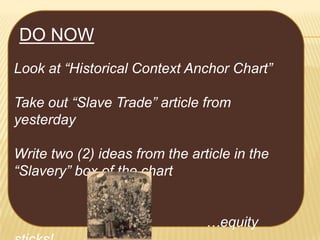
DO NOW
Look at “Historical Context Anchor Chart”
Take out “Slave Trade” article from
yesterday
Write two (2) ideas from the article in the
“Slavery” box of the chart

…equity
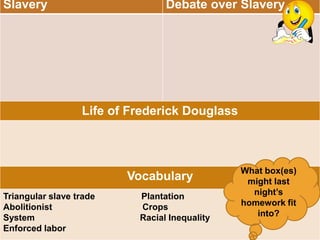
Slavery

Debate over Slavery

Life of Frederick Douglass

Vocabulary
Triangular slave trade
Abolitionist
System
Enforced labor

Plantation
Crops
Racial Inequality

What box(es)
might last
night’s
homework fit
into?
Slavery
Learning Objectives

What does
abolition mean,
again?

I can draw conclusions about the
abolition movement in America and cite
specific textual evidence to support
them.
Slavery
Narrative of Frederick Douglass

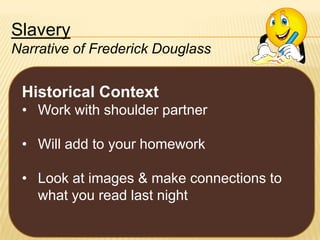
Historical Context
• Work with shoulder partner
• Will add to your homework
• Look at images & make connections to
what you read last night
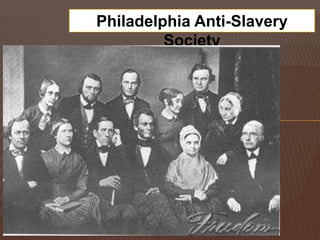
Philadelphia Anti-Slavery
Society
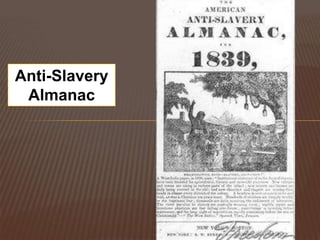
Anti-Slavery
Almanac
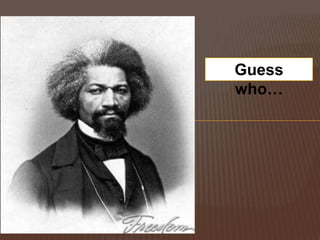
Guess
who…
Slavery
Narrative of Frederick Douglass

“Abolition” (PBS Episode)
• Excerpt from Freedom: A History of US

• Take out homework
• Compare answers with shoulder partner

• Be ready to share!
Slavery
Narrative of Frederick Douglass

“Abolition” (PBS Episode)
• Let’s re-read it together

• Review answers again…
• Make sure your partner’s responses are

precise and specific!
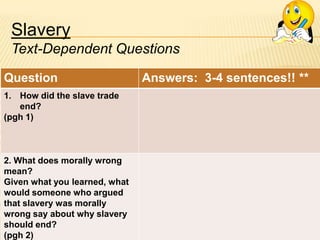
Slavery
Text-Dependent Questions
Question
1. How did the slave trade
end?
(pgh 1)

2. What does morally wrong
mean?
Given what you learned, what
would someone who argued
that slavery was morally
wrong say about why slavery
should end?
(pgh 2)

Answers: 3-4 sentences!! **
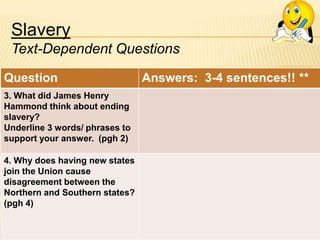
Slavery
Text-Dependent Questions
Question
3. What did James Henry
Hammond think about ending
slavery?
Underline 3 words/ phrases to
support your answer. (pgh 2)
4. Why does having new states
join the Union cause
disagreement between the
Northern and Southern states?
(pgh 4)

Answers: 3-4 sentences!! **
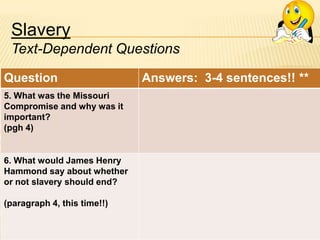
Slavery
Text-Dependent Questions
Question
5. What was the Missouri
Compromise and why was it
important?
(pgh 4)

6. What would James Henry
Hammond say about whether
or not slavery should end?
(paragraph 4, this time!!)

Answers: 3-4 sentences!! **
Slavery
Text-Dependent Questions
Question
7. What did European
countries decide about
slavery?
(pgh. 5)

8. What is the debate in the
abolition movement over how
slavery should end?
(pgh. 5)

Answers: 3-4 sentences!! **
Slavery
Narrative of Frederick Douglass

Historical Context Anchor Chart
**Which section of the anchor chart could
“Abolition” information fit into?
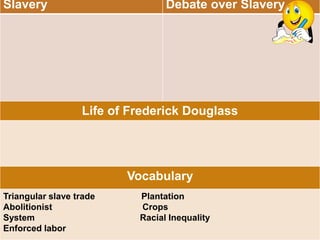
Slavery

Debate over Slavery

Life of Frederick Douglass

Vocabulary
Triangular slave trade
Abolitionist
System
Enforced labor

Plantation
Crops
Racial Inequality
Slavery
Narrative of Frederick Douglass

“Abolition” (PBS Episode)
• Excerpt from Freedom: A History of US
• MORE questions?!? ….Part II

• Let’s work on it together!
Slavery
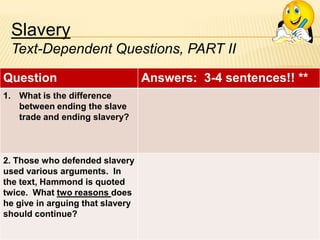
Text-Dependent Questions, PART II
Question
1. What is the difference
between ending the slave
trade and ending slavery?

2. Those who defended slavery
used various arguments. In
the text, Hammond is quoted
twice. What two reasons does
he give in arguing that slavery
should continue?

Answers: 3-4 sentences!! **
Slavery
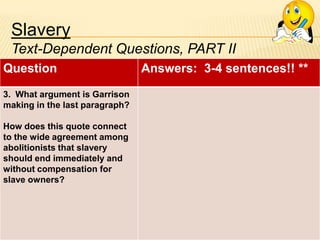
Text-Dependent Questions, PART II
Question
3. What argument is Garrison
making in the last paragraph?
How does this quote connect
to the wide agreement among
abolitionists that slavery
should end immediately and
without compensation for
slave owners?

Answers: 3-4 sentences!! **
Slavery
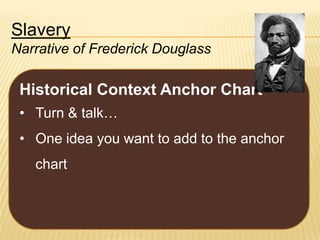
Narrative of Frederick Douglass

Historical Context Anchor Chart
• Turn & talk…

• One idea you want to add to the anchor
chart
Slavery

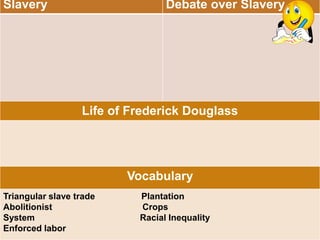
Debate over Slavery

Life of Frederick Douglass

Vocabulary
Triangular slave trade
Abolitionist
System
Enforced labor

Plantation
Crops
Racial Inequality
Slavery
Narrative of Frederick Douglass

Homework
• Historical Context Anchor Chart
• Add three (3) more ideas to the “Debate
over Slavery section ONLY

Slavery Module: Lesson four

  • 1.
    DO NOW Look at“Historical Context Anchor Chart” Take out “Slave Trade” article from yesterday Write two (2) ideas from the article in the “Slavery” box of the chart …equity
  • 2.
    Slavery Debate over Slavery Lifeof Frederick Douglass Vocabulary Triangular slave trade Abolitionist System Enforced labor Plantation Crops Racial Inequality What box(es) might last night’s homework fit into?
  • 3.
    Slavery Learning Objectives What does abolitionmean, again? I can draw conclusions about the abolition movement in America and cite specific textual evidence to support them.
  • 4.
    Slavery Narrative of FrederickDouglass Historical Context • Work with shoulder partner • Will add to your homework • Look at images & make connections to what you read last night
  • 5.
  • 6.
  • 7.
  • 8.
    Slavery Narrative of FrederickDouglass “Abolition” (PBS Episode) • Excerpt from Freedom: A History of US • Take out homework • Compare answers with shoulder partner • Be ready to share!
  • 9.
    Slavery Narrative of FrederickDouglass “Abolition” (PBS Episode) • Let’s re-read it together • Review answers again… • Make sure your partner’s responses are precise and specific!
  • 10.
    Slavery Text-Dependent Questions Question 1. Howdid the slave trade end? (pgh 1) 2. What does morally wrong mean? Given what you learned, what would someone who argued that slavery was morally wrong say about why slavery should end? (pgh 2) Answers: 3-4 sentences!! **
  • 11.
    Slavery Text-Dependent Questions Question 3. Whatdid James Henry Hammond think about ending slavery? Underline 3 words/ phrases to support your answer. (pgh 2) 4. Why does having new states join the Union cause disagreement between the Northern and Southern states? (pgh 4) Answers: 3-4 sentences!! **
  • 12.
    Slavery Text-Dependent Questions Question 5. Whatwas the Missouri Compromise and why was it important? (pgh 4) 6. What would James Henry Hammond say about whether or not slavery should end? (paragraph 4, this time!!) Answers: 3-4 sentences!! **
  • 13.
    Slavery Text-Dependent Questions Question 7. Whatdid European countries decide about slavery? (pgh. 5) 8. What is the debate in the abolition movement over how slavery should end? (pgh. 5) Answers: 3-4 sentences!! **
  • 14.
    Slavery Narrative of FrederickDouglass Historical Context Anchor Chart **Which section of the anchor chart could “Abolition” information fit into?
  • 15.
    Slavery Debate over Slavery Lifeof Frederick Douglass Vocabulary Triangular slave trade Abolitionist System Enforced labor Plantation Crops Racial Inequality
  • 16.
    Slavery Narrative of FrederickDouglass “Abolition” (PBS Episode) • Excerpt from Freedom: A History of US • MORE questions?!? ….Part II • Let’s work on it together!
  • 17.
    Slavery Text-Dependent Questions, PARTII Question 1. What is the difference between ending the slave trade and ending slavery? 2. Those who defended slavery used various arguments. In the text, Hammond is quoted twice. What two reasons does he give in arguing that slavery should continue? Answers: 3-4 sentences!! **
  • 18.
    Slavery Text-Dependent Questions, PARTII Question 3. What argument is Garrison making in the last paragraph? How does this quote connect to the wide agreement among abolitionists that slavery should end immediately and without compensation for slave owners? Answers: 3-4 sentences!! **
  • 19.
    Slavery Narrative of FrederickDouglass Historical Context Anchor Chart • Turn & talk… • One idea you want to add to the anchor chart
  • 20.
    Slavery Debate over Slavery Lifeof Frederick Douglass Vocabulary Triangular slave trade Abolitionist System Enforced labor Plantation Crops Racial Inequality
  • 21.
    Slavery Narrative of FrederickDouglass Homework • Historical Context Anchor Chart • Add three (3) more ideas to the “Debate over Slavery section ONLY