Take me on the journeyFrom Bondage to Freedom
Investigative ReportingYou have been chosen as a student reporter to  travel back to the time of slavery. Your job is to research and review authentic historical slave documents, interview former slave owners and slaves, and document your research. You will complete several tasks as you cover the following: You will watch the introductory video to familiarize yourself with Frederick  DouglassYou will read the autobiography of Frederick Douglass You will determine the importance of the slave narrative in the abolitionist movementYou will gain experience in working with the slave narrative as a work of literatureYou will explore themes of self-actualization and literacy enlightenment within the slave narrativeEnslaved Africans Being Loaded into Hold of Slave Ship
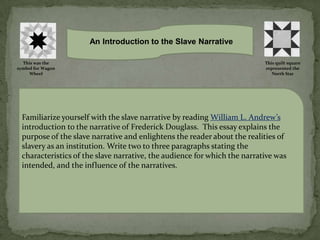
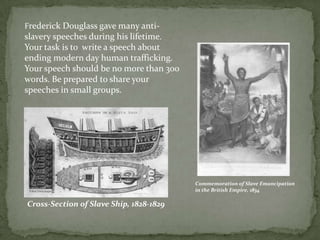
An Introduction to the Slave Narrative This quilt square represented the North StarThis was the symbol for Wagon WheelFamiliarize yourself with the slave narrative by reading William L. Andrew’s introduction to the narrative of Frederick Douglass.  This essay explains the purpose of the slave narrative and enlightens the reader about the realities of slavery as an institution. Write two to three paragraphs stating the characteristics of the slave narrative, the audience for which the narrative was intended, and the influence of the narratives.
You will begin your investigative research by logging on to the following website and listening to a short video titled “An evening with Frederick Douglass.” Frederick Douglass
Read the preface of the Narrative of the Life of Frederick DouglassPreface by William Lloyd Garrison Preface by Wendell PhillipsDemonstrate your understanding of the readings by responding to the question: What function do Garrison’s preface and Phillips’s letter serve?
Your job is to read about the life of Frederick Douglass by reading his autobiography -Narrative of the Life of Frederick Douglass, An American Slave, Written by HimselfWhen you have completed reading the narrative, write a thorough response to each of the following questions: How is education related to human freedom?
 What is a Human Right?
 Why is literacy a statement about freedom?
 How does literature affect social justice and social transformation?Africans Liberated from a Captured Slave Ship, 1846
Your next task is to read Escape From Slavery, 1838which details Frederick Douglass’ escape to the north. As you read, use MapQuest to create a map plotting each stop along his escape route. Print the map.Next, read the letter Douglass wrote to Thomas Auld  after he became a free man. Write two paragraphs analyzing the tone and voice in the letter.
Identifying Different Perspectives Now that you have read the narrative of Frederick Douglass. Your task is to read “Southern Thought,” an article written before the Civil War by a Southern Plantation owner by the name of George Fitzhugh. Draw a Venn diagram and compare/contrast Fredrick Douglas’ “Narrative of a Slave” with “Southern Thought.”  Examine how each author’s position in life contributes to his opinions about slavery and how each writer’s perspective works to create a more complete and perhaps more accurate picture of history. 
Create a character web of Frederick Douglass. Illustrate the characteristics with images, drawings, and words. Include at least two representations of his contributions. Be prepared to discuss the character web online with your classmates. Think critically about the people Douglass describes in his narrative  - Aunt Hester, Sophia Auld, and Edward Covey and write a brief essay explaining why these people are important to him. Think TankSlave Quarters on a Southern  Plantation
Research two spirituals for reflection and study. Decipher the songs and analyze what they reveal about the deeper thoughts and feelings of enslaved Americans. Consider the following: What is the meaning behind the song? What knowledge does the listener or reader need in order to understand the songs? What kind of language is used in these songs? Why do you think the composers chose to use this language? How are various groups of people portrayed in these songs?Remember to post your work on the Wiki. In his Narrative, Douglass describes the singing that slaves did while they worked in the fields. Their songs were called spirituals. While these spirituals may have conveyed to the white masters a sense of contentment amongst the slaves, these songs were sung to express the slaves’ innermost thoughts, fears, and hopes through hidden meanings, as they were not permitted to speak out. In this way, these spirituals can be thought of as “authentic” literature—that is, the truest words of the slaves.

Douglas literacy lesson

  • 1.
    Take me onthe journeyFrom Bondage to Freedom
  • 2.
    Investigative ReportingYou havebeen chosen as a student reporter to travel back to the time of slavery. Your job is to research and review authentic historical slave documents, interview former slave owners and slaves, and document your research. You will complete several tasks as you cover the following: You will watch the introductory video to familiarize yourself with Frederick DouglassYou will read the autobiography of Frederick Douglass You will determine the importance of the slave narrative in the abolitionist movementYou will gain experience in working with the slave narrative as a work of literatureYou will explore themes of self-actualization and literacy enlightenment within the slave narrativeEnslaved Africans Being Loaded into Hold of Slave Ship
  • 3.
    An Introduction tothe Slave Narrative This quilt square represented the North StarThis was the symbol for Wagon WheelFamiliarize yourself with the slave narrative by reading William L. Andrew’s introduction to the narrative of Frederick Douglass. This essay explains the purpose of the slave narrative and enlightens the reader about the realities of slavery as an institution. Write two to three paragraphs stating the characteristics of the slave narrative, the audience for which the narrative was intended, and the influence of the narratives.
  • 4.
    You will beginyour investigative research by logging on to the following website and listening to a short video titled “An evening with Frederick Douglass.” Frederick Douglass
  • 5.
    Read the prefaceof the Narrative of the Life of Frederick DouglassPreface by William Lloyd Garrison Preface by Wendell PhillipsDemonstrate your understanding of the readings by responding to the question: What function do Garrison’s preface and Phillips’s letter serve?
  • 6.
    Your job isto read about the life of Frederick Douglass by reading his autobiography -Narrative of the Life of Frederick Douglass, An American Slave, Written by HimselfWhen you have completed reading the narrative, write a thorough response to each of the following questions: How is education related to human freedom?
  • 7.
    What isa Human Right?
  • 8.
    Why isliteracy a statement about freedom?
  • 9.
    How doesliterature affect social justice and social transformation?Africans Liberated from a Captured Slave Ship, 1846
  • 10.
    Your next taskis to read Escape From Slavery, 1838which details Frederick Douglass’ escape to the north. As you read, use MapQuest to create a map plotting each stop along his escape route. Print the map.Next, read the letter Douglass wrote to Thomas Auld after he became a free man. Write two paragraphs analyzing the tone and voice in the letter.
  • 11.
    Identifying Different PerspectivesNow that you have read the narrative of Frederick Douglass. Your task is to read “Southern Thought,” an article written before the Civil War by a Southern Plantation owner by the name of George Fitzhugh. Draw a Venn diagram and compare/contrast Fredrick Douglas’ “Narrative of a Slave” with “Southern Thought.”  Examine how each author’s position in life contributes to his opinions about slavery and how each writer’s perspective works to create a more complete and perhaps more accurate picture of history. 
  • 12.
    Create a characterweb of Frederick Douglass. Illustrate the characteristics with images, drawings, and words. Include at least two representations of his contributions. Be prepared to discuss the character web online with your classmates. Think critically about the people Douglass describes in his narrative - Aunt Hester, Sophia Auld, and Edward Covey and write a brief essay explaining why these people are important to him. Think TankSlave Quarters on a Southern Plantation
  • 13.
    Research two spiritualsfor reflection and study. Decipher the songs and analyze what they reveal about the deeper thoughts and feelings of enslaved Americans. Consider the following: What is the meaning behind the song? What knowledge does the listener or reader need in order to understand the songs? What kind of language is used in these songs? Why do you think the composers chose to use this language? How are various groups of people portrayed in these songs?Remember to post your work on the Wiki. In his Narrative, Douglass describes the singing that slaves did while they worked in the fields. Their songs were called spirituals. While these spirituals may have conveyed to the white masters a sense of contentment amongst the slaves, these songs were sung to express the slaves’ innermost thoughts, fears, and hopes through hidden meanings, as they were not permitted to speak out. In this way, these spirituals can be thought of as “authentic” literature—that is, the truest words of the slaves.