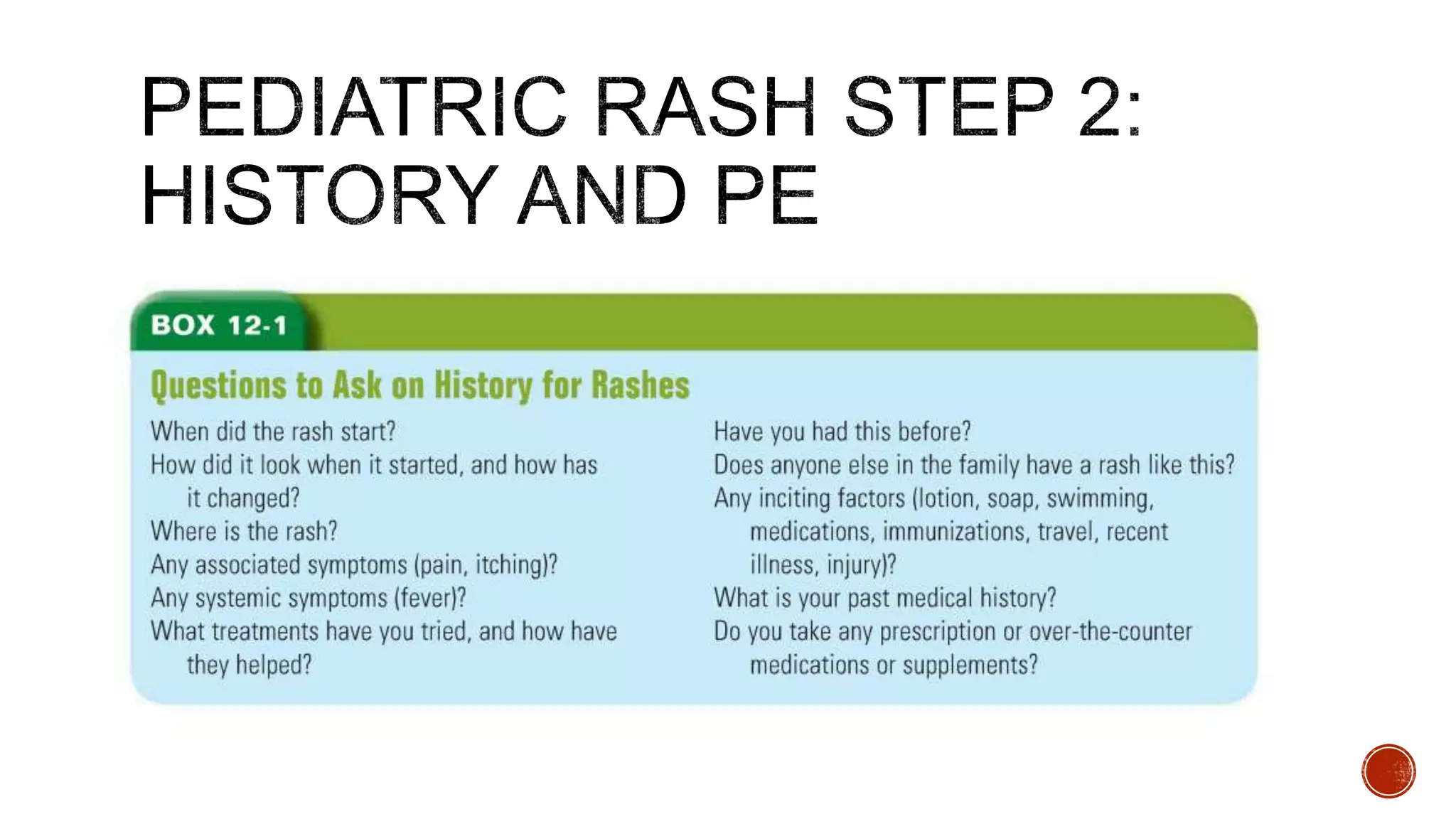
Prepared By Marwan monzer Nassar
 A rash is a change of the Skin which affects its color, appearance, or texture.
 The causes of a rash are numerous, make the evaluation extremely difficult. Need
thorough history and complete physical examination.
 Rashes can be categorized as maculopapular ,petechial, diffusely erythematous with
desquamation, vesiculobullous pustular and nodular.
 Etiology :Infectious, Drug reaction ,Allergy , Autoimmune and malignancy
SICK
 In the ER
 Sick?
 Treat aggressively!
 The skin findings may help clue you in to the source of the sickness, but don’t let pontification
of the unusual rash delay your rapid administration of necessary care!
Historical and physical “red flags” in a patient with an unknown rash include:[1]
Severe pain
Very old or young age
Immunosuppressed
New medication
Fever
Toxic appearance
Hypotension
Mucosal lesions
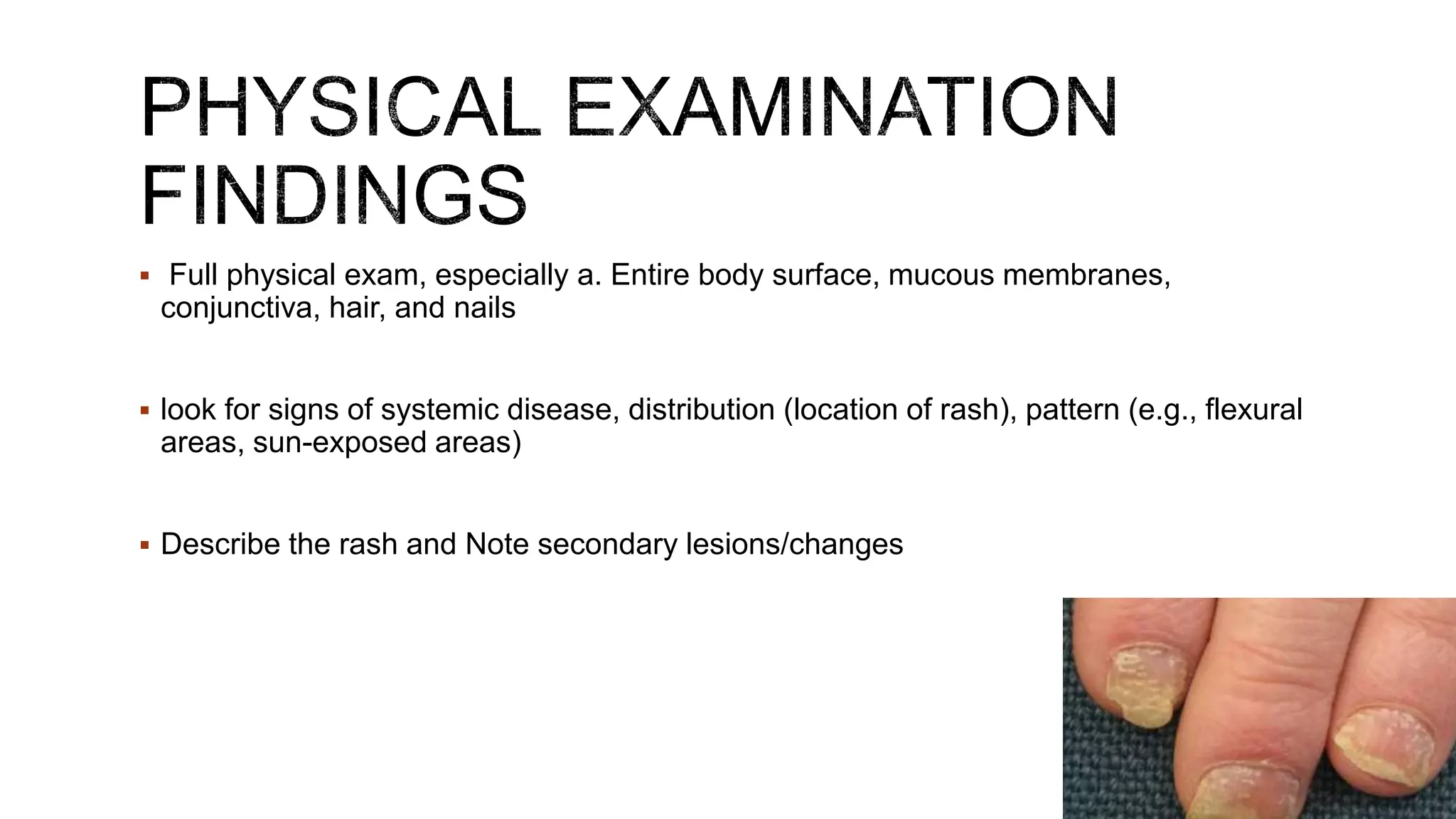
 Full physical exam, especially a. Entire body surface, mucous membranes,
conjunctiva, hair, and nails
 look for signs of systemic disease, distribution (location of rash), pattern (e.g., flexural
areas, sun-exposed areas)
 Describe the rash and Note secondary lesions/changes
 looking in a kid’s mouth can be challenging, but this step is very important!
 ITP with Wet Purpura (mucous membrane involvement) * risk of spontaneous bleeding.
 Koplick’s Spots .
 Even finding herpangina or gingivostomatitis may impact your plan.
 Gingival hyperplasia- AML
Gingival hyperplasia herpangina
Koplick’s Spots .
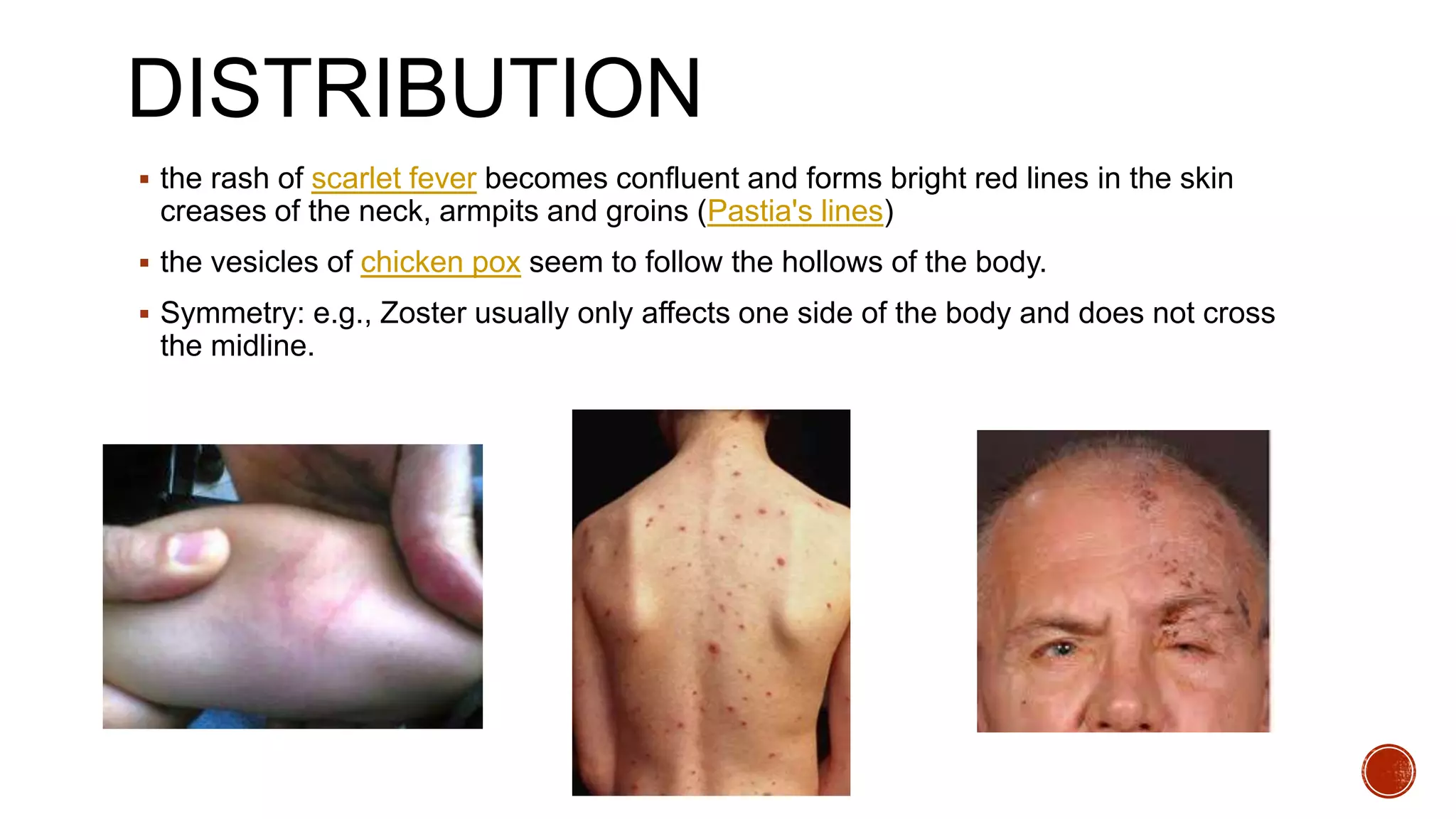
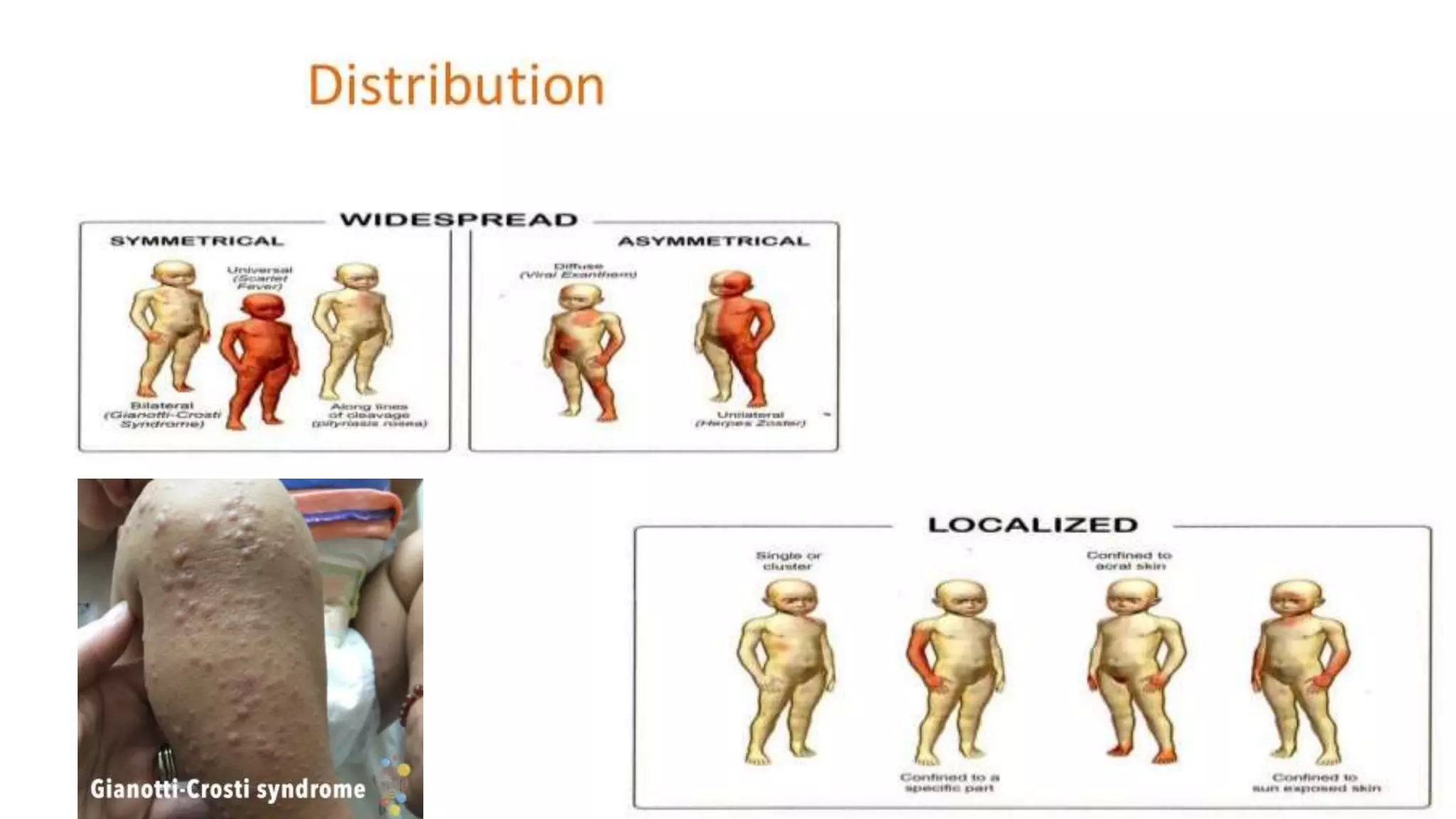
DISTRIBUTION
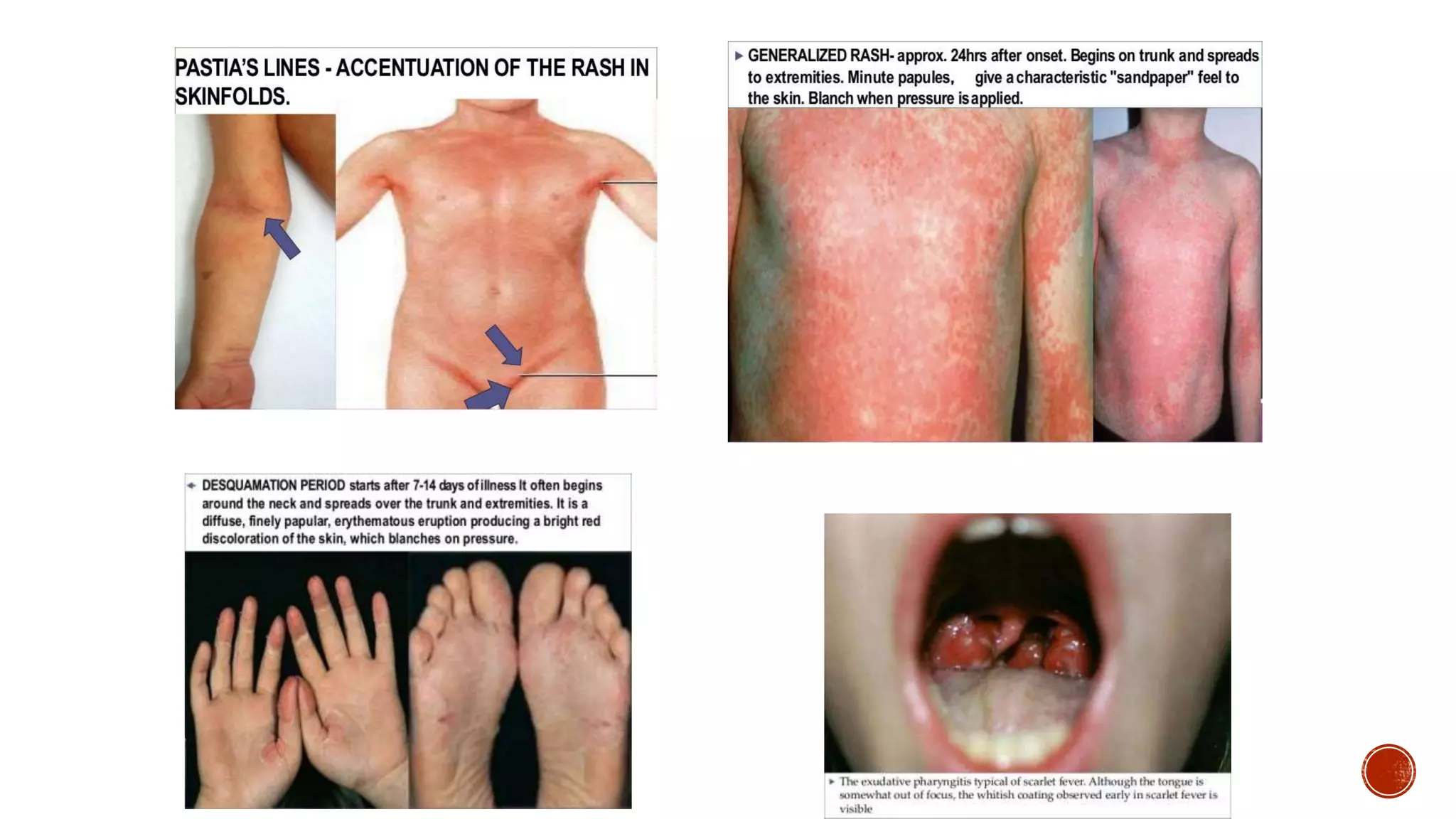
 the rash of scarlet fever becomes confluent and forms bright red lines in the skin
creases of the neck, armpits and groins (Pastia's lines)
 the vesicles of chicken pox seem to follow the hollows of the body.
 Symmetry: e.g., Zoster usually only affects one side of the body and does not cross
the midline.
DISTRIBUTION
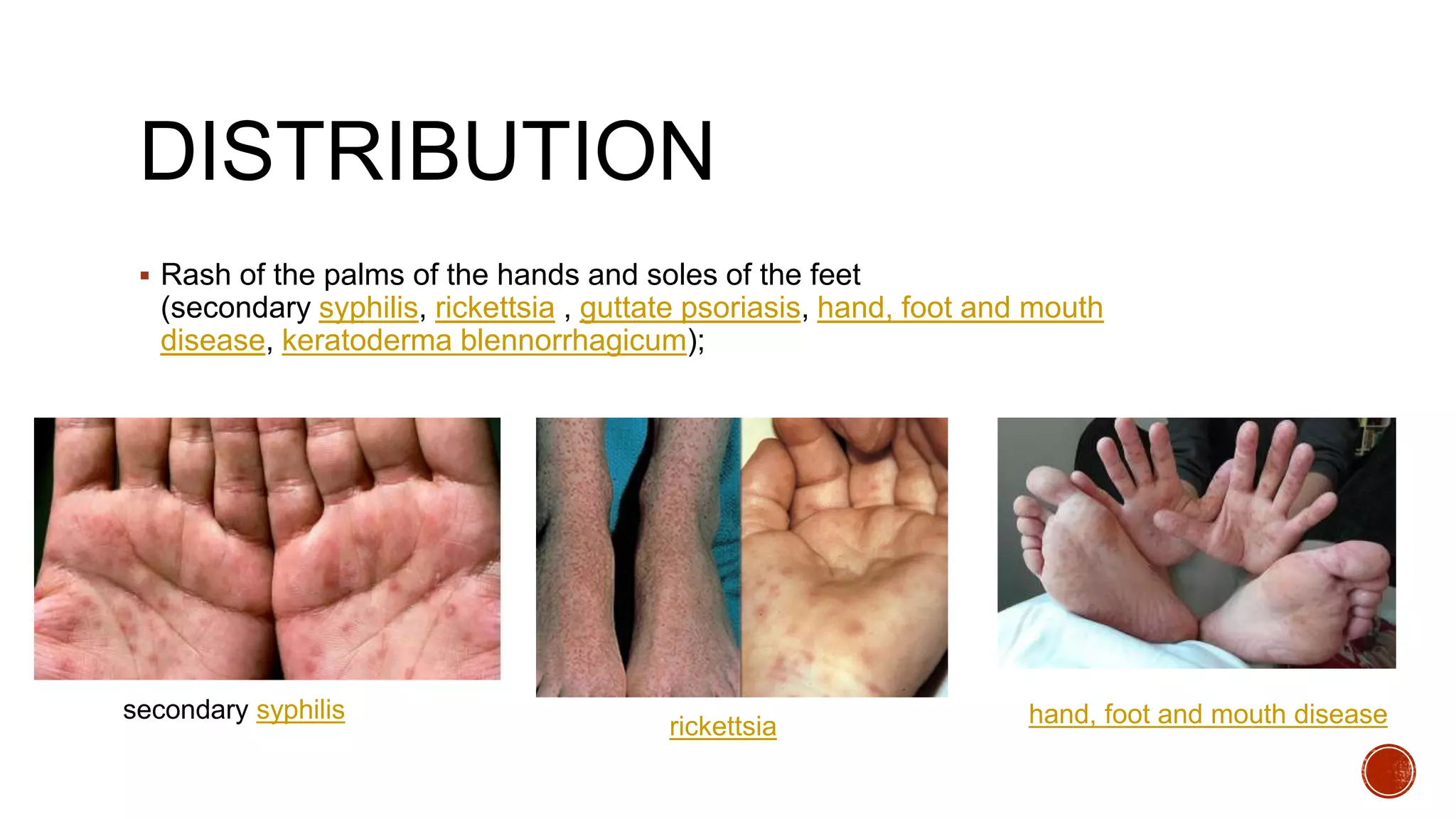
 Rash of the palms of the hands and soles of the feet
(secondary syphilis, rickettsia , guttate psoriasis, hand, foot and mouth
disease, keratoderma blennorrhagicum);
secondary syphilis
rickettsia hand, foot and mouth disease
 This is the hardest part… admitting to the family that you are not sure what the
cause of the rash is can be challenging.
 we are appropriately avoiding the addition of an incorrect “label” (diagnosis) to
the patient.
 In the next several hours to days, your ability to make a more accurate diagnosis may change.
 Give good anticipatory guidance on what specific things they need to monitor for and encourage
repeat evaluation in the next 12-24 hours.
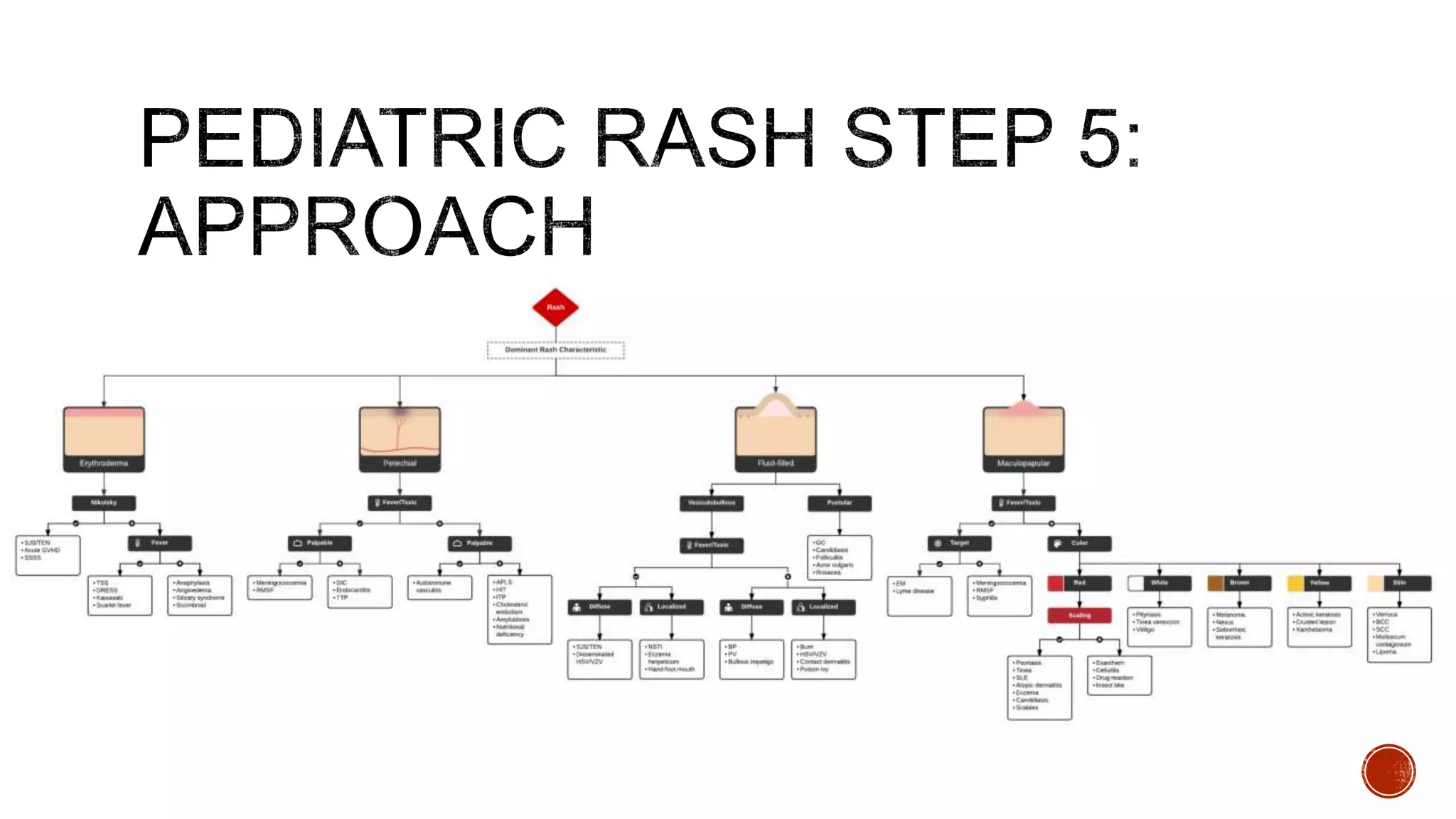
 The most common types of rashes are maculopapular and they have the broadest
differential diagnosis.
 They are usually seen with viral illnesses but can also be seen in certain bacterial
infections, drug reactions, and immune-mediated syndromes.
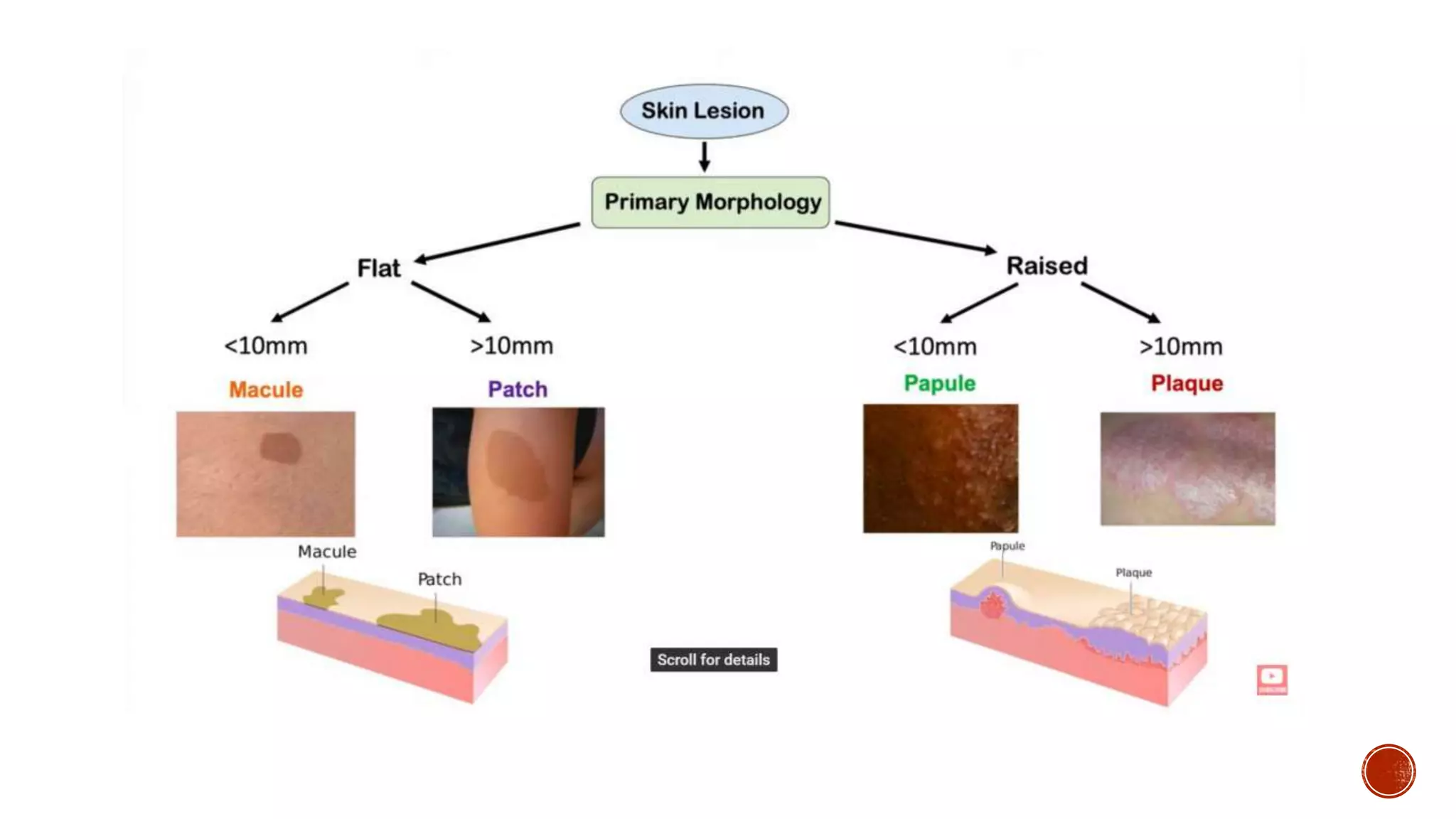
 These rashes are characterized by a combination of two types of lesions: macules,
and papules
 are common in childhood. The words 'exanthema' and 'anthos' mean 'breaking out'
and 'flower' in Greek, respectively. Similarly, a child breaking out with a viral exanthem
may be likened to a flower bursting into bloom.
 An exanthem is any eruptive skin rash that may be associated with fever or other
systemic symptoms. Causes include infectious pathogens, medication reactions and,
occasionally, a combination of both.
 In children, exanthems are most often related to infection and, of these, viral infections
are the most common.
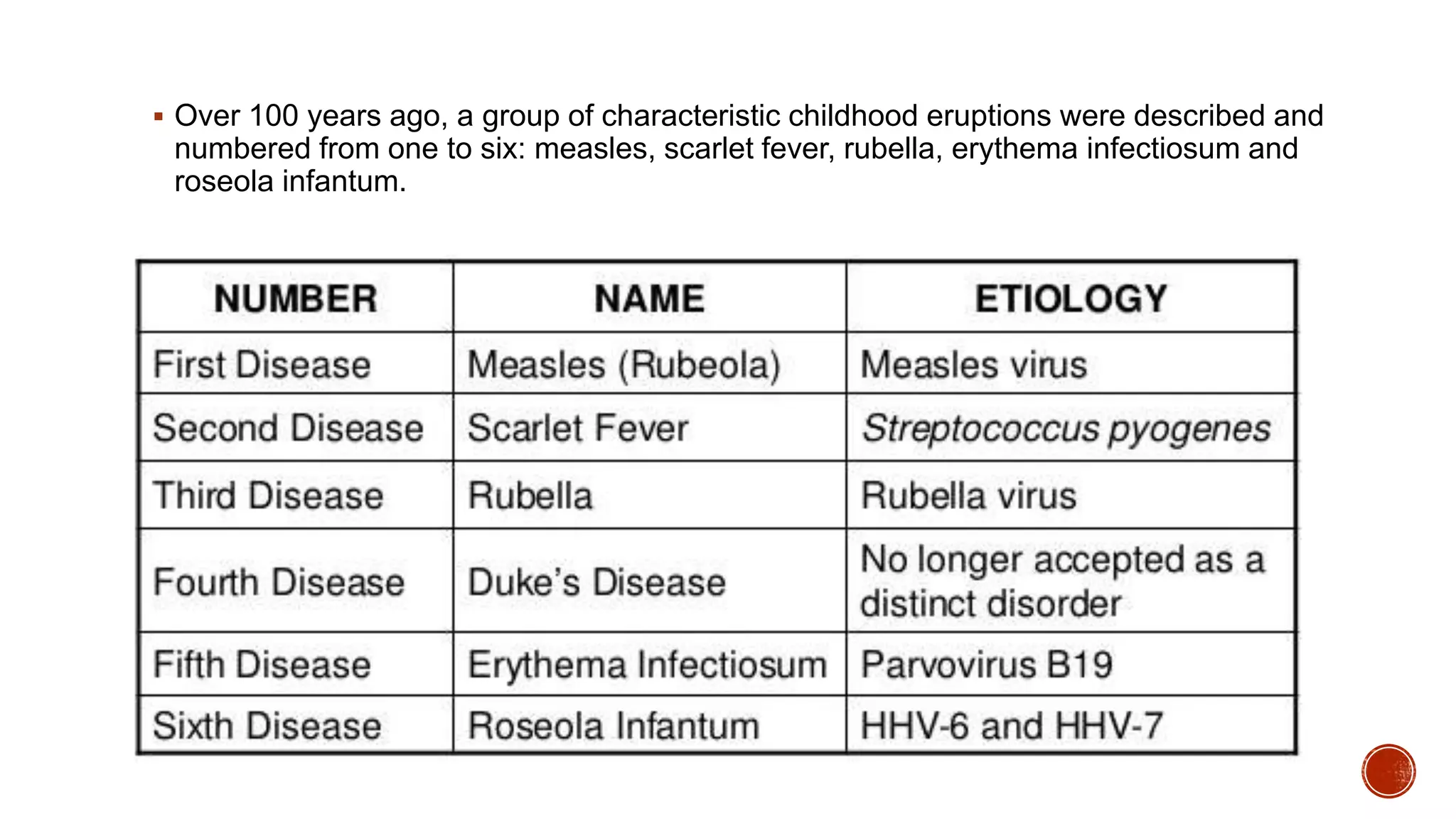
 Over 100 years ago, a group of characteristic childhood eruptions were described and
numbered from one to six: measles, scarlet fever, rubella, erythema infectiosum and
roseola infantum.
Step1 not sick
Step 2 4-year-old presents with a 1 week history of cough, runny nose, fever, sore
throat and red eyes. Yesterday, developed a red rash which started on her face and has
spread to her trunk. Her mother would like to know if the rash is from her new
medication. Augmentin 24hrs ago.has never received vaccinations due to her mother’s
fear regarding autism.
Step 3 oral exam
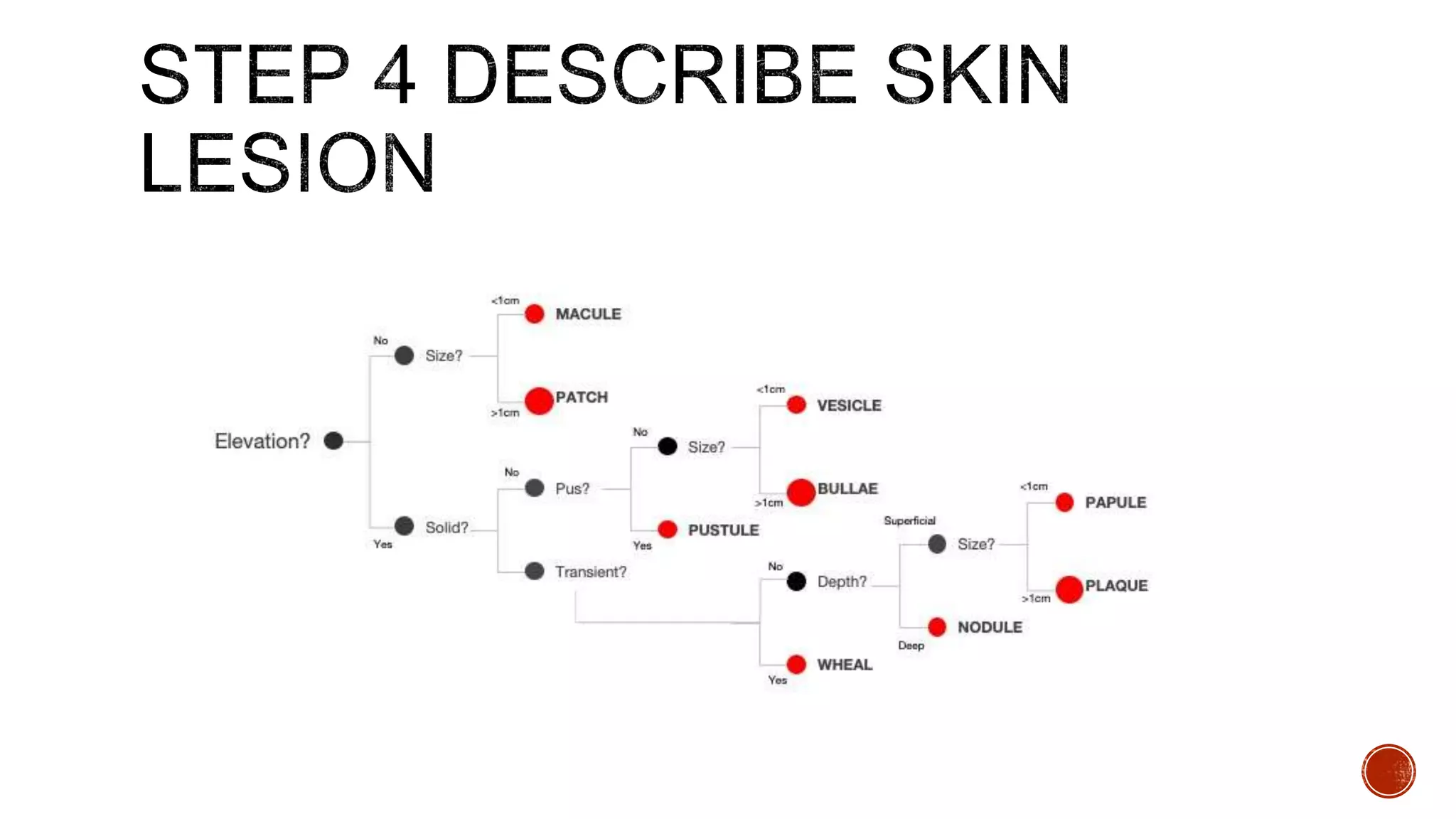
Step 4 maculopapular
 a. Drug Eruption (Too soon for an exanthematous drug eruption. Refer to the module
on drug reactions for more information)
 b. Erythema Infectiosum (Eruption begins with bright red cheeks followed by a
reticular eruption on the trunk and extremities)
 c. Measles
 d. Roseola (Tends to occur in younger children with high fevers preceding a sudden
rash that begins on the trunk)
 e. Rubella (Rash tends to spread more quickly, covering the body in 24hrs)
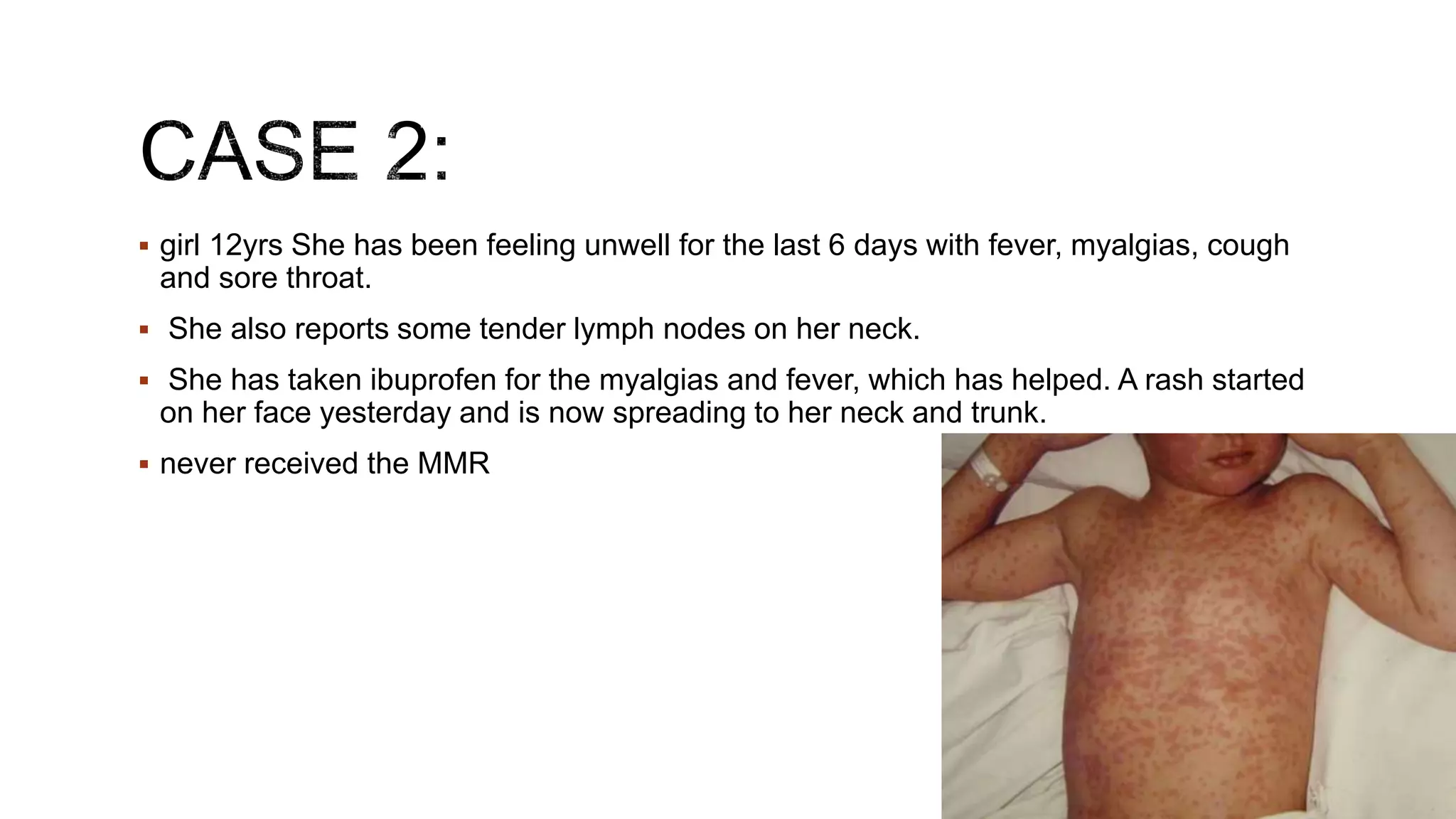
 girl 12yrs She has been feeling unwell for the last 6 days with fever, myalgias, cough
and sore throat.
 She also reports some tender lymph nodes on her neck.
 She has taken ibuprofen for the myalgias and fever, which has helped. A rash started
on her face yesterday and is now spreading to her neck and trunk.
 never received the MMR
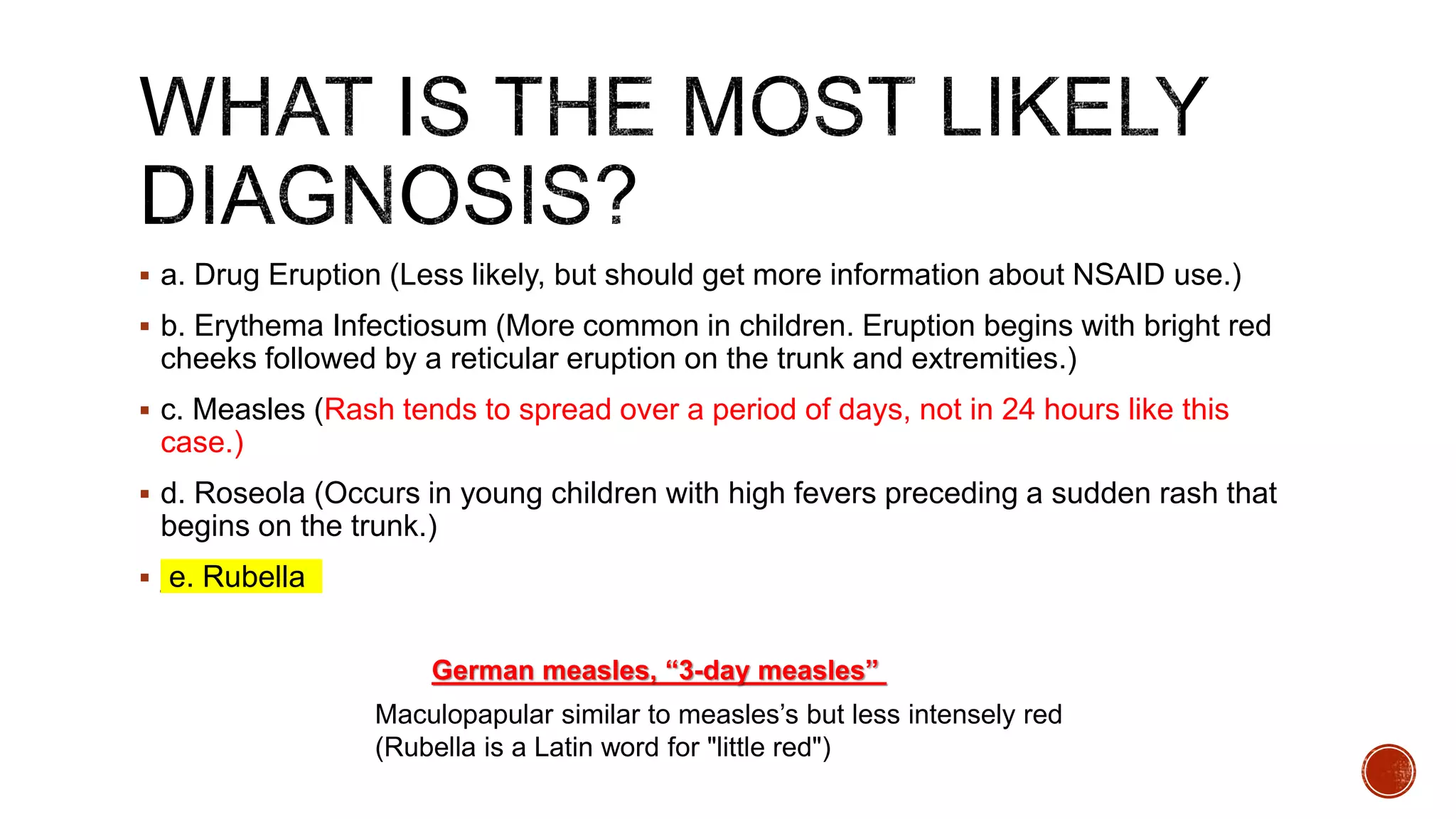
 a. Drug Eruption (Less likely, but should get more information about NSAID use.)
 b. Erythema Infectiosum (More common in children. Eruption begins with bright red
cheeks followed by a reticular eruption on the trunk and extremities.)
 c. Measles (Rash tends to spread over a period of days, not in 24 hours like this
case.)
 d. Roseola (Occurs in young children with high fevers preceding a sudden rash that
begins on the trunk.)
 e. Rubella
German measles, “3-day measles”
Maculopapular similar to measles’s but less intensely red
(Rubella is a Latin word for "little red")
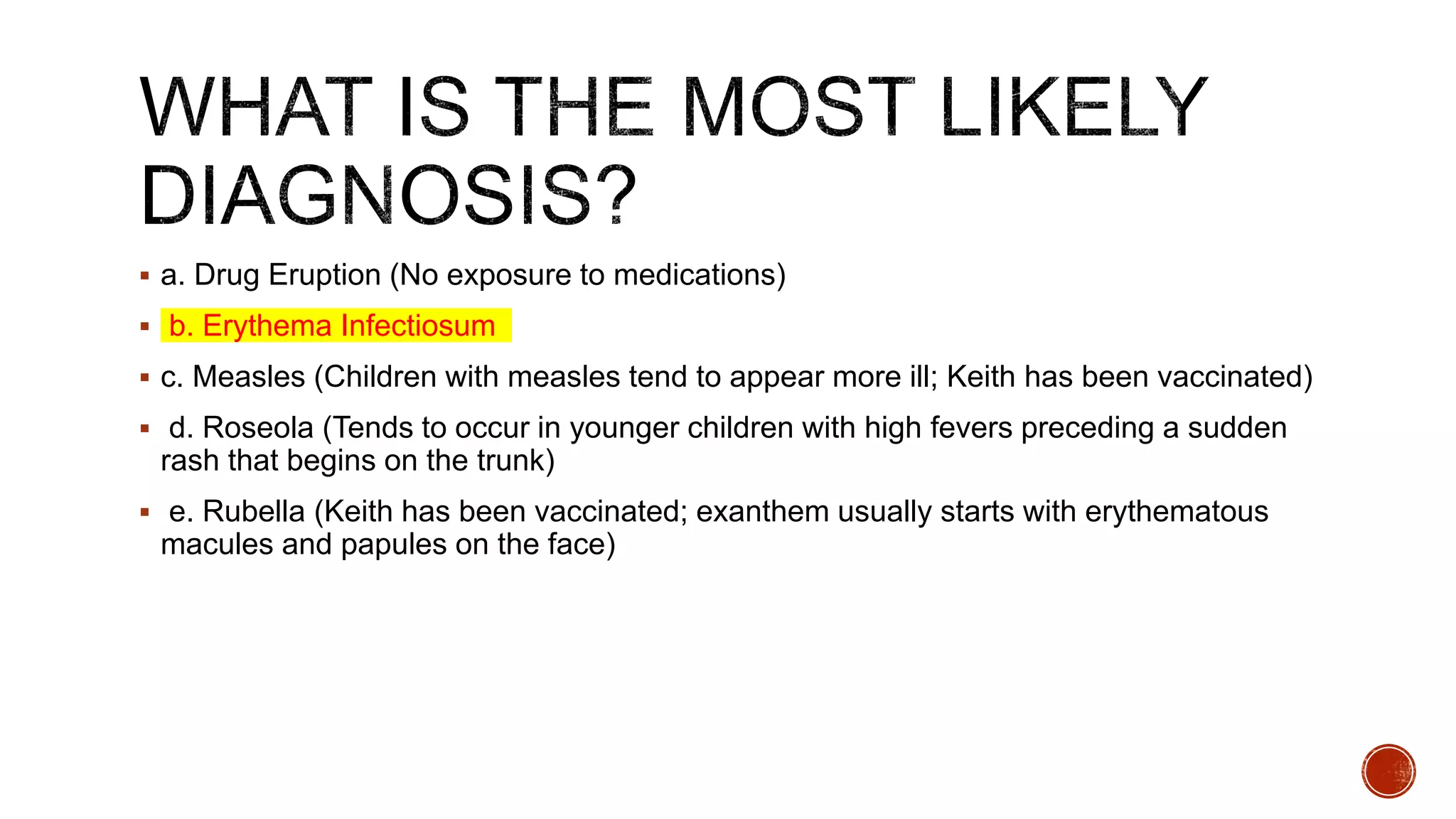
 10-year-old boy developed low grade fevers, red cheeks and a new rash on his body.
He is up to date with his vaccinations
 a. Drug Eruption (No exposure to medications)
 b. Erythema Infectiosum
 c. Measles (Children with measles tend to appear more ill; Keith has been vaccinated)
 d. Roseola (Tends to occur in younger children with high fevers preceding a sudden
rash that begins on the trunk)
 e. Rubella (Keith has been vaccinated; exanthem usually starts with erythematous
macules and papules on the face)
 His mother states that his older brother has a rash mostly involving the hands and
feet. Do you think he has parvovirus?
 Yes, he probably has papulopurpuric gloves-and socks syndrome
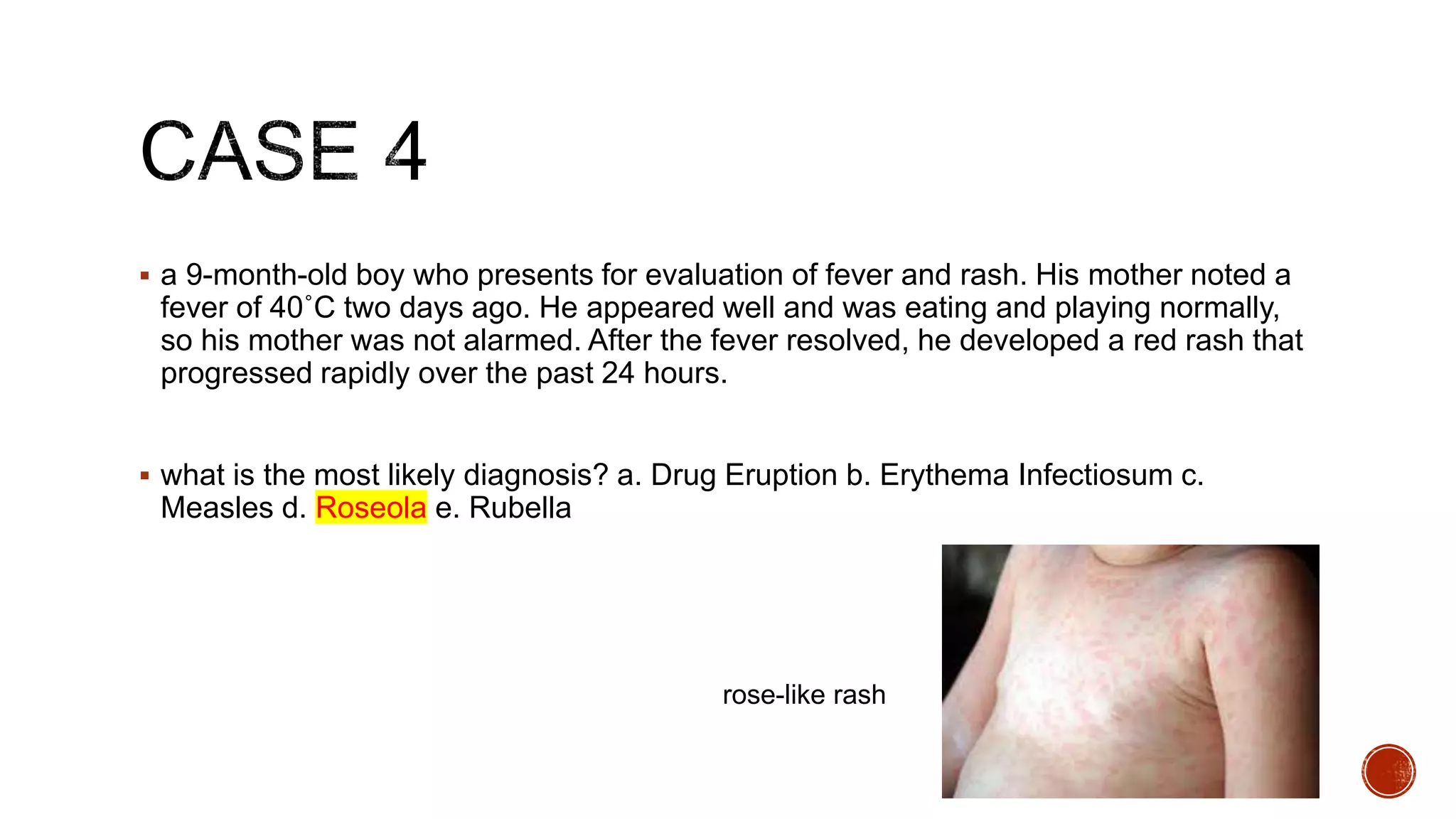
 a 9-month-old boy who presents for evaluation of fever and rash. His mother noted a
fever of 40˚C two days ago. He appeared well and was eating and playing normally,
so his mother was not alarmed. After the fever resolved, he developed a red rash that
progressed rapidly over the past 24 hours.
 what is the most likely diagnosis? a. Drug Eruption b. Erythema Infectiosum c.
Measles d. Roseola e. Rubella
rose-like rash
 o Scarlet fever
 o Typhoid fever
 o Meningococcemia
Early Meningococcemia
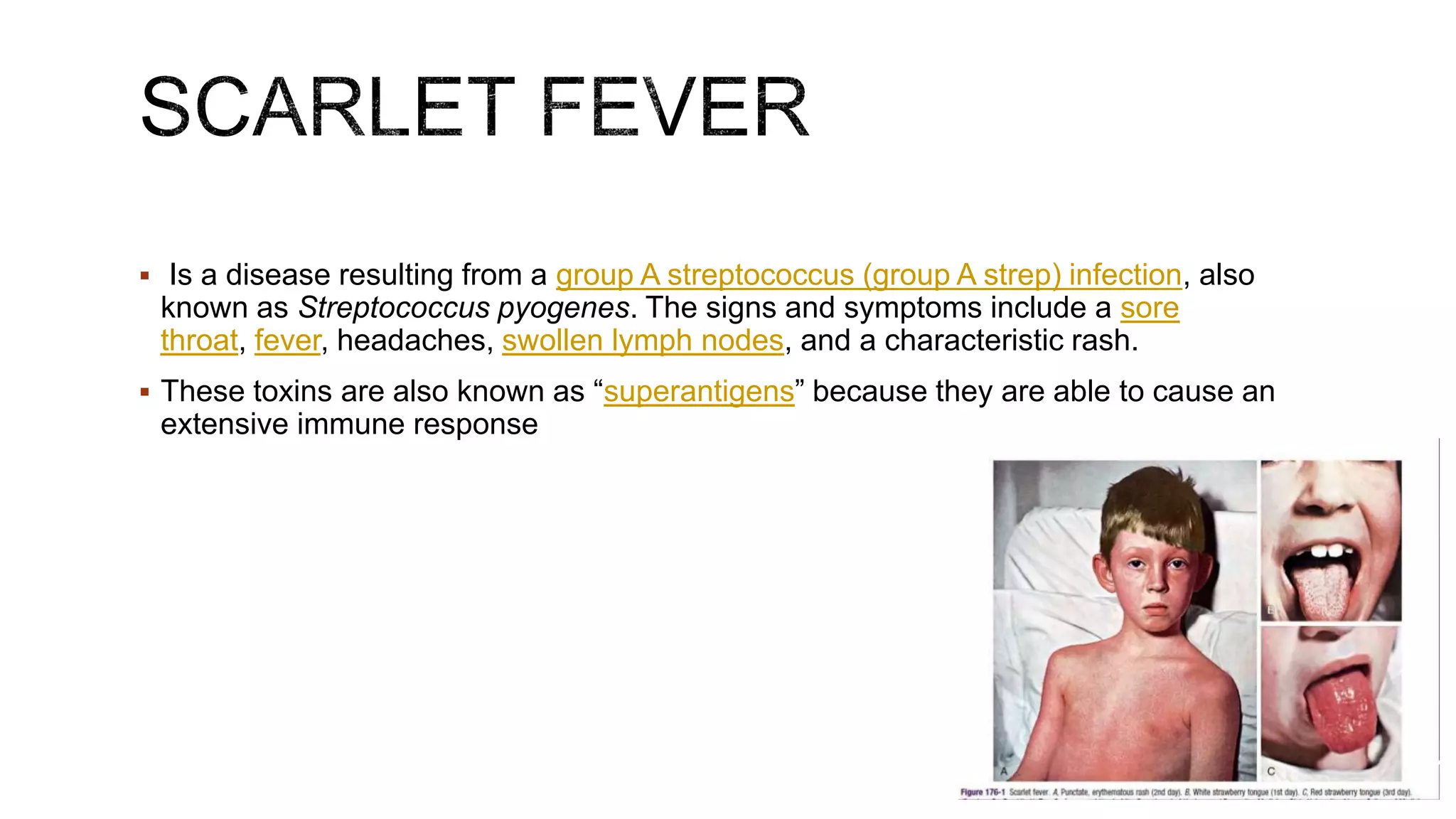
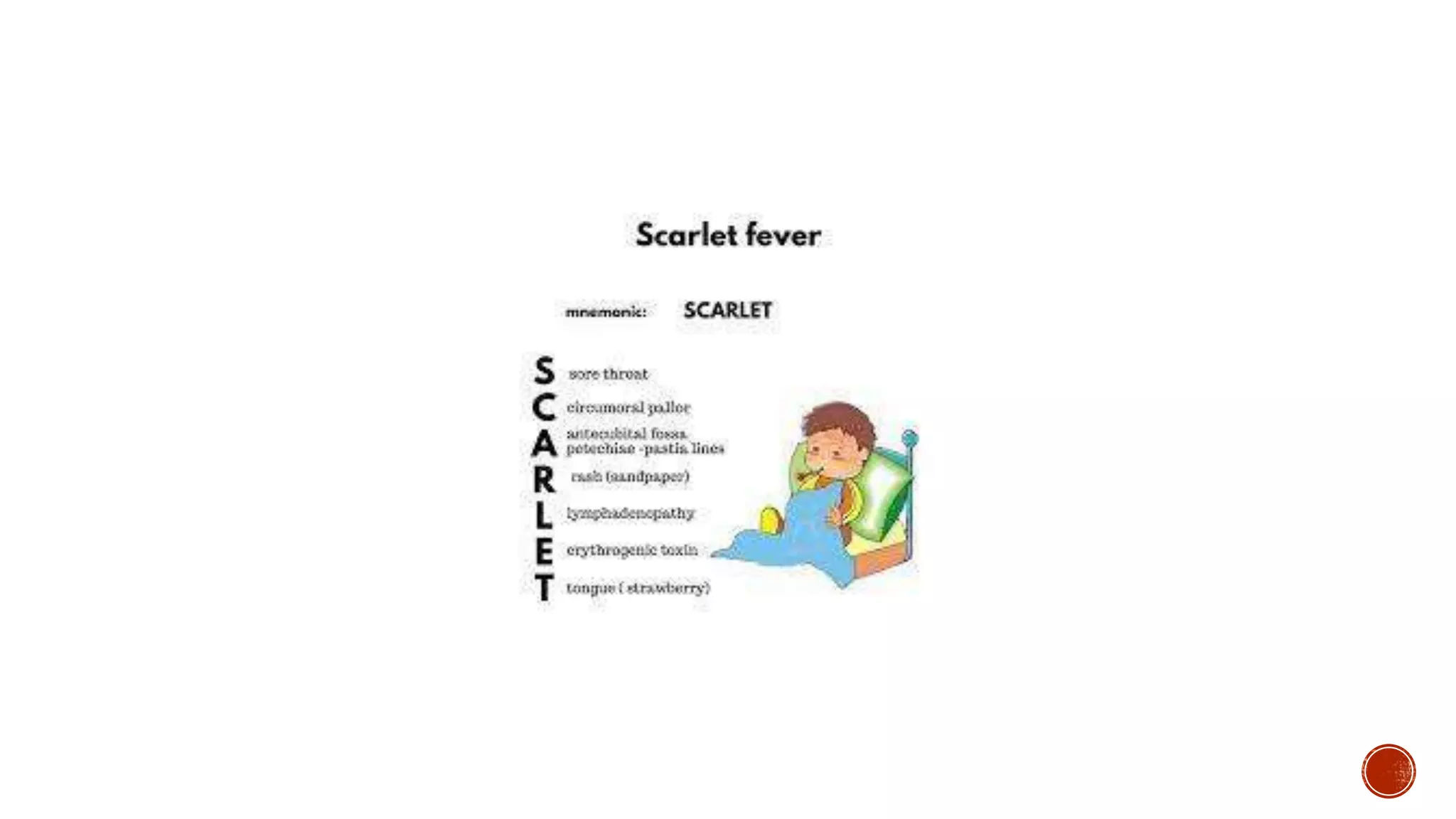
 Is a disease resulting from a group A streptococcus (group A strep) infection, also
known as Streptococcus pyogenes. The signs and symptoms include a sore
throat, fever, headaches, swollen lymph nodes, and a characteristic rash.
 These toxins are also known as “superantigens” because they are able to cause an
extensive immune response
 Typhoid fever, also known as enteric fever, is a potentially fatal multisystemic illness
caused primarily by Salmonella enterica serotype typhi and, to a lesser extent, S
enterica serotypes paratyphi A, B, and C. The terms typhoid and enteric fever are
commonly used to describe both major serotypes.
 Typhoid fever has a wide variety of presentations that range from an overwhelming
multisystemic illness to relatively minor cases of diarrhea with low-grade fever.
 Is rash caused by an adverse reaction to a medication. Most drug eruptions are
unsightly but resolve on their own once the causative medication is identified and
discontinued.
 Maculopapular eruptions are the most common type of reaction pattern. develop 3e14
days after exposure. Onset is usually on the trunk and chest. The rash can spread to
the limbs but usually spares the mucosae and face
 There are usually no constitutional features, and resolution after skin peeling can be
expected within 10 days.
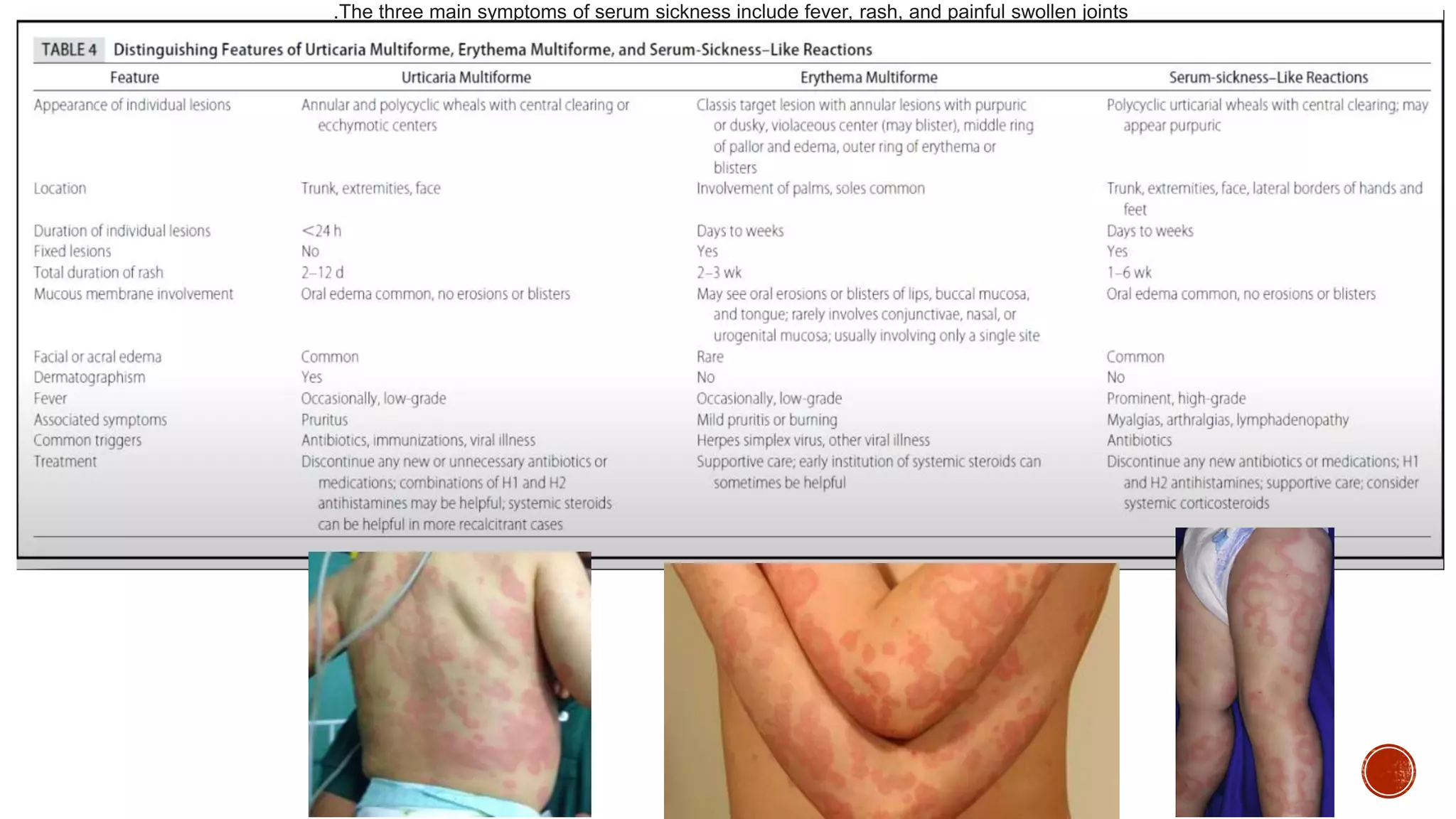
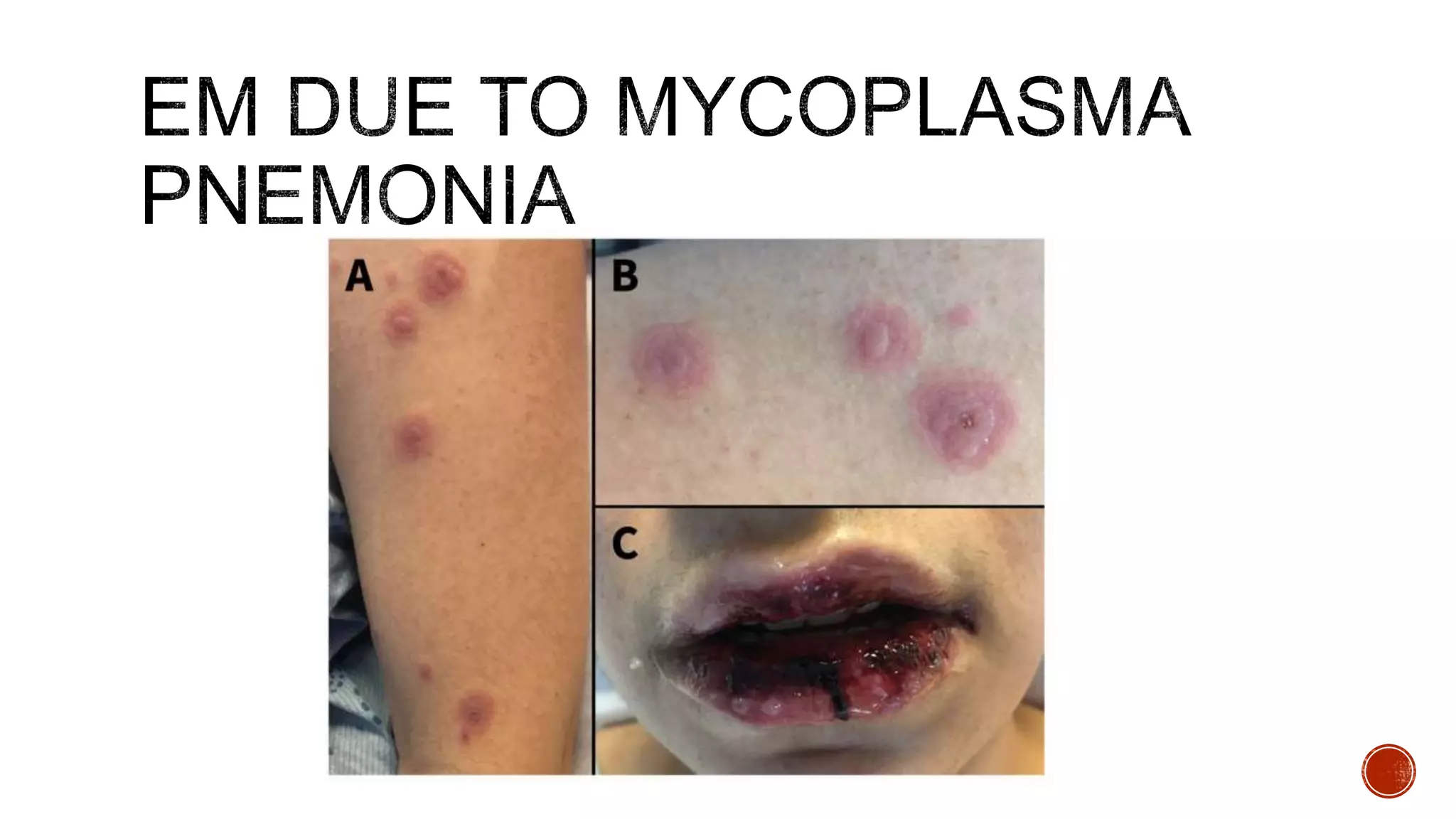
 is a condition that can either present as a self-limited rash (EM minor) or progress to
include the mucous membranes and become life threatening (EM major).
 EM is an autoimmune process that follows infection with herpes simplex, mycoplasma or
fungal diseases or drug exposure such as sulfa drugs, anticonvulsants and antibiotics.
 EM minor presents lesions typically begin as pink or red papules, which can then become
plaques. targetoid lesions on the extremities that then resolve in 1-2 weeks. Target
lesions involve the palms, soles, dorsa of hands and feet, face, extensor surfaces of the
extremities.
 EM minor requires only symptomatic treatment. EM major, on the other hand, is life
threatening and is defined by mucous membrane involvement. *discontinuing the
offending agent and fluid management, analgesics, wound care.
 Dermatology consult should be obtained and diagnosis is confirmed with skin biopsy.
The three main symptoms of serum sickness include fever, rash, and painful swollen joints
.
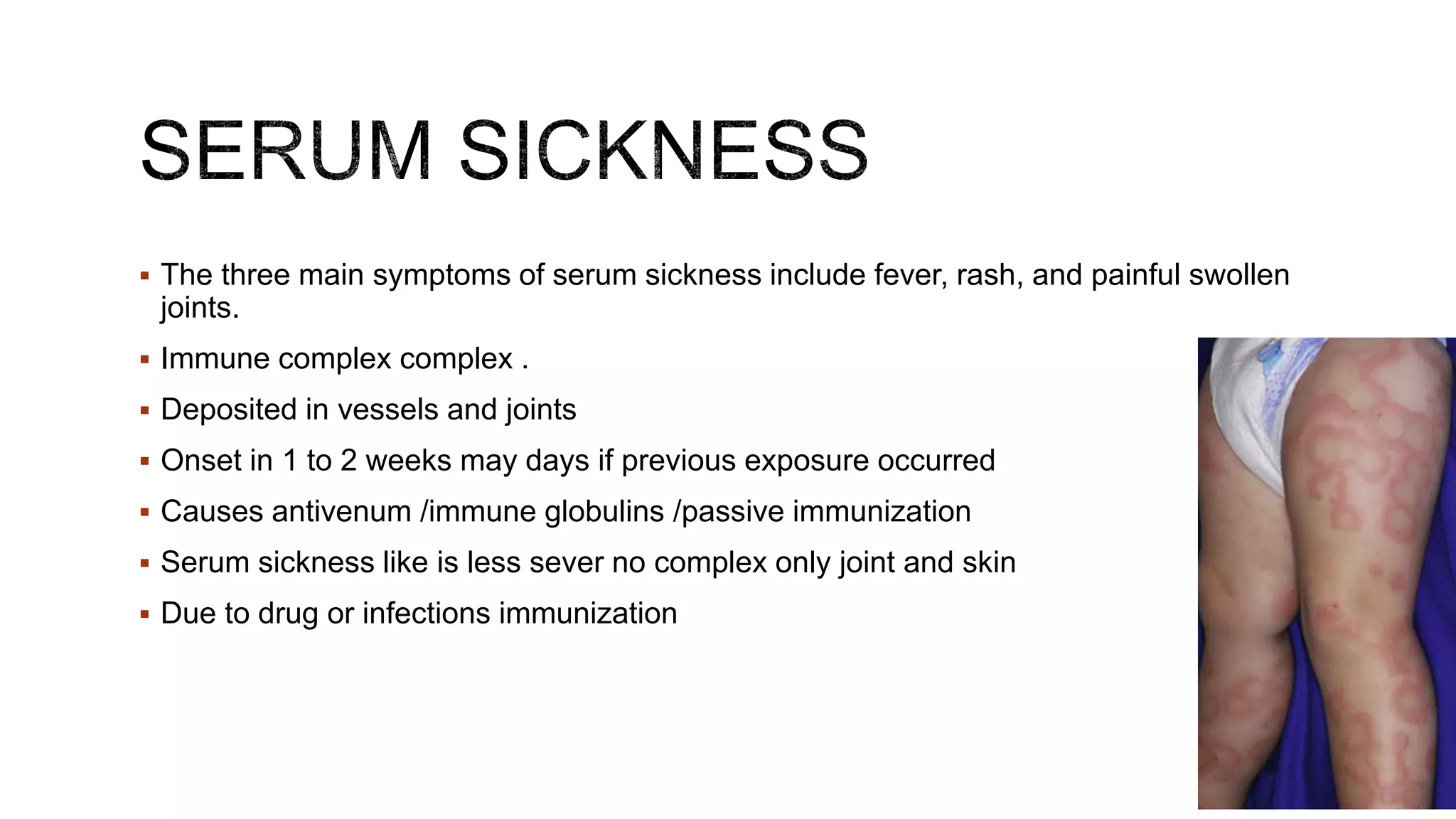
 The three main symptoms of serum sickness include fever, rash, and painful swollen
joints.
 Immune complex complex .
 Deposited in vessels and joints
 Onset in 1 to 2 weeks may days if previous exposure occurred
 Causes antivenum /immune globulins /passive immunization
 Serum sickness like is less sever no complex only joint and skin
 Due to drug or infections immunization
 Result from leakage of blood from vessel into surrounding tissues (skin or mucosal
membranes)
 Because blood is outside vessel, lesions are no blanchable Can be palpable or
nonpalpable: palpable caused by inflammation/destruction of vessel walls (i.e., vasculitis)
 History:
I. Establish time course and progression
2. Presence of fever (infectious more likely)
3. Age (younger ages make bleeding disorders more likely)
4. Location and type of lesion a. Palpable purpura in areas of pressure (e.g., waistband or
sock line) or dependency (e.g., over buttocks and lower extremities) is classic for Henoch-
Schonlein purpura (HSP)
 Child came at the emergency department with high fever (40°C), vomiting and nasal
congestion. She had no abnormalities on physical exam and was discharged home
with diagnosis of a probable viral infection, after excluding urinary infection.
 Ten hours later, the infant was readmitted with purpuric
lesions and prostration rapidly presenting with labial cyanosis,
capillary refill of 6 s, tachycardia, hypotension and anuria.
 fever plus petechial/purpuric rash equals meningococcemia until proven
otherwise and the patient should be placed on respiratory and contact isolation
immediately.
 The rash is initially erythematous, maculopapular and appears first on the wrist
and ankles, then becomes palpable petechiae, mimicking Rocky Mountain spotted
fever. The rash quickly spreads to the rest of the body coalescing into palpable
purpura. Diagnosis is confirmed by positive cultures of the skin, blood or CSF.
 Treatment should begin immediately with ceftriaxone if suspected. Vancomycin
should be added to cover resistant strep pneumoniae.
 Prophylaxis is necessary for anyone potentially exposed to respiratory secretions with
Rifampin, Ciprofloxacin or Ceftriaxone.
 Rocky Mountain spotted fever (RMSF): is a tick-borne illness caused by Rickettsia
rickettsii. Mortality exceeds 30% and increases when untreated or when treatment is
delayed.
 The skin lesions begin as a maculopapular rash on wrists and ankles before
becoming palpable petechiae and then spreads to the rest of the body. Patients
are febrile and toxic appearing and often have a history of travel. Patients complain of
fever, headaches, myalgias, and malaise. Calf and abdominal pain is also common.
 Treatment is with doxycycline in all non-pregnant patients, even children.
 is an autoimmune vasculitis that primarily affects children
 HSP is an acute, self-limited disease characterized by IgA and C3 deposition
preceded by an infection or drug exposure. Patients usually present with palpable
purpura on the legs and buttocks and complain of joint and abdominal pain.
 Some children will develop intussusception as a complication and may appear toxic.
Nephritis (hematuria and proteinuria) occurs in about 40% of patients, but only 1% will
develop end-stage renal disease.
 treatment is with corticosteroids and/or IVIG.
ERYTHEMATOUS RASHES
 Erythematous rashes are characterized by diffuse red skin from capillary congestion,
mimicking a bad sunburn. These rashes can occur in a variety of inflammatory and
infectious conditions, some of which can be rapidly fatal.
Toxic Epidermal Necrolysis
scarlet
anaphlaxis
SSS
 occurs in children <5 years old and presents as a red rash with eventual sloughing
of the epidermis.
 It is caused by certain strains of Staphylococcus aureus, which release an exfoliative
toxin.
 Symptoms include abrupt fever, diffuse, blanching skin erythema usually beginning
on the neck, axillae and groin associated with skin tenderness. Mucous membranes
are NOT involved.
 Patients may develop flaccid, loose bullae, but because epidermal cleavage is very
superficial, these fragile bullae often are not intact at the time of presentation
 Treatment includes antibiotics nafcillin or oxacillin, and Vancomycin in areas with aCA-
MRSA.
 Patients will require diligent fluid and electrolyte management
and wound care, generally in a burn unit.
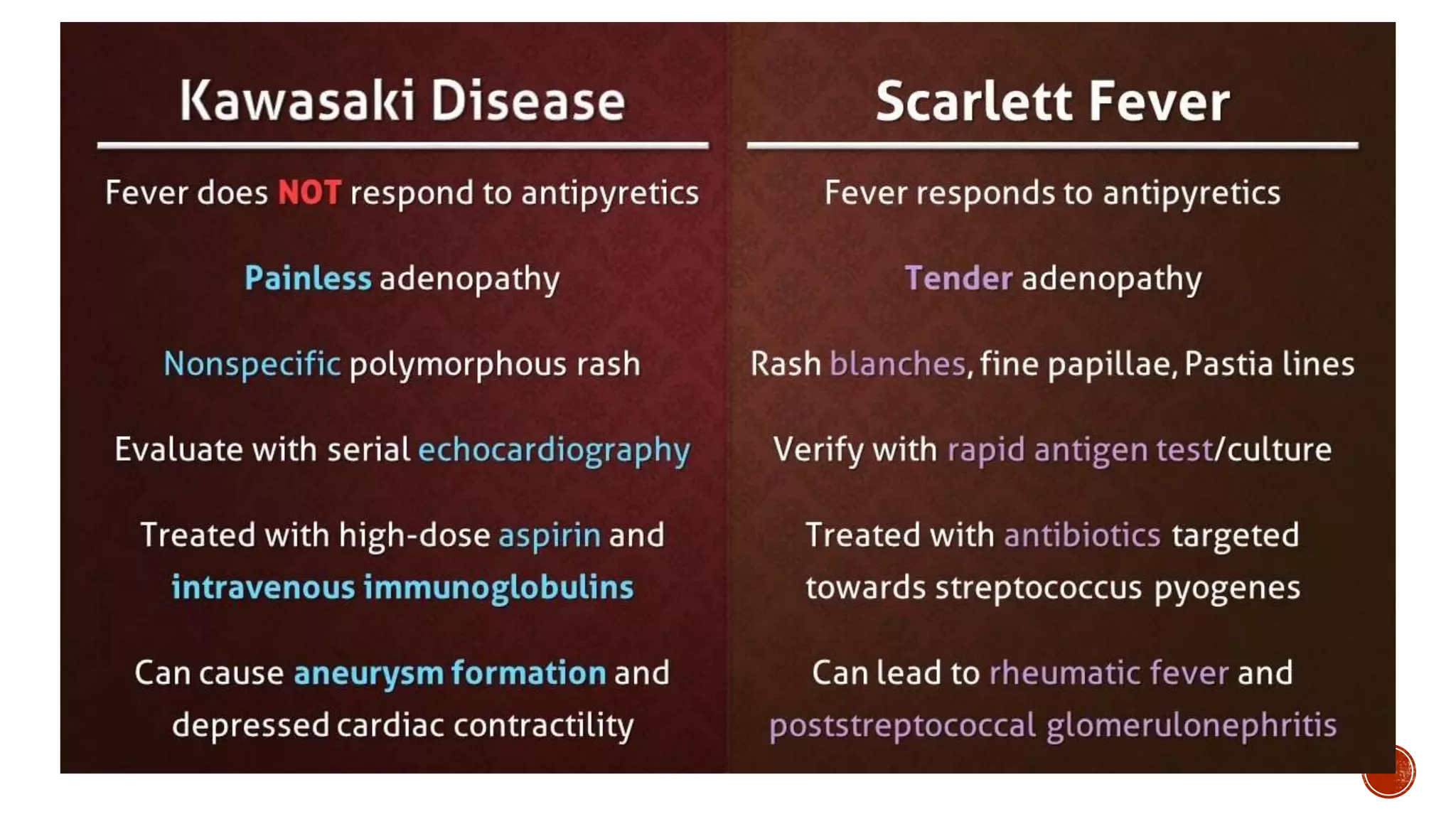
 vasculitis present with diffuse red rash and fever with lymphadenopathy,
strawberry tongue, conjunctivitis, edema of the extremities and peeling skin of
the fingers and toes. Symptoms generally follow a nonspecific respiratory or GI
illness.
 complication is development of coronary artery aneurysm and myocardial
infarction.
 Treatment is with high dose aspirin and IVIG.
 is a life threatening, generalized allergic reaction.
 The diagnosis should be highly suspected in an acute illness (developing over
minutes to hours) involving the skin and mucosal tissue.
 The patient may have diffuse hives, pruritus or generalized skin flushing, swollen
mucous membranes and at least one of the following: respiratory compromise OR
symptoms of hypoperfusion. Patients may also GI tract involvement.
 Treatment is with prompt delivery of epinephrine, volume resuscitation and
management of airway compromise or respiratory distress.
 antihistamines and glucocorticoids should NOT be used as initial treatment are NOT
life saving.
disorders are characterized by involvement of the dermal-epidermal junction causing
fluid-filled lesions to form.
DIC D gonococcal NF
Bullous
Contact
dermatitis
Burn
 is an infection primarily in children caused by Varicella-Zoster Virus and is transmitted
by aerosolized droplets from nasal secretions. The illness begins with a prodrome of
fever, malaise and pharyngitis followed by a generalized vesicular rash.
 The rash appears in crops over several days. The lesions are initially macular, but
evolve to become papular, vesicular and then eventually crust over. Lesions have an
erythematous base and are present in a variety of stages at one time.
 varicella vaccine, the incidence of complications has declined. The most common
complications include: soft tissue infections (42%), dehydration (11%) and neurologic
complications such as encephalitis and Reye syndrome (9%).
 that decreases in defenses against infections induced by NSAIDs could be due to
impairment of neutrophil blood cell function. increased risk of severe skin and soft
tissue complication of varicella in children.
 affecting children, which presents with fever, oral vesicles and skin lesions. The oral
vesicles are present on the buccal mucosa and tongue. On the skin, small blistering
lesions are distributed on the hands and feet but also can occur on the buttocks and
less commonly on the genitalia.
 The infection is spread by contact with nasal discharge, saliva, blister fluid or stool.
Coxsackie A is the etiologic agent.
 Management is primarily supportive consisting of oral analgesics and
encouraging adequate fluid intake.
 Impetigo is a common acute superficial bacterial skin infection (pyoderma). It is
characterized by pustules and honey-coloured crusted erosions ('school sores').
 Impetigo is most often caused by Staphylococcus aureus. Non-bullous impetigo can
also be caused by group A beta-haemolytic streptococcus (Streptococcus pyogenes).
Treatment includes topical antibiotics such as mupirocin,
retapamulin, and fusidic acid. Oral antibiotic therapy can
be used for impetigo with large bullae or when topical
therapy is impractical.
•Idiopathic livedo reticularis – the most common form of
livedo reticularis, completely benign condition of unknown
cause affecting mostly young women during the winter: It
is a lacy purple appearance of skin in extremities due to
sluggish venous blood flow. It may be mild, but ulceration
may occur later in the summer.
 The significance lies in its possible association with a variety of systemic disorders
Associated disorders may include coagulopathies, autoimmune diseases (including
systemic lupus erythematosus, dermatomyositis, rheumatoid arthritis, and
scleroderma), systemic vasculitides (including polyarteritis nodosa, Wegener's
granulomatosis, and Churg–Strauss syndrome), arterial occlusive disease, and
antiphospholipid antibody syndrome
Cold agglutaination
 Livedo racemosa describes a reddish-blue mottling of the skin in an irregular, reticular
pattern. It differs from the more common livedo reticularis by its shape. Livedo
racemosa consists of broken circular segments resulting in a seemingly larger pattern,
as opposed to the fine, regular, complete network of livedo reticularis. Livedo
racemosa results from permanent impairment of peripheral blood flow and, unlike
livedo reticularis, it persists on warming
 Given the combination of livedo racemosa, neurological symptoms, hypertension and
white matter changes on MRI brain, a diagnosis of Sneddon syndrome was
suspected.
 mostly thrombotic, blockages of skin vessels
Sneddon syndrome
 is an uncommon condition manifesting in a reticulated, or fishnet-like, pattern of
hyperpigmentation on the skin resulting from chronic exposure to low-levels of heat or
infrared radiation. The name comes from Latin and can be translated ‘redness from fire’.
 now being reported from exposure to space heaters, laptop computers batteries, heating
pads and heated seats in cars.
 Initially, lesions start as mottling or mildly pink patches and progress to the classic reddish
or violaceous to brown reticulated pattern. Multiple stages of the lesions are usually
present at the same time. The hyperpigmentation and lace-like patterns develop from
repeated injuries to superficial vascular networks and the outer layers of skin after
extended exposure to heat. Cellular changes in the skin resemble that of chronic sun
exposure with mild cellular atypia and increased elastic tissue in the dermis.
 This condition can look very similar to a vascular condition called livedo reticularis, which
can be associated with a serious underlying disease such as lupus.
heating pads on her abdomen
rash on his son’s anterior thighs that had persisted for 9
months. The macular, reticular, erythematous rash
hadevident hyperpigmentation bilaterally. laptop
computers
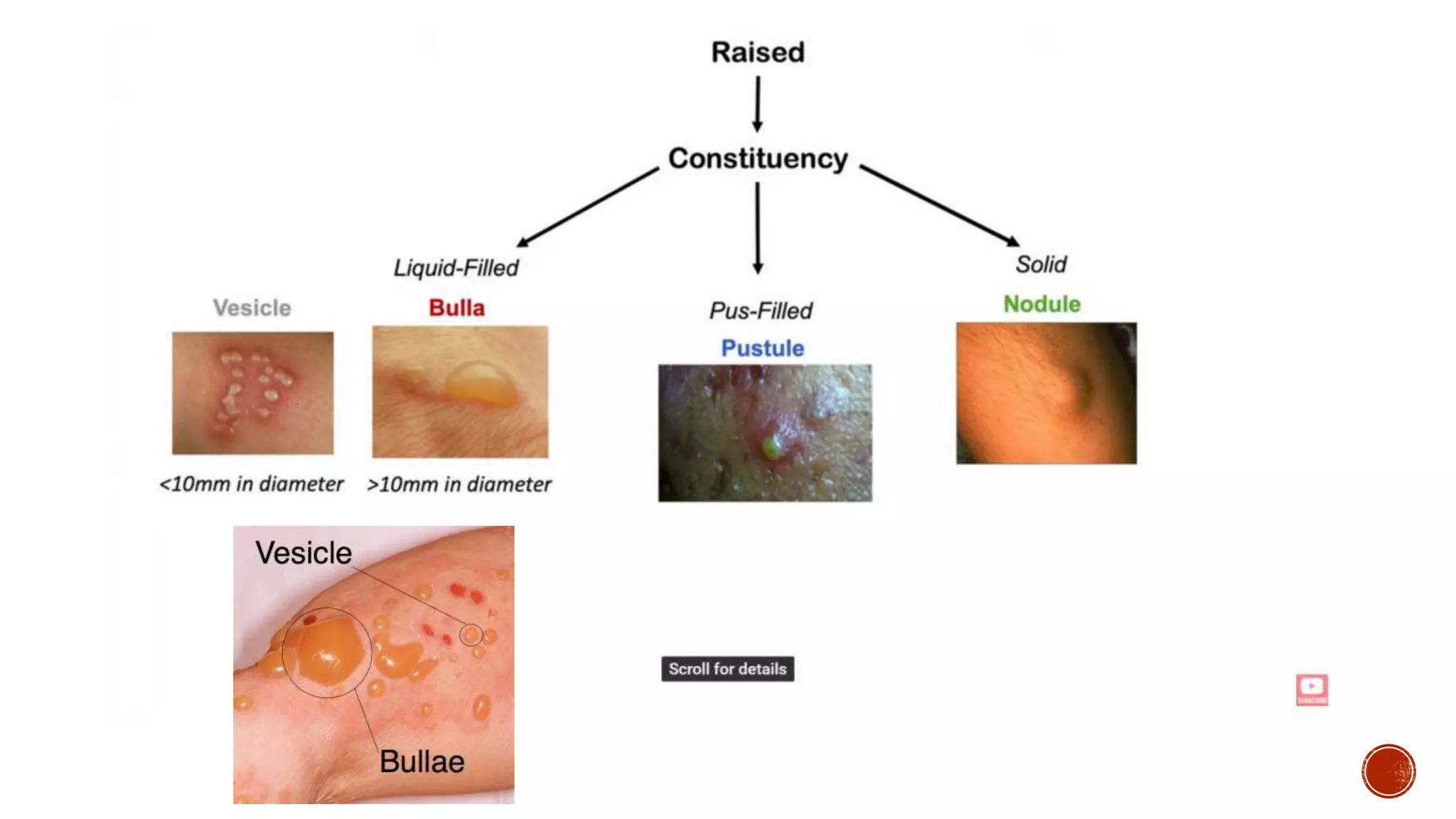
 NODULE - A palpable, solid lesion that is greater than 10 mm* in
diameter. Nodules are usually found in the dermal or subcutaneous tissue
 n immunocompromised patients, disseminated fungal infections may produce nodular
lesions. Disseminated candidiasis may present with diffuse nonerythematous nodules
in an immunocompromised patient who has fever and myalgias. Other fungal
infections to consider include cryptococcosis, blastomycosis, histoplasmosis,
coccidioidomycosis and sporotrichosis.2
SubQ mycosis
Nodule with central necrosis
 is an acute inflammatory and immunologic process involving the panniculus adiposus
(the fatty tissue layer underlying the skin).1 A number of etiologies have been
identified
 nodules are painful and tender.
Idiopathic (40 percent of cases)
Infectious causes
Beta-hemolytic
streptococci
Yersinia
species
Hepatitis C
virus
Mycobacterium
species
Chlamydia
trachomatis
Coccidioides
immitis
Noninfectious causes
Medications
Sulfonamides
Oral
contraceptives
Systemic lupus erythematosus
Sarcoidosis
Ulcerative colitis
Behçet's syndrome
Pregnancy
Lung CA met
Chronic
meningiococcemia
Polyarteritis Nodosa
Sweet Syndrome
Approach to Skin rash

Approach to Skin rash

  • 1.
    Prepared By Marwanmonzer Nassar
  • 2.
     A rashis a change of the Skin which affects its color, appearance, or texture.  The causes of a rash are numerous, make the evaluation extremely difficult. Need thorough history and complete physical examination.  Rashes can be categorized as maculopapular ,petechial, diffusely erythematous with desquamation, vesiculobullous pustular and nodular.  Etiology :Infectious, Drug reaction ,Allergy , Autoimmune and malignancy
  • 3.
    SICK  In theER  Sick?  Treat aggressively!  The skin findings may help clue you in to the source of the sickness, but don’t let pontification of the unusual rash delay your rapid administration of necessary care! Historical and physical “red flags” in a patient with an unknown rash include:[1] Severe pain Very old or young age Immunosuppressed New medication Fever Toxic appearance Hypotension Mucosal lesions
  • 5.
     Full physicalexam, especially a. Entire body surface, mucous membranes, conjunctiva, hair, and nails  look for signs of systemic disease, distribution (location of rash), pattern (e.g., flexural areas, sun-exposed areas)  Describe the rash and Note secondary lesions/changes
  • 6.
     looking ina kid’s mouth can be challenging, but this step is very important!  ITP with Wet Purpura (mucous membrane involvement) * risk of spontaneous bleeding.  Koplick’s Spots .  Even finding herpangina or gingivostomatitis may impact your plan.  Gingival hyperplasia- AML Gingival hyperplasia herpangina Koplick’s Spots .
  • 13.
    DISTRIBUTION  the rashof scarlet fever becomes confluent and forms bright red lines in the skin creases of the neck, armpits and groins (Pastia's lines)  the vesicles of chicken pox seem to follow the hollows of the body.  Symmetry: e.g., Zoster usually only affects one side of the body and does not cross the midline.
  • 14.
    DISTRIBUTION  Rash ofthe palms of the hands and soles of the feet (secondary syphilis, rickettsia , guttate psoriasis, hand, foot and mouth disease, keratoderma blennorrhagicum); secondary syphilis rickettsia hand, foot and mouth disease
  • 17.
     This isthe hardest part… admitting to the family that you are not sure what the cause of the rash is can be challenging.  we are appropriately avoiding the addition of an incorrect “label” (diagnosis) to the patient.  In the next several hours to days, your ability to make a more accurate diagnosis may change.  Give good anticipatory guidance on what specific things they need to monitor for and encourage repeat evaluation in the next 12-24 hours.
  • 18.
     The mostcommon types of rashes are maculopapular and they have the broadest differential diagnosis.  They are usually seen with viral illnesses but can also be seen in certain bacterial infections, drug reactions, and immune-mediated syndromes.  These rashes are characterized by a combination of two types of lesions: macules, and papules
  • 20.
     are commonin childhood. The words 'exanthema' and 'anthos' mean 'breaking out' and 'flower' in Greek, respectively. Similarly, a child breaking out with a viral exanthem may be likened to a flower bursting into bloom.  An exanthem is any eruptive skin rash that may be associated with fever or other systemic symptoms. Causes include infectious pathogens, medication reactions and, occasionally, a combination of both.  In children, exanthems are most often related to infection and, of these, viral infections are the most common.
  • 21.
     Over 100years ago, a group of characteristic childhood eruptions were described and numbered from one to six: measles, scarlet fever, rubella, erythema infectiosum and roseola infantum.
  • 22.
    Step1 not sick Step2 4-year-old presents with a 1 week history of cough, runny nose, fever, sore throat and red eyes. Yesterday, developed a red rash which started on her face and has spread to her trunk. Her mother would like to know if the rash is from her new medication. Augmentin 24hrs ago.has never received vaccinations due to her mother’s fear regarding autism. Step 3 oral exam Step 4 maculopapular
  • 23.
     a. DrugEruption (Too soon for an exanthematous drug eruption. Refer to the module on drug reactions for more information)  b. Erythema Infectiosum (Eruption begins with bright red cheeks followed by a reticular eruption on the trunk and extremities)  c. Measles  d. Roseola (Tends to occur in younger children with high fevers preceding a sudden rash that begins on the trunk)  e. Rubella (Rash tends to spread more quickly, covering the body in 24hrs)
  • 24.
     girl 12yrsShe has been feeling unwell for the last 6 days with fever, myalgias, cough and sore throat.  She also reports some tender lymph nodes on her neck.  She has taken ibuprofen for the myalgias and fever, which has helped. A rash started on her face yesterday and is now spreading to her neck and trunk.  never received the MMR
  • 25.
     a. DrugEruption (Less likely, but should get more information about NSAID use.)  b. Erythema Infectiosum (More common in children. Eruption begins with bright red cheeks followed by a reticular eruption on the trunk and extremities.)  c. Measles (Rash tends to spread over a period of days, not in 24 hours like this case.)  d. Roseola (Occurs in young children with high fevers preceding a sudden rash that begins on the trunk.)  e. Rubella German measles, “3-day measles” Maculopapular similar to measles’s but less intensely red (Rubella is a Latin word for "little red")
  • 26.
     10-year-old boydeveloped low grade fevers, red cheeks and a new rash on his body. He is up to date with his vaccinations
  • 27.
     a. DrugEruption (No exposure to medications)  b. Erythema Infectiosum  c. Measles (Children with measles tend to appear more ill; Keith has been vaccinated)  d. Roseola (Tends to occur in younger children with high fevers preceding a sudden rash that begins on the trunk)  e. Rubella (Keith has been vaccinated; exanthem usually starts with erythematous macules and papules on the face)
  • 28.
     His motherstates that his older brother has a rash mostly involving the hands and feet. Do you think he has parvovirus?  Yes, he probably has papulopurpuric gloves-and socks syndrome
  • 29.
     a 9-month-oldboy who presents for evaluation of fever and rash. His mother noted a fever of 40˚C two days ago. He appeared well and was eating and playing normally, so his mother was not alarmed. After the fever resolved, he developed a red rash that progressed rapidly over the past 24 hours.  what is the most likely diagnosis? a. Drug Eruption b. Erythema Infectiosum c. Measles d. Roseola e. Rubella rose-like rash
  • 30.
     o Scarletfever  o Typhoid fever  o Meningococcemia Early Meningococcemia
  • 31.
     Is adisease resulting from a group A streptococcus (group A strep) infection, also known as Streptococcus pyogenes. The signs and symptoms include a sore throat, fever, headaches, swollen lymph nodes, and a characteristic rash.  These toxins are also known as “superantigens” because they are able to cause an extensive immune response
  • 35.
     Typhoid fever,also known as enteric fever, is a potentially fatal multisystemic illness caused primarily by Salmonella enterica serotype typhi and, to a lesser extent, S enterica serotypes paratyphi A, B, and C. The terms typhoid and enteric fever are commonly used to describe both major serotypes.  Typhoid fever has a wide variety of presentations that range from an overwhelming multisystemic illness to relatively minor cases of diarrhea with low-grade fever.
  • 37.
     Is rashcaused by an adverse reaction to a medication. Most drug eruptions are unsightly but resolve on their own once the causative medication is identified and discontinued.  Maculopapular eruptions are the most common type of reaction pattern. develop 3e14 days after exposure. Onset is usually on the trunk and chest. The rash can spread to the limbs but usually spares the mucosae and face  There are usually no constitutional features, and resolution after skin peeling can be expected within 10 days.
  • 39.
     is acondition that can either present as a self-limited rash (EM minor) or progress to include the mucous membranes and become life threatening (EM major).  EM is an autoimmune process that follows infection with herpes simplex, mycoplasma or fungal diseases or drug exposure such as sulfa drugs, anticonvulsants and antibiotics.  EM minor presents lesions typically begin as pink or red papules, which can then become plaques. targetoid lesions on the extremities that then resolve in 1-2 weeks. Target lesions involve the palms, soles, dorsa of hands and feet, face, extensor surfaces of the extremities.  EM minor requires only symptomatic treatment. EM major, on the other hand, is life threatening and is defined by mucous membrane involvement. *discontinuing the offending agent and fluid management, analgesics, wound care.  Dermatology consult should be obtained and diagnosis is confirmed with skin biopsy.
  • 40.
    The three mainsymptoms of serum sickness include fever, rash, and painful swollen joints .
  • 41.
     The threemain symptoms of serum sickness include fever, rash, and painful swollen joints.  Immune complex complex .  Deposited in vessels and joints  Onset in 1 to 2 weeks may days if previous exposure occurred  Causes antivenum /immune globulins /passive immunization  Serum sickness like is less sever no complex only joint and skin  Due to drug or infections immunization
  • 43.
     Result fromleakage of blood from vessel into surrounding tissues (skin or mucosal membranes)  Because blood is outside vessel, lesions are no blanchable Can be palpable or nonpalpable: palpable caused by inflammation/destruction of vessel walls (i.e., vasculitis)  History: I. Establish time course and progression 2. Presence of fever (infectious more likely) 3. Age (younger ages make bleeding disorders more likely) 4. Location and type of lesion a. Palpable purpura in areas of pressure (e.g., waistband or sock line) or dependency (e.g., over buttocks and lower extremities) is classic for Henoch- Schonlein purpura (HSP)
  • 45.
     Child cameat the emergency department with high fever (40°C), vomiting and nasal congestion. She had no abnormalities on physical exam and was discharged home with diagnosis of a probable viral infection, after excluding urinary infection.  Ten hours later, the infant was readmitted with purpuric lesions and prostration rapidly presenting with labial cyanosis, capillary refill of 6 s, tachycardia, hypotension and anuria.
  • 47.
     fever pluspetechial/purpuric rash equals meningococcemia until proven otherwise and the patient should be placed on respiratory and contact isolation immediately.  The rash is initially erythematous, maculopapular and appears first on the wrist and ankles, then becomes palpable petechiae, mimicking Rocky Mountain spotted fever. The rash quickly spreads to the rest of the body coalescing into palpable purpura. Diagnosis is confirmed by positive cultures of the skin, blood or CSF.  Treatment should begin immediately with ceftriaxone if suspected. Vancomycin should be added to cover resistant strep pneumoniae.  Prophylaxis is necessary for anyone potentially exposed to respiratory secretions with Rifampin, Ciprofloxacin or Ceftriaxone.
  • 49.
     Rocky Mountainspotted fever (RMSF): is a tick-borne illness caused by Rickettsia rickettsii. Mortality exceeds 30% and increases when untreated or when treatment is delayed.  The skin lesions begin as a maculopapular rash on wrists and ankles before becoming palpable petechiae and then spreads to the rest of the body. Patients are febrile and toxic appearing and often have a history of travel. Patients complain of fever, headaches, myalgias, and malaise. Calf and abdominal pain is also common.  Treatment is with doxycycline in all non-pregnant patients, even children.
  • 50.
     is anautoimmune vasculitis that primarily affects children  HSP is an acute, self-limited disease characterized by IgA and C3 deposition preceded by an infection or drug exposure. Patients usually present with palpable purpura on the legs and buttocks and complain of joint and abdominal pain.  Some children will develop intussusception as a complication and may appear toxic. Nephritis (hematuria and proteinuria) occurs in about 40% of patients, but only 1% will develop end-stage renal disease.  treatment is with corticosteroids and/or IVIG.
  • 52.
    ERYTHEMATOUS RASHES  Erythematousrashes are characterized by diffuse red skin from capillary congestion, mimicking a bad sunburn. These rashes can occur in a variety of inflammatory and infectious conditions, some of which can be rapidly fatal.
  • 53.
  • 54.
     occurs inchildren <5 years old and presents as a red rash with eventual sloughing of the epidermis.  It is caused by certain strains of Staphylococcus aureus, which release an exfoliative toxin.  Symptoms include abrupt fever, diffuse, blanching skin erythema usually beginning on the neck, axillae and groin associated with skin tenderness. Mucous membranes are NOT involved.  Patients may develop flaccid, loose bullae, but because epidermal cleavage is very superficial, these fragile bullae often are not intact at the time of presentation  Treatment includes antibiotics nafcillin or oxacillin, and Vancomycin in areas with aCA- MRSA.  Patients will require diligent fluid and electrolyte management and wound care, generally in a burn unit.
  • 55.
     vasculitis presentwith diffuse red rash and fever with lymphadenopathy, strawberry tongue, conjunctivitis, edema of the extremities and peeling skin of the fingers and toes. Symptoms generally follow a nonspecific respiratory or GI illness.  complication is development of coronary artery aneurysm and myocardial infarction.  Treatment is with high dose aspirin and IVIG.
  • 56.
     is alife threatening, generalized allergic reaction.  The diagnosis should be highly suspected in an acute illness (developing over minutes to hours) involving the skin and mucosal tissue.  The patient may have diffuse hives, pruritus or generalized skin flushing, swollen mucous membranes and at least one of the following: respiratory compromise OR symptoms of hypoperfusion. Patients may also GI tract involvement.  Treatment is with prompt delivery of epinephrine, volume resuscitation and management of airway compromise or respiratory distress.  antihistamines and glucocorticoids should NOT be used as initial treatment are NOT life saving.
  • 57.
    disorders are characterizedby involvement of the dermal-epidermal junction causing fluid-filled lesions to form.
  • 58.
    DIC D gonococcalNF Bullous Contact dermatitis Burn
  • 59.
     is aninfection primarily in children caused by Varicella-Zoster Virus and is transmitted by aerosolized droplets from nasal secretions. The illness begins with a prodrome of fever, malaise and pharyngitis followed by a generalized vesicular rash.  The rash appears in crops over several days. The lesions are initially macular, but evolve to become papular, vesicular and then eventually crust over. Lesions have an erythematous base and are present in a variety of stages at one time.  varicella vaccine, the incidence of complications has declined. The most common complications include: soft tissue infections (42%), dehydration (11%) and neurologic complications such as encephalitis and Reye syndrome (9%).  that decreases in defenses against infections induced by NSAIDs could be due to impairment of neutrophil blood cell function. increased risk of severe skin and soft tissue complication of varicella in children.
  • 61.
     affecting children,which presents with fever, oral vesicles and skin lesions. The oral vesicles are present on the buccal mucosa and tongue. On the skin, small blistering lesions are distributed on the hands and feet but also can occur on the buttocks and less commonly on the genitalia.  The infection is spread by contact with nasal discharge, saliva, blister fluid or stool. Coxsackie A is the etiologic agent.  Management is primarily supportive consisting of oral analgesics and encouraging adequate fluid intake.
  • 62.
     Impetigo isa common acute superficial bacterial skin infection (pyoderma). It is characterized by pustules and honey-coloured crusted erosions ('school sores').  Impetigo is most often caused by Staphylococcus aureus. Non-bullous impetigo can also be caused by group A beta-haemolytic streptococcus (Streptococcus pyogenes). Treatment includes topical antibiotics such as mupirocin, retapamulin, and fusidic acid. Oral antibiotic therapy can be used for impetigo with large bullae or when topical therapy is impractical.
  • 63.
    •Idiopathic livedo reticularis– the most common form of livedo reticularis, completely benign condition of unknown cause affecting mostly young women during the winter: It is a lacy purple appearance of skin in extremities due to sluggish venous blood flow. It may be mild, but ulceration may occur later in the summer.
  • 65.
     The significancelies in its possible association with a variety of systemic disorders Associated disorders may include coagulopathies, autoimmune diseases (including systemic lupus erythematosus, dermatomyositis, rheumatoid arthritis, and scleroderma), systemic vasculitides (including polyarteritis nodosa, Wegener's granulomatosis, and Churg–Strauss syndrome), arterial occlusive disease, and antiphospholipid antibody syndrome Cold agglutaination
  • 66.
     Livedo racemosadescribes a reddish-blue mottling of the skin in an irregular, reticular pattern. It differs from the more common livedo reticularis by its shape. Livedo racemosa consists of broken circular segments resulting in a seemingly larger pattern, as opposed to the fine, regular, complete network of livedo reticularis. Livedo racemosa results from permanent impairment of peripheral blood flow and, unlike livedo reticularis, it persists on warming  Given the combination of livedo racemosa, neurological symptoms, hypertension and white matter changes on MRI brain, a diagnosis of Sneddon syndrome was suspected.
  • 67.
     mostly thrombotic,blockages of skin vessels Sneddon syndrome
  • 68.
     is anuncommon condition manifesting in a reticulated, or fishnet-like, pattern of hyperpigmentation on the skin resulting from chronic exposure to low-levels of heat or infrared radiation. The name comes from Latin and can be translated ‘redness from fire’.  now being reported from exposure to space heaters, laptop computers batteries, heating pads and heated seats in cars.  Initially, lesions start as mottling or mildly pink patches and progress to the classic reddish or violaceous to brown reticulated pattern. Multiple stages of the lesions are usually present at the same time. The hyperpigmentation and lace-like patterns develop from repeated injuries to superficial vascular networks and the outer layers of skin after extended exposure to heat. Cellular changes in the skin resemble that of chronic sun exposure with mild cellular atypia and increased elastic tissue in the dermis.  This condition can look very similar to a vascular condition called livedo reticularis, which can be associated with a serious underlying disease such as lupus.
  • 69.
    heating pads onher abdomen rash on his son’s anterior thighs that had persisted for 9 months. The macular, reticular, erythematous rash hadevident hyperpigmentation bilaterally. laptop computers
  • 70.
     NODULE -A palpable, solid lesion that is greater than 10 mm* in diameter. Nodules are usually found in the dermal or subcutaneous tissue  n immunocompromised patients, disseminated fungal infections may produce nodular lesions. Disseminated candidiasis may present with diffuse nonerythematous nodules in an immunocompromised patient who has fever and myalgias. Other fungal infections to consider include cryptococcosis, blastomycosis, histoplasmosis, coccidioidomycosis and sporotrichosis.2 SubQ mycosis Nodule with central necrosis
  • 71.
     is anacute inflammatory and immunologic process involving the panniculus adiposus (the fatty tissue layer underlying the skin).1 A number of etiologies have been identified  nodules are painful and tender. Idiopathic (40 percent of cases) Infectious causes Beta-hemolytic streptococci Yersinia species Hepatitis C virus Mycobacterium species Chlamydia trachomatis Coccidioides immitis Noninfectious causes Medications Sulfonamides Oral contraceptives Systemic lupus erythematosus Sarcoidosis Ulcerative colitis Behçet's syndrome Pregnancy
  • 73.