sketching social crm


         esteban kolsky
               thinkJar
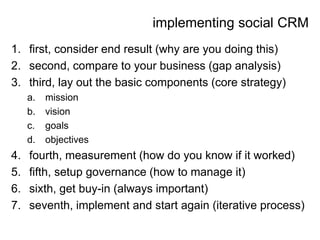
implementing social CRM
1. first, consider end result (why are you doing this)
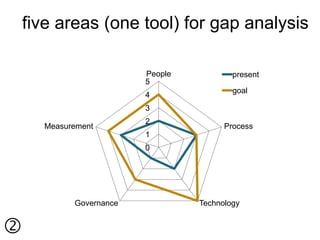
2. second, compare to your business (gap analysis)
3. third, lay out the basic components (core strategy)
     a.   mission
     b.   vision
     c.   goals
     d.   objectives
4.   fourth, measurement (how do you know if it worked)
5.   fifth, setup governance (how to manage it)
6.   sixth, get buy-in (always important)
7.   seventh, implement and start again (iterative process)
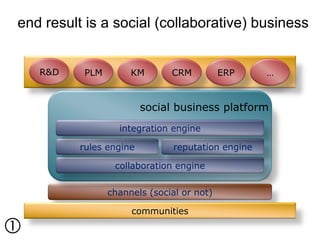
end result is a social (collaborative) business


    R&D    PLM        KM       CRM          ERP     …


                         social business platform
                   integration engine

          rules engine          reputation engine

                  collaboration engine

                 channels (social or not)

                      communities



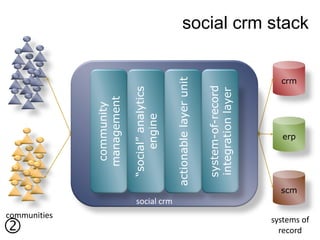
       communities
                                          community
                                         management

                                        “social” analytics
                                             engine


                     social crm
                                    actionable layer unit

                                        system-of-record
                                        integration layer
                                               erp
                                                             crm


                                  scm


  record
                                                                   social crm stack


systems of
five areas (one tool) for gap analysis

                       People           present
                       5
                                        goal
                       4
                       3
                       2
    Measurement                       Process
                       1
                       0


          Governance            Technology



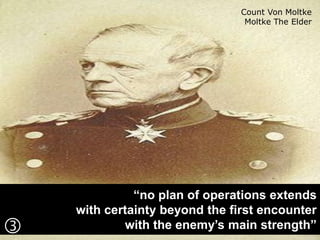
Count Von Moltke
                                 Moltke The Elder


              “no plan of operations extends
    with certainty beyond the first encounter
           with the enemy’s main strength”
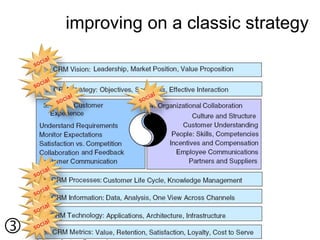
improving on a classic strategy


                          6
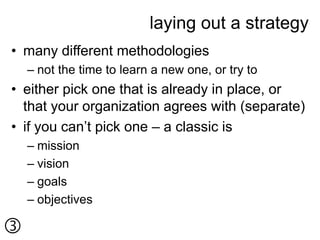
laying out a strategy
• many different methodologies
    – not the time to learn a new one, or try to
• either pick one that is already in place, or
  that your organization agrees with (separate)
• if you can’t pick one – a classic is
    – mission
    – vision
    – goals
    – objectives


need to create a strategy?
• mission – business needs
• vision – what does it look like when done
• goals – numbers to feed mission, vision
    – what numbers will show if done right
• objectives – other non-number benefits
    – customer satisfaction, employee retention
• make sure it flows forward
    – measurement – what, when, how, and why
      • feeding the goals
    – governance – operations, detailed document

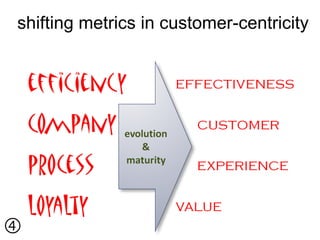
shifting metrics in customer-centricity



before we start with measurement
• there are no new metrics to monitor,
  measure, or worry about (effectiveness)
• new metrics are operational in nature,
  efficiency-centric (new channel, right?)
• social roi, or the “return on…” anything is a
  sleigh of hand
• continue the focus on kpi (always) and make
  sure you correlate efficiency to effectiveness
  and strategic


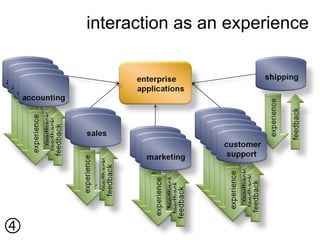
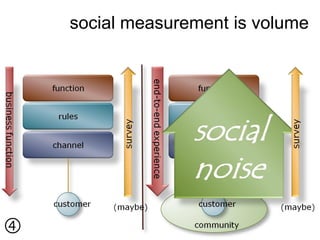
interaction as an experience



social measurement is volume



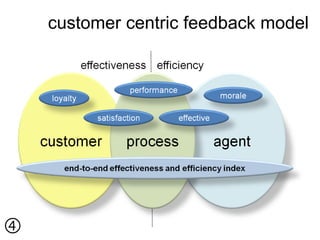
customer centric feedback model



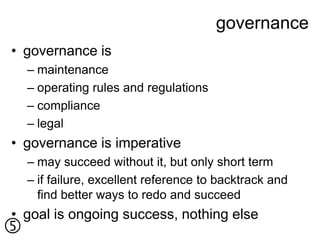
governance
• governance is
    – maintenance
    – operating rules and regulations
    – compliance
    – legal
• governance is imperative
    – may succeed without it, but only short term
    – if failure, excellent reference to backtrack and
      find better ways to redo and succeed
• goal is ongoing success, nothing else

management buy-in
• not about roi
    – Justifying project management doesn’t want
    – focus on solving pain, problem
    – bottom line it
      • make money (new revenue, tied to tracking)
      • save money (real cost savings, use examples)
      • no intangibles (gravy, cherry on top, awesome)
• find and retain executive sponsors
    – shared personal goals, beyond survival
• small-piece-by-small-piece approach

Its’ the journey, not the destination
                              16

Sketching Social CRM

  • 1.
    sketching social crm esteban kolsky thinkJar
  • 2.
    implementing social CRM 1.first, consider end result (why are you doing this) 2. second, compare to your business (gap analysis) 3. third, lay out the basic components (core strategy) a. mission b. vision c. goals d. objectives 4. fourth, measurement (how do you know if it worked) 5. fifth, setup governance (how to manage it) 6. sixth, get buy-in (always important) 7. seventh, implement and start again (iterative process)
  • 3.
    end result isa social (collaborative) business R&D PLM KM CRM ERP … social business platform integration engine rules engine reputation engine collaboration engine channels (social or not) communities 
  • 4.
    communities community management “social” analytics engine social crm actionable layer unit system-of-record integration layer erp crm scm record social crm stack systems of
  • 5.
    five areas (onetool) for gap analysis People present 5 goal 4 3 2 Measurement Process 1 0 Governance Technology 
  • 6.
    Count Von Moltke Moltke The Elder “no plan of operations extends with certainty beyond the first encounter  with the enemy’s main strength”
  • 7.
    improving on aclassic strategy  6
  • 8.
    laying out astrategy • many different methodologies – not the time to learn a new one, or try to • either pick one that is already in place, or that your organization agrees with (separate) • if you can’t pick one – a classic is – mission – vision – goals – objectives 
  • 9.
    need to createa strategy? • mission – business needs • vision – what does it look like when done • goals – numbers to feed mission, vision – what numbers will show if done right • objectives – other non-number benefits – customer satisfaction, employee retention • make sure it flows forward – measurement – what, when, how, and why • feeding the goals – governance – operations, detailed document 
  • 10.
    shifting metrics incustomer-centricity 
  • 11.
    before we startwith measurement • there are no new metrics to monitor, measure, or worry about (effectiveness) • new metrics are operational in nature, efficiency-centric (new channel, right?) • social roi, or the “return on…” anything is a sleigh of hand • continue the focus on kpi (always) and make sure you correlate efficiency to effectiveness and strategic 
  • 12.
    interaction as anexperience 
  • 13.
  • 14.
  • 15.
    governance • governance is – maintenance – operating rules and regulations – compliance – legal • governance is imperative – may succeed without it, but only short term – if failure, excellent reference to backtrack and find better ways to redo and succeed • goal is ongoing success, nothing else 
  • 16.
    management buy-in • notabout roi – Justifying project management doesn’t want – focus on solving pain, problem – bottom line it • make money (new revenue, tied to tracking) • save money (real cost savings, use examples) • no intangibles (gravy, cherry on top, awesome) • find and retain executive sponsors – shared personal goals, beyond survival • small-piece-by-small-piece approach 
  • 17.
    Its’ the journey,not the destination  16