Six Elements of a Contract

        Nikki Sinatra
          Crockett
          Period 3
The Offer
 Offer- A proposal by one party to another
 to create a legal binding agreement.
              Three elements;
    Offer- The proposal to one person.
   Offeror- Makes the offer with serious
                     intent.
 Offeree- The person the offer is made to.


http://www.youtube.com/watch?v=Gx8H4Ad
                    8j8o
Acceptance

 Acceptance- Unqualified willingness to go
  along with the offer.
 Mirror Image Rule- An offer is accepted
  exactly as is without an modifications
  (changes).
             5 ways to terminate;
              Rejection by the offeree
            Counter-offer by the offeree
             Revocation by the offeror
                   Lapse of time
           Death of the offeror or offeree
Genuine Agreement
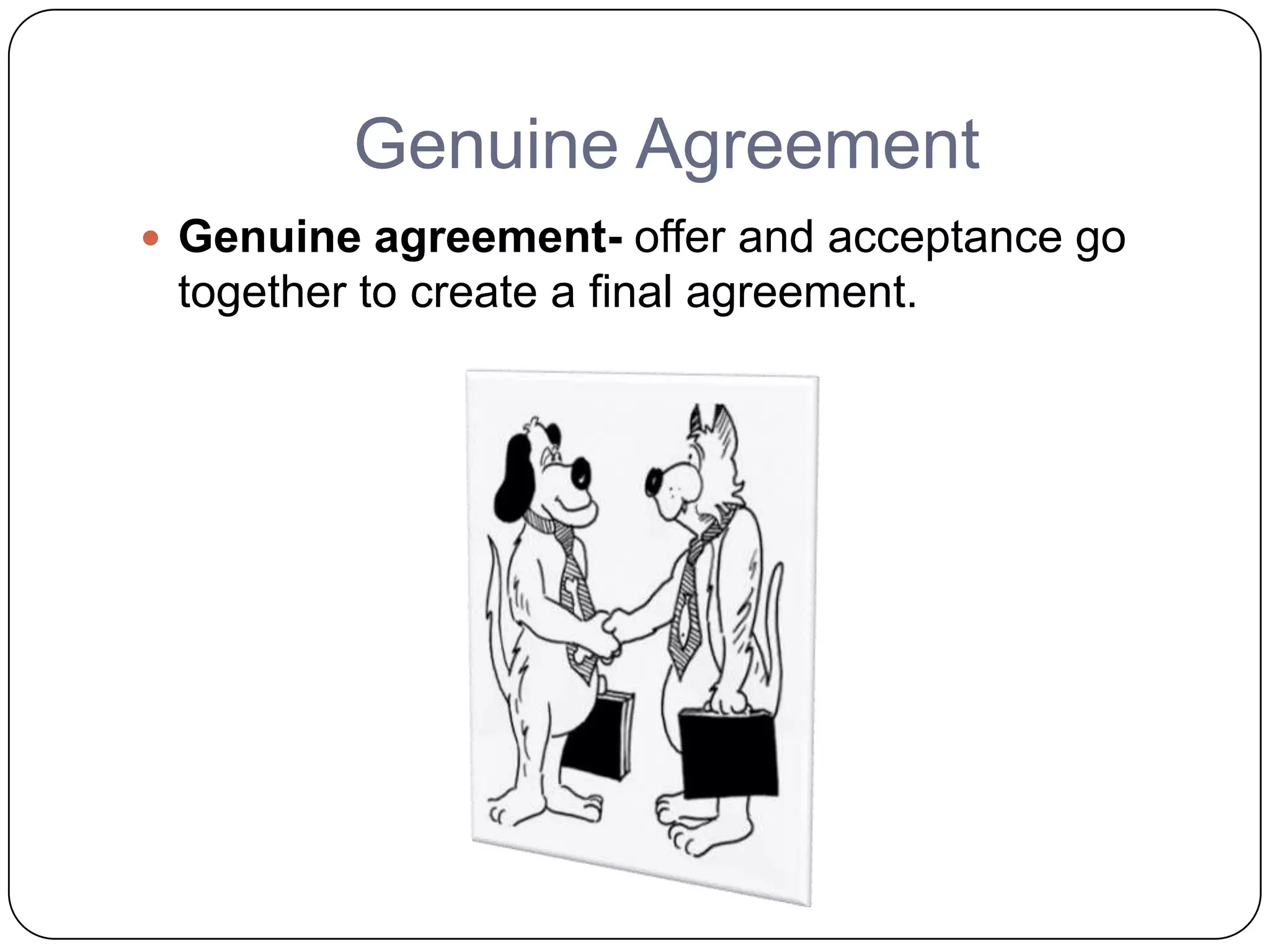
 Genuine agreement- offer and acceptance go
 together to create a final agreement.
Genuine Agreement
  Unilateral Mistake- Mistake one party makes.
                       2 Types;
 Nature of agreement-Signing a contract you don’t
              understand or have not read.
 Identity of a party- Bound by contract with face to
                     face meetings.
 Bilateral Mistake- Mistakes both parties make.
                        2 Types
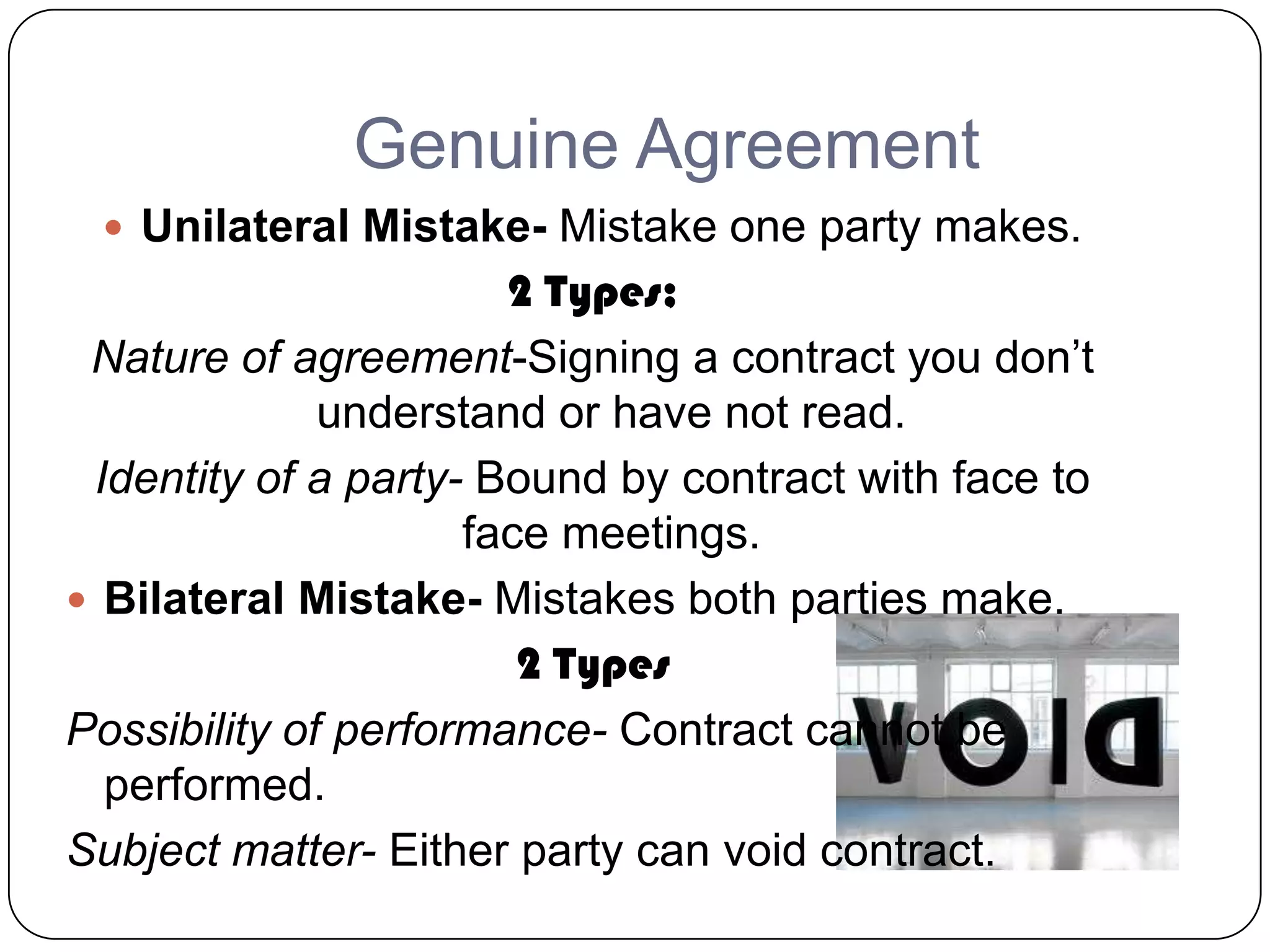
Possibility of performance- Contract cannot be
  performed.
Subject matter- Either party can void contract.
Genuine Agreement
 Fraud- Wrongful or criminal deception intended to
    result in financial or personal gain.
   Innocent Misrepresentation- Make an innocent
    statement of supposed fact that turns out to be false.
   Duress- Overcoming a person’s will by use of force or
    by threat of force or bodily harm.
   Economic Duress is a threat to a persons business or
    income.
   Under Influence is an unfair persuasive pressure
    within a relationship of trust.
Capacity
 Capacity- Legal ability to enter a contract.
Minors can enter a contract but when they turn of
   legal age (18) they can ratify the agreement.
Mentally Impaired- When declared insane, contract is
                  automatically voided.
Intoxicated- Not understanding the nature, purpose, or
               effect of contract; voided.
         Convicts & Aliens- Certain limitations.
Consideration
 Consideration- The exchange of benefits and
 detriments by the parties to a contact.
Benefit- Something a party receives in the agreement.
Detriment- Something a party gives up in the
 agreement.
Consideration
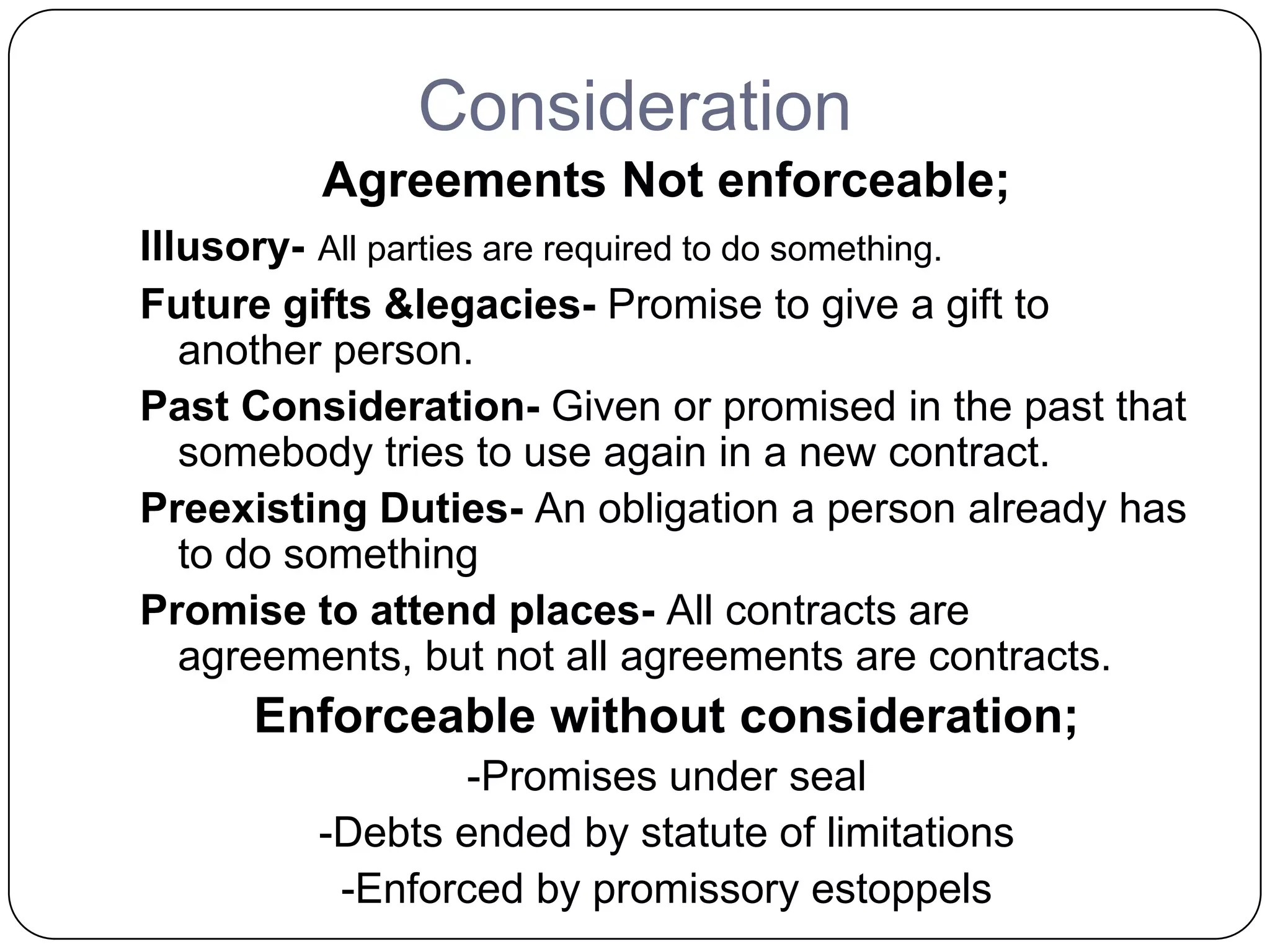
         Agreements Not enforceable;
Illusory- All parties are required to do something.
Future gifts &legacies- Promise to give a gift to
   another person.
Past Consideration- Given or promised in the past that
   somebody tries to use again in a new contract.
Preexisting Duties- An obligation a person already has
   to do something
Promise to attend places- All contracts are
   agreements, but not all agreements are contracts.
     Enforceable without consideration;
                 -Promises under seal
         -Debts ended by statute of limitations
          -Enforced by promissory estoppels
Legality
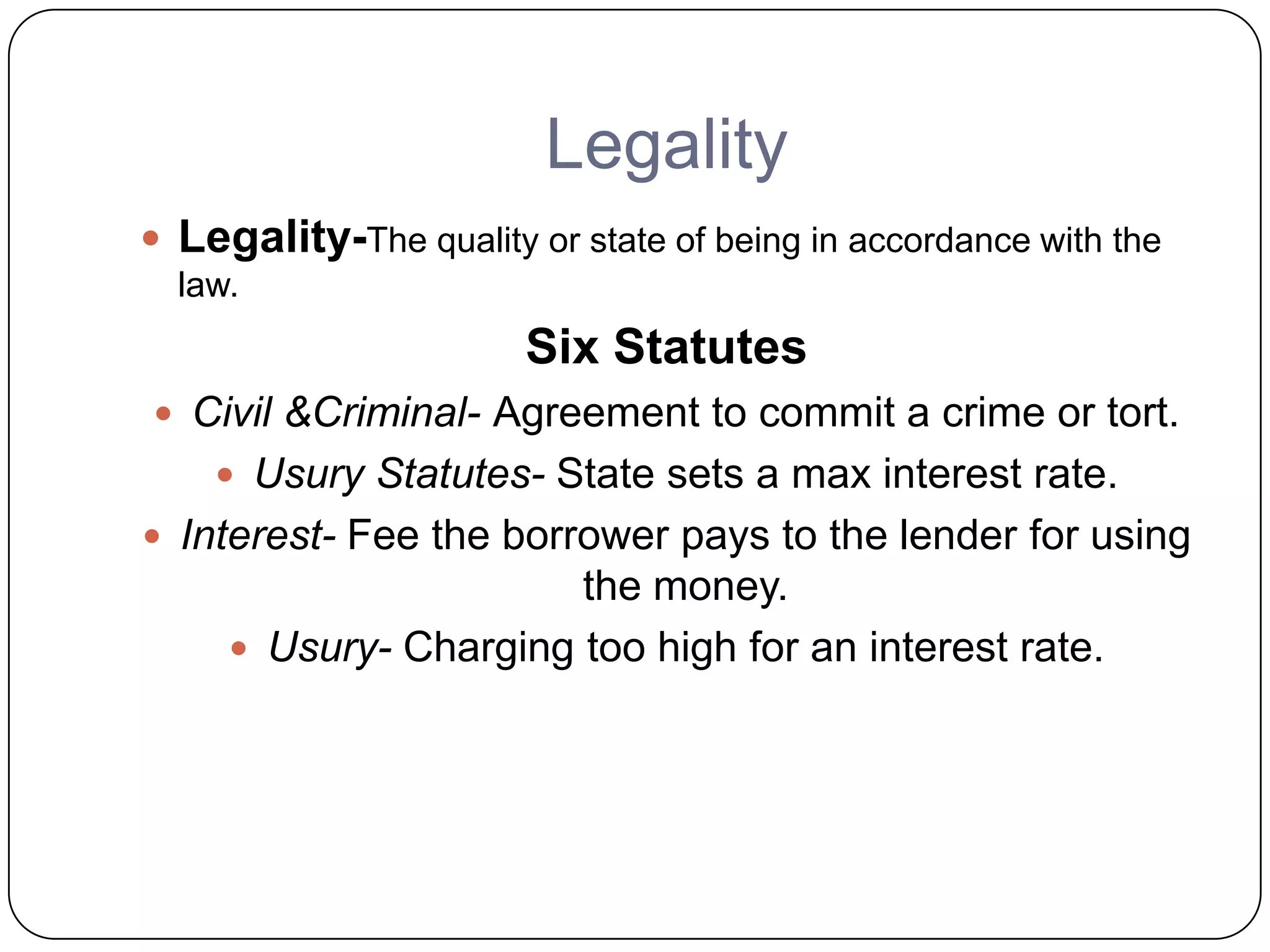
 Legality-The quality or state of being in accordance with the
  law.
                       Six Statutes
 Civil &Criminal- Agreement to commit a crime or tort.
     Usury Statutes- State sets a max interest rate.
 Interest- Fee the borrower pays to the lender for using
                       the money.
      Usury- Charging too high for an interest rate.
Legality
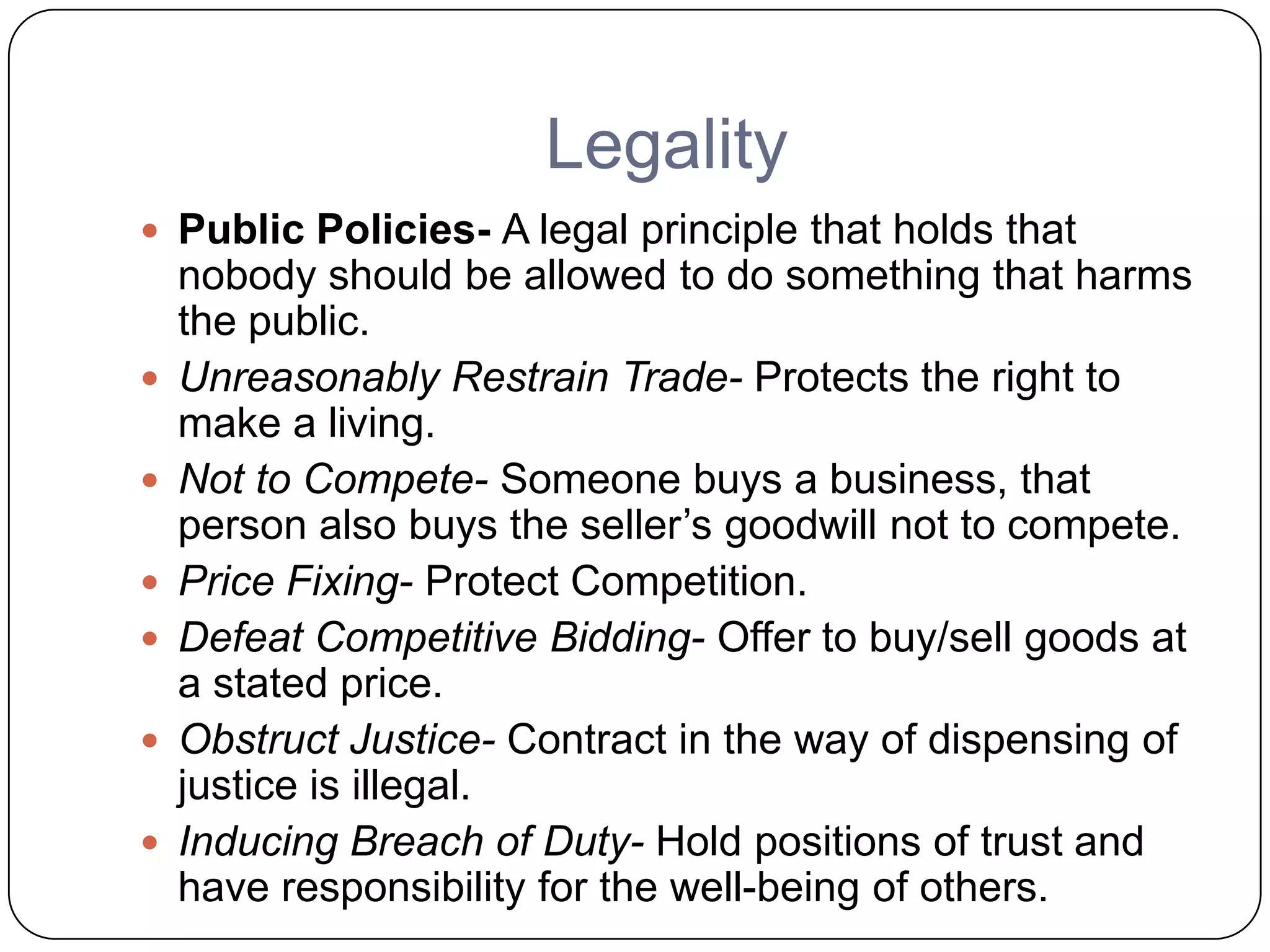
 Public Policies- A legal principle that holds that
    nobody should be allowed to do something that harms
    the public.
   Unreasonably Restrain Trade- Protects the right to
    make a living.
   Not to Compete- Someone buys a business, that
    person also buys the seller’s goodwill not to compete.
   Price Fixing- Protect Competition.
   Defeat Competitive Bidding- Offer to buy/sell goods at
    a stated price.
   Obstruct Justice- Contract in the way of dispensing of
    justice is illegal.
   Inducing Breach of Duty- Hold positions of trust and
    have responsibility for the well-being of others.
Six elements of a contract

Six elements of a contract

  • 1.
    Six Elements ofa Contract Nikki Sinatra Crockett Period 3
  • 2.
    The Offer  Offer-A proposal by one party to another to create a legal binding agreement.  Three elements;  Offer- The proposal to one person.  Offeror- Makes the offer with serious intent.  Offeree- The person the offer is made to. http://www.youtube.com/watch?v=Gx8H4Ad 8j8o
  • 3.
    Acceptance  Acceptance- Unqualifiedwillingness to go along with the offer.  Mirror Image Rule- An offer is accepted exactly as is without an modifications (changes).  5 ways to terminate;  Rejection by the offeree  Counter-offer by the offeree  Revocation by the offeror  Lapse of time  Death of the offeror or offeree
  • 4.
    Genuine Agreement  Genuineagreement- offer and acceptance go together to create a final agreement.
  • 5.
    Genuine Agreement Unilateral Mistake- Mistake one party makes. 2 Types; Nature of agreement-Signing a contract you don’t understand or have not read. Identity of a party- Bound by contract with face to face meetings.  Bilateral Mistake- Mistakes both parties make. 2 Types Possibility of performance- Contract cannot be performed. Subject matter- Either party can void contract.
  • 6.
    Genuine Agreement  Fraud-Wrongful or criminal deception intended to result in financial or personal gain.  Innocent Misrepresentation- Make an innocent statement of supposed fact that turns out to be false.  Duress- Overcoming a person’s will by use of force or by threat of force or bodily harm.  Economic Duress is a threat to a persons business or income.  Under Influence is an unfair persuasive pressure within a relationship of trust.
  • 7.
    Capacity  Capacity- Legalability to enter a contract. Minors can enter a contract but when they turn of legal age (18) they can ratify the agreement. Mentally Impaired- When declared insane, contract is automatically voided. Intoxicated- Not understanding the nature, purpose, or effect of contract; voided. Convicts & Aliens- Certain limitations.
  • 8.
    Consideration  Consideration- Theexchange of benefits and detriments by the parties to a contact. Benefit- Something a party receives in the agreement. Detriment- Something a party gives up in the agreement.
  • 9.
    Consideration Agreements Not enforceable; Illusory- All parties are required to do something. Future gifts &legacies- Promise to give a gift to another person. Past Consideration- Given or promised in the past that somebody tries to use again in a new contract. Preexisting Duties- An obligation a person already has to do something Promise to attend places- All contracts are agreements, but not all agreements are contracts. Enforceable without consideration; -Promises under seal -Debts ended by statute of limitations -Enforced by promissory estoppels
  • 10.
    Legality  Legality-The qualityor state of being in accordance with the law. Six Statutes  Civil &Criminal- Agreement to commit a crime or tort.  Usury Statutes- State sets a max interest rate.  Interest- Fee the borrower pays to the lender for using the money.  Usury- Charging too high for an interest rate.
  • 11.
    Legality  Public Policies-A legal principle that holds that nobody should be allowed to do something that harms the public.  Unreasonably Restrain Trade- Protects the right to make a living.  Not to Compete- Someone buys a business, that person also buys the seller’s goodwill not to compete.  Price Fixing- Protect Competition.  Defeat Competitive Bidding- Offer to buy/sell goods at a stated price.  Obstruct Justice- Contract in the way of dispensing of justice is illegal.  Inducing Breach of Duty- Hold positions of trust and have responsibility for the well-being of others.

Editor's Notes

  • #4 Rejection- decline the offer. Counter-offer- not accepting the original offer but negotiating for a final contract. Revocation- canceling the contract. Lapse of time a period of time where the contract remains valid. Death- contract is void due to death.