SIMPLE TIPS TO
REDUCE
PLASTIC WASTE
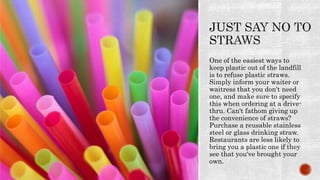
One of the easiest ways to
keep plastic out of the landfill
is to refuse plastic straws.
Simply inform your waiter or
waitress that you don't need
one, and make sure to specify
this when ordering at a drive-
thru. Can't fathom giving up
the convenience of straws?
Purchase a reusable stainless
steel or glass drinking straw.
Restaurants are less likely to
bring you a plastic one if they
see that you've brought your
own.
About 1 million plastic bags are used
every minute, and a single plastic bag
can take 1,000 years to degrade. If
you're already bringing reusable bags
to the grocery store, you're on the
right track, but if you're still using
plastic produce bags, it's time to make
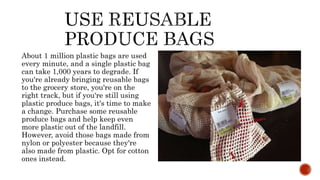
a change. Purchase some reusable
produce bags and help keep even
more plastic out of the landfill.
However, avoid those bags made from
nylon or polyester because they're
also made from plastic. Opt for cotton
ones instead.
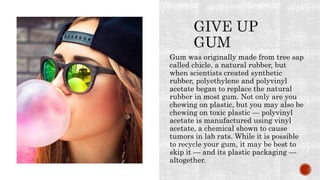
Gum was originally made from tree sap
called chicle, a natural rubber, but
when scientists created synthetic
rubber, polyethylene and polyvinyl
acetate began to replace the natural
rubber in most gum. Not only are you
chewing on plastic, but you may also be
chewing on toxic plastic — polyvinyl
acetate is manufactured using vinyl
acetate, a chemical shown to cause
tumors in lab rats. While it is possible
to recycle your gum, it may be best to
skip it — and its plastic packaging —
altogether.
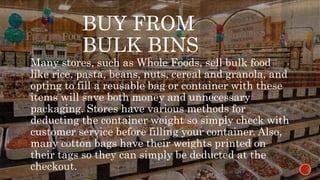
BUY FROM
BULK BINS
Many stores, such as Whole Foods, sell bulk food
like rice, pasta, beans, nuts, cereal and granola, and
opting to fill a reusable bag or container with these
items will save both money and unnecessary
packaging. Stores have various methods for
deducting the container weight so simply check with
customer service before filling your container. Also,
many cotton bags have their weights printed on
their tags so they can simply be deducted at the
checkout.
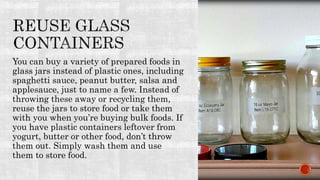
You can buy a variety of prepared foods in
glass jars instead of plastic ones, including
spaghetti sauce, peanut butter, salsa and
applesauce, just to name a few. Instead of
throwing these away or recycling them,
reuse the jars to store food or take them
with you when you’re buying bulk foods. If
you have plastic containers leftover from
yogurt, butter or other food, don’t throw
them out. Simply wash them and use
them to store food.
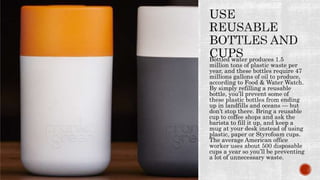
Bottled water produces 1.5
million tons of plastic waste per
year, and these bottles require 47
millions gallons of oil to produce,
according to Food & Water Watch.
By simply refilling a reusable
bottle, you’ll prevent some of
these plastic bottles from ending
up in landfills and oceans — but
don’t stop there. Bring a reusable
cup to coffee shops and ask the
barista to fill it up, and keep a
mug at your desk instead of using
plastic, paper or Styrofoam cups.
The average American office
worker uses about 500 disposable
cups a year so you’ll be preventing
a lot of unnecessary waste.
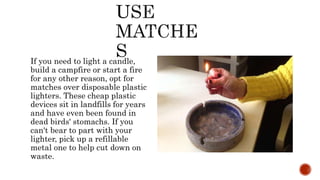
If you need to light a candle,
build a campfire or start a fire
for any other reason, opt for
matches over disposable plastic
lighters. These cheap plastic
devices sit in landfills for years
and have even been found in
dead birds' stomachs. If you
can't bear to part with your
lighter, pick up a refillable
metal one to help cut down on
waste.
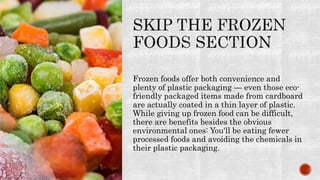
Frozen foods offer both convenience and
plenty of plastic packaging — even those eco-
friendly packaged items made from cardboard
are actually coated in a thin layer of plastic.
While giving up frozen food can be difficult,
there are benefits besides the obvious
environmental ones: You'll be eating fewer
processed foods and avoiding the chemicals in
their plastic packaging.
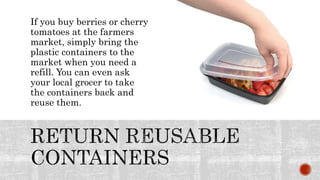
If you buy berries or cherry
tomatoes at the farmers
market, simply bring the
plastic containers to the
market when you need a
refill. You can even ask
your local grocer to take
the containers back and
reuse them.
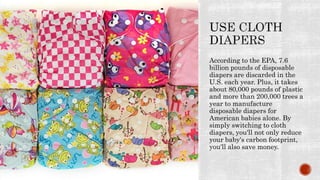
According to the EPA, 7.6
billion pounds of disposable
diapers are discarded in the
U.S. each year. Plus, it takes
about 80,000 pounds of plastic
and more than 200,000 trees a
year to manufacture
disposable diapers for
American babies alone. By
simply switching to cloth
diapers, you'll not only reduce
your baby's carbon footprint,
you'll also save money.
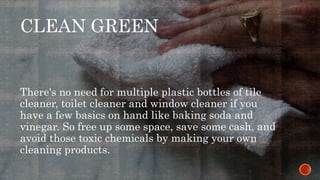
CLEAN GREEN
There's no need for multiple plastic bottles of tile
cleaner, toilet cleaner and window cleaner if you
have a few basics on hand like baking soda and
vinegar. So free up some space, save some cash, and
avoid those toxic chemicals by making your own
cleaning products.

Simple tips to reduce and reuse plastic waste

  • 1.
  • 2.
    One of theeasiest ways to keep plastic out of the landfill is to refuse plastic straws. Simply inform your waiter or waitress that you don't need one, and make sure to specify this when ordering at a drive- thru. Can't fathom giving up the convenience of straws? Purchase a reusable stainless steel or glass drinking straw. Restaurants are less likely to bring you a plastic one if they see that you've brought your own.
  • 3.
    About 1 millionplastic bags are used every minute, and a single plastic bag can take 1,000 years to degrade. If you're already bringing reusable bags to the grocery store, you're on the right track, but if you're still using plastic produce bags, it's time to make a change. Purchase some reusable produce bags and help keep even more plastic out of the landfill. However, avoid those bags made from nylon or polyester because they're also made from plastic. Opt for cotton ones instead.
  • 4.
    Gum was originallymade from tree sap called chicle, a natural rubber, but when scientists created synthetic rubber, polyethylene and polyvinyl acetate began to replace the natural rubber in most gum. Not only are you chewing on plastic, but you may also be chewing on toxic plastic — polyvinyl acetate is manufactured using vinyl acetate, a chemical shown to cause tumors in lab rats. While it is possible to recycle your gum, it may be best to skip it — and its plastic packaging — altogether.
  • 5.
    BUY FROM BULK BINS Manystores, such as Whole Foods, sell bulk food like rice, pasta, beans, nuts, cereal and granola, and opting to fill a reusable bag or container with these items will save both money and unnecessary packaging. Stores have various methods for deducting the container weight so simply check with customer service before filling your container. Also, many cotton bags have their weights printed on their tags so they can simply be deducted at the checkout.
  • 6.
    You can buya variety of prepared foods in glass jars instead of plastic ones, including spaghetti sauce, peanut butter, salsa and applesauce, just to name a few. Instead of throwing these away or recycling them, reuse the jars to store food or take them with you when you’re buying bulk foods. If you have plastic containers leftover from yogurt, butter or other food, don’t throw them out. Simply wash them and use them to store food.
  • 7.
    Bottled water produces1.5 million tons of plastic waste per year, and these bottles require 47 millions gallons of oil to produce, according to Food & Water Watch. By simply refilling a reusable bottle, you’ll prevent some of these plastic bottles from ending up in landfills and oceans — but don’t stop there. Bring a reusable cup to coffee shops and ask the barista to fill it up, and keep a mug at your desk instead of using plastic, paper or Styrofoam cups. The average American office worker uses about 500 disposable cups a year so you’ll be preventing a lot of unnecessary waste.
  • 8.
    If you needto light a candle, build a campfire or start a fire for any other reason, opt for matches over disposable plastic lighters. These cheap plastic devices sit in landfills for years and have even been found in dead birds' stomachs. If you can't bear to part with your lighter, pick up a refillable metal one to help cut down on waste.
  • 9.
    Frozen foods offerboth convenience and plenty of plastic packaging — even those eco- friendly packaged items made from cardboard are actually coated in a thin layer of plastic. While giving up frozen food can be difficult, there are benefits besides the obvious environmental ones: You'll be eating fewer processed foods and avoiding the chemicals in their plastic packaging.
  • 10.
    If you buyberries or cherry tomatoes at the farmers market, simply bring the plastic containers to the market when you need a refill. You can even ask your local grocer to take the containers back and reuse them.
  • 11.
    According to theEPA, 7.6 billion pounds of disposable diapers are discarded in the U.S. each year. Plus, it takes about 80,000 pounds of plastic and more than 200,000 trees a year to manufacture disposable diapers for American babies alone. By simply switching to cloth diapers, you'll not only reduce your baby's carbon footprint, you'll also save money.
  • 12.
    CLEAN GREEN There's noneed for multiple plastic bottles of tile cleaner, toilet cleaner and window cleaner if you have a few basics on hand like baking soda and vinegar. So free up some space, save some cash, and avoid those toxic chemicals by making your own cleaning products.