Explain the meaning of sewing equipment.
2. Classify types of sewing tools and
equipment
3. Make use of sewing tools and equipment.
LEARNING OBJECTIVES
STARTERS
SEWING EQUIPMENT
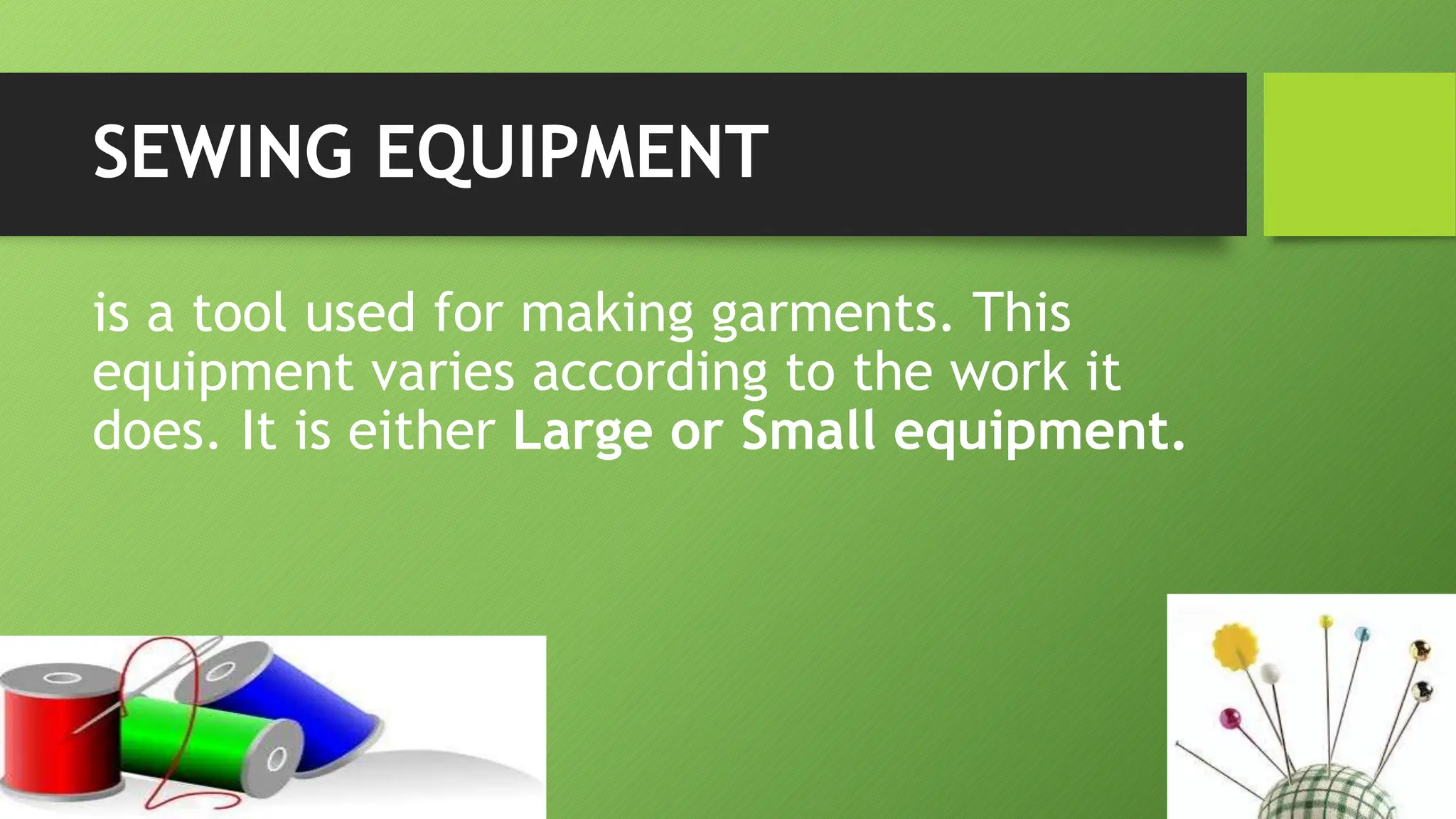
is a tool used for making garments. This
equipment varies according to the work it
does. It is either Large or Small equipment.
CLASSIFICATION OF SIMPLE SEWING TOOLS
AND EQUIPMENT
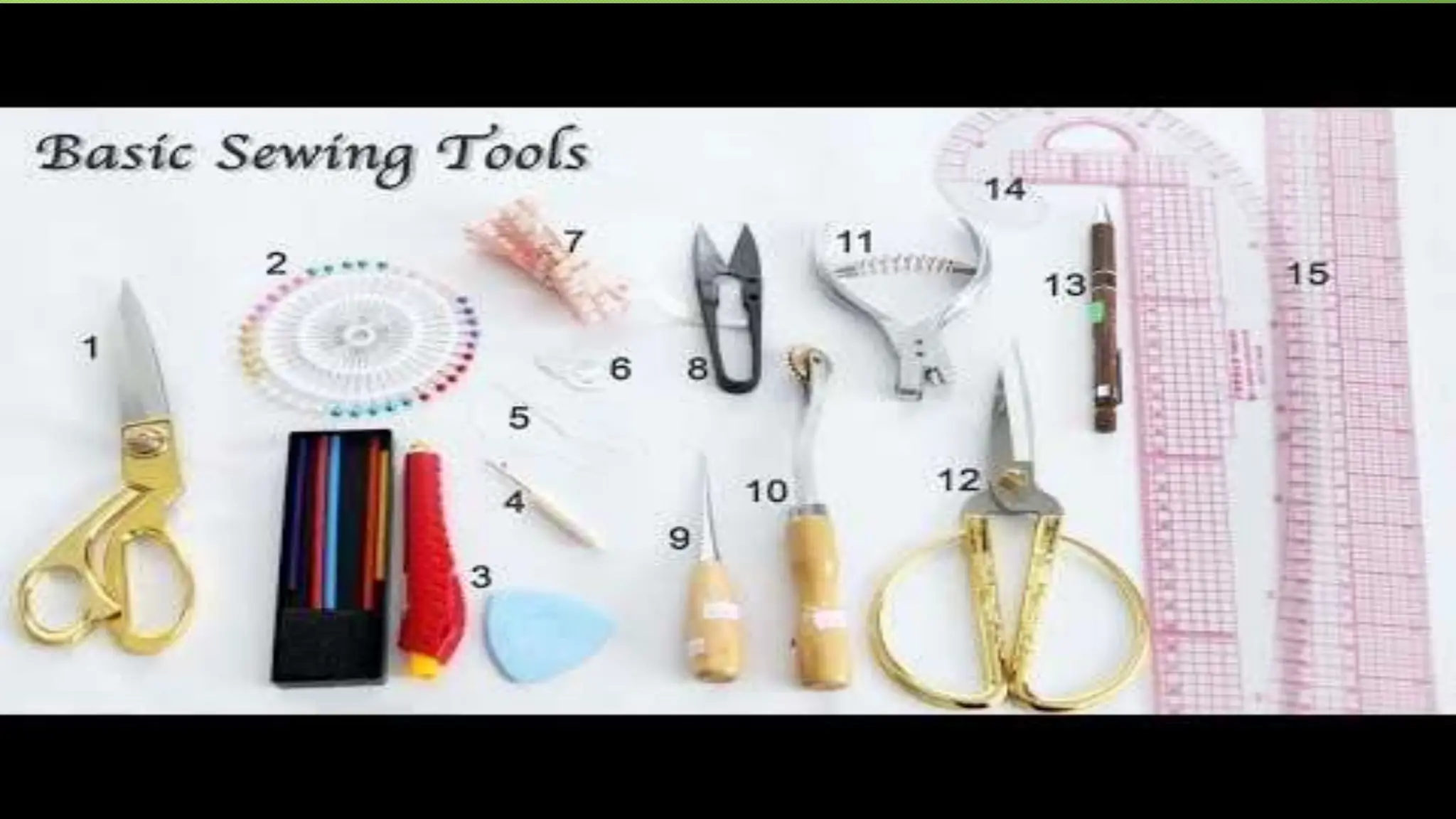
1)Tools and Equipment for Measuring
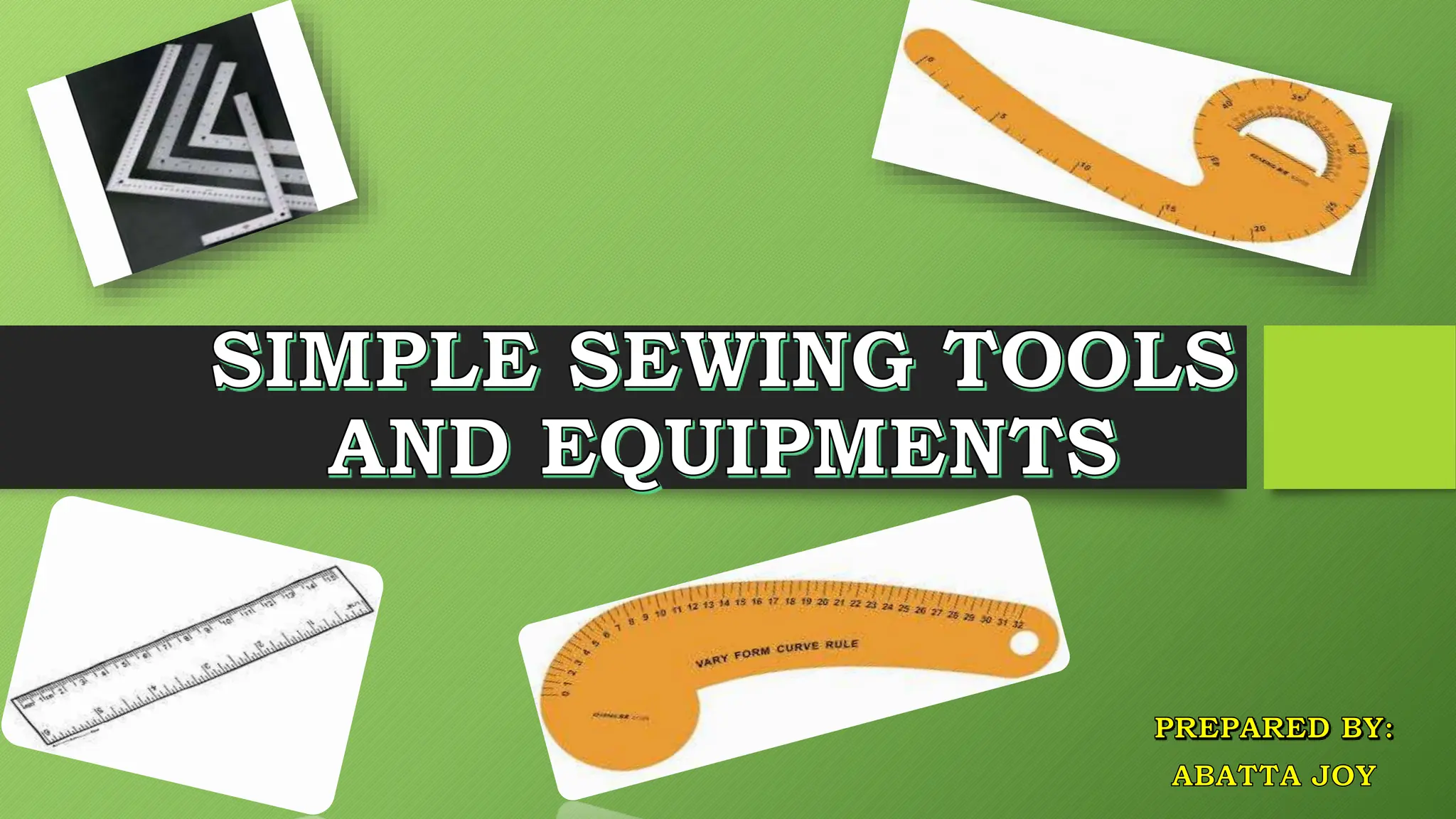
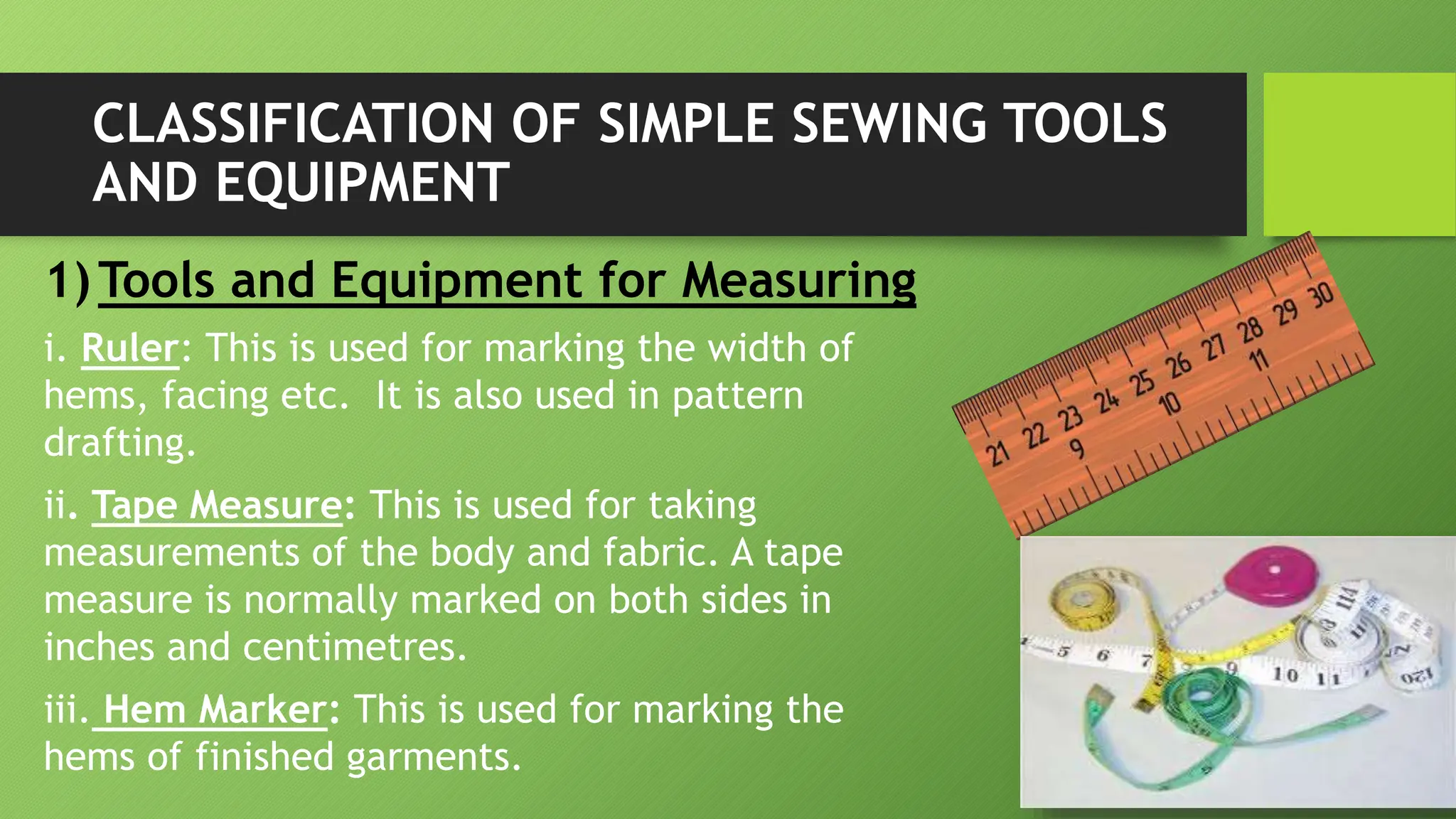
i. Ruler: This is used for marking the width of
hems, facing etc. It is also used in pattern
drafting.
ii. Tape Measure: This is used for taking
measurements of the body and fabric. A tape
measure is normally marked on both sides in
inches and centimetres.
iii. Hem Marker: This is used for marking the
hems of finished garments.
CLASSIFICATION OF SIMPLE SEWING TOOLS
AND EQUIPMENT
2) Tools and Equipment for Marking and
Tracing
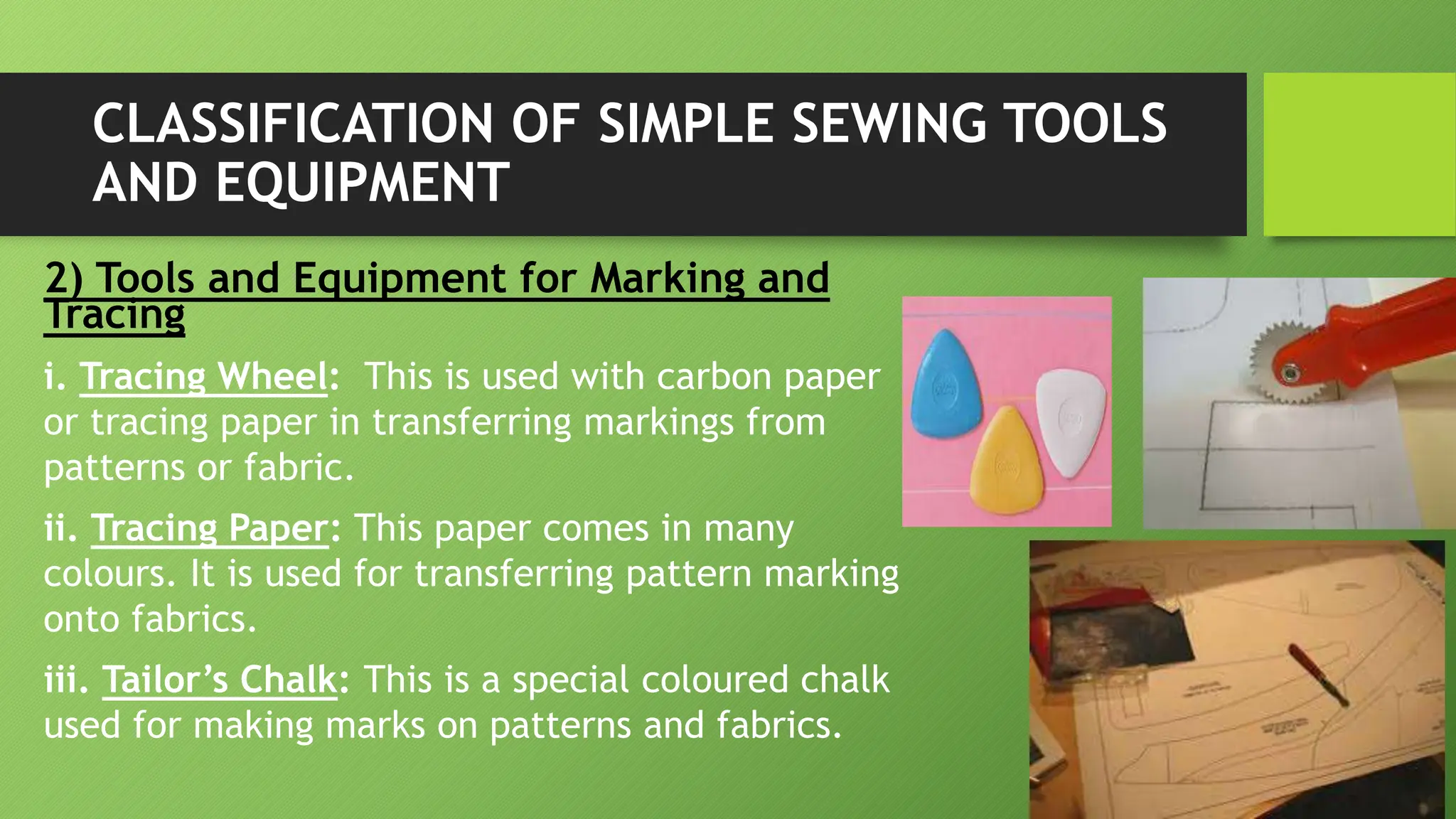
i. Tracing Wheel: This is used with carbon paper
or tracing paper in transferring markings from
patterns or fabric.
ii. Tracing Paper: This paper comes in many
colours. It is used for transferring pattern marking
onto fabrics.
iii. Tailor’s Chalk: This is a special coloured chalk
used for making marks on patterns and fabrics.
CLASSIFICATION OF SIMPLE SEWING TOOLS
AND EQUIPMENT
3) Tools and Equipment for
Cutting
•i. Scissors: There are different
types and sizes of scissors used
for cutting paper, fabric and
thread.
• ii. Pinking Shears: They are used
for neatening seams.
CLASSIFICATION OF SIMPLE SEWING TOOLS
AND EQUIPMENT
4) Tools and Equipment for Stitching
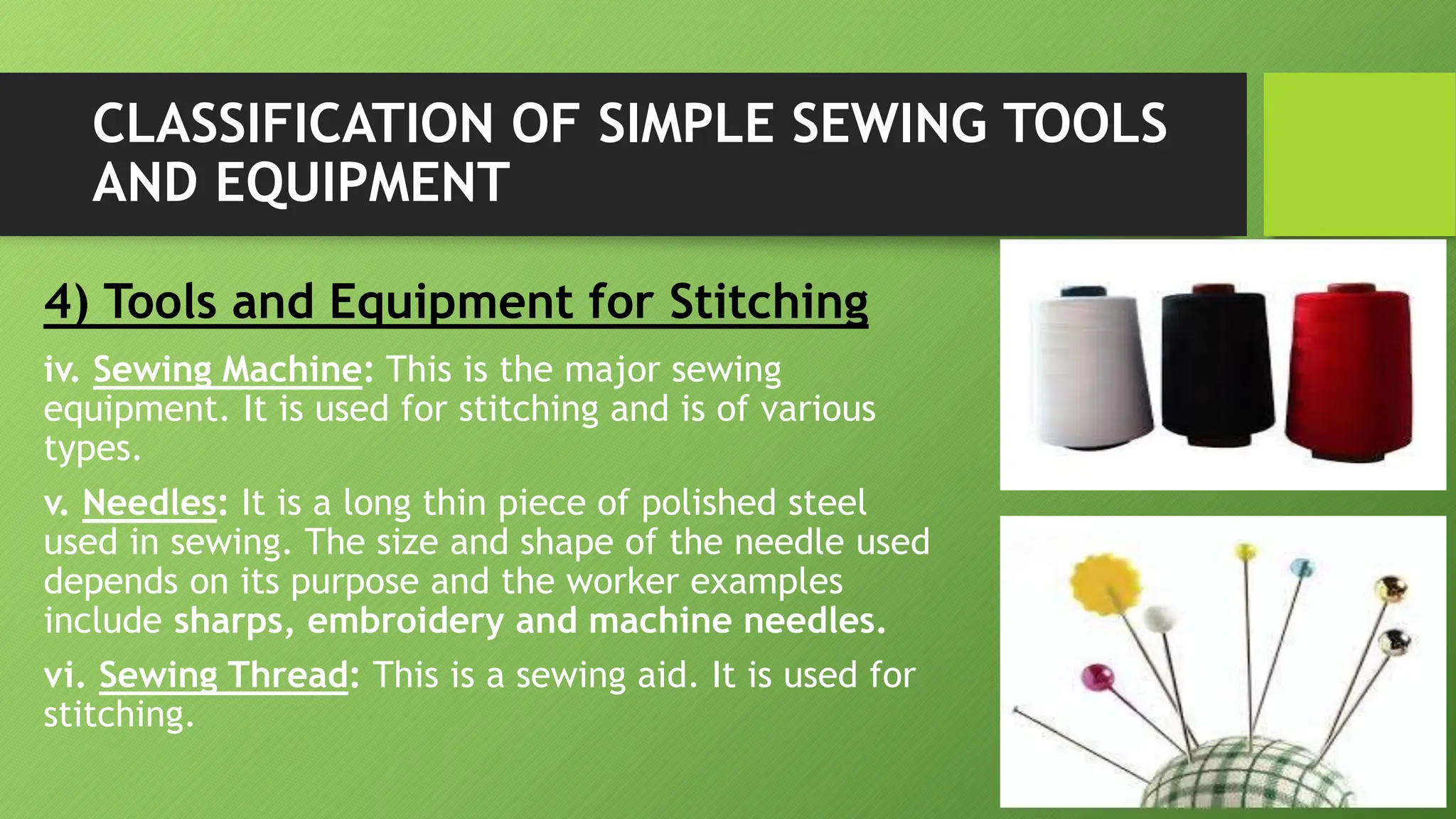
i. Dressmaker’s Pins: It is used for holding two or
more pieces of cloth or paper together when sewing
ii. Pin Cushion: Pin cushion is used to hold pins and
needles when sewing.
iii. Thimbles: This is a small cap-like metal or
plastic worn on the finger to protect it from the
needle when sewing.
CLASSIFICATION OF SIMPLE SEWING TOOLS
AND EQUIPMENT
4) Tools and Equipment for Stitching
iv. Sewing Machine: This is the major sewing
equipment. It is used for stitching and is of various
types.
v. Needles: It is a long thin piece of polished steel
used in sewing. The size and shape of the needle used
depends on its purpose and the worker examples
include sharps, embroidery and machine needles.
vi. Sewing Thread: This is a sewing aid. It is used for
stitching.
!
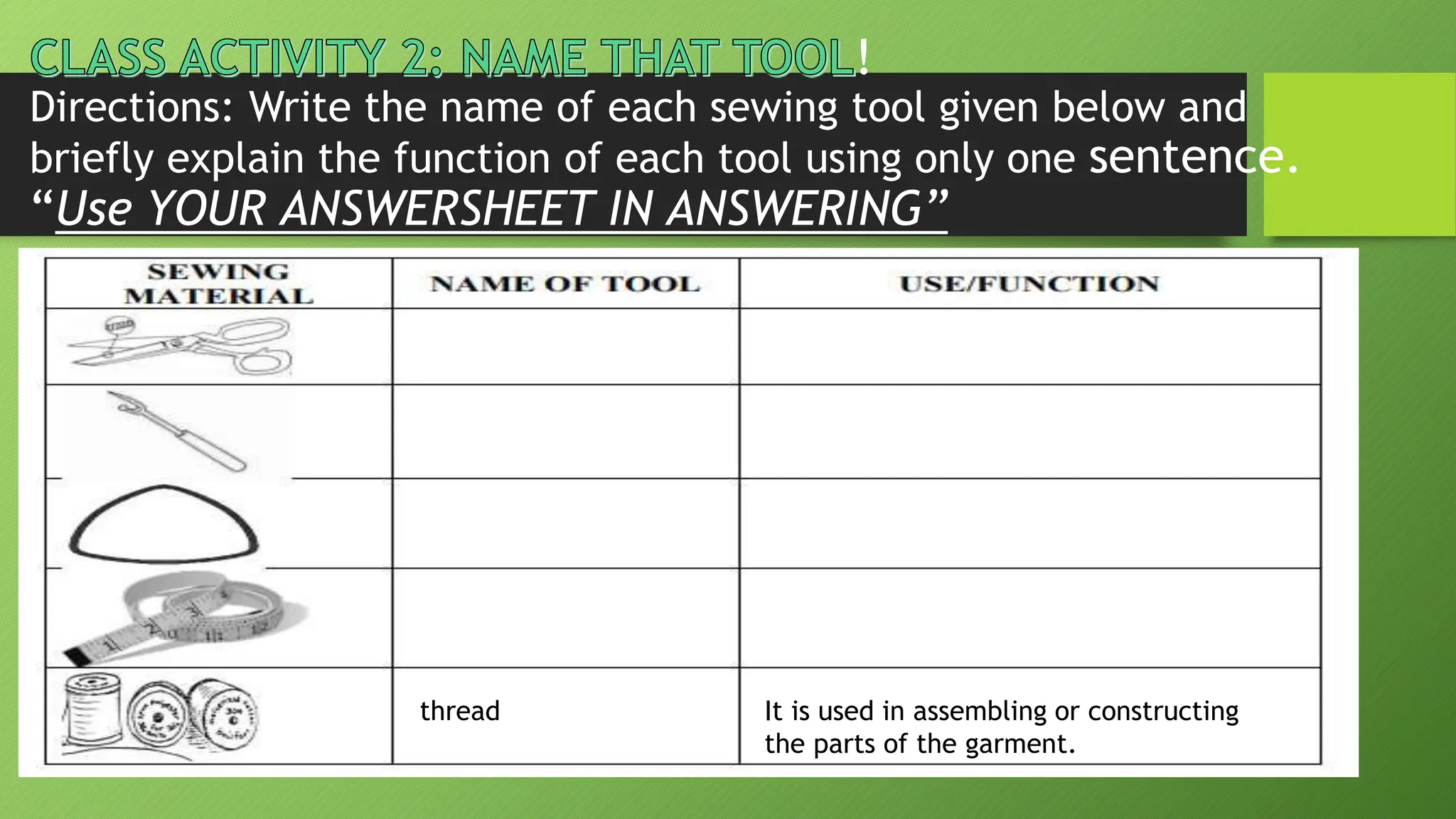
Directions: Write the name of each sewing tool given below and
briefly explain the function of each tool using only one sentence.
“Use YOUR ANSWERSHEET IN ANSWERING”
thread It is used in assembling or constructing
the parts of the garment.
GUIDELINES FOR THE CHOICE OF
SEWING TOOLS AND EQUIPMENT
• 1. In the choice of tools and equipment one must identify the various
sewing equipment.
• 2. Know what they are used for.
• 3. Be able to handle them properly.
• 4. Choose the best ones.
• 5. Take proper care of each of them.
• 6. Choose cutting equipment that will not rust.
• 7. Pins and needles should have sharp points.
• 8. Choose a tape measure that will not stretch.
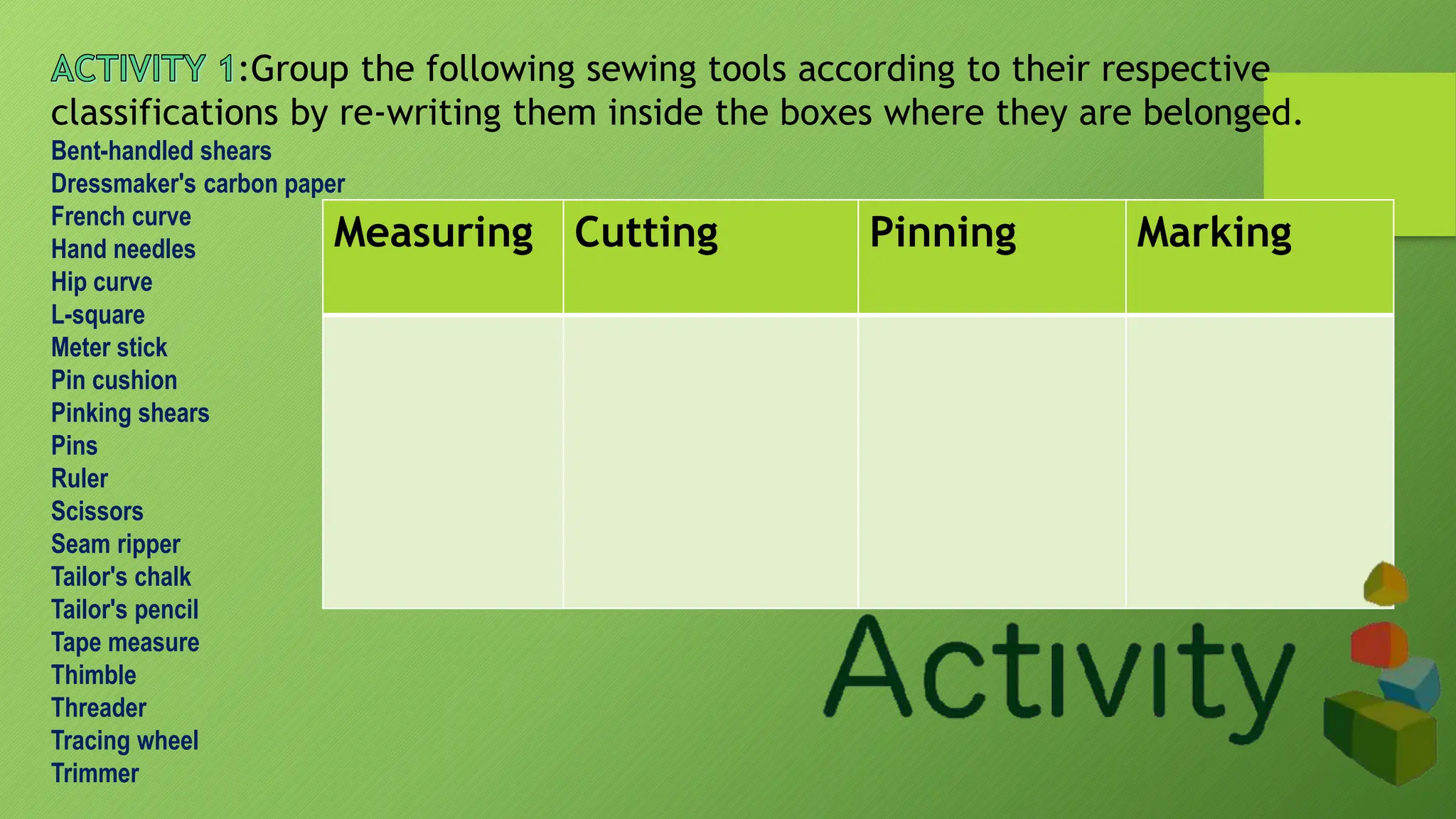
:Group the following sewing tools according to their respective
classifications by re-writing them inside the boxes where they are belonged.
Bent-handled shears
Dressmaker's carbon paper
French curve
Hand needles
Hip curve
L-square
Meter stick
Pin cushion
Pinking shears
Pins
Ruler
Scissors
Seam ripper
Tailor's chalk
Tailor's pencil
Tape measure
Thimble
Threader
Tracing wheel
Trimmer
Measuring Cutting Pinning Marking
SIMPLE SEWING TOOLS AND EQUIPMENT YR 7.ppt

SIMPLE SEWING TOOLS AND EQUIPMENT YR 7.ppt

  • 2.
    Explain the meaningof sewing equipment. 2. Classify types of sewing tools and equipment 3. Make use of sewing tools and equipment. LEARNING OBJECTIVES
  • 3.
  • 4.
    SEWING EQUIPMENT is atool used for making garments. This equipment varies according to the work it does. It is either Large or Small equipment.
  • 5.
    CLASSIFICATION OF SIMPLESEWING TOOLS AND EQUIPMENT 1)Tools and Equipment for Measuring i. Ruler: This is used for marking the width of hems, facing etc. It is also used in pattern drafting. ii. Tape Measure: This is used for taking measurements of the body and fabric. A tape measure is normally marked on both sides in inches and centimetres. iii. Hem Marker: This is used for marking the hems of finished garments.
  • 6.
    CLASSIFICATION OF SIMPLESEWING TOOLS AND EQUIPMENT 2) Tools and Equipment for Marking and Tracing i. Tracing Wheel: This is used with carbon paper or tracing paper in transferring markings from patterns or fabric. ii. Tracing Paper: This paper comes in many colours. It is used for transferring pattern marking onto fabrics. iii. Tailor’s Chalk: This is a special coloured chalk used for making marks on patterns and fabrics.
  • 7.
    CLASSIFICATION OF SIMPLESEWING TOOLS AND EQUIPMENT 3) Tools and Equipment for Cutting •i. Scissors: There are different types and sizes of scissors used for cutting paper, fabric and thread. • ii. Pinking Shears: They are used for neatening seams.
  • 8.
    CLASSIFICATION OF SIMPLESEWING TOOLS AND EQUIPMENT 4) Tools and Equipment for Stitching i. Dressmaker’s Pins: It is used for holding two or more pieces of cloth or paper together when sewing ii. Pin Cushion: Pin cushion is used to hold pins and needles when sewing. iii. Thimbles: This is a small cap-like metal or plastic worn on the finger to protect it from the needle when sewing.
  • 9.
    CLASSIFICATION OF SIMPLESEWING TOOLS AND EQUIPMENT 4) Tools and Equipment for Stitching iv. Sewing Machine: This is the major sewing equipment. It is used for stitching and is of various types. v. Needles: It is a long thin piece of polished steel used in sewing. The size and shape of the needle used depends on its purpose and the worker examples include sharps, embroidery and machine needles. vi. Sewing Thread: This is a sewing aid. It is used for stitching.
  • 10.
    ! Directions: Write thename of each sewing tool given below and briefly explain the function of each tool using only one sentence. “Use YOUR ANSWERSHEET IN ANSWERING” thread It is used in assembling or constructing the parts of the garment.
  • 11.
    GUIDELINES FOR THECHOICE OF SEWING TOOLS AND EQUIPMENT • 1. In the choice of tools and equipment one must identify the various sewing equipment. • 2. Know what they are used for. • 3. Be able to handle them properly. • 4. Choose the best ones. • 5. Take proper care of each of them. • 6. Choose cutting equipment that will not rust. • 7. Pins and needles should have sharp points. • 8. Choose a tape measure that will not stretch.
  • 12.
    :Group the followingsewing tools according to their respective classifications by re-writing them inside the boxes where they are belonged. Bent-handled shears Dressmaker's carbon paper French curve Hand needles Hip curve L-square Meter stick Pin cushion Pinking shears Pins Ruler Scissors Seam ripper Tailor's chalk Tailor's pencil Tape measure Thimble Threader Tracing wheel Trimmer Measuring Cutting Pinning Marking