Simple past and present perfect tense
Learning English easily
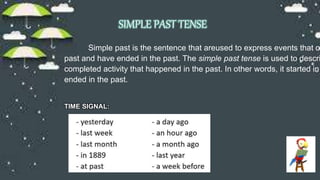
SIMPLE PAST TENSE
Simple past is the sentence that areused to express events that oc
past and have ended in the past. The simple past tense is used to descri
completed activity that happened in the past. In other words, it started in
ended in the past.
TIME SIGNAL:
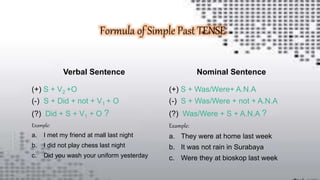
Formula of Simple Past TENSE
Verbal Sentence
(+) S + V2 +O
(-) S + Did + not + V1 + O
(?) Did + S + V1 + O ?
Example:
a. I met my friend at mall last night
b. I did not play chess last night
c. Did you wash your uniform yesterday
Nominal Sentence
(+) S + Was/Were+ A.N.A
(-) S + Was/Were + not + A.N.A
(?) Was/Were + S + A.N.A ?
Example:
a. They were at home last week
b. It was not rain in Surabaya
c. Were they at bioskop last week
PRESENT PERFECT TENSE
Present perfect tense refers to actions or circumstances that either
happened indefinitely in the past (for example, we have talked before) or
started in the past and continue to the present (for example, he has
become impatient for the past hour). Present perfect tense is used to talk
about actions that have started in the past (recent or old) and are
connected to the present (still ongoing or the effects can be felt in the
present).
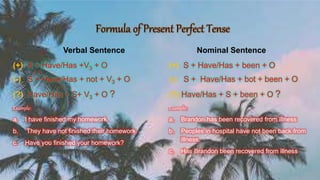
Formula of Present Perfect Tense
Verbal Sentence
(+) S + Have/Has +V3 + O
(-) S + Have/Has + not + V3 + O
(?) Have/Has + S+ V3 + O ?
Example:
a. I have finished my homework.
b. They have not finished their homework.
c. Have you finished your homework?
Nominal Sentence
(+) S + Have/Has + been + O
(-) S + Have/Has + bot + been + O
(?) Have/Has + S + been + O ?
Example:
a. Brandon has been recovered from illness
b. Peoples in hospital have not been back from
illness.
c. Has Brandon been recovered from illness
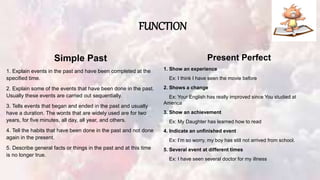
FUNCTION
Simple Past
1. Explain events in the past and have been completed at the
specified time.
2. Explain some of the events that have been done in the past.
Usually these events are carried out sequentially.
3. Tells events that began and ended in the past and usually
have a duration. The words that are widely used are for two
years, for five minutes, all day, all year, and others.
4. Tell the habits that have been done in the past and not done
again in the present.
5. Describe general facts or things in the past and at this time
is no longer true.
Present Perfect
1. Show an experience
Ex: I think I have seen the movie before
2. Shows a change
Ex: Your English has really improved since You studied at
America
3. Show an achievement
Ex: My Daughter has learned how to read
4. Indicate an unfinished event
Ex: I’m so worry, my boy has still not arrived from school.
5. Several event at different times
Ex: I have seen several doctor for my illness
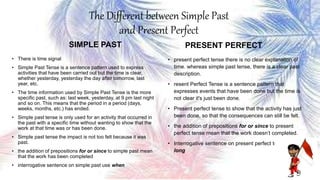
The Different between Simple Past
and Present Perfect
SIMPLE PAST
• There is time signal
• Simple Past Tense is a sentence pattern used to express
activities that have been carried out but the time is clear,
whether yesterday, yesterday the day after tomorrow, last
year, etc.
• The time information used by Simple Past Tense is the more
specific past, such as: last week, yesterday, at 9 pm last night
and so on. This means that the period in a period (days,
weeks, months, etc.) has ended.
• Simple past tense is only used for an activity that occurred in
the past with a specific time without wanting to show that the
work at that time was or has been done.
• Simple past tense the impact is not too felt because it was
past.
• the addition of prepositions for or since to simple past mean
that the work has been completed
• interrogative sentence on simple past use when
PRESENT PERFECT
• present perfect tense there is no clear explanation of
time. whereas simple past tense, there is a clear past
description.
• resent Perfect Tense is a sentence pattern that
expresses events that have been done but the time is
not clear it's just been done.
• Present perfect tense to show that the activity has just
been done, so that the consequences can still be felt.
• the addition of prepositions for or since to present
perfect tense mean that the work doesn’t completed.
• Interrogative sentence on present perfect tense use how
long
That’s all about simple past and present perfect tense

simple past tense and present perfect tense

  • 1.
    Simple past andpresent perfect tense Learning English easily
  • 2.
    SIMPLE PAST TENSE Simplepast is the sentence that areused to express events that oc past and have ended in the past. The simple past tense is used to descri completed activity that happened in the past. In other words, it started in ended in the past. TIME SIGNAL:
  • 3.
    Formula of SimplePast TENSE Verbal Sentence (+) S + V2 +O (-) S + Did + not + V1 + O (?) Did + S + V1 + O ? Example: a. I met my friend at mall last night b. I did not play chess last night c. Did you wash your uniform yesterday Nominal Sentence (+) S + Was/Were+ A.N.A (-) S + Was/Were + not + A.N.A (?) Was/Were + S + A.N.A ? Example: a. They were at home last week b. It was not rain in Surabaya c. Were they at bioskop last week
  • 4.
    PRESENT PERFECT TENSE Presentperfect tense refers to actions or circumstances that either happened indefinitely in the past (for example, we have talked before) or started in the past and continue to the present (for example, he has become impatient for the past hour). Present perfect tense is used to talk about actions that have started in the past (recent or old) and are connected to the present (still ongoing or the effects can be felt in the present).
  • 5.
    Formula of PresentPerfect Tense Verbal Sentence (+) S + Have/Has +V3 + O (-) S + Have/Has + not + V3 + O (?) Have/Has + S+ V3 + O ? Example: a. I have finished my homework. b. They have not finished their homework. c. Have you finished your homework? Nominal Sentence (+) S + Have/Has + been + O (-) S + Have/Has + bot + been + O (?) Have/Has + S + been + O ? Example: a. Brandon has been recovered from illness b. Peoples in hospital have not been back from illness. c. Has Brandon been recovered from illness
  • 6.
    FUNCTION Simple Past 1. Explainevents in the past and have been completed at the specified time. 2. Explain some of the events that have been done in the past. Usually these events are carried out sequentially. 3. Tells events that began and ended in the past and usually have a duration. The words that are widely used are for two years, for five minutes, all day, all year, and others. 4. Tell the habits that have been done in the past and not done again in the present. 5. Describe general facts or things in the past and at this time is no longer true. Present Perfect 1. Show an experience Ex: I think I have seen the movie before 2. Shows a change Ex: Your English has really improved since You studied at America 3. Show an achievement Ex: My Daughter has learned how to read 4. Indicate an unfinished event Ex: I’m so worry, my boy has still not arrived from school. 5. Several event at different times Ex: I have seen several doctor for my illness
  • 7.
    The Different betweenSimple Past and Present Perfect SIMPLE PAST • There is time signal • Simple Past Tense is a sentence pattern used to express activities that have been carried out but the time is clear, whether yesterday, yesterday the day after tomorrow, last year, etc. • The time information used by Simple Past Tense is the more specific past, such as: last week, yesterday, at 9 pm last night and so on. This means that the period in a period (days, weeks, months, etc.) has ended. • Simple past tense is only used for an activity that occurred in the past with a specific time without wanting to show that the work at that time was or has been done. • Simple past tense the impact is not too felt because it was past. • the addition of prepositions for or since to simple past mean that the work has been completed • interrogative sentence on simple past use when PRESENT PERFECT • present perfect tense there is no clear explanation of time. whereas simple past tense, there is a clear past description. • resent Perfect Tense is a sentence pattern that expresses events that have been done but the time is not clear it's just been done. • Present perfect tense to show that the activity has just been done, so that the consequences can still be felt. • the addition of prepositions for or since to present perfect tense mean that the work doesn’t completed. • Interrogative sentence on present perfect tense use how long
  • 8.
    That’s all aboutsimple past and present perfect tense