NAFModel
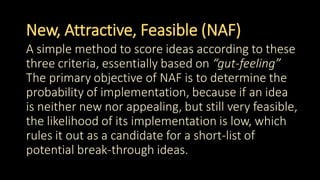
New, Attractive, Feasible (NAF)
A simple method to score ideas according to these
three criteria, essentially based on “gut-feeling”
The primary objective of NAF is to determine the
probability of implementation, because if an idea
is neither new nor appealing, but still very feasible,
the likelihood of its implementation is low, which
rules it out as a candidate for a short-list of
potential break-through ideas.
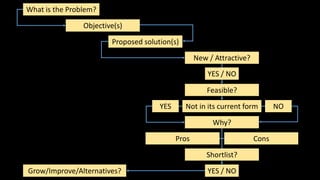
What is the Problem?
Proposed solution(s)
Objective(s)
New / Attractive?
Feasible?
YES / NO
Pros Cons
Why?
YES / NO
YES Not in its current form NO
Shortlist?
Grow/Improve/Alternatives?
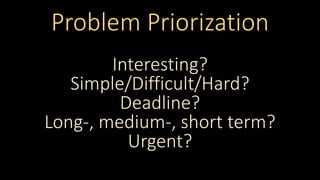
Problem Priorization
Interesting?
Simple/Difficult/Hard?
Deadline?
Long-, medium-, short term?
Urgent?
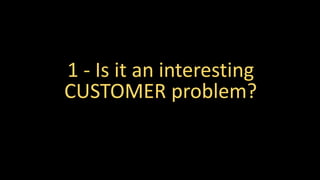
1 - Is it an interesting
CUSTOMER problem?
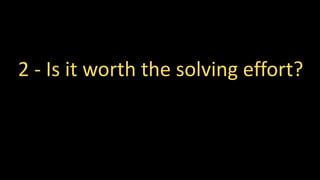
2 - Is it worth the solving effort?
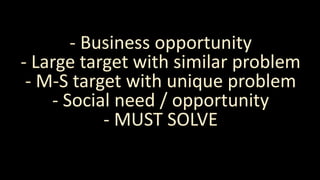
- Business opportunity
- Large target with similar problem
- M-S target with unique problem
- Social need / opportunity
- MUST SOLVE
3 - Could it generate VALUE?
For whom?
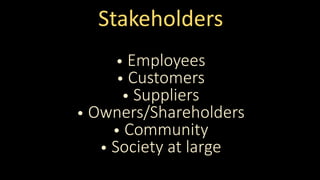
Stakeholders
• Employees
• Customers
• Suppliers
• Owners/Shareholders
• Community
• Society at large
Problem Definition
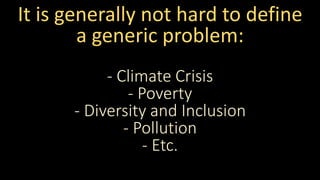
It is generally not hard to define
a generic problem:
- Climate Crisis
- Poverty
- Diversity and Inclusion
- Pollution
- Etc.
But it is often very hard to find/define
a related Customer problem.
The Climate Crisis, Pollution and Poverty
are everybody’s, thus, nobody’s problem
(or: not MY problem)
- The solution must be actionable
- The solution must address a specific want or
need of a specific target audience
- The solution must be “unique”, relevant and
attractive. I.e.: VALUABLE
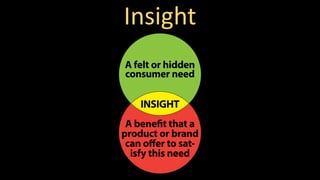
- Good/great solutions are often based on an
observation or a so-called “insight”
Insight

Simple Idea evaluation. New, Attractive, Feasible Model (NAF)

  • 1.
  • 2.
    New, Attractive, Feasible(NAF) A simple method to score ideas according to these three criteria, essentially based on “gut-feeling” The primary objective of NAF is to determine the probability of implementation, because if an idea is neither new nor appealing, but still very feasible, the likelihood of its implementation is low, which rules it out as a candidate for a short-list of potential break-through ideas.
  • 3.
    What is theProblem? Proposed solution(s) Objective(s) New / Attractive? Feasible? YES / NO Pros Cons Why? YES / NO YES Not in its current form NO Shortlist? Grow/Improve/Alternatives?
  • 4.
  • 5.
    1 - Isit an interesting CUSTOMER problem?
  • 6.
    2 - Isit worth the solving effort?
  • 7.
    - Business opportunity -Large target with similar problem - M-S target with unique problem - Social need / opportunity - MUST SOLVE
  • 8.
    3 - Couldit generate VALUE? For whom?
  • 9.
    Stakeholders • Employees • Customers •Suppliers • Owners/Shareholders • Community • Society at large
  • 10.
  • 11.
    It is generallynot hard to define a generic problem: - Climate Crisis - Poverty - Diversity and Inclusion - Pollution - Etc.
  • 12.
    But it isoften very hard to find/define a related Customer problem. The Climate Crisis, Pollution and Poverty are everybody’s, thus, nobody’s problem (or: not MY problem)
  • 13.
    - The solutionmust be actionable - The solution must address a specific want or need of a specific target audience - The solution must be “unique”, relevant and attractive. I.e.: VALUABLE - Good/great solutions are often based on an observation or a so-called “insight”
  • 14.