Similarities and
differences of
macromolecules
> Nucleic acid VS Proteins
> Proteins VS Lipids
> Lipids VS Carbohydrates
> Carbohydrates VS Nucleic acid
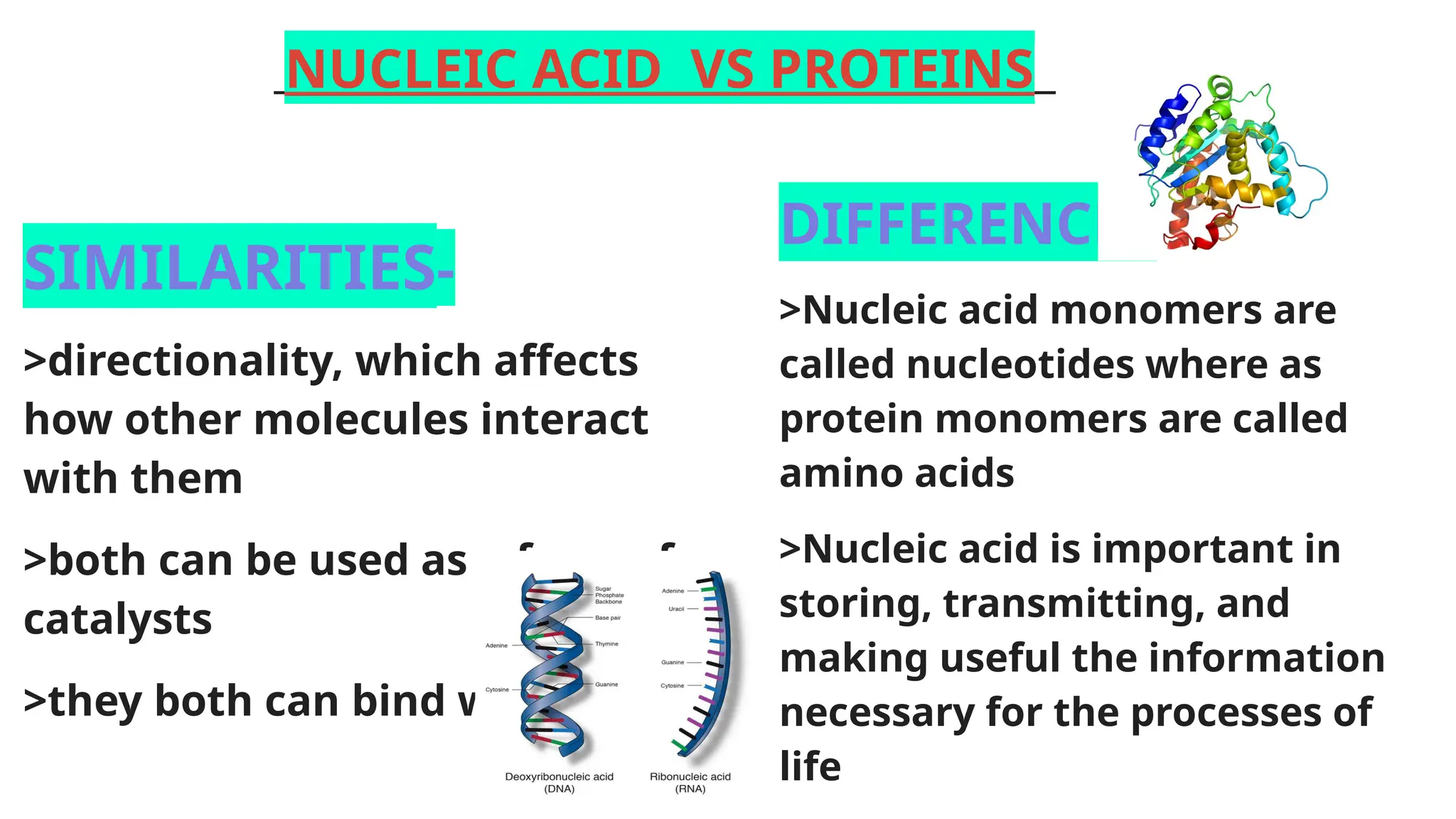
NUCLEIC ACID VS PROTEINS
SIMILARITIES-
>directionality, which affects
how other molecules interact
with them
>both can be used as a form of
catalysts
>they both can bind with metals
DIFFERENCES-
>Nucleic acid monomers are
called nucleotides where as
protein monomers are called
amino acids
>Nucleic acid is important in
storing, transmitting, and
making useful the information
necessary for the processes of
life
PROTEINS
VS LIPIDS
SIMILARITIES
>proteins helps in chemical
reaction(chemical messenger)
as all cell use proteins as
catalysts(enzymes)
DIFFERENCES-
>protein monomers are called
amino acids WHEREAS lipid
monomers are called fatty acids
>protien function as enzymes,
pigments and steroid hormones
where as lipids function include
storage of energy, insulation
and chemical messenger.
LIPIDS VS
CARBOHYDRATES
SIMILARITIES-
>both are used for energy
storage
>both help in releasing of
energy for our body
functioning
DIFFERENCES-
>lipid monomers are called fatty
acids where as carbohydrate
monomers are called
monosaccharides
>carbohydrates are soluble in water
where as lipids are insoluble in water
>lipids are use for long term energy
storage where as carbohydrate are
short term energy storage
Macromolecules
SIMILARITIES-
>all these biomolecules are
organic which means that they
contain carbon
>these are made up of small
pieces known as monomers
>monomers are connected by a
dehydration reaction
>this reaction is catalyzed by a
polymerase enzyme
differences -
>all macromolecules have a
different monomers
> macromolecules are used
in different parts of various
functions
>they all have different
complex structures

Similarities and Differences of macromolecules.pptx

  • 1.
    Similarities and differences of macromolecules >Nucleic acid VS Proteins > Proteins VS Lipids > Lipids VS Carbohydrates > Carbohydrates VS Nucleic acid
  • 2.
    NUCLEIC ACID VSPROTEINS SIMILARITIES- >directionality, which affects how other molecules interact with them >both can be used as a form of catalysts >they both can bind with metals DIFFERENCES- >Nucleic acid monomers are called nucleotides where as protein monomers are called amino acids >Nucleic acid is important in storing, transmitting, and making useful the information necessary for the processes of life
  • 3.
    PROTEINS VS LIPIDS SIMILARITIES >proteins helpsin chemical reaction(chemical messenger) as all cell use proteins as catalysts(enzymes) DIFFERENCES- >protein monomers are called amino acids WHEREAS lipid monomers are called fatty acids >protien function as enzymes, pigments and steroid hormones where as lipids function include storage of energy, insulation and chemical messenger.
  • 4.
    LIPIDS VS CARBOHYDRATES SIMILARITIES- >both areused for energy storage >both help in releasing of energy for our body functioning DIFFERENCES- >lipid monomers are called fatty acids where as carbohydrate monomers are called monosaccharides >carbohydrates are soluble in water where as lipids are insoluble in water >lipids are use for long term energy storage where as carbohydrate are short term energy storage
  • 5.
    Macromolecules SIMILARITIES- >all these biomoleculesare organic which means that they contain carbon >these are made up of small pieces known as monomers >monomers are connected by a dehydration reaction >this reaction is catalyzed by a polymerase enzyme differences - >all macromolecules have a different monomers > macromolecules are used in different parts of various functions >they all have different complex structures