A PRESENTATION
ON SICKLE CELL
DISEASE (SCD)
OUTLINE
 INTRODUCTION
 EPIDEMIOLOGY
 PATHOPHYSIOLOGY
 CAUSES
 SIGNS & SYMPTOMS
 INVESTIGATIONS
 COMPLICATIONS
 MANAGEMENT
 REFERENCES
INTRODUCTIO
N
 Sickle cell disease is a haemoglobinopathy disorder that
was recognized in 1910 by James Herrick (Karger AG,
Basel).
 Sickle cell disease is an inherited disease characterized by
the possession of two abnormal haemoglobins
(autosomal recessive), at least one of which is
haemoglobin S (Standard Treatment Guidelines, 2017).
 The possession of one normal haemoglobin (HbA) and
one abnormal haemoglobin (HbS) does not necessarily
constitute a sickle cell disease but rather that individual is
said to be a carrier of the disease. Homozygosity (HbSS)
results in the disease.
INTRODUCTIO
N

INTRODUCTIO
N
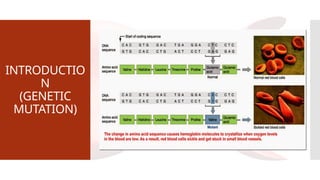
(GENETIC
MUTATION)
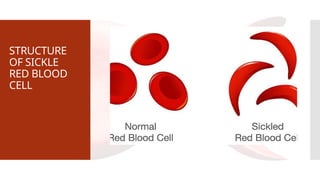
STRUCTURE
OF SICKLE
RED BLOOD
CELL
EPIDEMIOLOG
Y
 SCD is predominant throughout Sub-Saharan Africa, the Middle
East, parts of India and the Meditteranean.
 The carrier state is widespread with a particularly high prevalence
in West Africa of up to 30% (Hoffbrand and Moss, 2016)
 In a recent study conducted by WHO in November 2020, data
garnered showed that as high as 40% of people in some African
countries have the sickle cell trait.
 About 1,000 children in Africa are born with SCD every day, and
more than half will die before they reach 5 years old.
( https://sickle-cell.com/statistics )
PATHOPHYSIOLOG
Y
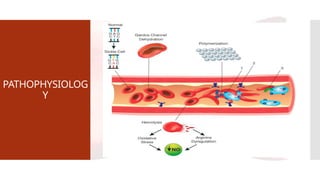
 The genetic mutation on the beta-globin chain of the
haemoglobin molecule results in the formation of
haemoglobin S (HbS), which has the unique feature of
polymerizing on deoxygenation, forming a semisolid gel.
 Three key pathophysiological mechanisms:
Polymerization of HbS
Vaso-occlusion
Endothelial dysfunction by haemolysis
PATHOPHYSIOLOG
Y
POLYMERIZATIO
N OF HbS
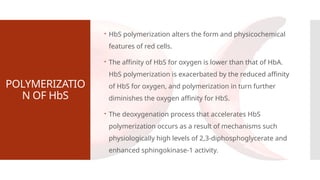
 HbS polymerization alters the form and physicochemical
features of red cells.
 The affinity of HbS for oxygen is lower than that of HbA.
HbS polymerization is exacerbated by the reduced affinity
of HbS for oxygen, and polymerization in turn further
diminishes the oxygen affinity for HbS.
 The deoxygenation process that accelerates HbS
polymerization occurs as a result of mechanisms such
physiologically high levels of 2,3-diphosphoglycerate and
enhanced sphingokinase-1 activity.
POLYMERIZATIO
N OF HbS
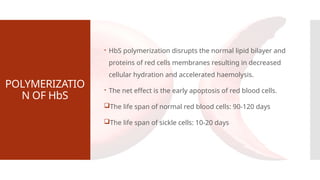
 HbS polymerization disrupts the normal lipid bilayer and
proteins of red cells membranes resulting in decreased
cellular hydration and accelerated haemolysis.
 The net effect is the early apoptosis of red blood cells.
The life span of normal red blood cells: 90-120 days
The life span of sickle cells: 10-20 days
VASO-
OCCLUSION
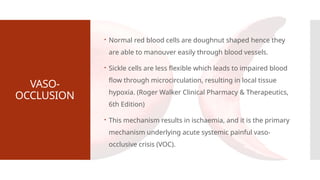
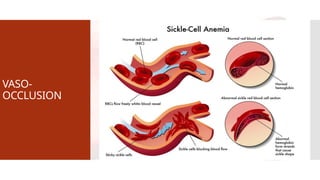
 Normal red blood cells are doughnut shaped hence they
are able to manouver easily through blood vessels.
 Sickle cells are less flexible which leads to impaired blood
flow through microcirculation, resulting in local tissue
hypoxia. (Roger Walker Clinical Pharmacy & Therapeutics,
6th Edition)
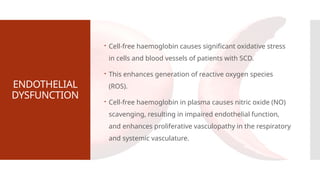
 This mechanism results in ischaemia, and it is the primary
mechanism underlying acute systemic painful vaso-
occlusive crisis (VOC).
VASO-
OCCLUSION
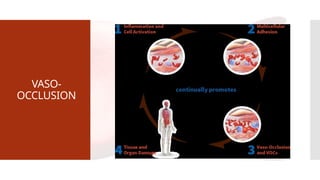
 The sickle/crescent-like/banana shape causes the red
blood cells to clog blood vessels.
 This leads to parts of the body being deprived of oxygen
(tissue hypoxia), which stimulates the host’s adaptive
inflammatory response. This is accompanied with pain as
the body tries to rectify the problem of occlusion. (Journal
of Translational Medicine, 2021)
VASO-
OCCLUSION
VASO-
OCCLUSION
ENDOTHELIAL
DYSFUNCTION
 Cell-free haemoglobin causes significant oxidative stress
in cells and blood vessels of patients with SCD.
 This enhances generation of reactive oxygen species
(ROS).
 Cell-free haemoglobin in plasma causes nitric oxide (NO)
scavenging, resulting in impaired endothelial function,
and enhances proliferative vasculopathy in the respiratory
and systemic vasculature.
FETAL
HAEMOGLOBI
N (HbF)

FETAL
HAEMOGLOBI
N (HbF)
 About 6 months post partum, there is an expression of
adult haemoglobin. This is what initiates the pain
associated with sickle cell disease.
 In some cases, individuals do not express adult
haemoglobins until at a later time in life. In such, pain is
not as pronounced as in the case of the above.
DIAGNOSIS
• 1. Blood smear
• 2. Slide sickling preparation
• 3. Solubility test
• 4. Complete Blood Count, reticulocyte count
• 5. Hemoglobin separation tests
• 6. Quantitation of hemoglobin fractions
• 7. Quantitation of globin chain fractions
• 8. DNA-based tests
• 9. Family studies
CAUSES
 Inheritance of two abnormal haemoglobin genes from
both parents (at least one of which is HbS)
Crises are typically precipitated by:
 Cold weather
 Dehydration
 Infection
 Physical exertion
 Mental stress
SYMPTOMS OF
SCD
 Joint and bone pain (especially during cold weather)
 Easy fatiguability
 Pallor
 Jaundice
 Difficulty in breathing with or without chest pain
 Chronic leg ulcer
 Abdominal pain, especially in splenic area
 Priapism
SIGNS OF
SCD
 Jaundice
 Pallor
 Hepatomegaly
 Spleenomegaly
 Frontal bossing
 Gnathopathy
 Growth delay or tall, lanky stature
INVESTIGATION
S
 Full Blood Count (FBC)
 Blood film comment
 Reticulocyte count
 Sickling test
 Haemoglobin electrophoresis
 Urine examination
 Chest X-ray in case of Acute Chest Syndrome (ACS)
 Blood and urine C/S when infection is suspected
 G6PD Assay
COMPLICATION
S
Cerebrovascular Accident (CVA):
 The morphology of RBCs predisposes SCD patients to
ischaemic strokes.
 Sickle cells tend to stick together making movement
through blood vessels difficult. They clump together and
block blood vessels. If this happens in the vessel
perfusing the brain, a cerebrovascular accident occurs.
 A stroke could also be due to an endothelial injury
(damage to the blood vessels supplying blood to the
brain) or a coagulopathy (a clot forming in the vessels and
moving to the brain).
COMPLICATION
S
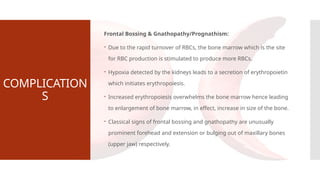
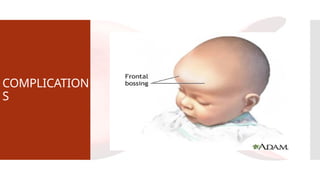
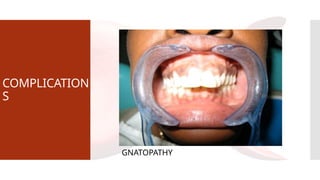
Frontal Bossing & Gnathopathy/Prognathism:
 Due to the rapid turnover of RBCs, the bone marrow which is the site
for RBC production is stimulated to produce more RBCs.
 Hypoxia detected by the kidneys leads to a secretion of erythropoietin
which initiates erythropoiesis.
 Increased erythropoiesis overwhelms the bone marrow hence leading
to enlargement of bone marrow, in effect, increase in size of the bone.
 Classical signs of frontal bossing and gnathopathy are unusually
prominent forehead and extension or bulging out of maxillary bones
(upper jaw) respectively.
COMPLICATION
S
COMPLICATION
S
GNATOPATHY
COMPLICATI
ONS
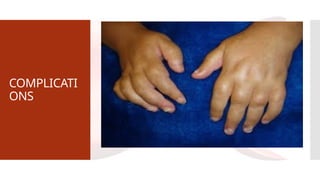
Dactylitis:
 It is also known as the sausage digit. It is a severe inflammation
of an entire digit and ca be very painful.
 It is derived from the Greek word ‘dactylos’ meaning finger.
 It happens when sickled cells block blood flow in the hands and
feet.
 The sickle cell gets stuck in the blood vessels and in the small
bones of the hands and feet.
COMPLICATI
ONS
COMPLICATION
S
Acute Chest Syndrome (ACS):
 Decreased blood supply to the chest region causes inflammation
and pain in the chest region.
 Inflammation of tissues that line the lungs and chest cavity
(pleurisy) is as a result of tissue hypoxia.
 Vaso-occlusion in the pulmonary vessels can cause pulmonary
oedema leading to respiratory distress as a result of fluid build up.
 This makes breathing difficult as the ribs are not able to
adequately expand upon breathing in.
 Consequently, hypoventilation occurs.
COMPLICATION
S
Acute Chest Syndrome (Cont’d)
 Classical symptoms of ACS include:
Cough
Chest pain
Tightness in chest
Tachypnea
Dyspnea
Fever
If a chest x-ray is taken, observations likely to be made are heavy
opacifications and lung infiltrates
COMPLICATION
S
Spleen:
 The spleen is the graveyard for dead red blood cells. Massive
haemolysis causes the spleen to enlarge in order to accommodate the
increased number of red blood cells (spleenomegaly).
 The stretching and enlargening of the spleen from its original size
causes abdominal pain as it presses on other vital organs.
 The spleen is responsible of opsonization, which is a crucial process for
combating microbes. It involves the production of opsonins; antibodies
which make the microbes suceptible to phagocytosis.
 Opsonins produced by the spleen break away the capsules of
encapsulated organisms.eg. Streptococcus pneumoniae, Haemophilus
influenzae, Neisseria meningitis, etc.
COMPLICATION
S
Spleen:
 Massive haemolysis causes spleen to be fibrosed as it does not
receive enough blood supply. This dimishes the efficiency of the
spleen leading to an autosplenectomy or asplenia (shrunk and
non-funtional spleen).
 This enables encapsulated organisms to thrive since production
of opsonins is impaired.
 Generally, the spleen helps fight infections by producing some
other inflammatory markers and so in the case of a non-
functional spleen, other organisms also have a field day making
the individual vulnerable to infections.
COMPLICATION
S
Liver:
 The sickled shape of the RBCs causes sinusoidal
obstruction which reduces blood flow to the liver and lead
to significant liver necrosis, often cirrhosis and decreased
liver function.
 Decrease in liver function, results in decrease in
production of hepatic enzymes which play vital roles in
processes such as protein metabolism, blood clotting,
fighting infections, etc.
 Massive haemolysis means red blood cells are dying
faster than the liver can filter them out. This can result in
hepatomegaly.
COMPLICATION
S
Liver (cont’d):
 Impaired function of the liver can cause jaundice. When the
heme moiety dissociates from the globulin moiety in the
hemolysis of RBCs, heme oxygenase reduces heme to biliverdin
which is subsequently reduced to bilirubin.
 The liver is expected to convert the bilirubin which is fat soluble to
its water soluble form so it can be excreted through urine and
faeces. Impairment of the liver distorts this function. Hence, there
is a build up of the fat-soluble bilirubin in the body.
 This leads to it being deposited in fatty tissues such us the sclera
of the eye, crossing the BBB to cause hepatic encephalopathy, etc.
COMPLICATION
S
Kidneys:
 Due to low perfusion of kidneys, a disorder known as
renal papillary necrosis occurs where all or part of the
renal papillae die. This can further lead to kindey failure. A
classical sign of papillary necrosis is haematuria.
 Due to the gradual loss in function of the kidneys, they fail
to concentrate urine (hypostenuria). This can be detected
by a low specific gravity in the urine.
 Urinary incontinence is also prevalent as kidney funtion
diminishes.
COMPLICATION
S
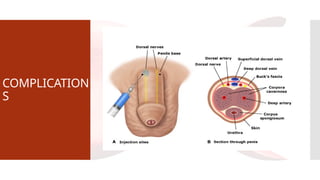
Priapism:
 Named after Priapus; the greek god of fertility.
 Due to occlusion of vessels, there is reduced backflow of
blood which can lead to a sustained erection (<4 hours) in
the absence of sexual stimulation or trauma.
 Sickling of the red blood cells in the sinusoids of the corpus
carvenosum is the primary mechanism for priapism; a
sustained painful erection.
 Detumescence (process of subsiding from a state of
tension) is impaired.
COMPLICATION
S
MANAGEMENT
 Non-Pharmaclogical Managemnt:
Good hydration at all times by drinking adequate water
Maintenance of good nutrition
Client education
Parental education
Genetic counselling
General public knowledge
MANAGEMENT
 Pharmacological Management:
Vaso-occlusive bone pain crisis:
There are 4 main ways of managing VOCs:
1. Oxygen supplementation to help with hypoxia
• Target for oxygen supplementation is 100% oxygen
saturation.
MANAGEMENT
2. Giving analgesics:
Mild to moderate pain:
Paracetamol, oral
Adults: 500mg-1g 6-8hourly
Children: 6-12 years; 250-500mg 6-8 hourly
1-5 years; 120-250mg 6-8 hourly
3 months-1 year; 60-120mg 6-8 hourly
For Paracetamol, rectal, doses are as above.
MANAGEMENT
Ibuprofen, oral
Adults: 400mg 6-8 hourly
Children: 6-12 years; 200mg-400mg 6-8 hourly
1-5 years; 100mg-200mg 6-8 hourly
3 months-1 year; not recommended
MANAGEMENT
Diclofenac, oral
Adults: 50mg 8 hourly or 100mg 12 hourly
Children: >12 years; 50mg 12 hourly
<12 years; not recommended
Diclofenac, rectal
Adults: 100mg daily up to max. of 200mg daily in divided doses
Children: 75-100mg daly
CAUTION: Long term use of NSAIDs (for more than two weeks) can
cause renal impairment and gastritis (STG,2017)
MANAGEMENT
 For moderate pain, a combination of Paracetamol and an
NSAID can be effective.
 Alternatively, a weak opioid can be given:
Tramadol, oral, 50mg 8 hourly
MANAGEMENT
Severe pain:
If pain is not controlled by the measures implemented
within 12 hours, morphine may be used but specialist
consultation is required (STG, 2017)
Morphine Sulphate, oral/IV
OR
Codeine phosphate, oral
Adults and children over 12 years: 30-60mg 4-6 hourly
CAUTION: To prevent opioid addiction, administer by the clock!
MANAGEMENT
3. Hydration Therapy:
Dextrose in Sodium Chloride, IV Infusion
Adults: 5% Dextrose in 0.9% Sodium Chloride 2-4L daily
Children: 5% Dextrose in 0.9% Sodium Chloride 150ml/kg
daily
OR
Adults: Normal saline alternating with 5% Dextrose 2-4L
daily
Children: Normal saline alternating 5% dextrose in
150ml/kg daily
MANAGEMENT
 In hydration therapy for rehydration, it is advisable to do
a 70% maintenace to prevent pulmonary oedema which
can exacerbate the ACS.
 In hydration therapy for VOCs, a full maintenance can be
done as flushing out of clogged blood vessels can reduce
pain hence is of priority.
MANAGEMENT
4. Blood Transfusion
 Blood transfusion is needed when haemoglobin level is <5g/dL
(2g/dL short of the baseline haemoglobin in SCD patients)
 Blood Transfusion is ideally done with packed cells not whole
blood.
 Exchange transfusion is the ideal form of tranfusion. It involves
draining out patient’s blood and transfusing with AA blood (sickle
free blood)
 Alternatively, dilute tranfusion can be done which involves keeping
patient’s blood and topping up with sickle free blood.
 Hb target is at least 10g/dL.
MANAGEMENT
Steady state management:
Folic acid, oral
Adults: 5mg daily
Children: >1 year; 5mg daily
<1 year; 2.5mg daily
NB: Iron supplementation is avoided in SCD patients since it
can cause haemochromatosis (iron overload). RBCs contain
iron. Hence massive haemolysis leads to already increased
amounts of iron in the body. Giving folic acid
supplemnentation suffices.
MANAGEMENT
Infections:
Patients with suspected bacterial infections or acute chest
syndrome require broad-spectrum antibiotics and should
have an urgent chest X-ray, blood and urine C/S to
streamline treatment.
Recommended parenteral broad-spectrum antibiotics for
acute chest syndrome include cephalosporins and
macrolides.
If the patient is discharged, oral prophylactic antibiotics
(mostly penicillins) are given.
MANAGEMENT
Infections:
IV Ceftriaxone
Adults: 2g daily for 3 days
IV Azithromycin
Adults: 500mg daily for 3 days
Children: 250mg daily for 3 days
MANAGEMENT
IV Cefuroxime
Adult: 50mg 8 hourly
Increased if necessary to 750mg 6 hourly, alternatively 1.5g
every 6-8 hours (depending on the severity of the infection).
Children: 20 mg/kg 8 hourly (max. per dose 750 mg)
Increased to 50-60mg/kg every 6–8 hours (max. per dose
1.5 g), increased dose used for severe infection.
MANAGEMENT
Penicillin V (Phenoxymethylpenicillin), oral
Given as prophylaxis for the prevention of pneumococcal infections.
Adult: 250mg twice daily
Children: 1–11 months; 62.5mg twice daily
1–4 years; 125mg twice daily
5–17 years; 250mg twice daily
Also for prophylaxis, pneumococcal conjugate vaccine 13 (PCV 13)
vaccination is given in infancy, and a booster given at 6 years
(STG,2017).
MANAGEMENT
Hydroxyurea:
 Hydroxyurea/hydroxycarbamide, an anti-cancer
medication, at lower doses has been shown to be
effective in the management of SCD.
 Hydroxyurea makes your red blood cells bigger, making
them stay rounder (doughnut shaped) and more flexible
and makes them less likely to turn into a sickle shape.
 It increases HbF thereby reducing sickling, decreasing
painful crises and decreases ACS and transfusion
requirement.
MANAGEMENT
Hydroxyurea:
 The inclusion criteria for HU therapy are patients who
have had constant pain crises for >3 years and patients
with consistent anemia of Hb <7g/dL.
 Target Hb for HU therapy is 10g/dL. It is not advisable to
go beyond this mark as that can precipitate leukostasis
and thicken the blood.
MANAGEMENT
Hydroxyurea, oral
Skilos
Adult: initially 15mg/kg daily, increased in steps of 2.5-5
mg/kg daily Dose to be increased every 12 weeks according
to response; usual dose 15–30 mg/kg daily; max. 35 mg/kg
per day.
Xromi
Adult: initially 15 mg/kg daily, increased in steps of 5mg/kg
daily, Dose to be increased every 8 weeks according to
response; usual maintenance 20–25 mg/kg daily; max. 35
mg/kg per day.
MANAGEMENT
Monoclonal antibodies (Crizanlizumab):
 They target vaso-occlusion and are found to decrease
pain crises in controlled, randomized studies.
 This medication works by binding and inhibiting P-
selectin, which contributes to adhesion of sickle
erythrocytes to the vascular endothelium.
 This medication is currently being studied and gradually
incorporated into treatment regimens for sickle cell
patients.
MANAGEMENT
L-glutamine:
• A naturally occurring amino acid whose use in sickle cell
disease is based on its antioxidant activity.
• It works by increasing NAD redox potential in sickle red
blood cells thereby increasing the levels of glutathione, an
antioxidant necessary for mopping up excess free radicals
in SCD as a result of increased activity of oxidases, heme
iron release, etc.
• This medication is currently being studied and gradually
incorporated into treatment regimens for sickle cell
patients.
MANAGEMENT
Voxelotor:
 This medication is known to inhibit polymerization of HbS,
stabilizes oxygenated haemoglobin, and was shown to
increase haemoglobin levels in a randomized controlled
trial.
 Data is still being garnered on the efficacy and toxicity of
this medication.
MANAGEMENT
Haemotopoietic Stem Cell Transplantation (HSCT):
• It involves the intravenous infusion of haematopoietic stem cells in
order to reestablish blood cell production in patients whose bone
marrow is damaged or defective.
• The transplantation is either autologous or allogeneic.
• An ideal potential donor is a sibling of the sickle cell patient. If that
is not possible external donors can be screened and an HLA typing
done to confirm donor is safe for the procedure.
 This remains the only curative treatment for sickle cell disease.
 It restores the normal haematopoeisis and potentially reverses or
halts some of the organ damage induced by the disease.
REFERENCES
 Standard Treatment Guidelines, Yamens Press Limited,
P.O. Box AF 274, Accra, Pages 69-72
 Rang & Dale Pharmacology, 6th
Edition
 BNF 83
 Pharmacotherapy
 Journal of Translational Medicine, 2011
 Merk Manual
 Medscape
 UpToDate
 https://sickle-cell.com/statistics
THANK YOU

Sickle Cell.pptx tttttttttttttttttttttttt

  • 1.
    A PRESENTATION ON SICKLECELL DISEASE (SCD)
  • 2.
    OUTLINE  INTRODUCTION  EPIDEMIOLOGY PATHOPHYSIOLOGY  CAUSES  SIGNS & SYMPTOMS  INVESTIGATIONS  COMPLICATIONS  MANAGEMENT  REFERENCES
  • 3.
    INTRODUCTIO N  Sickle celldisease is a haemoglobinopathy disorder that was recognized in 1910 by James Herrick (Karger AG, Basel).  Sickle cell disease is an inherited disease characterized by the possession of two abnormal haemoglobins (autosomal recessive), at least one of which is haemoglobin S (Standard Treatment Guidelines, 2017).  The possession of one normal haemoglobin (HbA) and one abnormal haemoglobin (HbS) does not necessarily constitute a sickle cell disease but rather that individual is said to be a carrier of the disease. Homozygosity (HbSS) results in the disease.
  • 4.
  • 5.
  • 6.
  • 7.
    EPIDEMIOLOG Y  SCD ispredominant throughout Sub-Saharan Africa, the Middle East, parts of India and the Meditteranean.  The carrier state is widespread with a particularly high prevalence in West Africa of up to 30% (Hoffbrand and Moss, 2016)  In a recent study conducted by WHO in November 2020, data garnered showed that as high as 40% of people in some African countries have the sickle cell trait.  About 1,000 children in Africa are born with SCD every day, and more than half will die before they reach 5 years old. ( https://sickle-cell.com/statistics )
  • 8.
    PATHOPHYSIOLOG Y  The geneticmutation on the beta-globin chain of the haemoglobin molecule results in the formation of haemoglobin S (HbS), which has the unique feature of polymerizing on deoxygenation, forming a semisolid gel.  Three key pathophysiological mechanisms: Polymerization of HbS Vaso-occlusion Endothelial dysfunction by haemolysis
  • 9.
  • 10.
    POLYMERIZATIO N OF HbS HbS polymerization alters the form and physicochemical features of red cells.  The affinity of HbS for oxygen is lower than that of HbA. HbS polymerization is exacerbated by the reduced affinity of HbS for oxygen, and polymerization in turn further diminishes the oxygen affinity for HbS.  The deoxygenation process that accelerates HbS polymerization occurs as a result of mechanisms such physiologically high levels of 2,3-diphosphoglycerate and enhanced sphingokinase-1 activity.
  • 11.
    POLYMERIZATIO N OF HbS HbS polymerization disrupts the normal lipid bilayer and proteins of red cells membranes resulting in decreased cellular hydration and accelerated haemolysis.  The net effect is the early apoptosis of red blood cells. The life span of normal red blood cells: 90-120 days The life span of sickle cells: 10-20 days
  • 12.
    VASO- OCCLUSION  Normal redblood cells are doughnut shaped hence they are able to manouver easily through blood vessels.  Sickle cells are less flexible which leads to impaired blood flow through microcirculation, resulting in local tissue hypoxia. (Roger Walker Clinical Pharmacy & Therapeutics, 6th Edition)  This mechanism results in ischaemia, and it is the primary mechanism underlying acute systemic painful vaso- occlusive crisis (VOC).
  • 13.
    VASO- OCCLUSION  The sickle/crescent-like/bananashape causes the red blood cells to clog blood vessels.  This leads to parts of the body being deprived of oxygen (tissue hypoxia), which stimulates the host’s adaptive inflammatory response. This is accompanied with pain as the body tries to rectify the problem of occlusion. (Journal of Translational Medicine, 2021)
  • 14.
  • 15.
  • 16.
    ENDOTHELIAL DYSFUNCTION  Cell-free haemoglobincauses significant oxidative stress in cells and blood vessels of patients with SCD.  This enhances generation of reactive oxygen species (ROS).  Cell-free haemoglobin in plasma causes nitric oxide (NO) scavenging, resulting in impaired endothelial function, and enhances proliferative vasculopathy in the respiratory and systemic vasculature.
  • 17.
  • 18.
    FETAL HAEMOGLOBI N (HbF)  About6 months post partum, there is an expression of adult haemoglobin. This is what initiates the pain associated with sickle cell disease.  In some cases, individuals do not express adult haemoglobins until at a later time in life. In such, pain is not as pronounced as in the case of the above.
  • 19.
    DIAGNOSIS • 1. Bloodsmear • 2. Slide sickling preparation • 3. Solubility test • 4. Complete Blood Count, reticulocyte count • 5. Hemoglobin separation tests • 6. Quantitation of hemoglobin fractions • 7. Quantitation of globin chain fractions • 8. DNA-based tests • 9. Family studies
  • 20.
    CAUSES  Inheritance oftwo abnormal haemoglobin genes from both parents (at least one of which is HbS) Crises are typically precipitated by:  Cold weather  Dehydration  Infection  Physical exertion  Mental stress
  • 21.
    SYMPTOMS OF SCD  Jointand bone pain (especially during cold weather)  Easy fatiguability  Pallor  Jaundice  Difficulty in breathing with or without chest pain  Chronic leg ulcer  Abdominal pain, especially in splenic area  Priapism
  • 22.
    SIGNS OF SCD  Jaundice Pallor  Hepatomegaly  Spleenomegaly  Frontal bossing  Gnathopathy  Growth delay or tall, lanky stature
  • 23.
    INVESTIGATION S  Full BloodCount (FBC)  Blood film comment  Reticulocyte count  Sickling test  Haemoglobin electrophoresis  Urine examination  Chest X-ray in case of Acute Chest Syndrome (ACS)  Blood and urine C/S when infection is suspected  G6PD Assay
  • 24.
    COMPLICATION S Cerebrovascular Accident (CVA): The morphology of RBCs predisposes SCD patients to ischaemic strokes.  Sickle cells tend to stick together making movement through blood vessels difficult. They clump together and block blood vessels. If this happens in the vessel perfusing the brain, a cerebrovascular accident occurs.  A stroke could also be due to an endothelial injury (damage to the blood vessels supplying blood to the brain) or a coagulopathy (a clot forming in the vessels and moving to the brain).
  • 25.
    COMPLICATION S Frontal Bossing &Gnathopathy/Prognathism:  Due to the rapid turnover of RBCs, the bone marrow which is the site for RBC production is stimulated to produce more RBCs.  Hypoxia detected by the kidneys leads to a secretion of erythropoietin which initiates erythropoiesis.  Increased erythropoiesis overwhelms the bone marrow hence leading to enlargement of bone marrow, in effect, increase in size of the bone.  Classical signs of frontal bossing and gnathopathy are unusually prominent forehead and extension or bulging out of maxillary bones (upper jaw) respectively.
  • 26.
  • 27.
  • 28.
    COMPLICATI ONS Dactylitis:  It isalso known as the sausage digit. It is a severe inflammation of an entire digit and ca be very painful.  It is derived from the Greek word ‘dactylos’ meaning finger.  It happens when sickled cells block blood flow in the hands and feet.  The sickle cell gets stuck in the blood vessels and in the small bones of the hands and feet.
  • 29.
  • 30.
    COMPLICATION S Acute Chest Syndrome(ACS):  Decreased blood supply to the chest region causes inflammation and pain in the chest region.  Inflammation of tissues that line the lungs and chest cavity (pleurisy) is as a result of tissue hypoxia.  Vaso-occlusion in the pulmonary vessels can cause pulmonary oedema leading to respiratory distress as a result of fluid build up.  This makes breathing difficult as the ribs are not able to adequately expand upon breathing in.  Consequently, hypoventilation occurs.
  • 31.
    COMPLICATION S Acute Chest Syndrome(Cont’d)  Classical symptoms of ACS include: Cough Chest pain Tightness in chest Tachypnea Dyspnea Fever If a chest x-ray is taken, observations likely to be made are heavy opacifications and lung infiltrates
  • 32.
    COMPLICATION S Spleen:  The spleenis the graveyard for dead red blood cells. Massive haemolysis causes the spleen to enlarge in order to accommodate the increased number of red blood cells (spleenomegaly).  The stretching and enlargening of the spleen from its original size causes abdominal pain as it presses on other vital organs.  The spleen is responsible of opsonization, which is a crucial process for combating microbes. It involves the production of opsonins; antibodies which make the microbes suceptible to phagocytosis.  Opsonins produced by the spleen break away the capsules of encapsulated organisms.eg. Streptococcus pneumoniae, Haemophilus influenzae, Neisseria meningitis, etc.
  • 33.
    COMPLICATION S Spleen:  Massive haemolysiscauses spleen to be fibrosed as it does not receive enough blood supply. This dimishes the efficiency of the spleen leading to an autosplenectomy or asplenia (shrunk and non-funtional spleen).  This enables encapsulated organisms to thrive since production of opsonins is impaired.  Generally, the spleen helps fight infections by producing some other inflammatory markers and so in the case of a non- functional spleen, other organisms also have a field day making the individual vulnerable to infections.
  • 34.
    COMPLICATION S Liver:  The sickledshape of the RBCs causes sinusoidal obstruction which reduces blood flow to the liver and lead to significant liver necrosis, often cirrhosis and decreased liver function.  Decrease in liver function, results in decrease in production of hepatic enzymes which play vital roles in processes such as protein metabolism, blood clotting, fighting infections, etc.  Massive haemolysis means red blood cells are dying faster than the liver can filter them out. This can result in hepatomegaly.
  • 35.
    COMPLICATION S Liver (cont’d):  Impairedfunction of the liver can cause jaundice. When the heme moiety dissociates from the globulin moiety in the hemolysis of RBCs, heme oxygenase reduces heme to biliverdin which is subsequently reduced to bilirubin.  The liver is expected to convert the bilirubin which is fat soluble to its water soluble form so it can be excreted through urine and faeces. Impairment of the liver distorts this function. Hence, there is a build up of the fat-soluble bilirubin in the body.  This leads to it being deposited in fatty tissues such us the sclera of the eye, crossing the BBB to cause hepatic encephalopathy, etc.
  • 36.
    COMPLICATION S Kidneys:  Due tolow perfusion of kidneys, a disorder known as renal papillary necrosis occurs where all or part of the renal papillae die. This can further lead to kindey failure. A classical sign of papillary necrosis is haematuria.  Due to the gradual loss in function of the kidneys, they fail to concentrate urine (hypostenuria). This can be detected by a low specific gravity in the urine.  Urinary incontinence is also prevalent as kidney funtion diminishes.
  • 37.
    COMPLICATION S Priapism:  Named afterPriapus; the greek god of fertility.  Due to occlusion of vessels, there is reduced backflow of blood which can lead to a sustained erection (<4 hours) in the absence of sexual stimulation or trauma.  Sickling of the red blood cells in the sinusoids of the corpus carvenosum is the primary mechanism for priapism; a sustained painful erection.  Detumescence (process of subsiding from a state of tension) is impaired.
  • 38.
  • 39.
    MANAGEMENT  Non-Pharmaclogical Managemnt: Goodhydration at all times by drinking adequate water Maintenance of good nutrition Client education Parental education Genetic counselling General public knowledge
  • 40.
    MANAGEMENT  Pharmacological Management: Vaso-occlusivebone pain crisis: There are 4 main ways of managing VOCs: 1. Oxygen supplementation to help with hypoxia • Target for oxygen supplementation is 100% oxygen saturation.
  • 41.
    MANAGEMENT 2. Giving analgesics: Mildto moderate pain: Paracetamol, oral Adults: 500mg-1g 6-8hourly Children: 6-12 years; 250-500mg 6-8 hourly 1-5 years; 120-250mg 6-8 hourly 3 months-1 year; 60-120mg 6-8 hourly For Paracetamol, rectal, doses are as above.
  • 42.
    MANAGEMENT Ibuprofen, oral Adults: 400mg6-8 hourly Children: 6-12 years; 200mg-400mg 6-8 hourly 1-5 years; 100mg-200mg 6-8 hourly 3 months-1 year; not recommended
  • 43.
    MANAGEMENT Diclofenac, oral Adults: 50mg8 hourly or 100mg 12 hourly Children: >12 years; 50mg 12 hourly <12 years; not recommended Diclofenac, rectal Adults: 100mg daily up to max. of 200mg daily in divided doses Children: 75-100mg daly CAUTION: Long term use of NSAIDs (for more than two weeks) can cause renal impairment and gastritis (STG,2017)
  • 44.
    MANAGEMENT  For moderatepain, a combination of Paracetamol and an NSAID can be effective.  Alternatively, a weak opioid can be given: Tramadol, oral, 50mg 8 hourly
  • 45.
    MANAGEMENT Severe pain: If painis not controlled by the measures implemented within 12 hours, morphine may be used but specialist consultation is required (STG, 2017) Morphine Sulphate, oral/IV OR Codeine phosphate, oral Adults and children over 12 years: 30-60mg 4-6 hourly CAUTION: To prevent opioid addiction, administer by the clock!
  • 46.
    MANAGEMENT 3. Hydration Therapy: Dextrosein Sodium Chloride, IV Infusion Adults: 5% Dextrose in 0.9% Sodium Chloride 2-4L daily Children: 5% Dextrose in 0.9% Sodium Chloride 150ml/kg daily OR Adults: Normal saline alternating with 5% Dextrose 2-4L daily Children: Normal saline alternating 5% dextrose in 150ml/kg daily
  • 47.
    MANAGEMENT  In hydrationtherapy for rehydration, it is advisable to do a 70% maintenace to prevent pulmonary oedema which can exacerbate the ACS.  In hydration therapy for VOCs, a full maintenance can be done as flushing out of clogged blood vessels can reduce pain hence is of priority.
  • 48.
    MANAGEMENT 4. Blood Transfusion Blood transfusion is needed when haemoglobin level is <5g/dL (2g/dL short of the baseline haemoglobin in SCD patients)  Blood Transfusion is ideally done with packed cells not whole blood.  Exchange transfusion is the ideal form of tranfusion. It involves draining out patient’s blood and transfusing with AA blood (sickle free blood)  Alternatively, dilute tranfusion can be done which involves keeping patient’s blood and topping up with sickle free blood.  Hb target is at least 10g/dL.
  • 49.
    MANAGEMENT Steady state management: Folicacid, oral Adults: 5mg daily Children: >1 year; 5mg daily <1 year; 2.5mg daily NB: Iron supplementation is avoided in SCD patients since it can cause haemochromatosis (iron overload). RBCs contain iron. Hence massive haemolysis leads to already increased amounts of iron in the body. Giving folic acid supplemnentation suffices.
  • 50.
    MANAGEMENT Infections: Patients with suspectedbacterial infections or acute chest syndrome require broad-spectrum antibiotics and should have an urgent chest X-ray, blood and urine C/S to streamline treatment. Recommended parenteral broad-spectrum antibiotics for acute chest syndrome include cephalosporins and macrolides. If the patient is discharged, oral prophylactic antibiotics (mostly penicillins) are given.
  • 51.
    MANAGEMENT Infections: IV Ceftriaxone Adults: 2gdaily for 3 days IV Azithromycin Adults: 500mg daily for 3 days Children: 250mg daily for 3 days
  • 52.
    MANAGEMENT IV Cefuroxime Adult: 50mg8 hourly Increased if necessary to 750mg 6 hourly, alternatively 1.5g every 6-8 hours (depending on the severity of the infection). Children: 20 mg/kg 8 hourly (max. per dose 750 mg) Increased to 50-60mg/kg every 6–8 hours (max. per dose 1.5 g), increased dose used for severe infection.
  • 53.
    MANAGEMENT Penicillin V (Phenoxymethylpenicillin),oral Given as prophylaxis for the prevention of pneumococcal infections. Adult: 250mg twice daily Children: 1–11 months; 62.5mg twice daily 1–4 years; 125mg twice daily 5–17 years; 250mg twice daily Also for prophylaxis, pneumococcal conjugate vaccine 13 (PCV 13) vaccination is given in infancy, and a booster given at 6 years (STG,2017).
  • 54.
    MANAGEMENT Hydroxyurea:  Hydroxyurea/hydroxycarbamide, ananti-cancer medication, at lower doses has been shown to be effective in the management of SCD.  Hydroxyurea makes your red blood cells bigger, making them stay rounder (doughnut shaped) and more flexible and makes them less likely to turn into a sickle shape.  It increases HbF thereby reducing sickling, decreasing painful crises and decreases ACS and transfusion requirement.
  • 55.
    MANAGEMENT Hydroxyurea:  The inclusioncriteria for HU therapy are patients who have had constant pain crises for >3 years and patients with consistent anemia of Hb <7g/dL.  Target Hb for HU therapy is 10g/dL. It is not advisable to go beyond this mark as that can precipitate leukostasis and thicken the blood.
  • 56.
    MANAGEMENT Hydroxyurea, oral Skilos Adult: initially15mg/kg daily, increased in steps of 2.5-5 mg/kg daily Dose to be increased every 12 weeks according to response; usual dose 15–30 mg/kg daily; max. 35 mg/kg per day. Xromi Adult: initially 15 mg/kg daily, increased in steps of 5mg/kg daily, Dose to be increased every 8 weeks according to response; usual maintenance 20–25 mg/kg daily; max. 35 mg/kg per day.
  • 57.
    MANAGEMENT Monoclonal antibodies (Crizanlizumab): They target vaso-occlusion and are found to decrease pain crises in controlled, randomized studies.  This medication works by binding and inhibiting P- selectin, which contributes to adhesion of sickle erythrocytes to the vascular endothelium.  This medication is currently being studied and gradually incorporated into treatment regimens for sickle cell patients.
  • 58.
    MANAGEMENT L-glutamine: • A naturallyoccurring amino acid whose use in sickle cell disease is based on its antioxidant activity. • It works by increasing NAD redox potential in sickle red blood cells thereby increasing the levels of glutathione, an antioxidant necessary for mopping up excess free radicals in SCD as a result of increased activity of oxidases, heme iron release, etc. • This medication is currently being studied and gradually incorporated into treatment regimens for sickle cell patients.
  • 59.
    MANAGEMENT Voxelotor:  This medicationis known to inhibit polymerization of HbS, stabilizes oxygenated haemoglobin, and was shown to increase haemoglobin levels in a randomized controlled trial.  Data is still being garnered on the efficacy and toxicity of this medication.
  • 60.
    MANAGEMENT Haemotopoietic Stem CellTransplantation (HSCT): • It involves the intravenous infusion of haematopoietic stem cells in order to reestablish blood cell production in patients whose bone marrow is damaged or defective. • The transplantation is either autologous or allogeneic. • An ideal potential donor is a sibling of the sickle cell patient. If that is not possible external donors can be screened and an HLA typing done to confirm donor is safe for the procedure.  This remains the only curative treatment for sickle cell disease.  It restores the normal haematopoeisis and potentially reverses or halts some of the organ damage induced by the disease.
  • 61.
    REFERENCES  Standard TreatmentGuidelines, Yamens Press Limited, P.O. Box AF 274, Accra, Pages 69-72  Rang & Dale Pharmacology, 6th Edition  BNF 83  Pharmacotherapy  Journal of Translational Medicine, 2011  Merk Manual  Medscape  UpToDate  https://sickle-cell.com/statistics
  • 62.

Editor's Notes

  • #8 Hb S Polymerization- is the primary, indispensable, initiating pathophysiologic event in SCD from which all of the other pathophysiologic changes arise
  • #10 Hb polymerization is a simple phase change from solution to gel. It is an endothermic process facilitated by hydrophobic interaction. It results from the release of ordered water molecules from the surface of free Hb
  • #57 5mg/kg on week 0, 2, and every 4weeks thereafter.
  • #58 Nicotinamide adenine dinucleotide Dose : < 30kg ; 5g PO BID 30-65kg; 10g PO BID >=65kg; 15g PO BID
  • #59 1500mg PO qDay
  • #60 Autologous- cells/ tissues related to self Allogenic taken diff individuals of same species.