Ceramic Application
Guidelines
A Guide for Success
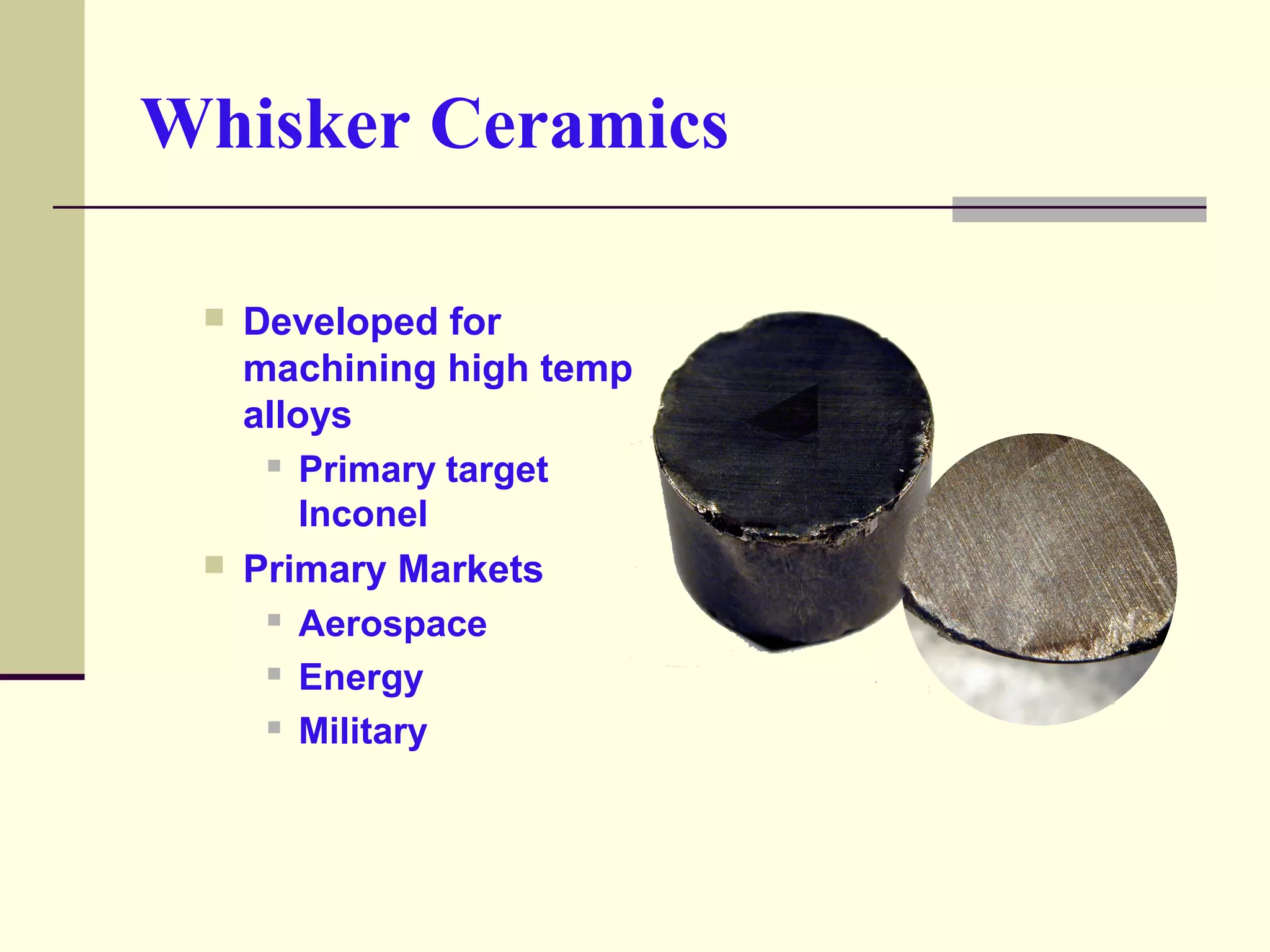
Whisker Ceramics
 Developed for
machining high temp
alloys
 Primary target
Inconel
 Primary Markets
 Aerospace
 Energy
 Military
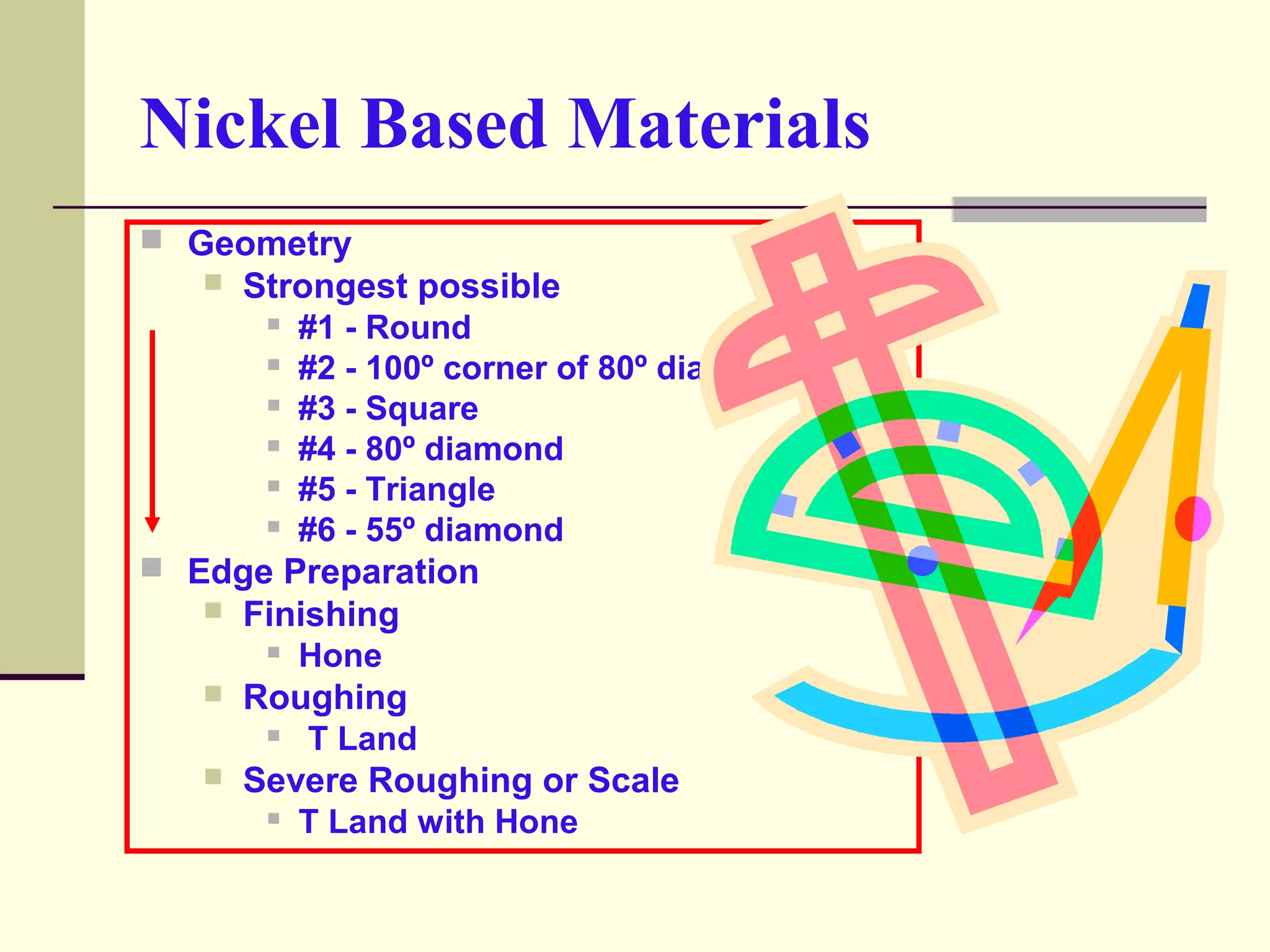
Nickel Based Materials
 Geometry
 Strongest possible
 #1 - Round
 #2 - 100º corner of 80º diamond
 #3 - Square
 #4 - 80º diamond
 #5 - Triangle
 #6 - 55º diamond
 Edge Preparation
 Finishing
 Hone
 Roughing
 T Land
 Severe Roughing or Scale
 T Land with Hone
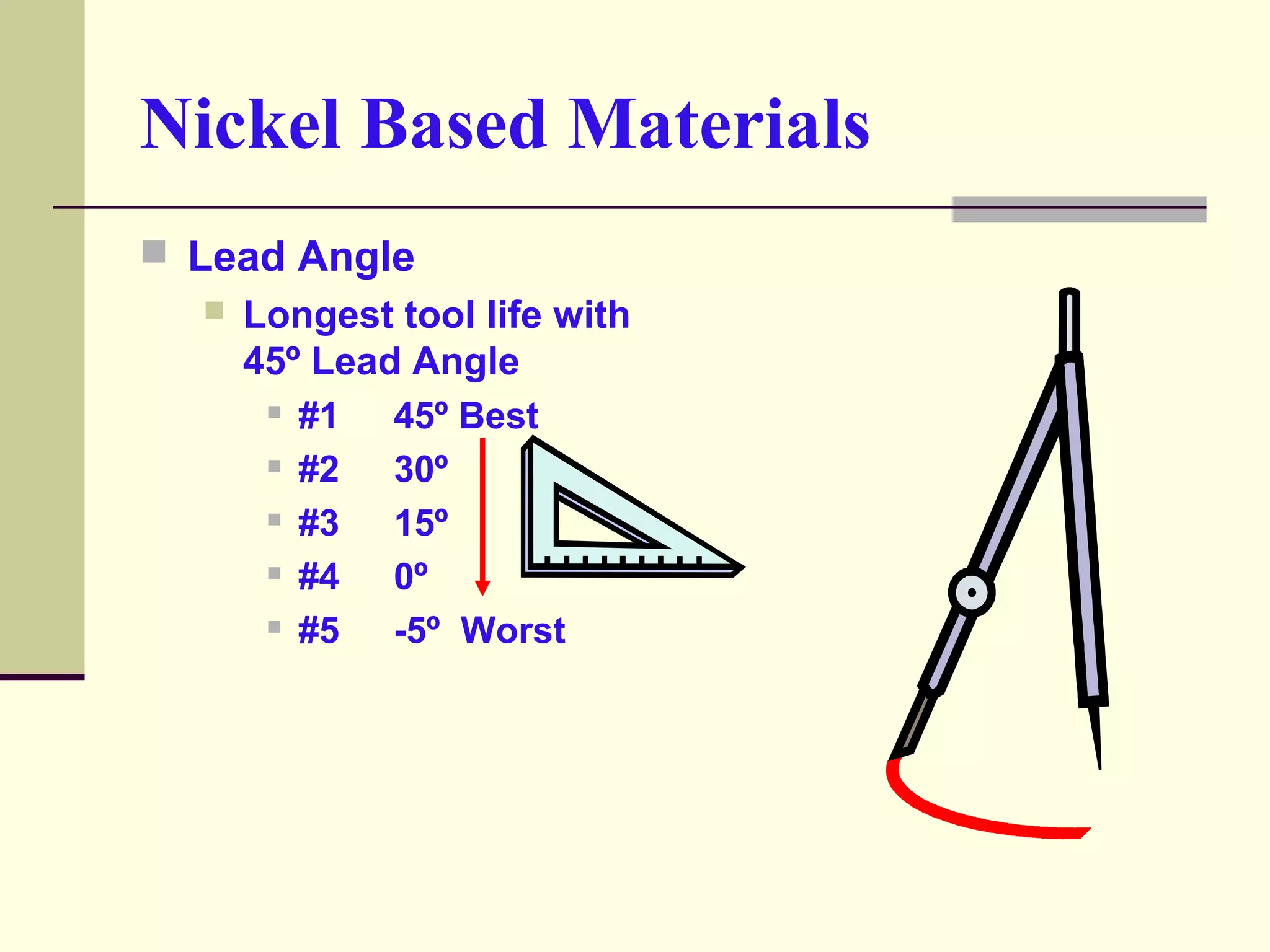
Nickel Based Materials
 Lead Angle
 Longest tool life with
45º Lead Angle
 #1 45º Best
 #2 30º
 #3 15º
 #4 0º
 #5 -5º Worst
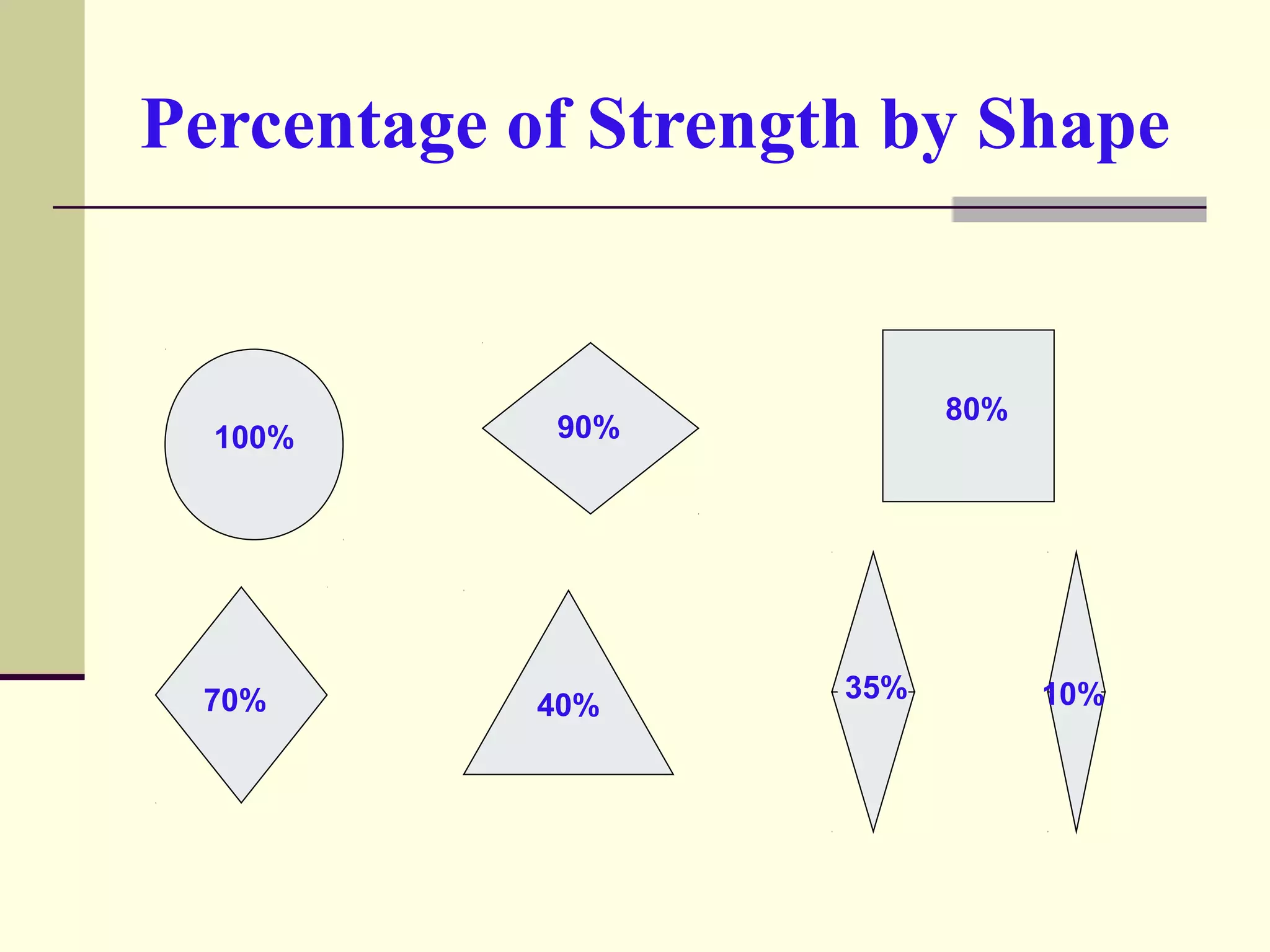
Percentage of Strength by Shape
100%
80%
40% 10%35%
90%
70%
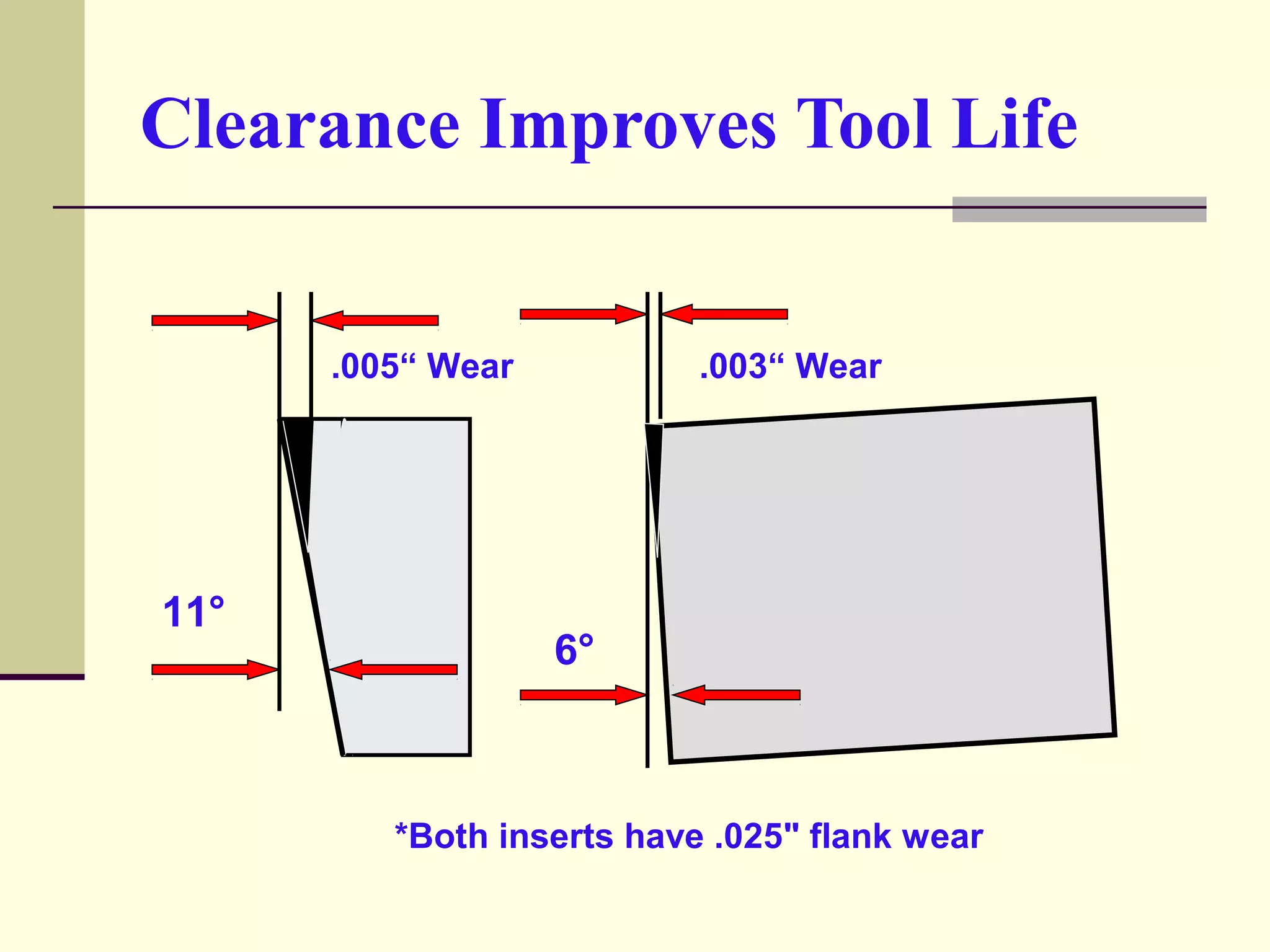
Clearance Improves Tool Life
11°
6°
.005“ Wear .003“ Wear
*Both inserts have .025" flank wear
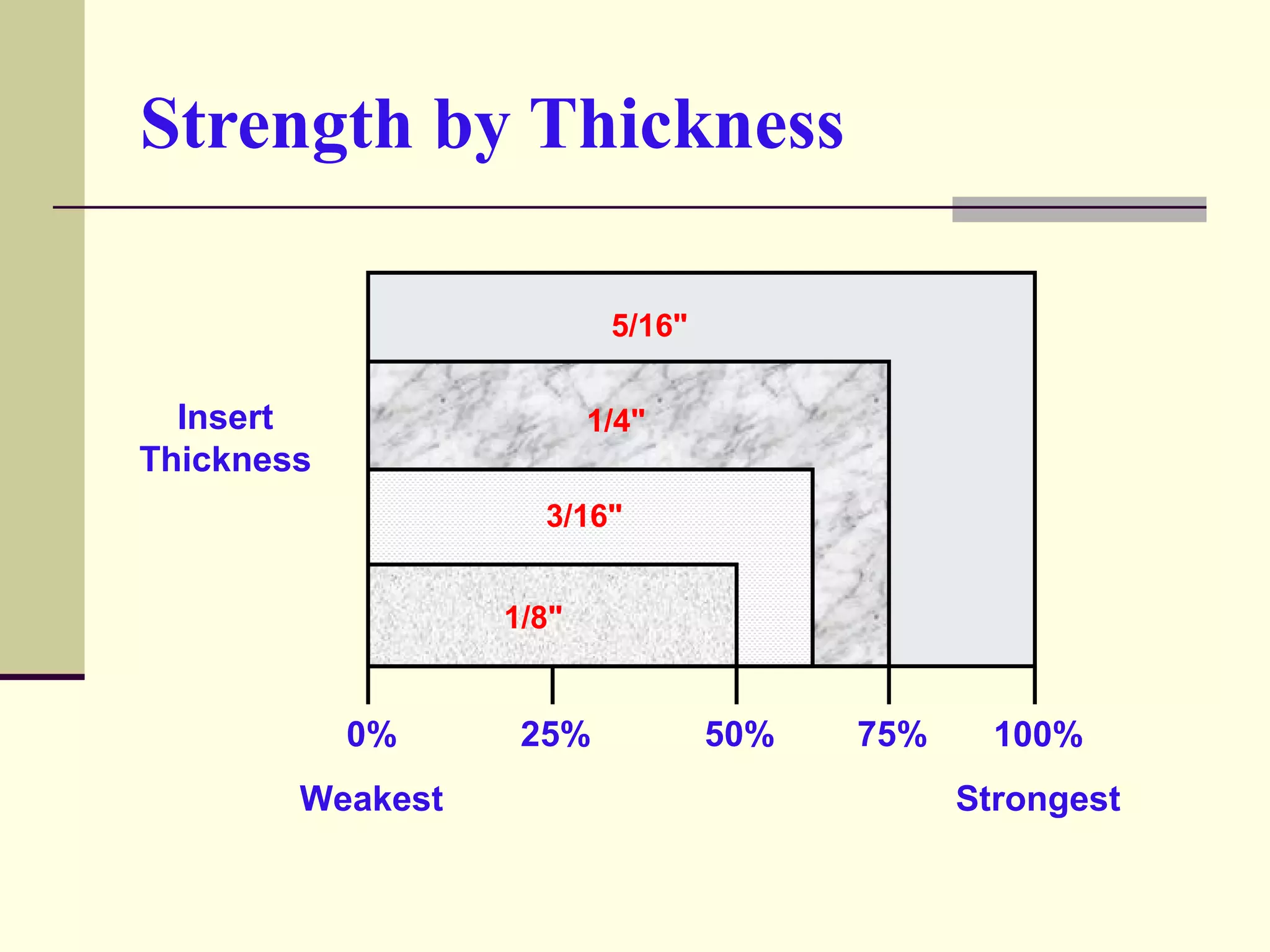
Strength by Thickness
5/16"
1/4"
3/16"
1/8"
0%
Weakest
25% 50% 75% 100%
Strongest
Insert
Thickness
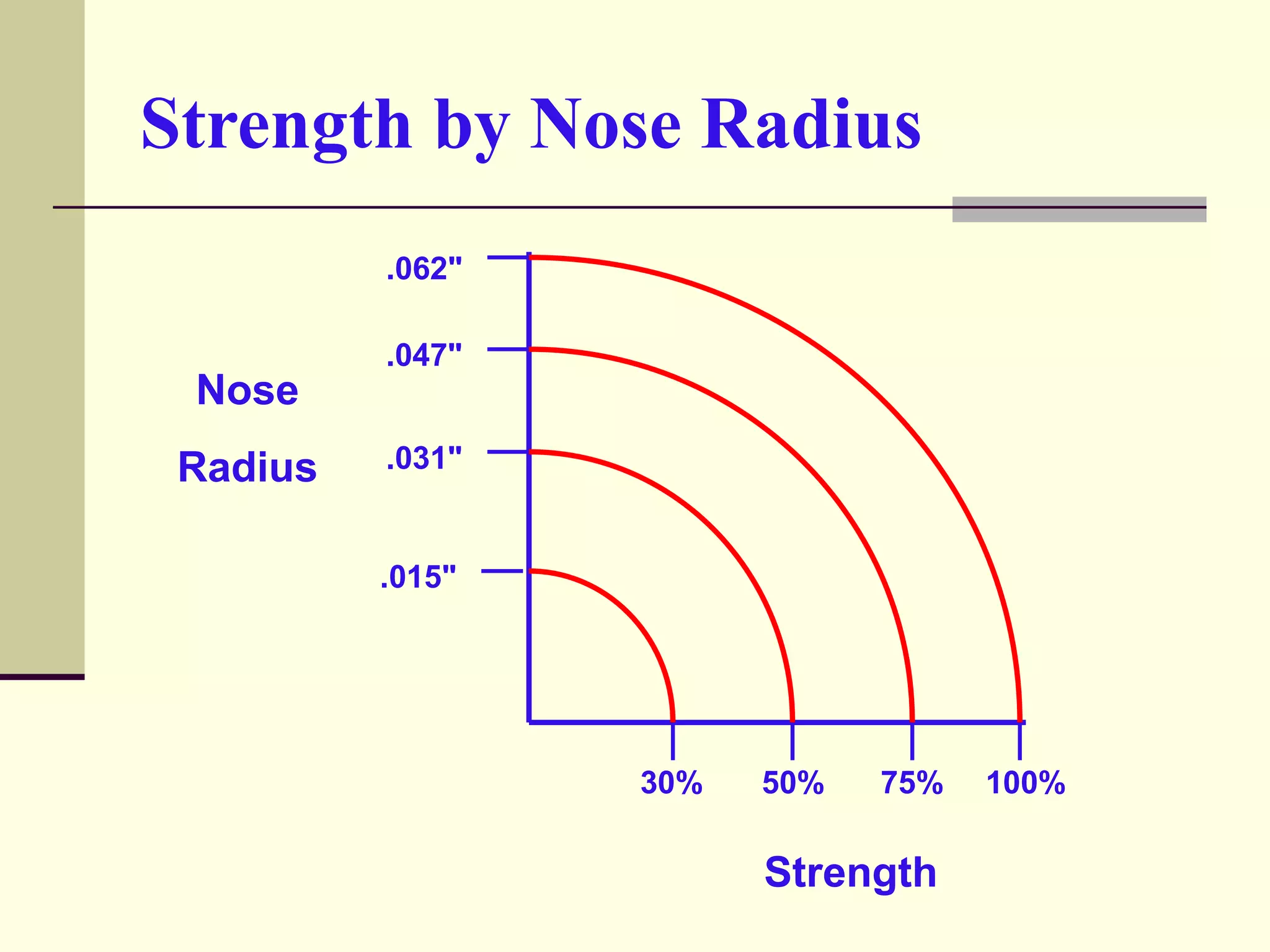
Strength by Nose Radius
.062"
.047"
.031"
.015"
100%75%50%30%
Strength
Nose
Radius
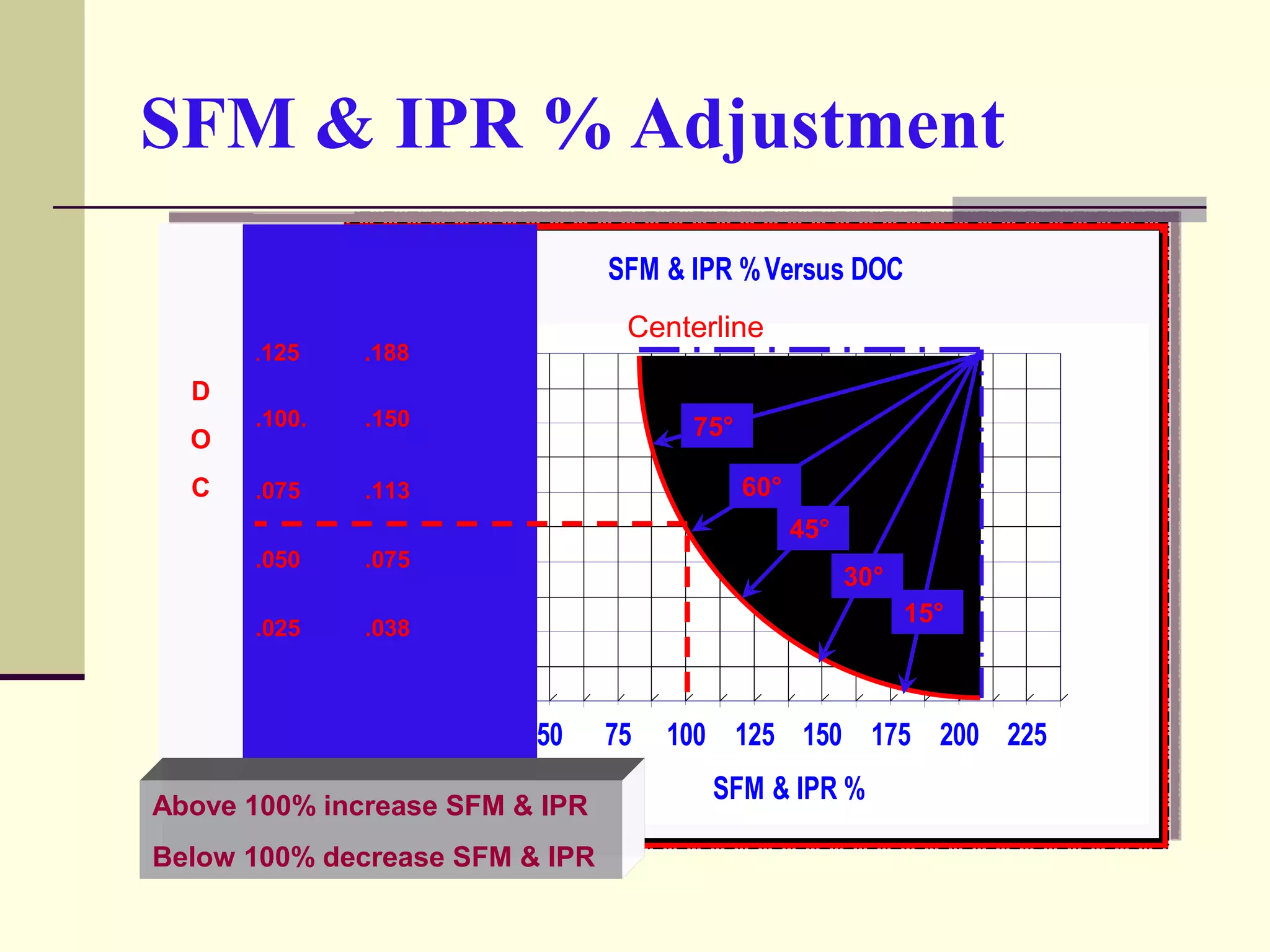
SFM & IPR % Adjustment
0.000
0.050
0.100
0.150
0.200
0.250
50 75 100 125 150 175 200 225
SFM & IPR %
SFM & IPR %Versus DOC
75°
60°
45°
30°
15°
Centerline
Insert Diameter
.250 .375 .500
.125 .188
.100. .150
.075 .113
.050 .075
.025 .038
D
O
C
0.000
0.050
0.100
0.150
0.200
0.250
50 75 100 125 150 175 200 225
SFM & IPR %
SFM & IPR %Versus DOC
75°
60°
45°
30°
15°
Centerline
Insert Diameter
.250 .375 .500
.125 .188
.100. .150
.075 .113
.050 .075
.025 .038
D
O
C
0.000
0.050
0.100
0.150
0.200
0.250
50 75 100 125 150 175 200 225
SFM & IPR %
SFM & IPR %Versus DOC
75°
60°
45°
30°
15°
Centerline
Insert Diameter
.250 .375 .500
.125 .188
.100. .150
.075 .113
.050 .075
.025 .038
D
O
C
0.000
0.050
0.100
0.150
0.200
0.250
50 75 100 125 150 175 200 225
SFM & IPR %
SFM & IPR %Versus DOC
75°
60°
45°
30°
15°
Centerline
Insert Diameter
.250 .375 .500
.125 .188
.100. .150
.075 .113
.050 .075
.025 .038
D
O
C
Above 100% increase SFM & IPR
Below 100% decrease SFM & IPR
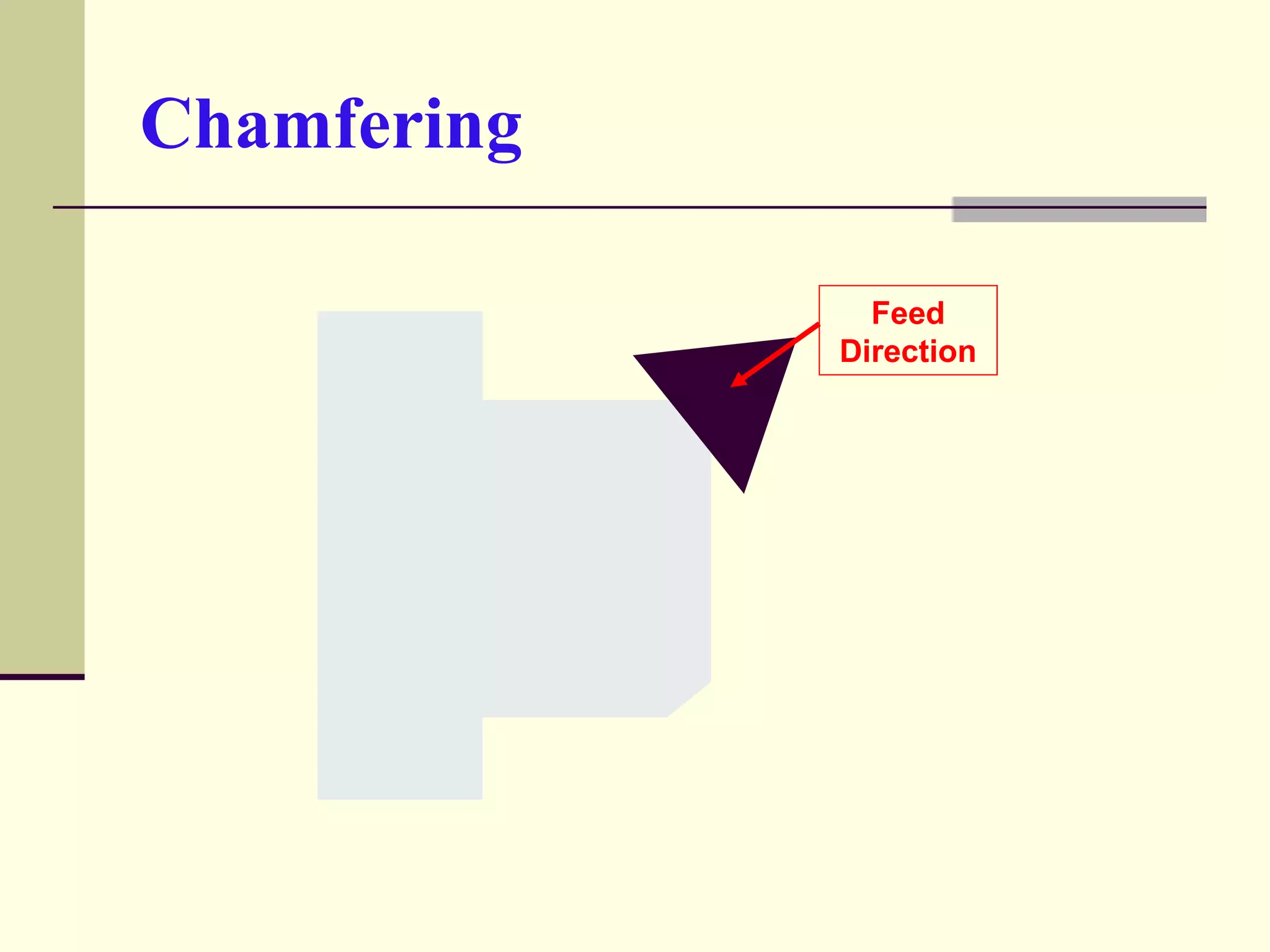
Chamfering
Feed
Direction
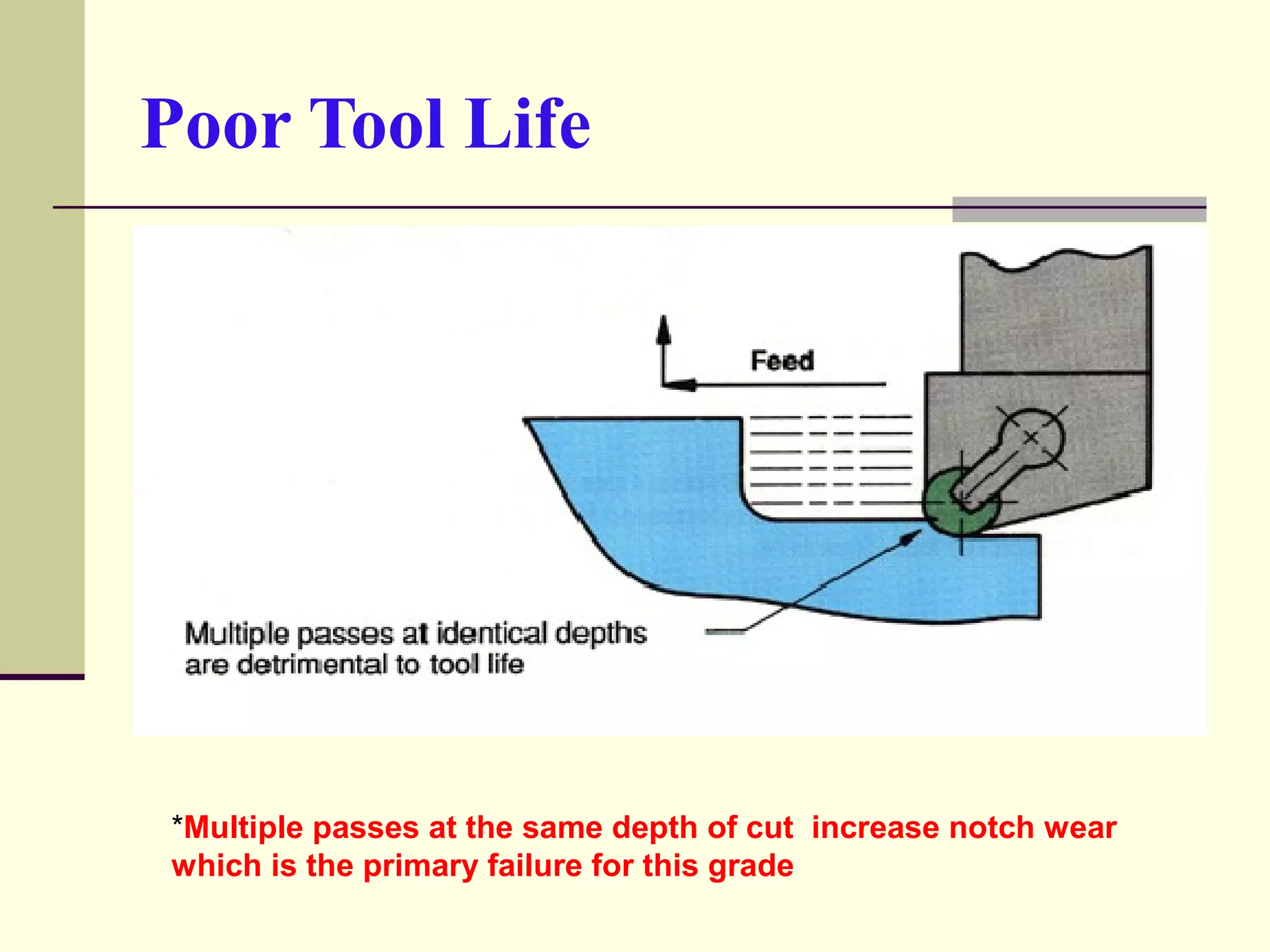
Poor Tool Life
*Multiple passes at the same depth of cut increase notch wear
which is the primary failure for this grade
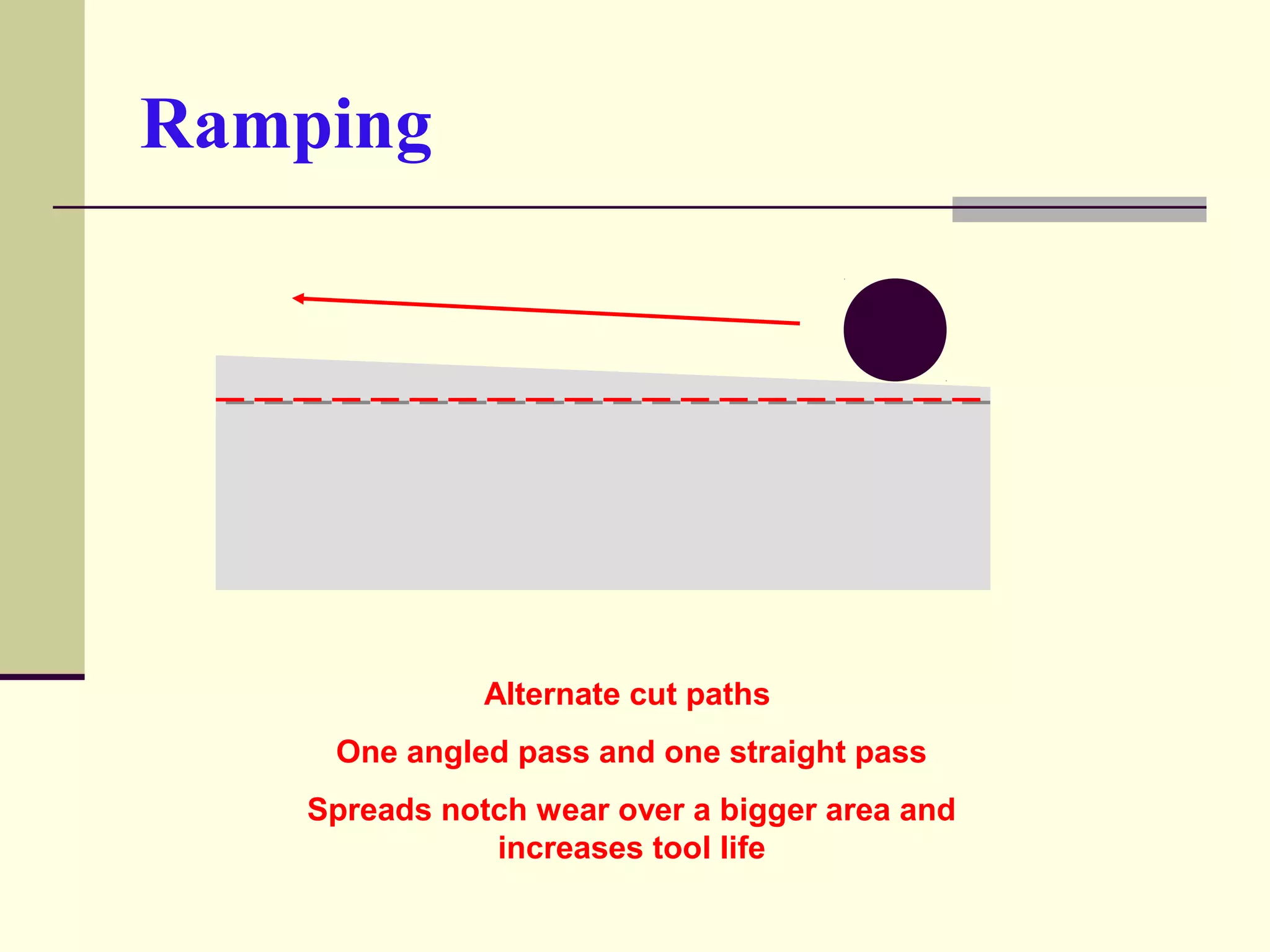
Ramping
Alternate cut paths
One angled pass and one straight pass
Spreads notch wear over a bigger area and
increases tool life
Nickel Based Materials
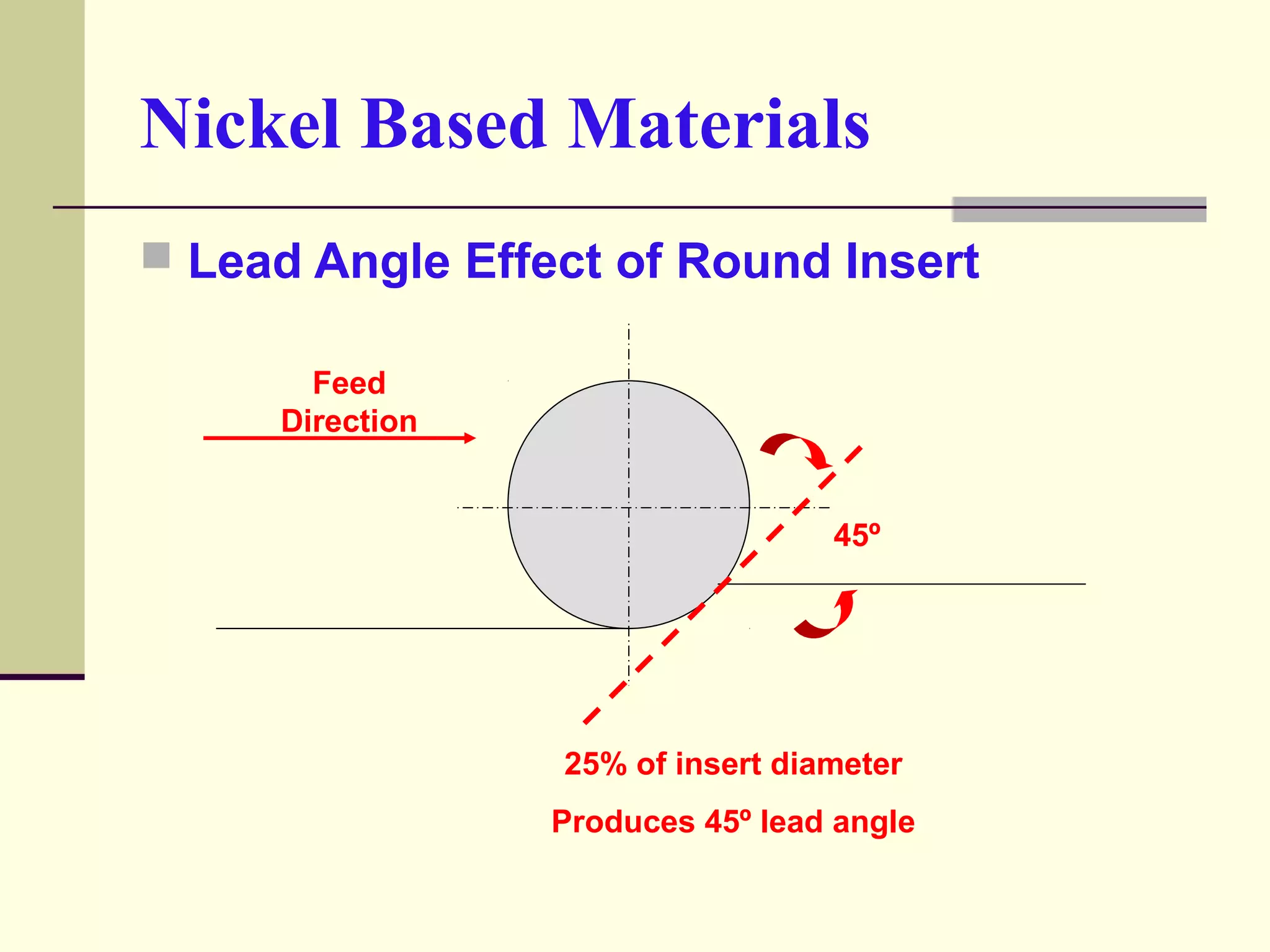
 Lead Angle Effect of Round Insert
45º
25% of insert diameter
Produces 45º lead angle
Feed
Direction
Nickel Based Materials
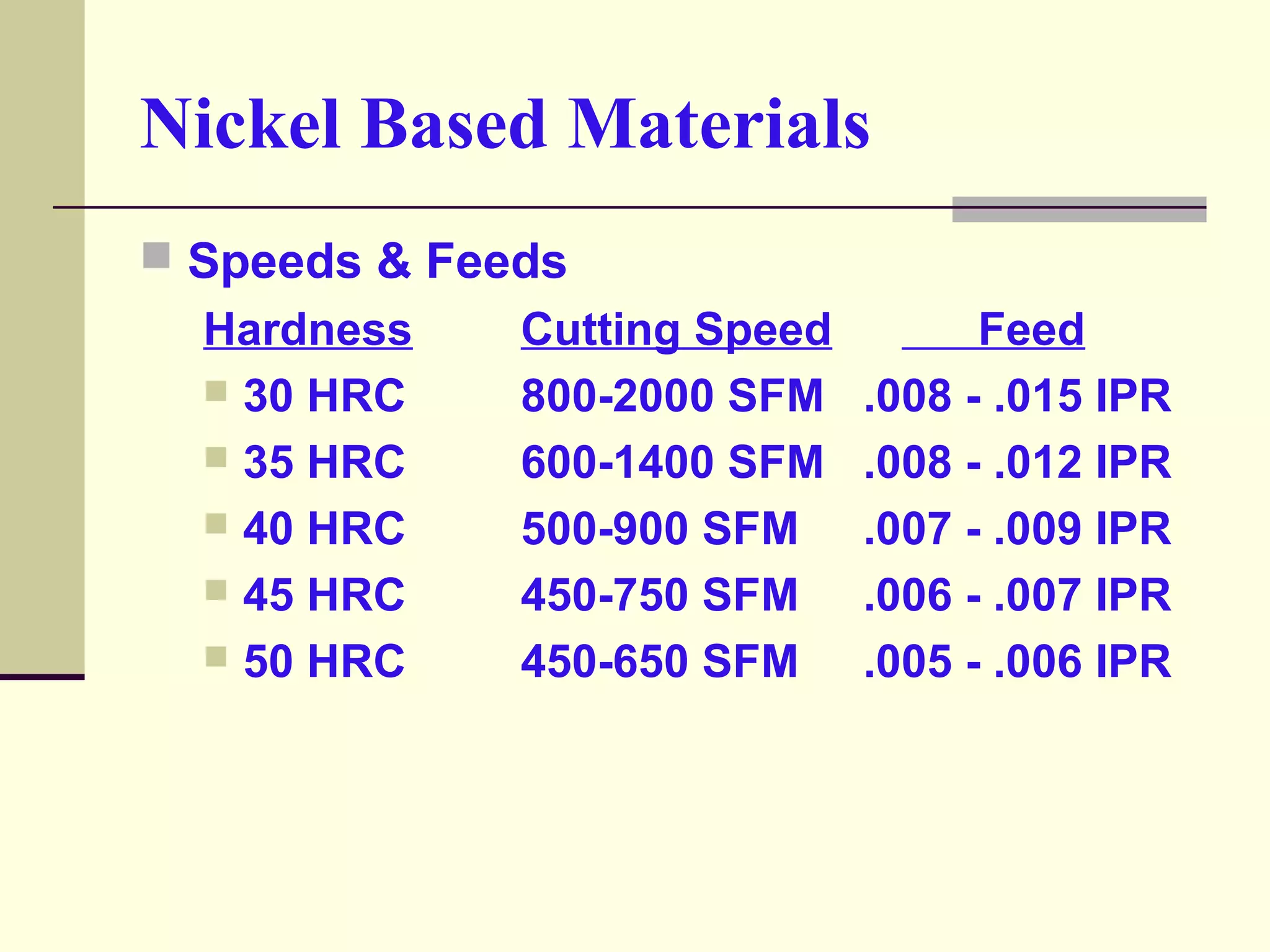
 Speeds & Feeds
Hardness Cutting Speed Feed
 30 HRC 800-2000 SFM .008 - .015 IPR
 35 HRC 600-1400 SFM .008 - .012 IPR
 40 HRC 500-900 SFM .007 - .009 IPR
 45 HRC 450-750 SFM .006 - .007 IPR
 50 HRC 450-650 SFM .005 - .006 IPR
Nickel Based Materials
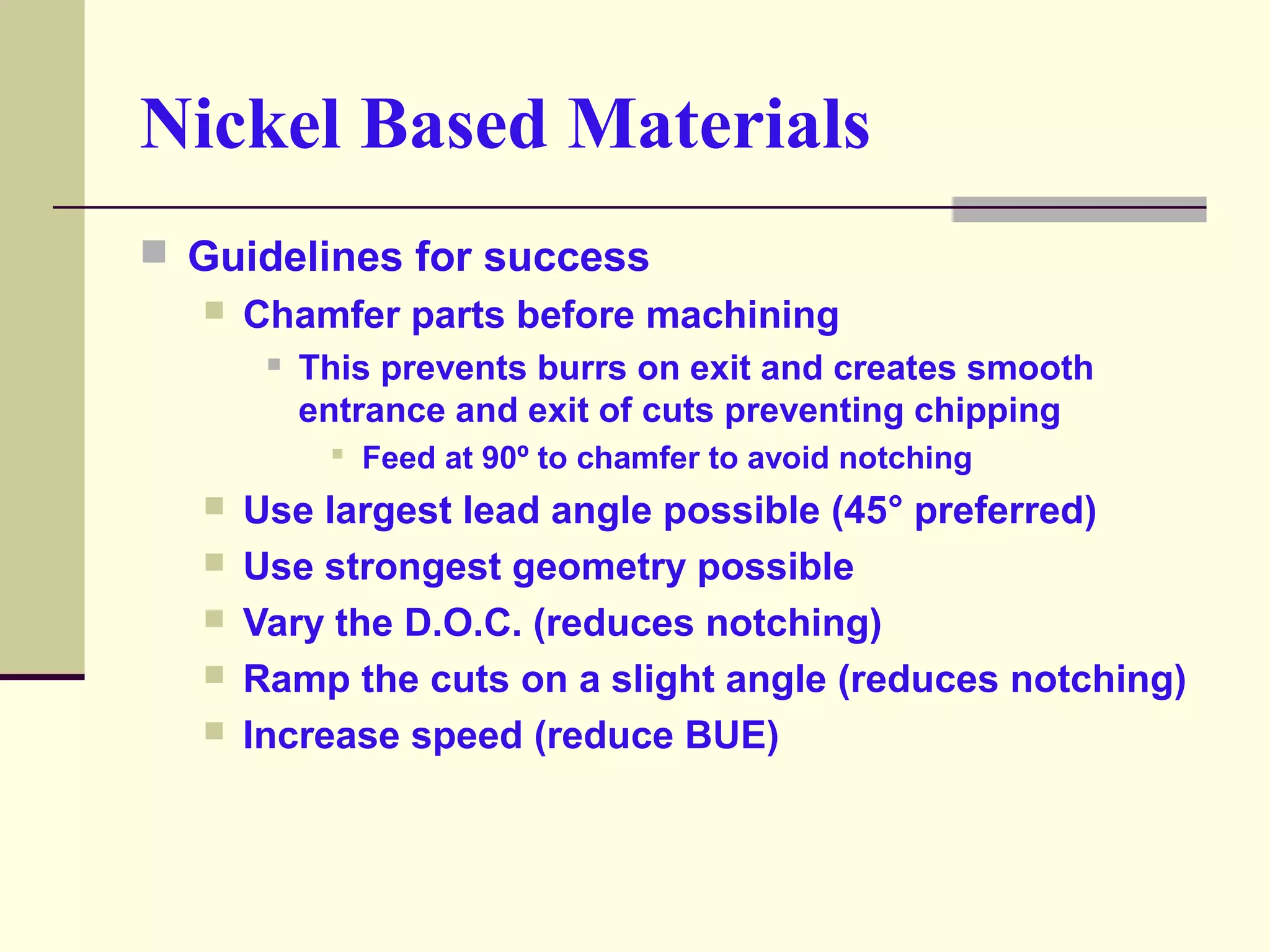
 Guidelines for success
 Chamfer parts before machining
 This prevents burrs on exit and creates smooth
entrance and exit of cuts preventing chipping
 Feed at 90º to chamfer to avoid notching
 Use largest lead angle possible (45° preferred)
 Use strongest geometry possible
 Vary the D.O.C. (reduces notching)
 Ramp the cuts on a slight angle (reduces notching)
 Increase speed (reduce BUE)
Nickel Based Materials
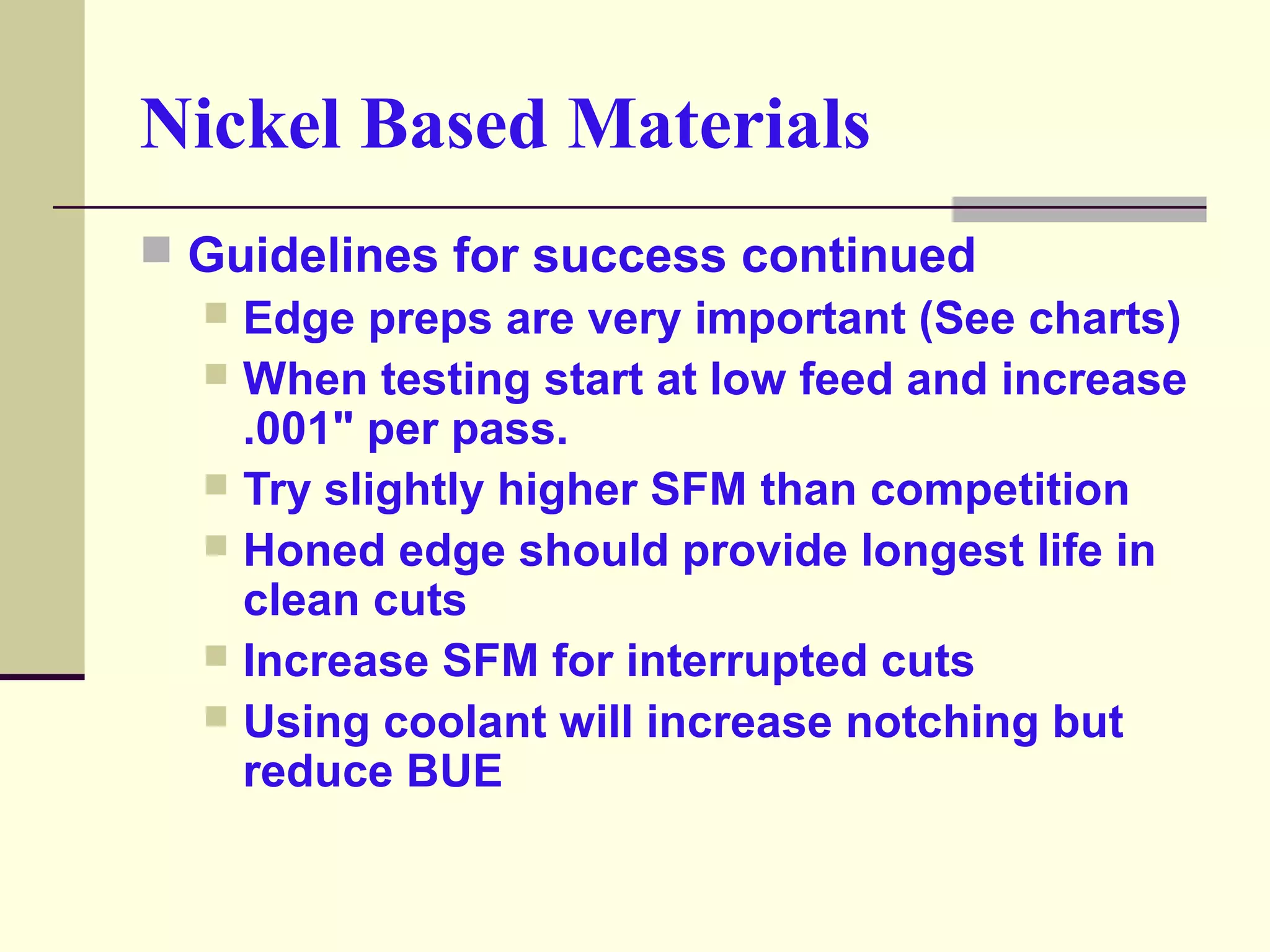
 Guidelines for success continued
 Edge preps are very important (See charts)
 When testing start at low feed and increase
.001" per pass.
 Try slightly higher SFM than competition
 Honed edge should provide longest life in
clean cuts
 Increase SFM for interrupted cuts
 Using coolant will increase notching but
reduce BUE
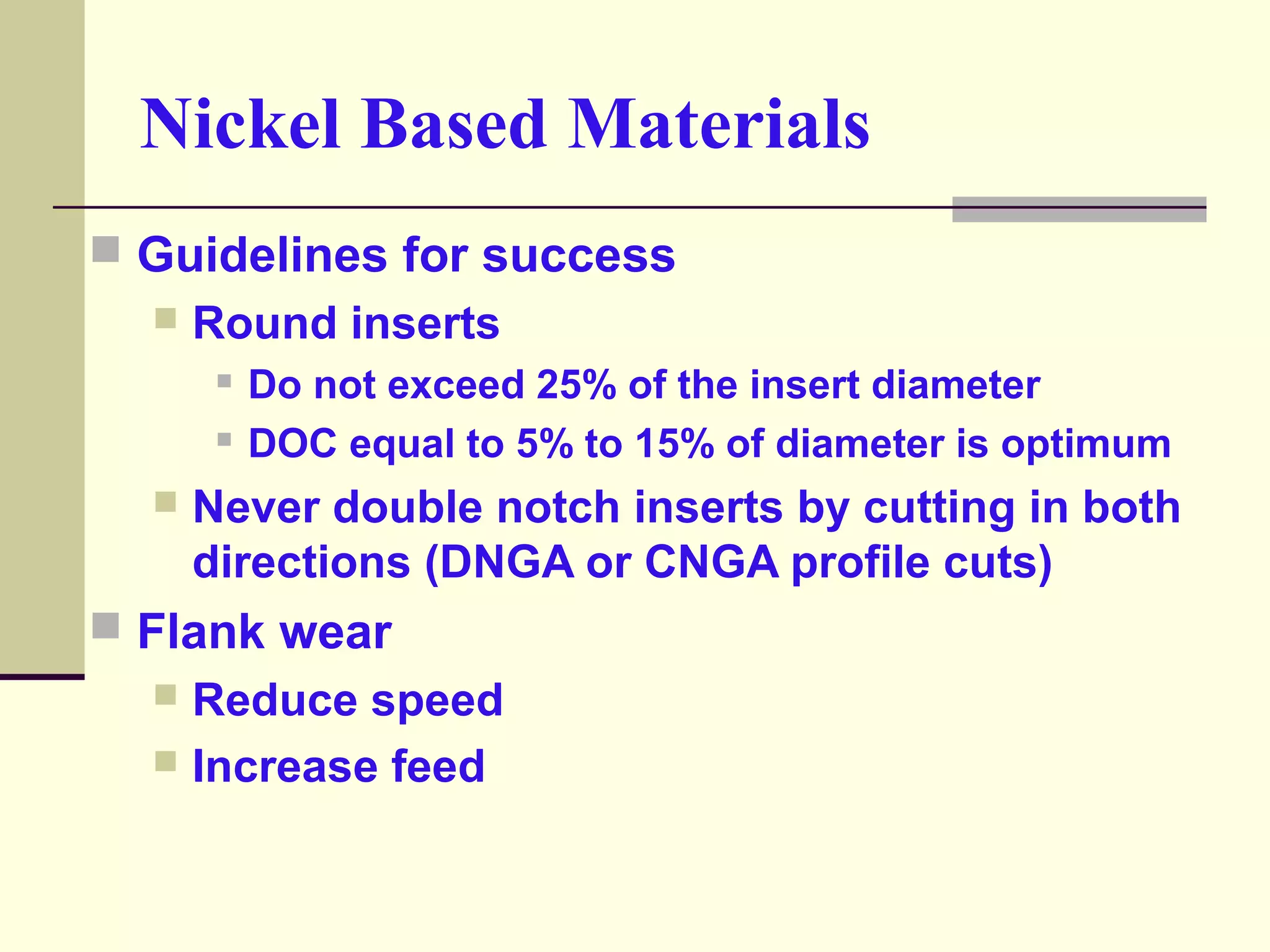
 Guidelines for success
 Round inserts
 Do not exceed 25% of the insert diameter
 DOC equal to 5% to 15% of diameter is optimum
 Never double notch inserts by cutting in both
directions (DNGA or CNGA profile cuts)
 Flank wear
 Reduce speed
 Increase feed
Nickel Based Materials
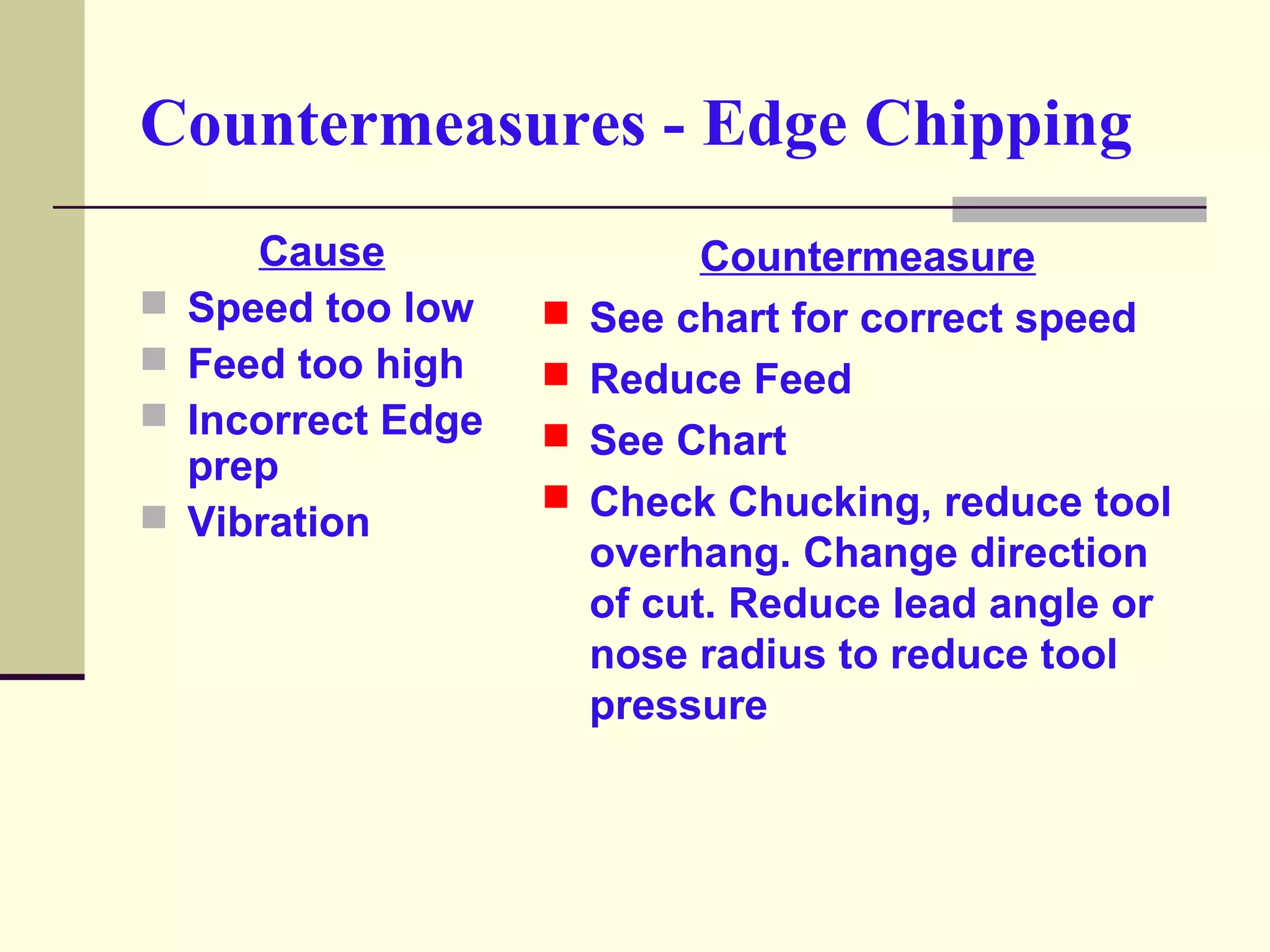
Countermeasures - Edge Chipping
Cause
 Speed too low
 Feed too high
 Incorrect Edge
prep
 Vibration
Countermeasure
 See chart for correct speed
 Reduce Feed
 See Chart
 Check Chucking, reduce tool
overhang. Change direction
of cut. Reduce lead angle or
nose radius to reduce tool
pressure
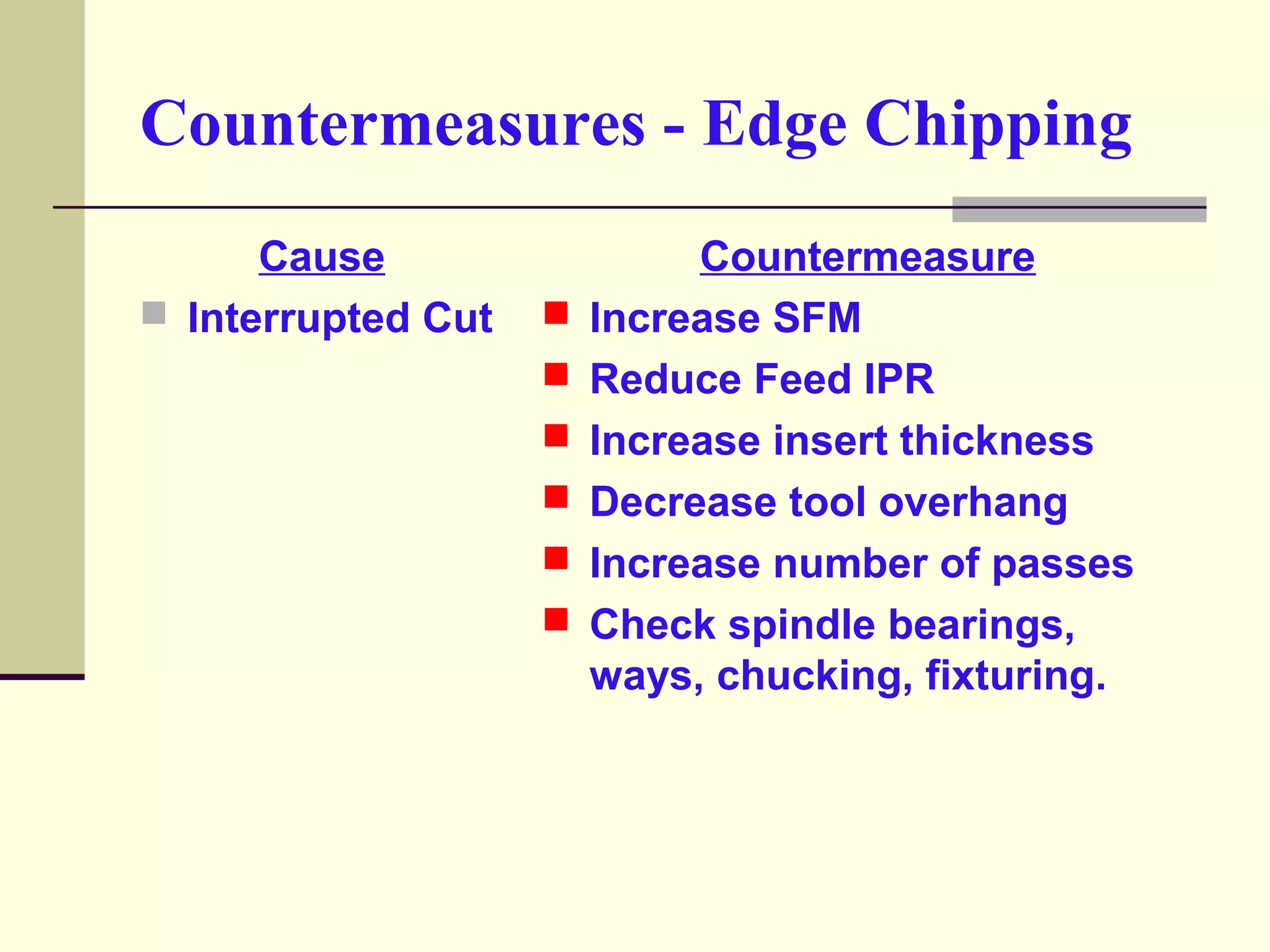
Countermeasures - Edge Chipping
Cause
 Interrupted Cut
Countermeasure
 Increase SFM
 Reduce Feed IPR
 Increase insert thickness
 Decrease tool overhang
 Increase number of passes
 Check spindle bearings,
ways, chucking, fixturing.
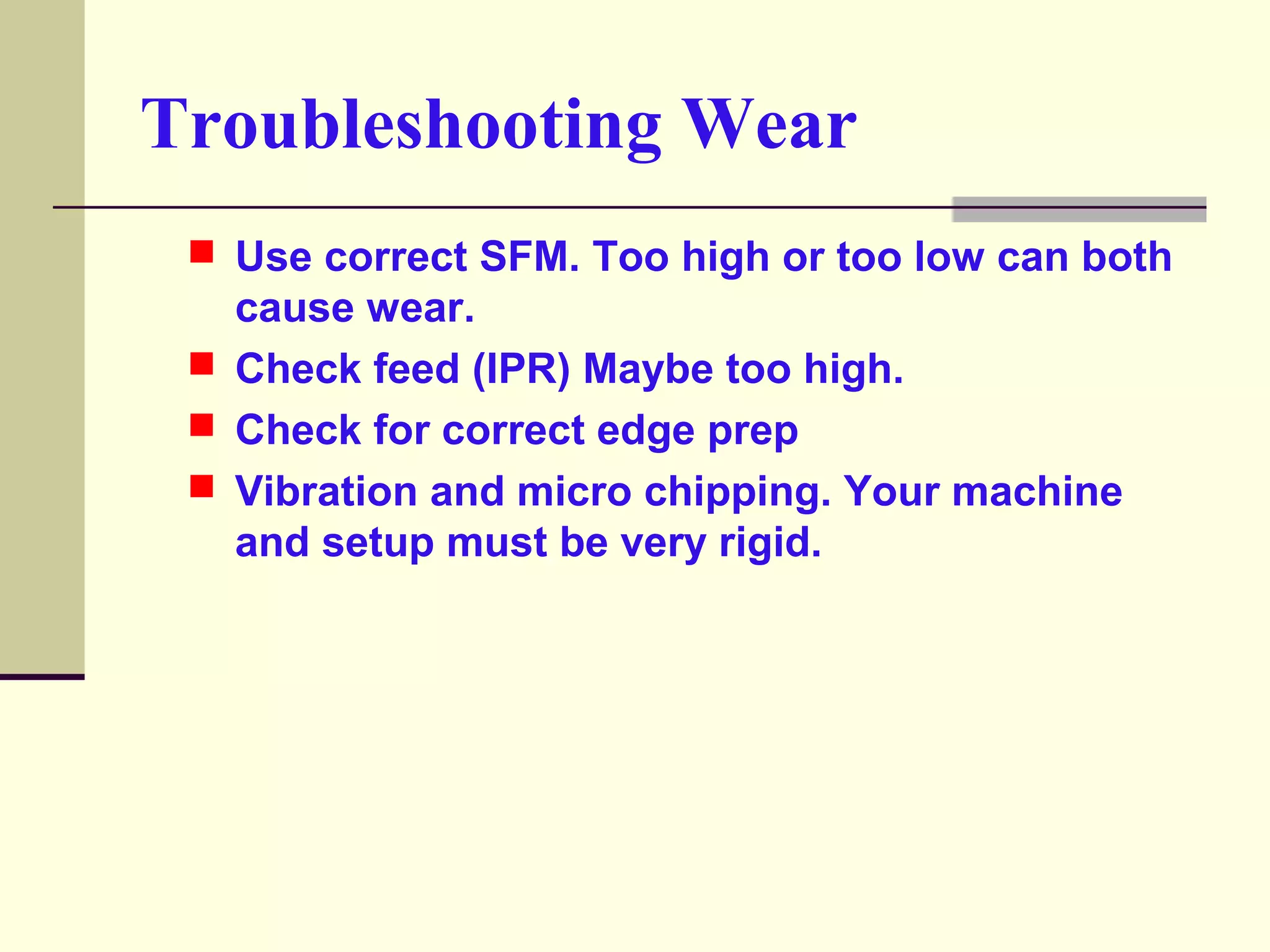
Troubleshooting Wear
 Use correct SFM. Too high or too low can both
cause wear.
 Check feed (IPR) Maybe too high.
 Check for correct edge prep
 Vibration and micro chipping. Your machine
and setup must be very rigid.
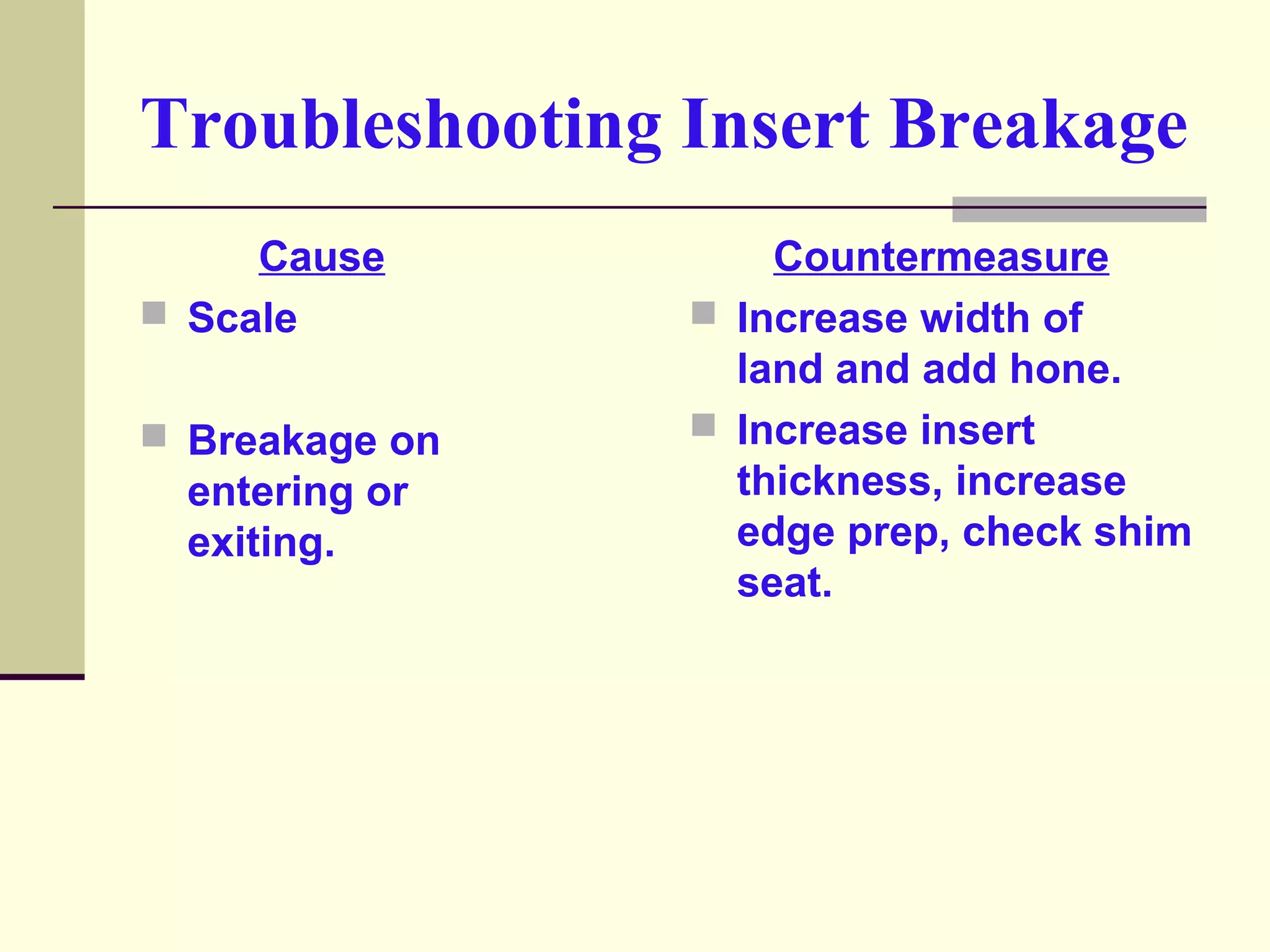
Troubleshooting Insert Breakage
Cause
 Scale
 Breakage on
entering or
exiting.
Countermeasure
 Increase width of
land and add hone.
 Increase insert
thickness, increase
edge prep, check shim
seat.
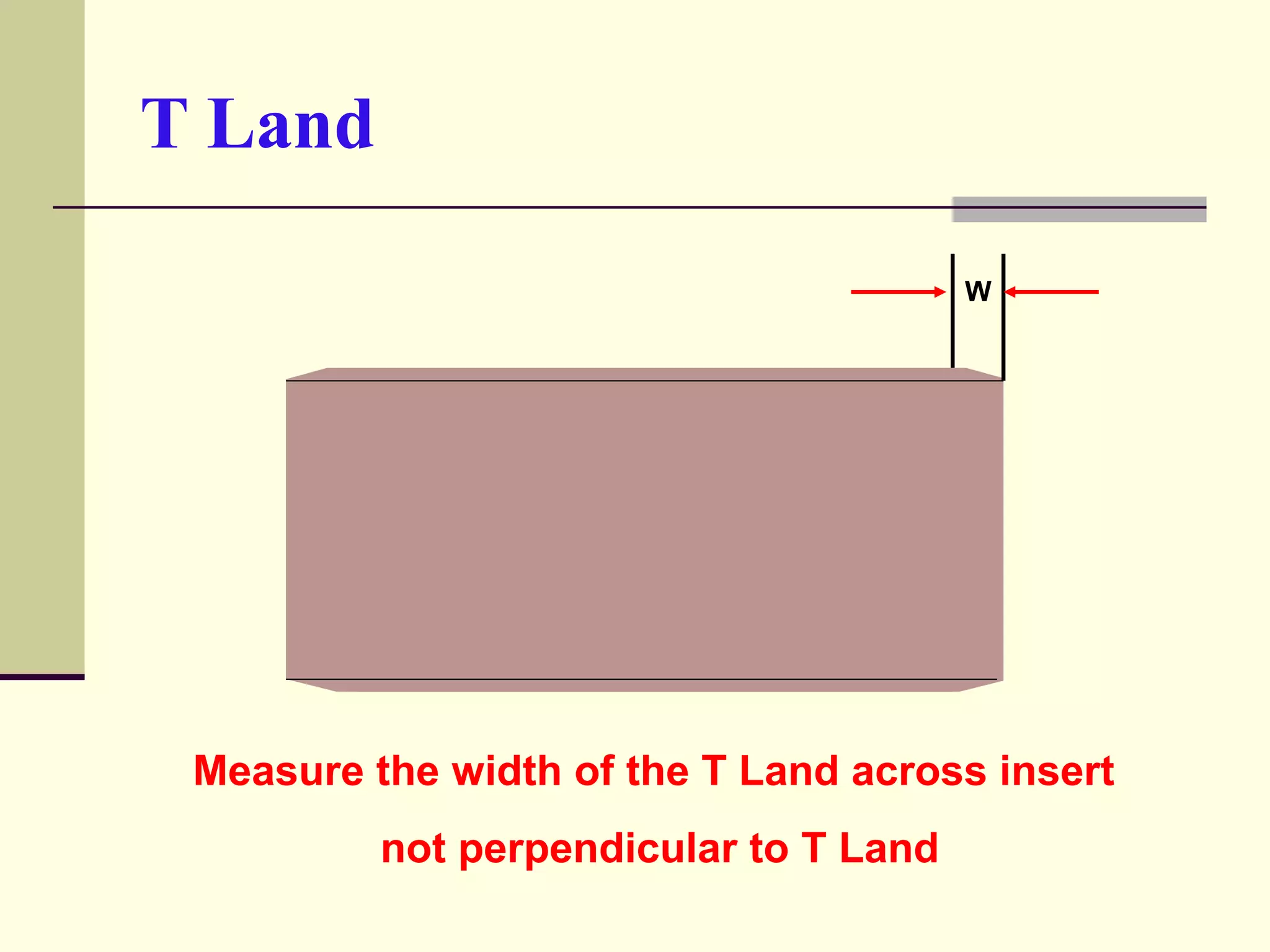
T Land
Measure the width of the T Land across insert
not perpendicular to T Land
W
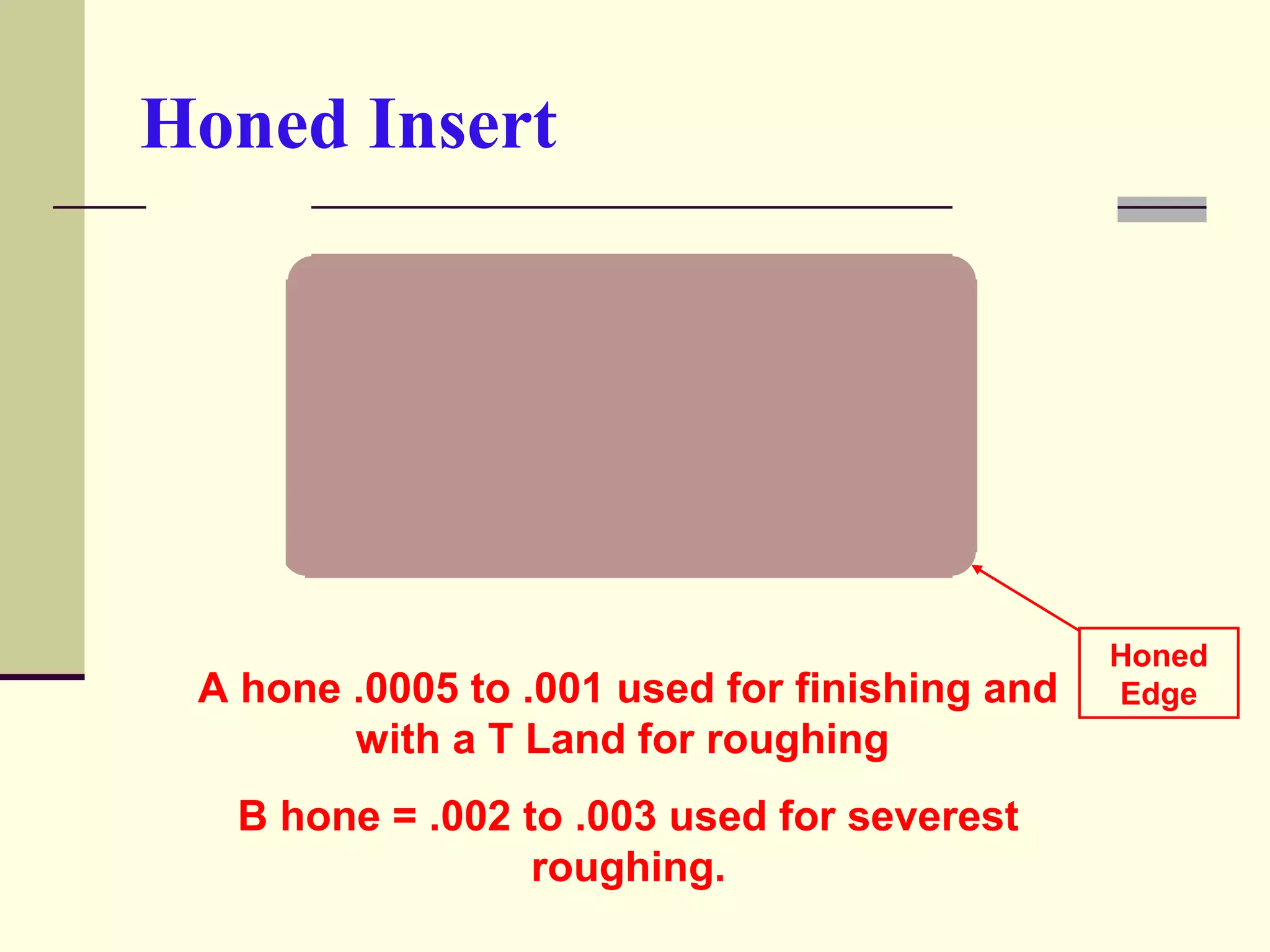
Honed Insert
A hone .0005 to .001 used for finishing and
with a T Land for roughing
B hone = .002 to .003 used for severest
roughing.
Honed
Edge
Ceramic & Whisker Ceramic
Edge Preparations
 T Lands
 .008" x 20° (standard edge prep)
 Turning & Milling Clean Materials Nickel Materials
 .008" x 20° + A Hone
 General Purpose Cobalt and Iron Based Alloys
 .008" x 20° (use a lighter feed & higher speed)
 .008" x 20° + A Hone
 Scale Applications, Overlay Welds, Lightly Interrupted
Cuts, Hardened Material Finish Turn & Mill
 .008" to .015" x 30° +B Hone
 The Severest Roughing Applications
Gray Iron Application Guideline
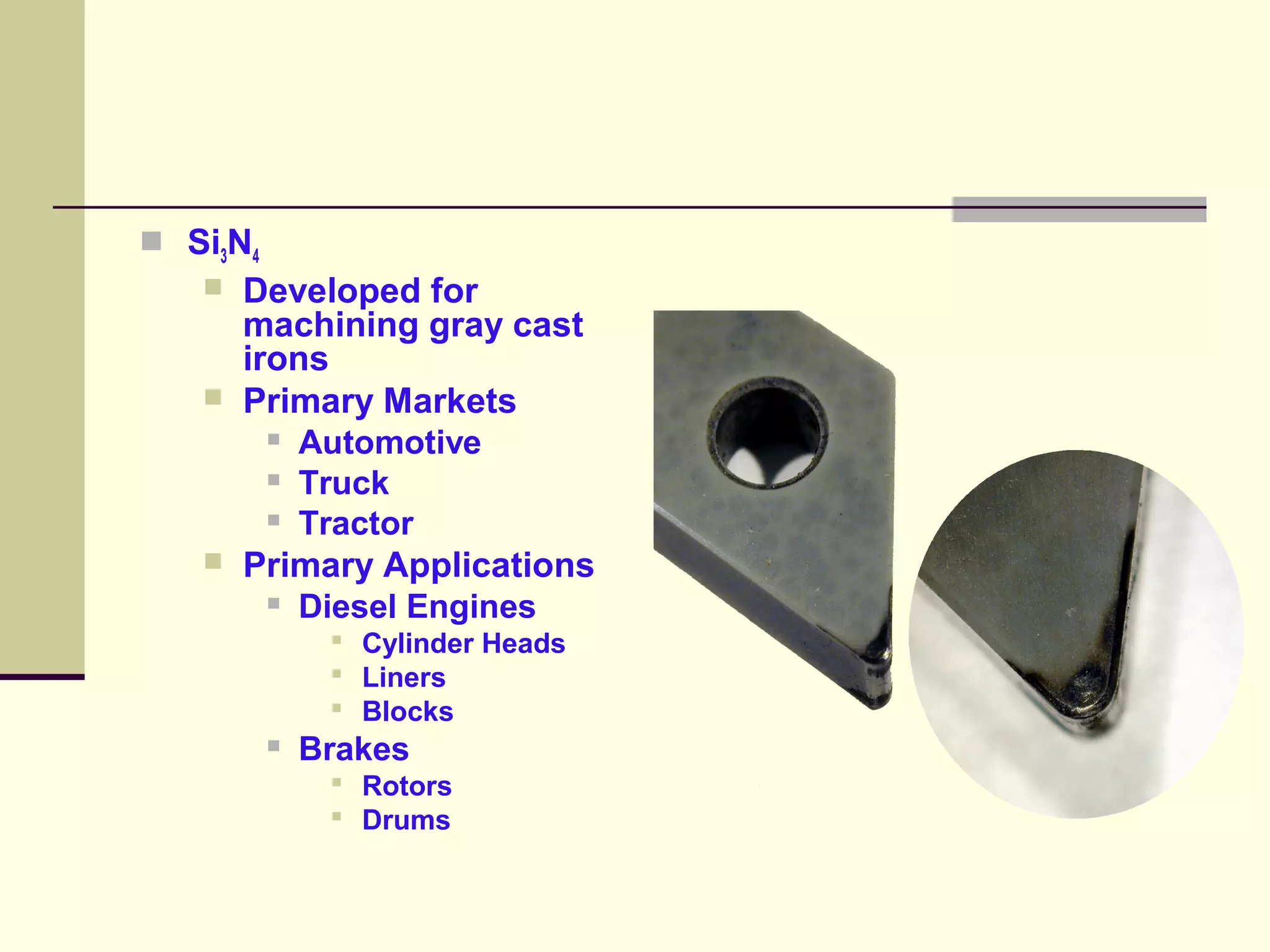
 Si3N4
 Developed for
machining gray cast
irons
 Primary Markets
 Automotive
 Truck
 Tractor
 Primary Applications
 Diesel Engines
 Cylinder Heads
 Liners
 Blocks
 Brakes
 Rotors
 Drums
Gray Cast Irons
 Speeds & Feeds
 Cutting Speed
 2000 to 3400
 Start at 2300
 Feed
 .005” to .030”
 As Required
Edge Preparations
 T Lands
 .008" – .016" x 20°
 Turning & Milling .008" – .016 “ x 20° + A Hone
 General Purpose Cobalt and Iron Based Alloys
 .008" x 20° standard edge prep
 .008" to .016” x 20° + A Hone
 Scale Applications, Overlay Welds, Lightly
Interrupted Cuts, Hardened Material Finish Turn &
Mill
 .013" to .015" x 30° +B Hone
 The Severest Roughing Applications
 Turning, max feed is 1.5 times the width of the T land
 Milling the max feed must be less than the T land

Si3 n4 application guidelines web

  • 1.
  • 2.
    Whisker Ceramics  Developedfor machining high temp alloys  Primary target Inconel  Primary Markets  Aerospace  Energy  Military
  • 3.
    Nickel Based Materials Geometry  Strongest possible  #1 - Round  #2 - 100º corner of 80º diamond  #3 - Square  #4 - 80º diamond  #5 - Triangle  #6 - 55º diamond  Edge Preparation  Finishing  Hone  Roughing  T Land  Severe Roughing or Scale  T Land with Hone
  • 4.
    Nickel Based Materials Lead Angle  Longest tool life with 45º Lead Angle  #1 45º Best  #2 30º  #3 15º  #4 0º  #5 -5º Worst
  • 5.
    Percentage of Strengthby Shape 100% 80% 40% 10%35% 90% 70%
  • 6.
    Clearance Improves ToolLife 11° 6° .005“ Wear .003“ Wear *Both inserts have .025" flank wear
  • 7.
    Strength by Thickness 5/16" 1/4" 3/16" 1/8" 0% Weakest 25%50% 75% 100% Strongest Insert Thickness
  • 8.
    Strength by NoseRadius .062" .047" .031" .015" 100%75%50%30% Strength Nose Radius
  • 9.
    SFM & IPR% Adjustment 0.000 0.050 0.100 0.150 0.200 0.250 50 75 100 125 150 175 200 225 SFM & IPR % SFM & IPR %Versus DOC 75° 60° 45° 30° 15° Centerline Insert Diameter .250 .375 .500 .125 .188 .100. .150 .075 .113 .050 .075 .025 .038 D O C 0.000 0.050 0.100 0.150 0.200 0.250 50 75 100 125 150 175 200 225 SFM & IPR % SFM & IPR %Versus DOC 75° 60° 45° 30° 15° Centerline Insert Diameter .250 .375 .500 .125 .188 .100. .150 .075 .113 .050 .075 .025 .038 D O C 0.000 0.050 0.100 0.150 0.200 0.250 50 75 100 125 150 175 200 225 SFM & IPR % SFM & IPR %Versus DOC 75° 60° 45° 30° 15° Centerline Insert Diameter .250 .375 .500 .125 .188 .100. .150 .075 .113 .050 .075 .025 .038 D O C 0.000 0.050 0.100 0.150 0.200 0.250 50 75 100 125 150 175 200 225 SFM & IPR % SFM & IPR %Versus DOC 75° 60° 45° 30° 15° Centerline Insert Diameter .250 .375 .500 .125 .188 .100. .150 .075 .113 .050 .075 .025 .038 D O C Above 100% increase SFM & IPR Below 100% decrease SFM & IPR
  • 10.
  • 11.
    Poor Tool Life *Multiplepasses at the same depth of cut increase notch wear which is the primary failure for this grade
  • 12.
    Ramping Alternate cut paths Oneangled pass and one straight pass Spreads notch wear over a bigger area and increases tool life
  • 13.
    Nickel Based Materials Lead Angle Effect of Round Insert 45º 25% of insert diameter Produces 45º lead angle Feed Direction
  • 14.
    Nickel Based Materials Speeds & Feeds Hardness Cutting Speed Feed  30 HRC 800-2000 SFM .008 - .015 IPR  35 HRC 600-1400 SFM .008 - .012 IPR  40 HRC 500-900 SFM .007 - .009 IPR  45 HRC 450-750 SFM .006 - .007 IPR  50 HRC 450-650 SFM .005 - .006 IPR
  • 15.
    Nickel Based Materials Guidelines for success  Chamfer parts before machining  This prevents burrs on exit and creates smooth entrance and exit of cuts preventing chipping  Feed at 90º to chamfer to avoid notching  Use largest lead angle possible (45° preferred)  Use strongest geometry possible  Vary the D.O.C. (reduces notching)  Ramp the cuts on a slight angle (reduces notching)  Increase speed (reduce BUE)
  • 16.
    Nickel Based Materials Guidelines for success continued  Edge preps are very important (See charts)  When testing start at low feed and increase .001" per pass.  Try slightly higher SFM than competition  Honed edge should provide longest life in clean cuts  Increase SFM for interrupted cuts  Using coolant will increase notching but reduce BUE
  • 17.
     Guidelines forsuccess  Round inserts  Do not exceed 25% of the insert diameter  DOC equal to 5% to 15% of diameter is optimum  Never double notch inserts by cutting in both directions (DNGA or CNGA profile cuts)  Flank wear  Reduce speed  Increase feed Nickel Based Materials
  • 18.
    Countermeasures - EdgeChipping Cause  Speed too low  Feed too high  Incorrect Edge prep  Vibration Countermeasure  See chart for correct speed  Reduce Feed  See Chart  Check Chucking, reduce tool overhang. Change direction of cut. Reduce lead angle or nose radius to reduce tool pressure
  • 19.
    Countermeasures - EdgeChipping Cause  Interrupted Cut Countermeasure  Increase SFM  Reduce Feed IPR  Increase insert thickness  Decrease tool overhang  Increase number of passes  Check spindle bearings, ways, chucking, fixturing.
  • 20.
    Troubleshooting Wear  Usecorrect SFM. Too high or too low can both cause wear.  Check feed (IPR) Maybe too high.  Check for correct edge prep  Vibration and micro chipping. Your machine and setup must be very rigid.
  • 21.
    Troubleshooting Insert Breakage Cause Scale  Breakage on entering or exiting. Countermeasure  Increase width of land and add hone.  Increase insert thickness, increase edge prep, check shim seat.
  • 22.
    T Land Measure thewidth of the T Land across insert not perpendicular to T Land W
  • 23.
    Honed Insert A hone.0005 to .001 used for finishing and with a T Land for roughing B hone = .002 to .003 used for severest roughing. Honed Edge
  • 24.
    Ceramic & WhiskerCeramic Edge Preparations  T Lands  .008" x 20° (standard edge prep)  Turning & Milling Clean Materials Nickel Materials  .008" x 20° + A Hone  General Purpose Cobalt and Iron Based Alloys  .008" x 20° (use a lighter feed & higher speed)  .008" x 20° + A Hone  Scale Applications, Overlay Welds, Lightly Interrupted Cuts, Hardened Material Finish Turn & Mill  .008" to .015" x 30° +B Hone  The Severest Roughing Applications
  • 25.
  • 26.
     Si3N4  Developedfor machining gray cast irons  Primary Markets  Automotive  Truck  Tractor  Primary Applications  Diesel Engines  Cylinder Heads  Liners  Blocks  Brakes  Rotors  Drums
  • 27.
    Gray Cast Irons Speeds & Feeds  Cutting Speed  2000 to 3400  Start at 2300  Feed  .005” to .030”  As Required
  • 28.
    Edge Preparations  TLands  .008" – .016" x 20°  Turning & Milling .008" – .016 “ x 20° + A Hone  General Purpose Cobalt and Iron Based Alloys  .008" x 20° standard edge prep  .008" to .016” x 20° + A Hone  Scale Applications, Overlay Welds, Lightly Interrupted Cuts, Hardened Material Finish Turn & Mill  .013" to .015" x 30° +B Hone  The Severest Roughing Applications  Turning, max feed is 1.5 times the width of the T land  Milling the max feed must be less than the T land