Should You Replace Your
         EHR?
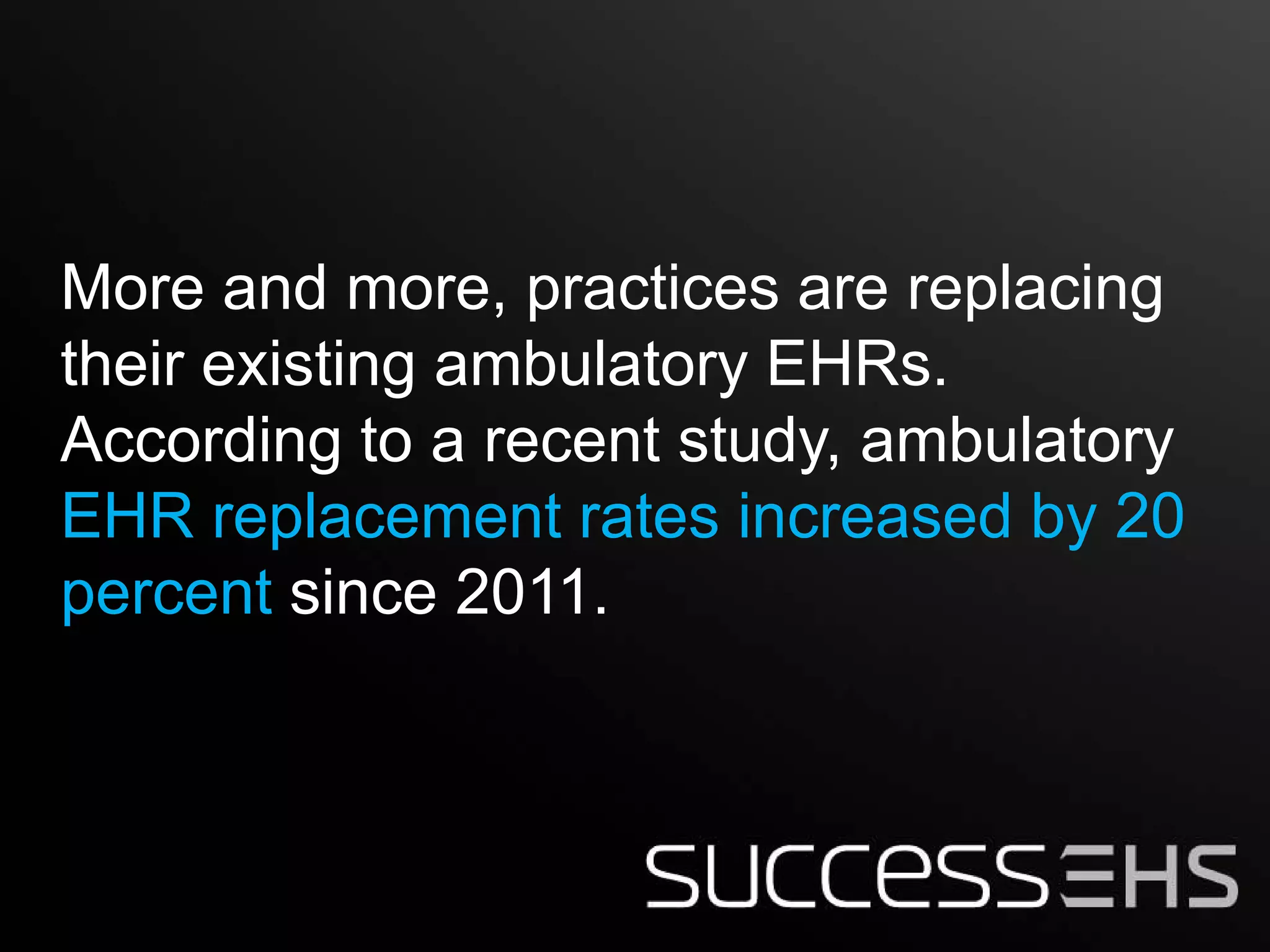
More and more, practices are replacing
their existing ambulatory EHRs.
According to a recent study, ambulatory
EHR replacement rates increased by 20
percent since 2011.
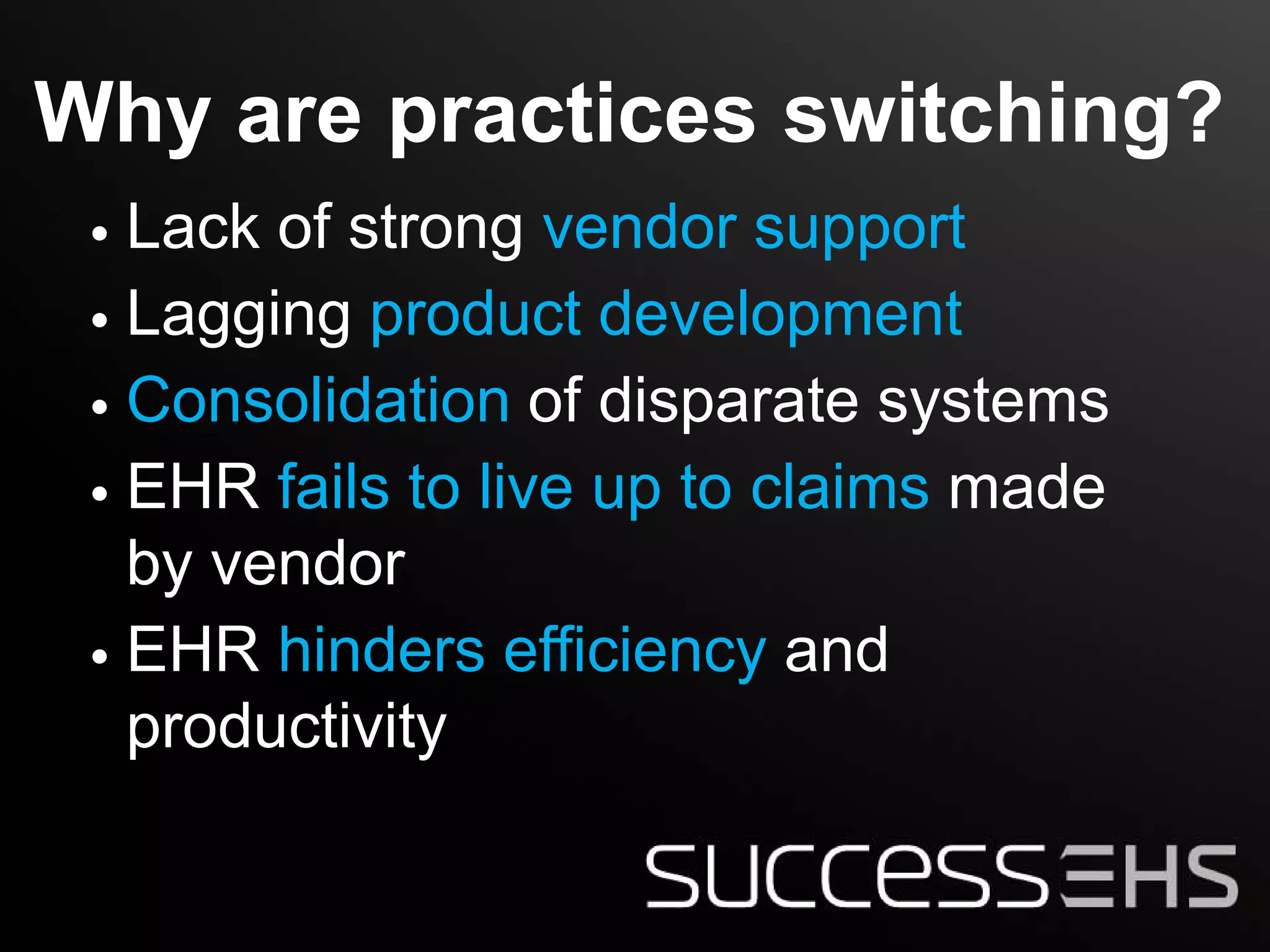
Why are practices switching?
 • Lack of strong vendor support
 • Lagging product development
 • Consolidation of disparate systems
 • EHR fails to live up to claims made
   by vendor
 • EHR hinders efficiency and
   productivity
Should you make the switch?
If you're thinking about replacing your
current EHR, consider the following
seven questions to determine if EHR
replacement is right for you:
Should you make the switch?
1. Could the issues be resolved
through remediation? If so, is the
vendor responsive to your needs and
concerns? If your vendor is unwilling
to work with you to resolve critical
issues, it is time to find a new vendor.
Should you make the switch?
2. Could the vendor resolve the
issues by making technical
improvements? If so, will the vendor
commit to making the needed
improvements in a reasonable time
frame? If not, begin the process of
evaluating other EHR systems.
Should you make the switch?
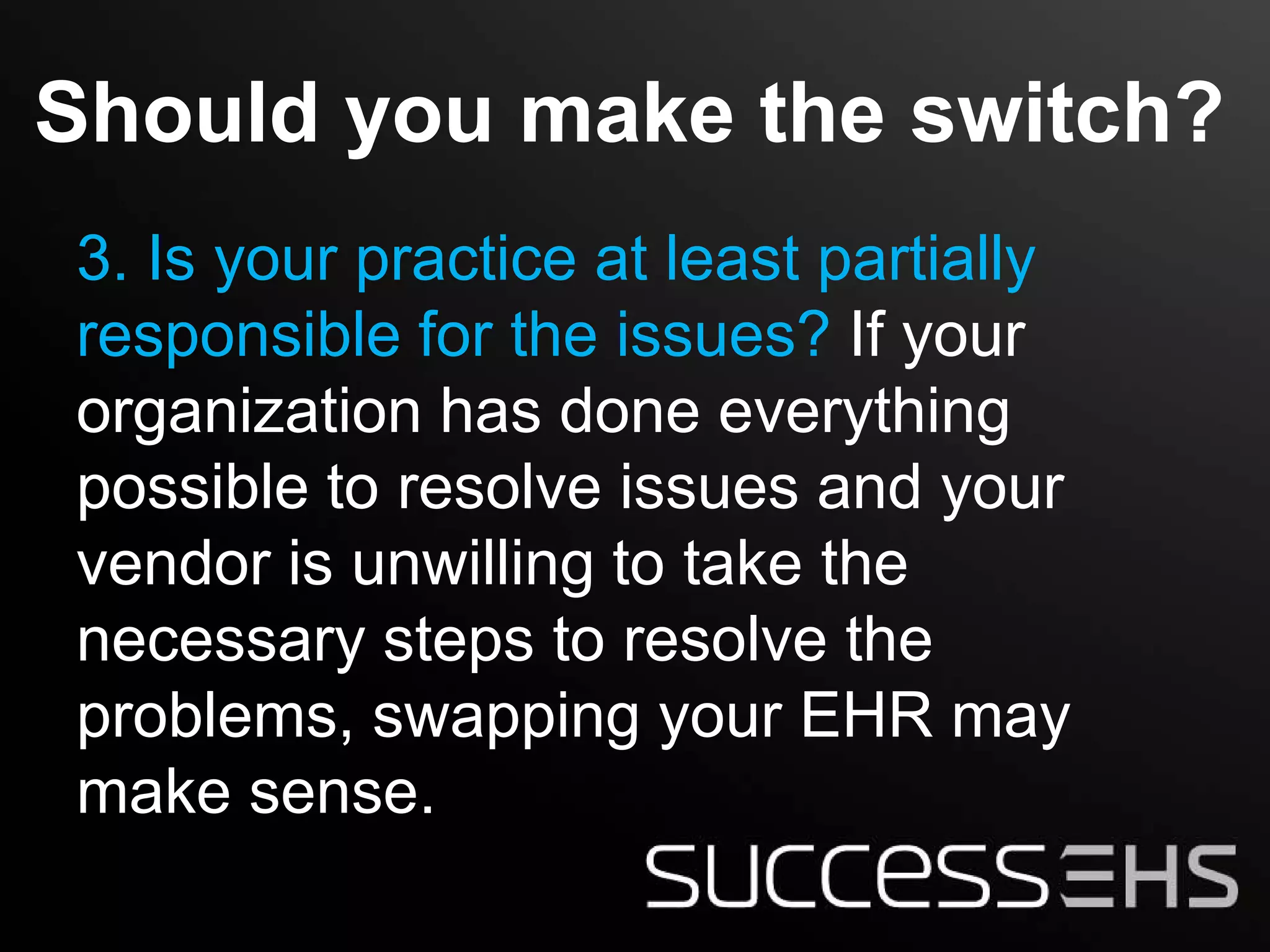
3. Is your practice at least partially
responsible for the issues? If your
organization has done everything
possible to resolve issues and your
vendor is unwilling to take the
necessary steps to resolve the
problems, swapping your EHR may
make sense.
Should you make the switch?
4. Is your current EHR
product/vendor stable enough to be
in business for the long-term? If your
current EHR vendor is not privately
held and financially stable, consider
making the switch to an EHR partner
that can commit to your success in
the long run.
Should you make the switch?
5. What penalties apply if you
terminate the contact? Review the
termination clause in your current
EHR contract to find out what it will
cost if your organization decides to
make the switch before your contract
has expired.
Should you make the switch?
6. Can your organization's goals,
such as achieving Meaningful Use,
be accomplished using your current
EHR? If your current EHR is holding
your organization back from meeting
its goals, the switch to a new EHR
may very well be worthwhile.
Should you make the switch?
7. Is your current system negatively
impacting physician productivity? An
EHR that hampers productivity now
will only grow worse as the
complexities of health reform
initiatives increase in the future.
Now what?
If your issues with your previous
vendor cannot be resolved, select a
new EHR vendor that can provide:
  • Rapid implementation
  • Smooth data migration
  • More results
  • Better service
Learn more!
Our website hosts a wealth of free
resources, including white papers, case
studies, industry blog, newsletter
covering current events in health care,
tips and tricks for your practice, and
other informative articles.
       www.successehs.com
Should You Replace Your EHR?

Should You Replace Your EHR?

  • 1.
  • 2.
    More and more,practices are replacing their existing ambulatory EHRs. According to a recent study, ambulatory EHR replacement rates increased by 20 percent since 2011.
  • 3.
    Why are practicesswitching? • Lack of strong vendor support • Lagging product development • Consolidation of disparate systems • EHR fails to live up to claims made by vendor • EHR hinders efficiency and productivity
  • 4.
    Should you makethe switch? If you're thinking about replacing your current EHR, consider the following seven questions to determine if EHR replacement is right for you:
  • 5.
    Should you makethe switch? 1. Could the issues be resolved through remediation? If so, is the vendor responsive to your needs and concerns? If your vendor is unwilling to work with you to resolve critical issues, it is time to find a new vendor.
  • 6.
    Should you makethe switch? 2. Could the vendor resolve the issues by making technical improvements? If so, will the vendor commit to making the needed improvements in a reasonable time frame? If not, begin the process of evaluating other EHR systems.
  • 7.
    Should you makethe switch? 3. Is your practice at least partially responsible for the issues? If your organization has done everything possible to resolve issues and your vendor is unwilling to take the necessary steps to resolve the problems, swapping your EHR may make sense.
  • 8.
    Should you makethe switch? 4. Is your current EHR product/vendor stable enough to be in business for the long-term? If your current EHR vendor is not privately held and financially stable, consider making the switch to an EHR partner that can commit to your success in the long run.
  • 9.
    Should you makethe switch? 5. What penalties apply if you terminate the contact? Review the termination clause in your current EHR contract to find out what it will cost if your organization decides to make the switch before your contract has expired.
  • 10.
    Should you makethe switch? 6. Can your organization's goals, such as achieving Meaningful Use, be accomplished using your current EHR? If your current EHR is holding your organization back from meeting its goals, the switch to a new EHR may very well be worthwhile.
  • 11.
    Should you makethe switch? 7. Is your current system negatively impacting physician productivity? An EHR that hampers productivity now will only grow worse as the complexities of health reform initiatives increase in the future.
  • 12.
    Now what? If yourissues with your previous vendor cannot be resolved, select a new EHR vendor that can provide: • Rapid implementation • Smooth data migration • More results • Better service
  • 13.
    Learn more! Our websitehosts a wealth of free resources, including white papers, case studies, industry blog, newsletter covering current events in health care, tips and tricks for your practice, and other informative articles. www.successehs.com