Joining of the Rails Ceremony
Bellringer: Pony Express Read p. 154 “The Pony Express and the Telegraph” and answer the following question: What was the Pony Express, how long did it operate, and what replaced it?
How shall we celebrate this incredible event? Green = Government Red = Union Pacific Blue = Central Pacific Read the section in your packet about your assigned person and write down the following information in your journals: group, name of person, how this person contributed to the railroad
Activity In your groups number off. You will share your information with the corresponding numbers in the other two groups. In your journals take notes about the people in the other groups, including their character name, group, and how they contributed to the completion of the railroad.
Instructions Who - Major contributors to the completion of the railroad and reasons why they are included in the ceremony. What - Incorporate activities to celebrate the completion of the Transcontinental Railroad and reasons why they are included. Also, include the creation of memorabilia (plaques, markers, etc.) and explain their significance. Where - Location of your ceremony. Explain why you chose this location. Why - Include reasons for your celebration. Why was the completion of the Transcontinental Railroad so important? How - Explain how the railroad was completed. Give specific examples. These examples might include contributions by certain people, sacrifices and hardships, teamwork, and examples of engineering.
Rendezvous at Promontory
Railroad coming to Utah Please read page 156 “Trains! The Transportation Revolution” and answer the following questions: Where did the two rail lines meet? When? How did the train affect Utah?
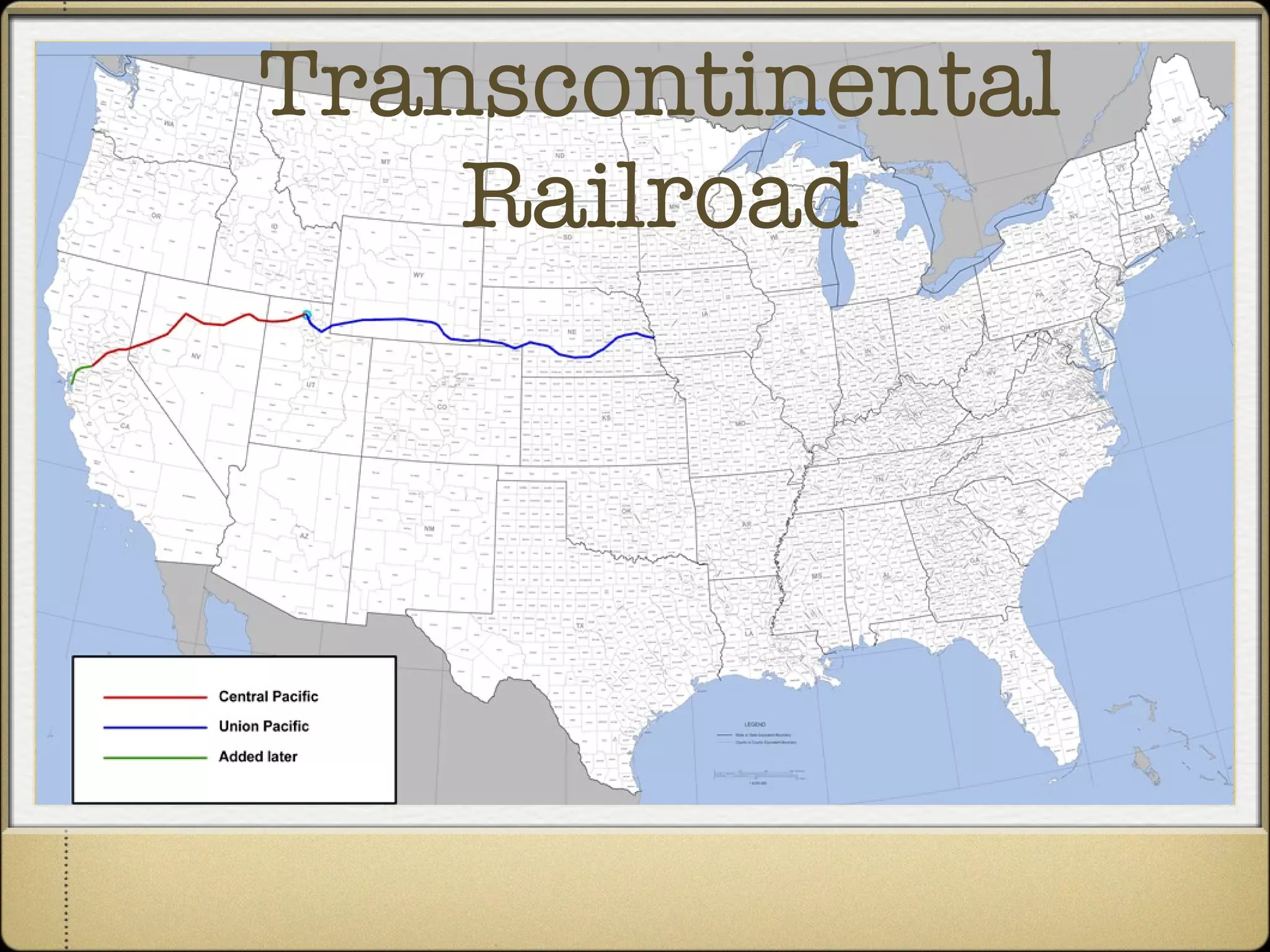
Transcontinental Railroad
Activity: The Nation’s Reactions Imagine you are living in America as the transcontinental railroad is completed. This event touched emotions deep in the American character, but it also meant different things to different people. You are going to look at this event from different perspectives.  An ordinary Citizen A citizen in the Far West A citizen in the East A business person A Native American In your journals, write a letter or journal entry as if you were living at this time. Express your reactions, thoughts, and feelings through the eyes of someone who lived at this time.
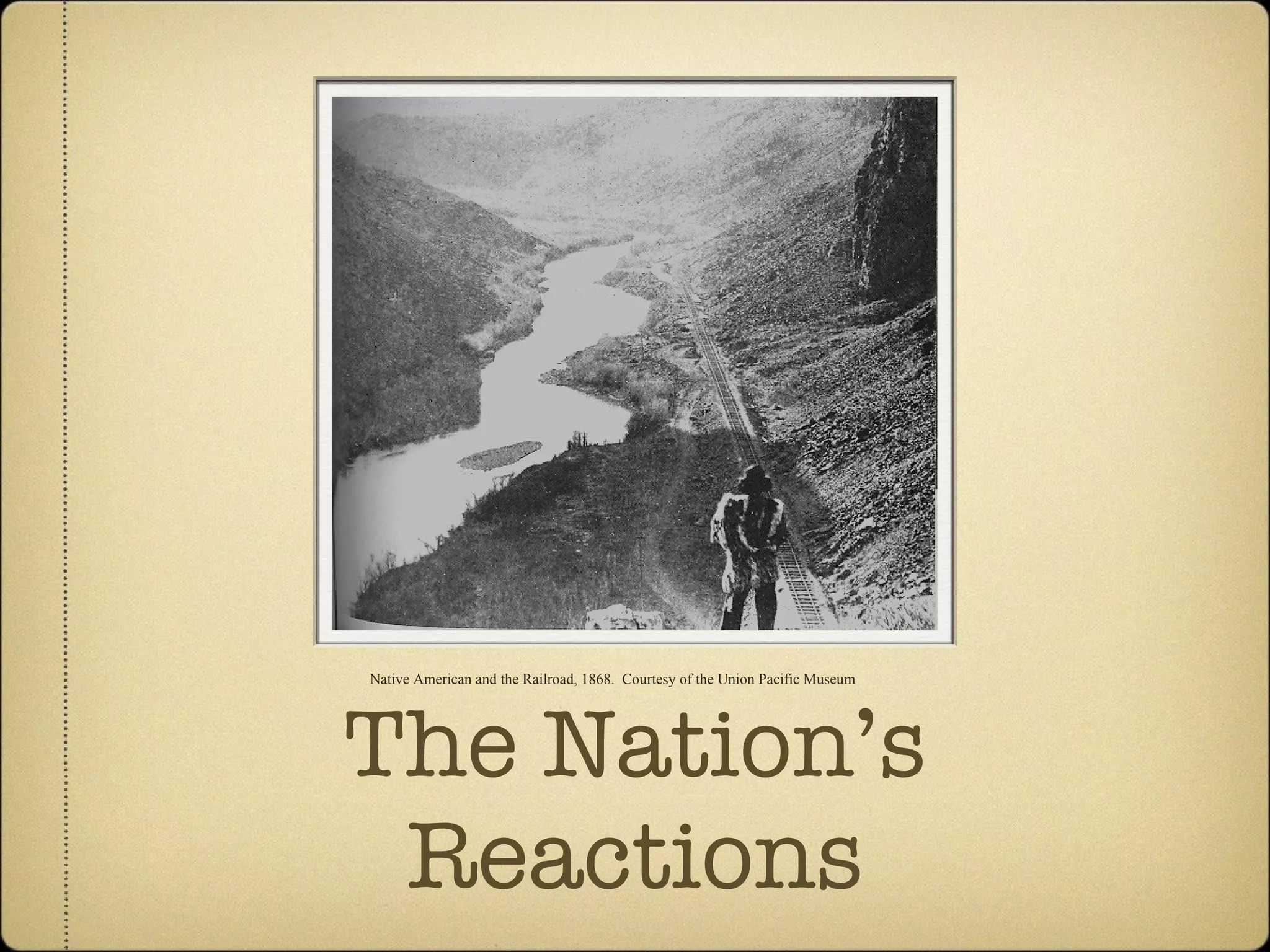
The Nation’s Reactions Native American and the Railroad, 1868.  Courtesy of the Union Pacific Museum
Nation’s Reactions The United States was exuberant as the construction of the transcontinental railroad drew to a close in the spring of 1869. The transcontinental railroad was called the “Eighth Wonder of the World.” Building the railroad was compared to the voyage of Columbus or the landing of the Pilgrims.  They may have exaggerated, but for the people of 1869, especially those over 40 years old, there was nothing to compare to it. A person born in 1829 or earlier was in a world in which President Andrew Jackson traveled no faster than Julius Caesar, a world in which no thought or information could be transmitted any faster than in Alexander the Great’s time.  In 1869 with the railroad and the telegraph that was beside it, a man could move at 60 miles per hour and transmit an idea from coast to coast almost instantly. The completion of the transcontinental railroad meant different things to different people of the country.
Joining of the Rails Ceremony
Pony Express Read p. 154 “The Pony Express and the Telegraph” and answer the following question: What was the Pony Express, how long did it operate, and what replaced it?
How shall we celebrate this incredible event? 1 = Government 2 = Union Pacific 3 = Central Pacific Read the section in your packet about your assigned person and write down the following information in your journals: Group, name of person, how this person contributed to the railroad
Instructions Decide who you would invite of the people you learned about. Write down who they represented (Central, Union or Gov’t), their names, and why you invited them. Be prepared to share.
The Joining of the Rails Ceremony Officials of both railroads had set Saturday, May 8th as official completion date Chinese worker riot Hostage situation
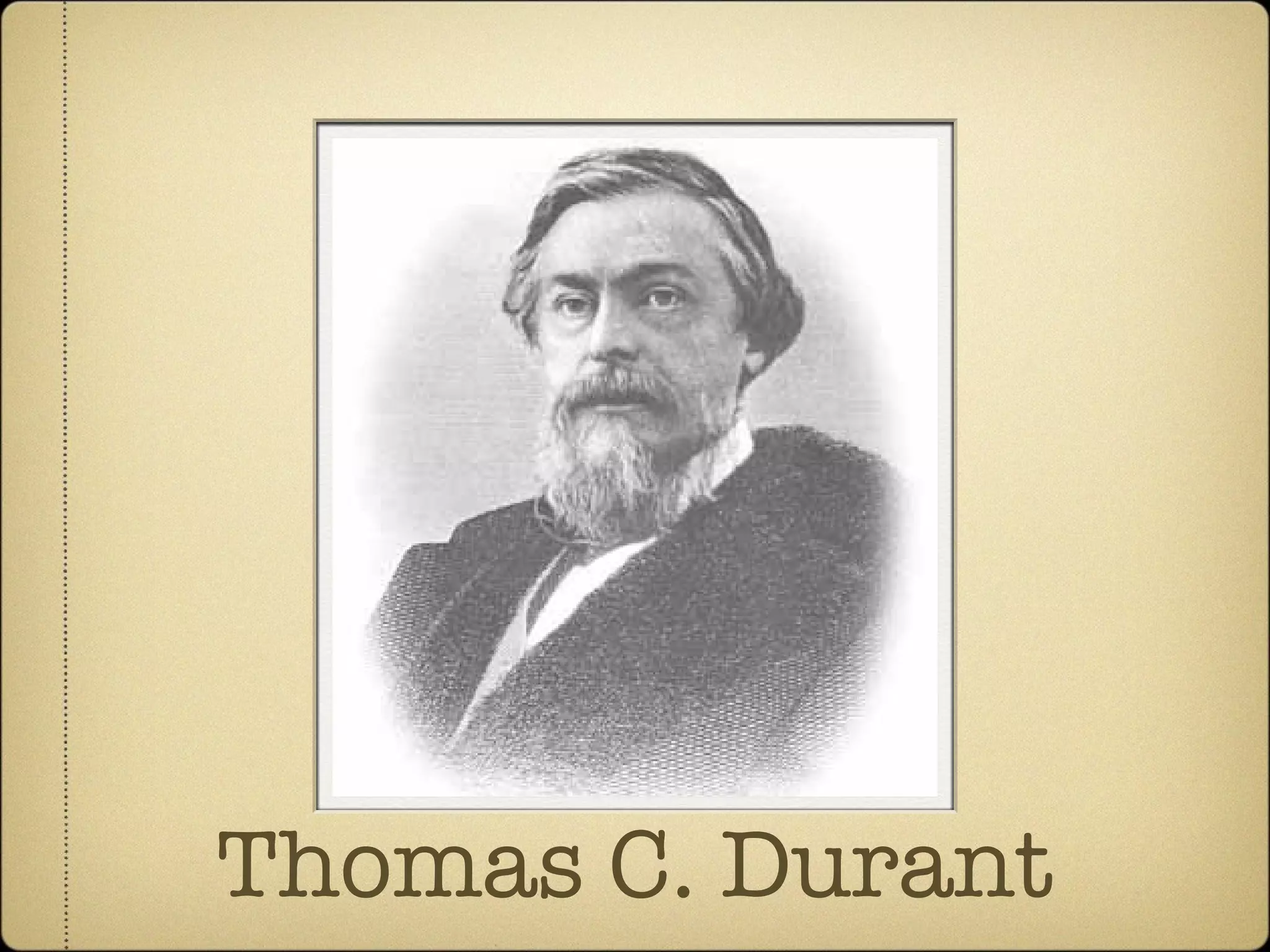
Thomas C. Durant
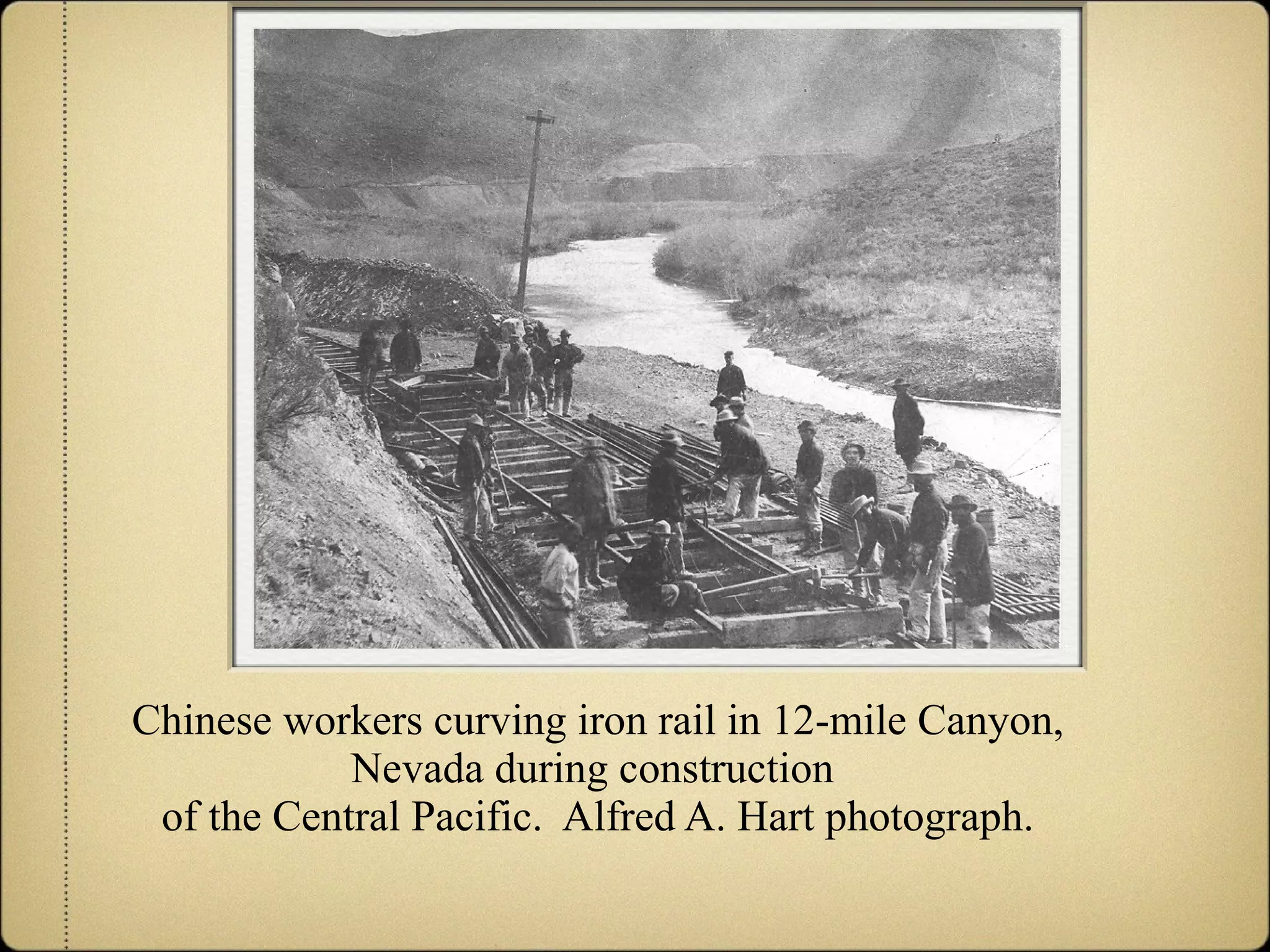
Chinese workers curving iron rail in 12-mile Canyon, Nevada during construction  of the Central Pacific.  Alfred A. Hart photograph.
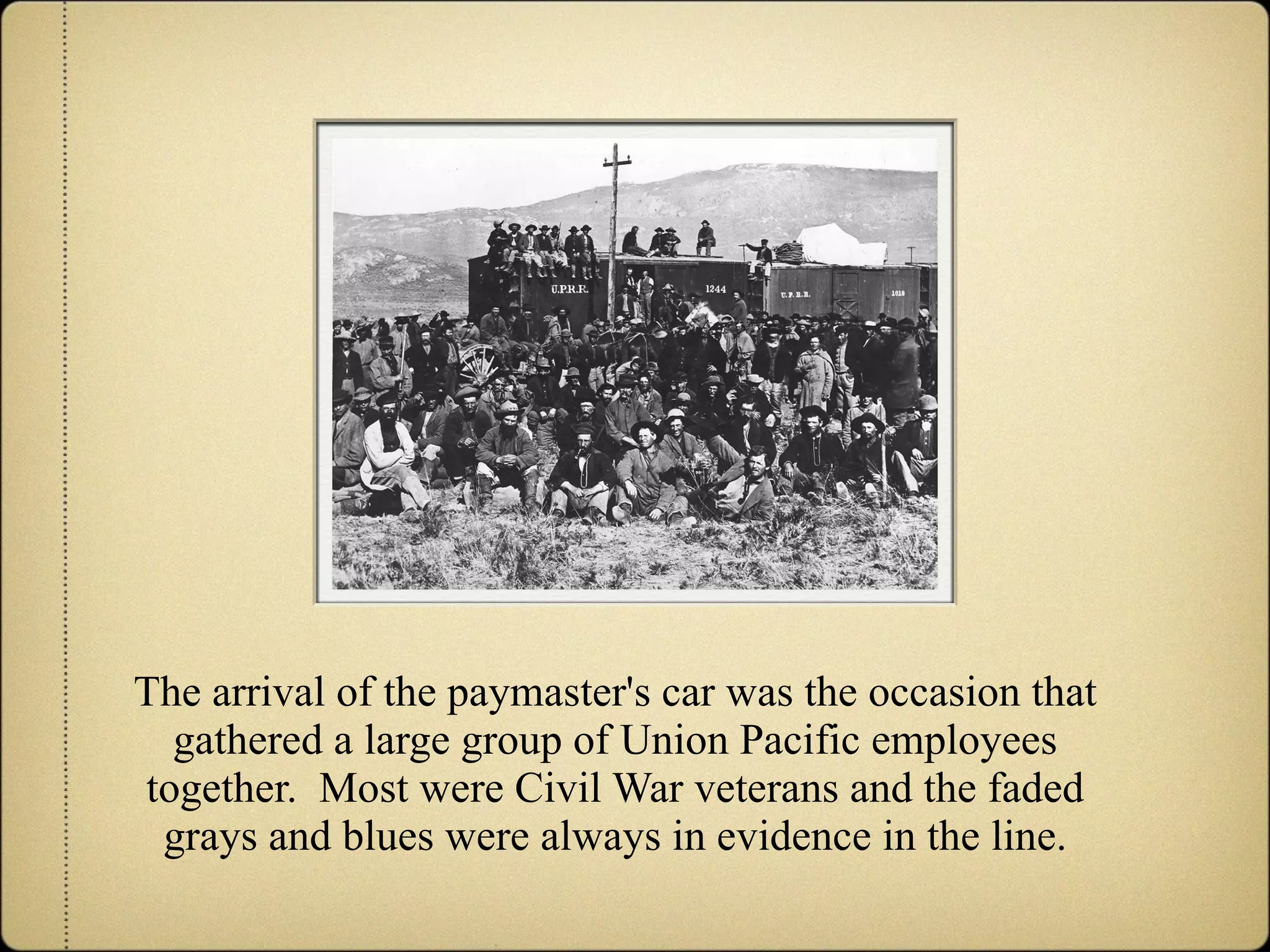
The arrival of the paymaster's car was the occasion that gathered a large group of Union Pacific employees together.  Most were Civil War veterans and the faded grays and blues were always in evidence in the line.
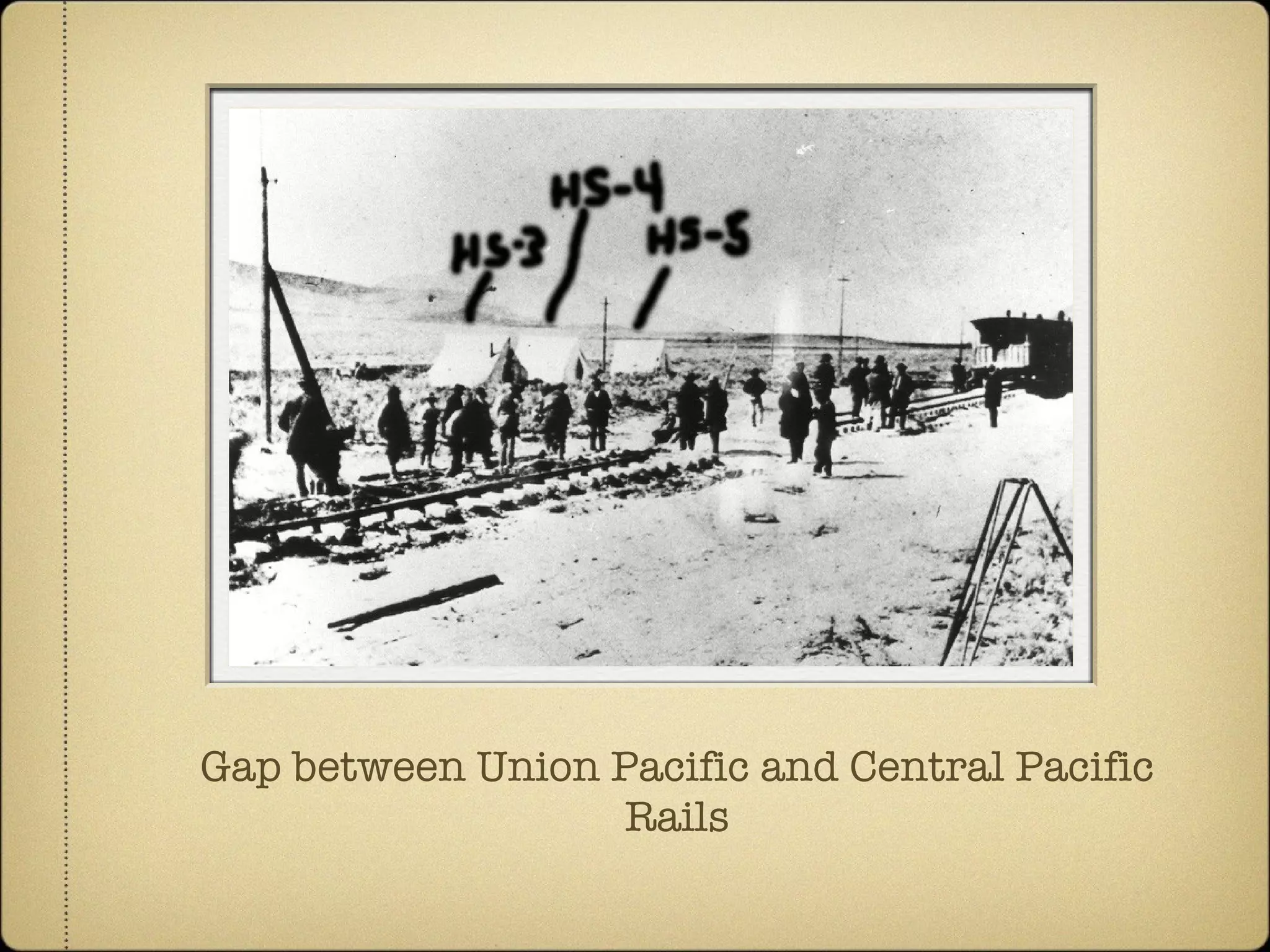
Gap between Union Pacific and Central Pacific Rails
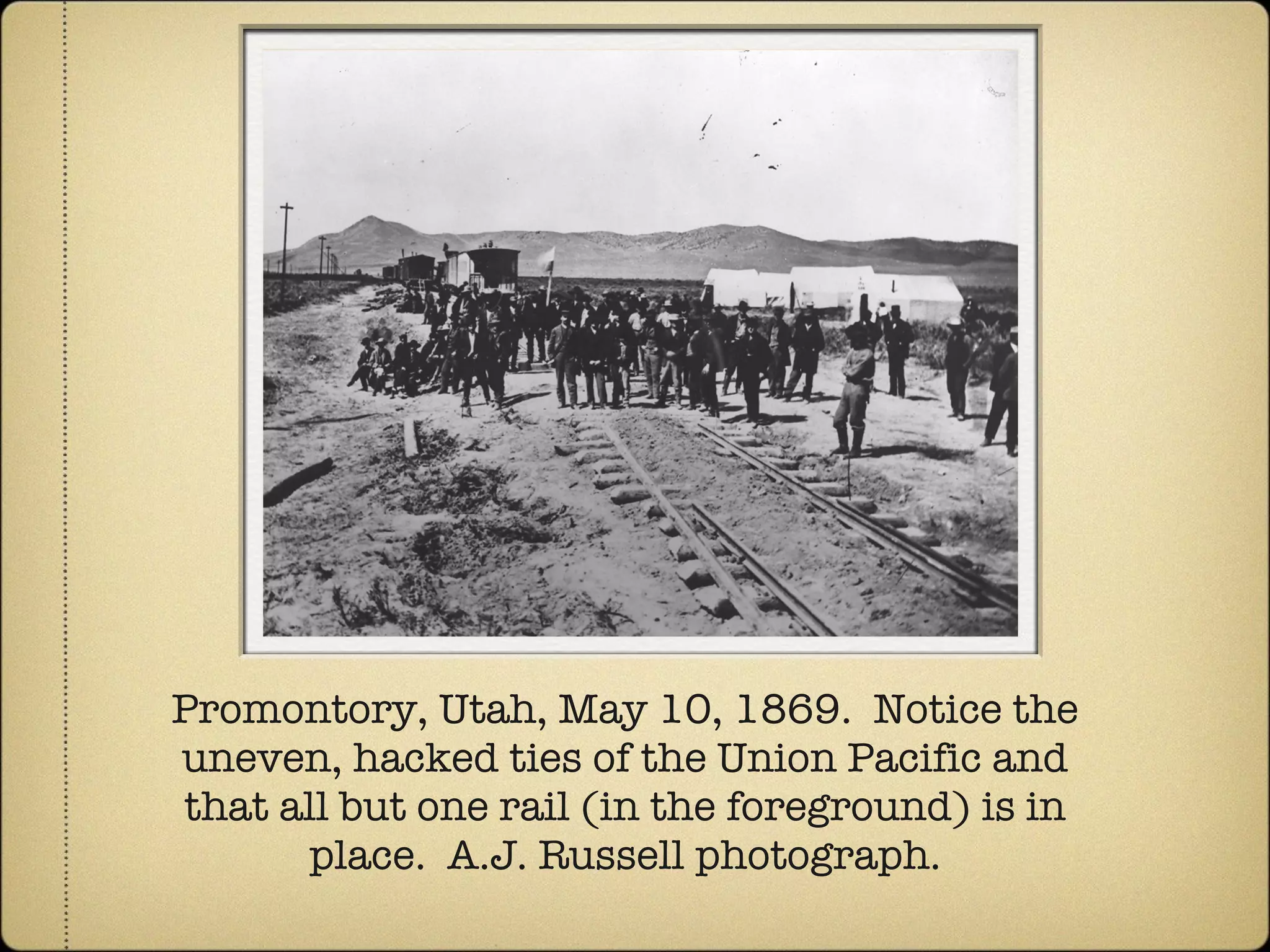
Promontory, Utah, May 10, 1869.  Notice the uneven, hacked ties of the Union Pacific and that all but one rail (in the foreground) is in place.  A.J. Russell photograph.
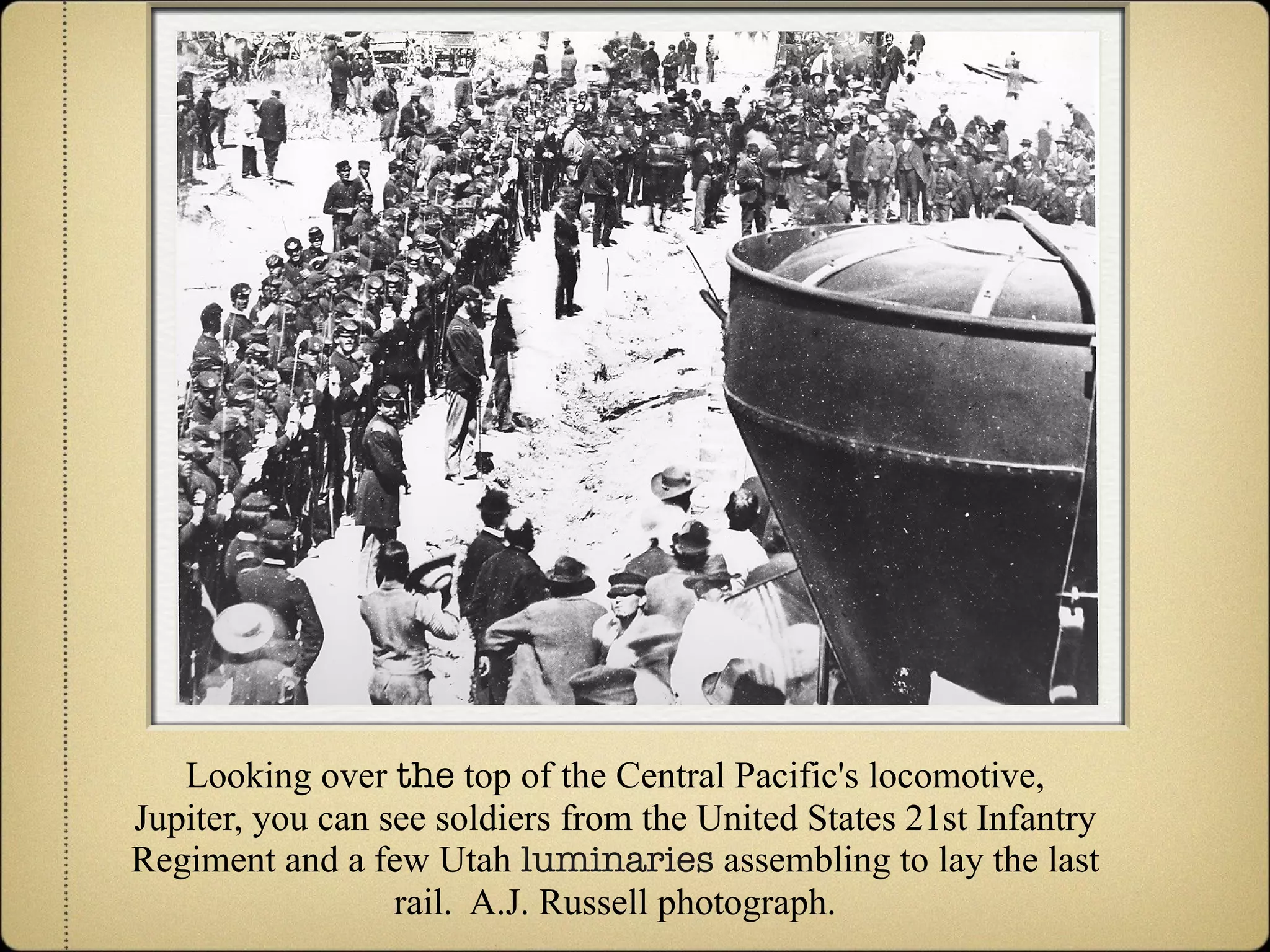
Looking over  the  top of the Central Pacific's locomotive, Jupiter, you can see soldiers from the United States 21st Infantry Regiment and a few Utah  luminaries  assembling to lay the last rail.  A.J. Russell photograph.
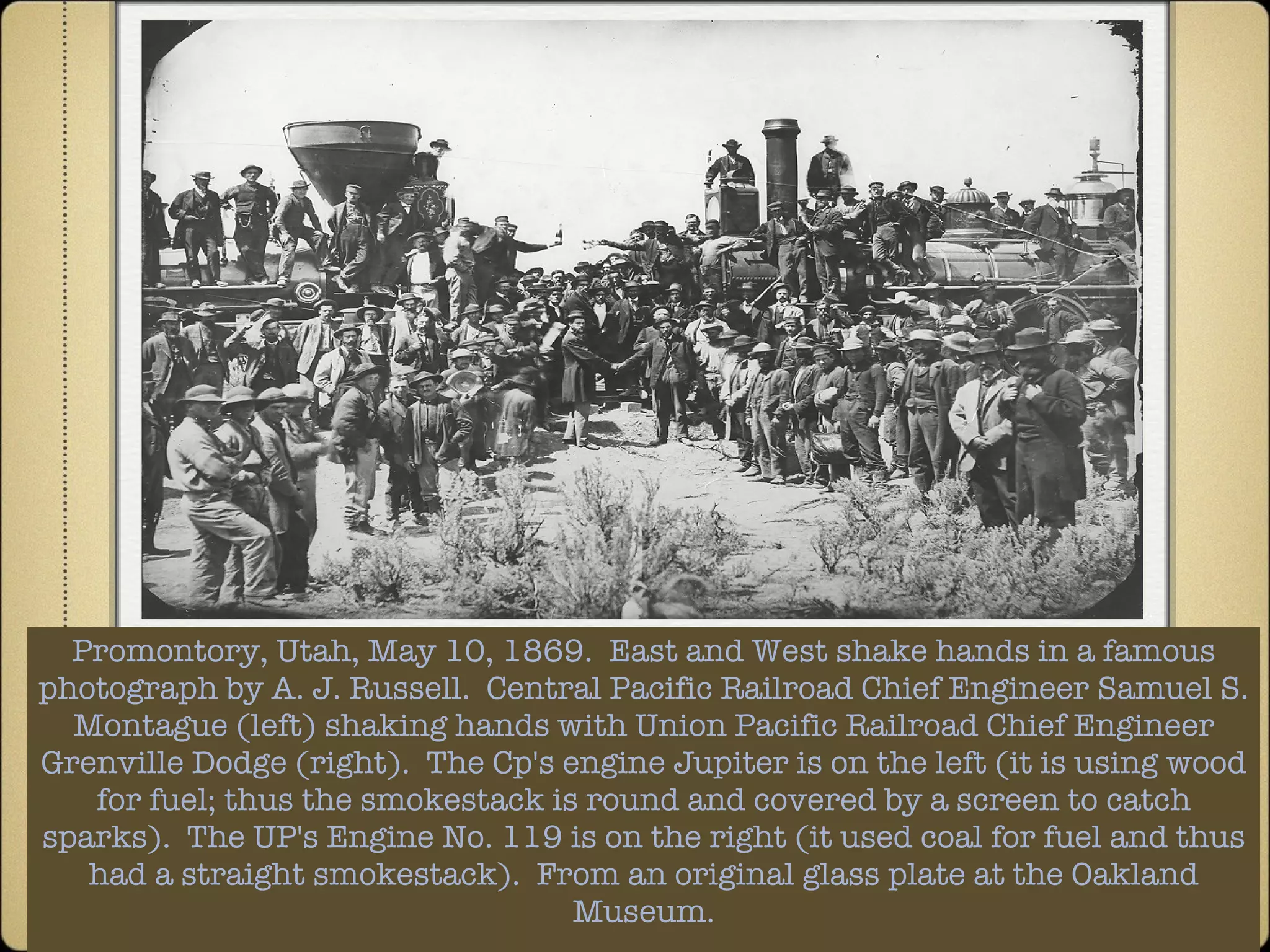
Promontory, Utah, May 10, 1869.  East and West shake hands in a famous photograph by A. J. Russell.  Central Pacific Railroad Chief Engineer Samuel S. Montague (left) shaking hands with Union Pacific Railroad Chief Engineer Grenville Dodge (right).  The Cp's engine Jupiter is on the left (it is using wood for fuel; thus the smokestack is round and covered by a screen to catch sparks).  The UP's Engine No. 119 is on the right (it used coal for fuel and thus had a straight smokestack).  From an original glass plate at the Oakland Museum.
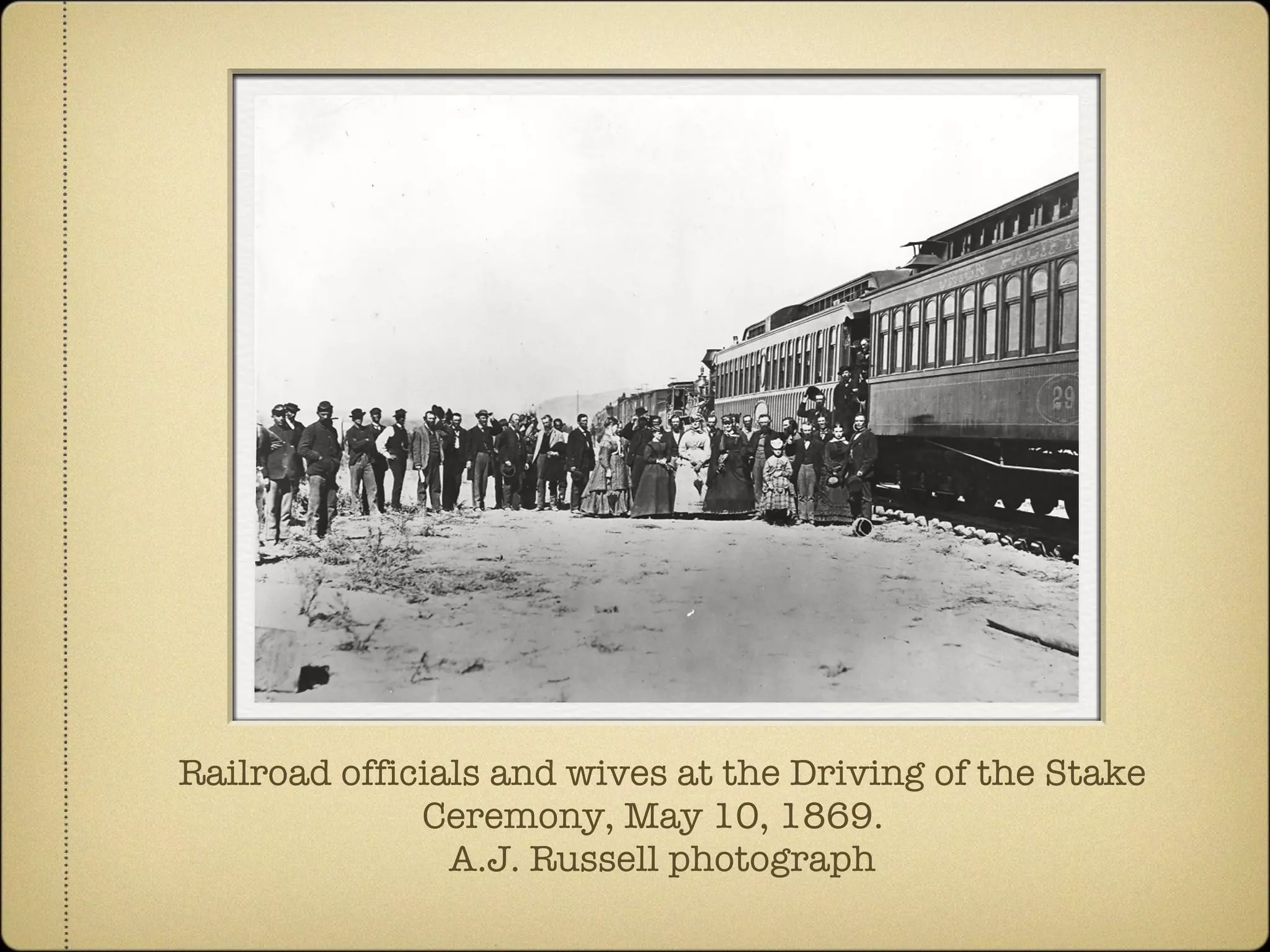
Railroad officials and wives at the Driving of the Stake Ceremony, May 10, 1869.  A.J. Russell photograph
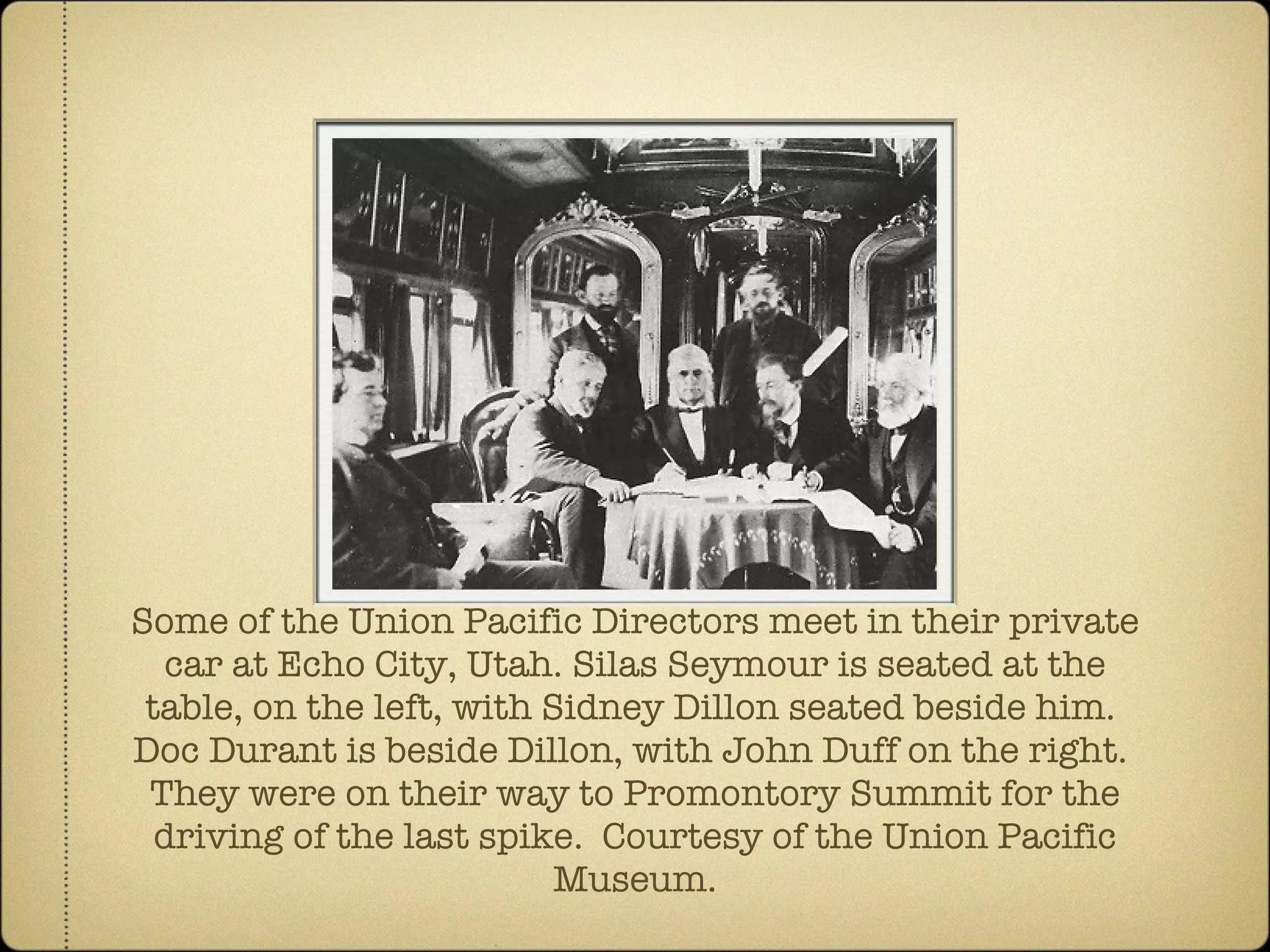
Some of the Union Pacific Directors meet in their private car at Echo City, Utah. Silas Seymour is seated at the table, on the left, with Sidney Dillon seated beside him.  Doc Durant is beside Dillon, with John Duff on the right.  They were on their way to Promontory Summit for the driving of the last spike.  Courtesy of the Union Pacific Museum.

Shortened railroad lesson

  • 1.
    Joining of theRails Ceremony
  • 2.
    Bellringer: Pony ExpressRead p. 154 “The Pony Express and the Telegraph” and answer the following question: What was the Pony Express, how long did it operate, and what replaced it?
  • 3.
    How shall wecelebrate this incredible event? Green = Government Red = Union Pacific Blue = Central Pacific Read the section in your packet about your assigned person and write down the following information in your journals: group, name of person, how this person contributed to the railroad
  • 4.
    Activity In yourgroups number off. You will share your information with the corresponding numbers in the other two groups. In your journals take notes about the people in the other groups, including their character name, group, and how they contributed to the completion of the railroad.
  • 5.
    Instructions Who -Major contributors to the completion of the railroad and reasons why they are included in the ceremony. What - Incorporate activities to celebrate the completion of the Transcontinental Railroad and reasons why they are included. Also, include the creation of memorabilia (plaques, markers, etc.) and explain their significance. Where - Location of your ceremony. Explain why you chose this location. Why - Include reasons for your celebration. Why was the completion of the Transcontinental Railroad so important? How - Explain how the railroad was completed. Give specific examples. These examples might include contributions by certain people, sacrifices and hardships, teamwork, and examples of engineering.
  • 6.
  • 7.
    Railroad coming toUtah Please read page 156 “Trains! The Transportation Revolution” and answer the following questions: Where did the two rail lines meet? When? How did the train affect Utah?
  • 8.
  • 9.
    Activity: The Nation’sReactions Imagine you are living in America as the transcontinental railroad is completed. This event touched emotions deep in the American character, but it also meant different things to different people. You are going to look at this event from different perspectives. An ordinary Citizen A citizen in the Far West A citizen in the East A business person A Native American In your journals, write a letter or journal entry as if you were living at this time. Express your reactions, thoughts, and feelings through the eyes of someone who lived at this time.
  • 10.
    The Nation’s ReactionsNative American and the Railroad, 1868. Courtesy of the Union Pacific Museum
  • 11.
    Nation’s Reactions TheUnited States was exuberant as the construction of the transcontinental railroad drew to a close in the spring of 1869. The transcontinental railroad was called the “Eighth Wonder of the World.” Building the railroad was compared to the voyage of Columbus or the landing of the Pilgrims. They may have exaggerated, but for the people of 1869, especially those over 40 years old, there was nothing to compare to it. A person born in 1829 or earlier was in a world in which President Andrew Jackson traveled no faster than Julius Caesar, a world in which no thought or information could be transmitted any faster than in Alexander the Great’s time. In 1869 with the railroad and the telegraph that was beside it, a man could move at 60 miles per hour and transmit an idea from coast to coast almost instantly. The completion of the transcontinental railroad meant different things to different people of the country.
  • 12.
    Joining of theRails Ceremony
  • 13.
    Pony Express Readp. 154 “The Pony Express and the Telegraph” and answer the following question: What was the Pony Express, how long did it operate, and what replaced it?
  • 14.
    How shall wecelebrate this incredible event? 1 = Government 2 = Union Pacific 3 = Central Pacific Read the section in your packet about your assigned person and write down the following information in your journals: Group, name of person, how this person contributed to the railroad
  • 15.
    Instructions Decide whoyou would invite of the people you learned about. Write down who they represented (Central, Union or Gov’t), their names, and why you invited them. Be prepared to share.
  • 16.
    The Joining ofthe Rails Ceremony Officials of both railroads had set Saturday, May 8th as official completion date Chinese worker riot Hostage situation
  • 17.
  • 18.
    Chinese workers curvingiron rail in 12-mile Canyon, Nevada during construction of the Central Pacific. Alfred A. Hart photograph.
  • 19.
    The arrival ofthe paymaster's car was the occasion that gathered a large group of Union Pacific employees together. Most were Civil War veterans and the faded grays and blues were always in evidence in the line.
  • 20.
    Gap between UnionPacific and Central Pacific Rails
  • 21.
    Promontory, Utah, May10, 1869. Notice the uneven, hacked ties of the Union Pacific and that all but one rail (in the foreground) is in place. A.J. Russell photograph.
  • 22.
    Looking over the top of the Central Pacific's locomotive, Jupiter, you can see soldiers from the United States 21st Infantry Regiment and a few Utah luminaries assembling to lay the last rail. A.J. Russell photograph.
  • 23.
    Promontory, Utah, May10, 1869. East and West shake hands in a famous photograph by A. J. Russell. Central Pacific Railroad Chief Engineer Samuel S. Montague (left) shaking hands with Union Pacific Railroad Chief Engineer Grenville Dodge (right). The Cp's engine Jupiter is on the left (it is using wood for fuel; thus the smokestack is round and covered by a screen to catch sparks). The UP's Engine No. 119 is on the right (it used coal for fuel and thus had a straight smokestack). From an original glass plate at the Oakland Museum.
  • 24.
    Railroad officials andwives at the Driving of the Stake Ceremony, May 10, 1869. A.J. Russell photograph
  • 25.
    Some of theUnion Pacific Directors meet in their private car at Echo City, Utah. Silas Seymour is seated at the table, on the left, with Sidney Dillon seated beside him. Doc Durant is beside Dillon, with John Duff on the right. They were on their way to Promontory Summit for the driving of the last spike. Courtesy of the Union Pacific Museum.