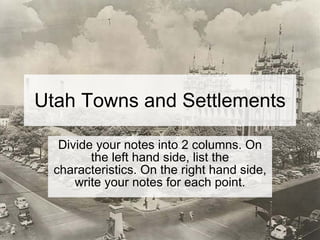
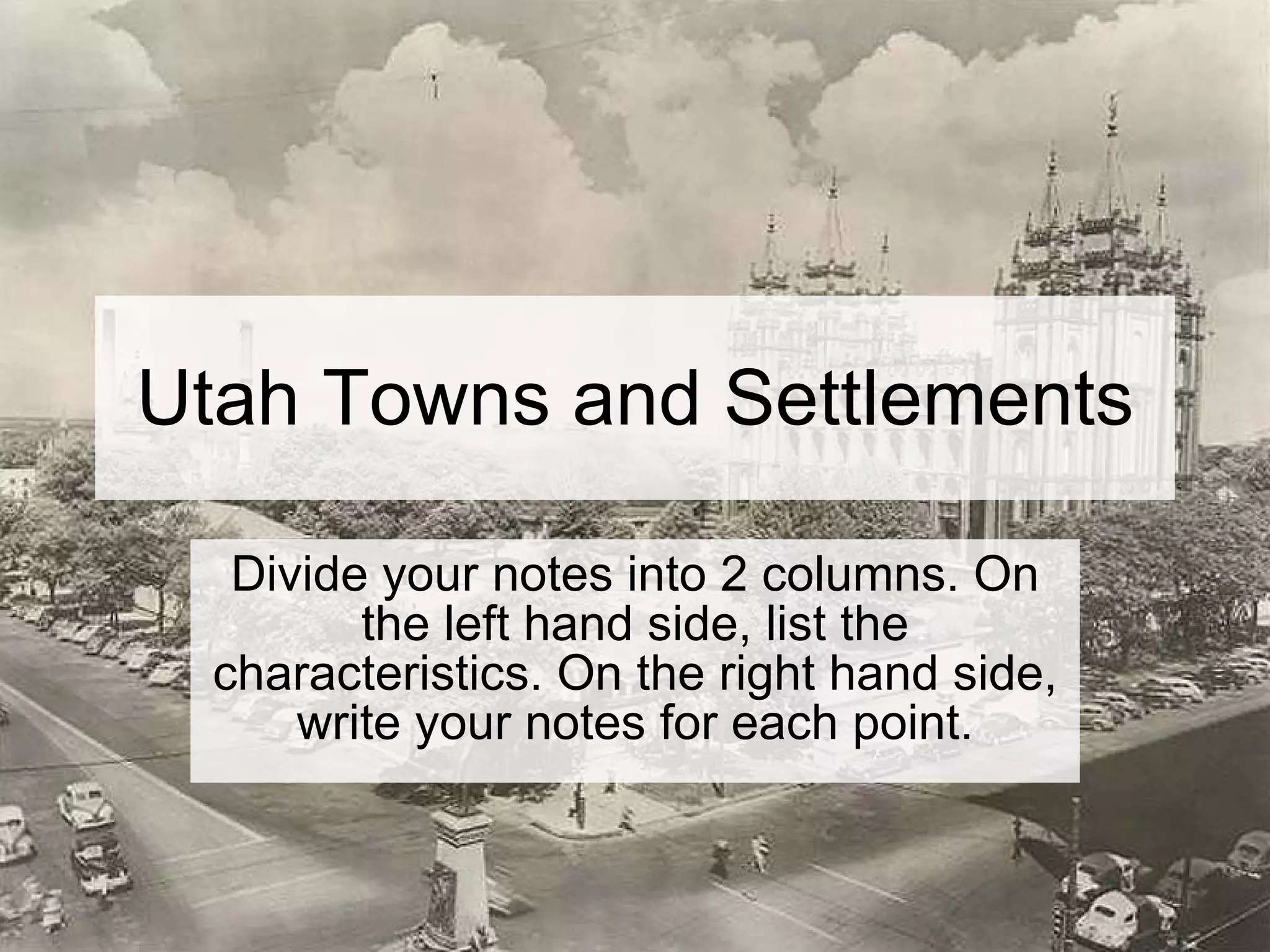
Utah Towns and Settlements Divide your notes into 2 columns. On the left hand side, list the characteristics. On the right hand side, write your notes for each point.
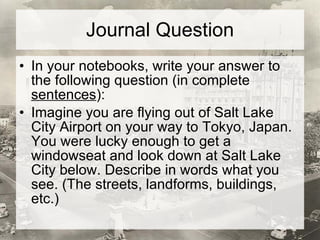
Journal Question In your notebooks, write your answer to the following question (in complete  sentences ): Imagine you are flying out of Salt Lake City Airport on your way to Tokyo, Japan. You were lucky enough to get a windowseat and look down at Salt Lake City below. Describe in words what you see. (The streets, landforms, buildings, etc.)
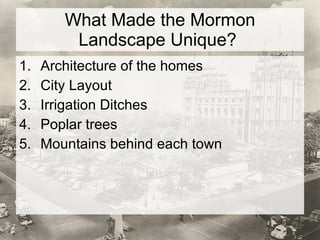
What Made the Mormon Landscape Unique?  Architecture of the homes City Layout Irrigation Ditches Poplar trees Mountains behind each town
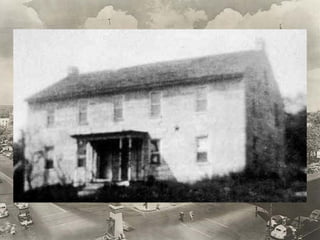
1. Architecture of the homes Sturdy brick houses (In contrast to the smaller, hip-roofed, frame houses that dominated the rest of the West) The brick might be fired or adobe, red or yellow The floor plan was almost uniformly symmetric, of the central-hall type called the Nauvoo style. They were Old Worldly in feel and usually boasted a gabled room with chimney at either end.  Many also sported two front doors
 
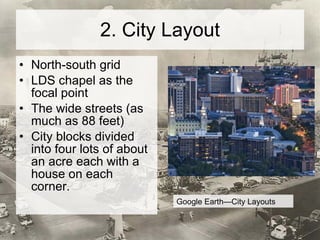
2. City Layout North-south grid LDS chapel as the focal point The wide streets (as much as 88 feet) City blocks divided into four lots of about an acre each with a house on each corner.  Google Earth—City Layouts
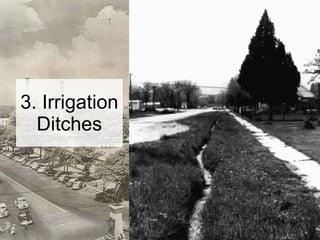
3. Irrigation Ditches
Mormons likened their exodus from Nauvoo to ancient Israel fleeing from a hostile land into the wilderness. And like ancient Israel, they looked to the word of their God for sustenance. "I will even make a way in the wilderness, and rivers in the desert," Isaiah wrote, "because I give waters in the wilderness, and rivers in the desert, to give drink to my people, my chosen." Before leaving Nauvoo Brigham Young and other Mormons had read about or heard reports from government explorers and mountain men about the arid conditions found in the Great Basin. Upon their arrival in the Great Salt Lake Valley, members of the first company quickly set about to turn the desert into a productive land just as ancient Israel had done in their own promised land. A small irrigation ditch was dug to divert water from City Creek to the sunbaked and hardened soil. The Mormons' long struggle to make the desert blossom as the rose is an epoch-making account in history of the American West.
The Mormons' development of irrigation was not the first such attempt to irrigate land in western North America. Long before the discovery of the New World by Europeans, Indians of the American Southwest diverted water to their crops. In the 1760s Spanish settlers at the mission of San Diego constructed canals to irrigate their crops. Several years prior to the arrival of the Mormon Saints at the Great Salt Lake Valley, some of the first American settlers in Oregon had dug small ditches to water their crops. And, contemporary with the Mormon settlement of the Great Salt Lake Valley, Indians in southern Utah were raising crops with the aid of irrigation.  To build large irrigation canals required large pools of human and financial resources. Recognizing this, Brigham Young urged farmers "to raise (their) sustenance from smaller quantities of land" than what they had been accustomed to in the more humid regions of the east. The success of building Zion rested squarely on communal cooperative efforts and the individual discipline of irrigators to use beneficially the limited water available to them.
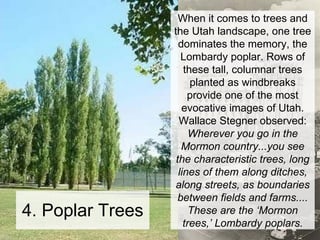
4. Poplar Trees When it comes to trees and the Utah landscape, one tree dominates the memory, the Lombardy poplar. Rows of these tall, columnar trees planted as windbreaks provide one of the most evocative images of Utah. Wallace Stegner observed: Wherever you go in the Mormon country...you see the characteristic trees, long lines of them along ditches, along streets, as boundaries between fields and farms.... These are the ‘Mormon trees,’ Lombardy poplars.
What do trees say about a people? http://history.utah.gov/experience_history/glimpses/trees.html#ordinance
Perhaps it is fanciful to judge a people by its trees. Probably the [large number] of poplars is the result of nothing more interesting than climatic conditions or the lack of other kinds of seeds and seedlings. Probably it is pure nonsense to see a reflection of Mormon group life in the fact that the poplars were practically never planted singly, but always in groups, and that the groups took the form of straight lines and ranks. Perhaps it is even more nonsensical to speculate that the straight, tall verticality of the Mormon trees appealed obscurely to the rigid sense of order of the settlers, and that a marching row of plumed poplars was symbolic, somehow, of the planter’s walking with God and his solidarity with his neighbors.  --Wallace Stegner, Utah Historian  http://history.utah.gov/experience_history/glimpses/trees.html#ordinance
An Ordinance In 1851, Salt Lake City passed an ordinance stating that “every holder of lots...are (sic) hereby required to set out in front of their lots such trees for shade... [that would] be the best calculated to adorn and improve the city.” Three years later Bishop E. D.  Woolley instructed a group of men in his ward to “see that shade trees be set sixteen feet apart around each block.” http://history.utah.gov/experience_history/glimpses/trees.html#ordinance
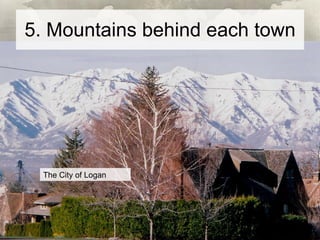
5. Mountains behind each town The City of Logan
Activity: Draw your own city What will your water source be? In which direction will your streets go? Are there any obstacles to your organization? (Ex: Mountains, rivers, etc.) How wide will your streets be? What kind of sanitation system will you have? (Ditches, sewers, rivers, none) Where will people live? Where will dirty/noisy/ugly businesses be? Will your city be functional, beautiful, or other? Will you need protection from attackers?

Utah Towns And Settlements

  • 1.
    Utah Towns andSettlements Divide your notes into 2 columns. On the left hand side, list the characteristics. On the right hand side, write your notes for each point.
  • 2.
    Journal Question Inyour notebooks, write your answer to the following question (in complete sentences ): Imagine you are flying out of Salt Lake City Airport on your way to Tokyo, Japan. You were lucky enough to get a windowseat and look down at Salt Lake City below. Describe in words what you see. (The streets, landforms, buildings, etc.)
  • 3.
    What Made theMormon Landscape Unique? Architecture of the homes City Layout Irrigation Ditches Poplar trees Mountains behind each town
  • 4.
    1. Architecture ofthe homes Sturdy brick houses (In contrast to the smaller, hip-roofed, frame houses that dominated the rest of the West) The brick might be fired or adobe, red or yellow The floor plan was almost uniformly symmetric, of the central-hall type called the Nauvoo style. They were Old Worldly in feel and usually boasted a gabled room with chimney at either end. Many also sported two front doors
  • 5.
  • 6.
    2. City LayoutNorth-south grid LDS chapel as the focal point The wide streets (as much as 88 feet) City blocks divided into four lots of about an acre each with a house on each corner. Google Earth—City Layouts
  • 7.
  • 8.
    Mormons likened theirexodus from Nauvoo to ancient Israel fleeing from a hostile land into the wilderness. And like ancient Israel, they looked to the word of their God for sustenance. "I will even make a way in the wilderness, and rivers in the desert," Isaiah wrote, "because I give waters in the wilderness, and rivers in the desert, to give drink to my people, my chosen." Before leaving Nauvoo Brigham Young and other Mormons had read about or heard reports from government explorers and mountain men about the arid conditions found in the Great Basin. Upon their arrival in the Great Salt Lake Valley, members of the first company quickly set about to turn the desert into a productive land just as ancient Israel had done in their own promised land. A small irrigation ditch was dug to divert water from City Creek to the sunbaked and hardened soil. The Mormons' long struggle to make the desert blossom as the rose is an epoch-making account in history of the American West.
  • 9.
    The Mormons' developmentof irrigation was not the first such attempt to irrigate land in western North America. Long before the discovery of the New World by Europeans, Indians of the American Southwest diverted water to their crops. In the 1760s Spanish settlers at the mission of San Diego constructed canals to irrigate their crops. Several years prior to the arrival of the Mormon Saints at the Great Salt Lake Valley, some of the first American settlers in Oregon had dug small ditches to water their crops. And, contemporary with the Mormon settlement of the Great Salt Lake Valley, Indians in southern Utah were raising crops with the aid of irrigation. To build large irrigation canals required large pools of human and financial resources. Recognizing this, Brigham Young urged farmers "to raise (their) sustenance from smaller quantities of land" than what they had been accustomed to in the more humid regions of the east. The success of building Zion rested squarely on communal cooperative efforts and the individual discipline of irrigators to use beneficially the limited water available to them.
  • 10.
    4. Poplar TreesWhen it comes to trees and the Utah landscape, one tree dominates the memory, the Lombardy poplar. Rows of these tall, columnar trees planted as windbreaks provide one of the most evocative images of Utah. Wallace Stegner observed: Wherever you go in the Mormon country...you see the characteristic trees, long lines of them along ditches, along streets, as boundaries between fields and farms.... These are the ‘Mormon trees,’ Lombardy poplars.
  • 11.
    What do treessay about a people? http://history.utah.gov/experience_history/glimpses/trees.html#ordinance
  • 12.
    Perhaps it isfanciful to judge a people by its trees. Probably the [large number] of poplars is the result of nothing more interesting than climatic conditions or the lack of other kinds of seeds and seedlings. Probably it is pure nonsense to see a reflection of Mormon group life in the fact that the poplars were practically never planted singly, but always in groups, and that the groups took the form of straight lines and ranks. Perhaps it is even more nonsensical to speculate that the straight, tall verticality of the Mormon trees appealed obscurely to the rigid sense of order of the settlers, and that a marching row of plumed poplars was symbolic, somehow, of the planter’s walking with God and his solidarity with his neighbors. --Wallace Stegner, Utah Historian http://history.utah.gov/experience_history/glimpses/trees.html#ordinance
  • 13.
    An Ordinance In1851, Salt Lake City passed an ordinance stating that “every holder of lots...are (sic) hereby required to set out in front of their lots such trees for shade... [that would] be the best calculated to adorn and improve the city.” Three years later Bishop E. D.  Woolley instructed a group of men in his ward to “see that shade trees be set sixteen feet apart around each block.” http://history.utah.gov/experience_history/glimpses/trees.html#ordinance
  • 14.
    5. Mountains behindeach town The City of Logan
  • 15.
    Activity: Draw yourown city What will your water source be? In which direction will your streets go? Are there any obstacles to your organization? (Ex: Mountains, rivers, etc.) How wide will your streets be? What kind of sanitation system will you have? (Ditches, sewers, rivers, none) Where will people live? Where will dirty/noisy/ugly businesses be? Will your city be functional, beautiful, or other? Will you need protection from attackers?