Welcome
to our
presentation
Groups
members
1.Suman Dhakal
2.Shital Dhakal
3.Johan Poudel
4.Binod Nepali
Computer
system
Contents
2.Parts of computer
3.Classification of computers on the basis of
work4.Classification of computers on the basis of
size
5.Generations of computers
6.Applications of computers
1.Introduction
COMPUT
ERWhat is computer?
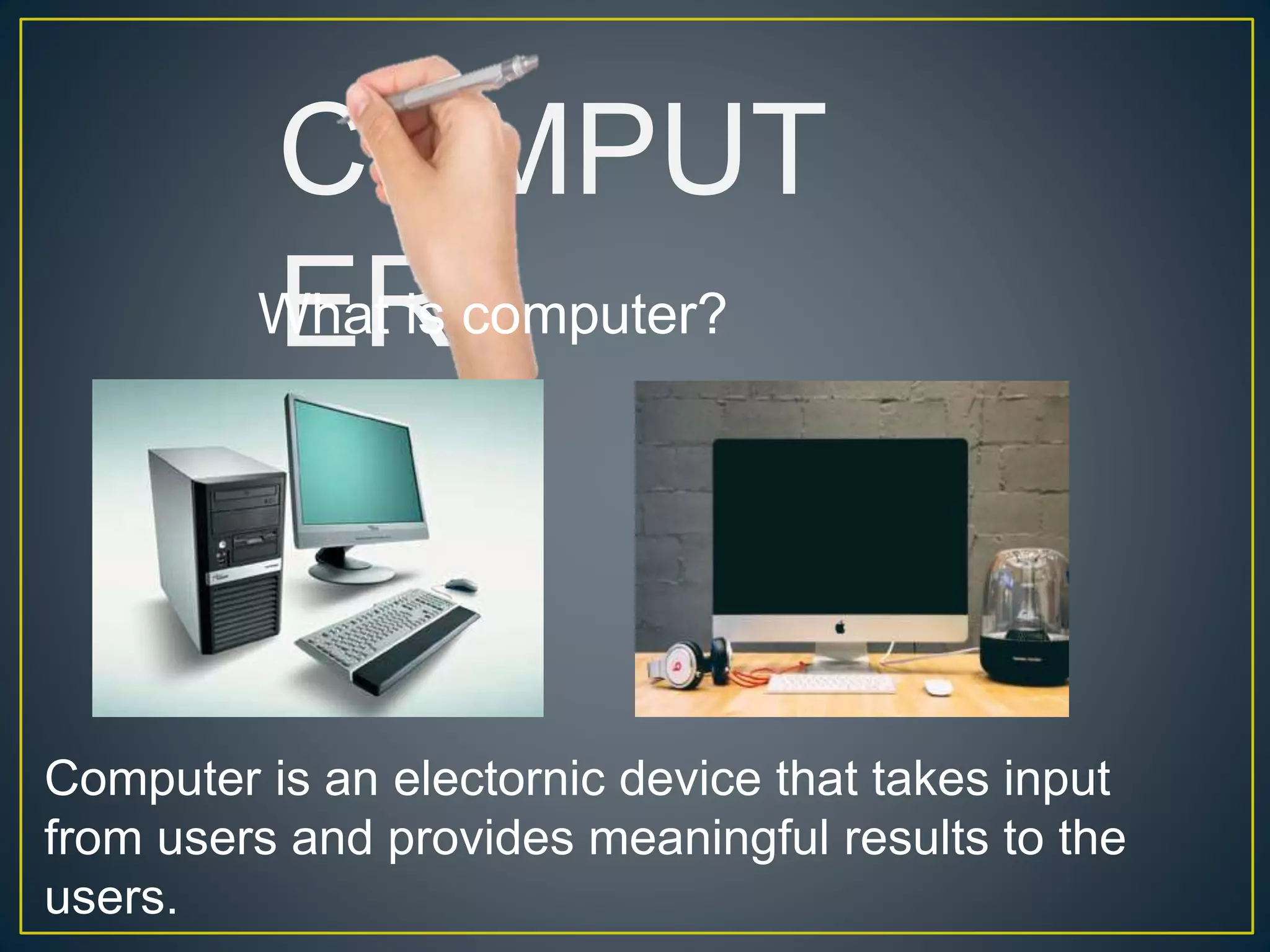
Computer is an electornic device that takes input
from users and provides meaningful results to the
users.
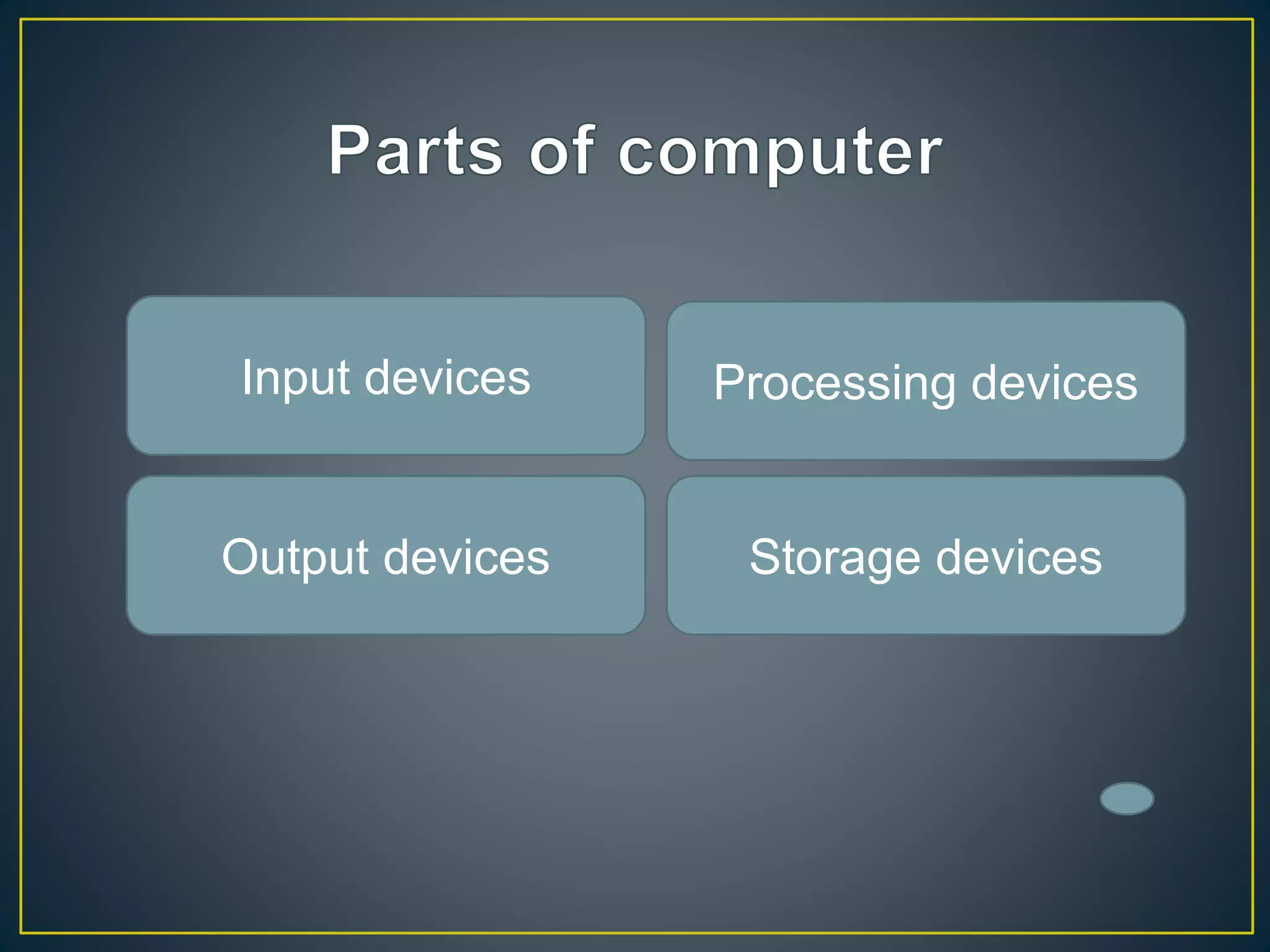
Input devices Processing devices
Output devices Storage devices
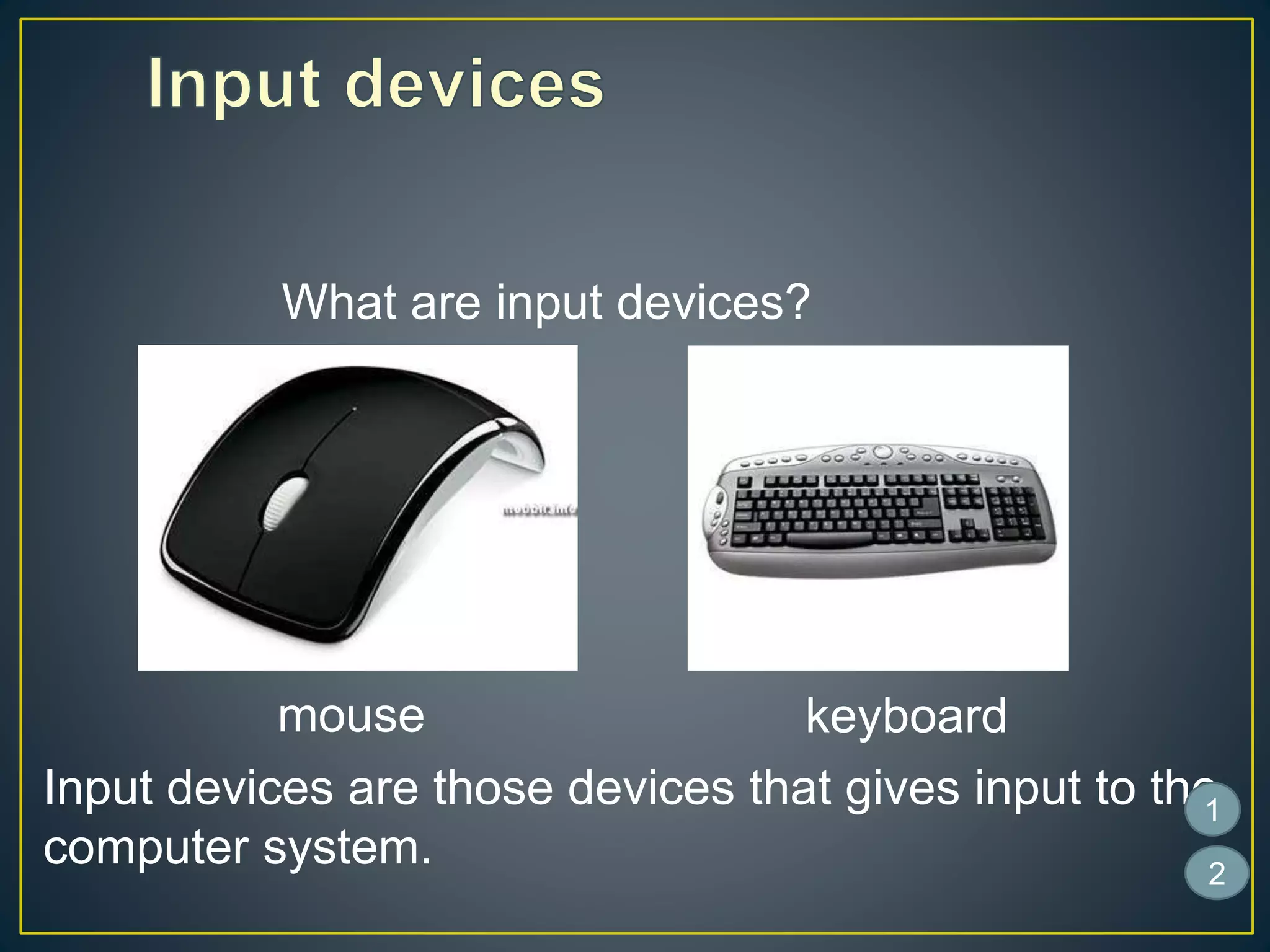
What are input devices?
Input devices are those devices that gives input to the
computer system.
mouse keyboard
1
2
Processing device
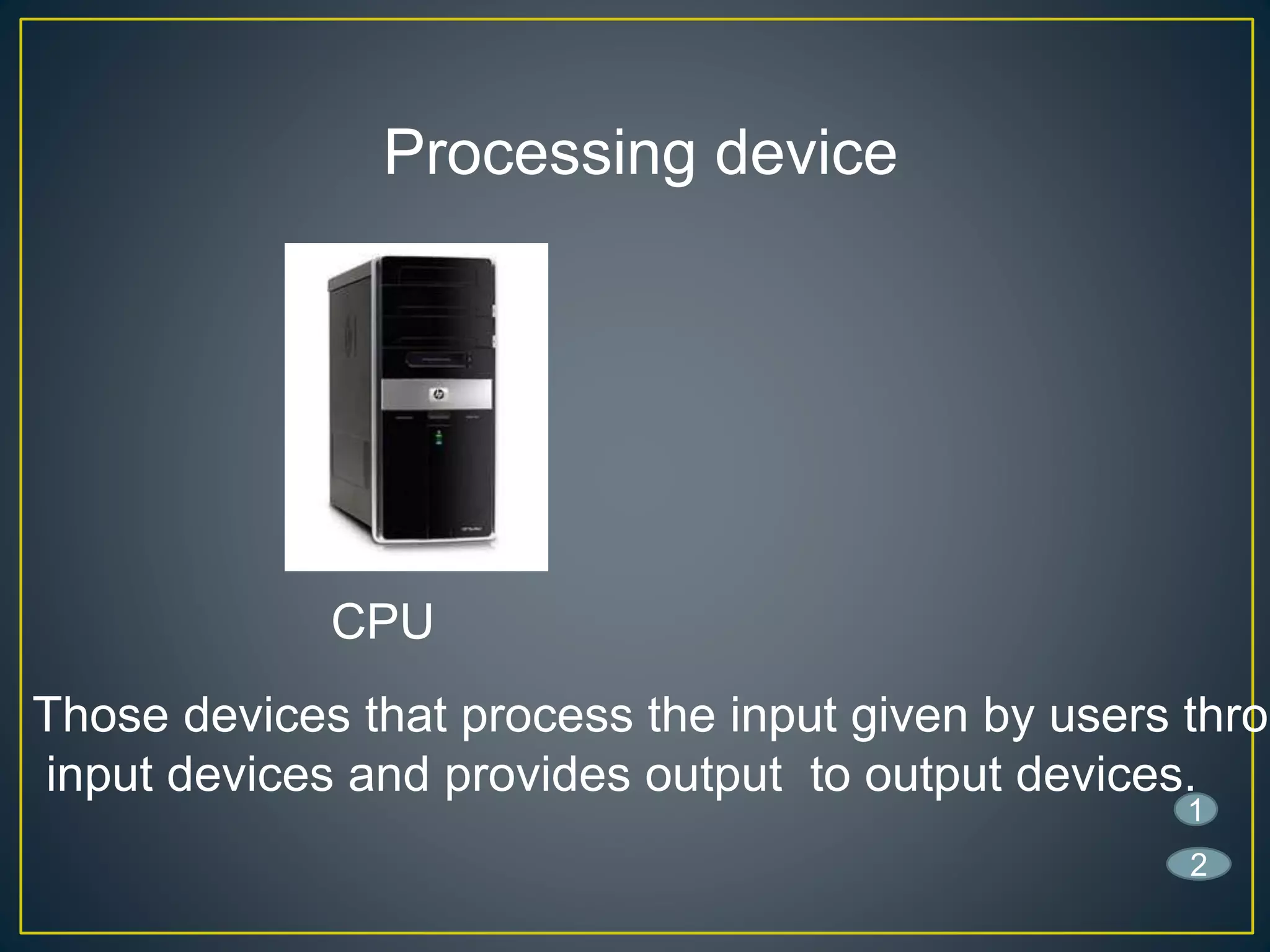
Those devices that process the input given by users throu
input devices and provides output to output devices.
1
CPU
2
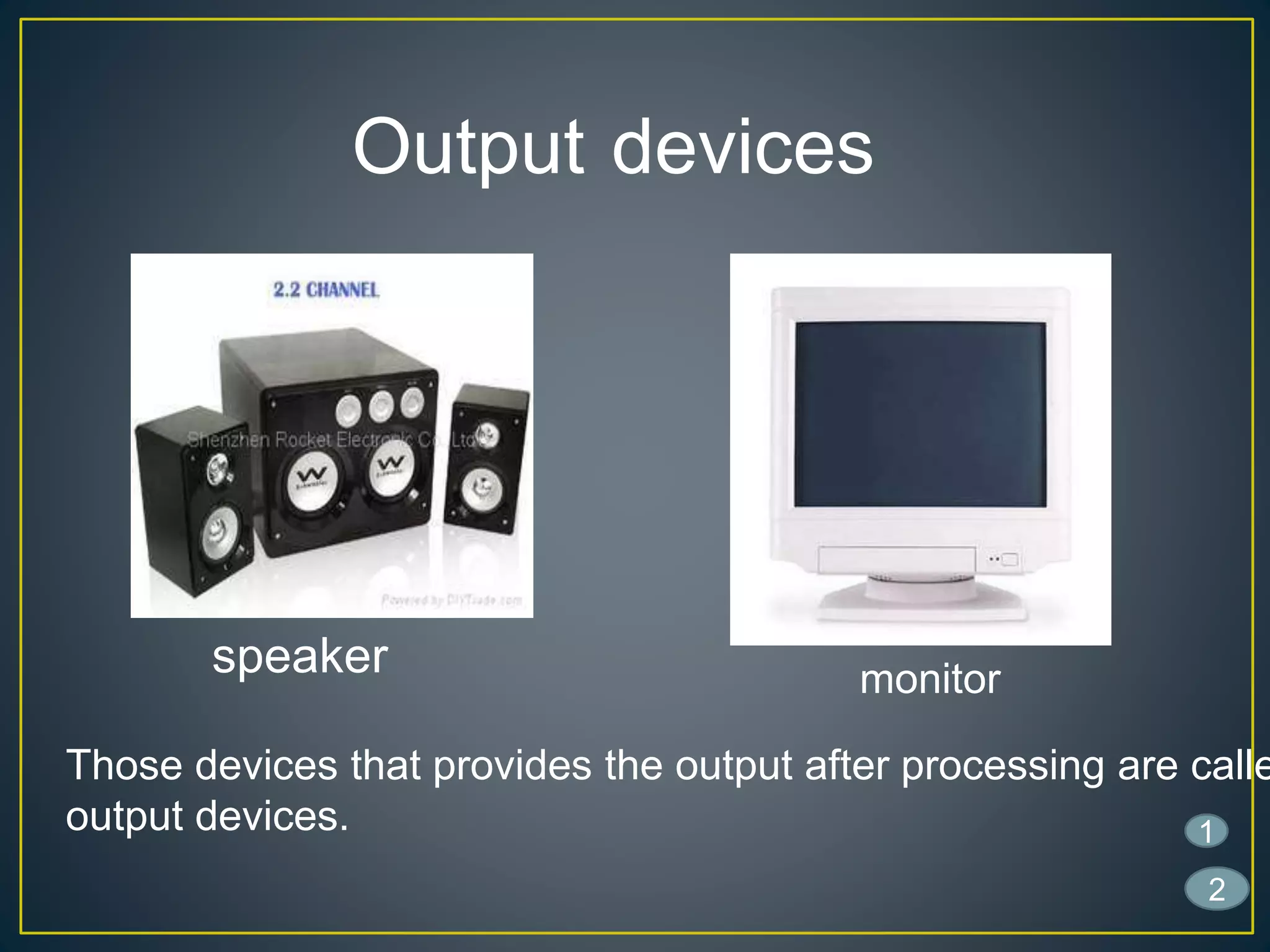
Output devices
Those devices that provides the output after processing are calle
output devices.
speaker monitor
1
2
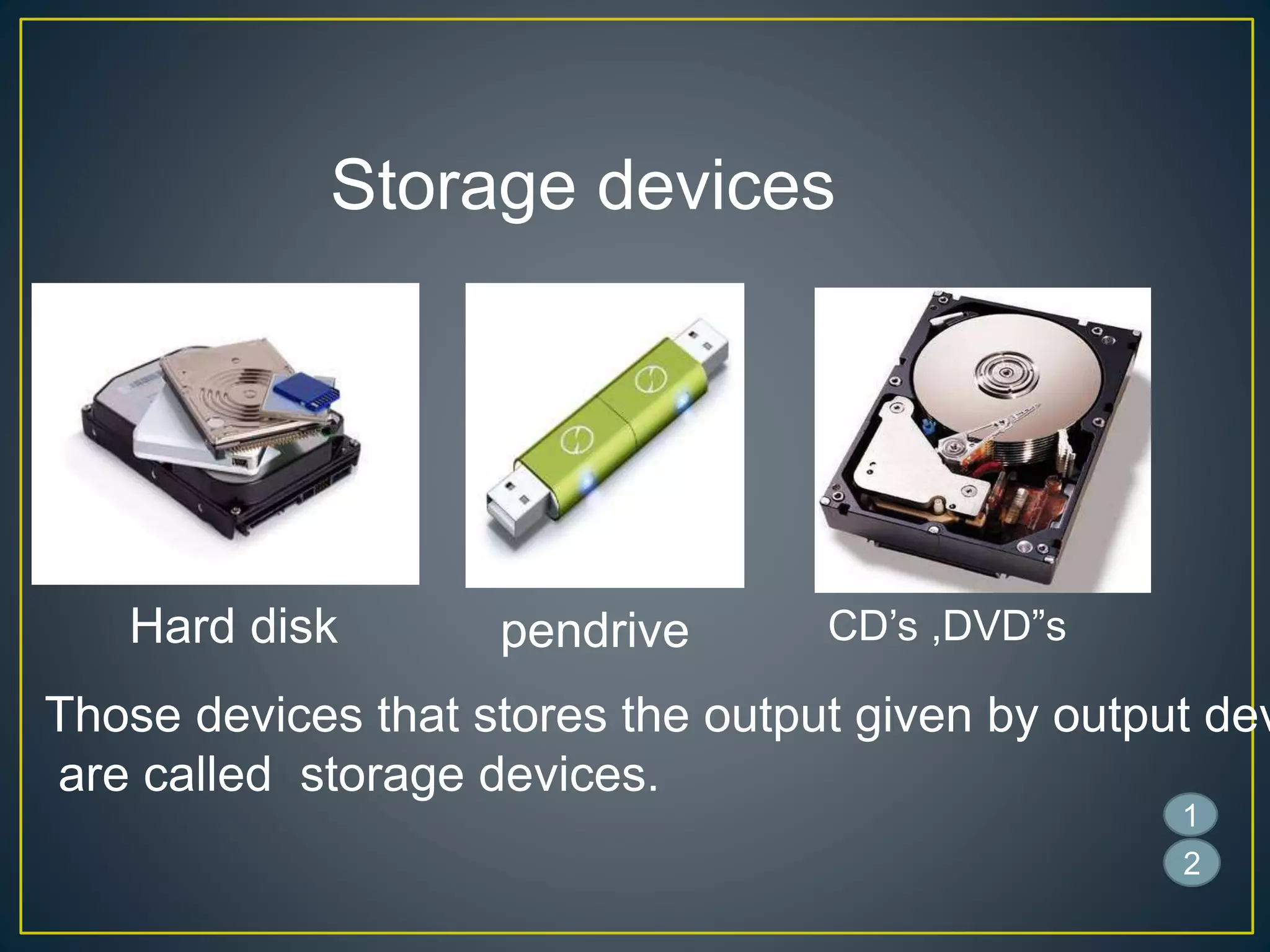
Storage devices
Those devices that stores the output given by output dev
are called storage devices.
pendrive CD’s ,DVD”s
1
2
Hard disk
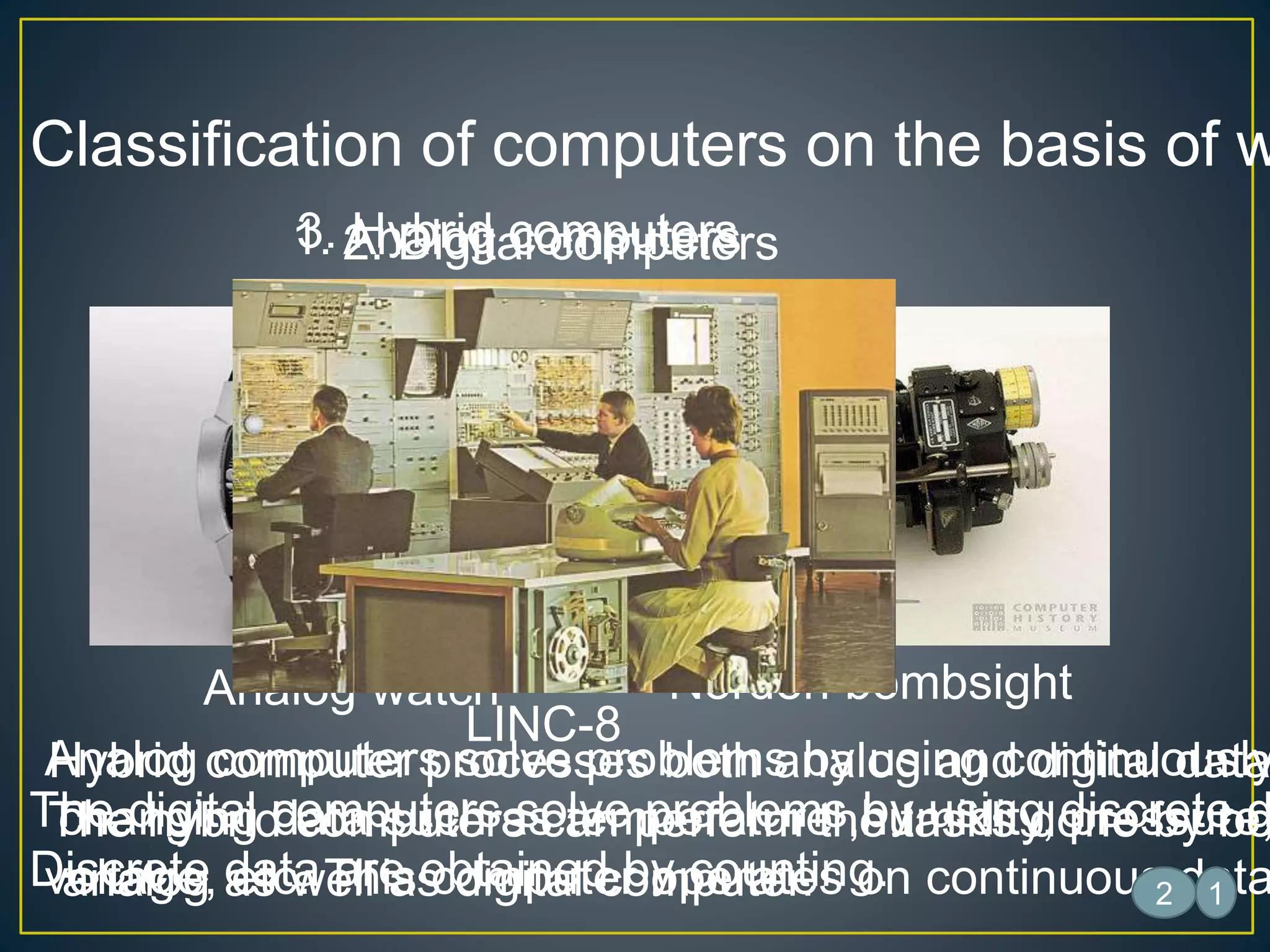
Classification of computers on the basis of w
1. Analog computers
Analog computers solve problems by using continuously
changing data such as temperature ,humidity, pressure,
voltage, etc. This computer operates on continuous data
2. Digital computers
The digital computers solve problems by using discrete d
Discrete data are obtained by counting.
3. Hybrid computers
Hybrid computer processes both analog and digital data
The hybrid computers can perform the tasks done by bo
analog as well as digital computer.
Analog watch Norden bombsight
1
Laptop
LINC-8
2
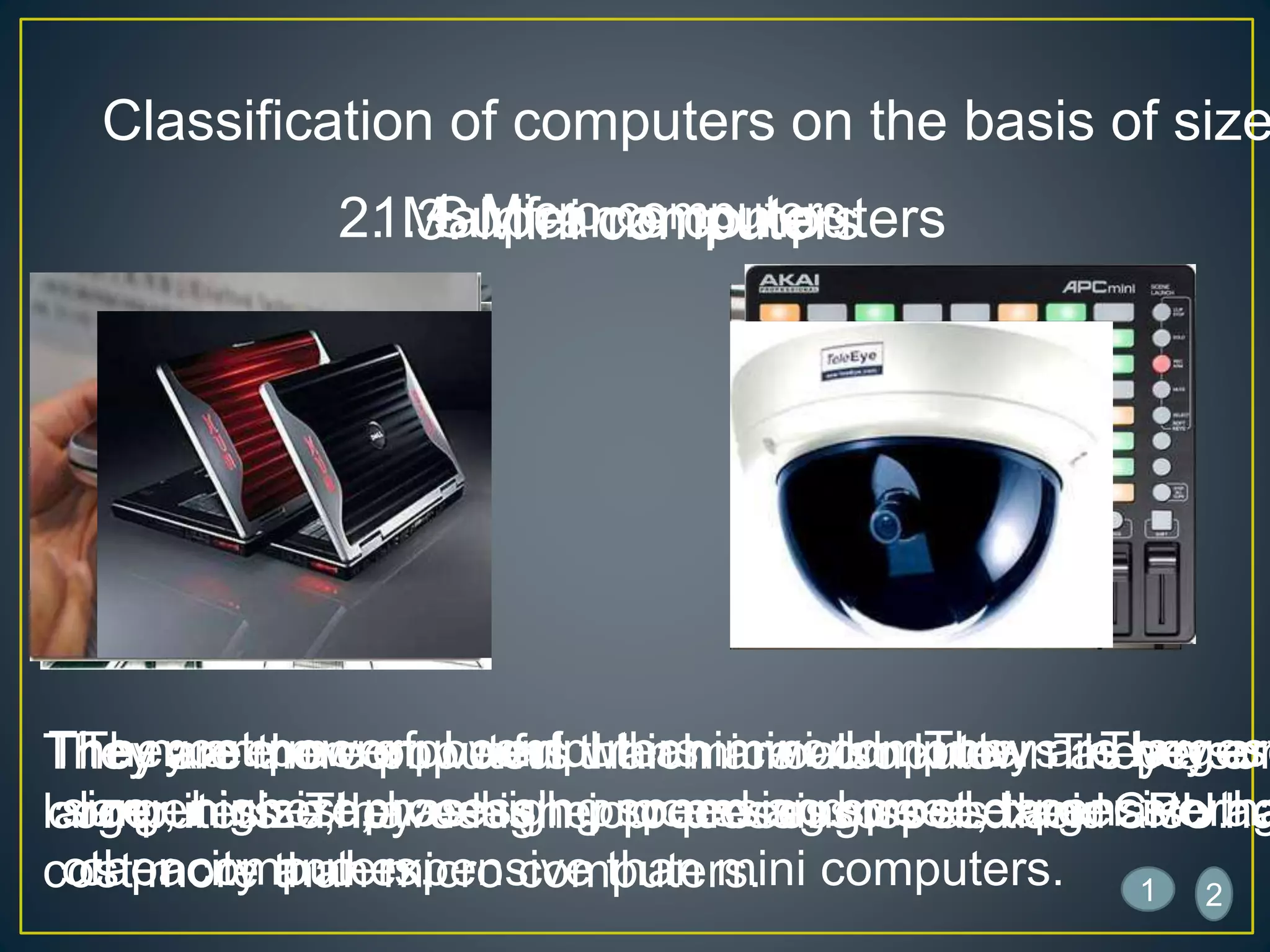
Classification of computers on the basis of size
1. Super computer
The most powerful computers in world . They are largest
size , highest processing speed and most expensive tha
other computers.
2. Mainframe computers
They are more powerful than mini computers . They are
larger in size, has high processing speed, larger storag
capacity and expensive than mini computers.
3. Mini computers
They are more powerful than microcomputer. They are
larger in size, have higher processing speed and also ha
cost more than micro computers.
4. Micro computers
They are the computers which are also known as person
computers. They uses micro processors as their CPU.
21
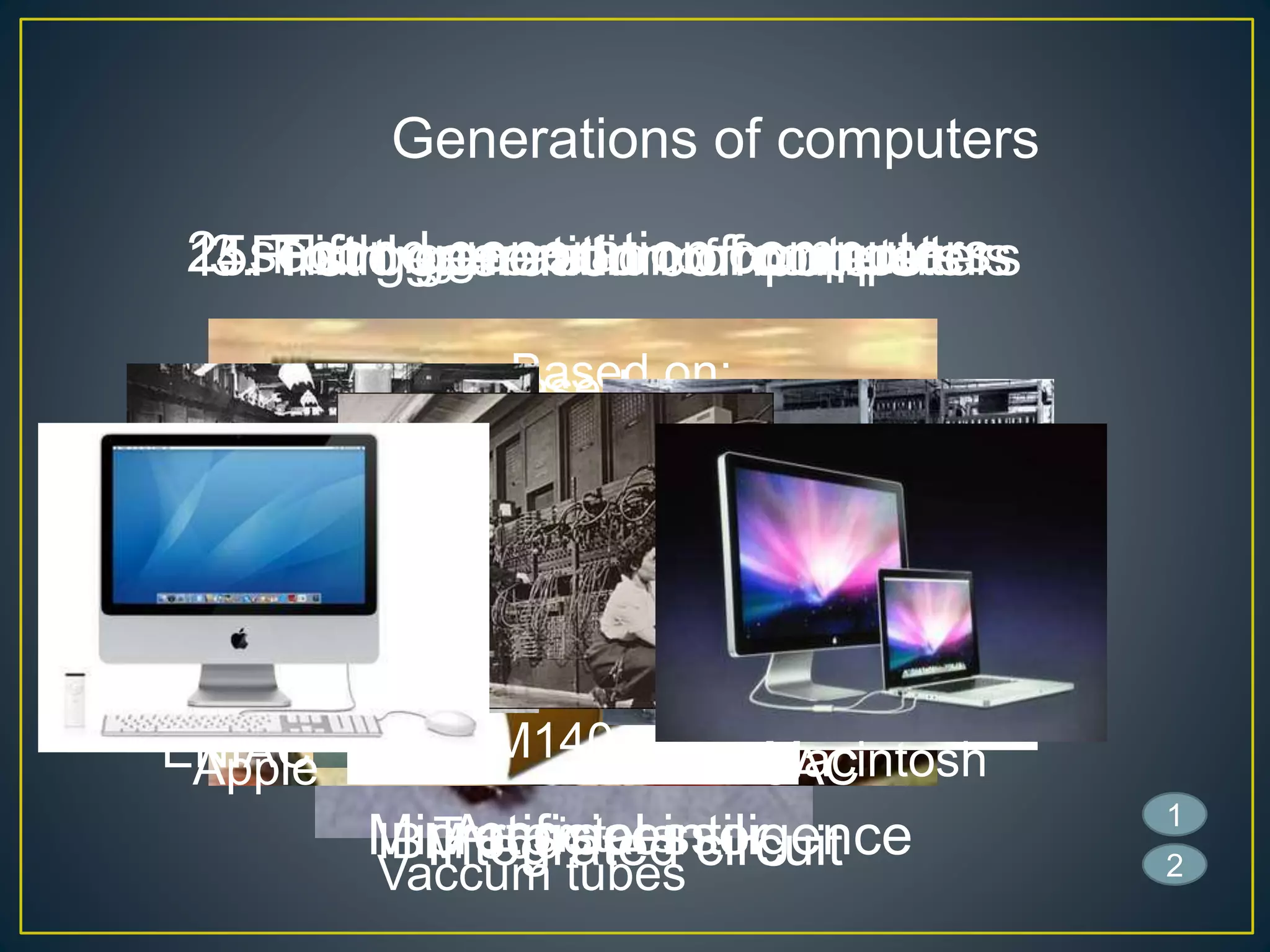
Generations of computers
1. First generation computers
Based on :
Vaccum tubes
2. second generation computers
Based on :
Transistors
3. Third generation of computers
Based on:
Integrated circuit
4. Fourth generation of computers
Based on:
Micro processor
5. Fifth generation of computers
Based on:
Artificial intiligence
ENIAC EDSAC
IBM140
IBM 360
Apple Macintosh
1
2
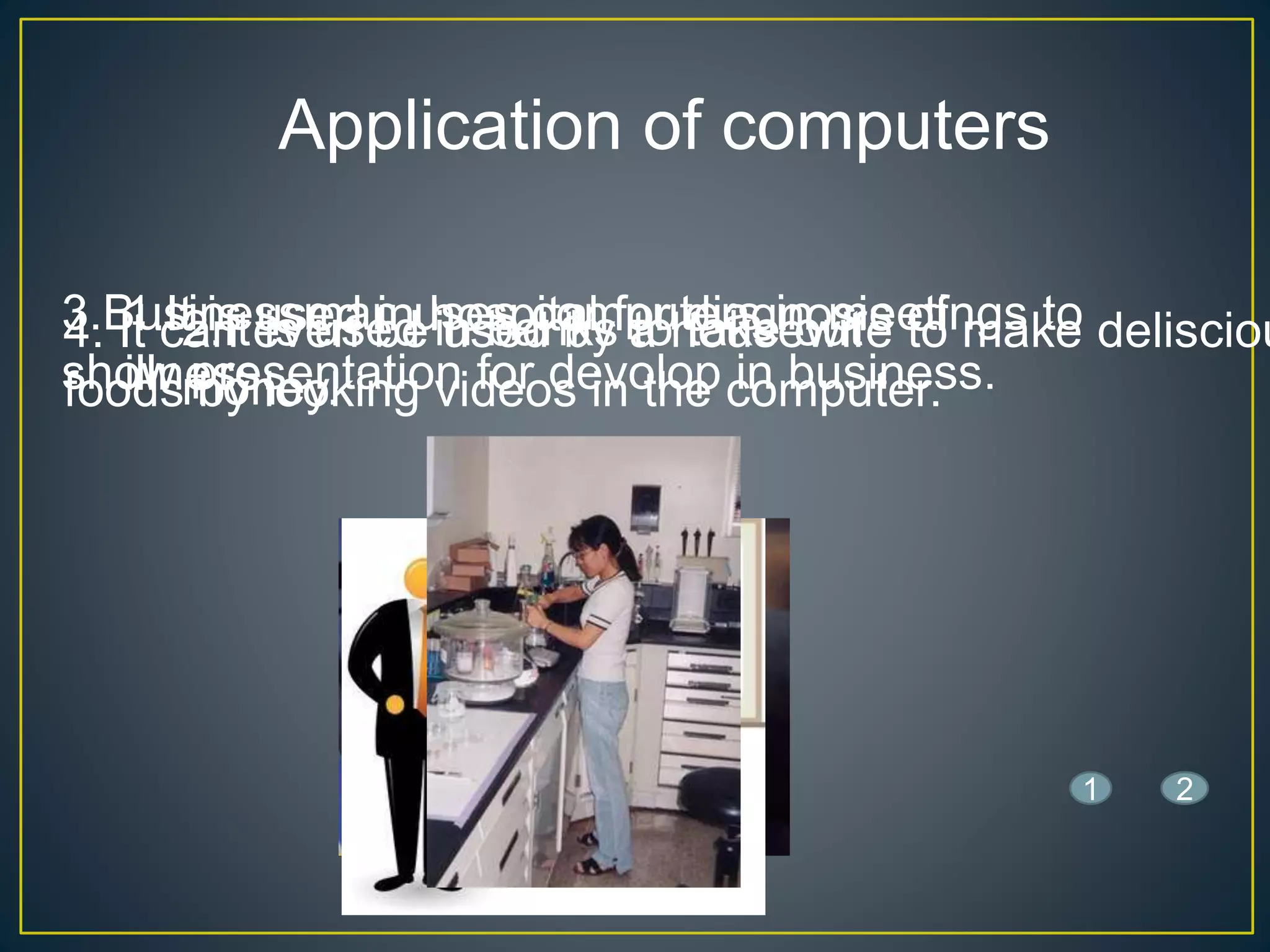
Application of computers
1.It is used in hospital for diagnosis of
illness.
2.It is used in banks to take out
money.
3.Businessman uses computers in meetings to
show presentation for devolop in business.
4. It can even be used by a housewife to make delisciou
foods by looking videos in the computer.
21
Any Questions?
Application of computers
Classification of computers on
the basis of size
Storage
Output devices
Processing devices
Input devices
Generation of computers
Classification of computers on
the basis of work
for
watching
our
presentation

short and sweet introduction of Computer

  • 1.
  • 2.
  • 3.
  • 4.
    Contents 2.Parts of computer 3.Classificationof computers on the basis of work4.Classification of computers on the basis of size 5.Generations of computers 6.Applications of computers 1.Introduction
  • 5.
    COMPUT ERWhat is computer? Computeris an electornic device that takes input from users and provides meaningful results to the users.
  • 6.
    Input devices Processingdevices Output devices Storage devices
  • 7.
    What are inputdevices? Input devices are those devices that gives input to the computer system. mouse keyboard 1 2
  • 8.
    Processing device Those devicesthat process the input given by users throu input devices and provides output to output devices. 1 CPU 2
  • 9.
    Output devices Those devicesthat provides the output after processing are calle output devices. speaker monitor 1 2
  • 10.
    Storage devices Those devicesthat stores the output given by output dev are called storage devices. pendrive CD’s ,DVD”s 1 2 Hard disk
  • 11.
    Classification of computerson the basis of w 1. Analog computers Analog computers solve problems by using continuously changing data such as temperature ,humidity, pressure, voltage, etc. This computer operates on continuous data 2. Digital computers The digital computers solve problems by using discrete d Discrete data are obtained by counting. 3. Hybrid computers Hybrid computer processes both analog and digital data The hybrid computers can perform the tasks done by bo analog as well as digital computer. Analog watch Norden bombsight 1 Laptop LINC-8 2
  • 12.
    Classification of computerson the basis of size 1. Super computer The most powerful computers in world . They are largest size , highest processing speed and most expensive tha other computers. 2. Mainframe computers They are more powerful than mini computers . They are larger in size, has high processing speed, larger storag capacity and expensive than mini computers. 3. Mini computers They are more powerful than microcomputer. They are larger in size, have higher processing speed and also ha cost more than micro computers. 4. Micro computers They are the computers which are also known as person computers. They uses micro processors as their CPU. 21
  • 13.
    Generations of computers 1.First generation computers Based on : Vaccum tubes 2. second generation computers Based on : Transistors 3. Third generation of computers Based on: Integrated circuit 4. Fourth generation of computers Based on: Micro processor 5. Fifth generation of computers Based on: Artificial intiligence ENIAC EDSAC IBM140 IBM 360 Apple Macintosh 1 2
  • 14.
    Application of computers 1.Itis used in hospital for diagnosis of illness. 2.It is used in banks to take out money. 3.Businessman uses computers in meetings to show presentation for devolop in business. 4. It can even be used by a housewife to make delisciou foods by looking videos in the computer. 21
  • 15.
    Any Questions? Application ofcomputers Classification of computers on the basis of size Storage Output devices Processing devices Input devices Generation of computers Classification of computers on the basis of work
  • 16.