libraries@cambridge
               2012


Are librarians and researchers
            on the same page?
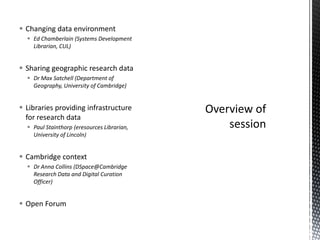
 Changing data environment
   Ed Chamberlain (Systems Development
    Librarian, CUL)


 Sharing geographic research data
   Dr Max Satchell (Department of
    Geography, University of Cambridge)


 Libraries providing infrastructure
  for research data
   Paul Stainthorp (eresources Librarian,
    University of Lincoln)


 Cambridge context
   Dr Anna Collins (DSpace@Cambridge
    Research Data and Digital Curation
    Officer)


 Open Forum
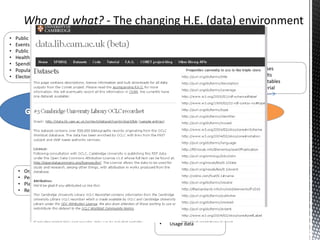
•   Public information
•   Events
•   Public service usage and availability
                                            •   Raw research data
•   Healthcare
                                            •   Usage data
•   Spending
                                            •   Environmental data                   •   Courses
•   Population / census
                                            •   Geographic information               •   Results
•   Electoral information
                                                                                     •   Timetables
                                                                                     •   Material


     •   Organisation
     •   People
     •   Places
     •   Results


                                                           •    Bibliographic data
                                                           •    Usage data
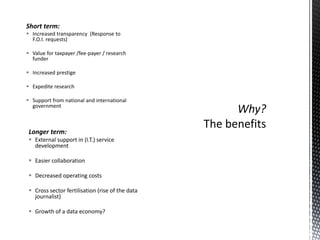
Short term:
 Increased transparency (Response to
  F.O.I. requests)

 Value for taxpayer /fee-payer / research
  funder

 Increased prestige

 Expedite research

 Support from national and international
  government


 Longer term:
  External support in (I.T.) service
   development

  Easier collaboration

  Decreased operating costs

  Cross sector fertilisation (rise of the data
   journalist)

  Growth of a data economy?
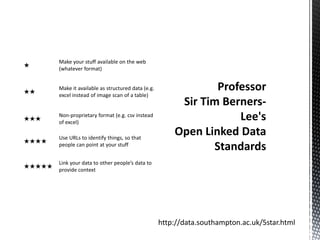
Make your stuff available on the web
★
        (whatever format)


★★
        Make it available as structured data (e.g.               Professor
        excel instead of image scan of a table)
                                                          Sir Tim Berners-
★★★
        Non-proprietary format (e.g. csv instead
        of excel)
                                                                     Lee's
        Use URLs to identify things, so that
                                                         Open Linked Data
★★★★
        people can point at your stuff
                                                                Standards
        Link your data to other people’s data to
★★★★★
        provide context


                                                     http://data.southampton.ac.uk/5star.html
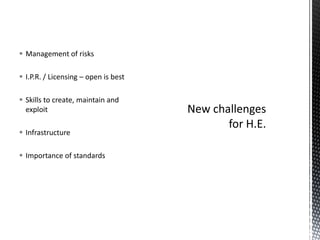
 Management of risks

 I.P.R. / Licensing – open is best

 Skills to create, maintain and
  exploit

 Infrastructure

 Importance of standards
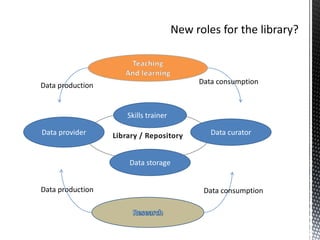
Data production                    Data consumption


                  Skills trainer

Data provider                         Data curator


                  Data storage


Data production                     Data consumption
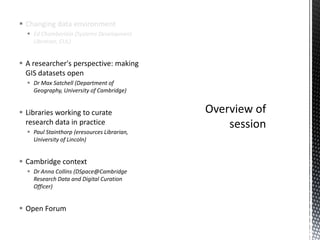
 Changing data environment
   Ed Chamberlain (Systems Development
    Librarian, CUL)


 A researcher's perspective: making
  GIS datasets open
   Dr Max Satchell (Department of
    Geography, University of Cambridge)


 Libraries working to curate
  research data in practice
   Paul Stainthorp (eresources Librarian,
    University of Lincoln)


 Cambridge context
   Dr Anna Collins (DSpace@Cambridge
    Research Data and Digital Curation
    Officer)


 Open Forum

Sharing data

  • 1.
    libraries@cambridge 2012 Are librarians and researchers on the same page?
  • 2.
     Changing dataenvironment  Ed Chamberlain (Systems Development Librarian, CUL)  Sharing geographic research data  Dr Max Satchell (Department of Geography, University of Cambridge)  Libraries providing infrastructure for research data  Paul Stainthorp (eresources Librarian, University of Lincoln)  Cambridge context  Dr Anna Collins (DSpace@Cambridge Research Data and Digital Curation Officer)  Open Forum
  • 3.
    Public information • Events • Public service usage and availability • Raw research data • Healthcare • Usage data • Spending • Environmental data • Courses • Population / census • Geographic information • Results • Electoral information • Timetables • Material • Organisation • People • Places • Results • Bibliographic data • Usage data
  • 4.
    Short term:  Increasedtransparency (Response to F.O.I. requests)  Value for taxpayer /fee-payer / research funder  Increased prestige  Expedite research  Support from national and international government Longer term:  External support in (I.T.) service development  Easier collaboration  Decreased operating costs  Cross sector fertilisation (rise of the data journalist)  Growth of a data economy?
  • 6.
    Make your stuffavailable on the web ★ (whatever format) ★★ Make it available as structured data (e.g. Professor excel instead of image scan of a table) Sir Tim Berners- ★★★ Non-proprietary format (e.g. csv instead of excel) Lee's Use URLs to identify things, so that Open Linked Data ★★★★ people can point at your stuff Standards Link your data to other people’s data to ★★★★★ provide context http://data.southampton.ac.uk/5star.html
  • 7.
     Management ofrisks  I.P.R. / Licensing – open is best  Skills to create, maintain and exploit  Infrastructure  Importance of standards
  • 8.
    Data production Data consumption Skills trainer Data provider Data curator Data storage Data production Data consumption
  • 9.
     Changing dataenvironment  Ed Chamberlain (Systems Development Librarian, CUL)  A researcher's perspective: making GIS datasets open  Dr Max Satchell (Department of Geography, University of Cambridge)  Libraries working to curate research data in practice  Paul Stainthorp (eresources Librarian, University of Lincoln)  Cambridge context  Dr Anna Collins (DSpace@Cambridge Research Data and Digital Curation Officer)  Open Forum

Editor's Notes

  • #4 The past few years has seen a substantial growth in the release of datasets to the general publicFrom the focus point of H.E. we can see massive changeIncreasingly prevalent in cultural heritage
  • #9 If you want specificity …