“Share a Coke”
Coca-Cola’s Marketing campaign
By Jin Lin Pan
Background
• In summer 2011, Coca-Cola wanted a big idea for an increasingly
competitive market and get Australians to sit up and notice Coca-Cola.
• A Campaign was needed that would make a big splash and disrupt
and excite Australians. It also needed to have mass appeal, while
hitting the young target.
Objectives
• The primary campaign objective was simple: increase consumption of
Coca-Cola over the summer period. The secondary objective was to
get people talking about Coca-Cola again.
• The campaign needed to make consumers see Coca-Cola in a way that
would encourage them to actually consume the product, not just love
the brand.
Strategy
• Coca-Cola wanted to jumpstart real conversations and remind people
of those in their lives they may have lost touch with, or have yet to
meet.
• Australians are known for calling each other by their first name, or
“mate” for that matter, and what better way to spark conversation
than by using a first name.
Execution
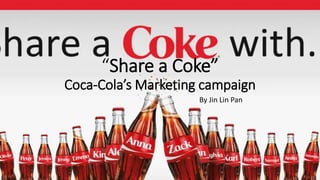
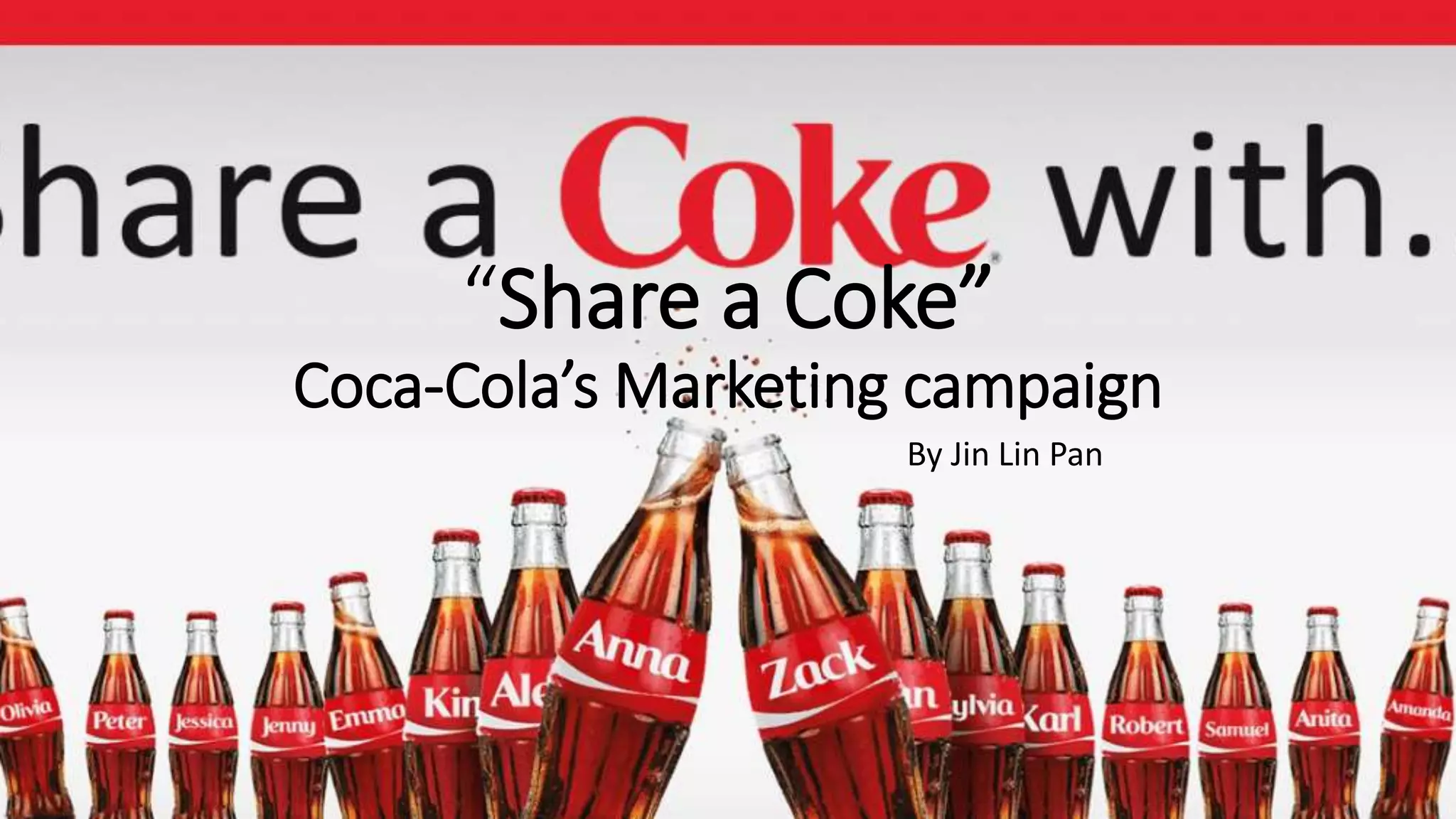
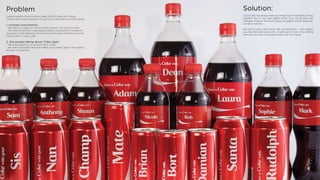
• Coca-Cola printed 150 of the country’s most popular names on labels
of Coke bottles for the first time in the brand‘s history.
Channel:
• TV (reached 30% of population)
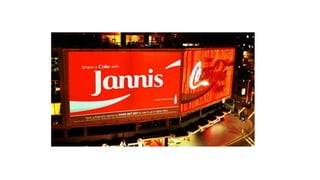
• Outdoor (including digital signage)
• Publicity (seeding kits to key media and influencers)
• Mobile (SMS/MMS)
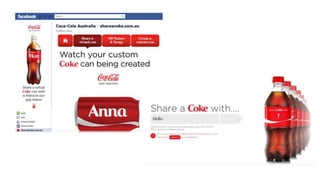
• Facebook (sharing virtual cans and feedback)
Results
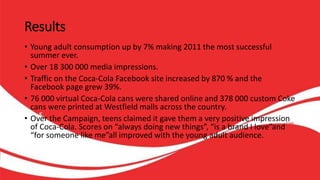
• Young adult consumption up by 7% making 2011 the most successful
summer ever.
• Over 18 300 000 media impressions.
• Traffic on the Coca-Cola Facebook site increased by 870 % and the
Facebook page grew 39%.
• 76 000 virtual Coca-Cola cans were shared online and 378 000 custom Coke
cans were printed at Westfield malls across the country.
• Over the Campaign, teens claimed it gave them a very positive impression
of Coca-Cola. Scores on “always doing new things”, “is a brand I love”and
“for someone like me”all improved with the young adult audience.
Why this is a successful campaign?
• The Brand personally connected with Consumers
By offering the personal experience, For example, when a consumer
shares a name-branded coke bottle their friends, they feel that they are
creating better memories rather than promoting the Coke brand itself.
Thank You

Share a Coke

  • 1.
    “Share a Coke” Coca-Cola’sMarketing campaign By Jin Lin Pan
  • 2.
    Background • In summer2011, Coca-Cola wanted a big idea for an increasingly competitive market and get Australians to sit up and notice Coca-Cola. • A Campaign was needed that would make a big splash and disrupt and excite Australians. It also needed to have mass appeal, while hitting the young target.
  • 3.
    Objectives • The primarycampaign objective was simple: increase consumption of Coca-Cola over the summer period. The secondary objective was to get people talking about Coca-Cola again. • The campaign needed to make consumers see Coca-Cola in a way that would encourage them to actually consume the product, not just love the brand.
  • 4.
    Strategy • Coca-Cola wantedto jumpstart real conversations and remind people of those in their lives they may have lost touch with, or have yet to meet. • Australians are known for calling each other by their first name, or “mate” for that matter, and what better way to spark conversation than by using a first name.
  • 6.
    Execution • Coca-Cola printed150 of the country’s most popular names on labels of Coke bottles for the first time in the brand‘s history. Channel: • TV (reached 30% of population) • Outdoor (including digital signage) • Publicity (seeding kits to key media and influencers) • Mobile (SMS/MMS) • Facebook (sharing virtual cans and feedback)
  • 8.
    Results • Young adultconsumption up by 7% making 2011 the most successful summer ever. • Over 18 300 000 media impressions. • Traffic on the Coca-Cola Facebook site increased by 870 % and the Facebook page grew 39%. • 76 000 virtual Coca-Cola cans were shared online and 378 000 custom Coke cans were printed at Westfield malls across the country. • Over the Campaign, teens claimed it gave them a very positive impression of Coca-Cola. Scores on “always doing new things”, “is a brand I love”and “for someone like me”all improved with the young adult audience.
  • 10.
    Why this isa successful campaign? • The Brand personally connected with Consumers By offering the personal experience, For example, when a consumer shares a name-branded coke bottle their friends, they feel that they are creating better memories rather than promoting the Coke brand itself.
  • 11.