Download to read offline



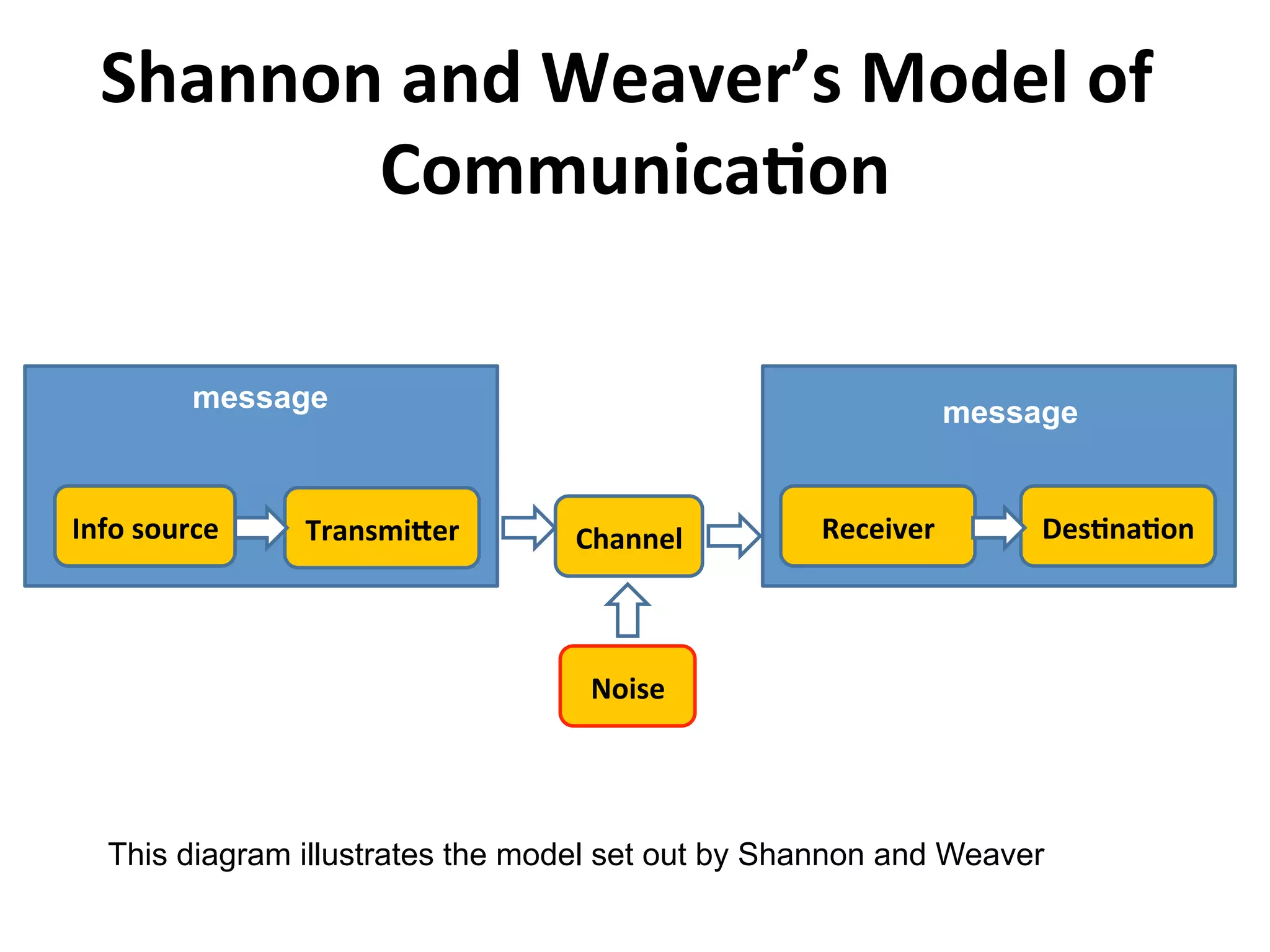


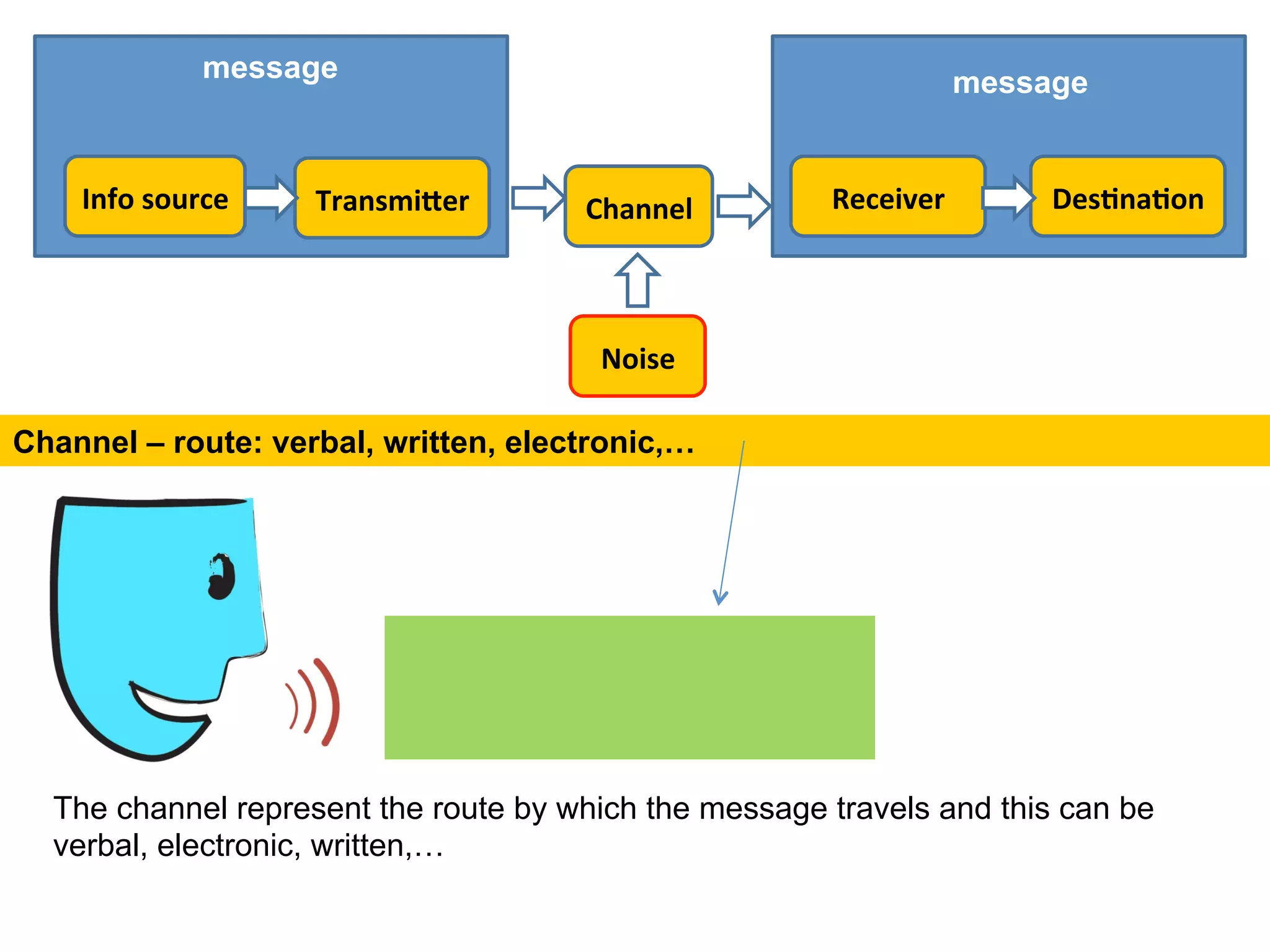


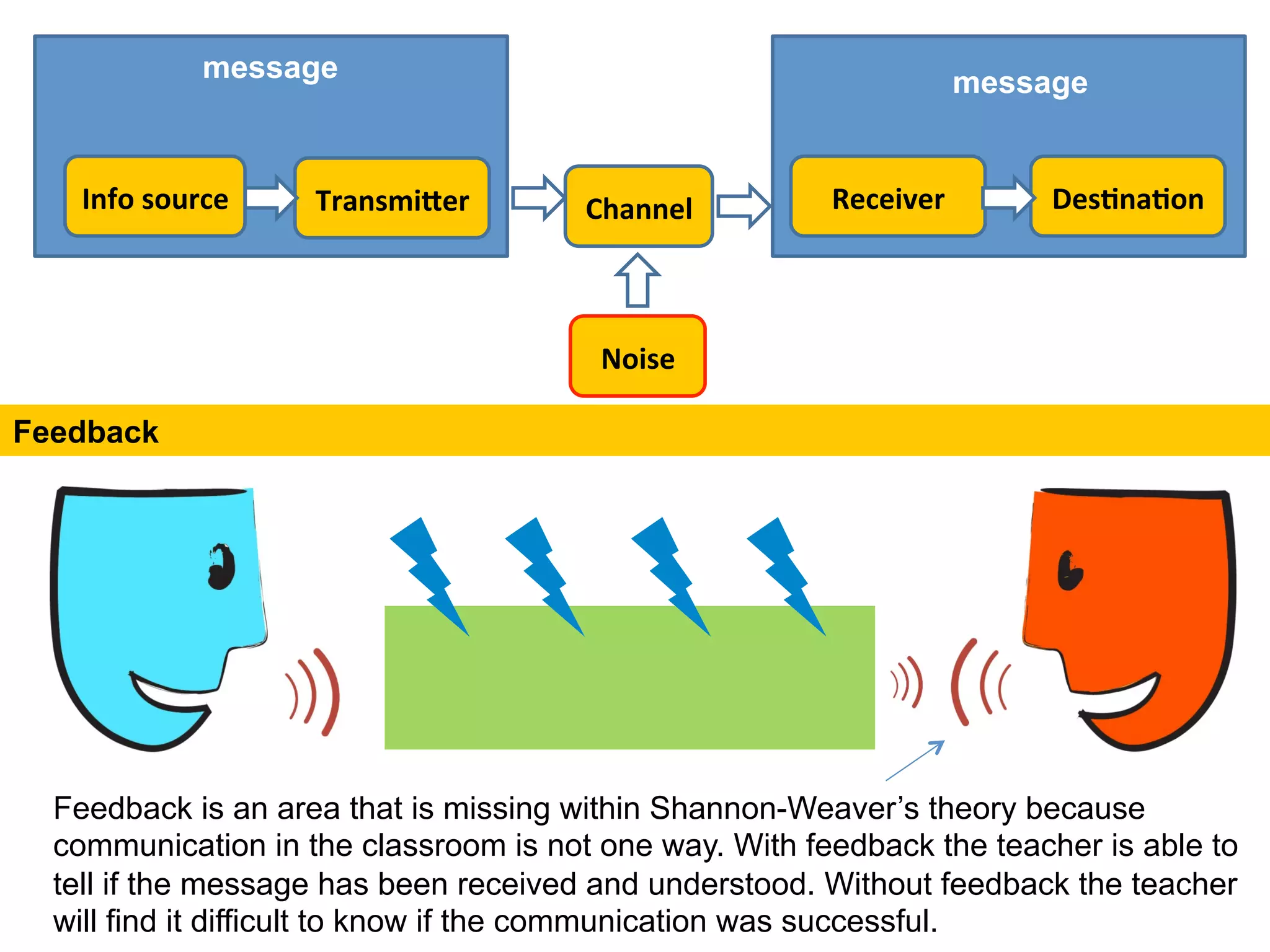


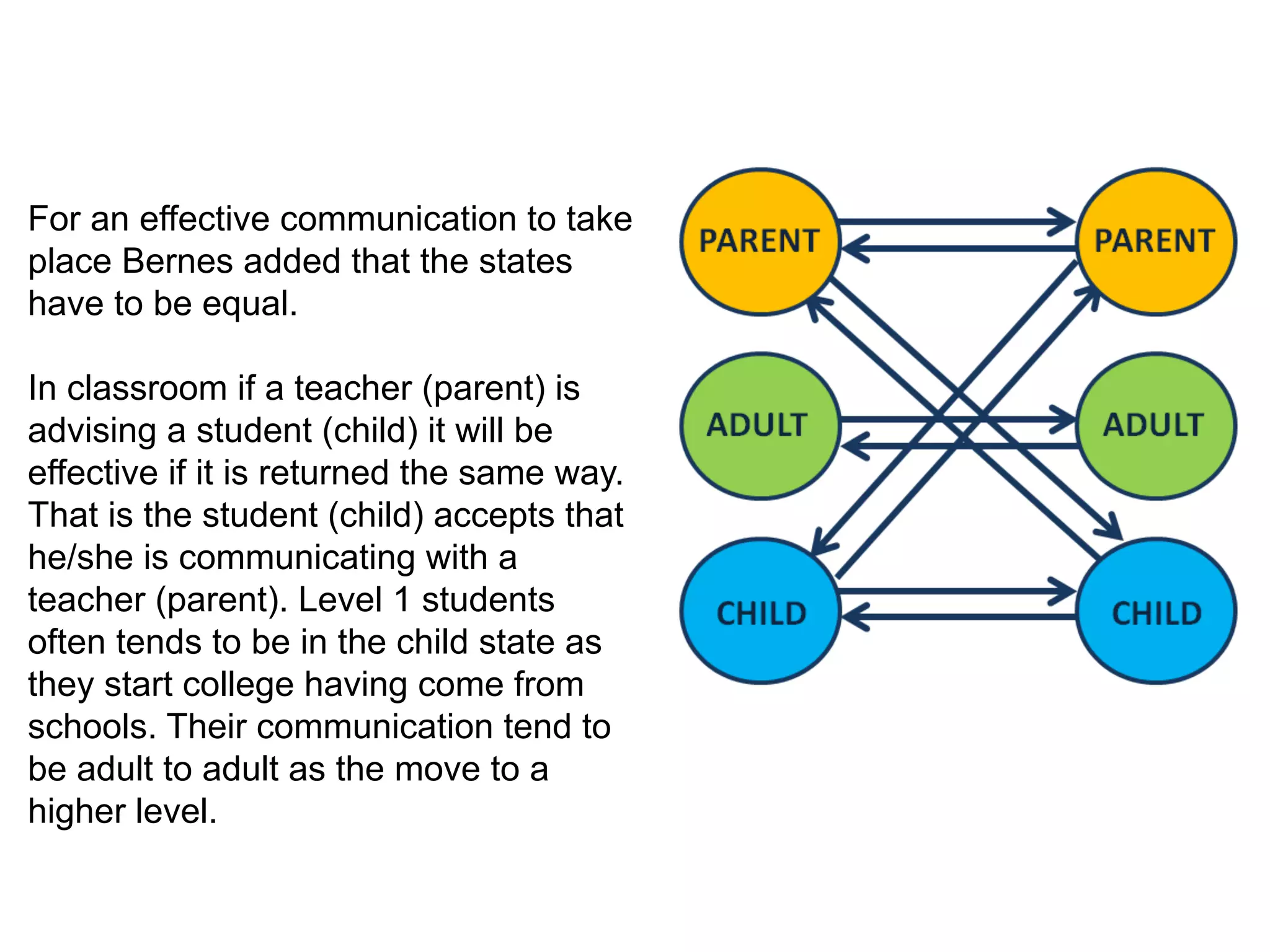


Shannon and Weaver's communication theory, developed in 1949, outlines a linear model involving five key components: information, transmitter, channel, receiver, and destination, with noise as a significant interference factor. The theory emphasizes that effective communication requires feedback, which is often missing in the original model, highlighting the importance of comprehending and adapting communication styles to different cultural contexts. Additionally, concepts like proxemics and transactional analysis are explored to improve classroom communication, taking into account the spatial dynamics and ego states that influence teacher-student interactions.


