BA III sem
Shakta Cult
By
Prachi Virag Sontakke
Devi worship
• Tradition of worship of Devi in many forms.
• Antiquity of worship of females goes back to Prehistoric times.
• But mere worship of female god does not constitute Shakta cult.
Evidence of Devi worship
Archaeological evidence
• Durga Temple at Aihole.
• 64 Yogini temples at Bhedaghat
• 64 Yogini temples at Khajuraho.
• 64 Yogini temples at Hirapur, Odisha.
• Kamakhya devi temple, Assam.
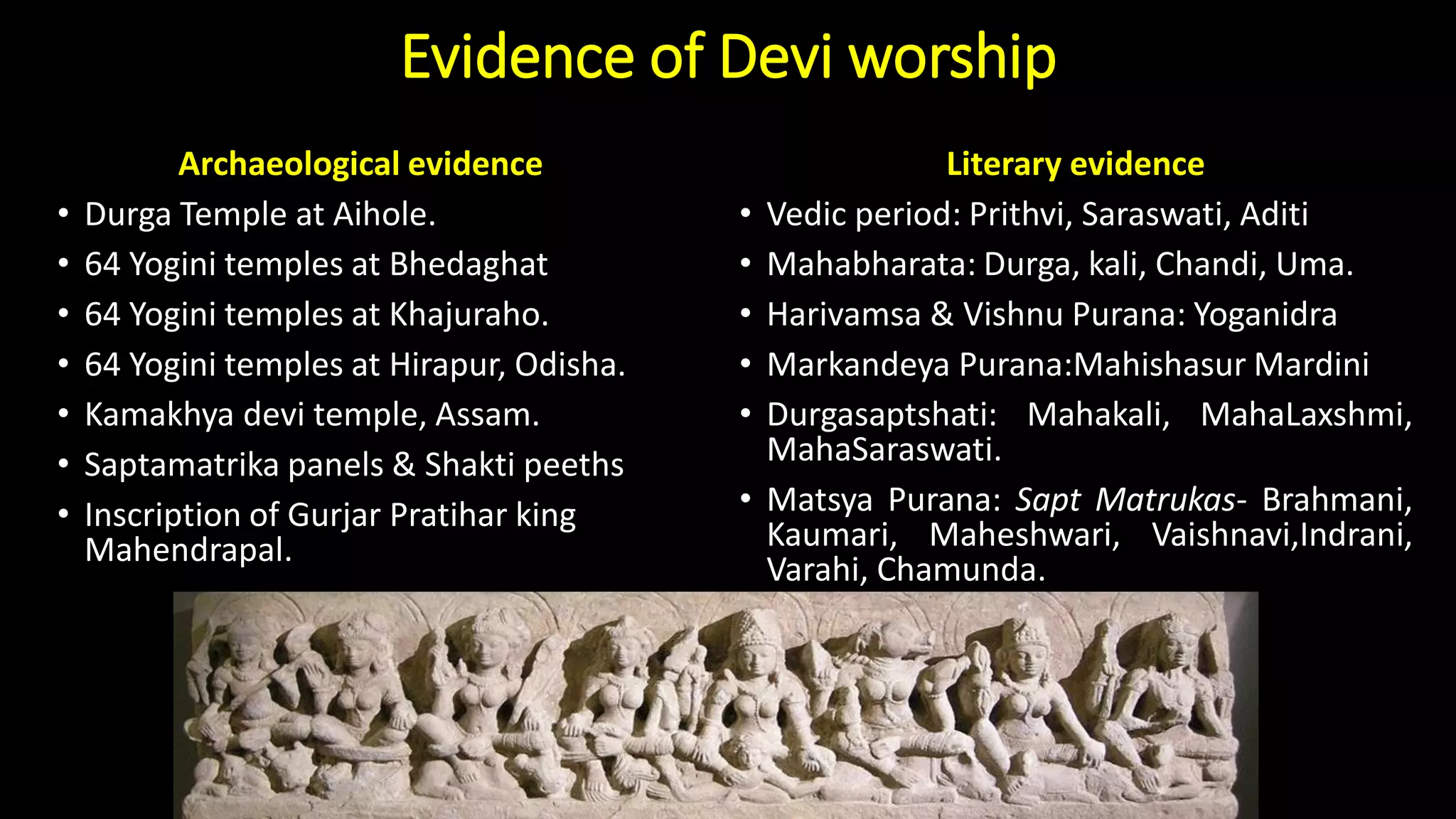
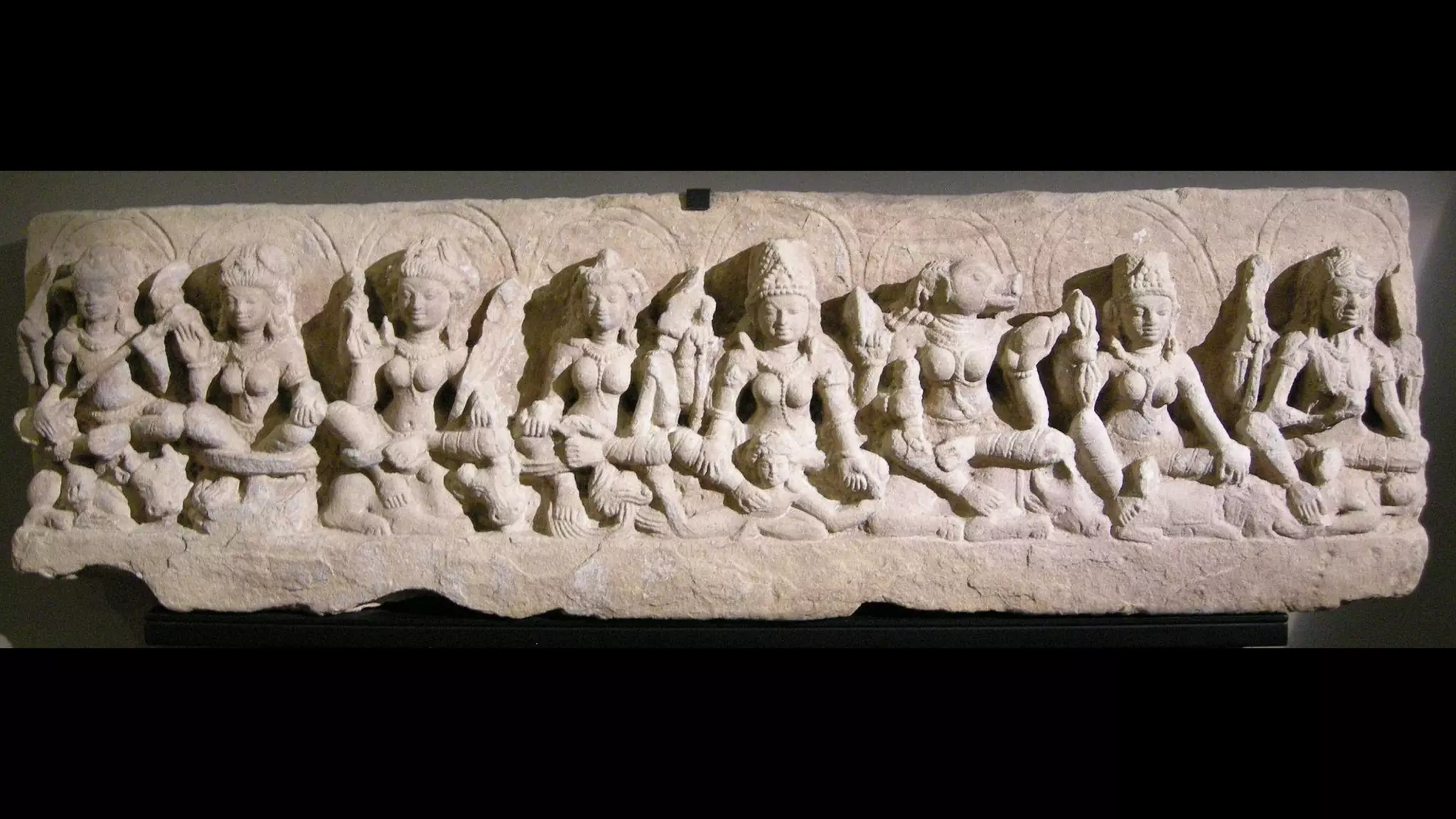
• Saptamatrika panels & Shakti peeths
• Inscription of Gurjar Pratihar king
Mahendrapal.
Literary evidence
• Vedic period: Prithvi, Saraswati, Aditi
• Mahabharata: Durga, kali, Chandi, Uma.
• Harivamsa & Vishnu Purana: Yoganidra
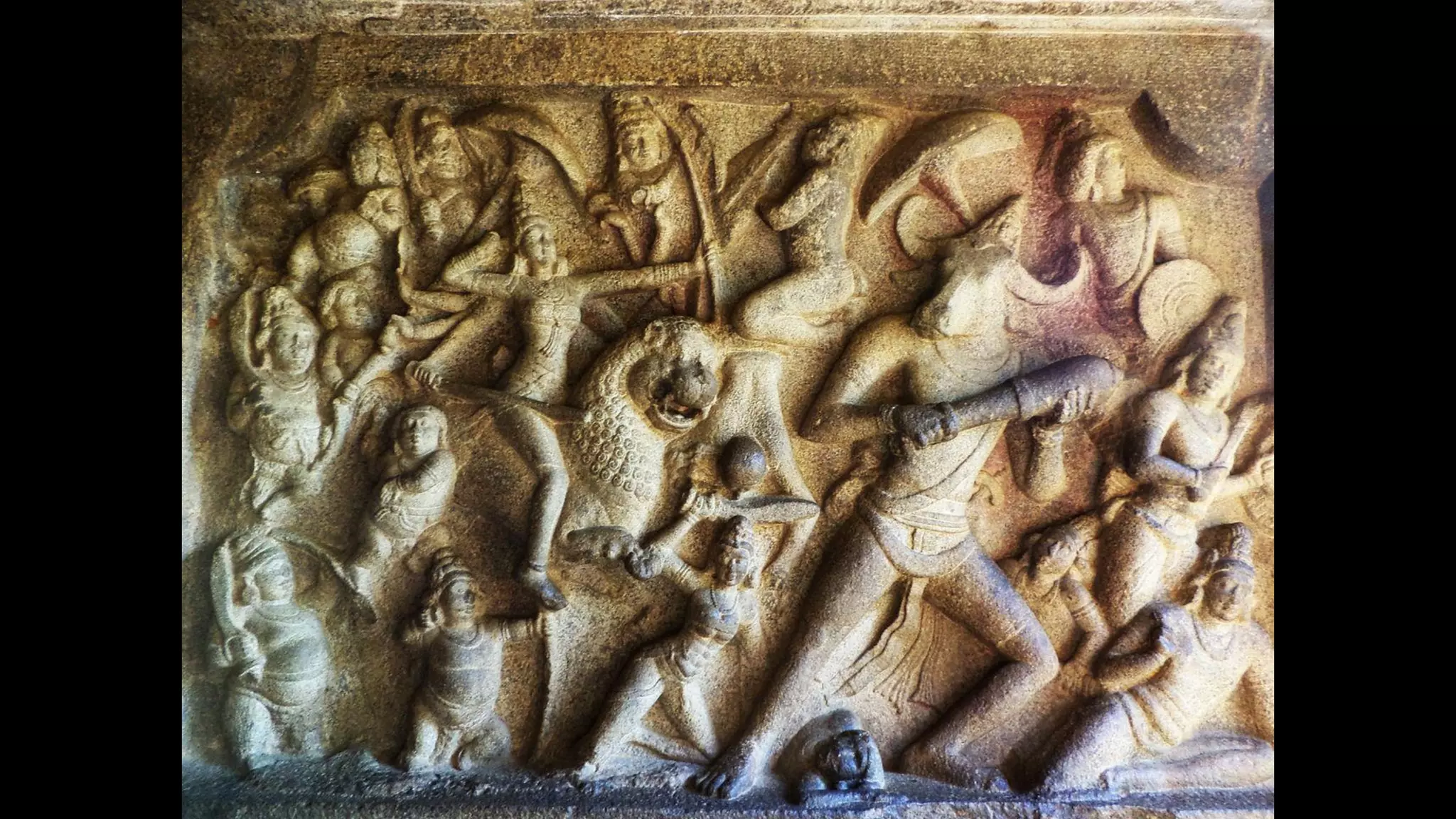
• Markandeya Purana:Mahishasur Mardini
• Durgasaptshati: Mahakali, MahaLaxshmi,
MahaSaraswati.
• Matsya Purana: Sapt Matrukas- Brahmani,
Kaumari, Maheshwari, Vaishnavi,Indrani,
Varahi, Chamunda.
Forms of Devi in General
• .
Humble form Fierce form Sensuous form
Worship of Devi in
association with a male
God.
Worship of Devi as an
Independent personality
Worship of sensuous form of
Devi
Worshipped as his power
& consort
Durga, Chandi, Kali Anand Bhairavi, Tripur
Sundari, Lalita.
Is benevolent & kind Decorated with weapons
Also worshiped by kapalikas.
Shakta cult
• Shakta cult is the cult which worships the sensuous form of Devi
• Shaktas approach the Devi in many forms; however, they are all considered to be but
diverse aspects of the one supreme Goddess
• Devi presented as offering her grace and blessings in a profound and beatific state of
divine ecstasy that She ceaselessly lives in.
• Sources: Tantrasahitya, Prapanchsaartantra, Tripur rahasya, Kali tantra, Devi Mahatmya.
• One of the sub tradition of Tantra worship.
• Developed after the decline of Buddhism
Shakta dieties: Sensuous forms of Devi
• Tripursundari : Lalita, Shodashi
• Matangi
• Anandabhairavi
• Tripurbhairavi
Tripursundari
• Foremost of the Mahavidyas, the highest aspect of Mahadevi.
• Dazzling beauty,very young but self-emergent
• Appears as power of intuitive and perceptive knowledge and less as a
knowledge issued from analysis and reasoning.
• Tripura Upanishad : She is the ultimate Shakti (energy, power) of the universe.
• Described as the supreme consciousness, ruling from above Brahma, Vishnu,
and Shiva
• Tripura sundari also created Ganesha
• Temples dedicated to her
Depiction of
Tripursundari
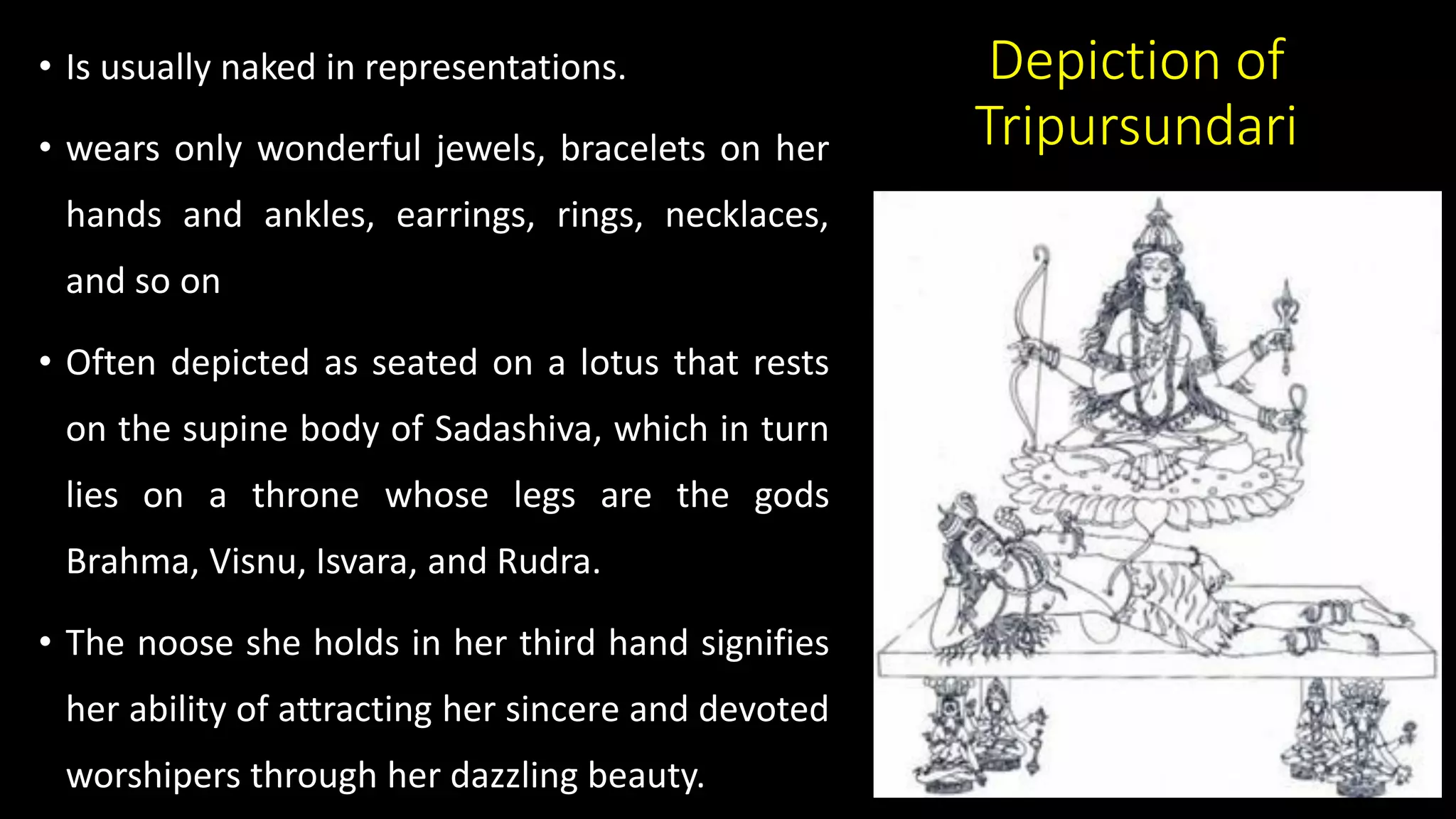
• Is usually naked in representations.
• wears only wonderful jewels, bracelets on her
hands and ankles, earrings, rings, necklaces,
and so on
• Often depicted as seated on a lotus that rests
on the supine body of Sadashiva, which in turn
lies on a throne whose legs are the gods
Brahma, Visnu, Isvara, and Rudra.
• The noose she holds in her third hand signifies
her ability of attracting her sincere and devoted
worshipers through her dazzling beauty.
Depiction of Tripursundari
• The hook held in her hand represents
the means through which she cuts off
any attachment for the illusions of the
outside world.
• Lalita Sahasranama: Sits on a throne
like a queen, wears jewels having
auspicious marks of a married woman
& has heavy breasts and a thin waist.
Crescent moon adorns her forehead,
her smile overwhelms Kameshwara.
Kamakshi Temple, Kanchi
(dedicated to Kamakshi
the ultimate Goddess
Lalita Maha Tripura sundari).
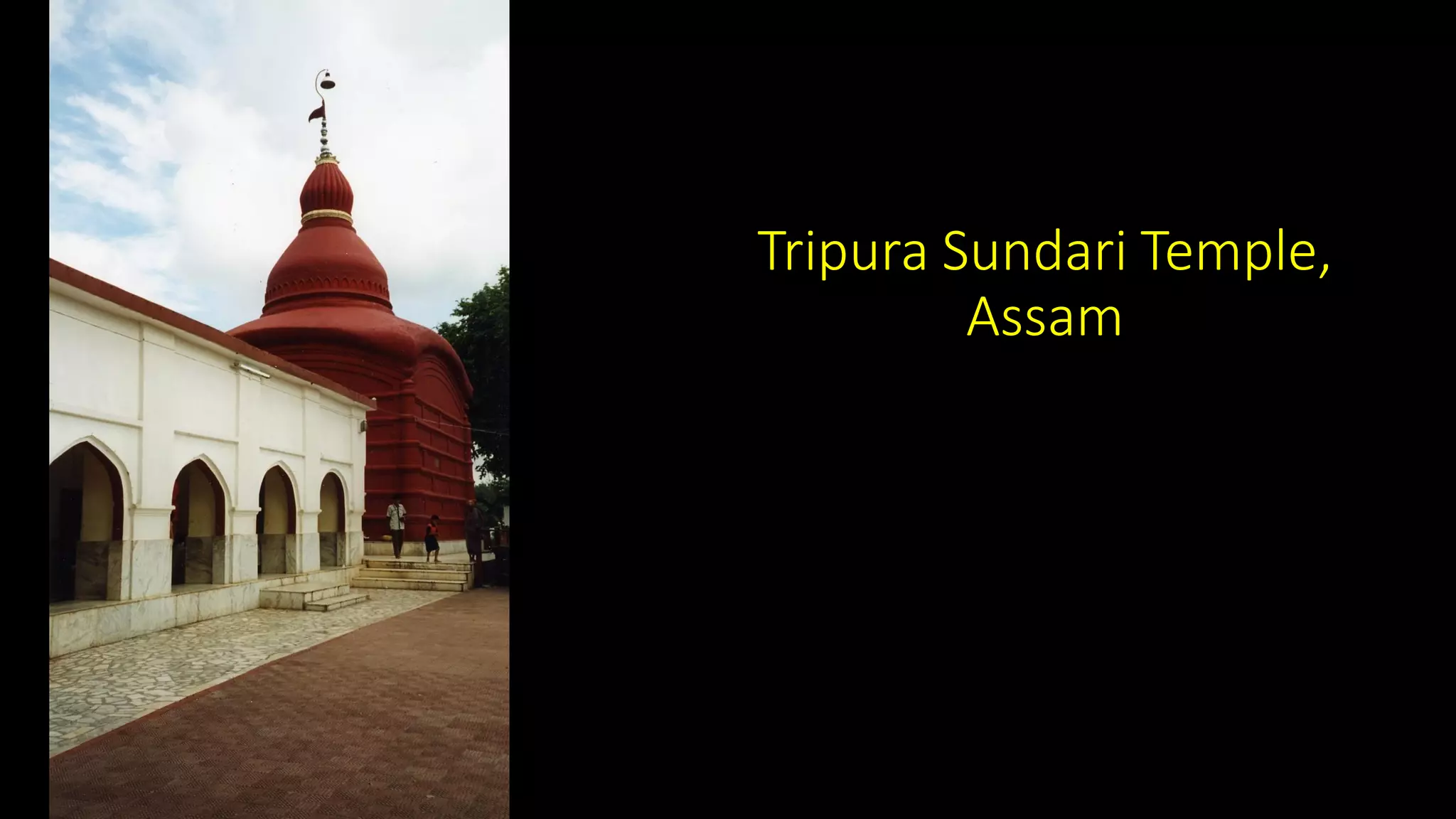
Tripura Sundari Temple,
Assam
Bala Tripura Sundari Temple
Lalita
• A form of TripurSundari
• Lalita = the one who plays
• Also known as the deity presiding Sri Yantra
• Considered as the most beautiful of deities and represents the supreme
ecstatic bliss as source of any other wonderful perceptions.
• whole Creation is in fact the beautiful, charming game, or play of the Divine
Mother
• Lalita awakens the receptive soul to the divine happiness impregnating every
single thing that exists in the universe.
Shodashi
• A 16 year old form of Tripura Sundari.
• The age of sixteen was not chosen by accident.
• Is the age the woman experiments the most pleasant and fascinating
aspects of her personality.
• Her most inner impulse is to experiment new sensations, and to fascinate
the people around with her charm
• Her innocence and purity disarms even the darkest souls, acting as a
powerful magnet for all who resonate with beauty, truth and goodness
Matangi
• Matangi impersonates the great powers of nature.
• Personifies the wild beauty, the abstraction, the mystery and the hidden
power of the tropical jungle where She is symbolized by a strong and active
elephant thus reflecting the primary rhythms of Nature.
• Bliss (ananda) is another aspect of Matangi that is very active, passionate.
• Is the counselor of the Great Cosmic Wisdom Tripura Sundari, the Supreme
Queen of the entire Creation.
• Music is also a very efficient means of worshipping Matangi
Main postulates
• Worship of Devi as beautiful, celestial maiden who is Mahabhairavi.
• She is the supreme, ultimate, eternal reality of all existence as advaita.
• She is the source of all creation, its embodiment and the energy that
animates and governs it, and that into which everything will ultimately
dissolves.
• Main aim of the worshipper is to establish unity with Tripur Sundari.
• This is done by Tantra worship
Method of worship
• Females represent a manifestation of Devi.
• Females as medium of worship.
• Establishing intimacy with her is the same as establishing unity with Devi.
• The tantra practices are secretive, subject to speculations and criticism-drinking
by both worshipper & worshipped, performing sexual acts
• Socially unacceptable behaviour, flouting social norms.
• Puranas despise Shakta cult.
• Brahmavaivarta Purana: Devi is an obstruction in attaining knowledge and
represents ignorance.
Philosophy of Shakta sect
• Derived from the spiritual tradition of the Tantric teachings.
• Beauty and ecstatic bliss represent the fundamental energy of the universe
• The “game”, the “play” is the nature of any existing thing in the universe.
• Tripursundari pierces us with the arrows of ecstasy, delight and happiness,
revealing thus to us all the forms of the Creation as aspects of our inner divine
nature.
• Cuts off any attachment for the illusions of the outside world by her hook
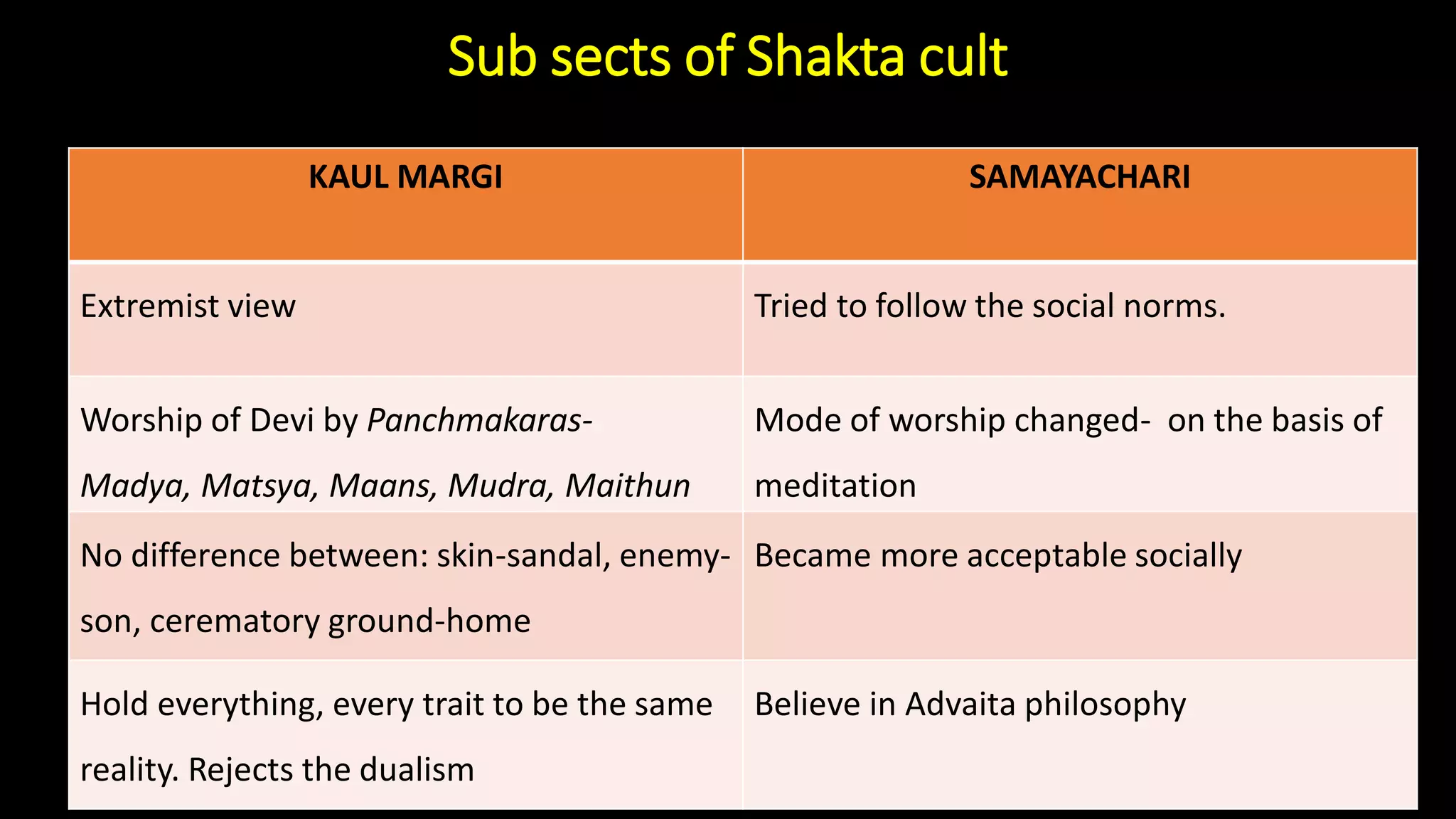
Sub sects of Shakta cult
KAUL MARGI SAMAYACHARI
Extremist view Tried to follow the social norms.
Worship of Devi by Panchmakaras-
Madya, Matsya, Maans, Mudra, Maithun
Mode of worship changed- on the basis of
meditation
No difference between: skin-sandal, enemy-
son, cerematory ground-home
Became more acceptable socially
Hold everything, every trait to be the same
reality. Rejects the dualism
Believe in Advaita philosophy
Shakta philosophy
• Influence of Samkhya philosophy-advaita
• Shiva & Shakti are supreme elements.
• Devi = nature
• Shiva = Param Purush
• Union of two leads to creation.
• Shiva is static Shakti and Shakti is dynamic
Shiva.
Shiva
Shakti
Shakta
philosophy
Yoginis and Tripursundari
• Lalitōpakhyanā, part of the Brahmaṇḍa Purāṇa: Devas prayed to
Tripursundari to kill Bhandasura.
• When she started for the war with Bandasura, she was accompanied
by the powers called Balambika, Varahi, Gayatri, Matangi.
64 Yogini temple,Muraina
64 Yogini temple,Heerapur district, Odisa
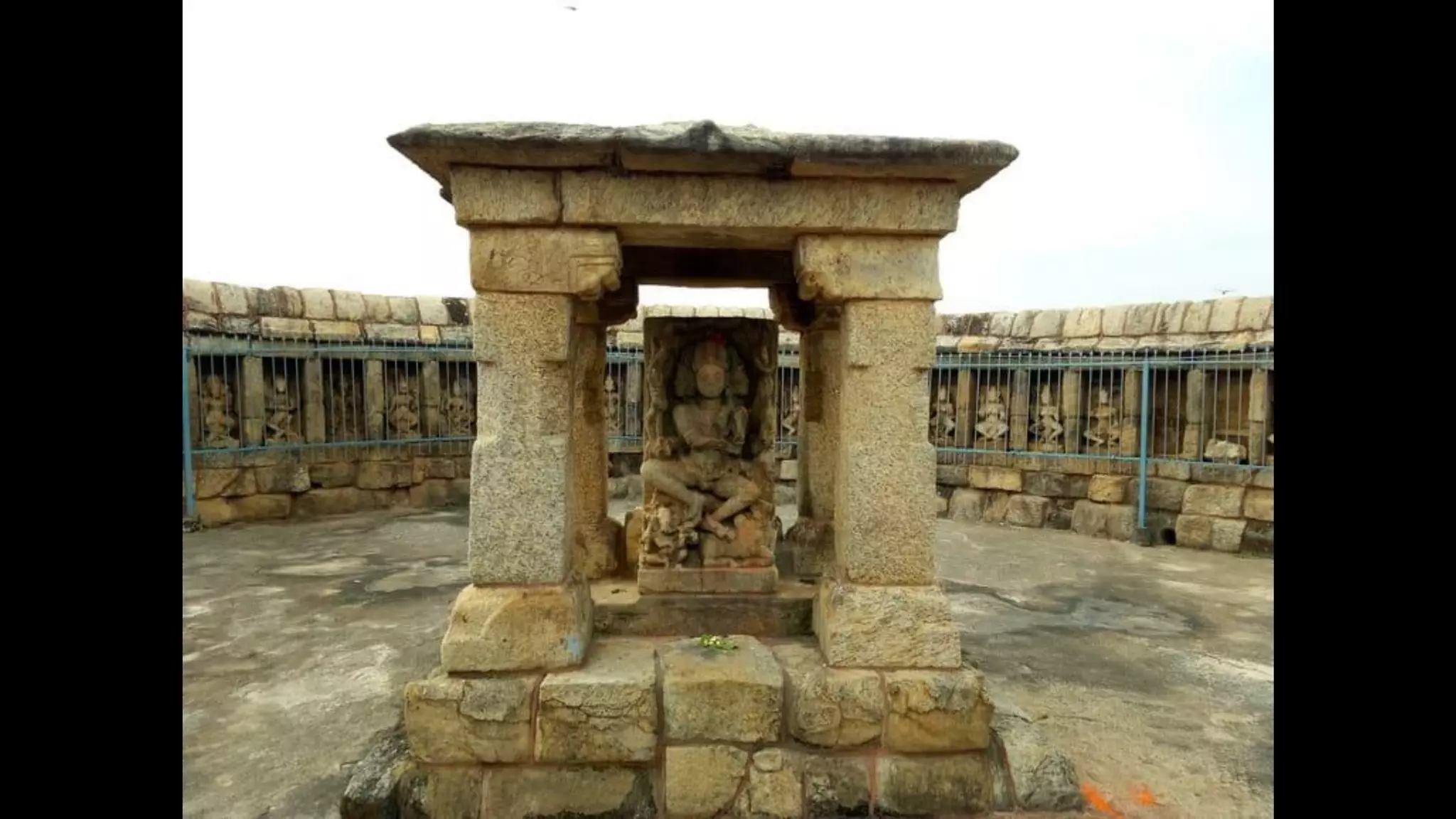
64 Yogini
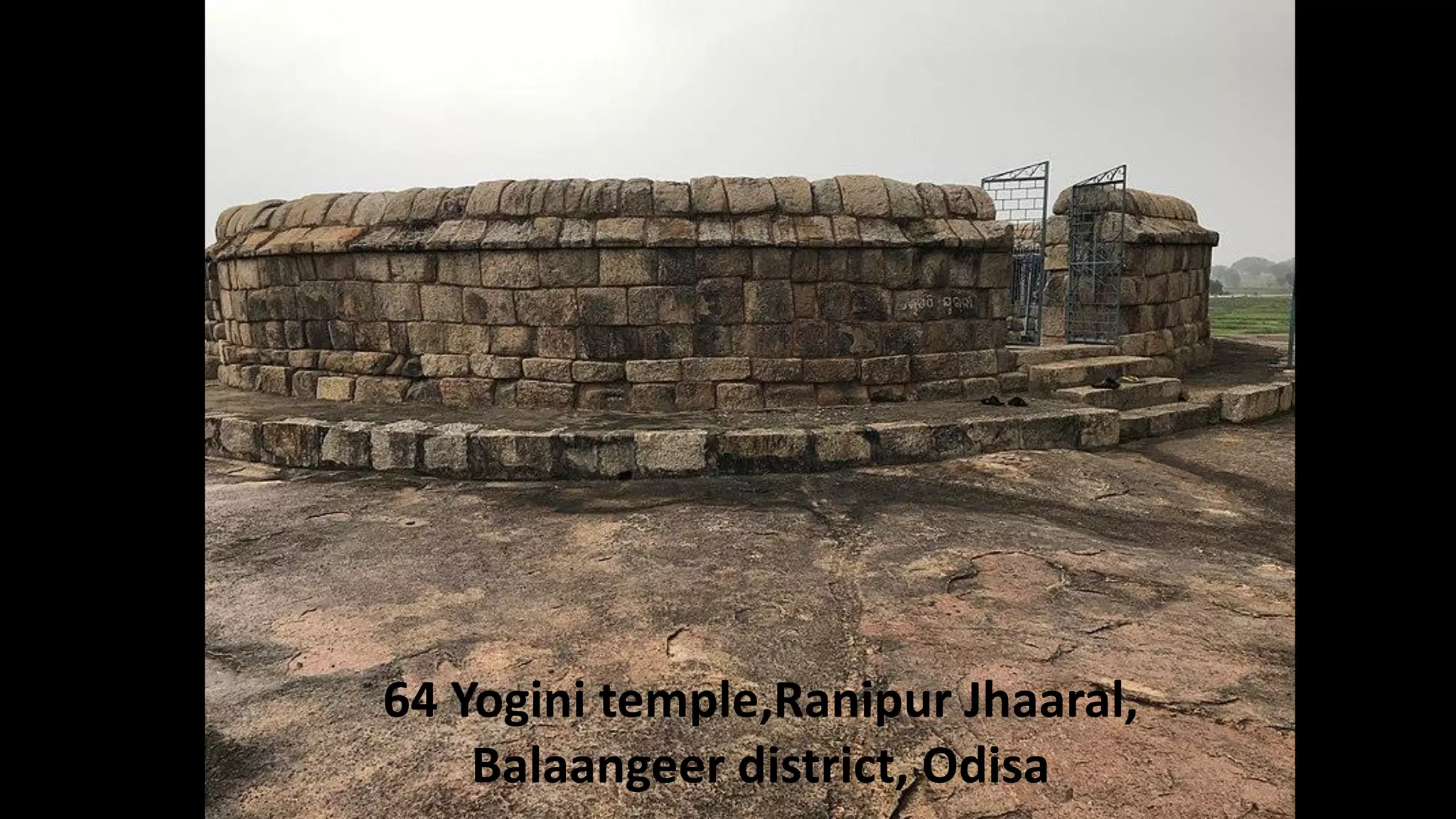
64 Yogini temple,Ranipur Jhaaral,
Balaangeer district, Odisa
64 Yogini temple,
Bhedaghat,
Jabalpur
64 Yogini temple, Khajuraho
Conclusion
• Tradition of devi worship quite ancient
• Worship of sensous form of devi started later
• Developed as core of Shakta cult
• Associated with Tantric practices.
• Continuity of tradition.

shakta.pdf

  • 1.
    BA III sem ShaktaCult By Prachi Virag Sontakke
  • 2.
    Devi worship • Traditionof worship of Devi in many forms. • Antiquity of worship of females goes back to Prehistoric times. • But mere worship of female god does not constitute Shakta cult.
  • 3.
    Evidence of Deviworship Archaeological evidence • Durga Temple at Aihole. • 64 Yogini temples at Bhedaghat • 64 Yogini temples at Khajuraho. • 64 Yogini temples at Hirapur, Odisha. • Kamakhya devi temple, Assam. • Saptamatrika panels & Shakti peeths • Inscription of Gurjar Pratihar king Mahendrapal. Literary evidence • Vedic period: Prithvi, Saraswati, Aditi • Mahabharata: Durga, kali, Chandi, Uma. • Harivamsa & Vishnu Purana: Yoganidra • Markandeya Purana:Mahishasur Mardini • Durgasaptshati: Mahakali, MahaLaxshmi, MahaSaraswati. • Matsya Purana: Sapt Matrukas- Brahmani, Kaumari, Maheshwari, Vaishnavi,Indrani, Varahi, Chamunda.
  • 9.
    Forms of Deviin General • . Humble form Fierce form Sensuous form Worship of Devi in association with a male God. Worship of Devi as an Independent personality Worship of sensuous form of Devi Worshipped as his power & consort Durga, Chandi, Kali Anand Bhairavi, Tripur Sundari, Lalita. Is benevolent & kind Decorated with weapons Also worshiped by kapalikas.
  • 10.
    Shakta cult • Shaktacult is the cult which worships the sensuous form of Devi • Shaktas approach the Devi in many forms; however, they are all considered to be but diverse aspects of the one supreme Goddess • Devi presented as offering her grace and blessings in a profound and beatific state of divine ecstasy that She ceaselessly lives in. • Sources: Tantrasahitya, Prapanchsaartantra, Tripur rahasya, Kali tantra, Devi Mahatmya. • One of the sub tradition of Tantra worship. • Developed after the decline of Buddhism
  • 11.
    Shakta dieties: Sensuousforms of Devi • Tripursundari : Lalita, Shodashi • Matangi • Anandabhairavi • Tripurbhairavi
  • 12.
    Tripursundari • Foremost ofthe Mahavidyas, the highest aspect of Mahadevi. • Dazzling beauty,very young but self-emergent • Appears as power of intuitive and perceptive knowledge and less as a knowledge issued from analysis and reasoning. • Tripura Upanishad : She is the ultimate Shakti (energy, power) of the universe. • Described as the supreme consciousness, ruling from above Brahma, Vishnu, and Shiva • Tripura sundari also created Ganesha • Temples dedicated to her
  • 13.
    Depiction of Tripursundari • Isusually naked in representations. • wears only wonderful jewels, bracelets on her hands and ankles, earrings, rings, necklaces, and so on • Often depicted as seated on a lotus that rests on the supine body of Sadashiva, which in turn lies on a throne whose legs are the gods Brahma, Visnu, Isvara, and Rudra. • The noose she holds in her third hand signifies her ability of attracting her sincere and devoted worshipers through her dazzling beauty.
  • 14.
    Depiction of Tripursundari •The hook held in her hand represents the means through which she cuts off any attachment for the illusions of the outside world. • Lalita Sahasranama: Sits on a throne like a queen, wears jewels having auspicious marks of a married woman & has heavy breasts and a thin waist. Crescent moon adorns her forehead, her smile overwhelms Kameshwara.
  • 15.
    Kamakshi Temple, Kanchi (dedicatedto Kamakshi the ultimate Goddess Lalita Maha Tripura sundari).
  • 16.
  • 17.
  • 18.
    Lalita • A formof TripurSundari • Lalita = the one who plays • Also known as the deity presiding Sri Yantra • Considered as the most beautiful of deities and represents the supreme ecstatic bliss as source of any other wonderful perceptions. • whole Creation is in fact the beautiful, charming game, or play of the Divine Mother • Lalita awakens the receptive soul to the divine happiness impregnating every single thing that exists in the universe.
  • 19.
    Shodashi • A 16year old form of Tripura Sundari. • The age of sixteen was not chosen by accident. • Is the age the woman experiments the most pleasant and fascinating aspects of her personality. • Her most inner impulse is to experiment new sensations, and to fascinate the people around with her charm • Her innocence and purity disarms even the darkest souls, acting as a powerful magnet for all who resonate with beauty, truth and goodness
  • 20.
    Matangi • Matangi impersonatesthe great powers of nature. • Personifies the wild beauty, the abstraction, the mystery and the hidden power of the tropical jungle where She is symbolized by a strong and active elephant thus reflecting the primary rhythms of Nature. • Bliss (ananda) is another aspect of Matangi that is very active, passionate. • Is the counselor of the Great Cosmic Wisdom Tripura Sundari, the Supreme Queen of the entire Creation. • Music is also a very efficient means of worshipping Matangi
  • 21.
    Main postulates • Worshipof Devi as beautiful, celestial maiden who is Mahabhairavi. • She is the supreme, ultimate, eternal reality of all existence as advaita. • She is the source of all creation, its embodiment and the energy that animates and governs it, and that into which everything will ultimately dissolves. • Main aim of the worshipper is to establish unity with Tripur Sundari. • This is done by Tantra worship
  • 22.
    Method of worship •Females represent a manifestation of Devi. • Females as medium of worship. • Establishing intimacy with her is the same as establishing unity with Devi. • The tantra practices are secretive, subject to speculations and criticism-drinking by both worshipper & worshipped, performing sexual acts • Socially unacceptable behaviour, flouting social norms. • Puranas despise Shakta cult. • Brahmavaivarta Purana: Devi is an obstruction in attaining knowledge and represents ignorance.
  • 23.
    Philosophy of Shaktasect • Derived from the spiritual tradition of the Tantric teachings. • Beauty and ecstatic bliss represent the fundamental energy of the universe • The “game”, the “play” is the nature of any existing thing in the universe. • Tripursundari pierces us with the arrows of ecstasy, delight and happiness, revealing thus to us all the forms of the Creation as aspects of our inner divine nature. • Cuts off any attachment for the illusions of the outside world by her hook
  • 24.
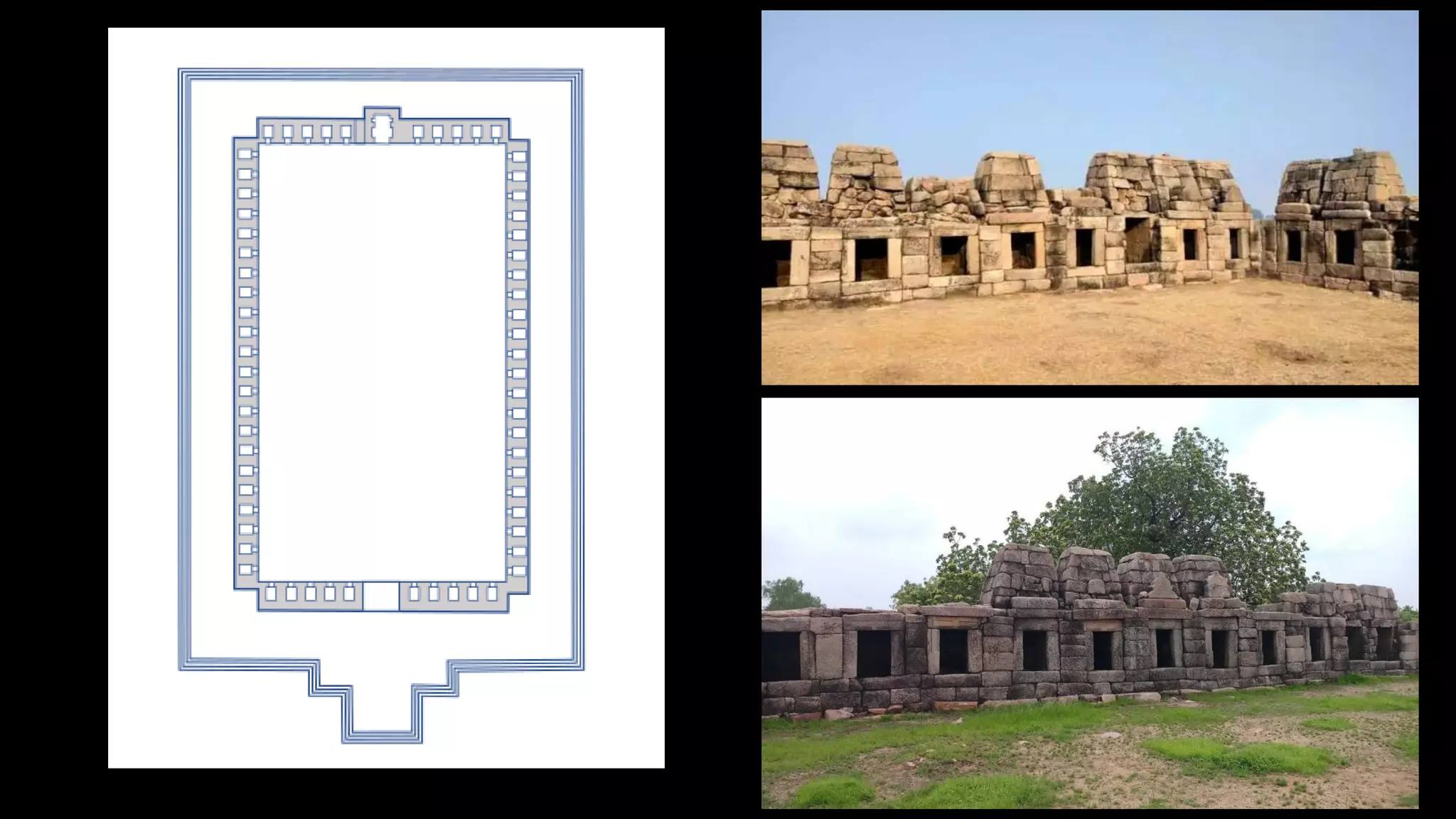
    Sub sects ofShakta cult KAUL MARGI SAMAYACHARI Extremist view Tried to follow the social norms. Worship of Devi by Panchmakaras- Madya, Matsya, Maans, Mudra, Maithun Mode of worship changed- on the basis of meditation No difference between: skin-sandal, enemy- son, cerematory ground-home Became more acceptable socially Hold everything, every trait to be the same reality. Rejects the dualism Believe in Advaita philosophy
  • 25.
    Shakta philosophy • Influenceof Samkhya philosophy-advaita • Shiva & Shakti are supreme elements. • Devi = nature • Shiva = Param Purush • Union of two leads to creation. • Shiva is static Shakti and Shakti is dynamic Shiva. Shiva Shakti Shakta philosophy
  • 26.
    Yoginis and Tripursundari •Lalitōpakhyanā, part of the Brahmaṇḍa Purāṇa: Devas prayed to Tripursundari to kill Bhandasura. • When she started for the war with Bandasura, she was accompanied by the powers called Balambika, Varahi, Gayatri, Matangi.
  • 27.
  • 30.
  • 32.
    64 Yogini 64 Yoginitemple,Ranipur Jhaaral, Balaangeer district, Odisa
  • 35.
  • 38.
  • 41.
    Conclusion • Tradition ofdevi worship quite ancient • Worship of sensous form of devi started later • Developed as core of Shakta cult • Associated with Tantric practices. • Continuity of tradition.