Sexually Transmitted
Infections/ Diseases
Dr. Emmanuel Okurut
Introduction
• Sexually transmitted infections are disease processes
from close physical contact between males and
females by transmission through sexual contact.
• Transmission of an organism between sexual partners
through different routes of sexual contact, either oral,
anal, or vaginal.
• STIs become a concern and burden on the healthcare
systems, as many infections go untreated and lead to
complications
Etiology
• Sexually transmitted infections (STIs) are a worldwide health problem
and should be recognized by all health agencies in public sectors.
• STIs go underrecognized and have a higher incidence in medically
underserved populations.
• The presenting condition or disease depends on the specific organism,
route, signs, and symptoms of the disease.
• Risk factors that increase transmission of STIs include having
unprotected sexual contact with multiple partners, history of STIs,
sexual assault, use of alcohol, use of recreational drugs, and
intravenous drug use.
Epidemiology
• Sexually transmitted diseases (STD) have a high
incidence in most countries, especially between the
ages of 15 to 50 years of age, including infants.
• Providers must recognize that most of all, STIs
correlate with patient behavior and should also be
addressed during clinical evaluation.
• Incidence is on the rise despite the mgt
approaches…why??
Pathophysiology
• Most common infections -human immunodeficiency virus, gonorrhea,
chlamydia, genital herpes, human papillomavirus, trichomoniasis, and
syphilis.
• STIs can either be bacterial, viral, or parasites, which are transmitted
through sexual activity with the exchange of bodily fluids from the infected
partner.
• STIs invade the human body through microscopic abrasions within the
mucosal membranes of the penis, vagina, anus, or any other mucosal
surfaces.
• Transmission of STIs can include the use of intravenous drugs, exposure
through the vagina during childbirth, or breastfeeding
• Organisms invade normal cells and overburden the immune system creating
typical signs and symptoms of the disease.
• As a provider in the frontlines of STI diagnosis, it is key to understand
curable versus incurable sexually transmitted infections.
Human Immunodeficiency Virus(HIV) /Acquired Immunodeficiency
Syndrome (AIDS)
• Enveloped retrovirus encapsulated with two single-stranded RNA.
• Primary HIV signs and symptoms are described as flu-like, often diagnosed
as an acute viral syndrome.
• The duration of onset of symptoms ranges from 4 to 10 weeks.
• AIDS is described as the late stage of HIV disease
Gonorrhea
• Gram-negative diplococci bacteria are known as Neisseria gonorrhoeae.
• The second most common STI compared to Chlamydia trachomatis.
• Gonorrhea uses glucose to invade mucus epithelial cells. Gonorrhea modifies
cellular proteins that allow further penetration of other organisms.
• The proliferation of gonorrhea leads to a localized inflammatory reaction
leading to signs and symptoms of a sexually transmitted infection.
Chlamydia
• Gram-negative obligate, non-motile intracellular bacteria known as Chlamydia
trachomatis.
• The most common sexually transmitted infection in the United States, according
to the CDC and WHO.
• Two infectious forms exist, the elementary body (EB) and the reticulate body
(RB). The EB form invades the cell, and the RB form will produce other
infectious EB that will infect other non-infectious forms
Human Papillomavirus (HPV)
• HPV is a double-stranded DNA virus that replicates in the basal cell layer of the
stratified squamous epithelial cells. This replication cycle induces hyperplasia to
carcinoma.
• HPV types 16 and 18 are oncogenic strains that induce neoplasm formation.
• HPV types 6 and 11 are common strains that induce anogenital warts,
commonly known as condyloma acuminata.
Syphilis
• Spirochete bacterium known as Treponema pallidum.
• Syphilis infections are increasing versus previous reports, according to the CDC.
• Syphilis presents with a chancre, which is a painless well-demarcated lesion at the
site of inoculation.
• Syphilis presents in various forms of infection, depending on the duration of
infection known as Primary, Secondary, or Tertiary.
Genital Herpes
• Genital herpes is caused by the herpes simplex virus 1(HSV-1) or herpes simplex
virus 2 (HSV-2).
• HSV-1/HSV-2 is a double-stranded DNA virus coated by a lipoglycoprotein with an
affinity to infect target cells.
• HSV-1 usually associated with orolabial infections, but according to CDC, HSV-1 is
now leading in the cause of genital herpes in young and homosexual patients.
Trichomoniasis
• Single-celled flagellated anaerobic protozoa are known
as Trichomonas vaginallis.
• Trichomoniasis is direct damage to the epithelium.
• The injuries lead to micro ulcerations, specifically in the vagina,
cervix, urethra, and paraurethral glands.
History and Physical
While performing the sexual history collection, an easy pneumonic that
can help guide your questions can be remembered as the "other 5 P's".
• Partners
• Practices
• Prevention against pregnancy
• Protection against sexually transmitted infections
• Past history of sexually transmitted infections
HIV
• Females and Males:
• Signs and symptoms: Patients may present asymptomatic or with an acute
viral syndrome to include systemic like symptoms: malaise, fatigue, anorexia,
fever, chills, arthralgias, myalgias, or cutaneous presentations.
• Physical Exam: Depending on the chief complaint will guide the physical
exam. In general, pt should have a thorough history and physical exam to rule
out a broad differential diagnosis
Gonorrhea
• Females:
• Signs and symptoms: Patients may present with dysuria, urgency, urinary frequency,
lower pelvic pain, and abnormal vaginal bleeding.
• Physical Exam: If suspecting systemic infection, a thorough physical exam should be
performed.
• Genitourinary exam: May include inflammation of the external vagina causing excoriations from
pruritus, mucopurulent discharge, and friable inflamed mucosal tissue of the cervix.
• Males:
• Signs and symptoms: Patients may present with testicular pain, dysuria, purulent
discharge from meatus, pain with defecation secondary to inflammation of the rectal area,
and or prostate. Although the provider should observe systemic signs and symptoms
consistent with disseminated gonococcal infection i.e., sore throat, or redness of eyes,
joint pain, cutaneous lesions.
• Physical Exam: Genitourinary exam: There may be palpable tenderness over the
epididymis, purulent discharge from the meatus, Palpable tenderness to the prostate or
rectum. As the provider and you are concerned about disseminated gonococcal infection,
the provider should perform a thorough physical exam
Chlamydia
• Females:
• Signs and symptoms: Most infections can be asymptomatic but may present with
vaginal discharge, abnormal vaginal bleeding, lower pelvic pain, urinary frequency, or
dysuria. If systemic infection is present, the patient may be febrile, with abdominal
pain, nausea, vomiting, fatigue, and malaise.
• Physical Exam: Genitourinary exam: inflammation of the cervix with mucopurulent
discharge, ectropion, vaginal discharge, tenderness of the cervix, tenderness of the
adnexal regions, and abdominal tenderness. If systemic and Fitz-Hugh-Curtis syndrome
is on your differential, there may be right upper quadrant tenderness secondary to
perihepatitis.
• Males:
• Signs and symptoms: The most common presenting symptoms are dysuria, testicular
pain, pain with defecation secondary to inflammation of the rectal area, and or prostate.
• Physical Exam: Genitourinary exam: tenderness to the testicles specifically over the
epididymis, tenderness with palpation to the prostate, or rectum region
HPV:
• Females and Males:
• Signs and symptoms: Most complaints are cosmetic in nature or an incidental
finding due to the asymptomatic nature of HPV types 6 and 11. Patients may also
present with ulcerative lesions secondary to oncogenic HPV types 16 and 18
• Physical Exam: On exam, there may be an exophytic lesion described as a
cauliflower-like growth known as condylomata acuminata. Lesions can be
observed over the external genital region, perineum, and or perianal area. Exam
for females entails a speculum exam with screening to rule out cervical cancer.
Syphilis:
• Females and males:
• Signs and symptoms: Presenting symptoms of a syphilis infection depends on the phase
of the infection at the current state of evaluation. Symptoms can be broken down by
primary, secondary, latent, and tertiary phases, which are best detailed and discussed in
the referenced article "Syphilis."
• Physical Exam: The physical exam is dependent on the presenting phase of the syphilis
infection.
• Primary: Presents with a painless well-demarcated lesion/ulcer known as a chancre at the site of
inoculation.
• Secondary: Presents with systemic symptoms involving a cutaneous lesion and rash. Lesions known
as condylomata lata are wart-like lesions that present and resolve during the secondary phase. The
rash is specific for palmar regions of the hands and feet.
• Latent: Seroconversion of the patient to have positive syphilis serum screenings; Early <1 year, Late
>1 year
• Tertiary: presentation can be within months or years from inoculation. Systemic symptoms can range
to cardiovascular, neurologic, and cutaneous symptoms described as gummatous lesions.
• Neurosyphilis can present with stroke-like symptoms, cranial nerve deficits, a change in mental status,
general paresis, or tabes dorsalis.
Herpes
• Females and males:
• Signs and symptoms: Primary infections tend to induce systemic symptoms,
including vesicular lesions over affected areas, pruritus, dysuria, fever, headaches,
malaise, and lymphadenopathy. Reactivation usually presents with a prodromal
phase to include tingling, itching, and rash consistent with vesicular lesions.
• Recurrent infections tend to be less intense with a shorter duration.
• Physical Exam: The provider should focus on the affected area, whether it is
localized or systemic. A primary herpes infection tends to be worse and diffuse
symptomatically involving various symptoms. Females may have diffuse vesicular
lesions to the internal and external vaginal area. Males may have diffuse vesicular
lesions to the glans of the penis, penile shaft, scrotum, perineal/perianal area, and
the external/internal rectum.
• A recurrent herpes infection isolated vesicular lesions over a neuronal tract where
the virus is dormant
Trichomoniasis
• Females:
• Signs and symptoms: Female can remain asymptomatic with trichomonas vaginalis
infection but at times may present with a complaint of foul-smelling discharge,
pruritus, dyspareunia, dysuria, and vaginal spotting.
• Physical Exam: The exam will show irritation of the external and internal vagina,
including classic physical findings "strawberry cervix" as known as colpitis
macularis. A foul frothy vaginal discharge may be present on the exam.
• Males:
• Signs and symptoms: Males can remain asymptomatic with a trichomonas vaginalis
infection but can also present with testicular pain, dysuria, or rectal pain.
• Physical Exam: Tenderness with palpation to the epididymis and prostate on rectal
exam. No overlying skin lesions or inflammatory processes will be seen.
Granuloma Inguinale
• Females and males:
• Signs and symptoms: Patients will present with highly vascularized lesions over the
genitals, perineum that tend to be painless.
• Physical Exam: Exam will show ulcer-like lesions that are beefy red consistent with high
vascularization that bleeds easily with manipulation. 4 main lesions can be seen on the
exam: (1) Ulcerovegetative: large painless ulcer present on the patients physical
exam. (2) Nodular: soft and erythematous that tend to ulcerate throughout the infectious
process. (3) Cicatricial: dry ulcerations that tend to transition into plaques. (4)
Hypertrophic: lesions are thick and painless.
• Lymphogranuloma venereum (LGV)
• Females and males:
• Signs and symptoms: Patients will present with painful lymphadenopathy localized
to the inguinal area. Patients may note the initial presentation of a pustule that
gradually progressed to large painful ulceration.
• Physical Exam: LGV presents with two stages: Primary phase is a small painless
papule/pustule that will ulcerate and can be visualized throughout the affected
genital area. During the secondary phase, patients present with unilateral
lymphadenopathy that is fluctuant with palpation or maybe suppurative in a
presentation known as Buboes. Buboes tend to rupture in the acute phase and
progress to a thickened mass.
Mycoplasma Genitalium
• Females
• Signs and symptoms: Patients may present with pelvic pain, dysuria, similar type
symptoms as gonorrhea or chlamydia infection. Vaginal irritation, discharge, or
foul smell.
• Physical Exam: Exam will show irritation of the external and internal vagina,
vaginal discharge, cervical tenderness, adnexal tenderness, or abnormal vaginal
spotting.
• Males:
• Signs and symptoms: Patients may present with suprapubic pain, dysuria, urinary
frequency, urgency, or testicular pain.
• Physical exam: Exam can be benign or tenderness to the epididymis with palpation
or tenderness to the prostate on rectal exam.
Evaluation
• Most common laboratory testing performed include:
• Nucleic Acid Amplification Test (NAAT)
• Cerebrospinal Fluid (CSF)
• Fluorescent Treponemal Antibody Absorption Test (FTA-ABS)
• Rapid Plasma Reagin (RPR)
• Treponema pallidum Particle Agglutination (TP-PA)
• Venereal Disease Research Laboratory (VDRL)
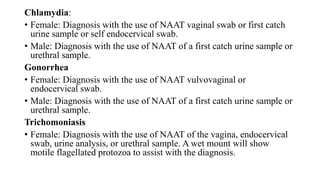
Chlamydia:
• Female: Diagnosis with the use of NAAT vaginal swab or first catch
urine sample or self endocervical swab.
• Male: Diagnosis with the use of NAAT of a first catch urine sample or
urethral sample.
Gonorrhea
• Female: Diagnosis with the use of NAAT vulvovaginal or
endocervical swab.
• Male: Diagnosis with the use of NAAT of a first catch urine sample or
urethral sample.
Trichomoniasis
• Female: Diagnosis with the use of NAAT of the vagina, endocervical
swab, urine analysis, or urethral sample. A wet mount will show
motile flagellated protozoa to assist with the diagnosis.
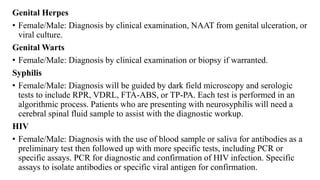
Genital Herpes
• Female/Male: Diagnosis by clinical examination, NAAT from genital ulceration, or
viral culture.
Genital Warts
• Female/Male: Diagnosis by clinical examination or biopsy if warranted.
Syphilis
• Female/Male: Diagnosis will be guided by dark field microscopy and serologic
tests to include RPR, VDRL, FTA-ABS, or TP-PA. Each test is performed in an
algorithmic process. Patients who are presenting with neurosyphilis will need a
cerebral spinal fluid sample to assist with the diagnostic workup.
HIV
• Female/Male: Diagnosis with the use of blood sample or saliva for antibodies as a
preliminary test then followed up with more specific tests, including PCR or
specific assays. PCR for diagnostic and confirmation of HIV infection. Specific
assays to isolate antibodies or specific viral antigen for confirmation.
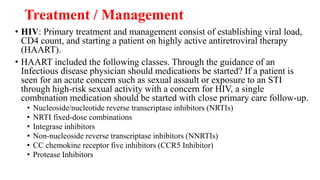
Treatment / Management
• HIV: Primary treatment and management consist of establishing viral load,
CD4 count, and starting a patient on highly active antiretroviral therapy
(HAART).
• HAART included the following classes. Through the guidance of an
Infectious disease physician should medications be started? If a patient is
seen for an acute concern such as sexual assault or exposure to an STI
through high-risk sexual activity with a concern for HIV, a single
combination medication should be started with close primary care follow-up.
• Nucleoside/nucleotide reverse transcriptase inhibitors (NRTIs)
• NRTI fixed-dose combinations
• Integrase inhibitors
• Non-nucleoside reverse transcriptase inhibitors (NNRTIs)
• CC chemokine receptor five inhibitors (CCR5 Inhibitor)
• Protease Inhibitors
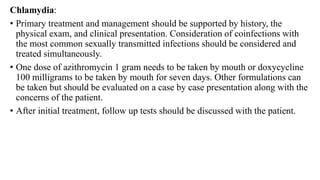
Chlamydia:
• Primary treatment and management should be supported by history, the
physical exam, and clinical presentation. Consideration of coinfections with
the most common sexually transmitted infections should be considered and
treated simultaneously.
• One dose of azithromycin 1 gram needs to be taken by mouth or doxycycline
100 milligrams to be taken by mouth for seven days. Other formulations can
be taken but should be evaluated on a case by case presentation along with the
concerns of the patient.
• After initial treatment, follow up tests should be discussed with the patient.
Gonorrhea:
• Primary treatment and management should be supported by history, the
physical exam, and the clinical presentation. Consideration of coinfections
with the most common sexually transmitted infections should be considered
and treated simultaneously.
• One dose of 3rd generation cephalosporin, specifically ceftriaxone 250
milligrams to be given by intramuscular injection. One dose of
azithromycin 1 gram to be taken by mouth to treat possible coinfection of
chlamydia.
• After initial treatment, follow up tests should be discussed with the patient.
Syphilis:
• Treatment and management of secondary, latent, and tertiary syphilis should
be independent on the treatment of primary syphilis infection.
• Primary, secondary, and early syphilis infection can be treated with Penicillin
G Benzathine 2.4 million units to be given by intramuscular injection.
• Tertiary syphilis should be treated as an inpatient due to the three doses of
penicillin G benzathine 2.4 million units once a week for a total of 3 weeks.
• Neurosyphilis should be treated as an inpatient with intravenous penicillin G
aqueous 18-24 million units daily divided into 3 to 4 million units every 4
hours or a continuous infusion for a total of 14 days.
Genital Herpes:
• Treatment and management of a primary infection should include systemic
infection followed by symptomatic treatment and starting antiviral
medications.
• The provider and patient should discuss medication options, including the
financial strain that may hinder appropriate treatment. Treatment of
reactivation herpes infection should be treated with what medication works
best for the patient.
• Acyclovir, valacyclovir, and famciclovir are three types of primary treatment
that can be started on patients. There are various formulations and treatment
courses that should be started after the best management plan is discussed
with the patient
Trichomoniasis:
• Treatment and management should be established with that patient after
diagnosis.
• One dose of metronidazole 2 grams to be taken by mouth
• Metronidazole 500 mg by mouth twice daily with food for seven days
• One dose of tinidazole 2 grams to be taken by mouth
Granuloma inguinale:
• Treatment and management should be guided by history, the physical
exam, and clinical presentation as granuloma inguinale is not very
common in the United States.
• Azithromycin 1 gram to be taken by mouth once per week until lesions
resolve completely.
LGV:
• Treatment and management should be guided by history, the physical exam,
and clinical presentation as LGV is not very common in the United States.
• Doxycycline 100 milligrams taken by mouth twice daily for 21 days.
Mycoplasma genitalium:
• Concern for an M. genitalium infection should be considered if the patient is
suspected of a chlamydia or gonorrhea infection.
• One time dose of azithromycin 500 milligrams taken by mouth plus continued
azithromycin regimen at 250 milligrams once daily for four days
Differential Diagnosis
Differential STIs should be assessed by system and
symptomatology: Each of the following systems can be affected
by STIs, leading to direct or indirect involvement.
• Cardiovascular: HIV, Syphilis, HSV-1/HSV-2
• Respiratory: HIV, chlamydia
• Gastrointestinal: HIV, HSV-1/HSV-2, chlamydia, gonorrhea,
HPV
• Genitourinary: HIV, HSV-1/HSV-2, chlamydia, gonorrhea,
HPV
• Central nervous system: HIV, syphilis, HSV-1/HSV-2,
gonorrhea, HPV
• Musculoskeletal: HIV, HSV-1/HSV-2, chlamydia, gonorrhea,
HPV
• Integumentary system: HIV, HSV-1/HSV-2, chlamydia,
gonorrhea, HPV
Prognosis
• The prognosis depends on the diagnosis of the disease and the
progression of the disease at the time of diagnosis.
• If the disease process is found in the acute phase and can be treated
effectively with antivirals, antibiotics, or antifungals, the outcome is
dependent on the treatment course.
• Medication adherence plays a primary role in the prognosis of an
infection that is treatable or a chronic condition such as HIV, HSV-
1/HSV-2, partially treated STIs, or asymptomatic STIs that continue
untreated
Complications
• There is a wide array of complications from STIs if left untreated.
• Females tend to be at higher risk for complications from STIs to
include systemic infection from untreated PID, sterility, and infertility
from complicated gonorrhea/chlamydial infections.
• Females, while pregnant, have a higher percentage of preterm labor if
they are positive for certain STIs.
• Females and males have a risk of neoplasm secondary to certain HPV
strain types.
• HIV infections, if not properly managed, will progress to AIDS, a fatal
late complication of the infection secondary to a severely
immunocompromised state.
STI Screening in Pregnancy: CDC
Recommendations
Recommended Screening Tests for ALL Pregnant Women
HIV
• ‘Opt-out screening’ – screen at first prenatal visit after notifying patient of the
need to be screened, unless patient declines
• Screen in prepregnancy or as early as possible in pregnancy
• If patient declines, address concerns and discuss the following
• A previous negative HIV test does not mean patient is still negative
• Health benefit not only to patient but to fetus/offspring as treatment available to reduce
perinatal transmission
• Retest in the 3rd trimester (before 36 weeks, if possible) if at high risk
• Illicit drug use
• STI during pregnancy
• Multiple sex partners during pregnancy
• Live in areas of high HIV incidence
• Receiving care in facilities with an HIV incidence in pregnant women ≥1/1,000 per year
• Partner has HIV
• Signs or symptoms of acute HIV infection
• Fever | Lymphadenopathy | Skin rash | Myalgias | Arthralgias | Headache | Oral Ulcers | Leukopenia |
Thrombocytopenia | Elevated transaminase
• Rapid HIV testing should be performed on any woman in labor who has not been
screened during pregnancy, unless she declines
• If rapid HIV test positive, antiretroviral prophylaxis should be administered prior to receiving
confirmatory test results
• AAP recommends expedited HIV testing as soon as possible after birth for infants born to
women with unknown HIV status
• NOTE: The USPSTF (June 2019) continues to recommend screening for HIV
infection in all pregnant persons, including those who present in labor or at delivery
whose HIV status is unknown. (A recommendation)
SYPHILIS
• Serologic tests should be performed at first prenatal visit
• Screening for syphilis infection is a 2-step process | Antepartum screening can be
performed by manual nontreponemal antibody testing (e.g., RPR) by using the
traditional syphilis screening algorithm or by treponemal antibody testing (e.g.,
immunoassays)
• Traditional screening: Initial “nontreponemal” antibody test (ie, Venereal Disease Research
Laboratory test or rapid plasma reagin [RPR] test) to detect biomarkers released from damage
caused by syphilis infection, followed by a confirmatory “treponemal” antibody detection test (ie,
fluorescent treponemal antibody absorption [FTA-ABS] or T pallidum particle agglutination test
[TP-PA])
• Reverse sequence screening algorithm: Automated treponemal test (such as an enzyme-linked
[EIA], chemiluminescence [CIA], or multiplex flow immunoassay [immunoblot]) performed
first, followed by a nontreponemal test
• If the test results of the reverse sequence algorithm are discordant, a second treponemal test (preferably
using a different treponemal antibody) is performed
• Pregnant women with positive treponemal screening tests (e.g., EIA, CIA, or immunoblot)
should have additional quantitative nontreponemal testing because titers are essential for
monitoring treatment response
• If access to prenatal care is suboptimal, RPR test and treatment should be performed at time
of pregnancy confirmation
• Serologic retesting in the 3rd trimester (28 weeks) and at delivery if the patient for patients
at high risk including
• Sex with multiple partners | Sex in conjunction with drug use or transactional sex
• Late entry to prenatal care (i.e., first visit during the second trimester or later) or no prenatal care
• Methamphetamine or heroin use
• Incarceration of the woman or her partner
• Unstable housing or homelessness
• Test any woman who delivers a stillborn or in the case of infant death
• Untreated syphilis has a 40% infant death rate
• Do NOT discharge neonate if serologic status is unknown
• Newborn infection may not be immediately obvious
• Within a few weeks may develop
• Developmental delay
• Seizures
• Birth defects such as bone deformation, blindness and deafness
• Note: In September 2018, the USPSTF reaffirmed previous guidance and “recommends
early screening for syphilis infection in all pregnant women.” (Grade A – Offer or Provide
this Service)
HEPATITIS B (HBV)
• Test for hepatitis B surface antigen (HBsAg) at the first prenatal visit regardless of
previous testing or vaccination
• At time of admission for delivery, retest if patient:
• Is at high risk – more than one sex partner in previous 6 months, evaluation or treatment for STI,
injection-drug use, HBsAG-positive sex partner
• Was not screened prenatally
• Has clinical hepatitis
• Always do HBsAg testing prior to giving the HBV vaccine to avoid misinterpretation
• Report HBsAg positive women to local or state health departments to ensure they are
entered into a case management program to arrange access to appropriate vaccinations
for contacts and prophylaxis for infants
• If HBsAg positive, test for hepatitis B virus deoxyribonucleic acid (HBV DNA) to guide the use
of antiviral medication to prevent perinatal transmission
• If HBV DNA >200,000 IU/mL (7.6 log10 IU/mL): The American Association for the Study of
Liver Diseases suggests antiviral therapy during pregnancy to further reduce perinatal HBV
transmission
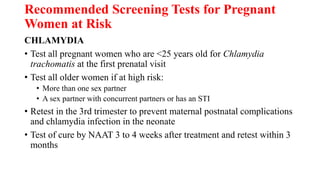
Recommended Screening Tests for Pregnant
Women at Risk
CHLAMYDIA
• Test all pregnant women who are <25 years old for Chlamydia
trachomatis at the first prenatal visit
• Test all older women if at high risk:
• More than one sex partner
• A sex partner with concurrent partners or has an STI
• Retest in the 3rd trimester to prevent maternal postnatal complications
and chlamydia infection in the neonate
• Test of cure by NAAT 3 to 4 weeks after treatment and retest within 3
months
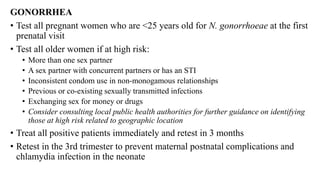
GONORRHEA
• Test all pregnant women who are <25 years old for N. gonorrhoeae at the first
prenatal visit
• Test all older women if at high risk:
• More than one sex partner
• A sex partner with concurrent partners or has an STI
• Inconsistent condom use in non-monogamous relationships
• Previous or co-existing sexually transmitted infections
• Exchanging sex for money or drugs
• Consider consulting local public health authorities for further guidance on identifying
those at high risk related to geographic location
• Treat all positive patients immediately and retest in 3 months
• Retest in the 3rd trimester to prevent maternal postnatal complications and
chlamydia infection in the neonate
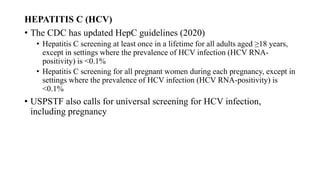
HEPATITIS C (HCV)
• The CDC has updated HepC guidelines (2020)
• Hepatitis C screening at least once in a lifetime for all adults aged ≥18 years,
except in settings where the prevalence of HCV infection (HCV RNA-
positivity) is <0.1%
• Hepatitis C screening for all pregnant women during each pregnancy, except in
settings where the prevalence of HCV infection (HCV RNA-positivity) is
<0.1%
• USPSTF also calls for universal screening for HCV infection,
including pregnancy
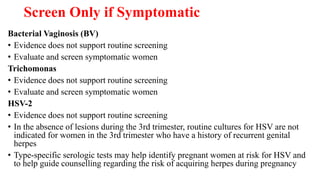
Screen Only if Symptomatic
Bacterial Vaginosis (BV)
• Evidence does not support routine screening
• Evaluate and screen symptomatic women
Trichomonas
• Evidence does not support routine screening
• Evaluate and screen symptomatic women
HSV-2
• Evidence does not support routine screening
• In the absence of lesions during the 3rd trimester, routine cultures for HSV are not
indicated for women in the 3rd trimester who have a history of recurrent genital
herpes
• Type-specific serologic tests may help identify pregnant women at risk for HSV and
to help guide counselling regarding the risk of acquiring herpes during pregnancy
Screening at Delivery
SYPHILIS
• Select groups of pregnant women, including women who are at high
risk for syphilis or live in areas of high syphilis morbidity
• Pregnant women with no previously established status
• Pregnant women who deliver a stillborn infant
HIV
• Pregnant women not screened during pregnancy
HBV
• Women admitted for delivery at a health care facility without documentation
of HBsAg test results should have blood drawn and tested as soon as possible
after admission
• Women at high risk
• Having had more than one sex partner during the previous 6 months, an HBsAg-
positive sex partner, evaluation or treatment for a sexually transmitted disease, or
recent or current injection-drug use
• Women with signs or symptoms of hepatitis
• Note: CDC recommends universal hepatitis B vaccination within 24 hours of
birth for medically stable infants >2000 grams
• Permissive language that allowed the vaccine to be delayed until after
hospital discharge has been removed
• Administer hepatitis B vaccination and hepatitis immune globulin regardless
of birth weight within 12 hours of birth for infants born to hepatitis b-infected
mothers
CHLAMYDIA
• Pregnant women less than 25 years of age
• Continued high risk
• New or multiple sex partners, sex partner with concurrent partners, sex partners who
have a sexually transmitted disease
GONORRHEA
• Continued high risk
• Past or current injection-drug use, having had a blood transfusion before July 1992,
receipt of an unregulated tattoo, having been on long-term hemodialysis, intranasal drug
use, and other percutaneous exposures

Sexually Transmitted Infections in gyn.pptx

  • 1.
  • 2.
    Introduction • Sexually transmittedinfections are disease processes from close physical contact between males and females by transmission through sexual contact. • Transmission of an organism between sexual partners through different routes of sexual contact, either oral, anal, or vaginal. • STIs become a concern and burden on the healthcare systems, as many infections go untreated and lead to complications
  • 3.
    Etiology • Sexually transmittedinfections (STIs) are a worldwide health problem and should be recognized by all health agencies in public sectors. • STIs go underrecognized and have a higher incidence in medically underserved populations. • The presenting condition or disease depends on the specific organism, route, signs, and symptoms of the disease. • Risk factors that increase transmission of STIs include having unprotected sexual contact with multiple partners, history of STIs, sexual assault, use of alcohol, use of recreational drugs, and intravenous drug use.
  • 4.
    Epidemiology • Sexually transmitteddiseases (STD) have a high incidence in most countries, especially between the ages of 15 to 50 years of age, including infants. • Providers must recognize that most of all, STIs correlate with patient behavior and should also be addressed during clinical evaluation. • Incidence is on the rise despite the mgt approaches…why??
  • 5.
    Pathophysiology • Most commoninfections -human immunodeficiency virus, gonorrhea, chlamydia, genital herpes, human papillomavirus, trichomoniasis, and syphilis. • STIs can either be bacterial, viral, or parasites, which are transmitted through sexual activity with the exchange of bodily fluids from the infected partner. • STIs invade the human body through microscopic abrasions within the mucosal membranes of the penis, vagina, anus, or any other mucosal surfaces. • Transmission of STIs can include the use of intravenous drugs, exposure through the vagina during childbirth, or breastfeeding • Organisms invade normal cells and overburden the immune system creating typical signs and symptoms of the disease. • As a provider in the frontlines of STI diagnosis, it is key to understand curable versus incurable sexually transmitted infections.
  • 6.
    Human Immunodeficiency Virus(HIV)/Acquired Immunodeficiency Syndrome (AIDS) • Enveloped retrovirus encapsulated with two single-stranded RNA. • Primary HIV signs and symptoms are described as flu-like, often diagnosed as an acute viral syndrome. • The duration of onset of symptoms ranges from 4 to 10 weeks. • AIDS is described as the late stage of HIV disease Gonorrhea • Gram-negative diplococci bacteria are known as Neisseria gonorrhoeae. • The second most common STI compared to Chlamydia trachomatis. • Gonorrhea uses glucose to invade mucus epithelial cells. Gonorrhea modifies cellular proteins that allow further penetration of other organisms. • The proliferation of gonorrhea leads to a localized inflammatory reaction leading to signs and symptoms of a sexually transmitted infection.
  • 7.
    Chlamydia • Gram-negative obligate,non-motile intracellular bacteria known as Chlamydia trachomatis. • The most common sexually transmitted infection in the United States, according to the CDC and WHO. • Two infectious forms exist, the elementary body (EB) and the reticulate body (RB). The EB form invades the cell, and the RB form will produce other infectious EB that will infect other non-infectious forms Human Papillomavirus (HPV) • HPV is a double-stranded DNA virus that replicates in the basal cell layer of the stratified squamous epithelial cells. This replication cycle induces hyperplasia to carcinoma. • HPV types 16 and 18 are oncogenic strains that induce neoplasm formation. • HPV types 6 and 11 are common strains that induce anogenital warts, commonly known as condyloma acuminata.
  • 8.
    Syphilis • Spirochete bacteriumknown as Treponema pallidum. • Syphilis infections are increasing versus previous reports, according to the CDC. • Syphilis presents with a chancre, which is a painless well-demarcated lesion at the site of inoculation. • Syphilis presents in various forms of infection, depending on the duration of infection known as Primary, Secondary, or Tertiary. Genital Herpes • Genital herpes is caused by the herpes simplex virus 1(HSV-1) or herpes simplex virus 2 (HSV-2). • HSV-1/HSV-2 is a double-stranded DNA virus coated by a lipoglycoprotein with an affinity to infect target cells. • HSV-1 usually associated with orolabial infections, but according to CDC, HSV-1 is now leading in the cause of genital herpes in young and homosexual patients.
  • 9.
    Trichomoniasis • Single-celled flagellatedanaerobic protozoa are known as Trichomonas vaginallis. • Trichomoniasis is direct damage to the epithelium. • The injuries lead to micro ulcerations, specifically in the vagina, cervix, urethra, and paraurethral glands.
  • 10.
    History and Physical Whileperforming the sexual history collection, an easy pneumonic that can help guide your questions can be remembered as the "other 5 P's". • Partners • Practices • Prevention against pregnancy • Protection against sexually transmitted infections • Past history of sexually transmitted infections
  • 11.
    HIV • Females andMales: • Signs and symptoms: Patients may present asymptomatic or with an acute viral syndrome to include systemic like symptoms: malaise, fatigue, anorexia, fever, chills, arthralgias, myalgias, or cutaneous presentations. • Physical Exam: Depending on the chief complaint will guide the physical exam. In general, pt should have a thorough history and physical exam to rule out a broad differential diagnosis
  • 12.
    Gonorrhea • Females: • Signsand symptoms: Patients may present with dysuria, urgency, urinary frequency, lower pelvic pain, and abnormal vaginal bleeding. • Physical Exam: If suspecting systemic infection, a thorough physical exam should be performed. • Genitourinary exam: May include inflammation of the external vagina causing excoriations from pruritus, mucopurulent discharge, and friable inflamed mucosal tissue of the cervix. • Males: • Signs and symptoms: Patients may present with testicular pain, dysuria, purulent discharge from meatus, pain with defecation secondary to inflammation of the rectal area, and or prostate. Although the provider should observe systemic signs and symptoms consistent with disseminated gonococcal infection i.e., sore throat, or redness of eyes, joint pain, cutaneous lesions. • Physical Exam: Genitourinary exam: There may be palpable tenderness over the epididymis, purulent discharge from the meatus, Palpable tenderness to the prostate or rectum. As the provider and you are concerned about disseminated gonococcal infection, the provider should perform a thorough physical exam
  • 13.
    Chlamydia • Females: • Signsand symptoms: Most infections can be asymptomatic but may present with vaginal discharge, abnormal vaginal bleeding, lower pelvic pain, urinary frequency, or dysuria. If systemic infection is present, the patient may be febrile, with abdominal pain, nausea, vomiting, fatigue, and malaise. • Physical Exam: Genitourinary exam: inflammation of the cervix with mucopurulent discharge, ectropion, vaginal discharge, tenderness of the cervix, tenderness of the adnexal regions, and abdominal tenderness. If systemic and Fitz-Hugh-Curtis syndrome is on your differential, there may be right upper quadrant tenderness secondary to perihepatitis. • Males: • Signs and symptoms: The most common presenting symptoms are dysuria, testicular pain, pain with defecation secondary to inflammation of the rectal area, and or prostate. • Physical Exam: Genitourinary exam: tenderness to the testicles specifically over the epididymis, tenderness with palpation to the prostate, or rectum region
  • 14.
    HPV: • Females andMales: • Signs and symptoms: Most complaints are cosmetic in nature or an incidental finding due to the asymptomatic nature of HPV types 6 and 11. Patients may also present with ulcerative lesions secondary to oncogenic HPV types 16 and 18 • Physical Exam: On exam, there may be an exophytic lesion described as a cauliflower-like growth known as condylomata acuminata. Lesions can be observed over the external genital region, perineum, and or perianal area. Exam for females entails a speculum exam with screening to rule out cervical cancer.
  • 15.
    Syphilis: • Females andmales: • Signs and symptoms: Presenting symptoms of a syphilis infection depends on the phase of the infection at the current state of evaluation. Symptoms can be broken down by primary, secondary, latent, and tertiary phases, which are best detailed and discussed in the referenced article "Syphilis." • Physical Exam: The physical exam is dependent on the presenting phase of the syphilis infection. • Primary: Presents with a painless well-demarcated lesion/ulcer known as a chancre at the site of inoculation. • Secondary: Presents with systemic symptoms involving a cutaneous lesion and rash. Lesions known as condylomata lata are wart-like lesions that present and resolve during the secondary phase. The rash is specific for palmar regions of the hands and feet. • Latent: Seroconversion of the patient to have positive syphilis serum screenings; Early <1 year, Late >1 year • Tertiary: presentation can be within months or years from inoculation. Systemic symptoms can range to cardiovascular, neurologic, and cutaneous symptoms described as gummatous lesions. • Neurosyphilis can present with stroke-like symptoms, cranial nerve deficits, a change in mental status, general paresis, or tabes dorsalis.
  • 16.
    Herpes • Females andmales: • Signs and symptoms: Primary infections tend to induce systemic symptoms, including vesicular lesions over affected areas, pruritus, dysuria, fever, headaches, malaise, and lymphadenopathy. Reactivation usually presents with a prodromal phase to include tingling, itching, and rash consistent with vesicular lesions. • Recurrent infections tend to be less intense with a shorter duration. • Physical Exam: The provider should focus on the affected area, whether it is localized or systemic. A primary herpes infection tends to be worse and diffuse symptomatically involving various symptoms. Females may have diffuse vesicular lesions to the internal and external vaginal area. Males may have diffuse vesicular lesions to the glans of the penis, penile shaft, scrotum, perineal/perianal area, and the external/internal rectum. • A recurrent herpes infection isolated vesicular lesions over a neuronal tract where the virus is dormant
  • 17.
    Trichomoniasis • Females: • Signsand symptoms: Female can remain asymptomatic with trichomonas vaginalis infection but at times may present with a complaint of foul-smelling discharge, pruritus, dyspareunia, dysuria, and vaginal spotting. • Physical Exam: The exam will show irritation of the external and internal vagina, including classic physical findings "strawberry cervix" as known as colpitis macularis. A foul frothy vaginal discharge may be present on the exam. • Males: • Signs and symptoms: Males can remain asymptomatic with a trichomonas vaginalis infection but can also present with testicular pain, dysuria, or rectal pain. • Physical Exam: Tenderness with palpation to the epididymis and prostate on rectal exam. No overlying skin lesions or inflammatory processes will be seen.
  • 18.
    Granuloma Inguinale • Femalesand males: • Signs and symptoms: Patients will present with highly vascularized lesions over the genitals, perineum that tend to be painless. • Physical Exam: Exam will show ulcer-like lesions that are beefy red consistent with high vascularization that bleeds easily with manipulation. 4 main lesions can be seen on the exam: (1) Ulcerovegetative: large painless ulcer present on the patients physical exam. (2) Nodular: soft and erythematous that tend to ulcerate throughout the infectious process. (3) Cicatricial: dry ulcerations that tend to transition into plaques. (4) Hypertrophic: lesions are thick and painless.
  • 19.
    • Lymphogranuloma venereum(LGV) • Females and males: • Signs and symptoms: Patients will present with painful lymphadenopathy localized to the inguinal area. Patients may note the initial presentation of a pustule that gradually progressed to large painful ulceration. • Physical Exam: LGV presents with two stages: Primary phase is a small painless papule/pustule that will ulcerate and can be visualized throughout the affected genital area. During the secondary phase, patients present with unilateral lymphadenopathy that is fluctuant with palpation or maybe suppurative in a presentation known as Buboes. Buboes tend to rupture in the acute phase and progress to a thickened mass.
  • 20.
    Mycoplasma Genitalium • Females •Signs and symptoms: Patients may present with pelvic pain, dysuria, similar type symptoms as gonorrhea or chlamydia infection. Vaginal irritation, discharge, or foul smell. • Physical Exam: Exam will show irritation of the external and internal vagina, vaginal discharge, cervical tenderness, adnexal tenderness, or abnormal vaginal spotting. • Males: • Signs and symptoms: Patients may present with suprapubic pain, dysuria, urinary frequency, urgency, or testicular pain. • Physical exam: Exam can be benign or tenderness to the epididymis with palpation or tenderness to the prostate on rectal exam.
  • 21.
    Evaluation • Most commonlaboratory testing performed include: • Nucleic Acid Amplification Test (NAAT) • Cerebrospinal Fluid (CSF) • Fluorescent Treponemal Antibody Absorption Test (FTA-ABS) • Rapid Plasma Reagin (RPR) • Treponema pallidum Particle Agglutination (TP-PA) • Venereal Disease Research Laboratory (VDRL)
  • 22.
    Chlamydia: • Female: Diagnosiswith the use of NAAT vaginal swab or first catch urine sample or self endocervical swab. • Male: Diagnosis with the use of NAAT of a first catch urine sample or urethral sample. Gonorrhea • Female: Diagnosis with the use of NAAT vulvovaginal or endocervical swab. • Male: Diagnosis with the use of NAAT of a first catch urine sample or urethral sample. Trichomoniasis • Female: Diagnosis with the use of NAAT of the vagina, endocervical swab, urine analysis, or urethral sample. A wet mount will show motile flagellated protozoa to assist with the diagnosis.
  • 23.
    Genital Herpes • Female/Male:Diagnosis by clinical examination, NAAT from genital ulceration, or viral culture. Genital Warts • Female/Male: Diagnosis by clinical examination or biopsy if warranted. Syphilis • Female/Male: Diagnosis will be guided by dark field microscopy and serologic tests to include RPR, VDRL, FTA-ABS, or TP-PA. Each test is performed in an algorithmic process. Patients who are presenting with neurosyphilis will need a cerebral spinal fluid sample to assist with the diagnostic workup. HIV • Female/Male: Diagnosis with the use of blood sample or saliva for antibodies as a preliminary test then followed up with more specific tests, including PCR or specific assays. PCR for diagnostic and confirmation of HIV infection. Specific assays to isolate antibodies or specific viral antigen for confirmation.
  • 24.
    Treatment / Management •HIV: Primary treatment and management consist of establishing viral load, CD4 count, and starting a patient on highly active antiretroviral therapy (HAART). • HAART included the following classes. Through the guidance of an Infectious disease physician should medications be started? If a patient is seen for an acute concern such as sexual assault or exposure to an STI through high-risk sexual activity with a concern for HIV, a single combination medication should be started with close primary care follow-up. • Nucleoside/nucleotide reverse transcriptase inhibitors (NRTIs) • NRTI fixed-dose combinations • Integrase inhibitors • Non-nucleoside reverse transcriptase inhibitors (NNRTIs) • CC chemokine receptor five inhibitors (CCR5 Inhibitor) • Protease Inhibitors
  • 25.
    Chlamydia: • Primary treatmentand management should be supported by history, the physical exam, and clinical presentation. Consideration of coinfections with the most common sexually transmitted infections should be considered and treated simultaneously. • One dose of azithromycin 1 gram needs to be taken by mouth or doxycycline 100 milligrams to be taken by mouth for seven days. Other formulations can be taken but should be evaluated on a case by case presentation along with the concerns of the patient. • After initial treatment, follow up tests should be discussed with the patient.
  • 26.
    Gonorrhea: • Primary treatmentand management should be supported by history, the physical exam, and the clinical presentation. Consideration of coinfections with the most common sexually transmitted infections should be considered and treated simultaneously. • One dose of 3rd generation cephalosporin, specifically ceftriaxone 250 milligrams to be given by intramuscular injection. One dose of azithromycin 1 gram to be taken by mouth to treat possible coinfection of chlamydia. • After initial treatment, follow up tests should be discussed with the patient.
  • 27.
    Syphilis: • Treatment andmanagement of secondary, latent, and tertiary syphilis should be independent on the treatment of primary syphilis infection. • Primary, secondary, and early syphilis infection can be treated with Penicillin G Benzathine 2.4 million units to be given by intramuscular injection. • Tertiary syphilis should be treated as an inpatient due to the three doses of penicillin G benzathine 2.4 million units once a week for a total of 3 weeks. • Neurosyphilis should be treated as an inpatient with intravenous penicillin G aqueous 18-24 million units daily divided into 3 to 4 million units every 4 hours or a continuous infusion for a total of 14 days.
  • 28.
    Genital Herpes: • Treatmentand management of a primary infection should include systemic infection followed by symptomatic treatment and starting antiviral medications. • The provider and patient should discuss medication options, including the financial strain that may hinder appropriate treatment. Treatment of reactivation herpes infection should be treated with what medication works best for the patient. • Acyclovir, valacyclovir, and famciclovir are three types of primary treatment that can be started on patients. There are various formulations and treatment courses that should be started after the best management plan is discussed with the patient
  • 29.
    Trichomoniasis: • Treatment andmanagement should be established with that patient after diagnosis. • One dose of metronidazole 2 grams to be taken by mouth • Metronidazole 500 mg by mouth twice daily with food for seven days • One dose of tinidazole 2 grams to be taken by mouth Granuloma inguinale: • Treatment and management should be guided by history, the physical exam, and clinical presentation as granuloma inguinale is not very common in the United States. • Azithromycin 1 gram to be taken by mouth once per week until lesions resolve completely.
  • 30.
    LGV: • Treatment andmanagement should be guided by history, the physical exam, and clinical presentation as LGV is not very common in the United States. • Doxycycline 100 milligrams taken by mouth twice daily for 21 days. Mycoplasma genitalium: • Concern for an M. genitalium infection should be considered if the patient is suspected of a chlamydia or gonorrhea infection. • One time dose of azithromycin 500 milligrams taken by mouth plus continued azithromycin regimen at 250 milligrams once daily for four days
  • 31.
    Differential Diagnosis Differential STIsshould be assessed by system and symptomatology: Each of the following systems can be affected by STIs, leading to direct or indirect involvement. • Cardiovascular: HIV, Syphilis, HSV-1/HSV-2 • Respiratory: HIV, chlamydia • Gastrointestinal: HIV, HSV-1/HSV-2, chlamydia, gonorrhea, HPV • Genitourinary: HIV, HSV-1/HSV-2, chlamydia, gonorrhea, HPV • Central nervous system: HIV, syphilis, HSV-1/HSV-2, gonorrhea, HPV • Musculoskeletal: HIV, HSV-1/HSV-2, chlamydia, gonorrhea, HPV • Integumentary system: HIV, HSV-1/HSV-2, chlamydia, gonorrhea, HPV
  • 32.
    Prognosis • The prognosisdepends on the diagnosis of the disease and the progression of the disease at the time of diagnosis. • If the disease process is found in the acute phase and can be treated effectively with antivirals, antibiotics, or antifungals, the outcome is dependent on the treatment course. • Medication adherence plays a primary role in the prognosis of an infection that is treatable or a chronic condition such as HIV, HSV- 1/HSV-2, partially treated STIs, or asymptomatic STIs that continue untreated
  • 33.
    Complications • There isa wide array of complications from STIs if left untreated. • Females tend to be at higher risk for complications from STIs to include systemic infection from untreated PID, sterility, and infertility from complicated gonorrhea/chlamydial infections. • Females, while pregnant, have a higher percentage of preterm labor if they are positive for certain STIs. • Females and males have a risk of neoplasm secondary to certain HPV strain types. • HIV infections, if not properly managed, will progress to AIDS, a fatal late complication of the infection secondary to a severely immunocompromised state.
  • 34.
    STI Screening inPregnancy: CDC Recommendations Recommended Screening Tests for ALL Pregnant Women HIV • ‘Opt-out screening’ – screen at first prenatal visit after notifying patient of the need to be screened, unless patient declines • Screen in prepregnancy or as early as possible in pregnancy • If patient declines, address concerns and discuss the following • A previous negative HIV test does not mean patient is still negative • Health benefit not only to patient but to fetus/offspring as treatment available to reduce perinatal transmission
  • 35.
    • Retest inthe 3rd trimester (before 36 weeks, if possible) if at high risk • Illicit drug use • STI during pregnancy • Multiple sex partners during pregnancy • Live in areas of high HIV incidence • Receiving care in facilities with an HIV incidence in pregnant women ≥1/1,000 per year • Partner has HIV • Signs or symptoms of acute HIV infection • Fever | Lymphadenopathy | Skin rash | Myalgias | Arthralgias | Headache | Oral Ulcers | Leukopenia | Thrombocytopenia | Elevated transaminase • Rapid HIV testing should be performed on any woman in labor who has not been screened during pregnancy, unless she declines • If rapid HIV test positive, antiretroviral prophylaxis should be administered prior to receiving confirmatory test results • AAP recommends expedited HIV testing as soon as possible after birth for infants born to women with unknown HIV status • NOTE: The USPSTF (June 2019) continues to recommend screening for HIV infection in all pregnant persons, including those who present in labor or at delivery whose HIV status is unknown. (A recommendation)
  • 36.
    SYPHILIS • Serologic testsshould be performed at first prenatal visit • Screening for syphilis infection is a 2-step process | Antepartum screening can be performed by manual nontreponemal antibody testing (e.g., RPR) by using the traditional syphilis screening algorithm or by treponemal antibody testing (e.g., immunoassays) • Traditional screening: Initial “nontreponemal” antibody test (ie, Venereal Disease Research Laboratory test or rapid plasma reagin [RPR] test) to detect biomarkers released from damage caused by syphilis infection, followed by a confirmatory “treponemal” antibody detection test (ie, fluorescent treponemal antibody absorption [FTA-ABS] or T pallidum particle agglutination test [TP-PA]) • Reverse sequence screening algorithm: Automated treponemal test (such as an enzyme-linked [EIA], chemiluminescence [CIA], or multiplex flow immunoassay [immunoblot]) performed first, followed by a nontreponemal test • If the test results of the reverse sequence algorithm are discordant, a second treponemal test (preferably using a different treponemal antibody) is performed • Pregnant women with positive treponemal screening tests (e.g., EIA, CIA, or immunoblot) should have additional quantitative nontreponemal testing because titers are essential for monitoring treatment response
  • 37.
    • If accessto prenatal care is suboptimal, RPR test and treatment should be performed at time of pregnancy confirmation • Serologic retesting in the 3rd trimester (28 weeks) and at delivery if the patient for patients at high risk including • Sex with multiple partners | Sex in conjunction with drug use or transactional sex • Late entry to prenatal care (i.e., first visit during the second trimester or later) or no prenatal care • Methamphetamine or heroin use • Incarceration of the woman or her partner • Unstable housing or homelessness • Test any woman who delivers a stillborn or in the case of infant death • Untreated syphilis has a 40% infant death rate • Do NOT discharge neonate if serologic status is unknown • Newborn infection may not be immediately obvious • Within a few weeks may develop • Developmental delay • Seizures • Birth defects such as bone deformation, blindness and deafness • Note: In September 2018, the USPSTF reaffirmed previous guidance and “recommends early screening for syphilis infection in all pregnant women.” (Grade A – Offer or Provide this Service)
  • 38.
    HEPATITIS B (HBV) •Test for hepatitis B surface antigen (HBsAg) at the first prenatal visit regardless of previous testing or vaccination • At time of admission for delivery, retest if patient: • Is at high risk – more than one sex partner in previous 6 months, evaluation or treatment for STI, injection-drug use, HBsAG-positive sex partner • Was not screened prenatally • Has clinical hepatitis • Always do HBsAg testing prior to giving the HBV vaccine to avoid misinterpretation • Report HBsAg positive women to local or state health departments to ensure they are entered into a case management program to arrange access to appropriate vaccinations for contacts and prophylaxis for infants • If HBsAg positive, test for hepatitis B virus deoxyribonucleic acid (HBV DNA) to guide the use of antiviral medication to prevent perinatal transmission • If HBV DNA >200,000 IU/mL (7.6 log10 IU/mL): The American Association for the Study of Liver Diseases suggests antiviral therapy during pregnancy to further reduce perinatal HBV transmission
  • 39.
    Recommended Screening Testsfor Pregnant Women at Risk CHLAMYDIA • Test all pregnant women who are <25 years old for Chlamydia trachomatis at the first prenatal visit • Test all older women if at high risk: • More than one sex partner • A sex partner with concurrent partners or has an STI • Retest in the 3rd trimester to prevent maternal postnatal complications and chlamydia infection in the neonate • Test of cure by NAAT 3 to 4 weeks after treatment and retest within 3 months
  • 40.
    GONORRHEA • Test allpregnant women who are <25 years old for N. gonorrhoeae at the first prenatal visit • Test all older women if at high risk: • More than one sex partner • A sex partner with concurrent partners or has an STI • Inconsistent condom use in non-monogamous relationships • Previous or co-existing sexually transmitted infections • Exchanging sex for money or drugs • Consider consulting local public health authorities for further guidance on identifying those at high risk related to geographic location • Treat all positive patients immediately and retest in 3 months • Retest in the 3rd trimester to prevent maternal postnatal complications and chlamydia infection in the neonate
  • 41.
    HEPATITIS C (HCV) •The CDC has updated HepC guidelines (2020) • Hepatitis C screening at least once in a lifetime for all adults aged ≥18 years, except in settings where the prevalence of HCV infection (HCV RNA- positivity) is <0.1% • Hepatitis C screening for all pregnant women during each pregnancy, except in settings where the prevalence of HCV infection (HCV RNA-positivity) is <0.1% • USPSTF also calls for universal screening for HCV infection, including pregnancy
  • 42.
    Screen Only ifSymptomatic Bacterial Vaginosis (BV) • Evidence does not support routine screening • Evaluate and screen symptomatic women Trichomonas • Evidence does not support routine screening • Evaluate and screen symptomatic women HSV-2 • Evidence does not support routine screening • In the absence of lesions during the 3rd trimester, routine cultures for HSV are not indicated for women in the 3rd trimester who have a history of recurrent genital herpes • Type-specific serologic tests may help identify pregnant women at risk for HSV and to help guide counselling regarding the risk of acquiring herpes during pregnancy
  • 43.
    Screening at Delivery SYPHILIS •Select groups of pregnant women, including women who are at high risk for syphilis or live in areas of high syphilis morbidity • Pregnant women with no previously established status • Pregnant women who deliver a stillborn infant HIV • Pregnant women not screened during pregnancy
  • 44.
    HBV • Women admittedfor delivery at a health care facility without documentation of HBsAg test results should have blood drawn and tested as soon as possible after admission • Women at high risk • Having had more than one sex partner during the previous 6 months, an HBsAg- positive sex partner, evaluation or treatment for a sexually transmitted disease, or recent or current injection-drug use • Women with signs or symptoms of hepatitis • Note: CDC recommends universal hepatitis B vaccination within 24 hours of birth for medically stable infants >2000 grams • Permissive language that allowed the vaccine to be delayed until after hospital discharge has been removed • Administer hepatitis B vaccination and hepatitis immune globulin regardless of birth weight within 12 hours of birth for infants born to hepatitis b-infected mothers
  • 45.
    CHLAMYDIA • Pregnant womenless than 25 years of age • Continued high risk • New or multiple sex partners, sex partner with concurrent partners, sex partners who have a sexually transmitted disease GONORRHEA • Continued high risk • Past or current injection-drug use, having had a blood transfusion before July 1992, receipt of an unregulated tattoo, having been on long-term hemodialysis, intranasal drug use, and other percutaneous exposures