

Communicating
  Sexually
The Closest Physical
    Encounter
What influences our Attitudes
Toward Sex?
 Culture
 The Mass Media
       TV (16 and Pregnant, Bachelor)
       Music (Lady Gaga & Kesha vs. Marvin Gaye & Al Green)
       Print (Playboy vs. Cosmo)
 Parents
 Peers
 Past Relationships
Three General Orientations
toward Sex
 Procreational: sex is for making babies
 Recreational: sex is for fun
 Relational: sex is an expression of intimacy


What orientation is most accepted in the US?
Changing Attitudes about Sex
   How have attitudes toward sex changed over the
    years?
   Why do you think this is?
   Is this good or bad?
Safe Sex vs. Abstinence?
THE TALK!
   http://www.youtube.com/watch?v=bL33hoaGM
The Talk
   When is the best time?
       Are there consequences for starting the talks
        too young?
 What should be said?
 Why is there a debate on what schools
  should teach our children about sex?
Sexual Invitations and Coercion
 Why do men typically initiate sex in early
  relationships?
 What is date rape?
 The rape paradox~
       If you come out  Victimized
       If you stay quiet  Silenced
       Both cases, Power is removed…
   What do you think are some of the causes
    of date rape?
What is sexual harassment?

SEXUAL HARASSMENT
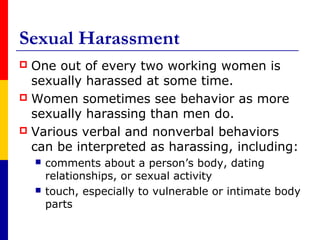
Sexual Harassment
 One out of every two working women is
  sexually harassed at some time.
 Women sometimes see behavior as more
  sexually harassing than men do.
 Various verbal and nonverbal behaviors
  can be interpreted as harassing, including:
       comments about a person’s body, dating
        relationships, or sexual activity
       touch, especially to vulnerable or intimate body
        parts
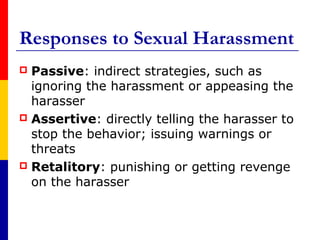
Responses to Sexual Harassment
 Passive: indirect strategies, such as
  ignoring the harassment or appeasing the
  harasser
 Assertive: directly telling the harasser to
  stop the behavior; issuing warnings or
  threats
 Retalitory: punishing or getting revenge
  on the harasser
 Based on what you learned in this chapter,
  what strategies would you use to protect
  yourself from sexual coercion or
  harassment?
 Why do you think people misinterpret
  supposed sexual cues so often?

sex

  • 1.
    Communicating Sexually TheClosest Physical Encounter
  • 2.
    What influences ourAttitudes Toward Sex?  Culture  The Mass Media  TV (16 and Pregnant, Bachelor)  Music (Lady Gaga & Kesha vs. Marvin Gaye & Al Green)  Print (Playboy vs. Cosmo)  Parents  Peers  Past Relationships
  • 3.
    Three General Orientations towardSex  Procreational: sex is for making babies  Recreational: sex is for fun  Relational: sex is an expression of intimacy What orientation is most accepted in the US?
  • 4.
    Changing Attitudes aboutSex  How have attitudes toward sex changed over the years?  Why do you think this is?  Is this good or bad?
  • 5.
    Safe Sex vs.Abstinence?
  • 6.
  • 7.
    http://www.youtube.com/watch?v=bL33hoaGM
  • 8.
    The Talk  When is the best time?  Are there consequences for starting the talks too young?  What should be said?  Why is there a debate on what schools should teach our children about sex?
  • 10.
    Sexual Invitations andCoercion  Why do men typically initiate sex in early relationships?  What is date rape?  The rape paradox~  If you come out  Victimized  If you stay quiet  Silenced  Both cases, Power is removed…  What do you think are some of the causes of date rape?
  • 11.
    What is sexualharassment? SEXUAL HARASSMENT
  • 12.
    Sexual Harassment  Oneout of every two working women is sexually harassed at some time.  Women sometimes see behavior as more sexually harassing than men do.  Various verbal and nonverbal behaviors can be interpreted as harassing, including:  comments about a person’s body, dating relationships, or sexual activity  touch, especially to vulnerable or intimate body parts
  • 13.
    Responses to SexualHarassment  Passive: indirect strategies, such as ignoring the harassment or appeasing the harasser  Assertive: directly telling the harasser to stop the behavior; issuing warnings or threats  Retalitory: punishing or getting revenge on the harasser
  • 14.
     Based onwhat you learned in this chapter, what strategies would you use to protect yourself from sexual coercion or harassment?  Why do you think people misinterpret supposed sexual cues so often?