Running head: SEXUAL HARASSMENT THROUGH SOCIAL MEDIA 1
Behind the Screen. Analyzing the Experiences and the Attitudes of Sexual Harassment through
Social Media among College Students
Elizabeth A. Glass
Southern Arkansas University
SEXUAL HARASSMENT THROUGH SOCIAL MEDIA 2
Abstract
Sexual harassment is a prevalent problem committed and suffered by many and college students
are no exception. Sexual harassment has many facets in which it can appear including social
media. Little research has been conducted, but college students may be at the mercy of a greater
amount of sexual harassment via social media. However, students attending universities
supported by federal funding are expected to be protected by Title IX through obligation to the
university. The purpose of this quantitative study was to accumulate experiences of and attitudes
from 50 college students (68.4% being females and 31.6% being males) attending Southern
Arkansas University (SAU) of what is thought to be sexual harassment through online social
media networks including, but not necessarily limited to Facebook, Instagram, Tinder, Tumblr,
Twitter, and Yik Yak. Observed objectives of this study included: do college students understand
what online sexual harassment via social media may include; do attitudes toward online sexual
harassment differ depending on gender; will there be a significant difference over which gender
experiences online sexual harassment more whether as the victim or perpetrator; do victims of
online sexual harassment report the sexual harassment; do college students know how to report
online sexual harassment. Quantitative data were utilized to determine differences of attitudes of
online sexual harassment based on any experiences or lack of experiences involving sexual
harassment as well as having an understanding as to what online sexual harassment includes. The
data collected was used to compare the differing experiences and attitudes among various groups
of SAU based on demographics.
Keywords: Sexual Harassment, Social Media, Bystander Effect, Title IX
SEXUAL HARASSMENT THROUGH SOCIAL MEDIA 3
Hiding Behind a Screen. Analyzing the Experiences and the Attitudes of Sexual Harassment
through Social Media among College Students
The rise in social media has made way for the rise of online sexual harassment.
Approximately 81% of all wireless internet users are young adults ages 18-29 and of those young
adults 72% use social networking applications and sites regularly (Lenhart, Purcell, Smith, &
Zickuhr 2010). Popular social media applications and websites may include Facebook, Twitter,
Instagram, Tinder, Tumblr, Yik Yak, and Snapchat. A statistical report carried out by Duggan
and Brenner depict that young adults dominate social media platforms with 86% using Facebook,
53% using Instagram (Duggan, Ellison, Lampe, Lenhart, & Madden 2015), 27% using Twitter,
and though no true study has been done for Snapchat, it’s suggested that 77% use the application
(Duggan & Brenner, 2012).
With social media reigning supreme among college students, it’s no surprise that sexual
harassment is an issue. The danger in social media is the ability to hide behind a screen, lying
about one’s age, gender, sexuality, income, or relationship status, but more frightening one’s
intentions all the while preserving the ability to remain totally anonymous with disguised names
or nameless altogether. Social media venues such as Snapchat allow users to send pictures and
videos with a maximum viewing limit of ten seconds. Any evidence of inappropriate sexual
misconduct disappears within that short time frame. Though posts to Facebook, Twitter, and
Instagram don’t disappear within seconds, it does not prevent harassers from taking advantage of
cyberspace to do their dirty work through.
One study found that 24% of females and 8% of males on a college campus had
experienced sexual harassment of some sort (Goodson, McCormick, & Evans, 2001). The issue
with these numbers is the lack of reporting sexual harassment. Often times sexual harassment
SEXUAL HARASSMENT THROUGH SOCIAL MEDIA 4
especially done over the internet is not recognized as sexual harassment: it’s not understood that
what has happened or is happening is wrong and needs to be reported.
Azy Barak, a researcher who studied sexual harassment that occurs offline and online,
broke sexual harassment down into three subgroups: gender harassment, unwanted sexual
attention, and sexual coercion. Gender harassment entails unsought insults in regards to gender
while unwanted sexual attention refers to the unsolicited mannerisms desiring sexual activities,
and sexual coercion involves the harasser pressuring an individual into sexual undertakings
which could even lead to punishment when rejected (Barak, 2005). Sexual harassment can be
defined beyond Barak’s subgroups. Sexual harassment also includes seductive behavior, sexual
bribery, and sexual imposition (Menon, 2015). Seductive behavior is unwelcome, inappropriate
and abhorrent advances in a sexual fashion. Sexual bribery is the solicitation of sex or other
sexual practices promising a repayment. Sexual imposition is carnal deception or harassment
that’s become assault (Menon, 2015).
Menon gathered data from 25% of full time students attending the university being
researched and nearly half were female and the majority ages 20-24. Findings presented that
females were much more likely than males to recognize sexual harassment as an issue and be the
victims of it. Of those who stated having experienced sexual harassment, only 25% told someone
else and most never made a formal complaint. African American woman are the most likely of
all women to experience sexual harassment (Kwesiga, Luthar, & Tata, 2008). Furthermore, a
study conducted showed that men have more tolerant attitudes towards sexual harassment and
viewed scenarios of sexual harassment of women to be exaggerated (Rankin & Reason, 2006).
These views may be skewed from not having enough understanding as to what sexual
harassment entails.
SEXUAL HARASSMENT THROUGH SOCIAL MEDIA 5
The lack of filing a formal complaint among college students is attributable to
embarrassment and the fear that action will not be taken to resolve the issue (Menon, 2015).
There’s a vicious cycle. Sexual harassment via the internet isn’t taken highly into account
(Citron, 2009) leading to the distress over action not being taken to put a stop to it; furthermore
resulting in a lack of reporting and unreliable data in regards to online sexual harassment.
Absence of reliable data may actually prevent law enforcement from intervening and answering
to complaints (Bocij, 2004).
Because online sexual harassment has been under researched, there is a lack of laws
protecting internet users in the instance of online sexual harassment (Franks, 2012). Even though
sexual harassment has unfortunately grown spreading virtually anywhere including the internet
and becoming more complex, laws in regards to sexual harassment need updating. Franks sheds
light on a major limitation of current laws; they only treat sexual harassment done in certain
public settings as true and punishable. Online sexual harassment is more often than not played
down by the public, lawmakers, and those who have not been harmed by the lasting effects of
sexual harassment (Citron, 2009). If victims don’t have laws protecting them, they won’t report
(Bocij, 2004) just as the 75% of females of Menon’s study felt they could not report.
The students surveyed for this research analyzing the experiences and attitudes of sexual
harassment through social media attend Southern Arkansas University (SAU). According to the
online SAU student handbook, sexual harassment is defined as a person bullying, speaking
distressing language, slanderous and/or defamatory language, or aggressive words to another
person(s), and also includes stalking. Sexual assault is closely related to sexual harassment in
that it can be a part of or the next up from harassment. The online SAU student handbook defines
sexual assault as attacking or threatening another person in a sexual mean as well as any threats
SEXUAL HARASSMENT THROUGH SOCIAL MEDIA 6
of physical contact, and making physical contact without consent. SAU is obligated under Title
IX to take initiative in the instance a victim reports such a case.
The purpose of this study is to gather the differing experiences and attitudes of male and
female college students attending SAU of what is considered to be sexual harassment through
online social media planes. Thus far minute research has been done targeting college students’
use of social media, the likelihood of sexual harassment, and whether or not the students
understand when sexual harassment has occurred or if they’ve been a harasser themselves.
When developing this study, five main research questions were considered: (a) Do
college students understand what sexual harassment is via the internet? (b) What are college
students’ opinions or attitudes in regards to online sexual harassment in general, as a victim, or
one who may have been a harasser? (c) What experiences do college students have with sexual
harassment online? (d) How many college students may have been accused of sexual harassment
themselves whether from the harassed individual, the university, and/or law enforcement? (e) Do
college students know what to do if they are the victims of sexual harassment through the
internet; do college students as bystanders know what to do if a peer is sexually harassed through
the internet?
This research is meant to provide SAU as a whole with information to better the
experience for college students even when they are online.
Hypotheses
1) Attitudes, opinions, and personal experiences of the participants will differ according to
gender.
2) Many participants will have actually experienced online sexual harassment.
SEXUAL HARASSMENT THROUGH SOCIAL MEDIA 7
3) Few participants will have actually been accused of and punished for online sexual
harassment even in the instance that sexual harassment had taken place.
4) Few participants will know what to do if they are the victim or a witness of sexual
harassment through the internet.
Methods
Instrument
For the purpose of this study, a survey was developed and conducted by the researcher in
order to gather data on the differing experiences and attitudes of college students attending SAU
on what is considered to be sexual harassment through social media. The survey consisted of six
demographic items including sex at birth, gender, race, classification, relationship status, and
age. Grouped with the demographic items was a single question requesting the participant to
check off various social media outlets they are currently using or have used in the past including:
Facebook, Instagram, Tinder, Tumblr, Twitter, and Yik Yak. Snapchat was excluded from this
survey, because many articles have heavily covered it’s relation to sexual activity. Thirty-six
questions were asked using the Likert-rating scale of “strongly agree”, “agree”, neutral”,
“disagree”, or “strongly disagree”. Of those thirty-six questions, twenty questions served as a
measurement as to what college students themselves believe to be online sexual harassment. The
remaining sixteen questions of the thirty-six measured college students’ attitudes in regards to
possible mindsets of sexual harassment that occurs online. Fourteen “yes” or “no” questions with
the occasional “not applicable” option drew on any personal experiences of online sexual
harassment including witnessing it or reporting it. One final question asked participants to rank
various social media planes 1 through 6 of where sexual harassment most often takes place based
on personal experience or from what is heard from others. “1” being the most likely, “2” being
SEXUAL HARASSMENT THROUGH SOCIAL MEDIA 8
very likely, “3” being likely, “4” being somewhat likely, “5” being not very likely, and “6” being
least likely. The instrument was peer reviewed twice by the Institutional Review Board (IRB)
comprised of several peers currently enrolled in Research Methods and those who had taken the
course in the past. Little changes were made, but included excluding three items that were
repetitive and rewording a few questions in order to be better understood and less wordy.
Additionally, an informed consent was provided in order to ethically request volunteers to
participate in the study while ensuring confidentiality to any and all surveys. A copy of the
informed consent is located in Appendix A while a copy of the instrument is located in Appendix
B.
Pilot Study
A pilot study was conducted prior to official data collection. The researcher conducted
the pilot study on a literature class that agree to participate and document any suggested edits.
Upon administering the survey, informed consent forms were distributed to the participants with
the thorough explanation that each survey would be kept confidential, remain anonymous, never
be traced back to the possible participant, and would be used for this research study only. After
signing the consent forms and completing the survey, the researcher reviewed the surveys for
possible feedback. No feedback required any further changes to be made. Data from the pilot
study was included in the final set of data.
Participants and Procedures
Participants included in this study were 50 undergraduate students enrolled at SAU.
Females made up the majority of participants (68.4%, n = 68) then males (31.6%, n = 31). There
were neither transgender males nor transgender females that participated in the study. The
SEXUAL HARASSMENT THROUGH SOCIAL MEDIA 9
sample consisted of mostly 3rd year students (59.2%, n = 29.6), then 4th year students (28.9%, n
= 14.45), followed by 2nd year students (9.2%, n =4.5), and lastly students of more than 4 years
(2.6%, n = 1.3). None of the participants were 1st year students. Participants were selected
outside of Peace Hall where most surveying usually takes place. Instead, participants were
selected based on which professors allowed the surveys to be given and which students of those
classes chose to take part. Three undergraduate classes were surveyed in total.
An informed consent was provided to all participants requesting that they read the form
in its entirety then sign and date the form if they agreed to participate. Just as the pilot study
participants, all volunteers were assured that each survey would be kept confidential, remain
anonymous, never be traced back to the possible participant, and would be used for this research
study only. The survey was the given to those who signed the informed consent form and agreed
to participate. The survey took approximately 15 minutes for the participants to complete. Upon
completion, the researcher asked if any participants had any further questions regarding the
survey. All survey and consent forms were collected and immediately entered into the computer
using the statistical program SPSS 24. After completion of each survey and prior to entering data
into SPSS, each survey was numbered with no association to the participant, but to further ensure
confidentiality and make data entry more organized and reliable. Participants’ names were never
used.
Results
The purpose of this quantitative study is to gather the differing experiences and attitudes
of male and female college students attending SAU of what is considered to be sexual
harassment through online social media planes. In order to gather a random sampling of
SEXUAL HARASSMENT THROUGH SOCIAL MEDIA 10
participants, the researcher surveyed three, diverse classes outside of the Psychology building
including one smaller literature class, one large nutrition class, and one large wellness class.
The ultimate goal of this study was to answer the following questions: do college students
understand what online sexual harassment via social media may include; do attitudes toward
online sexual harassment differ depending on gender; will there be a significant difference over
which gender experiences online sexual harassment more whether as the victim or perpetrator;
do victims of online sexual harassment report the sexual harassment; do college students know
how to report online sexual harassment.
Question 1
The first group of items (1 – 20) were set to measure what college students believed to be
online sexual harassment. Each statement in the first set queried for possible and various forms
of sexual harassment through social media (gender harassment, unwanted sexual attention,
sexual coercion, seductive behavior, sexual bribery, and sexual imposition). Items answered with
“strongly agree” or “agree” suggested the participants fully understood what can be considered
online sexual harassment which was the case; almost all participants answered with mostly
“strongly agree” or “agree”.
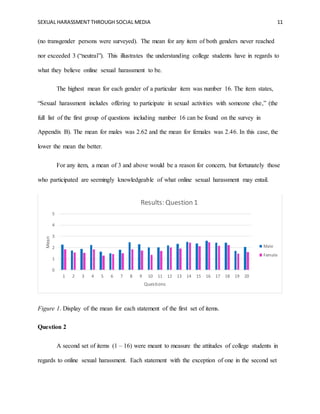
Figure 1 displays the mean for each statement answered in the first set of questions.
“Strongly agree” represents 1, “agree” represents 2, “neutral” represents 3, “disagree” represents
4, and “strongly disagree” represents 5. The abscissa is labeled “Questions” with numbers 1 – 20
representing each item. The ordinate is labeled “Mean” with numbers 0 – 5 representing the
mean based of the numbers coded to “strongly agree”, “agree”, “neutral”, “disagree”, and
“strongly disagree”. The blue columns represent males while the pink columns represent females
SEXUAL HARASSMENT THROUGH SOCIAL MEDIA 11
(no transgender persons were surveyed). The mean for any item of both genders never reached
nor exceeded 3 (“neutral”). This illustrates the understanding college students have in regards to
what they believe online sexual harassment to be.
The highest mean for each gender of a particular item was number 16. The item states,
“Sexual harassment includes offering to participate in sexual activities with someone else,” (the
full list of the first group of questions including number 16 can be found on the survey in
Appendix B). The mean for males was 2.62 and the mean for females was 2.46. In this case, the
lower the mean the better.
For any item, a mean of 3 and above would be a reason for concern, but fortunately those
who participated are seemingly knowledgeable of what online sexual harassment may entail.
Figure 1. Display of the mean for each statement of the first set of items.
Question 2
A second set of items (1 – 16) were meant to measure the attitudes of college students in
regards to online sexual harassment. Each statement with the exception of one in the second set
0
1
2
3
4
5
1 2 3 4 5 6 7 8 9 10 11 12 13 14 15 16 17 18 19 20
Mean
Questions
Results: Question 1
Male
Female
SEXUAL HARASSMENT THROUGH SOCIAL MEDIA 12
are common myths made about sexual harassment whether on or offline. Items answered with
“strongly disagree” or “disagree” suggested the participants fully understood that the statements
(myths) were not true. Most items were answered with “neutral” or “disagree” in this section.
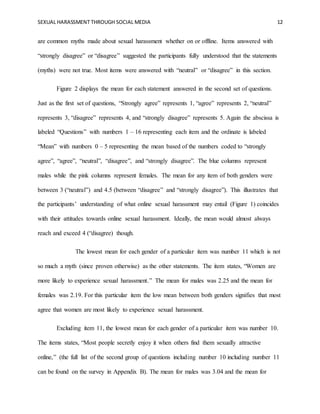
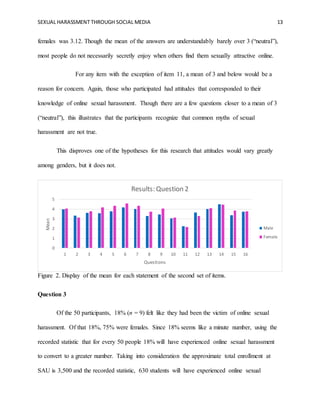
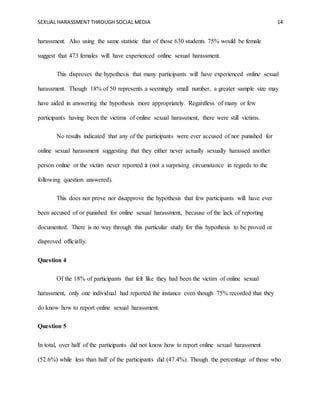
Figure 2 displays the mean for each statement answered in the second set of questions.
Just as the first set of questions, “Strongly agree” represents 1, “agree” represents 2, “neutral”
represents 3, “disagree” represents 4, and “strongly disagree” represents 5. Again the abscissa is
labeled “Questions” with numbers 1 – 16 representing each item and the ordinate is labeled
“Mean” with numbers 0 – 5 representing the mean based of the numbers coded to “strongly
agree”, “agree”, “neutral”, “disagree”, and “strongly disagree”. The blue columns represent
males while the pink columns represent females. The mean for any item of both genders were
between 3 (“neutral”) and 4.5 (between “disagree” and “strongly disagree”). This illustrates that
the participants’ understanding of what online sexual harassment may entail (Figure 1) coincides
with their attitudes towards online sexual harassment. Ideally, the mean would almost always
reach and exceed 4 (“disagree) though.
The lowest mean for each gender of a particular item was number 11 which is not
so much a myth (since proven otherwise) as the other statements. The item states, “Women are
more likely to experience sexual harassment.” The mean for males was 2.25 and the mean for
females was 2.19. For this particular item the low mean between both genders signifies that most
agree that women are most likely to experience sexual harassment.
Excluding item 11, the lowest mean for each gender of a particular item was number 10.
The items states, “Most people secretly enjoy it when others find them sexually attractive
online,” (the full list of the second group of questions including number 10 including number 11
can be found on the survey in Appendix B). The mean for males was 3.04 and the mean for
SEXUAL HARASSMENT THROUGH SOCIAL MEDIA 13
females was 3.12. Though the mean of the answers are understandably barely over 3 (“neutral”),
most people do not necessarily secretly enjoy when others find them sexually attractive online.
For any item with the exception of item 11, a mean of 3 and below would be a
reason for concern. Again, those who participated had attitudes that corresponded to their
knowledge of online sexual harassment. Though there are a few questions closer to a mean of 3
(“neutral”), this illustrates that the participants recognize that common myths of sexual
harassment are not true.
This disproves one of the hypotheses for this research that attitudes would vary greatly
among genders, but it does not.
Figure 2. Display of the mean for each statement of the second set of items.
Question 3
Of the 50 participants, 18% (n = 9) felt like they had been the victim of online sexual
harassment. Of that 18%, 75% were females. Since 18% seems like a minute number, using the
recorded statistic that for every 50 people 18% will have experienced online sexual harassment
to convert to a greater number. Taking into consideration the approximate total enrollment at
SAU is 3,500 and the recorded statistic, 630 students will have experienced online sexual
0
1
2
3
4
5
1 2 3 4 5 6 7 8 9 10 11 12 13 14 15 16
Mean
Questions
Results: Question 2
Male
Female
SEXUAL HARASSMENT THROUGH SOCIAL MEDIA 14
harassment. Also using the same statistic that of those 630 students 75% would be female
suggest that 473 females will have experienced online sexual harassment.
This disproves the hypothesis that many participants will have experienced online sexual
harassment. Though 18% of 50 represents a seemingly small number, a greater sample size may
have aided in answering the hypothesis more appropriately. Regardless of many or few
participants having been the victims of online sexual harassment, there were still victims.
No results indicated that any of the participants were ever accused of nor punished for
online sexual harassment suggesting that they either never actually sexually harassed another
person online or the victim never reported it (not a surprising circumstance in regards to the
following question answered).
This does not prove nor disapprove the hypothesis that few participants will have ever
been accused of or punished for online sexual harassment, because of the lack of reporting
documented. There is no way through this particular study for this hypothesis to be proved or
disproved officially.
Question 4
Of the 18% of participants that felt like they had been the victim of online sexual
harassment, only one individual had reported the instance even though 75% recorded that they
do know how to report online sexual harassment.
Question 5
In total, over half of the participants did not know how to report online sexual harassment
(52.6%) while less than half of the participants did (47.4%). Though the percentage of those who
SEXUAL HARASSMENT THROUGH SOCIAL MEDIA 15
know how to report online sexual harassment and those who do not know how to report are
close, it still strongly suggests students need to be better informed on how to report online sexual
harassment to the university.
Unfortunately, this proves the hypothesis that most participants will not know how to
report online sexual harassment. Though the numbers are relatively close, it would be ideal to
see a much greater number of those who knew how to report online sexual harassment as
opposed to those who did not.
Discussion
The ultimate purpose of this research was to gather the differing experiences and attitudes
of college students attending SAU of what is considered to be sexual harassment through social
media by presenting various statements that required a “strongly agree”, “agree”, “neutral”,
“disagree”, or “strongly disagree” answer. Additionally, statements that required a “yes” or “no”
answer were presented to further gather differing experiences in regards to online sexual
harassment. In addition to noting differences between males and females, the study was also
constructed to see if there was a difference of experiences and attitudes of different races,
classifications, relationship status, and age. This research is meant to provide SAU as a whole
with information to better the experience for college students even when they are online as well
as educate students on Title IX in order to promote a safe and comfortable environment.
Facebook was the most used social media among the participants (97% were
users). Instagram at a close second (94%) followed by Twitter (85%), Tumblr (23%), Yik Yak
(21%), and Tinder (15%). Participants ranked each plane of social media by what they
considered or had heard from others to be the platform where the most sexual harassment does or
SEXUAL HARASSMENT THROUGH SOCIAL MEDIA 16
would occur. A rank of 1 – 6 was used to rank the six social medias listed (1 being the most
likely and 6 being the least likely). Though only 15% of the participants use Tinder, it was
considered to be the most likely (44% ranking it number 1) of social medias for sexual
harassment to take place. Tumblr was considered the least likely (35% ranking it number 6) of
social medias for sexual harassment to take place.
Results of the research indicated that fortunately most students seemed to understand
what online sexual harassment included. Also, many students had not experienced online sexual
harassment themselves, but of those who did only 2.25% reported it. 40.8% circled “yes” to
having witnessed online sexual harassment, but of those 40.8% only 6.6% intervened to defend
the victim presenting the bystander effect even online to be a great issue.
Though each participant ranked each social media accordingly, some participants may
have never used certain social medias. Though they were requested to rank each social media by
personal experience or from what they hear from others, they could not have been completely
sure having not utilized certain social medias. After reviewing and documenting all the data, this
could be perceived as a limitation.
No significant differences between race, classification, nor age were obvious with the
questions presented. Any significant differences that occurred, took place between gender (male
and female – no participants were transgender) or relationship status (in a relationship or single
were the two most prevalent statuses). A particular item in regards to a gender difference answer
was, “Sexual harassment includes: Making comment on a particular person’s post about sex and
sexual actions.” The significant difference between males and females were merely that males
mostly answered with “agree” and females mostly answered with “strongly agree”. Any and all
items concerning gender differences were this way. A particular item in regards to a relationship
SEXUAL HARASSMENT THROUGH SOCIAL MEDIA 17
status difference answer was, “Most are flattered when they get sexual attention from others
online.” Those in a relationship answered with “agree” while those who are single answered with
“neutral” which was the case with any and all other items concerning relationship status
differences.
From this study it could not be determined that African American females experience
sexual harassment more often than any other gender or race as Kwesiga, Luthar, and Tata had
previously documented (2008). The sample size would need to be greater in order to properly
determine if that were the case on SAU’s campus.
Also in regards to previous research of Menon (2015), females did not particularly
heavily recognize sexual harassment over males, but did more often answer with “strongly
agree” or “strongly disagree” when the answer to an item would ideally be “strongly agree” or
“agree” and “strongly disagree” or “disagree” whereas males usually answered “agree” or
“disagree”. Again, the sample size would need to be greater in order to see a significant
difference if any were present at all. Additionally, from this study males did not present to be
more tolerant of sexual harassment than females nor did males show to believe that reports of
sexual harassment are exaggerated. In fact, question 5 of the second set of items stated, “People
who have claimed they have been sexually harassed are usually exaggerating.” The statement
required an answer of “strongly agree”, “agree”, “neutral”, “disagree”, and “strongly disagree”.
18 participants responded with “strongly disagree”, 23 with “disagree” 5 with “neutral”, 3 with
“agree”, and 1 with “strongly agree”. All females answered with “disagree” or “strongly
disagree” with the exception of 3 who answered “neutral”. Males also mostly answered with
“disagree” and “strongly disagree” except 2 who answered “neutral”, 3 who answered “agree”,
and 1 who answered “strongly agree”. This would be the only bit of information that would
SEXUAL HARASSMENT THROUGH SOCIAL MEDIA 18
suggest that males would believe claims of sexual harassment to be exaggerated, but it’s not very
strong data. It would be best had the sample size been greater and not just doubled, but even
greater.
73.7% of participants are aware of what Title IX is and 61.8% are aware of SAU’s
obligation to take initiative in the instance a victim reports a case of sexual harassment even via
social media. This suggests that most participants have been well versed in regards to their
safety. Students do need more educating in how to report online sexual harassment to the school
in the instance of sexual harassment occurring. Additionally, they need to be assured and
informed of their rights to privacy and protection as a student of SAU as well as the Title IX
committee and other resources.
SEXUAL HARASSMENT THROUGH SOCIAL MEDIA 19
References
Barak, A. (2005) Sexual harassment on the internet. Social Science Computer Review, 23(1). 77-
92
Bocij, P. (2004) Camgirls, blogs, and wish lists: How young people are courting danger on
the internet. Safer Communities, 3(3). 16-22
Brenner, J., & Duggan, M. (2013) The demographics of social media users: 2012. Pew Research,
1-14
Citron, D. (2009). Law’s expressive value in combating cyber gender harassment. Michigan Law
Review, 108(3). 373-415
Duggan, M., Ellison, N.B., Lampe, C., Lenhart, A., & Madden, M. (2015). Social media update
2014. Pew Research, 1-17
Franks, M. (2012). Sexual Harassment 2.0. Maryland Law Review, 71(3)
Goodson, P. Deborah, M. & Evans, A. (2001). Searching for sexually explicit materials on the
internet: An exploratory study of college student’s behavior and attitudes. Archives of
Sexual Behavior, 30(2), 101-118
Kwesiga, E., Luthar, H. K., & Tata, J. (2008). A model for predicting outcomes of sexual
harassment complaints by race and gender. Employ Respons Rights, 21, 21-35
Lenhart, A., Purcell, K., Smith, A., & Zickuhr, K. (2010). Social media and mobile internet use
among teens and young adults, Pew Research, 1-51
Menon, J. A. (2015) Sexual harassment: A myth or reality in academia? Annamalai International
Journal of Business Studies and Research, 27-29
SEXUAL HARASSMENT THROUGH SOCIAL MEDIA 20
Rankin, S. R., & Reason, R. D. (2006). College students’ experiences and perceptions of
harassment on campus: An exploration of gender differences. The College Student Affairs
Journal, 1, 12-13.
SEXUAL HARASSMENT THROUGH SOCIAL MEDIA 21
Appendix A
Participant Informed Consent Form
You are invited to take part in a research study.You were chosen for the study because of yourstatus as a college
student.Please read this form and ask questions you may have before acting on this invitation to be in the study.
This study is being conducted by Southern Arkansas University (SAU) student Elizabeth Glass.
Background Information:
The purpose of this quantitative study is to gather the differing experiences and attitudes of sexual harassment
through social media among college students attending Southern Arkansas University. Results of the study will be
accessible to all participants and the general public.
Procedures:
If you agree to participate in this study,you will be asked to complete a survey designed by the researcher. The
survey consists ofconfidential demographic information, fifty-one items, and will take approximately 15 minutes to
complete.
Voluntary Nature of Study:
Your participation in this study is voluntary. This means that your decision will be respected whether or not y ou
choose to participate in the study.No one at SAU or affiliated with you will treat you differently based on your
decision to participate or not.If you decide to consent now,you can still change your mind later. No incentives will
be provided for participating in research.
Risks and Benefits of Being in the Study:
There are no risks or benefits to participating in the study.In the event you experience distress or anxiety during
your participation in the study,you may terminate your participation at any time. You may refuse to answer any
questions you considerinvasive or stressful
Compensation:
There will be no incentives for participating in this research.
Confidentiality:
Any information you provide will be kept confidential. In any report of this study that might be published, the
researcher will not include any information that will make it possible to identify a participant. Confidentiality is
further ensured by not asking participants for their names.
Contacts and Questions:
You may ask questions nowor if you have questions later, you may contact the researcher at
eaglass1488@muleriders.saumag.edu. You may also contact Dr. Deborah Wilson, Chair of Behavioral & Social
Sciences and Title IX member at djwilson@saumag.edu or by phone at 870-235-4324.
Statement of Consent:
I have read the above information and feel I understand the study well enough to make a decision about my
involvement. My signature below indicates I am agreeing to the terms described above and consent to participate in
the study.
Signature of Participant: ________________________________________ Date:________________
SEXUAL HARASSMENT THROUGH SOCIAL MEDIA 22
Appendix B
Please circle the answer that applies to you. All responses are confidential.
Sex at Birth: Male Female
Gender: Male Female Transgender Male Transgender Female
Race: African African-American Asian/Pacific Islander Caucasian
Hispanic Middle Eastern Native American
Classification: 1st
Year 2nd
Year 3rd
Year 4th
Year 4th
Year +
Relationship Status: Cohabitating In a Relationship Married Open Relationship
Single Married – Separated Single – Divorced
Age: ________
Check all that apply:
I use or have used:
__ Facebook __ Instagram __ Tinder __ Tumblr __ Twitter __ Yik Yak
This portion of the survey is a measurement of what college students themselves believe to be online
sexual harassment.
Online sexual harassment includes:
1. Sexist comments.
Strongly Agree Agree Neutral Disagree Strongly Disagree
2. Sending pictures of sexual body parts to someone without asking them first.
Strongly Agree Agree Neutral Disagree Strongly Disagree
3. Asking for pictures of sexual body parts from strangers.
Strongly Agree Agree Neutral Disagree Strongly Disagree
4. Asking for pictures of sexual body parts from friends.
Strongly Agree Agree Neutral Disagree Strongly Disagree
SEXUAL HARASSMENT THROUGH SOCIAL MEDIA 23
5. Not taking “no” for an answer when denied sexual images, sexual conversation, or physical
sexual contact.
Strongly Agree Agree Neutral Disagree Strongly Disagree
6. Posting sexual images of someone that they had privately shared with another person.
Strongly Agree Agree Neutral Disagree Strongly Disagree
7. Threatening rape even as a joke.
Strongly Agree Agree Neutral Disagree Strongly Disagree
8. Making comments on a particular person’s posts about sex and sexual actions.
Strongly Agree Agree Neutral Disagree Strongly Disagree
9. Making comments on a person’s posts about sex and sexual actions with that person.
Strongly Agree Agree Neutral Disagree Strongly Disagree
10. Sending pornographic content to others randomly or without warning.
Strongly Agree Agree Neutral Disagree Strongly Disagree
11. Posting links that are supposed to lead to one site, but lead to a pornographic site instead.
Strongly Agree Agree Neutral Disagree Strongly Disagree
12. Making reference to one’s own sexual body parts to someone else.
Strongly Agree Agree Neutral Disagree Strongly Disagree
13. Making reference to someone else’s sexual body parts to that person.
Strongly Agree Agree Neutral Disagree Strongly Disagree
14. Making reference to one’s own sex life to someone else.
Strongly Agree Agree Neutral Disagree Strongly Disagree
15. Making reference to someone else’s sex life to that person.
Strongly Agree Agree Neutral Disagree Strongly Disagree
16. Offering to participate in sexual activities with someone else.
Strongly Agree Agree Neutral Disagree Strongly Disagree
17. Insinuating participating in sexual activities with someone else.
Strongly Agree Agree Neutral Disagree Strongly Disagree
18. Posting or sending drawings of nudity for others to see.
Strongly Agree Agree Neutral Disagree Strongly Disagree
19. Threatening harm to others in order to get sex.
SEXUAL HARASSMENT THROUGH SOCIAL MEDIA 24
Strongly Agree Agree Neutral Disagree Strongly Disagree
20. Offering a reward to others in order to get sex.
Strongly Agree Agree Neutral Disagree Strongly Disagree
This portion of the survey is a measurement of college students’ attitudes in regards to possible
mindsets in regards to sexual harassment that occurs online.
1. If a person does not make a complaint, it probably was not serious enough to be sexual
harassment.
Strongly Agree Agree Neutral Disagree Strongly Disagree
2. Most people are flattered when they get sexual attention from others online.
Strongly Agree Agree Neutral Disagree Strongly Disagree
3. People should not take offense when a person expresses sexual interest online.
Strongly Agree Agree Neutral Disagree Strongly Disagree
4. People who claim sexual harassment have usually done something to cause it.
Strongly Agree Agree Neutral Disagree Strongly Disagree
5. People who claim that they have been sexually harassed are usually exaggerating.
Strongly Agree Agree Neutral Disagree Strongly Disagree
6. Claims of online sexual harassment should not be taken too seriously.
Strongly Agree Agree Neutral Disagree Strongly Disagree
7. People who wait several weeks or months to report sexual harassment are probably just making it
up.
Strongly Agree Agree Neutral Disagree Strongly Disagree
8. People can usually stop unwanted sexual attention by simply telling the person that their behavior
is unwanted.
Strongly Agree Agree Neutral Disagree Strongly Disagree
9. Nearly all instances of sexual harassment would end if the person simply told the harasser to stop.
Strongly Agree Agree Neutral Disagree Strongly Disagree
10. Most people secretly enjoy it when others find them sexually attractive online.
Strongly Agree Agree Neutral Disagree Strongly Disagree
11. Women are more likely to experience sexual harassment.
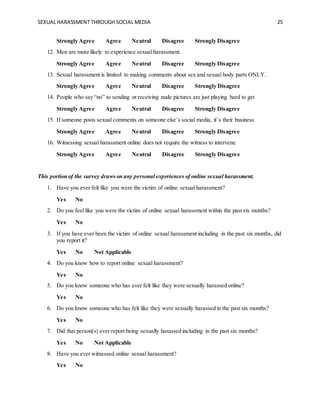
SEXUAL HARASSMENT THROUGH SOCIAL MEDIA 25
Strongly Agree Agree Neutral Disagree Strongly Disagree
12. Men are more likely to experience sexual harassment.
Strongly Agree Agree Neutral Disagree Strongly Disagree
13. Sexual harassment is limited to making comments about sex and sexual body parts ONLY.
Strongly Agree Agree Neutral Disagree Strongly Disagree
14. People who say “no” to sending or receiving nude pictures are just playing hard to get
Strongly Agree Agree Neutral Disagree Strongly Disagree
15. If someone posts sexual comments on someone else’s social media, it’s their business
Strongly Agree Agree Neutral Disagree Strongly Disagree
16. Witnessing sexual harassment online does not require the witness to intervene
Strongly Agree Agree Neutral Disagree Strongly Disagree
This portion of the survey drawson any personal experiences of online sexual harassment.
1. Have you ever felt like you were the victim of online sexual harassment?
Yes No
2. Do you feel like you were the victim of online sexual harassment within the past six months?
Yes No
3. If you have ever been the victim of online sexual harassment including in the past six months, did
you report it?
Yes No Not Applicable
4. Do you know how to report online sexual harassment?
Yes No
5. Do you know someone who has ever felt like they were sexually harassed online?
Yes No
6. Do you know someone who has felt like they were sexually harassed in the past six months?
Yes No
7. Did that person(s) ever report being sexually harassed including in the past six months?
Yes No Not Applicable
8. Have you ever witnessed online sexual harassment?
Yes No
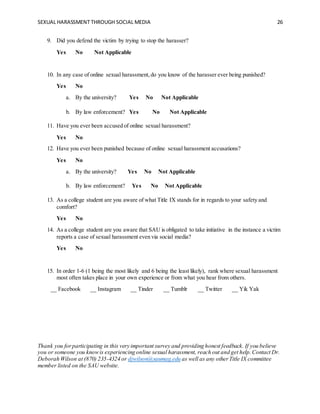
SEXUAL HARASSMENT THROUGH SOCIAL MEDIA 26
9. Did you defend the victim by trying to stop the harasser?
Yes No Not Applicable
10. In any case of online sexual harassment,do you know of the harasser ever being punished?
Yes No
a. By the university? Yes No Not Applicable
b. By law enforcement? Yes No Not Applicable
11. Have you ever been accused of online sexual harassment?
Yes No
12. Have you ever been punished because of online sexual harassment accusations?
Yes No
a. By the university? Yes No Not Applicable
b. By law enforcement? Yes No Not Applicable
13. As a college student are you aware of what Title IX stands for in regards to your safety and
comfort?
Yes No
14. As a college student are you aware that SAU is obligated to take initiative in the instance a victim
reports a case of sexual harassment even via social media?
Yes No
15. In order 1-6 (1 being the most likely and 6 being the least likely), rank where sexual harassment
most often takes place in your own experience or from what you hear from others.
__ Facebook __ Instagram __ Tinder __ Tumblr __ Twitter __ Yik Yak
Thank you forparticipating in this very important survey and providing honest feedback. If you believe
you or someone you knowis experiencing online sexual harassment, reach out and get help.Contact Dr.
Deborah Wilson at (870) 235-4324 or djwilson@saumag.edu as well as any otherTitle IX committee
member listed on the SAU website.

Glass RM Spring 2016 Final

  • 1.
    Running head: SEXUALHARASSMENT THROUGH SOCIAL MEDIA 1 Behind the Screen. Analyzing the Experiences and the Attitudes of Sexual Harassment through Social Media among College Students Elizabeth A. Glass Southern Arkansas University
  • 2.
    SEXUAL HARASSMENT THROUGHSOCIAL MEDIA 2 Abstract Sexual harassment is a prevalent problem committed and suffered by many and college students are no exception. Sexual harassment has many facets in which it can appear including social media. Little research has been conducted, but college students may be at the mercy of a greater amount of sexual harassment via social media. However, students attending universities supported by federal funding are expected to be protected by Title IX through obligation to the university. The purpose of this quantitative study was to accumulate experiences of and attitudes from 50 college students (68.4% being females and 31.6% being males) attending Southern Arkansas University (SAU) of what is thought to be sexual harassment through online social media networks including, but not necessarily limited to Facebook, Instagram, Tinder, Tumblr, Twitter, and Yik Yak. Observed objectives of this study included: do college students understand what online sexual harassment via social media may include; do attitudes toward online sexual harassment differ depending on gender; will there be a significant difference over which gender experiences online sexual harassment more whether as the victim or perpetrator; do victims of online sexual harassment report the sexual harassment; do college students know how to report online sexual harassment. Quantitative data were utilized to determine differences of attitudes of online sexual harassment based on any experiences or lack of experiences involving sexual harassment as well as having an understanding as to what online sexual harassment includes. The data collected was used to compare the differing experiences and attitudes among various groups of SAU based on demographics. Keywords: Sexual Harassment, Social Media, Bystander Effect, Title IX
  • 3.
    SEXUAL HARASSMENT THROUGHSOCIAL MEDIA 3 Hiding Behind a Screen. Analyzing the Experiences and the Attitudes of Sexual Harassment through Social Media among College Students The rise in social media has made way for the rise of online sexual harassment. Approximately 81% of all wireless internet users are young adults ages 18-29 and of those young adults 72% use social networking applications and sites regularly (Lenhart, Purcell, Smith, & Zickuhr 2010). Popular social media applications and websites may include Facebook, Twitter, Instagram, Tinder, Tumblr, Yik Yak, and Snapchat. A statistical report carried out by Duggan and Brenner depict that young adults dominate social media platforms with 86% using Facebook, 53% using Instagram (Duggan, Ellison, Lampe, Lenhart, & Madden 2015), 27% using Twitter, and though no true study has been done for Snapchat, it’s suggested that 77% use the application (Duggan & Brenner, 2012). With social media reigning supreme among college students, it’s no surprise that sexual harassment is an issue. The danger in social media is the ability to hide behind a screen, lying about one’s age, gender, sexuality, income, or relationship status, but more frightening one’s intentions all the while preserving the ability to remain totally anonymous with disguised names or nameless altogether. Social media venues such as Snapchat allow users to send pictures and videos with a maximum viewing limit of ten seconds. Any evidence of inappropriate sexual misconduct disappears within that short time frame. Though posts to Facebook, Twitter, and Instagram don’t disappear within seconds, it does not prevent harassers from taking advantage of cyberspace to do their dirty work through. One study found that 24% of females and 8% of males on a college campus had experienced sexual harassment of some sort (Goodson, McCormick, & Evans, 2001). The issue with these numbers is the lack of reporting sexual harassment. Often times sexual harassment
  • 4.
    SEXUAL HARASSMENT THROUGHSOCIAL MEDIA 4 especially done over the internet is not recognized as sexual harassment: it’s not understood that what has happened or is happening is wrong and needs to be reported. Azy Barak, a researcher who studied sexual harassment that occurs offline and online, broke sexual harassment down into three subgroups: gender harassment, unwanted sexual attention, and sexual coercion. Gender harassment entails unsought insults in regards to gender while unwanted sexual attention refers to the unsolicited mannerisms desiring sexual activities, and sexual coercion involves the harasser pressuring an individual into sexual undertakings which could even lead to punishment when rejected (Barak, 2005). Sexual harassment can be defined beyond Barak’s subgroups. Sexual harassment also includes seductive behavior, sexual bribery, and sexual imposition (Menon, 2015). Seductive behavior is unwelcome, inappropriate and abhorrent advances in a sexual fashion. Sexual bribery is the solicitation of sex or other sexual practices promising a repayment. Sexual imposition is carnal deception or harassment that’s become assault (Menon, 2015). Menon gathered data from 25% of full time students attending the university being researched and nearly half were female and the majority ages 20-24. Findings presented that females were much more likely than males to recognize sexual harassment as an issue and be the victims of it. Of those who stated having experienced sexual harassment, only 25% told someone else and most never made a formal complaint. African American woman are the most likely of all women to experience sexual harassment (Kwesiga, Luthar, & Tata, 2008). Furthermore, a study conducted showed that men have more tolerant attitudes towards sexual harassment and viewed scenarios of sexual harassment of women to be exaggerated (Rankin & Reason, 2006). These views may be skewed from not having enough understanding as to what sexual harassment entails.
  • 5.
    SEXUAL HARASSMENT THROUGHSOCIAL MEDIA 5 The lack of filing a formal complaint among college students is attributable to embarrassment and the fear that action will not be taken to resolve the issue (Menon, 2015). There’s a vicious cycle. Sexual harassment via the internet isn’t taken highly into account (Citron, 2009) leading to the distress over action not being taken to put a stop to it; furthermore resulting in a lack of reporting and unreliable data in regards to online sexual harassment. Absence of reliable data may actually prevent law enforcement from intervening and answering to complaints (Bocij, 2004). Because online sexual harassment has been under researched, there is a lack of laws protecting internet users in the instance of online sexual harassment (Franks, 2012). Even though sexual harassment has unfortunately grown spreading virtually anywhere including the internet and becoming more complex, laws in regards to sexual harassment need updating. Franks sheds light on a major limitation of current laws; they only treat sexual harassment done in certain public settings as true and punishable. Online sexual harassment is more often than not played down by the public, lawmakers, and those who have not been harmed by the lasting effects of sexual harassment (Citron, 2009). If victims don’t have laws protecting them, they won’t report (Bocij, 2004) just as the 75% of females of Menon’s study felt they could not report. The students surveyed for this research analyzing the experiences and attitudes of sexual harassment through social media attend Southern Arkansas University (SAU). According to the online SAU student handbook, sexual harassment is defined as a person bullying, speaking distressing language, slanderous and/or defamatory language, or aggressive words to another person(s), and also includes stalking. Sexual assault is closely related to sexual harassment in that it can be a part of or the next up from harassment. The online SAU student handbook defines sexual assault as attacking or threatening another person in a sexual mean as well as any threats
  • 6.
    SEXUAL HARASSMENT THROUGHSOCIAL MEDIA 6 of physical contact, and making physical contact without consent. SAU is obligated under Title IX to take initiative in the instance a victim reports such a case. The purpose of this study is to gather the differing experiences and attitudes of male and female college students attending SAU of what is considered to be sexual harassment through online social media planes. Thus far minute research has been done targeting college students’ use of social media, the likelihood of sexual harassment, and whether or not the students understand when sexual harassment has occurred or if they’ve been a harasser themselves. When developing this study, five main research questions were considered: (a) Do college students understand what sexual harassment is via the internet? (b) What are college students’ opinions or attitudes in regards to online sexual harassment in general, as a victim, or one who may have been a harasser? (c) What experiences do college students have with sexual harassment online? (d) How many college students may have been accused of sexual harassment themselves whether from the harassed individual, the university, and/or law enforcement? (e) Do college students know what to do if they are the victims of sexual harassment through the internet; do college students as bystanders know what to do if a peer is sexually harassed through the internet? This research is meant to provide SAU as a whole with information to better the experience for college students even when they are online. Hypotheses 1) Attitudes, opinions, and personal experiences of the participants will differ according to gender. 2) Many participants will have actually experienced online sexual harassment.
  • 7.
    SEXUAL HARASSMENT THROUGHSOCIAL MEDIA 7 3) Few participants will have actually been accused of and punished for online sexual harassment even in the instance that sexual harassment had taken place. 4) Few participants will know what to do if they are the victim or a witness of sexual harassment through the internet. Methods Instrument For the purpose of this study, a survey was developed and conducted by the researcher in order to gather data on the differing experiences and attitudes of college students attending SAU on what is considered to be sexual harassment through social media. The survey consisted of six demographic items including sex at birth, gender, race, classification, relationship status, and age. Grouped with the demographic items was a single question requesting the participant to check off various social media outlets they are currently using or have used in the past including: Facebook, Instagram, Tinder, Tumblr, Twitter, and Yik Yak. Snapchat was excluded from this survey, because many articles have heavily covered it’s relation to sexual activity. Thirty-six questions were asked using the Likert-rating scale of “strongly agree”, “agree”, neutral”, “disagree”, or “strongly disagree”. Of those thirty-six questions, twenty questions served as a measurement as to what college students themselves believe to be online sexual harassment. The remaining sixteen questions of the thirty-six measured college students’ attitudes in regards to possible mindsets of sexual harassment that occurs online. Fourteen “yes” or “no” questions with the occasional “not applicable” option drew on any personal experiences of online sexual harassment including witnessing it or reporting it. One final question asked participants to rank various social media planes 1 through 6 of where sexual harassment most often takes place based on personal experience or from what is heard from others. “1” being the most likely, “2” being
  • 8.
    SEXUAL HARASSMENT THROUGHSOCIAL MEDIA 8 very likely, “3” being likely, “4” being somewhat likely, “5” being not very likely, and “6” being least likely. The instrument was peer reviewed twice by the Institutional Review Board (IRB) comprised of several peers currently enrolled in Research Methods and those who had taken the course in the past. Little changes were made, but included excluding three items that were repetitive and rewording a few questions in order to be better understood and less wordy. Additionally, an informed consent was provided in order to ethically request volunteers to participate in the study while ensuring confidentiality to any and all surveys. A copy of the informed consent is located in Appendix A while a copy of the instrument is located in Appendix B. Pilot Study A pilot study was conducted prior to official data collection. The researcher conducted the pilot study on a literature class that agree to participate and document any suggested edits. Upon administering the survey, informed consent forms were distributed to the participants with the thorough explanation that each survey would be kept confidential, remain anonymous, never be traced back to the possible participant, and would be used for this research study only. After signing the consent forms and completing the survey, the researcher reviewed the surveys for possible feedback. No feedback required any further changes to be made. Data from the pilot study was included in the final set of data. Participants and Procedures Participants included in this study were 50 undergraduate students enrolled at SAU. Females made up the majority of participants (68.4%, n = 68) then males (31.6%, n = 31). There were neither transgender males nor transgender females that participated in the study. The
  • 9.
    SEXUAL HARASSMENT THROUGHSOCIAL MEDIA 9 sample consisted of mostly 3rd year students (59.2%, n = 29.6), then 4th year students (28.9%, n = 14.45), followed by 2nd year students (9.2%, n =4.5), and lastly students of more than 4 years (2.6%, n = 1.3). None of the participants were 1st year students. Participants were selected outside of Peace Hall where most surveying usually takes place. Instead, participants were selected based on which professors allowed the surveys to be given and which students of those classes chose to take part. Three undergraduate classes were surveyed in total. An informed consent was provided to all participants requesting that they read the form in its entirety then sign and date the form if they agreed to participate. Just as the pilot study participants, all volunteers were assured that each survey would be kept confidential, remain anonymous, never be traced back to the possible participant, and would be used for this research study only. The survey was the given to those who signed the informed consent form and agreed to participate. The survey took approximately 15 minutes for the participants to complete. Upon completion, the researcher asked if any participants had any further questions regarding the survey. All survey and consent forms were collected and immediately entered into the computer using the statistical program SPSS 24. After completion of each survey and prior to entering data into SPSS, each survey was numbered with no association to the participant, but to further ensure confidentiality and make data entry more organized and reliable. Participants’ names were never used. Results The purpose of this quantitative study is to gather the differing experiences and attitudes of male and female college students attending SAU of what is considered to be sexual harassment through online social media planes. In order to gather a random sampling of
  • 10.
    SEXUAL HARASSMENT THROUGHSOCIAL MEDIA 10 participants, the researcher surveyed three, diverse classes outside of the Psychology building including one smaller literature class, one large nutrition class, and one large wellness class. The ultimate goal of this study was to answer the following questions: do college students understand what online sexual harassment via social media may include; do attitudes toward online sexual harassment differ depending on gender; will there be a significant difference over which gender experiences online sexual harassment more whether as the victim or perpetrator; do victims of online sexual harassment report the sexual harassment; do college students know how to report online sexual harassment. Question 1 The first group of items (1 – 20) were set to measure what college students believed to be online sexual harassment. Each statement in the first set queried for possible and various forms of sexual harassment through social media (gender harassment, unwanted sexual attention, sexual coercion, seductive behavior, sexual bribery, and sexual imposition). Items answered with “strongly agree” or “agree” suggested the participants fully understood what can be considered online sexual harassment which was the case; almost all participants answered with mostly “strongly agree” or “agree”. Figure 1 displays the mean for each statement answered in the first set of questions. “Strongly agree” represents 1, “agree” represents 2, “neutral” represents 3, “disagree” represents 4, and “strongly disagree” represents 5. The abscissa is labeled “Questions” with numbers 1 – 20 representing each item. The ordinate is labeled “Mean” with numbers 0 – 5 representing the mean based of the numbers coded to “strongly agree”, “agree”, “neutral”, “disagree”, and “strongly disagree”. The blue columns represent males while the pink columns represent females
  • 11.
    SEXUAL HARASSMENT THROUGHSOCIAL MEDIA 11 (no transgender persons were surveyed). The mean for any item of both genders never reached nor exceeded 3 (“neutral”). This illustrates the understanding college students have in regards to what they believe online sexual harassment to be. The highest mean for each gender of a particular item was number 16. The item states, “Sexual harassment includes offering to participate in sexual activities with someone else,” (the full list of the first group of questions including number 16 can be found on the survey in Appendix B). The mean for males was 2.62 and the mean for females was 2.46. In this case, the lower the mean the better. For any item, a mean of 3 and above would be a reason for concern, but fortunately those who participated are seemingly knowledgeable of what online sexual harassment may entail. Figure 1. Display of the mean for each statement of the first set of items. Question 2 A second set of items (1 – 16) were meant to measure the attitudes of college students in regards to online sexual harassment. Each statement with the exception of one in the second set 0 1 2 3 4 5 1 2 3 4 5 6 7 8 9 10 11 12 13 14 15 16 17 18 19 20 Mean Questions Results: Question 1 Male Female
  • 12.
    SEXUAL HARASSMENT THROUGHSOCIAL MEDIA 12 are common myths made about sexual harassment whether on or offline. Items answered with “strongly disagree” or “disagree” suggested the participants fully understood that the statements (myths) were not true. Most items were answered with “neutral” or “disagree” in this section. Figure 2 displays the mean for each statement answered in the second set of questions. Just as the first set of questions, “Strongly agree” represents 1, “agree” represents 2, “neutral” represents 3, “disagree” represents 4, and “strongly disagree” represents 5. Again the abscissa is labeled “Questions” with numbers 1 – 16 representing each item and the ordinate is labeled “Mean” with numbers 0 – 5 representing the mean based of the numbers coded to “strongly agree”, “agree”, “neutral”, “disagree”, and “strongly disagree”. The blue columns represent males while the pink columns represent females. The mean for any item of both genders were between 3 (“neutral”) and 4.5 (between “disagree” and “strongly disagree”). This illustrates that the participants’ understanding of what online sexual harassment may entail (Figure 1) coincides with their attitudes towards online sexual harassment. Ideally, the mean would almost always reach and exceed 4 (“disagree) though. The lowest mean for each gender of a particular item was number 11 which is not so much a myth (since proven otherwise) as the other statements. The item states, “Women are more likely to experience sexual harassment.” The mean for males was 2.25 and the mean for females was 2.19. For this particular item the low mean between both genders signifies that most agree that women are most likely to experience sexual harassment. Excluding item 11, the lowest mean for each gender of a particular item was number 10. The items states, “Most people secretly enjoy it when others find them sexually attractive online,” (the full list of the second group of questions including number 10 including number 11 can be found on the survey in Appendix B). The mean for males was 3.04 and the mean for
  • 13.
    SEXUAL HARASSMENT THROUGHSOCIAL MEDIA 13 females was 3.12. Though the mean of the answers are understandably barely over 3 (“neutral”), most people do not necessarily secretly enjoy when others find them sexually attractive online. For any item with the exception of item 11, a mean of 3 and below would be a reason for concern. Again, those who participated had attitudes that corresponded to their knowledge of online sexual harassment. Though there are a few questions closer to a mean of 3 (“neutral”), this illustrates that the participants recognize that common myths of sexual harassment are not true. This disproves one of the hypotheses for this research that attitudes would vary greatly among genders, but it does not. Figure 2. Display of the mean for each statement of the second set of items. Question 3 Of the 50 participants, 18% (n = 9) felt like they had been the victim of online sexual harassment. Of that 18%, 75% were females. Since 18% seems like a minute number, using the recorded statistic that for every 50 people 18% will have experienced online sexual harassment to convert to a greater number. Taking into consideration the approximate total enrollment at SAU is 3,500 and the recorded statistic, 630 students will have experienced online sexual 0 1 2 3 4 5 1 2 3 4 5 6 7 8 9 10 11 12 13 14 15 16 Mean Questions Results: Question 2 Male Female
  • 14.
    SEXUAL HARASSMENT THROUGHSOCIAL MEDIA 14 harassment. Also using the same statistic that of those 630 students 75% would be female suggest that 473 females will have experienced online sexual harassment. This disproves the hypothesis that many participants will have experienced online sexual harassment. Though 18% of 50 represents a seemingly small number, a greater sample size may have aided in answering the hypothesis more appropriately. Regardless of many or few participants having been the victims of online sexual harassment, there were still victims. No results indicated that any of the participants were ever accused of nor punished for online sexual harassment suggesting that they either never actually sexually harassed another person online or the victim never reported it (not a surprising circumstance in regards to the following question answered). This does not prove nor disapprove the hypothesis that few participants will have ever been accused of or punished for online sexual harassment, because of the lack of reporting documented. There is no way through this particular study for this hypothesis to be proved or disproved officially. Question 4 Of the 18% of participants that felt like they had been the victim of online sexual harassment, only one individual had reported the instance even though 75% recorded that they do know how to report online sexual harassment. Question 5 In total, over half of the participants did not know how to report online sexual harassment (52.6%) while less than half of the participants did (47.4%). Though the percentage of those who
  • 15.
    SEXUAL HARASSMENT THROUGHSOCIAL MEDIA 15 know how to report online sexual harassment and those who do not know how to report are close, it still strongly suggests students need to be better informed on how to report online sexual harassment to the university. Unfortunately, this proves the hypothesis that most participants will not know how to report online sexual harassment. Though the numbers are relatively close, it would be ideal to see a much greater number of those who knew how to report online sexual harassment as opposed to those who did not. Discussion The ultimate purpose of this research was to gather the differing experiences and attitudes of college students attending SAU of what is considered to be sexual harassment through social media by presenting various statements that required a “strongly agree”, “agree”, “neutral”, “disagree”, or “strongly disagree” answer. Additionally, statements that required a “yes” or “no” answer were presented to further gather differing experiences in regards to online sexual harassment. In addition to noting differences between males and females, the study was also constructed to see if there was a difference of experiences and attitudes of different races, classifications, relationship status, and age. This research is meant to provide SAU as a whole with information to better the experience for college students even when they are online as well as educate students on Title IX in order to promote a safe and comfortable environment. Facebook was the most used social media among the participants (97% were users). Instagram at a close second (94%) followed by Twitter (85%), Tumblr (23%), Yik Yak (21%), and Tinder (15%). Participants ranked each plane of social media by what they considered or had heard from others to be the platform where the most sexual harassment does or
  • 16.
    SEXUAL HARASSMENT THROUGHSOCIAL MEDIA 16 would occur. A rank of 1 – 6 was used to rank the six social medias listed (1 being the most likely and 6 being the least likely). Though only 15% of the participants use Tinder, it was considered to be the most likely (44% ranking it number 1) of social medias for sexual harassment to take place. Tumblr was considered the least likely (35% ranking it number 6) of social medias for sexual harassment to take place. Results of the research indicated that fortunately most students seemed to understand what online sexual harassment included. Also, many students had not experienced online sexual harassment themselves, but of those who did only 2.25% reported it. 40.8% circled “yes” to having witnessed online sexual harassment, but of those 40.8% only 6.6% intervened to defend the victim presenting the bystander effect even online to be a great issue. Though each participant ranked each social media accordingly, some participants may have never used certain social medias. Though they were requested to rank each social media by personal experience or from what they hear from others, they could not have been completely sure having not utilized certain social medias. After reviewing and documenting all the data, this could be perceived as a limitation. No significant differences between race, classification, nor age were obvious with the questions presented. Any significant differences that occurred, took place between gender (male and female – no participants were transgender) or relationship status (in a relationship or single were the two most prevalent statuses). A particular item in regards to a gender difference answer was, “Sexual harassment includes: Making comment on a particular person’s post about sex and sexual actions.” The significant difference between males and females were merely that males mostly answered with “agree” and females mostly answered with “strongly agree”. Any and all items concerning gender differences were this way. A particular item in regards to a relationship
  • 17.
    SEXUAL HARASSMENT THROUGHSOCIAL MEDIA 17 status difference answer was, “Most are flattered when they get sexual attention from others online.” Those in a relationship answered with “agree” while those who are single answered with “neutral” which was the case with any and all other items concerning relationship status differences. From this study it could not be determined that African American females experience sexual harassment more often than any other gender or race as Kwesiga, Luthar, and Tata had previously documented (2008). The sample size would need to be greater in order to properly determine if that were the case on SAU’s campus. Also in regards to previous research of Menon (2015), females did not particularly heavily recognize sexual harassment over males, but did more often answer with “strongly agree” or “strongly disagree” when the answer to an item would ideally be “strongly agree” or “agree” and “strongly disagree” or “disagree” whereas males usually answered “agree” or “disagree”. Again, the sample size would need to be greater in order to see a significant difference if any were present at all. Additionally, from this study males did not present to be more tolerant of sexual harassment than females nor did males show to believe that reports of sexual harassment are exaggerated. In fact, question 5 of the second set of items stated, “People who have claimed they have been sexually harassed are usually exaggerating.” The statement required an answer of “strongly agree”, “agree”, “neutral”, “disagree”, and “strongly disagree”. 18 participants responded with “strongly disagree”, 23 with “disagree” 5 with “neutral”, 3 with “agree”, and 1 with “strongly agree”. All females answered with “disagree” or “strongly disagree” with the exception of 3 who answered “neutral”. Males also mostly answered with “disagree” and “strongly disagree” except 2 who answered “neutral”, 3 who answered “agree”, and 1 who answered “strongly agree”. This would be the only bit of information that would
  • 18.
    SEXUAL HARASSMENT THROUGHSOCIAL MEDIA 18 suggest that males would believe claims of sexual harassment to be exaggerated, but it’s not very strong data. It would be best had the sample size been greater and not just doubled, but even greater. 73.7% of participants are aware of what Title IX is and 61.8% are aware of SAU’s obligation to take initiative in the instance a victim reports a case of sexual harassment even via social media. This suggests that most participants have been well versed in regards to their safety. Students do need more educating in how to report online sexual harassment to the school in the instance of sexual harassment occurring. Additionally, they need to be assured and informed of their rights to privacy and protection as a student of SAU as well as the Title IX committee and other resources.
  • 19.
    SEXUAL HARASSMENT THROUGHSOCIAL MEDIA 19 References Barak, A. (2005) Sexual harassment on the internet. Social Science Computer Review, 23(1). 77- 92 Bocij, P. (2004) Camgirls, blogs, and wish lists: How young people are courting danger on the internet. Safer Communities, 3(3). 16-22 Brenner, J., & Duggan, M. (2013) The demographics of social media users: 2012. Pew Research, 1-14 Citron, D. (2009). Law’s expressive value in combating cyber gender harassment. Michigan Law Review, 108(3). 373-415 Duggan, M., Ellison, N.B., Lampe, C., Lenhart, A., & Madden, M. (2015). Social media update 2014. Pew Research, 1-17 Franks, M. (2012). Sexual Harassment 2.0. Maryland Law Review, 71(3) Goodson, P. Deborah, M. & Evans, A. (2001). Searching for sexually explicit materials on the internet: An exploratory study of college student’s behavior and attitudes. Archives of Sexual Behavior, 30(2), 101-118 Kwesiga, E., Luthar, H. K., & Tata, J. (2008). A model for predicting outcomes of sexual harassment complaints by race and gender. Employ Respons Rights, 21, 21-35 Lenhart, A., Purcell, K., Smith, A., & Zickuhr, K. (2010). Social media and mobile internet use among teens and young adults, Pew Research, 1-51 Menon, J. A. (2015) Sexual harassment: A myth or reality in academia? Annamalai International Journal of Business Studies and Research, 27-29
  • 20.
    SEXUAL HARASSMENT THROUGHSOCIAL MEDIA 20 Rankin, S. R., & Reason, R. D. (2006). College students’ experiences and perceptions of harassment on campus: An exploration of gender differences. The College Student Affairs Journal, 1, 12-13.
  • 21.
    SEXUAL HARASSMENT THROUGHSOCIAL MEDIA 21 Appendix A Participant Informed Consent Form You are invited to take part in a research study.You were chosen for the study because of yourstatus as a college student.Please read this form and ask questions you may have before acting on this invitation to be in the study. This study is being conducted by Southern Arkansas University (SAU) student Elizabeth Glass. Background Information: The purpose of this quantitative study is to gather the differing experiences and attitudes of sexual harassment through social media among college students attending Southern Arkansas University. Results of the study will be accessible to all participants and the general public. Procedures: If you agree to participate in this study,you will be asked to complete a survey designed by the researcher. The survey consists ofconfidential demographic information, fifty-one items, and will take approximately 15 minutes to complete. Voluntary Nature of Study: Your participation in this study is voluntary. This means that your decision will be respected whether or not y ou choose to participate in the study.No one at SAU or affiliated with you will treat you differently based on your decision to participate or not.If you decide to consent now,you can still change your mind later. No incentives will be provided for participating in research. Risks and Benefits of Being in the Study: There are no risks or benefits to participating in the study.In the event you experience distress or anxiety during your participation in the study,you may terminate your participation at any time. You may refuse to answer any questions you considerinvasive or stressful Compensation: There will be no incentives for participating in this research. Confidentiality: Any information you provide will be kept confidential. In any report of this study that might be published, the researcher will not include any information that will make it possible to identify a participant. Confidentiality is further ensured by not asking participants for their names. Contacts and Questions: You may ask questions nowor if you have questions later, you may contact the researcher at eaglass1488@muleriders.saumag.edu. You may also contact Dr. Deborah Wilson, Chair of Behavioral & Social Sciences and Title IX member at djwilson@saumag.edu or by phone at 870-235-4324. Statement of Consent: I have read the above information and feel I understand the study well enough to make a decision about my involvement. My signature below indicates I am agreeing to the terms described above and consent to participate in the study. Signature of Participant: ________________________________________ Date:________________
  • 22.
    SEXUAL HARASSMENT THROUGHSOCIAL MEDIA 22 Appendix B Please circle the answer that applies to you. All responses are confidential. Sex at Birth: Male Female Gender: Male Female Transgender Male Transgender Female Race: African African-American Asian/Pacific Islander Caucasian Hispanic Middle Eastern Native American Classification: 1st Year 2nd Year 3rd Year 4th Year 4th Year + Relationship Status: Cohabitating In a Relationship Married Open Relationship Single Married – Separated Single – Divorced Age: ________ Check all that apply: I use or have used: __ Facebook __ Instagram __ Tinder __ Tumblr __ Twitter __ Yik Yak This portion of the survey is a measurement of what college students themselves believe to be online sexual harassment. Online sexual harassment includes: 1. Sexist comments. Strongly Agree Agree Neutral Disagree Strongly Disagree 2. Sending pictures of sexual body parts to someone without asking them first. Strongly Agree Agree Neutral Disagree Strongly Disagree 3. Asking for pictures of sexual body parts from strangers. Strongly Agree Agree Neutral Disagree Strongly Disagree 4. Asking for pictures of sexual body parts from friends. Strongly Agree Agree Neutral Disagree Strongly Disagree
  • 23.
    SEXUAL HARASSMENT THROUGHSOCIAL MEDIA 23 5. Not taking “no” for an answer when denied sexual images, sexual conversation, or physical sexual contact. Strongly Agree Agree Neutral Disagree Strongly Disagree 6. Posting sexual images of someone that they had privately shared with another person. Strongly Agree Agree Neutral Disagree Strongly Disagree 7. Threatening rape even as a joke. Strongly Agree Agree Neutral Disagree Strongly Disagree 8. Making comments on a particular person’s posts about sex and sexual actions. Strongly Agree Agree Neutral Disagree Strongly Disagree 9. Making comments on a person’s posts about sex and sexual actions with that person. Strongly Agree Agree Neutral Disagree Strongly Disagree 10. Sending pornographic content to others randomly or without warning. Strongly Agree Agree Neutral Disagree Strongly Disagree 11. Posting links that are supposed to lead to one site, but lead to a pornographic site instead. Strongly Agree Agree Neutral Disagree Strongly Disagree 12. Making reference to one’s own sexual body parts to someone else. Strongly Agree Agree Neutral Disagree Strongly Disagree 13. Making reference to someone else’s sexual body parts to that person. Strongly Agree Agree Neutral Disagree Strongly Disagree 14. Making reference to one’s own sex life to someone else. Strongly Agree Agree Neutral Disagree Strongly Disagree 15. Making reference to someone else’s sex life to that person. Strongly Agree Agree Neutral Disagree Strongly Disagree 16. Offering to participate in sexual activities with someone else. Strongly Agree Agree Neutral Disagree Strongly Disagree 17. Insinuating participating in sexual activities with someone else. Strongly Agree Agree Neutral Disagree Strongly Disagree 18. Posting or sending drawings of nudity for others to see. Strongly Agree Agree Neutral Disagree Strongly Disagree 19. Threatening harm to others in order to get sex.
  • 24.
    SEXUAL HARASSMENT THROUGHSOCIAL MEDIA 24 Strongly Agree Agree Neutral Disagree Strongly Disagree 20. Offering a reward to others in order to get sex. Strongly Agree Agree Neutral Disagree Strongly Disagree This portion of the survey is a measurement of college students’ attitudes in regards to possible mindsets in regards to sexual harassment that occurs online. 1. If a person does not make a complaint, it probably was not serious enough to be sexual harassment. Strongly Agree Agree Neutral Disagree Strongly Disagree 2. Most people are flattered when they get sexual attention from others online. Strongly Agree Agree Neutral Disagree Strongly Disagree 3. People should not take offense when a person expresses sexual interest online. Strongly Agree Agree Neutral Disagree Strongly Disagree 4. People who claim sexual harassment have usually done something to cause it. Strongly Agree Agree Neutral Disagree Strongly Disagree 5. People who claim that they have been sexually harassed are usually exaggerating. Strongly Agree Agree Neutral Disagree Strongly Disagree 6. Claims of online sexual harassment should not be taken too seriously. Strongly Agree Agree Neutral Disagree Strongly Disagree 7. People who wait several weeks or months to report sexual harassment are probably just making it up. Strongly Agree Agree Neutral Disagree Strongly Disagree 8. People can usually stop unwanted sexual attention by simply telling the person that their behavior is unwanted. Strongly Agree Agree Neutral Disagree Strongly Disagree 9. Nearly all instances of sexual harassment would end if the person simply told the harasser to stop. Strongly Agree Agree Neutral Disagree Strongly Disagree 10. Most people secretly enjoy it when others find them sexually attractive online. Strongly Agree Agree Neutral Disagree Strongly Disagree 11. Women are more likely to experience sexual harassment.
  • 25.
    SEXUAL HARASSMENT THROUGHSOCIAL MEDIA 25 Strongly Agree Agree Neutral Disagree Strongly Disagree 12. Men are more likely to experience sexual harassment. Strongly Agree Agree Neutral Disagree Strongly Disagree 13. Sexual harassment is limited to making comments about sex and sexual body parts ONLY. Strongly Agree Agree Neutral Disagree Strongly Disagree 14. People who say “no” to sending or receiving nude pictures are just playing hard to get Strongly Agree Agree Neutral Disagree Strongly Disagree 15. If someone posts sexual comments on someone else’s social media, it’s their business Strongly Agree Agree Neutral Disagree Strongly Disagree 16. Witnessing sexual harassment online does not require the witness to intervene Strongly Agree Agree Neutral Disagree Strongly Disagree This portion of the survey drawson any personal experiences of online sexual harassment. 1. Have you ever felt like you were the victim of online sexual harassment? Yes No 2. Do you feel like you were the victim of online sexual harassment within the past six months? Yes No 3. If you have ever been the victim of online sexual harassment including in the past six months, did you report it? Yes No Not Applicable 4. Do you know how to report online sexual harassment? Yes No 5. Do you know someone who has ever felt like they were sexually harassed online? Yes No 6. Do you know someone who has felt like they were sexually harassed in the past six months? Yes No 7. Did that person(s) ever report being sexually harassed including in the past six months? Yes No Not Applicable 8. Have you ever witnessed online sexual harassment? Yes No
  • 26.
    SEXUAL HARASSMENT THROUGHSOCIAL MEDIA 26 9. Did you defend the victim by trying to stop the harasser? Yes No Not Applicable 10. In any case of online sexual harassment,do you know of the harasser ever being punished? Yes No a. By the university? Yes No Not Applicable b. By law enforcement? Yes No Not Applicable 11. Have you ever been accused of online sexual harassment? Yes No 12. Have you ever been punished because of online sexual harassment accusations? Yes No a. By the university? Yes No Not Applicable b. By law enforcement? Yes No Not Applicable 13. As a college student are you aware of what Title IX stands for in regards to your safety and comfort? Yes No 14. As a college student are you aware that SAU is obligated to take initiative in the instance a victim reports a case of sexual harassment even via social media? Yes No 15. In order 1-6 (1 being the most likely and 6 being the least likely), rank where sexual harassment most often takes place in your own experience or from what you hear from others. __ Facebook __ Instagram __ Tinder __ Tumblr __ Twitter __ Yik Yak Thank you forparticipating in this very important survey and providing honest feedback. If you believe you or someone you knowis experiencing online sexual harassment, reach out and get help.Contact Dr. Deborah Wilson at (870) 235-4324 or djwilson@saumag.edu as well as any otherTitle IX committee member listed on the SAU website.