7 new ways to present
  evaluation findings

  10th EES Biennial Conference
        3-5 October 2012
         Helsinki, Finland

          Glenn O’Neil

          oneil@owlre.com
           www.owlre.com
Introduction

– The poor use of evaluation findings is an area of
  concern for both evaluators and commissioning
  bodies
– Studies have identified different factors that
  influence evaluation use including quality issues,
  organisational culture, relationships and external
  influences
– New ways to present evaluation findings is the
  focus of this presentation


                         2
Introduction

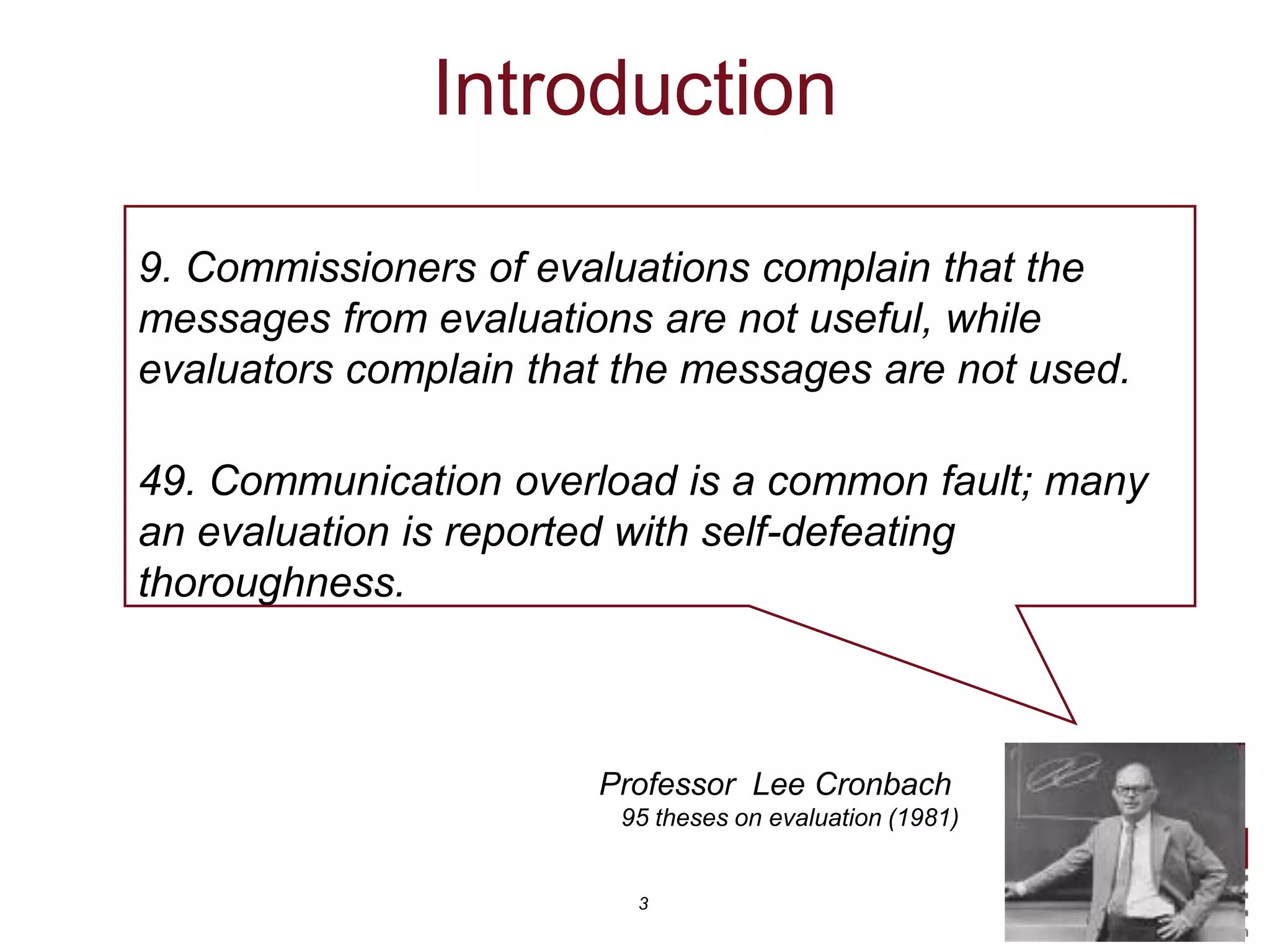
9. Commissioners of evaluations complain that the
messages from evaluations are not useful, while
evaluators complain that the messages are not used.

49. Communication overload is a common fault; many
an evaluation is reported with self-defeating
thoroughness.


                       Professor Lee Cronbach
                        95 theses on evaluation (1981)


                         3
new ways to present
evaluation findings


        4
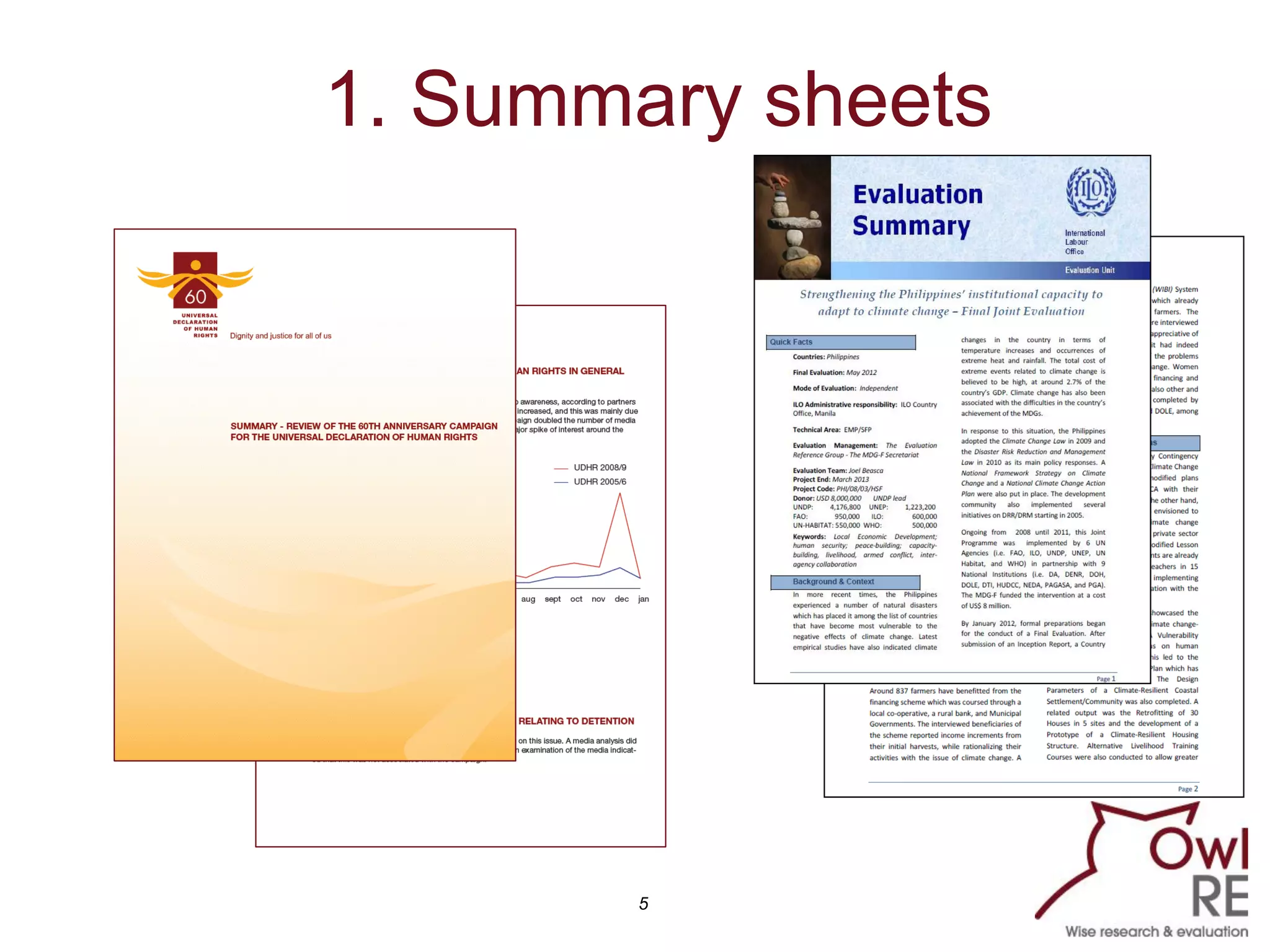
1. Summary sheets


       5
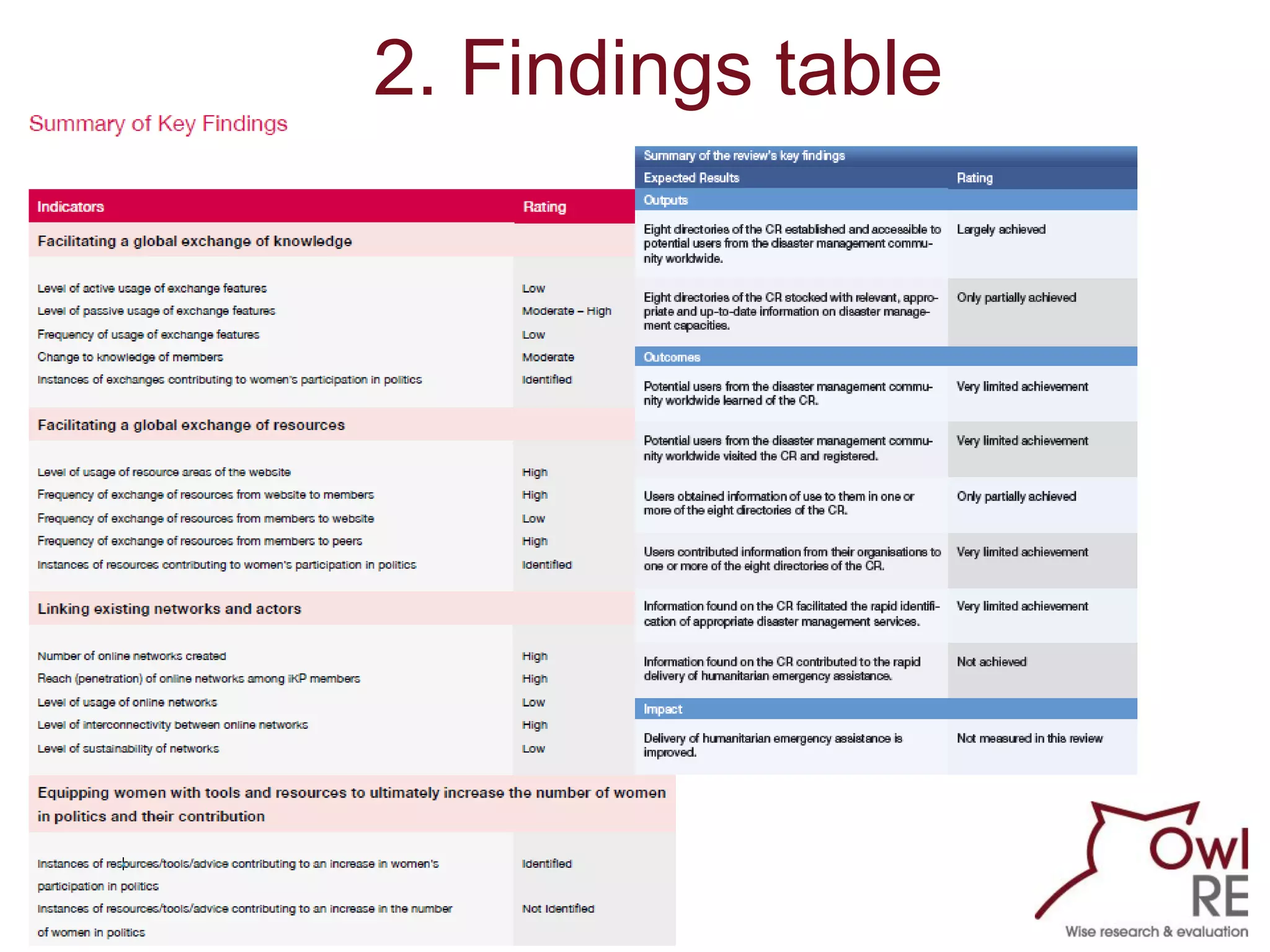
2. Findings table


       6
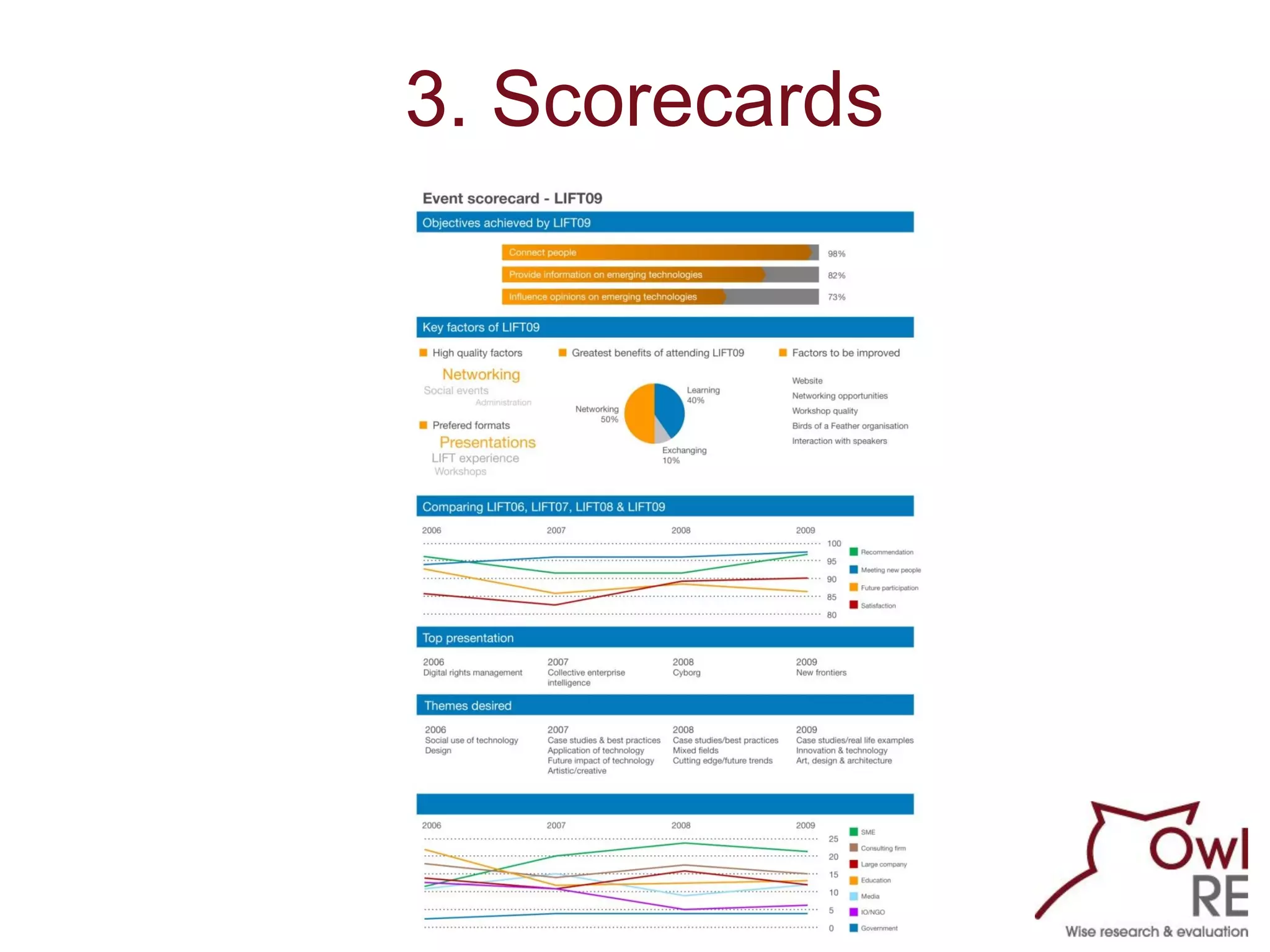
3. Scorecards


      7
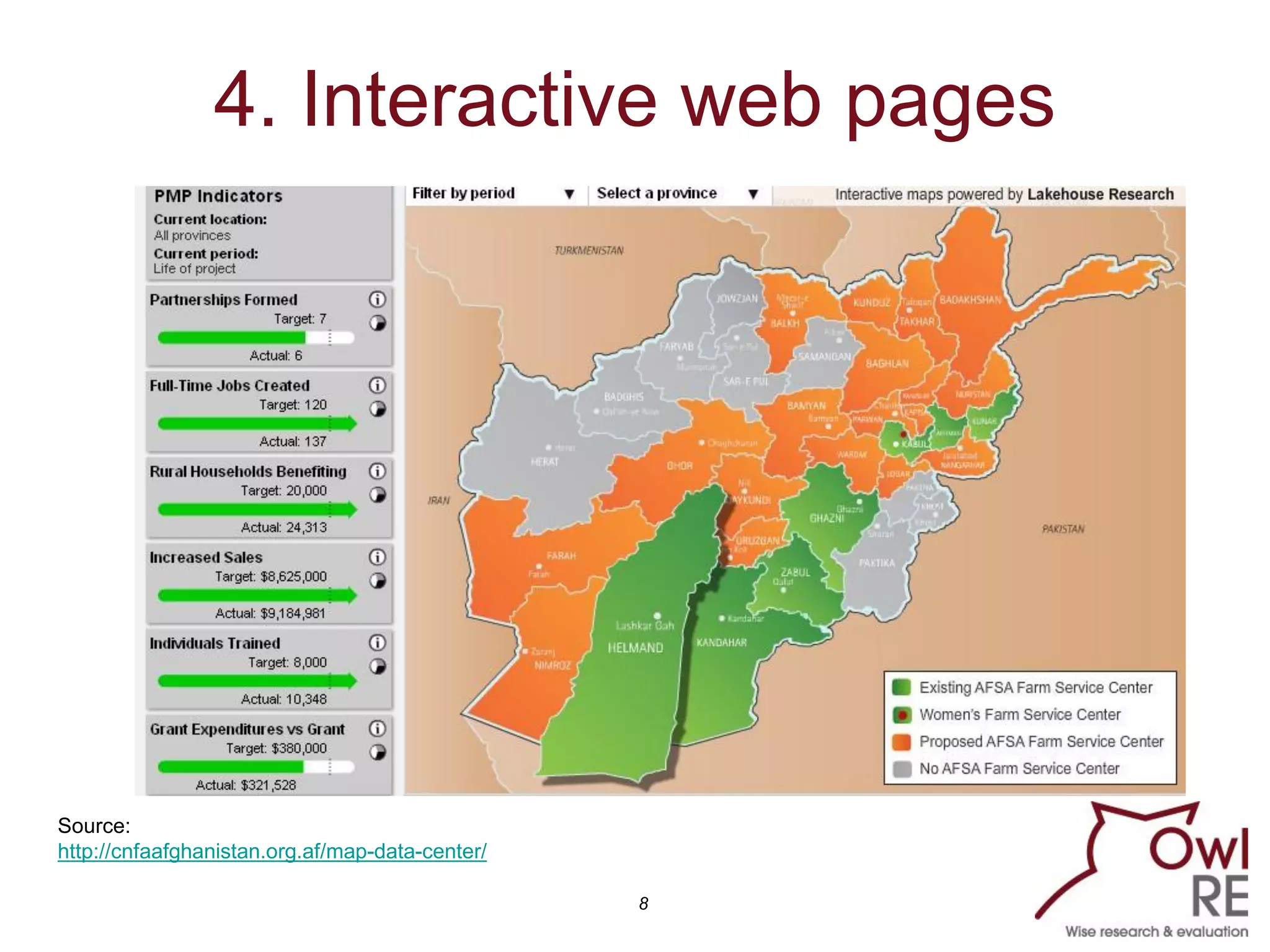
4. Interactive web pages


Source:
http://cnfaafghanistan.org.af/map-data-center/

                                                 8
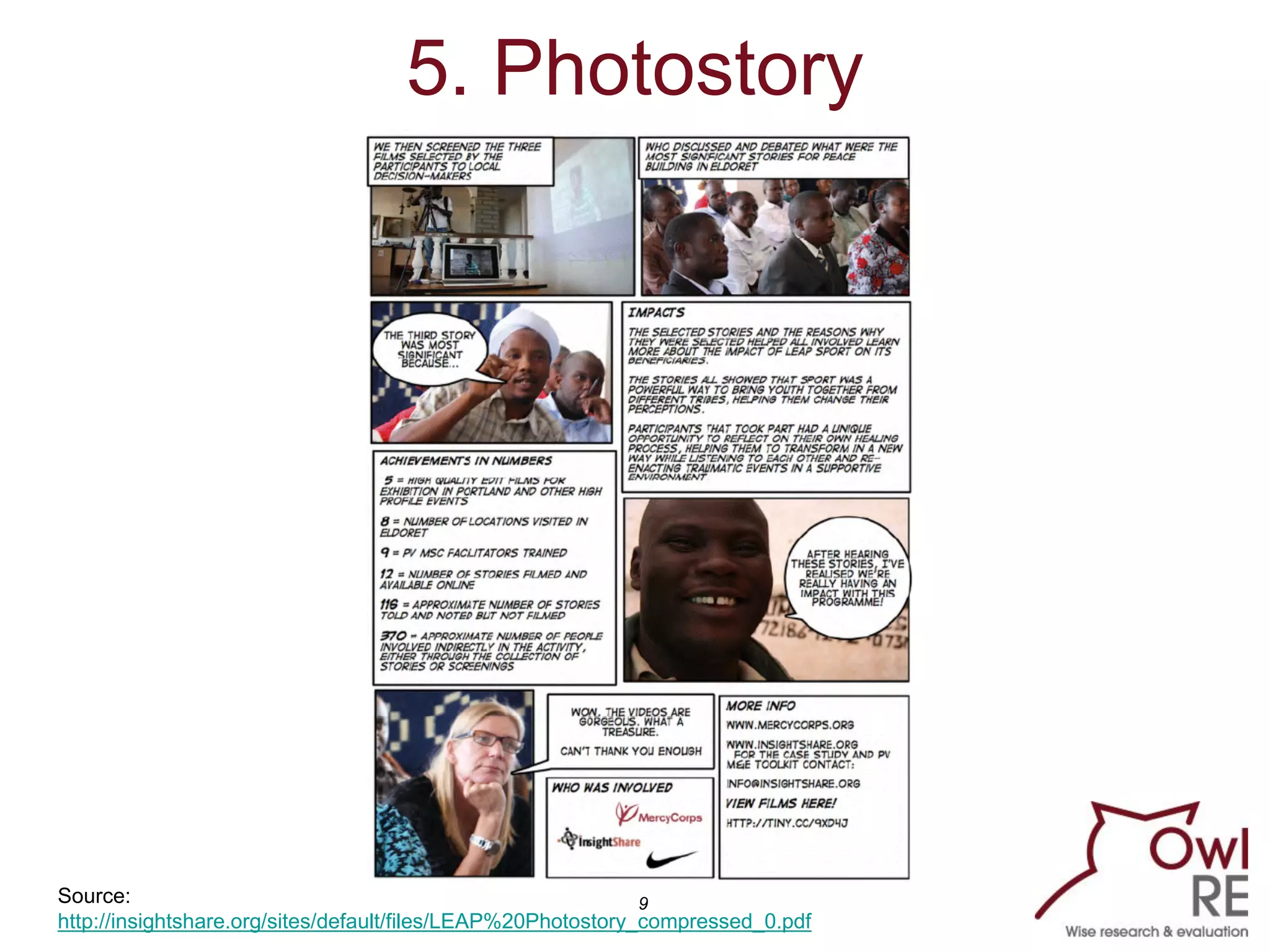
5. Photostory


Source:                                                       9
http://insightshare.org/sites/default/files/LEAP%20Photostory_compressed_0.pdf
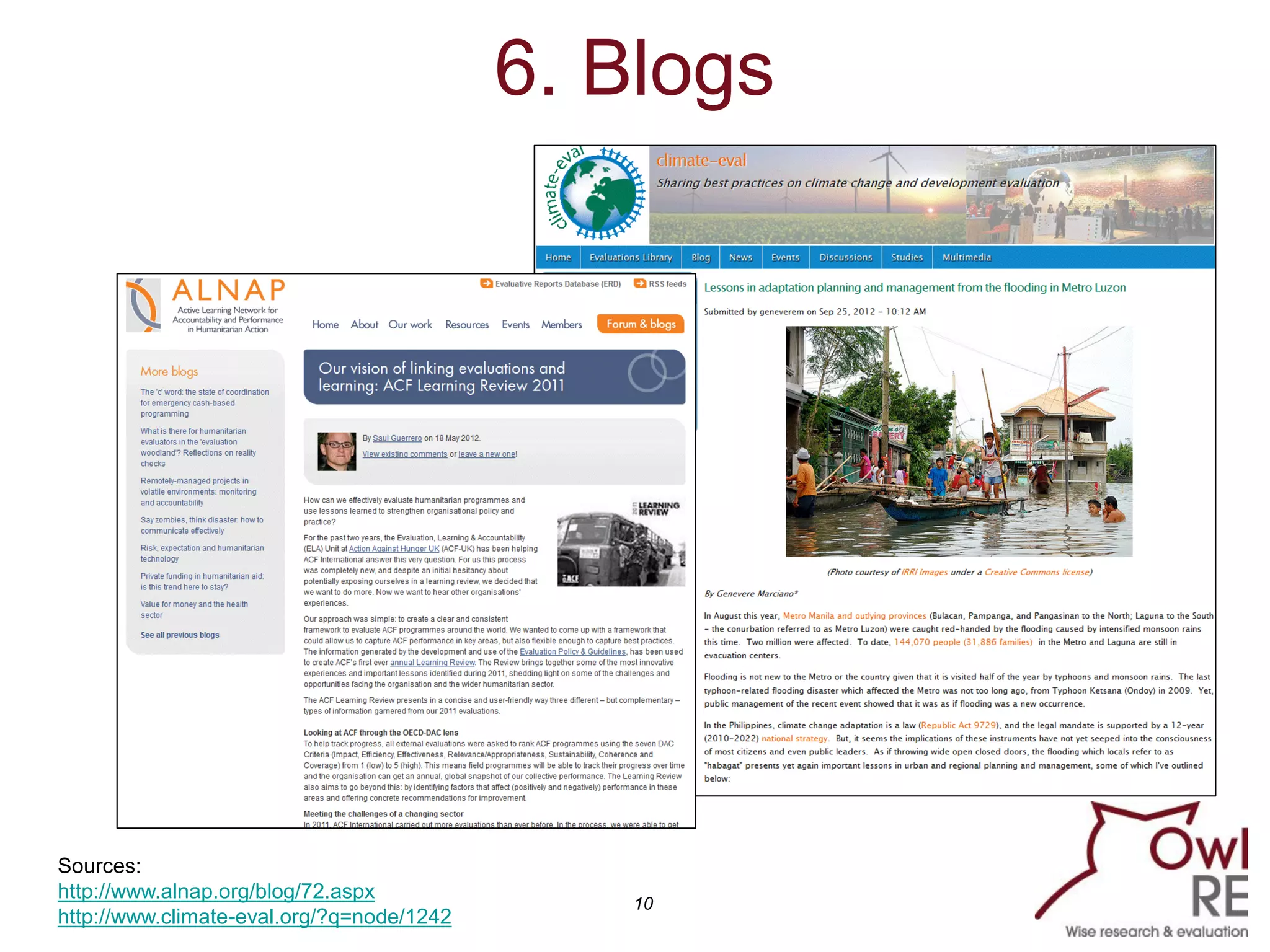
6. Blogs


Sources:
http://www.alnap.org/blog/72.aspx
                                              10
http://www.climate-eval.org/?q=node/1242
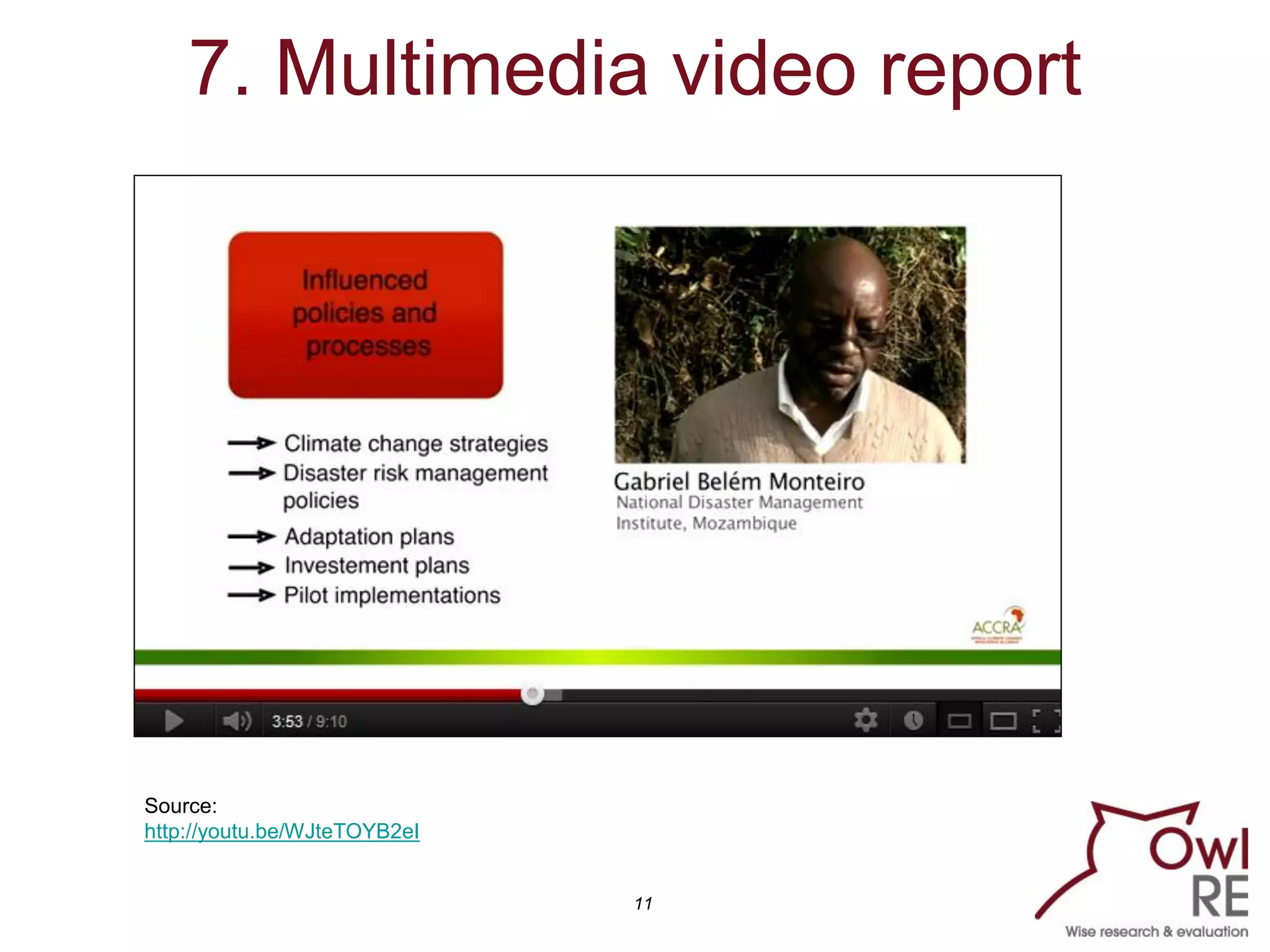
7. Multimedia video report


Source:
http://youtu.be/WJteTOYB2eI


                              11
tips for using new ways to present
         evaluation findings


1. Thought needs to be given before the evaluation
   commences
2. Many tools can be made simply but a budget is
   often required
3. Once key findings are finalised thought needs to
   go into what points will be communicated
4. The tool(s) you use will largely depend upon the
   level of interactivity desired
                        12
tips for using new ways to present
          evaluation findings


5. Findings will be little seen without a promotional
strategy
6. Social media can be used for awareness-raising
interactivity or simply distribution
7. For the doubters – visualisation of findings
increases understanding and retention of messages


                         13
Contact details

View these slides on my blog:

    www.intelligentmeasurement.wordpress.com


Contacts:
   oneil@owlre.com

   @glenn_oneil
   glennoneil

   www.owlre.com
                              14

Seven new ways to present evaluation findings

  • 1.
    7 new waysto present evaluation findings 10th EES Biennial Conference 3-5 October 2012 Helsinki, Finland Glenn O’Neil oneil@owlre.com www.owlre.com
  • 2.
    Introduction – The pooruse of evaluation findings is an area of concern for both evaluators and commissioning bodies – Studies have identified different factors that influence evaluation use including quality issues, organisational culture, relationships and external influences – New ways to present evaluation findings is the focus of this presentation 2
  • 3.
    Introduction 9. Commissioners ofevaluations complain that the messages from evaluations are not useful, while evaluators complain that the messages are not used. 49. Communication overload is a common fault; many an evaluation is reported with self-defeating thoroughness. Professor Lee Cronbach 95 theses on evaluation (1981) 3
  • 4.
    new ways topresent evaluation findings 4
  • 5.
  • 6.
  • 7.
  • 8.
    4. Interactive webpages Source: http://cnfaafghanistan.org.af/map-data-center/ 8
  • 9.
    5. Photostory Source: 9 http://insightshare.org/sites/default/files/LEAP%20Photostory_compressed_0.pdf
  • 10.
    6. Blogs Sources: http://www.alnap.org/blog/72.aspx 10 http://www.climate-eval.org/?q=node/1242
  • 11.
    7. Multimedia videoreport Source: http://youtu.be/WJteTOYB2eI 11
  • 12.
    tips for usingnew ways to present evaluation findings 1. Thought needs to be given before the evaluation commences 2. Many tools can be made simply but a budget is often required 3. Once key findings are finalised thought needs to go into what points will be communicated 4. The tool(s) you use will largely depend upon the level of interactivity desired 12
  • 13.
    tips for usingnew ways to present evaluation findings 5. Findings will be little seen without a promotional strategy 6. Social media can be used for awareness-raising interactivity or simply distribution 7. For the doubters – visualisation of findings increases understanding and retention of messages 13
  • 14.
    Contact details View theseslides on my blog: www.intelligentmeasurement.wordpress.com Contacts: oneil@owlre.com @glenn_oneil glennoneil www.owlre.com 14