CYBER TERRORISM :
THE RISING THREAT IN CYBER
DIMENSION?
Zahri Yunos
Chief Operating Officer
CyberSecurity Malaysia
Commonwealth
Cybersecurity Forum 2014
London
5 – 6 March 2014
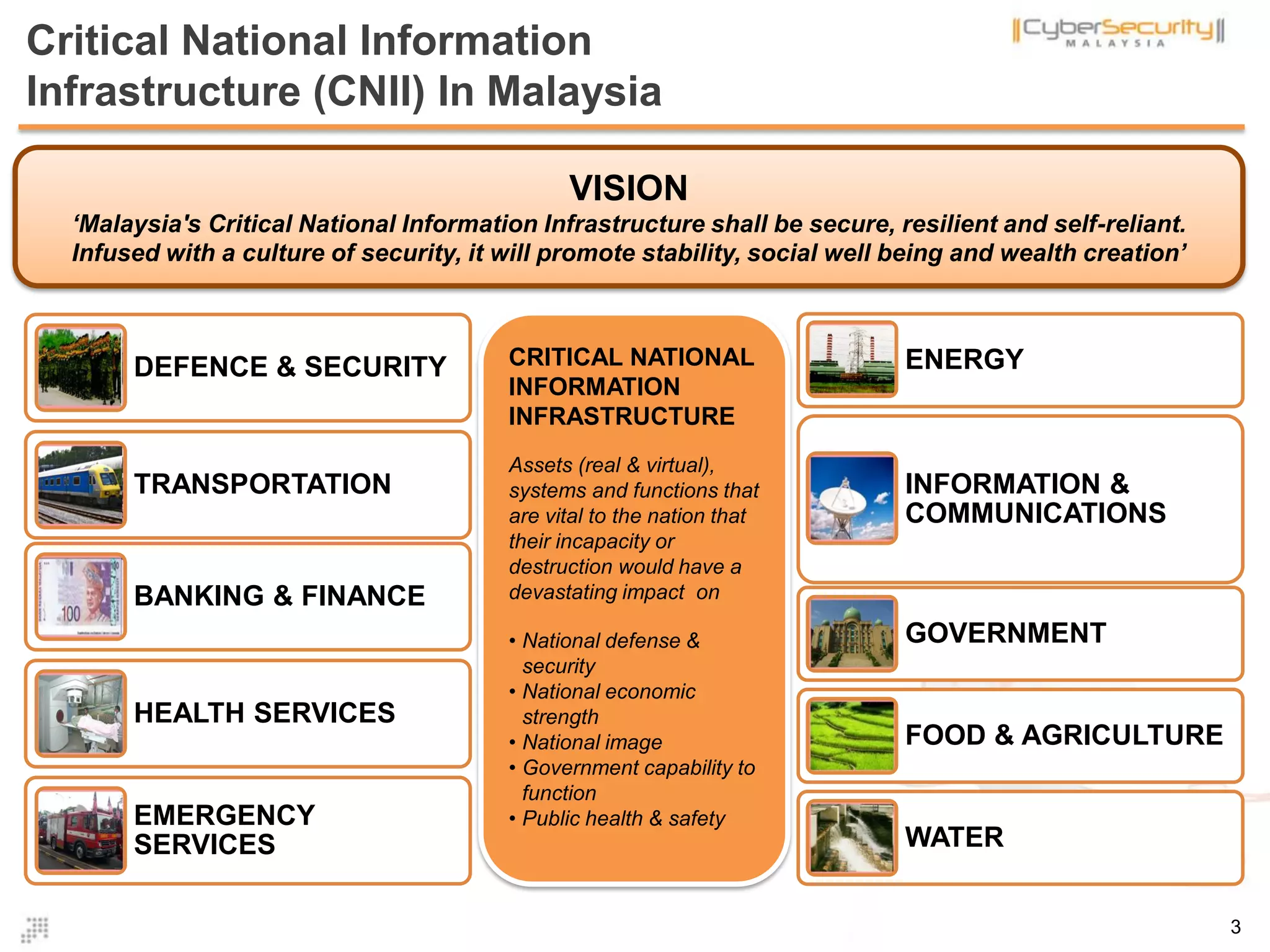
CRITICAL NATIONAL
INFORMATION
INFRASTRUCTURE (CNII)
Critical National Information
Infrastructure (CNII) In Malaysia
DEFENCE & SECURITY
TRANSPORTATION
BANKING & FINANCE
HEALTH SERVICES
EMERGENCY
SERVICES
VISION
‘Malaysia's Critical National Information Infrastructure shall be secure, resilient and self-reliant.
Infused with a culture of security, it will promote stability, social well being and wealth creation’
CRITICAL NATIONAL
INFORMATION
INFRASTRUCTURE
Assets (real & virtual),
systems and functions that
are vital to the nation that
their incapacity or
destruction would have a
devastating impact on
• National defense &
security
• National economic
strength
• National image
• Government capability to
function
• Public health & safety
ENERGY
INFORMATION &
COMMUNICATIONS
GOVERNMENT
FOOD & AGRICULTURE
WATER
3
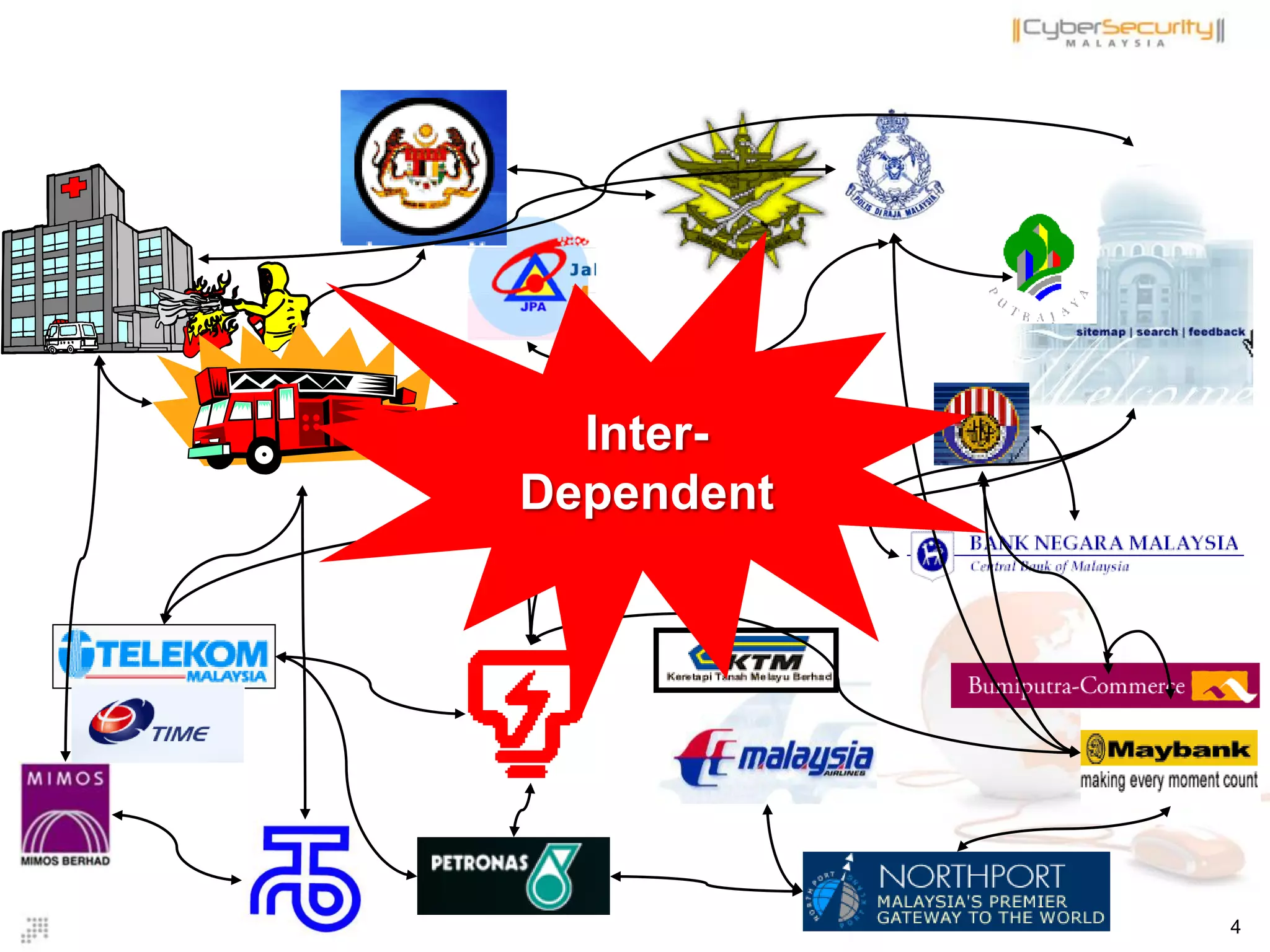
Inter-
Dependent
4
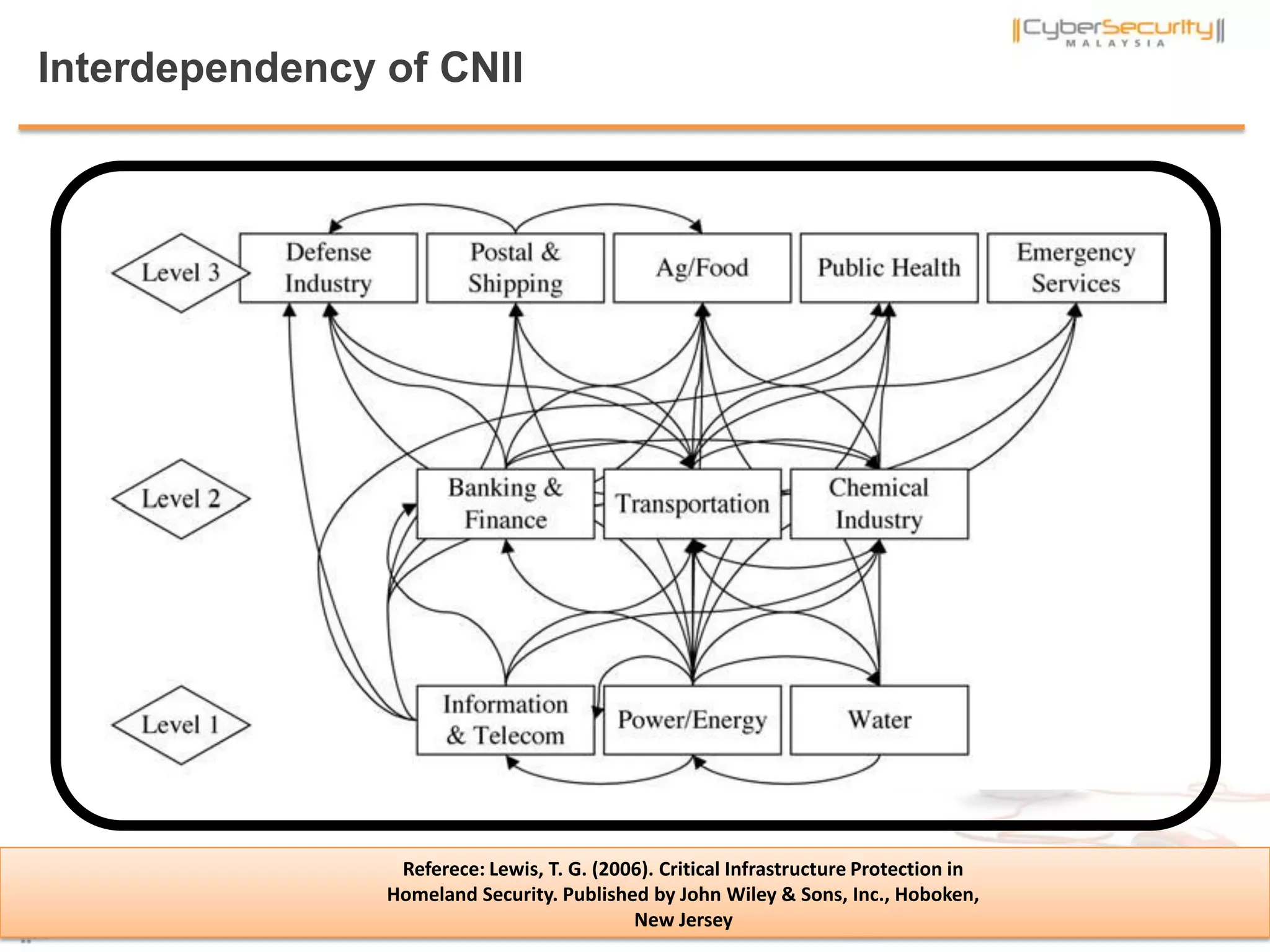
Interdependency of CNII
Referece: Lewis, T. G. (2006). Critical Infrastructure Protection in
Homeland Security. Published by John Wiley & Sons, Inc., Hoboken,
New Jersey
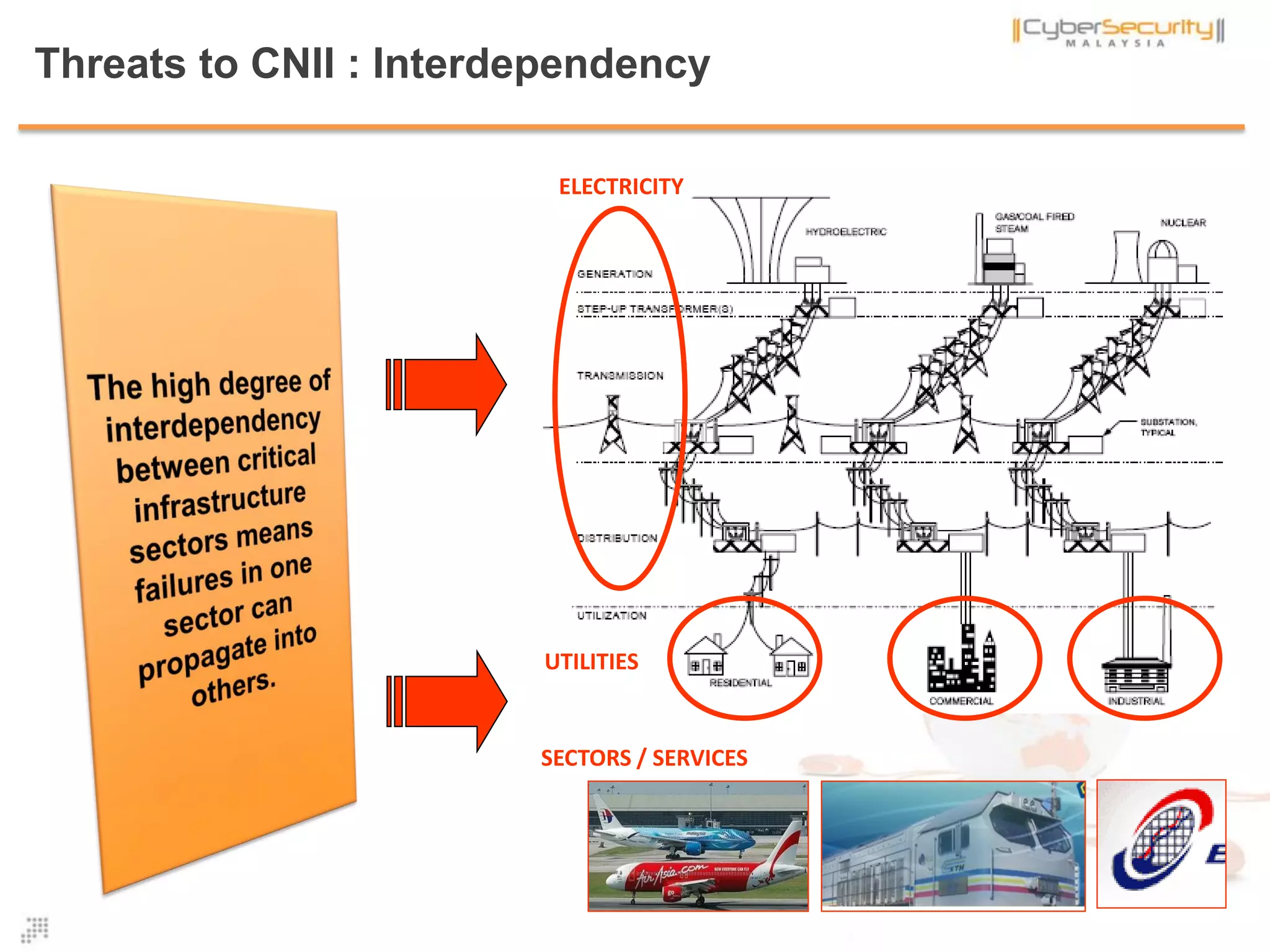
ELECTRICITY
UTILITIES
Threats to CNII : Interdependency
SECTORS / SERVICES
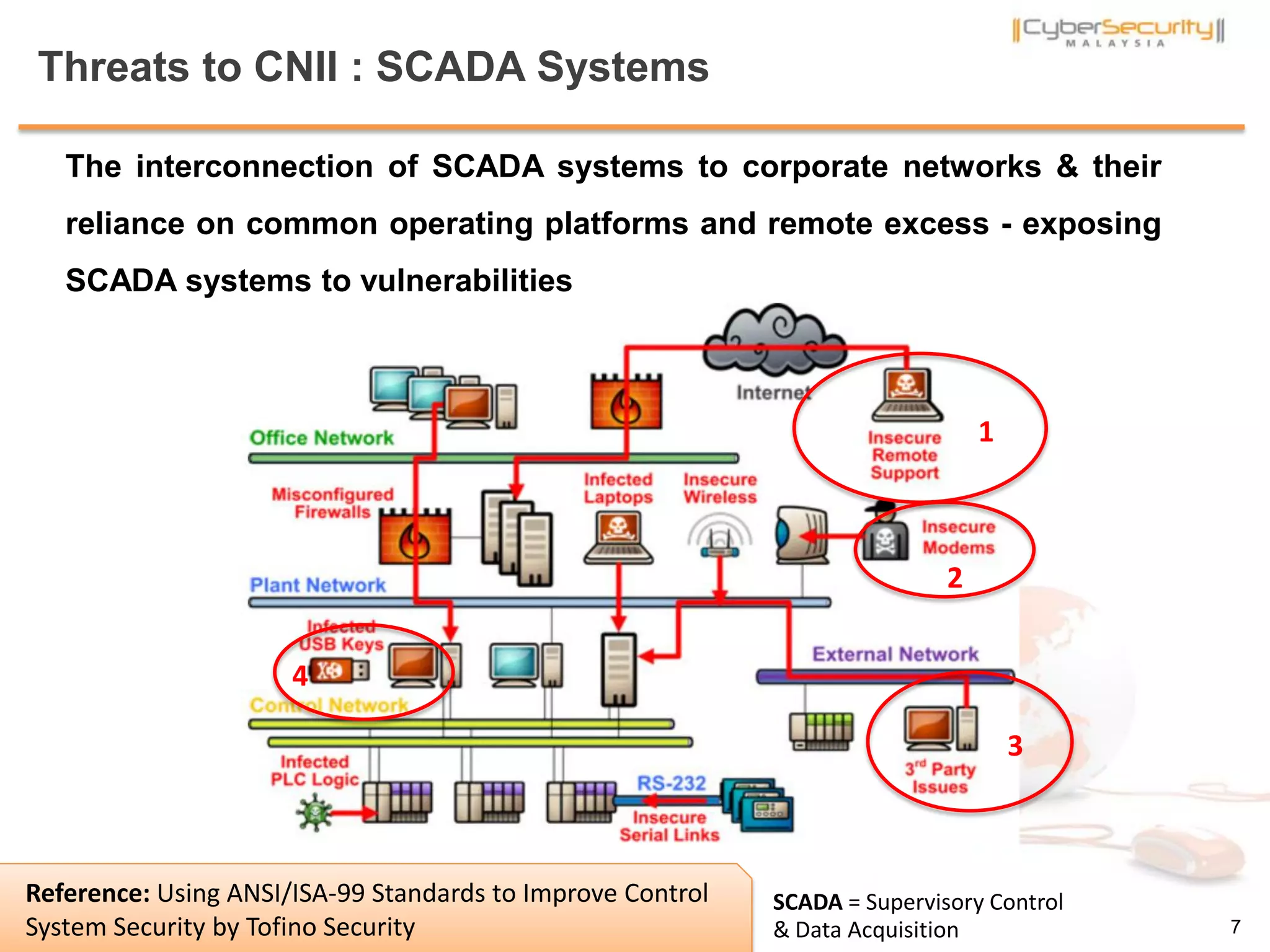
SCADA = Supervisory Control
& Data Acquisition
Threats to CNII : SCADA Systems
1
2
3
4
Reference: Using ANSI/ISA-99 Standards to Improve Control
System Security by Tofino Security
The interconnection of SCADA systems to corporate networks & their
reliance on common operating platforms and remote excess - exposing
SCADA systems to vulnerabilities
7
Threats to CNII : The Use of ICT and
Cyberspace by Terrorist
Use of
Internet
By
Terrorist
Psychological
Warfare
Publicity and
Propaganda
Data Mining
Fundraising
Recruitment
and
Mobilization
Social
Networking
Sharing
Information
Planning and
Coordination
Reference:
[1] Mantel, B.: (2009). Terrorism and the Internet.
Should Web Sites That Promote Terrorism Be
Shut Down?. From CQ Researchers, pp. 129-153
[2] Zhang, Y., Zeng, S., Huang, C.N., Fan, L., Yu, X.,
Dang, Y., Larson, C., Denning, D., Roberts, N., and
Chen, H.: (2010). Developing a Dark Web
Collection and Infrastructure for Computational
and Social Sciences. IEEE International
Conference on Intelligence and Security
Informatics, pp. 59-64
[3] Li, X., Mao, W., Zeng, D., and Wang, F.: (2010).
Automatic Construction of Domain Theory for
Attack Planning. IEEE International Conference on
Intelligence and Security Informatics, pp 65-70
[4] Fu, T., Abbasi, A., and Chen, H. A Focused
Crawler for Dark Web Forums. Journal of the
American Society for Information Science and
Technology
[5] Yunos, Z., Ahmad, R., Mat Ali, S., and
Shamsuddin, S. Illicit Activities and Terrorism in
Cyberspace: An Exploratory Study in the
Southeast Asian Region. in:M. Chau et al. (Eds.):
Pacific Asia Workshop on Intelligence and
Security Informatics (PAISI 2012), 29 May 2012,
LNCS 7299 Springer, Heidelberg, pp. 27-35, 2012
8
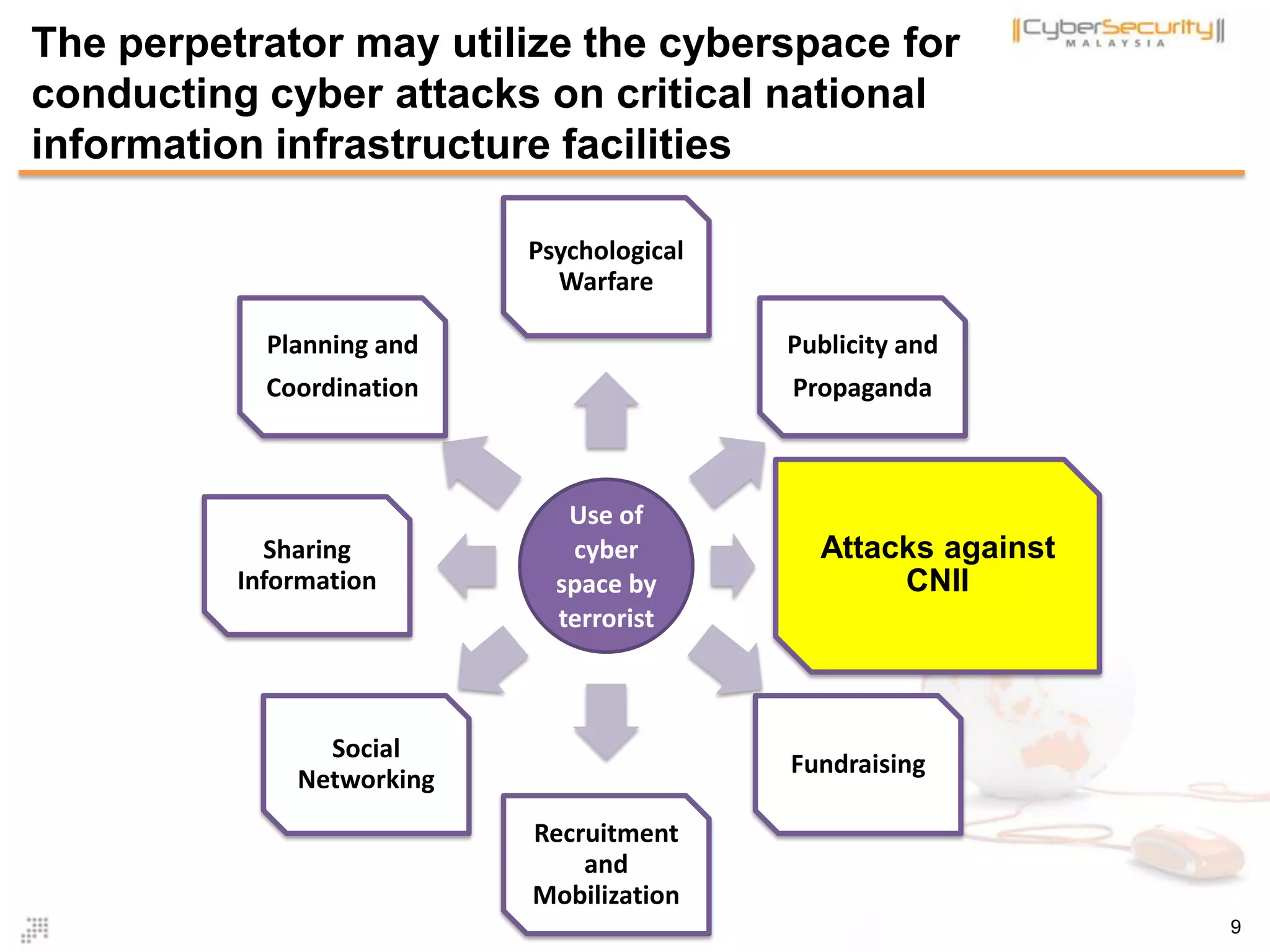
Use of
cyber
space by
terrorist
Psychological
Warfare
Publicity and
Propaganda
Attacks against
CNII
Fundraising
Recruitment
and
Mobilization
Social
Networking
Sharing
Information
Planning and
Coordination
The perpetrator may utilize the cyberspace for
conducting cyber attacks on critical national
information infrastructure facilities
9
 Many nations all over the world constantly increase their
dependency on cyberspace by maximising the use of ICT
 Interdependencies that exist within critical infrastructures have
raised concerns - successful cyber attacks on one computer
system can have serious cascading effects on other, resulting in
potentially catastrophic damage and disruption
 Through ICT, perpetrators can disrupt critical services, hence
affecting the nation’s operation and its ability to function.
Why would a perpetrator decide to use ICT instead of
using the usual methods of assassination, hostage-
taking, guerrilla warfare and bombing?
10
11
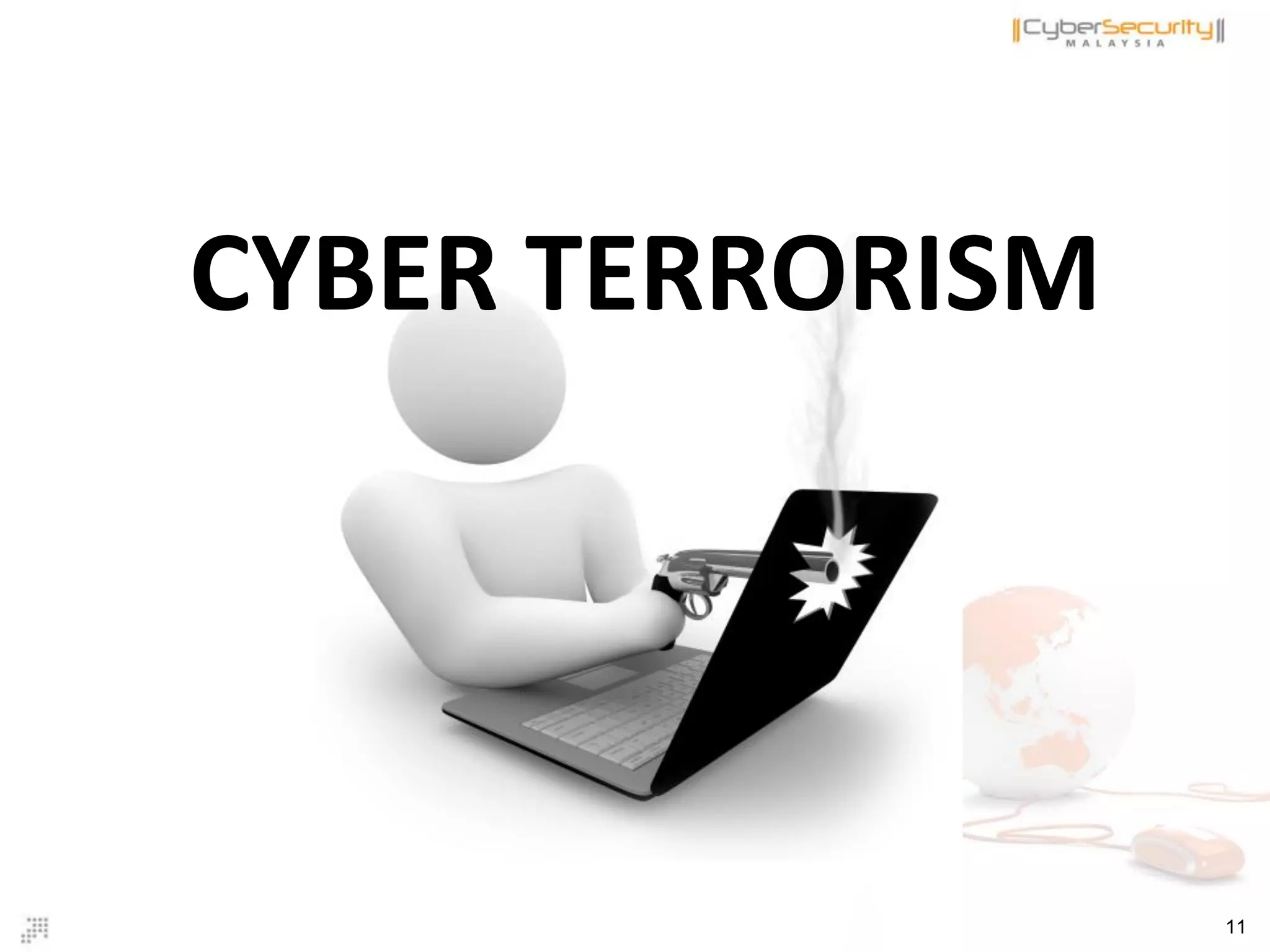
CYBER TERRORISM
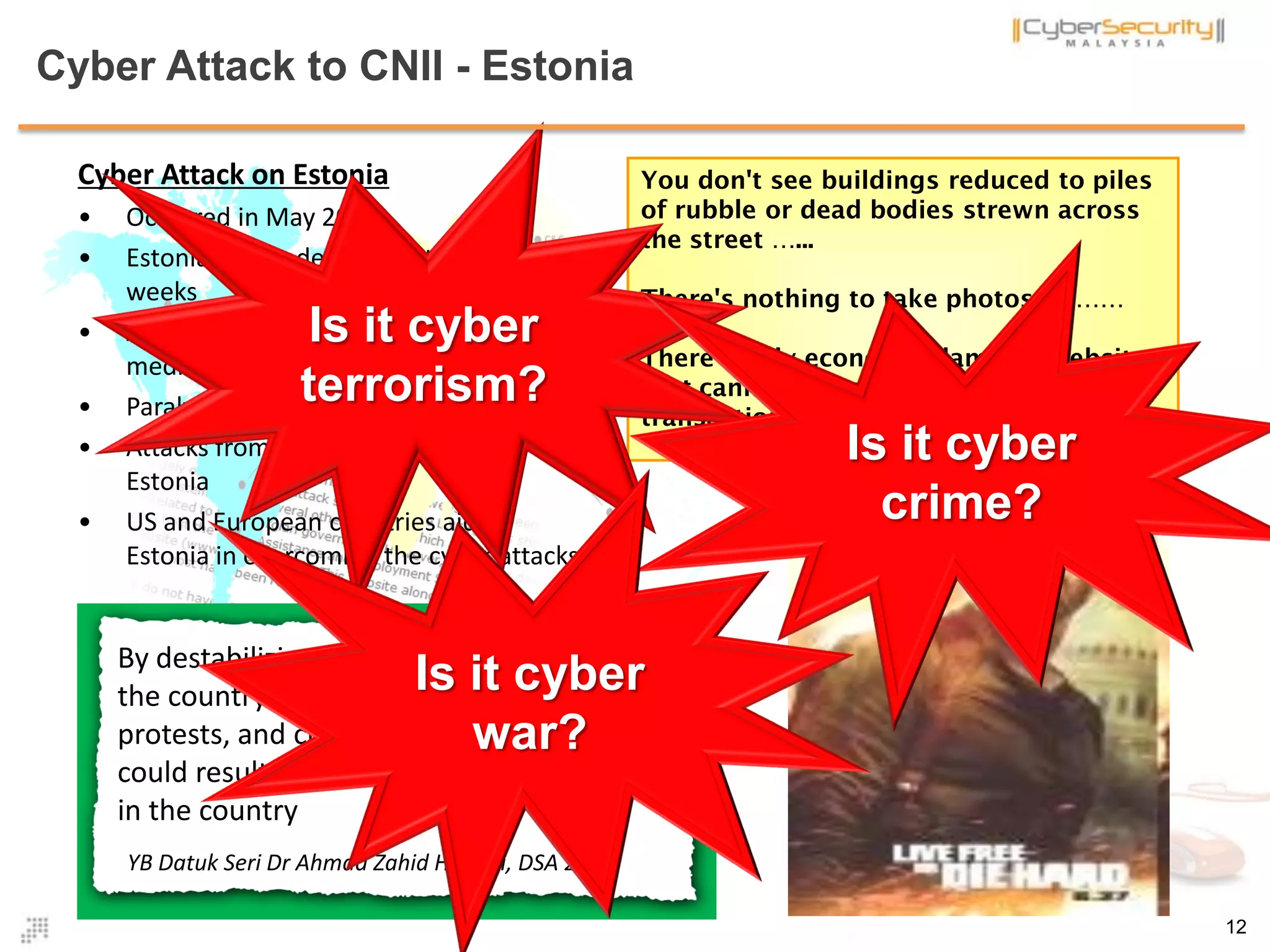
Cyber Attack to CNII - Estonia
12
Cyber Attack on Estonia
• Occurred in May 2007
• Estonia was under cyber attacks for 3
weeks
• Attack targeted government, banking,
media and police websites
• Paralyzed internet communication.
• Attacks from 128 sources outside
Estonia
• US and European countries aided
Estonia in overcoming the cyber attacks
You don't see buildings reduced to piles
of rubble or dead bodies strewn across
the street …...
There's nothing to take photos of ……
There's only economic damage, websites
that cannot be accessed and
transactions that cannot take place …..
By destabilizing the economy, the people of
the country is subject to riots, rallies and
protests, and crippling its stability which
could result in violence and creating unrest
in the country
YB Datuk Seri Dr Ahmad Zahid Hamidi, DSA 2012
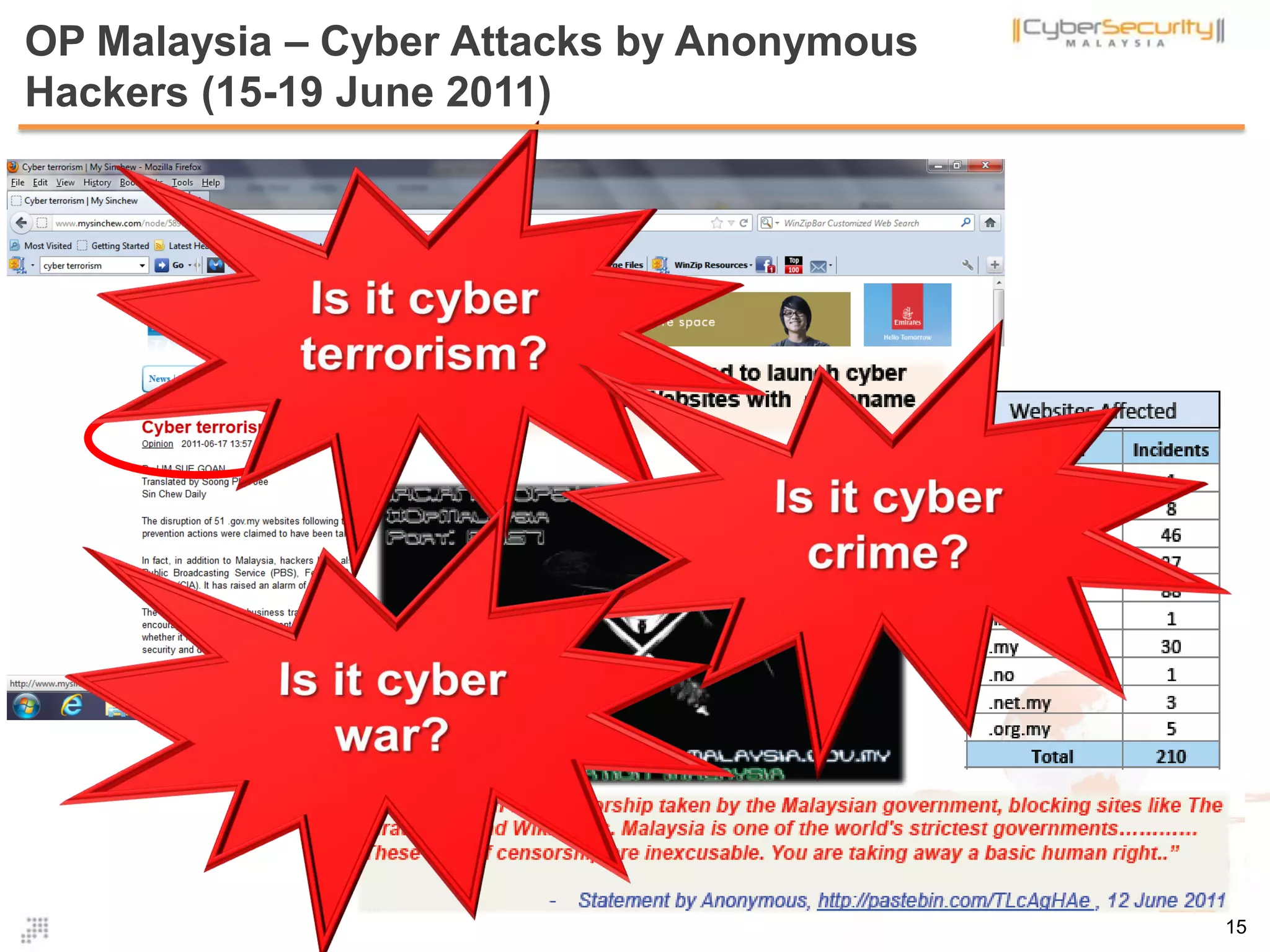
Is it cyber
terrorism?
12
Is it cyber
crime?
Is it cyber
war?
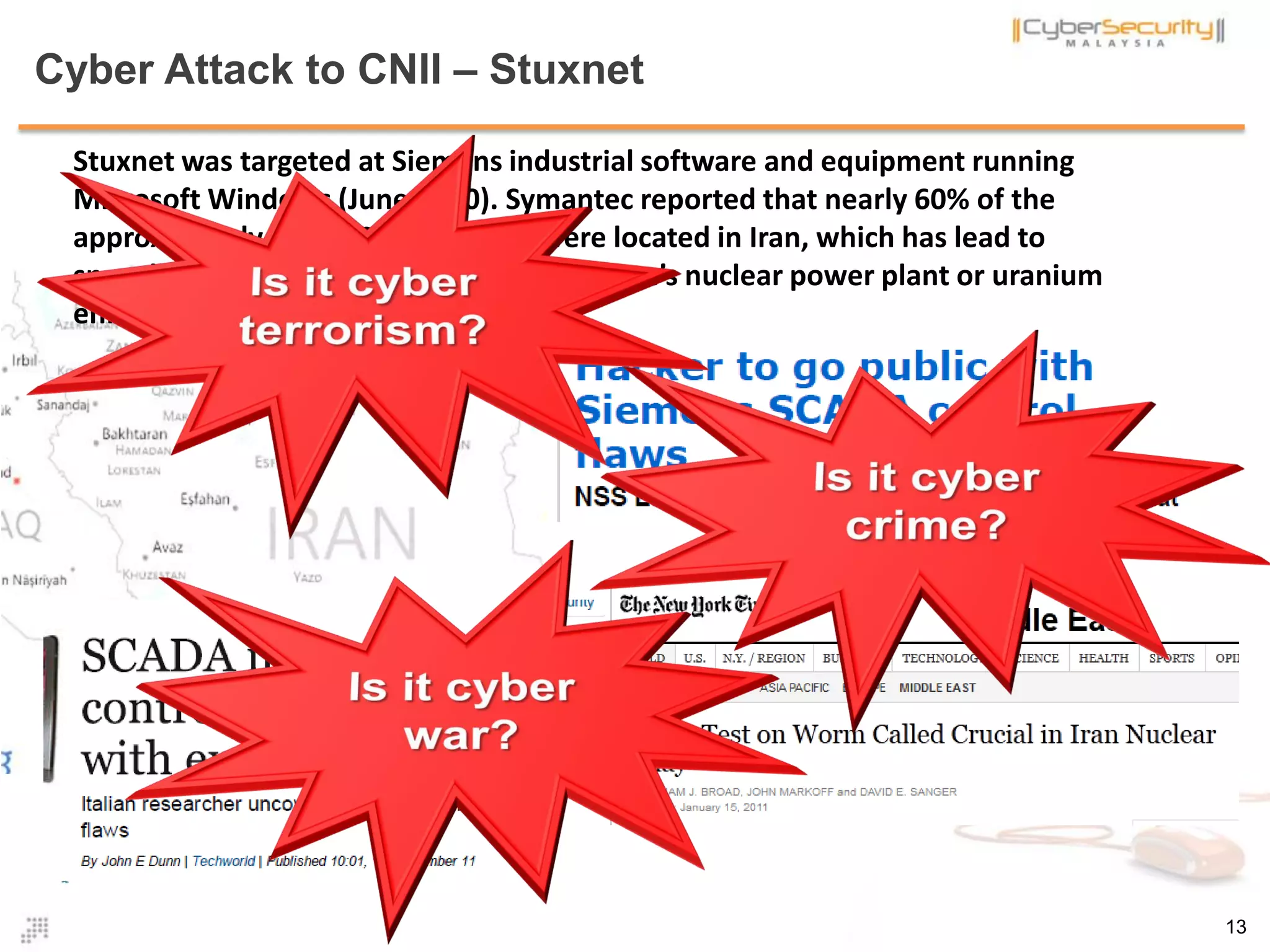
Cyber Attack to CNII – Stuxnet
Stuxnet was targeted at Siemens industrial software and equipment running
Microsoft Windows (June 2010). Symantec reported that nearly 60% of the
approximately 100,000 infect hosts were located in Iran, which has lead to
speculation that Stuxnet’s target was at Iran’s nuclear power plant or uranium
enrichment plant
13
14
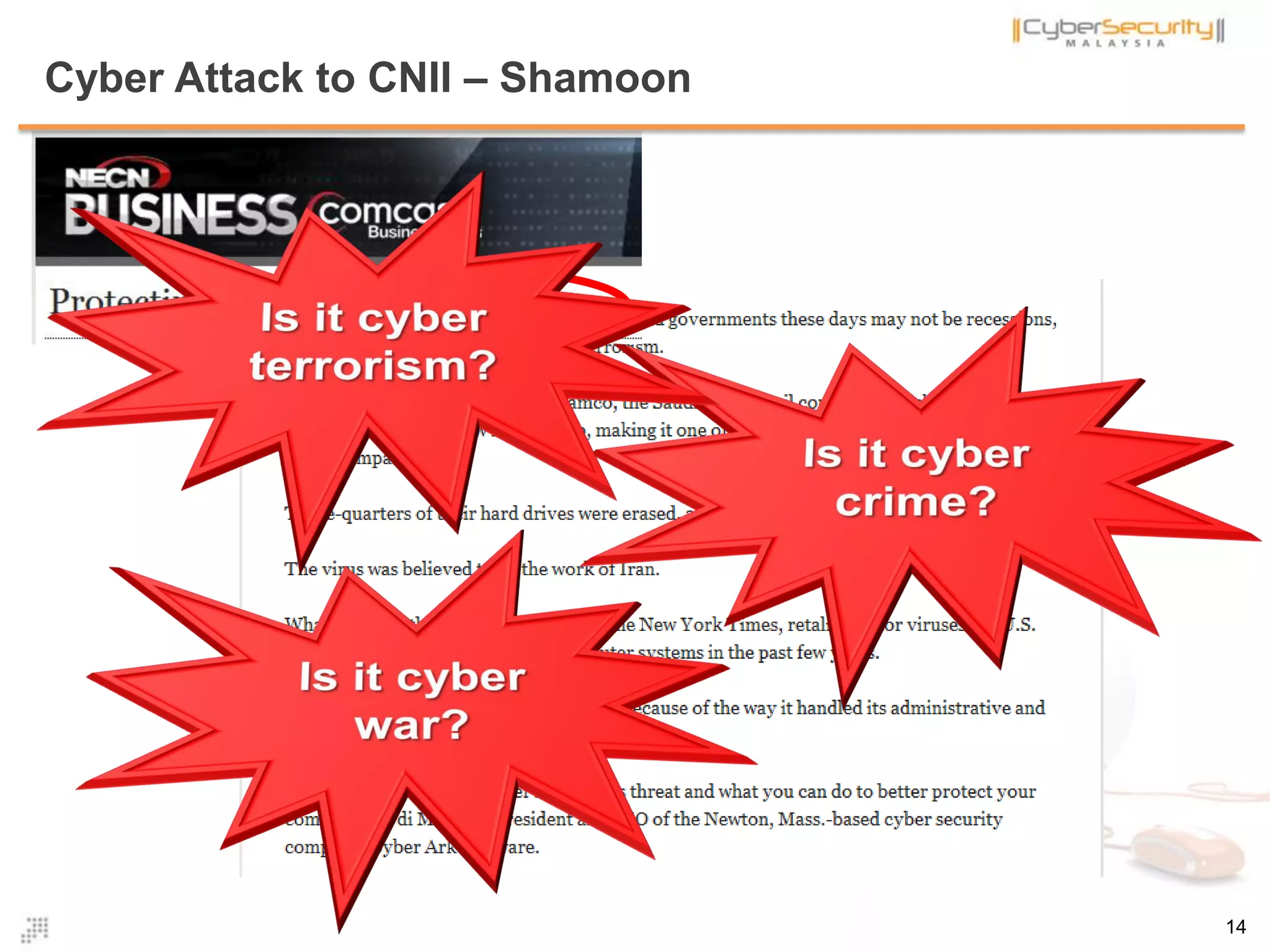
Cyber Attack to CNII – Shamoon
OP Malaysia – Cyber Attacks by Anonymous
Hackers (15-19 June 2011)
15
Definition: Cyber Terrorism
Reference: D. E. Denning, “Cyberterrorism,” Testimony given to the House Armed Services Committee
Special Oversight Panel on Terrorism, 2000
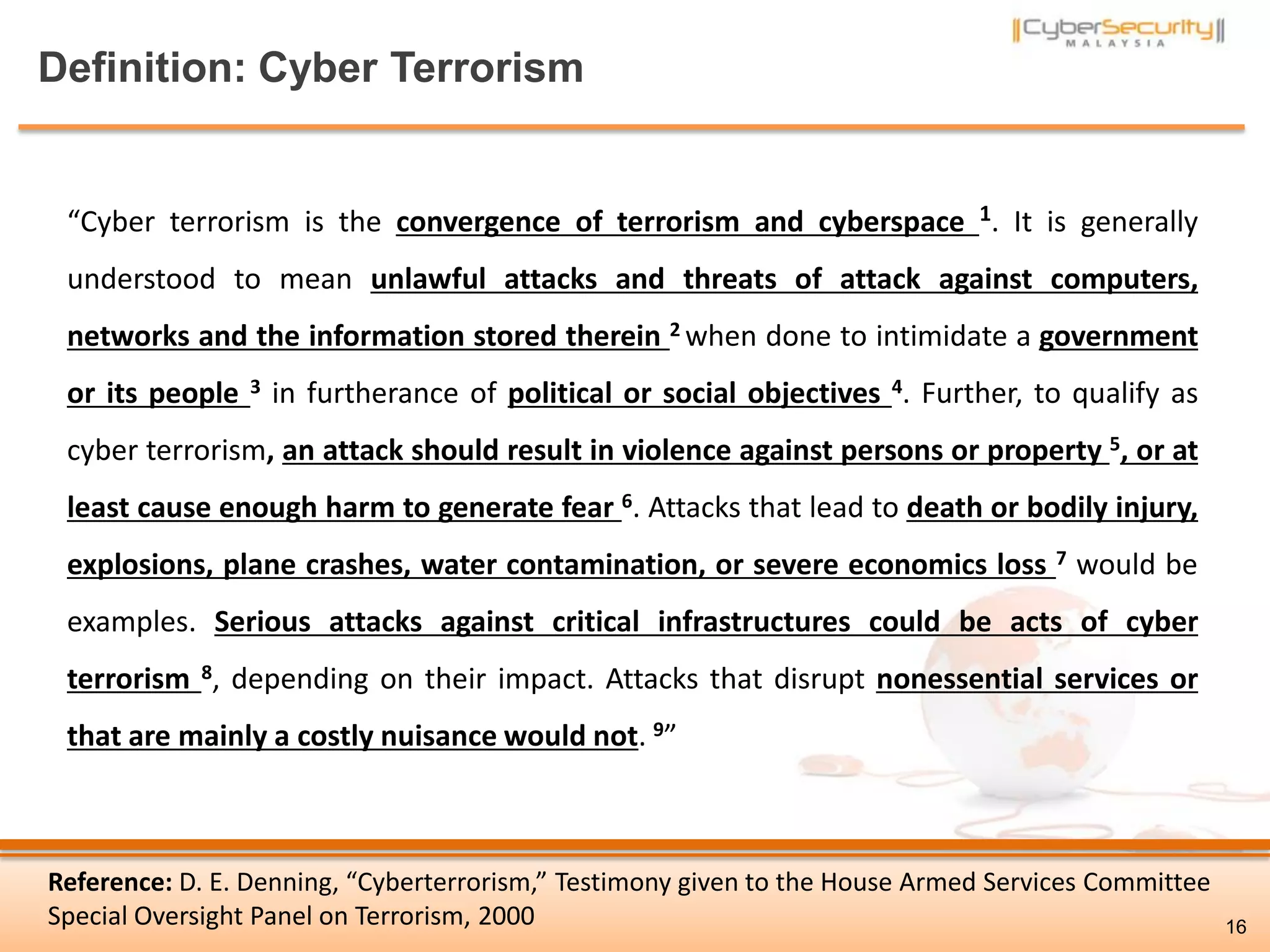
“Cyber terrorism is the convergence of terrorism and cyberspace 1. It is generally
understood to mean unlawful attacks and threats of attack against computers,
networks and the information stored therein 2 when done to intimidate a government
or its people 3 in furtherance of political or social objectives 4. Further, to qualify as
cyber terrorism, an attack should result in violence against persons or property 5, or at
least cause enough harm to generate fear 6. Attacks that lead to death or bodily injury,
explosions, plane crashes, water contamination, or severe economics loss 7 would be
examples. Serious attacks against critical infrastructures could be acts of cyber
terrorism 8, depending on their impact. Attacks that disrupt nonessential services or
that are mainly a costly nuisance would not. 9”
16
Definition : Cyber Terrorism .. many more
• There are many definitions on cyber terrorism provided by researchers,
policy makers and individuals
• Interestingly, most governments in the world do not agree on one single
definition of cyber terrorism. There is no common definition of cyber
terrorism
• The ambiguity in the definition brings indistinctness in action; as the old
maxim goes “one man’s terrorist is another man’s freedom fighter” [1].
• According to Schmid, "there is no agreement among experts and there is
not likely to be an agreement as long they cannot even agree on a common
definition on terrorism (and cyber terrorism).“ [2]
Reference:
[1] L. E. Prichard, J. J., and MacDonald, “Cyber Terrorism: A Study of the Extent of Coverage in Computer Security
Textbooks,” Journal of Information Technology Education, vol. 3, 2004.
[2] A. P. Schmid, “Root Causes of Terrorism: Methodological and Theoretical Notes, Empirical Findings and Four
Inventories of Assumed Causal Factors,” 2005. 17
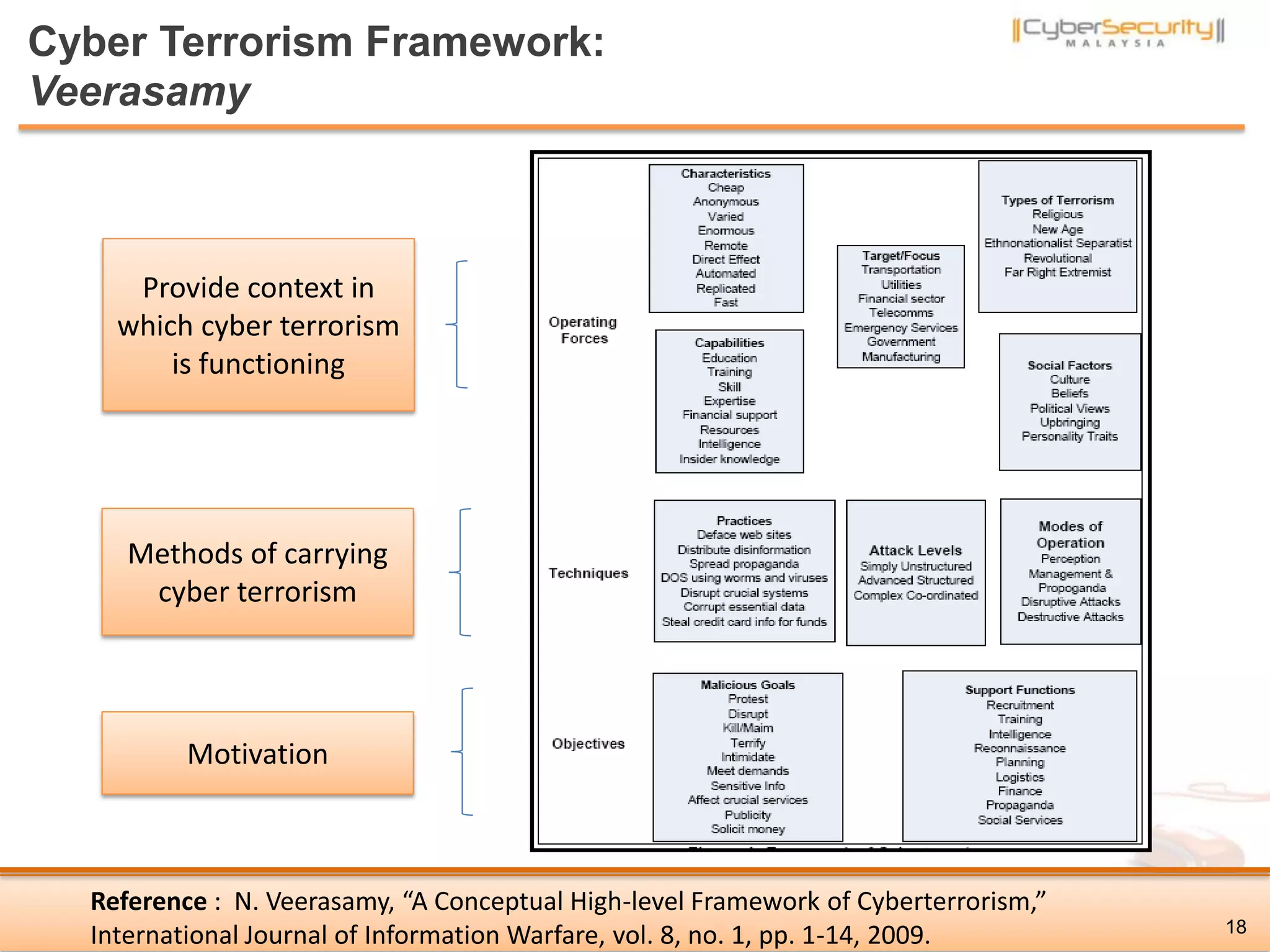
Cyber Terrorism Framework:
Veerasamy
Reference : N. Veerasamy, “A Conceptual High-level Framework of Cyberterrorism,”
International Journal of Information Warfare, vol. 8, no. 1, pp. 1-14, 2009. 18
Provide context in
which cyber terrorism
is functioning
Methods of carrying
cyber terrorism
Motivation
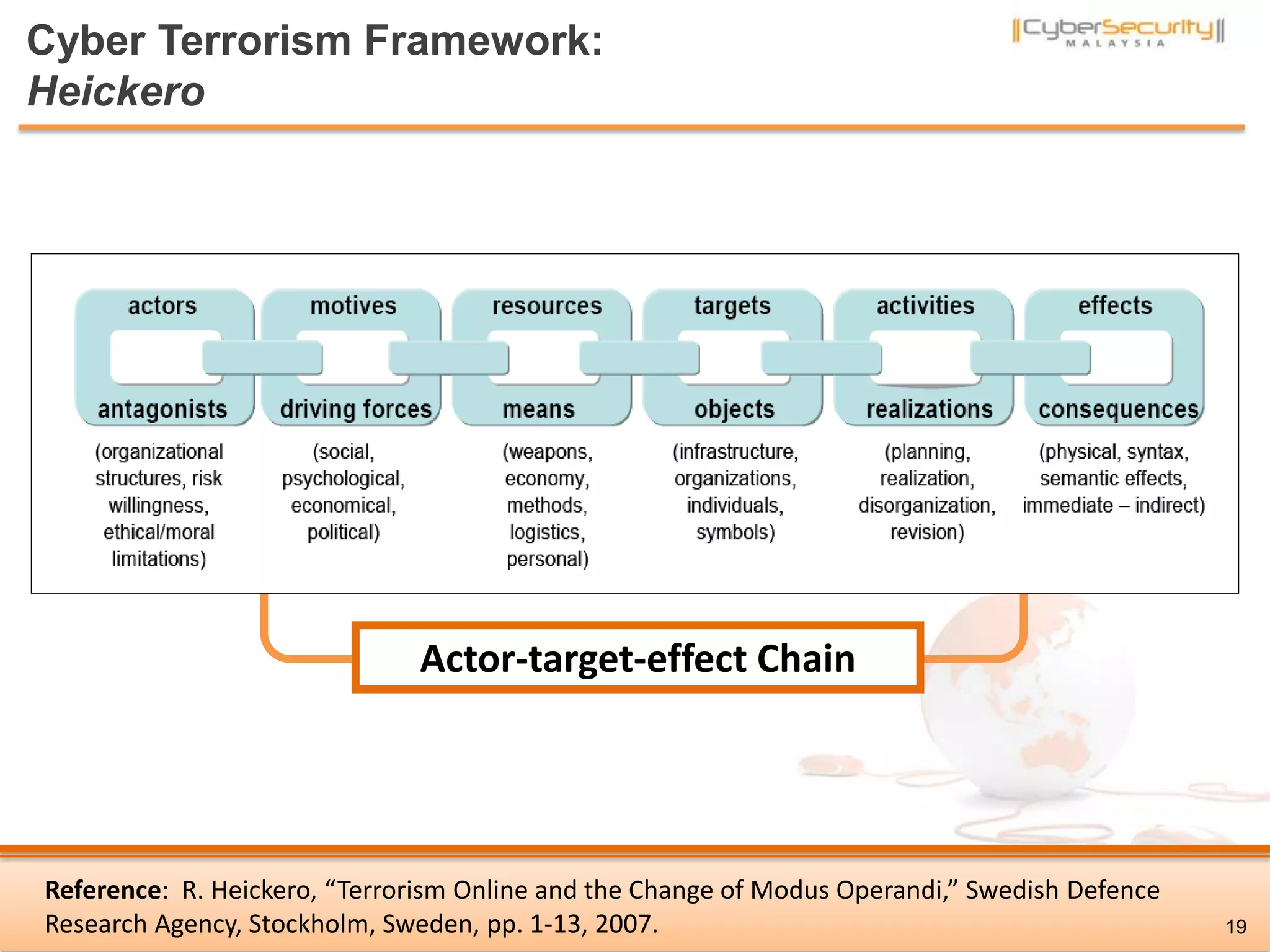
Cyber Terrorism Framework:
Heickero
Actor-target-effect Chain
Reference: R. Heickero, “Terrorism Online and the Change of Modus Operandi,” Swedish Defence
Research Agency, Stockholm, Sweden, pp. 1-13, 2007. 19
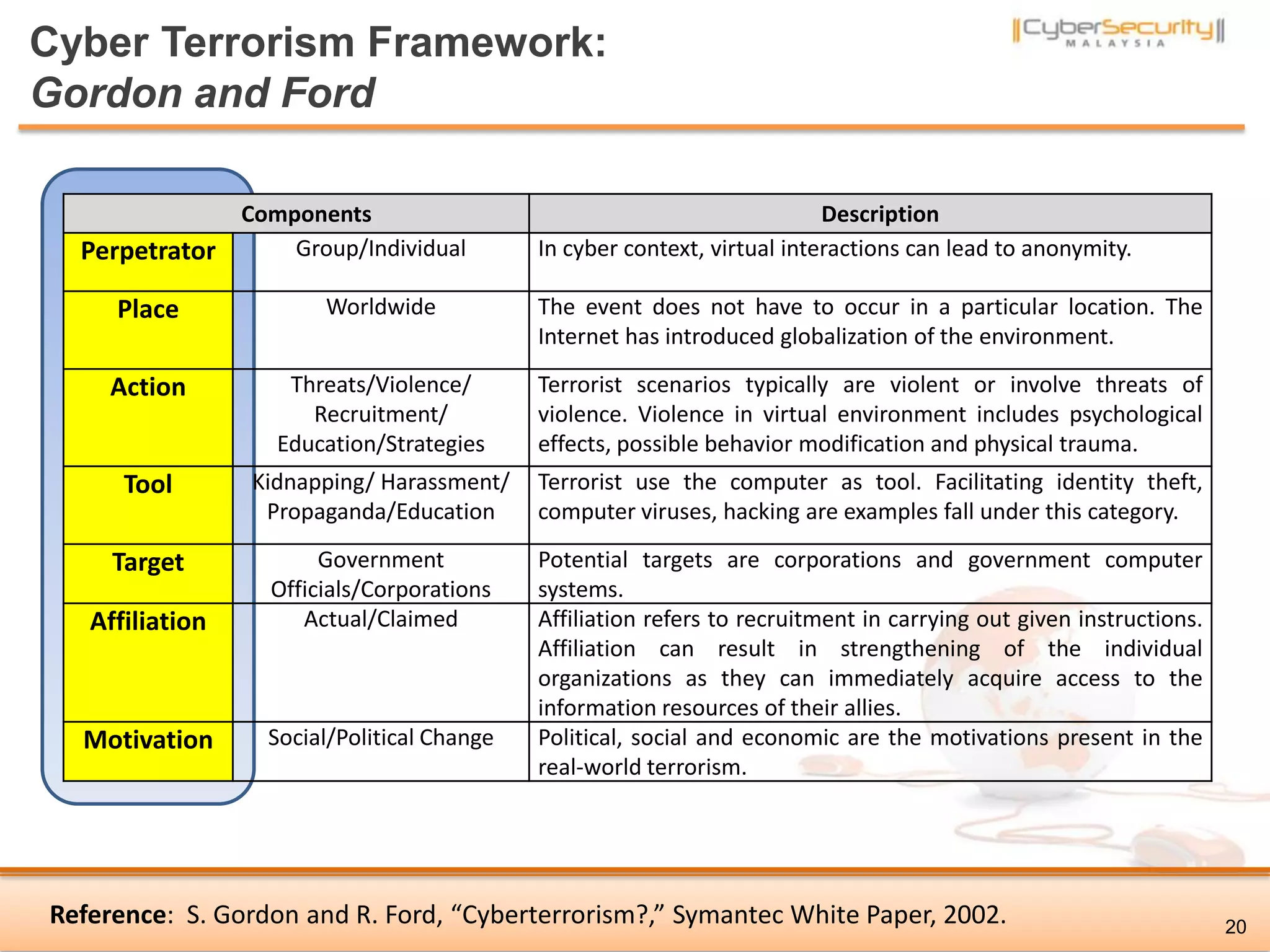
Cyber Terrorism Framework:
Gordon and Ford
Reference: S. Gordon and R. Ford, “Cyberterrorism?,” Symantec White Paper, 2002.
Components Description
Perpetrator Group/Individual In cyber context, virtual interactions can lead to anonymity.
Place Worldwide The event does not have to occur in a particular location. The
Internet has introduced globalization of the environment.
Action Threats/Violence/
Recruitment/
Education/Strategies
Terrorist scenarios typically are violent or involve threats of
violence. Violence in virtual environment includes psychological
effects, possible behavior modification and physical trauma.
Tool Kidnapping/ Harassment/
Propaganda/Education
Terrorist use the computer as tool. Facilitating identity theft,
computer viruses, hacking are examples fall under this category.
Target Government
Officials/Corporations
Potential targets are corporations and government computer
systems.
Affiliation Actual/Claimed Affiliation refers to recruitment in carrying out given instructions.
Affiliation can result in strengthening of the individual
organizations as they can immediately acquire access to the
information resources of their allies.
Motivation Social/Political Change Political, social and economic are the motivations present in the
real-world terrorism.
20
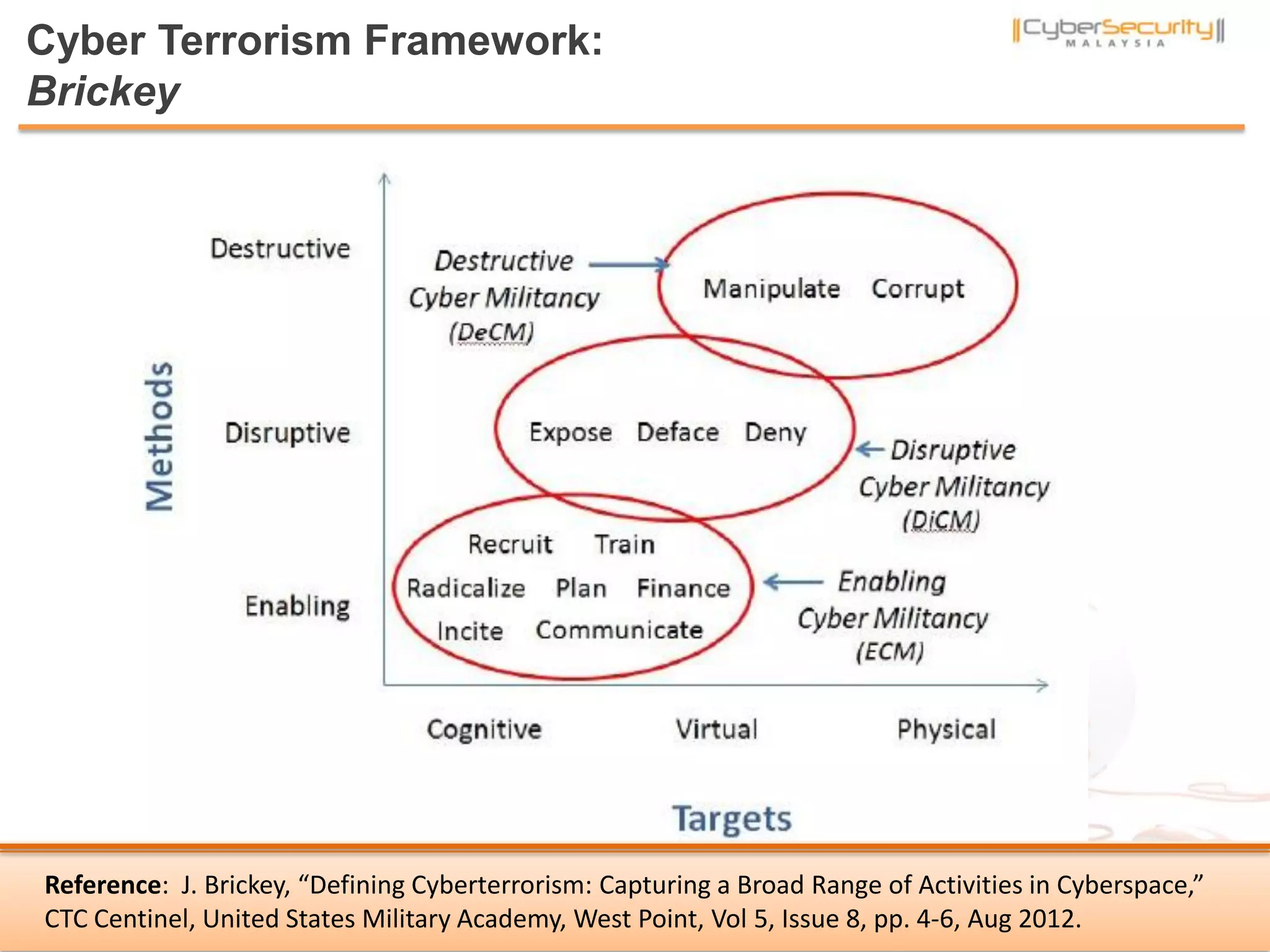
Cyber Terrorism Framework:
Brickey
21
Reference: J. Brickey, “Defining Cyberterrorism: Capturing a Broad Range of Activities in Cyberspace,”
CTC Centinel, United States Military Academy, West Point, Vol 5, Issue 8, pp. 4-6, Aug 2012.
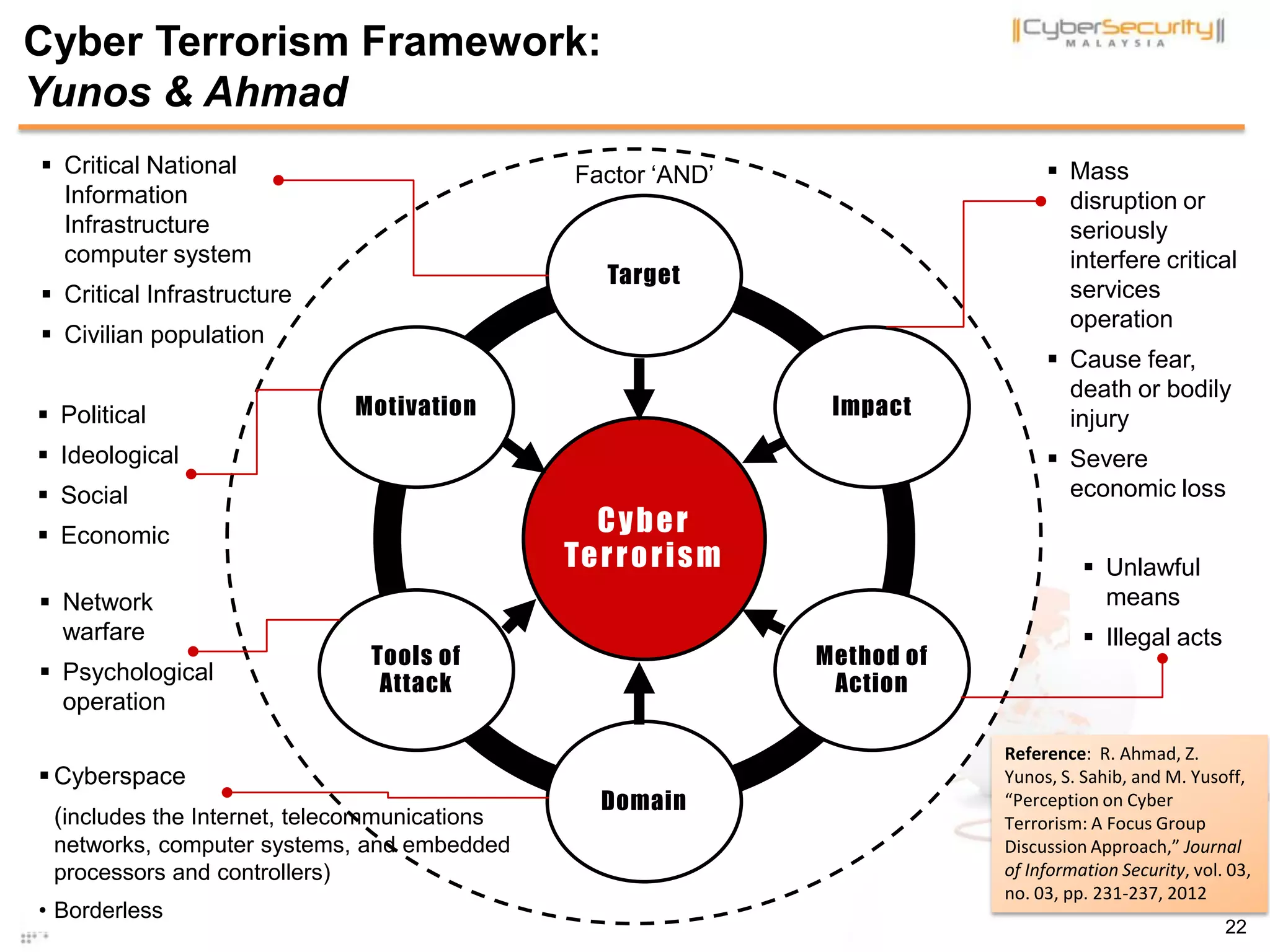
Cyber Terrorism Framework:
Yunos & Ahmad
 Mass
disruption or
seriously
interfere critical
services
operation
 Cause fear,
death or bodily
injury
 Severe
economic loss
 Network
warfare
 Psychological
operation
 Critical National
Information
Infrastructure
computer system
 Critical Infrastructure
 Civilian population
Cyber
Terrorism
Target
Impact
Method of
Action
Domain
Tools of
Attack
Motivation Political
 Ideological
 Social
 Economic
 Cyberspace
(includes the Internet, telecommunications
networks, computer systems, and embedded
processors and controllers)
• Borderless
 Unlawful
means
 Illegal acts
Factor ‘AND’
22
Reference: R. Ahmad, Z.
Yunos, S. Sahib, and M. Yusoff,
“Perception on Cyber
Terrorism: A Focus Group
Discussion Approach,” Journal
of Information Security, vol. 03,
no. 03, pp. 231-237, 2012
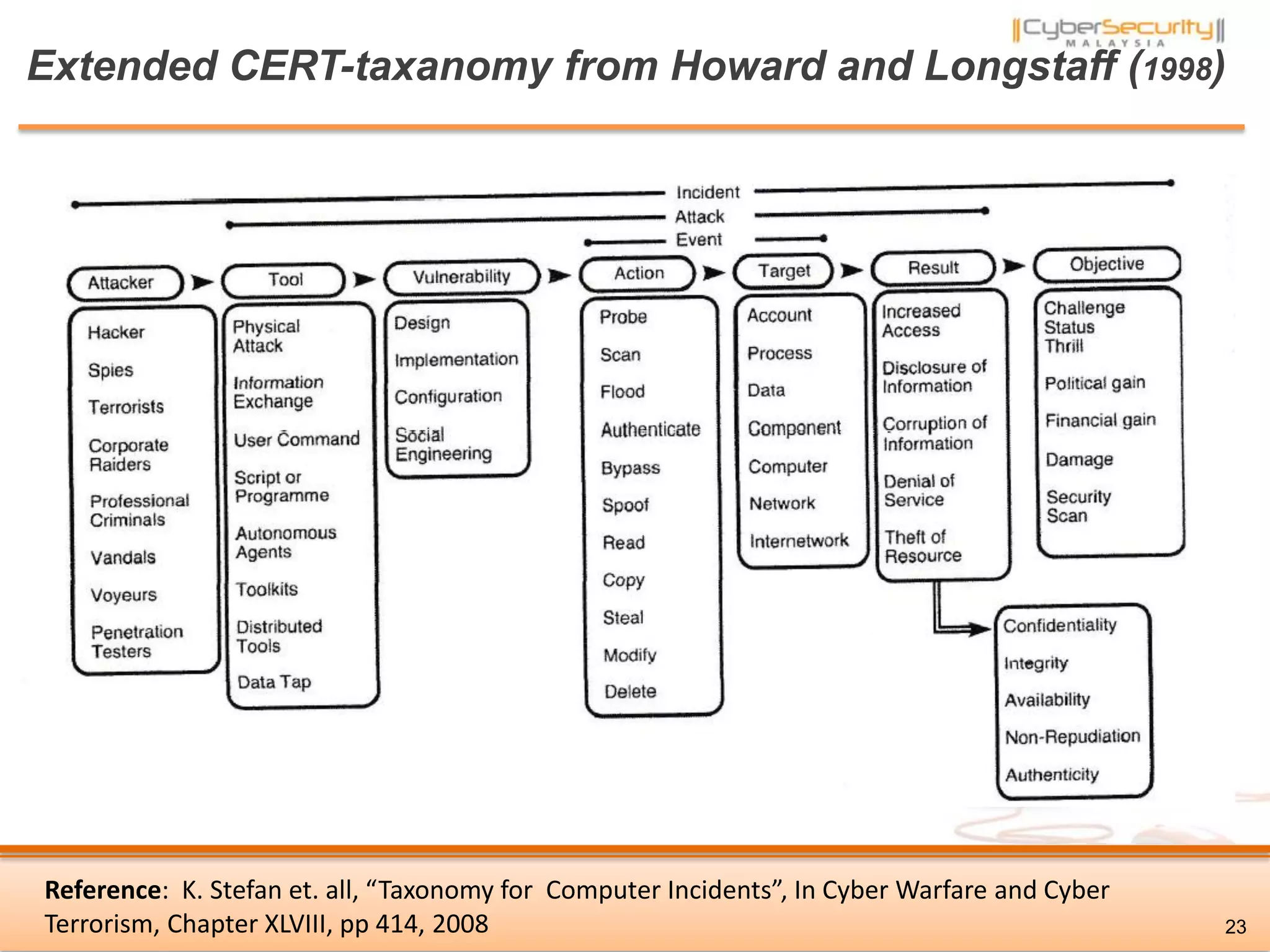
Reference: K. Stefan et. all, “Taxonomy for Computer Incidents”, In Cyber Warfare and Cyber
Terrorism, Chapter XLVIII, pp 414, 2008 23
Extended CERT-taxanomy from Howard and Longstaff (1998)
Initiatives in Safeguarding Malaysia
CNII Against Cyber Threats
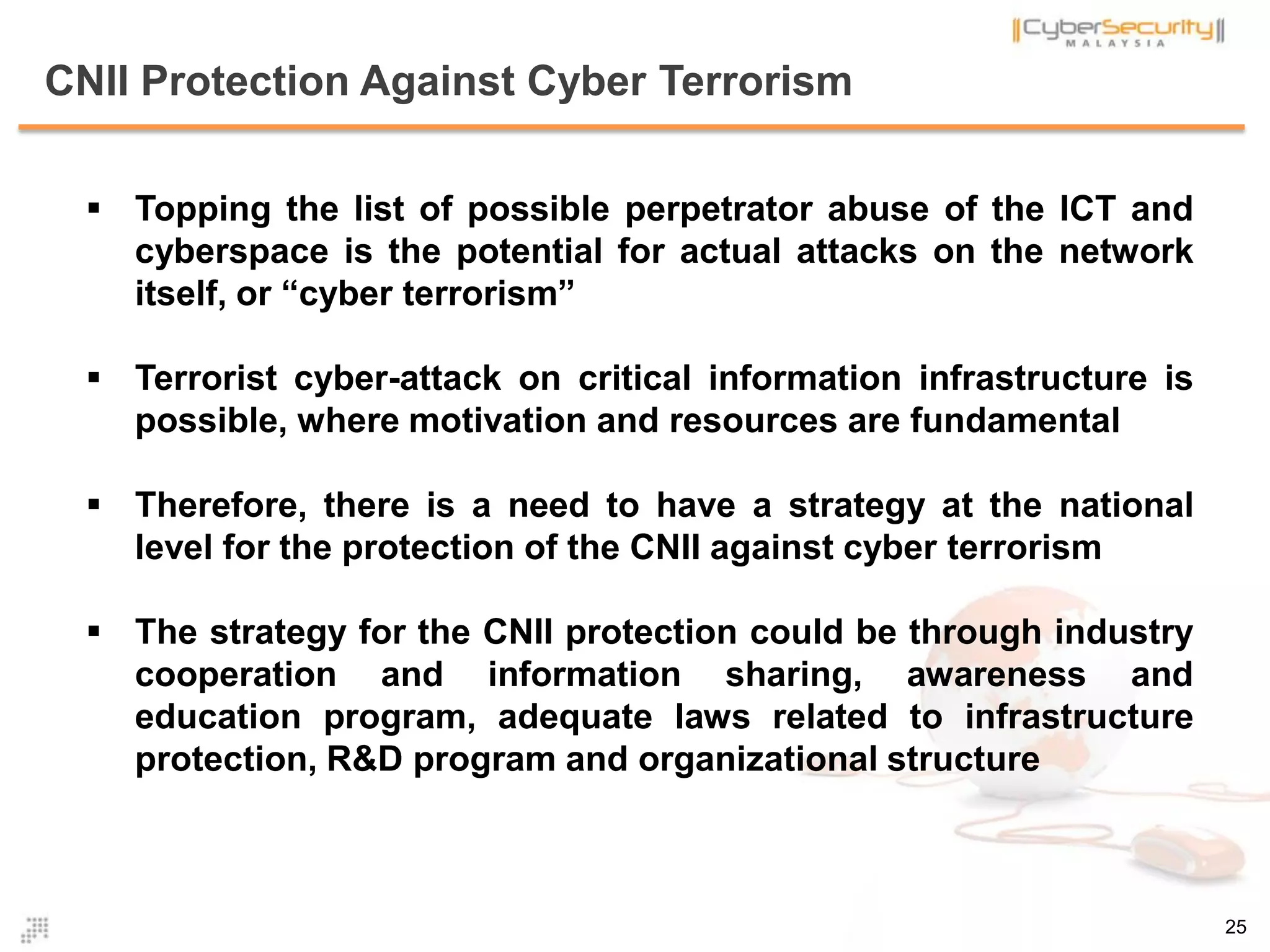
CNII Protection Against Cyber Terrorism
 Topping the list of possible perpetrator abuse of the ICT and
cyberspace is the potential for actual attacks on the network
itself, or “cyber terrorism”
 Terrorist cyber-attack on critical information infrastructure is
possible, where motivation and resources are fundamental
 Therefore, there is a need to have a strategy at the national
level for the protection of the CNII against cyber terrorism
 The strategy for the CNII protection could be through industry
cooperation and information sharing, awareness and
education program, adequate laws related to infrastructure
protection, R&D program and organizational structure
25
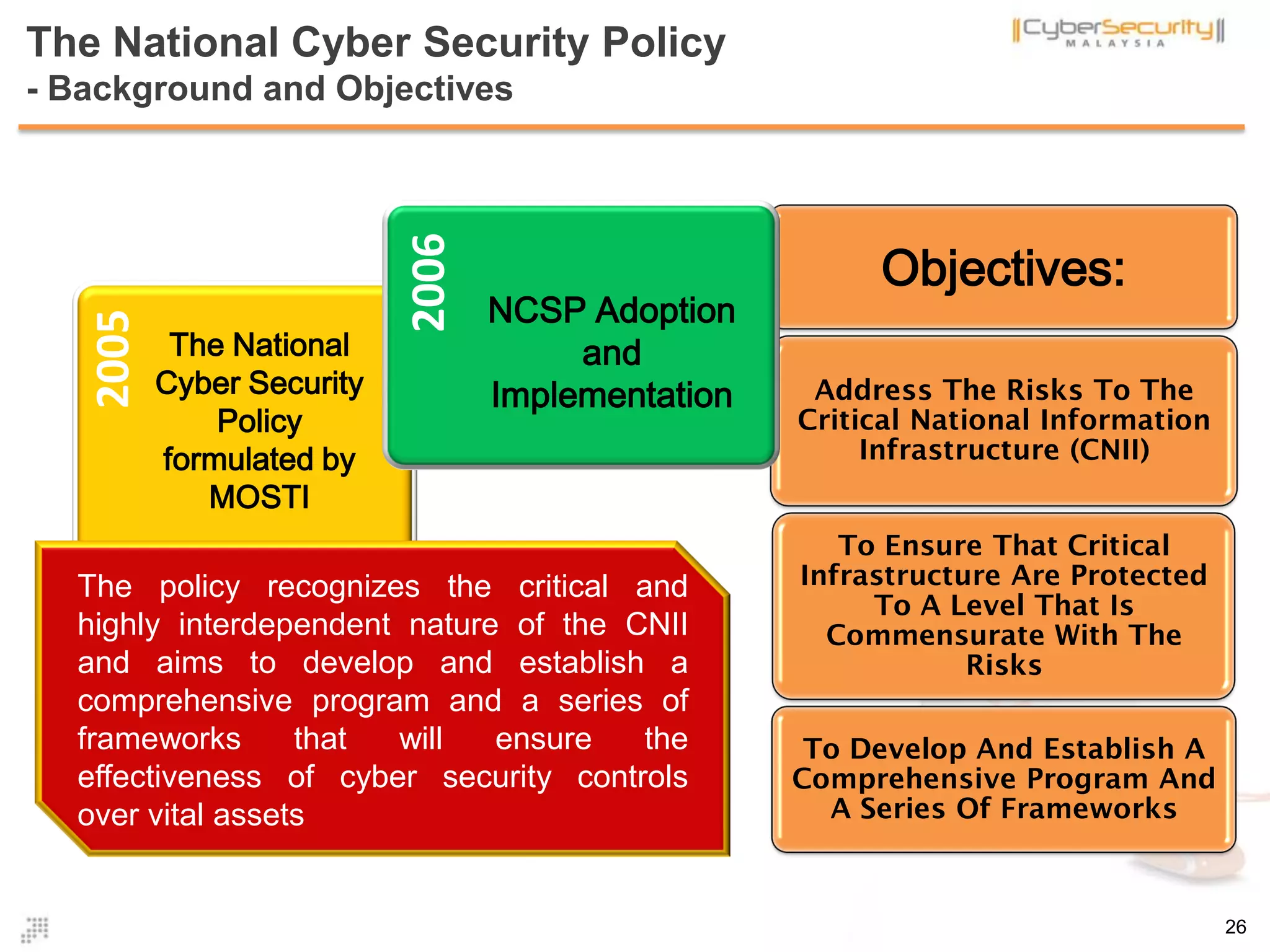
The National Cyber Security Policy
- Background and Objectives
Objectives:
Address The Risks To The
Critical National Information
Infrastructure (CNII)
To Ensure That Critical
Infrastructure Are Protected
To A Level That Is
Commensurate With The
Risks
To Develop And Establish A
Comprehensive Program And
A Series Of Frameworks
2005
The National
Cyber Security
Policy
formulated by
MOSTI
2006
NCSP Adoption
and
Implementation
The policy recognizes the critical and
highly interdependent nature of the CNII
and aims to develop and establish a
comprehensive program and a series of
frameworks that will ensure the
effectiveness of cyber security controls
over vital assets
26
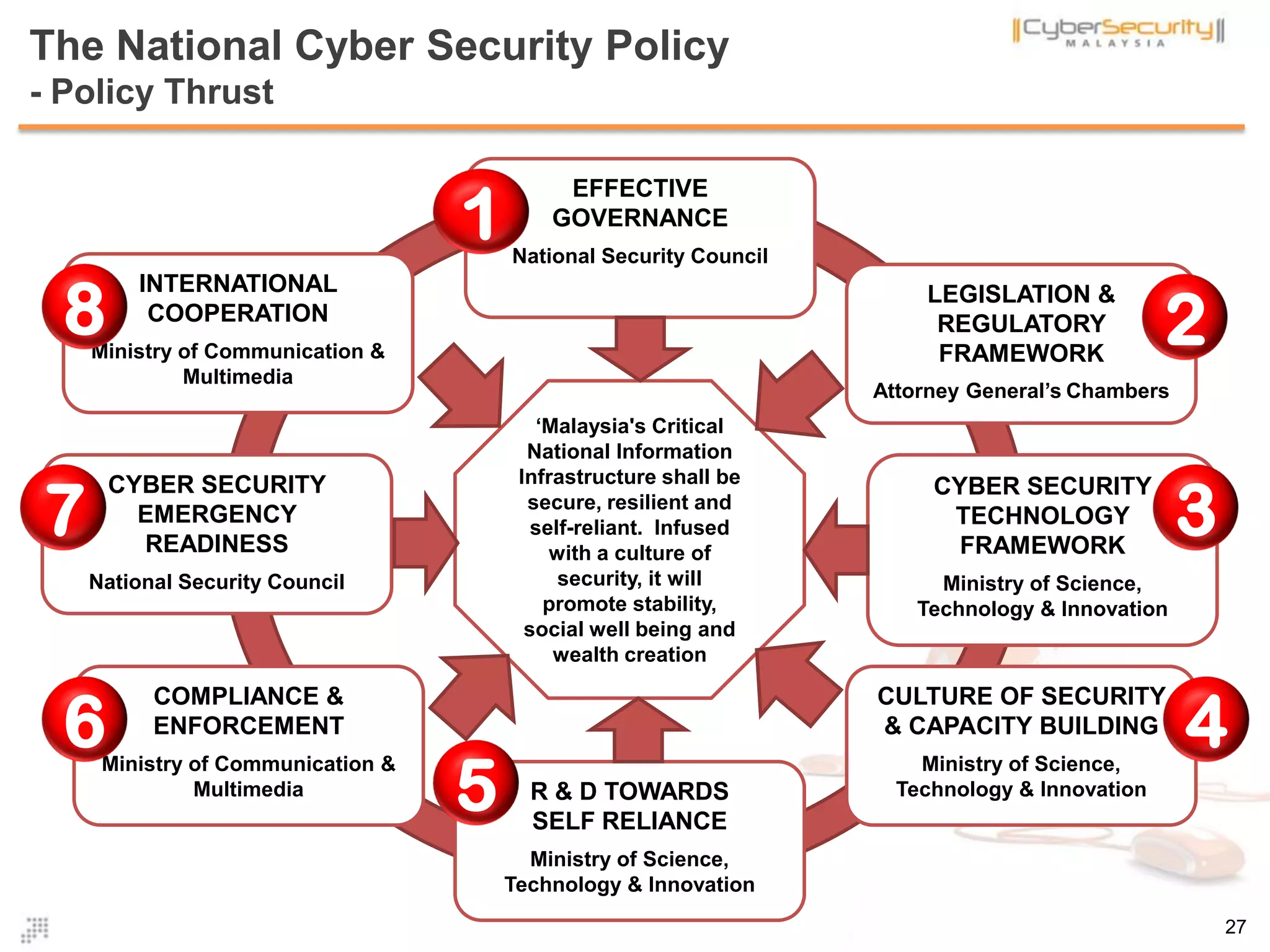
The National Cyber Security Policy
- Policy Thrust
Copyright © 2010 CyberSecurity Malaysia
INTERNATIONAL
COOPERATION
Ministry of Communication &
Multimedia
‘Malaysia's Critical
National Information
Infrastructure shall be
secure, resilient and
self-reliant. Infused
with a culture of
security, it will
promote stability,
social well being and
wealth creation
CYBER SECURITY
EMERGENCY
READINESS
National Security Council
COMPLIANCE &
ENFORCEMENT
Ministry of Communication &
Multimedia R & D TOWARDS
SELF RELIANCE
Ministry of Science,
Technology & Innovation
CULTURE OF SECURITY
& CAPACITY BUILDING
Ministry of Science,
Technology & Innovation
CYBER SECURITY
TECHNOLOGY
FRAMEWORK
Ministry of Science,
Technology & Innovation
LEGISLATION &
REGULATORY
FRAMEWORK
Attorney General’s Chambers
EFFECTIVE
GOVERNANCE
National Security Council
1
2
3
4
5
6
7
8
27
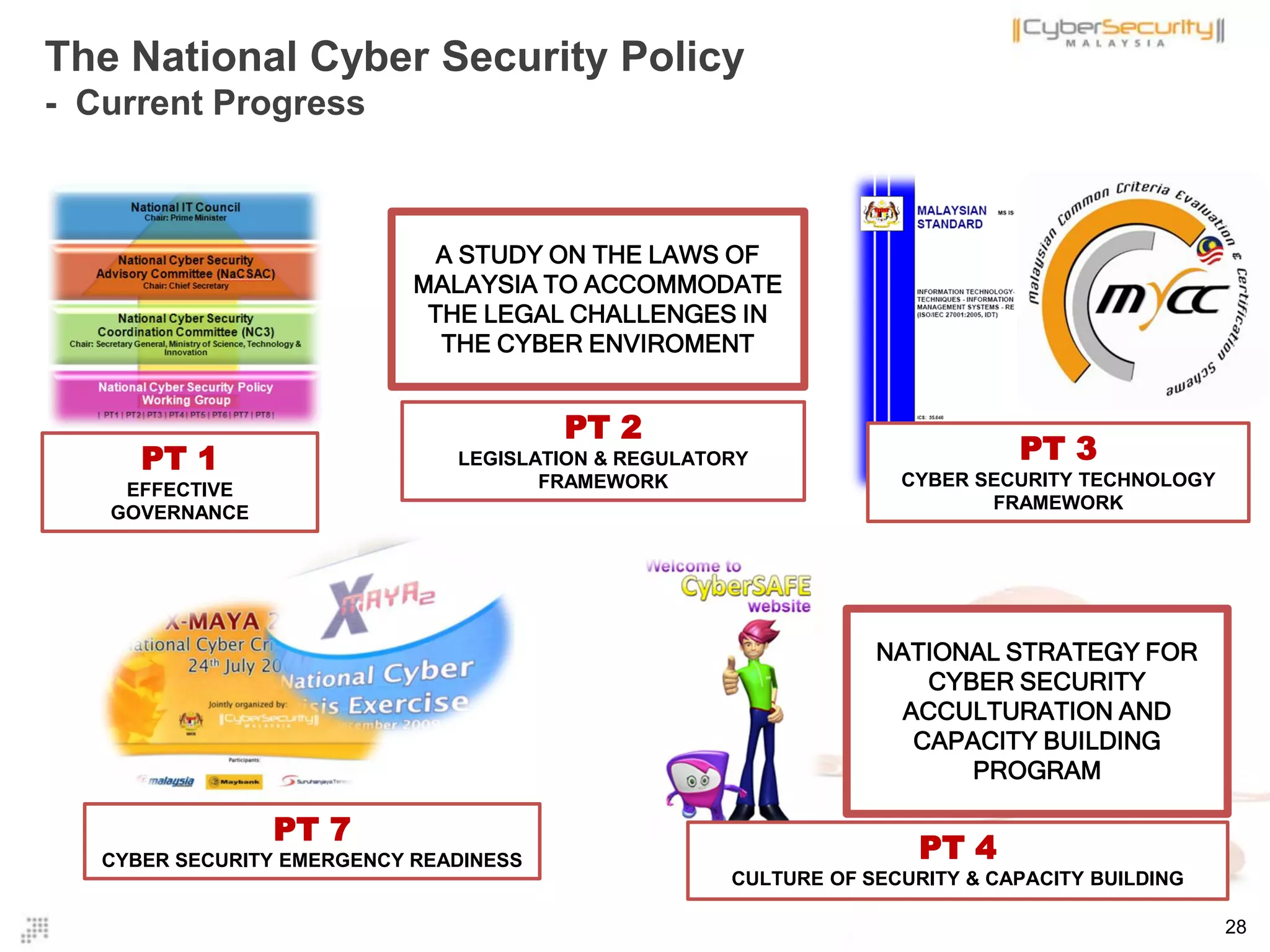
The National Cyber Security Policy
- Current Progress
PT 1
EFFECTIVE
GOVERNANCE
A STUDY ON THE LAWS OF
MALAYSIA TO ACCOMMODATE
THE LEGAL CHALLENGES IN
THE CYBER ENVIROMENT
PT 2
LEGISLATION & REGULATORY
FRAMEWORK
PT 3
CYBER SECURITY TECHNOLOGY
FRAMEWORK
NATIONAL STRATEGY FOR
CYBER SECURITY
ACCULTURATION AND
CAPACITY BUILDING
PROGRAM
PT 4
CULTURE OF SECURITY & CAPACITY BUILDING
PT 7
CYBER SECURITY EMERGENCY READINESS
28
29
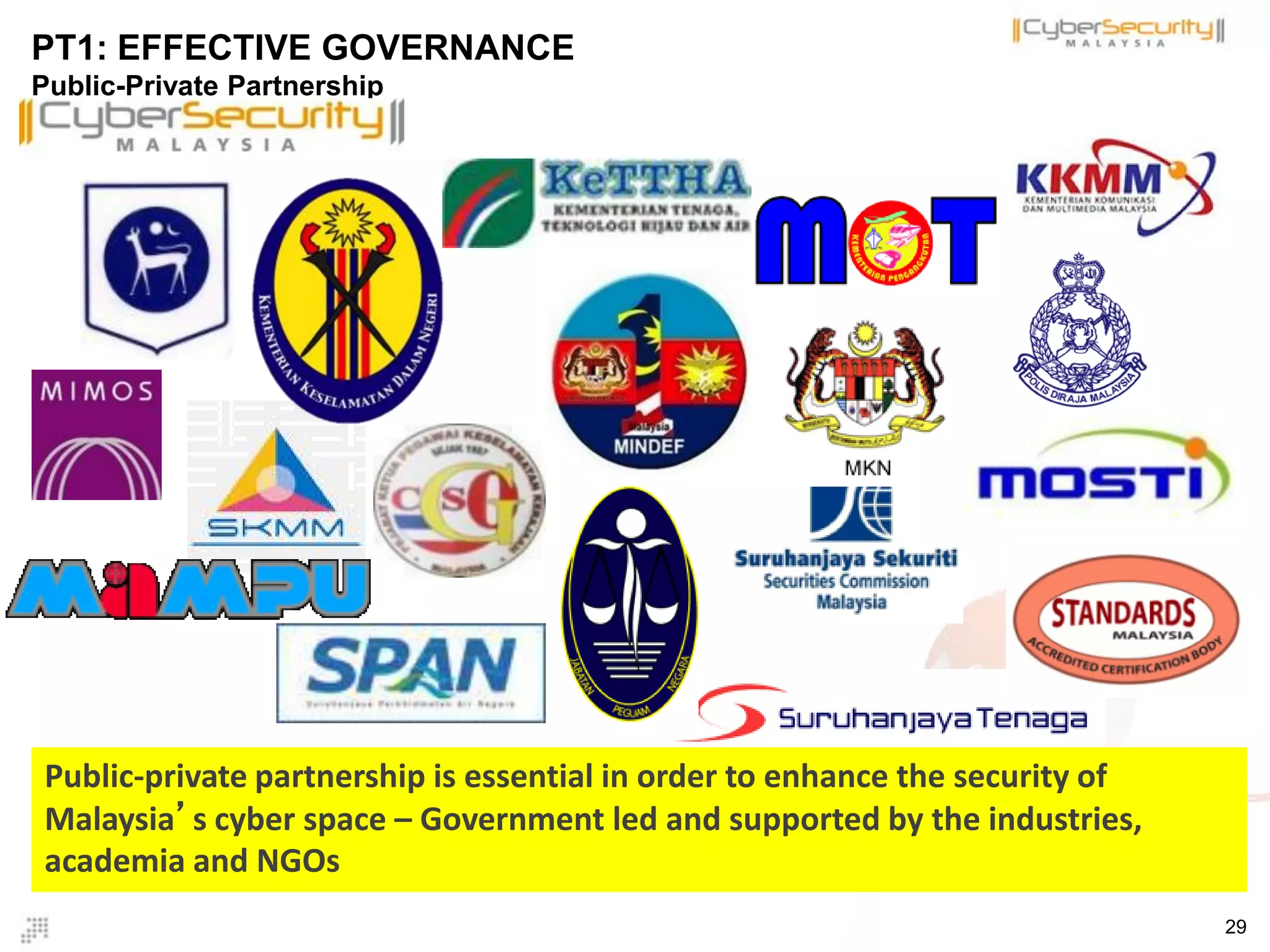
PT1: EFFECTIVE GOVERNANCE
Public-Private Partnership
29
Public-private partnership is essential in order to enhance the security of
Malaysia’s cyber space – Government led and supported by the industries,
academia and NGOs
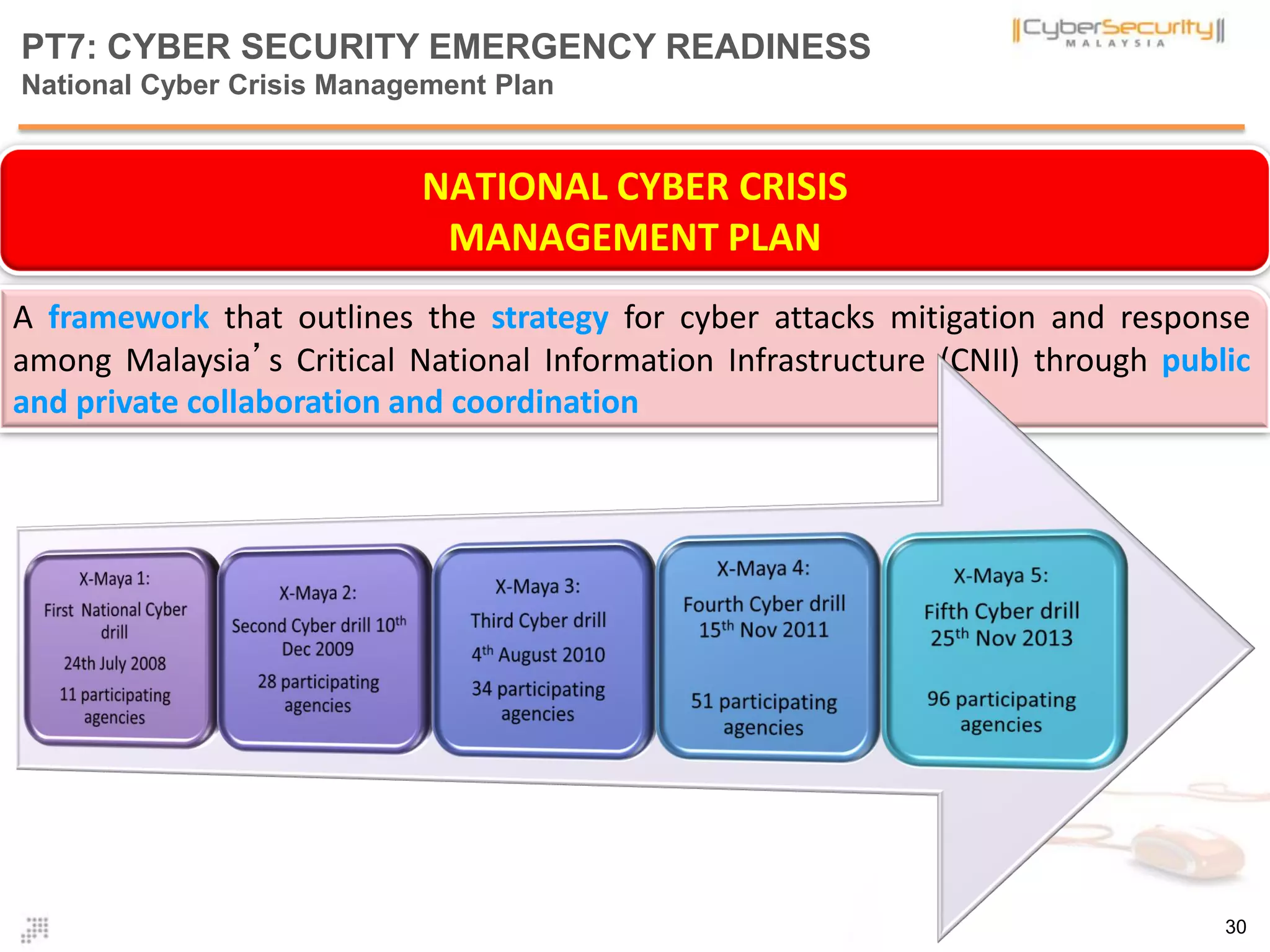
PT7: CYBER SECURITY EMERGENCY READINESS
National Cyber Crisis Management Plan
NATIONAL CYBER CRISIS
MANAGEMENT PLAN
A framework that outlines the strategy for cyber attacks mitigation and response
among Malaysia’s Critical National Information Infrastructure (CNII) through public
and private collaboration and coordination
30
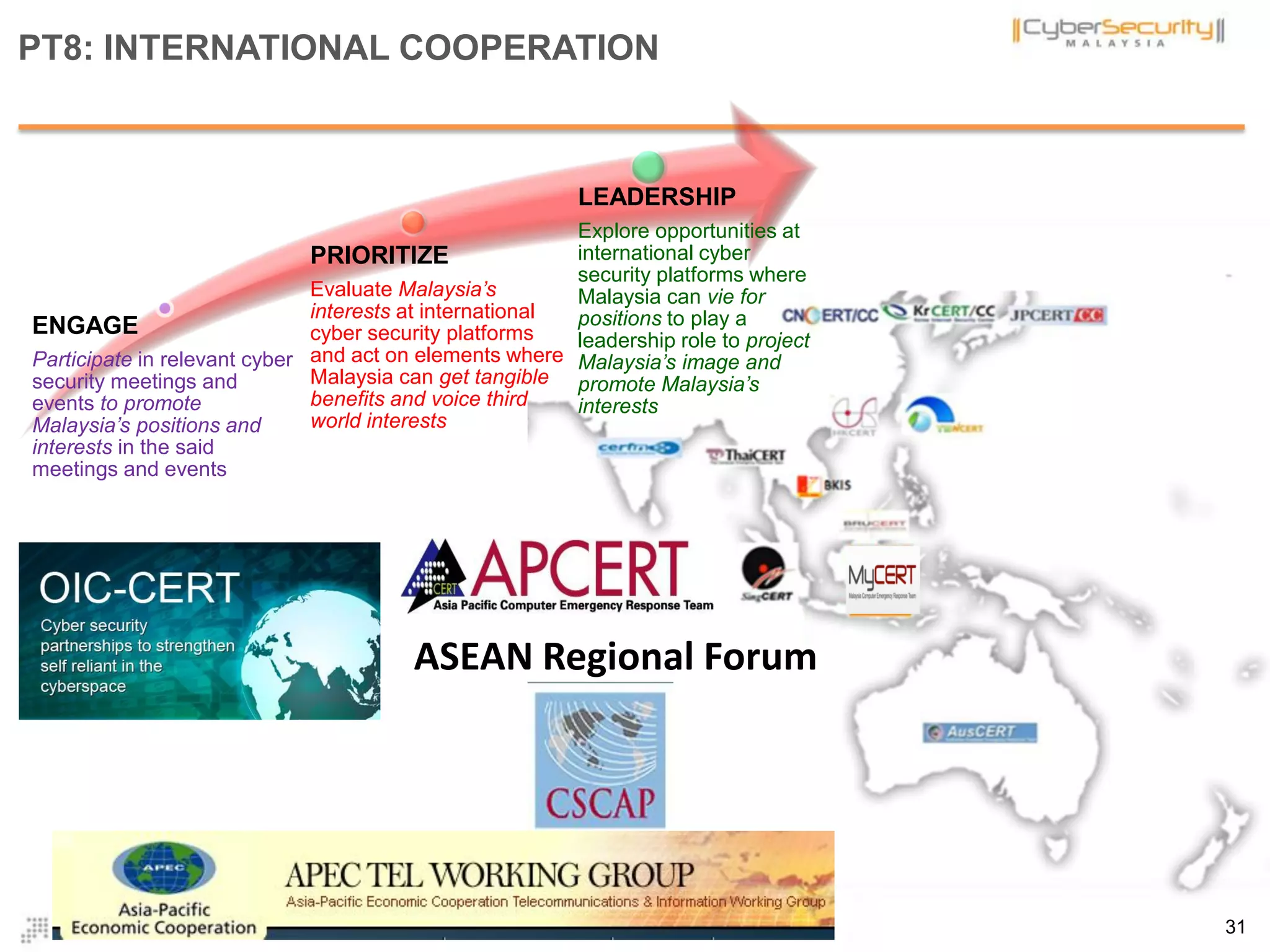
PT8: INTERNATIONAL COOPERATION
31
ENGAGE
Participate in relevant cyber
security meetings and
events to promote
Malaysia’s positions and
interests in the said
meetings and events
PRIORITIZE
Evaluate Malaysia’s
interests at international
cyber security platforms
and act on elements where
Malaysia can get tangible
benefits and voice third
world interests
LEADERSHIP
Explore opportunities at
international cyber
security platforms where
Malaysia can vie for
positions to play a
leadership role to project
Malaysia’s image and
promote Malaysia’s
interests
ASEAN Regional Forum
+
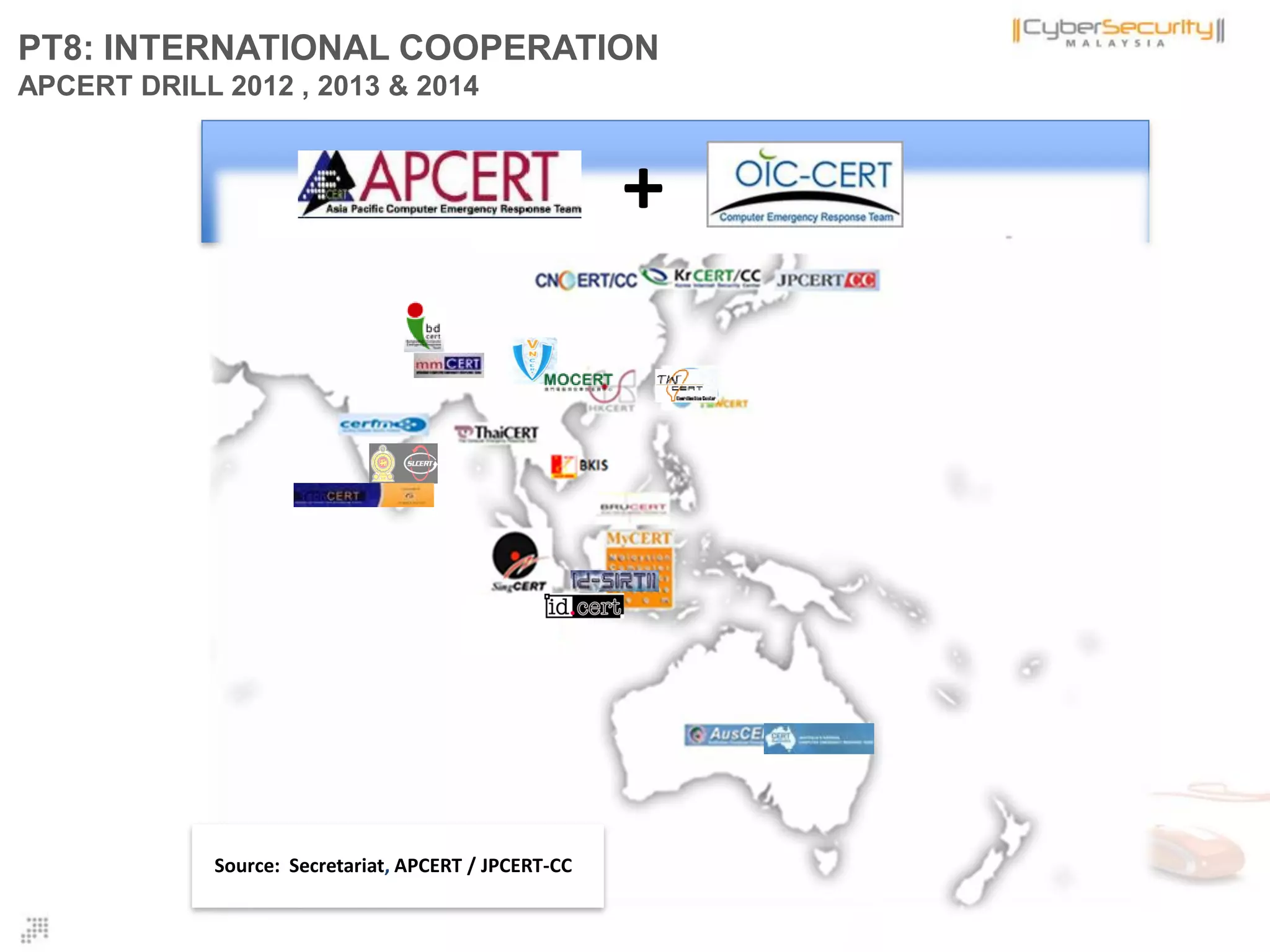
Source: Secretariat, APCERT / JPCERT-CC
PT8: INTERNATIONAL COOPERATION
APCERT DRILL 2012 , 2013 & 2014
• Cyber world offers great opportunity, but the emergence
of cyber threats brought together a number of
repercussions that should not be taken for granted
• Hence it is important to address these threats in a
comprehensive manner. These include:
 To have an integrated policy framework
 To enhance the use of technology and process to mitigate the
threats
 To inculcate a cyber security acculturation through continuous
training and awareness programs
• Public-Private Partnership is essential to enhance the
security and safety of cyber space
Conclusion
33
Session 3.2 Zahri Hj Yunos

Session 3.2 Zahri Hj Yunos

  • 1.
    CYBER TERRORISM : THERISING THREAT IN CYBER DIMENSION? Zahri Yunos Chief Operating Officer CyberSecurity Malaysia Commonwealth Cybersecurity Forum 2014 London 5 – 6 March 2014
  • 2.
  • 3.
    Critical National Information Infrastructure(CNII) In Malaysia DEFENCE & SECURITY TRANSPORTATION BANKING & FINANCE HEALTH SERVICES EMERGENCY SERVICES VISION ‘Malaysia's Critical National Information Infrastructure shall be secure, resilient and self-reliant. Infused with a culture of security, it will promote stability, social well being and wealth creation’ CRITICAL NATIONAL INFORMATION INFRASTRUCTURE Assets (real & virtual), systems and functions that are vital to the nation that their incapacity or destruction would have a devastating impact on • National defense & security • National economic strength • National image • Government capability to function • Public health & safety ENERGY INFORMATION & COMMUNICATIONS GOVERNMENT FOOD & AGRICULTURE WATER 3
  • 4.
  • 5.
    Interdependency of CNII Referece:Lewis, T. G. (2006). Critical Infrastructure Protection in Homeland Security. Published by John Wiley & Sons, Inc., Hoboken, New Jersey
  • 6.
    ELECTRICITY UTILITIES Threats to CNII: Interdependency SECTORS / SERVICES
  • 7.
    SCADA = SupervisoryControl & Data Acquisition Threats to CNII : SCADA Systems 1 2 3 4 Reference: Using ANSI/ISA-99 Standards to Improve Control System Security by Tofino Security The interconnection of SCADA systems to corporate networks & their reliance on common operating platforms and remote excess - exposing SCADA systems to vulnerabilities 7
  • 8.
    Threats to CNII: The Use of ICT and Cyberspace by Terrorist Use of Internet By Terrorist Psychological Warfare Publicity and Propaganda Data Mining Fundraising Recruitment and Mobilization Social Networking Sharing Information Planning and Coordination Reference: [1] Mantel, B.: (2009). Terrorism and the Internet. Should Web Sites That Promote Terrorism Be Shut Down?. From CQ Researchers, pp. 129-153 [2] Zhang, Y., Zeng, S., Huang, C.N., Fan, L., Yu, X., Dang, Y., Larson, C., Denning, D., Roberts, N., and Chen, H.: (2010). Developing a Dark Web Collection and Infrastructure for Computational and Social Sciences. IEEE International Conference on Intelligence and Security Informatics, pp. 59-64 [3] Li, X., Mao, W., Zeng, D., and Wang, F.: (2010). Automatic Construction of Domain Theory for Attack Planning. IEEE International Conference on Intelligence and Security Informatics, pp 65-70 [4] Fu, T., Abbasi, A., and Chen, H. A Focused Crawler for Dark Web Forums. Journal of the American Society for Information Science and Technology [5] Yunos, Z., Ahmad, R., Mat Ali, S., and Shamsuddin, S. Illicit Activities and Terrorism in Cyberspace: An Exploratory Study in the Southeast Asian Region. in:M. Chau et al. (Eds.): Pacific Asia Workshop on Intelligence and Security Informatics (PAISI 2012), 29 May 2012, LNCS 7299 Springer, Heidelberg, pp. 27-35, 2012 8
  • 9.
    Use of cyber space by terrorist Psychological Warfare Publicityand Propaganda Attacks against CNII Fundraising Recruitment and Mobilization Social Networking Sharing Information Planning and Coordination The perpetrator may utilize the cyberspace for conducting cyber attacks on critical national information infrastructure facilities 9
  • 10.
     Many nationsall over the world constantly increase their dependency on cyberspace by maximising the use of ICT  Interdependencies that exist within critical infrastructures have raised concerns - successful cyber attacks on one computer system can have serious cascading effects on other, resulting in potentially catastrophic damage and disruption  Through ICT, perpetrators can disrupt critical services, hence affecting the nation’s operation and its ability to function. Why would a perpetrator decide to use ICT instead of using the usual methods of assassination, hostage- taking, guerrilla warfare and bombing? 10
  • 11.
  • 12.
    Cyber Attack toCNII - Estonia 12 Cyber Attack on Estonia • Occurred in May 2007 • Estonia was under cyber attacks for 3 weeks • Attack targeted government, banking, media and police websites • Paralyzed internet communication. • Attacks from 128 sources outside Estonia • US and European countries aided Estonia in overcoming the cyber attacks You don't see buildings reduced to piles of rubble or dead bodies strewn across the street …... There's nothing to take photos of …… There's only economic damage, websites that cannot be accessed and transactions that cannot take place ….. By destabilizing the economy, the people of the country is subject to riots, rallies and protests, and crippling its stability which could result in violence and creating unrest in the country YB Datuk Seri Dr Ahmad Zahid Hamidi, DSA 2012 Is it cyber terrorism? 12 Is it cyber crime? Is it cyber war?
  • 13.
    Cyber Attack toCNII – Stuxnet Stuxnet was targeted at Siemens industrial software and equipment running Microsoft Windows (June 2010). Symantec reported that nearly 60% of the approximately 100,000 infect hosts were located in Iran, which has lead to speculation that Stuxnet’s target was at Iran’s nuclear power plant or uranium enrichment plant 13
  • 14.
    14 Cyber Attack toCNII – Shamoon
  • 15.
    OP Malaysia –Cyber Attacks by Anonymous Hackers (15-19 June 2011) 15
  • 16.
    Definition: Cyber Terrorism Reference:D. E. Denning, “Cyberterrorism,” Testimony given to the House Armed Services Committee Special Oversight Panel on Terrorism, 2000 “Cyber terrorism is the convergence of terrorism and cyberspace 1. It is generally understood to mean unlawful attacks and threats of attack against computers, networks and the information stored therein 2 when done to intimidate a government or its people 3 in furtherance of political or social objectives 4. Further, to qualify as cyber terrorism, an attack should result in violence against persons or property 5, or at least cause enough harm to generate fear 6. Attacks that lead to death or bodily injury, explosions, plane crashes, water contamination, or severe economics loss 7 would be examples. Serious attacks against critical infrastructures could be acts of cyber terrorism 8, depending on their impact. Attacks that disrupt nonessential services or that are mainly a costly nuisance would not. 9” 16
  • 17.
    Definition : CyberTerrorism .. many more • There are many definitions on cyber terrorism provided by researchers, policy makers and individuals • Interestingly, most governments in the world do not agree on one single definition of cyber terrorism. There is no common definition of cyber terrorism • The ambiguity in the definition brings indistinctness in action; as the old maxim goes “one man’s terrorist is another man’s freedom fighter” [1]. • According to Schmid, "there is no agreement among experts and there is not likely to be an agreement as long they cannot even agree on a common definition on terrorism (and cyber terrorism).“ [2] Reference: [1] L. E. Prichard, J. J., and MacDonald, “Cyber Terrorism: A Study of the Extent of Coverage in Computer Security Textbooks,” Journal of Information Technology Education, vol. 3, 2004. [2] A. P. Schmid, “Root Causes of Terrorism: Methodological and Theoretical Notes, Empirical Findings and Four Inventories of Assumed Causal Factors,” 2005. 17
  • 18.
    Cyber Terrorism Framework: Veerasamy Reference: N. Veerasamy, “A Conceptual High-level Framework of Cyberterrorism,” International Journal of Information Warfare, vol. 8, no. 1, pp. 1-14, 2009. 18 Provide context in which cyber terrorism is functioning Methods of carrying cyber terrorism Motivation
  • 19.
    Cyber Terrorism Framework: Heickero Actor-target-effectChain Reference: R. Heickero, “Terrorism Online and the Change of Modus Operandi,” Swedish Defence Research Agency, Stockholm, Sweden, pp. 1-13, 2007. 19
  • 20.
    Cyber Terrorism Framework: Gordonand Ford Reference: S. Gordon and R. Ford, “Cyberterrorism?,” Symantec White Paper, 2002. Components Description Perpetrator Group/Individual In cyber context, virtual interactions can lead to anonymity. Place Worldwide The event does not have to occur in a particular location. The Internet has introduced globalization of the environment. Action Threats/Violence/ Recruitment/ Education/Strategies Terrorist scenarios typically are violent or involve threats of violence. Violence in virtual environment includes psychological effects, possible behavior modification and physical trauma. Tool Kidnapping/ Harassment/ Propaganda/Education Terrorist use the computer as tool. Facilitating identity theft, computer viruses, hacking are examples fall under this category. Target Government Officials/Corporations Potential targets are corporations and government computer systems. Affiliation Actual/Claimed Affiliation refers to recruitment in carrying out given instructions. Affiliation can result in strengthening of the individual organizations as they can immediately acquire access to the information resources of their allies. Motivation Social/Political Change Political, social and economic are the motivations present in the real-world terrorism. 20
  • 21.
    Cyber Terrorism Framework: Brickey 21 Reference:J. Brickey, “Defining Cyberterrorism: Capturing a Broad Range of Activities in Cyberspace,” CTC Centinel, United States Military Academy, West Point, Vol 5, Issue 8, pp. 4-6, Aug 2012.
  • 22.
    Cyber Terrorism Framework: Yunos& Ahmad  Mass disruption or seriously interfere critical services operation  Cause fear, death or bodily injury  Severe economic loss  Network warfare  Psychological operation  Critical National Information Infrastructure computer system  Critical Infrastructure  Civilian population Cyber Terrorism Target Impact Method of Action Domain Tools of Attack Motivation Political  Ideological  Social  Economic  Cyberspace (includes the Internet, telecommunications networks, computer systems, and embedded processors and controllers) • Borderless  Unlawful means  Illegal acts Factor ‘AND’ 22 Reference: R. Ahmad, Z. Yunos, S. Sahib, and M. Yusoff, “Perception on Cyber Terrorism: A Focus Group Discussion Approach,” Journal of Information Security, vol. 03, no. 03, pp. 231-237, 2012
  • 23.
    Reference: K. Stefanet. all, “Taxonomy for Computer Incidents”, In Cyber Warfare and Cyber Terrorism, Chapter XLVIII, pp 414, 2008 23 Extended CERT-taxanomy from Howard and Longstaff (1998)
  • 24.
    Initiatives in SafeguardingMalaysia CNII Against Cyber Threats
  • 25.
    CNII Protection AgainstCyber Terrorism  Topping the list of possible perpetrator abuse of the ICT and cyberspace is the potential for actual attacks on the network itself, or “cyber terrorism”  Terrorist cyber-attack on critical information infrastructure is possible, where motivation and resources are fundamental  Therefore, there is a need to have a strategy at the national level for the protection of the CNII against cyber terrorism  The strategy for the CNII protection could be through industry cooperation and information sharing, awareness and education program, adequate laws related to infrastructure protection, R&D program and organizational structure 25
  • 26.
    The National CyberSecurity Policy - Background and Objectives Objectives: Address The Risks To The Critical National Information Infrastructure (CNII) To Ensure That Critical Infrastructure Are Protected To A Level That Is Commensurate With The Risks To Develop And Establish A Comprehensive Program And A Series Of Frameworks 2005 The National Cyber Security Policy formulated by MOSTI 2006 NCSP Adoption and Implementation The policy recognizes the critical and highly interdependent nature of the CNII and aims to develop and establish a comprehensive program and a series of frameworks that will ensure the effectiveness of cyber security controls over vital assets 26
  • 27.
    The National CyberSecurity Policy - Policy Thrust Copyright © 2010 CyberSecurity Malaysia INTERNATIONAL COOPERATION Ministry of Communication & Multimedia ‘Malaysia's Critical National Information Infrastructure shall be secure, resilient and self-reliant. Infused with a culture of security, it will promote stability, social well being and wealth creation CYBER SECURITY EMERGENCY READINESS National Security Council COMPLIANCE & ENFORCEMENT Ministry of Communication & Multimedia R & D TOWARDS SELF RELIANCE Ministry of Science, Technology & Innovation CULTURE OF SECURITY & CAPACITY BUILDING Ministry of Science, Technology & Innovation CYBER SECURITY TECHNOLOGY FRAMEWORK Ministry of Science, Technology & Innovation LEGISLATION & REGULATORY FRAMEWORK Attorney General’s Chambers EFFECTIVE GOVERNANCE National Security Council 1 2 3 4 5 6 7 8 27
  • 28.
    The National CyberSecurity Policy - Current Progress PT 1 EFFECTIVE GOVERNANCE A STUDY ON THE LAWS OF MALAYSIA TO ACCOMMODATE THE LEGAL CHALLENGES IN THE CYBER ENVIROMENT PT 2 LEGISLATION & REGULATORY FRAMEWORK PT 3 CYBER SECURITY TECHNOLOGY FRAMEWORK NATIONAL STRATEGY FOR CYBER SECURITY ACCULTURATION AND CAPACITY BUILDING PROGRAM PT 4 CULTURE OF SECURITY & CAPACITY BUILDING PT 7 CYBER SECURITY EMERGENCY READINESS 28
  • 29.
    29 PT1: EFFECTIVE GOVERNANCE Public-PrivatePartnership 29 Public-private partnership is essential in order to enhance the security of Malaysia’s cyber space – Government led and supported by the industries, academia and NGOs
  • 30.
    PT7: CYBER SECURITYEMERGENCY READINESS National Cyber Crisis Management Plan NATIONAL CYBER CRISIS MANAGEMENT PLAN A framework that outlines the strategy for cyber attacks mitigation and response among Malaysia’s Critical National Information Infrastructure (CNII) through public and private collaboration and coordination 30
  • 31.
    PT8: INTERNATIONAL COOPERATION 31 ENGAGE Participatein relevant cyber security meetings and events to promote Malaysia’s positions and interests in the said meetings and events PRIORITIZE Evaluate Malaysia’s interests at international cyber security platforms and act on elements where Malaysia can get tangible benefits and voice third world interests LEADERSHIP Explore opportunities at international cyber security platforms where Malaysia can vie for positions to play a leadership role to project Malaysia’s image and promote Malaysia’s interests ASEAN Regional Forum
  • 32.
    + Source: Secretariat, APCERT/ JPCERT-CC PT8: INTERNATIONAL COOPERATION APCERT DRILL 2012 , 2013 & 2014
  • 33.
    • Cyber worldoffers great opportunity, but the emergence of cyber threats brought together a number of repercussions that should not be taken for granted • Hence it is important to address these threats in a comprehensive manner. These include:  To have an integrated policy framework  To enhance the use of technology and process to mitigate the threats  To inculcate a cyber security acculturation through continuous training and awareness programs • Public-Private Partnership is essential to enhance the security and safety of cyber space Conclusion 33