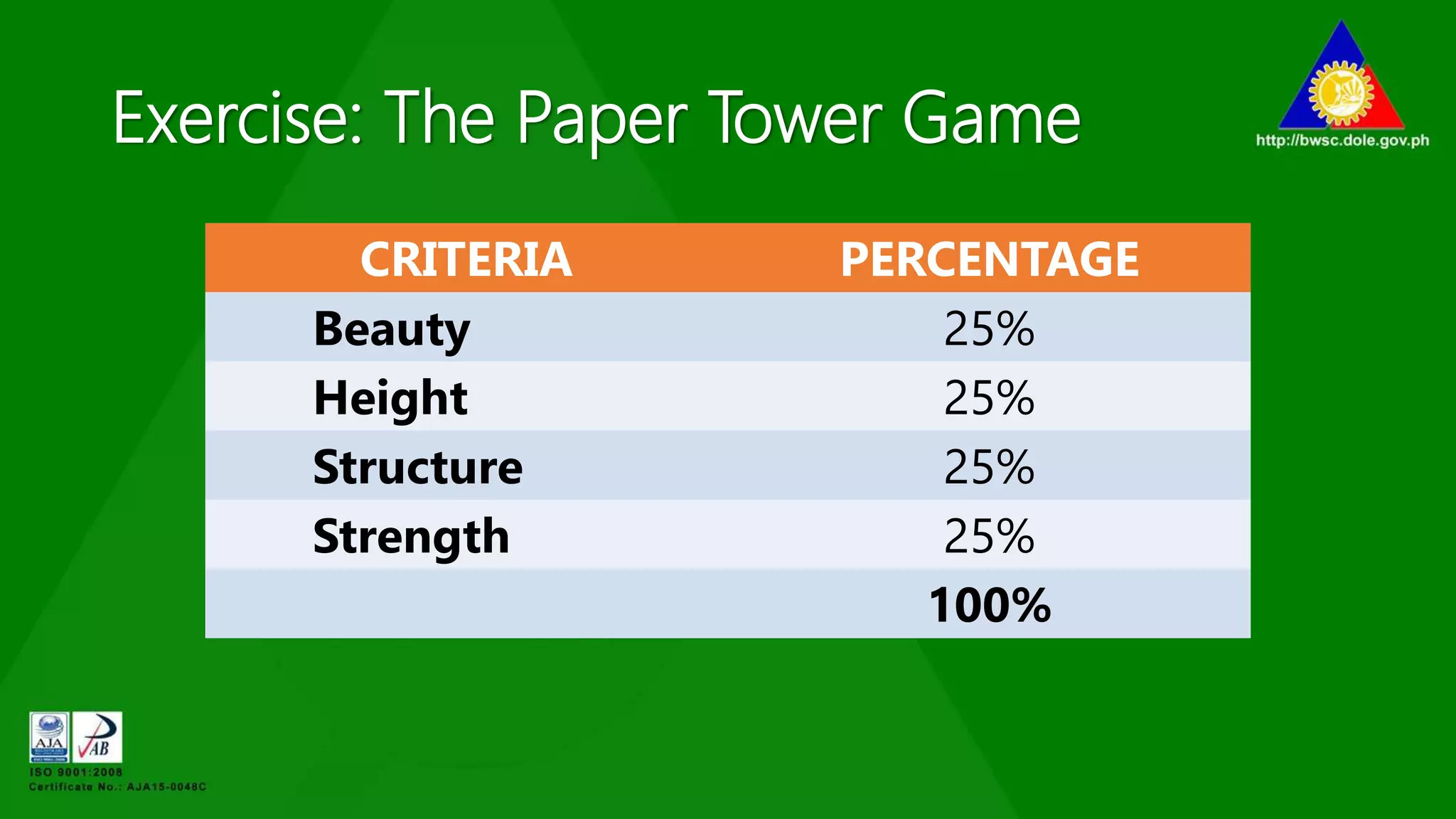
Exercise: The Paper Tower Game
CRITERIA PERCENTAGE
Beauty 25%
Height 25%
Structure 25%
Strength 25%
100%
SESSION 3: ORGANIZATION
AND MANAGEMENT
Business and Work Improvement Course
Exercise: What do you see?
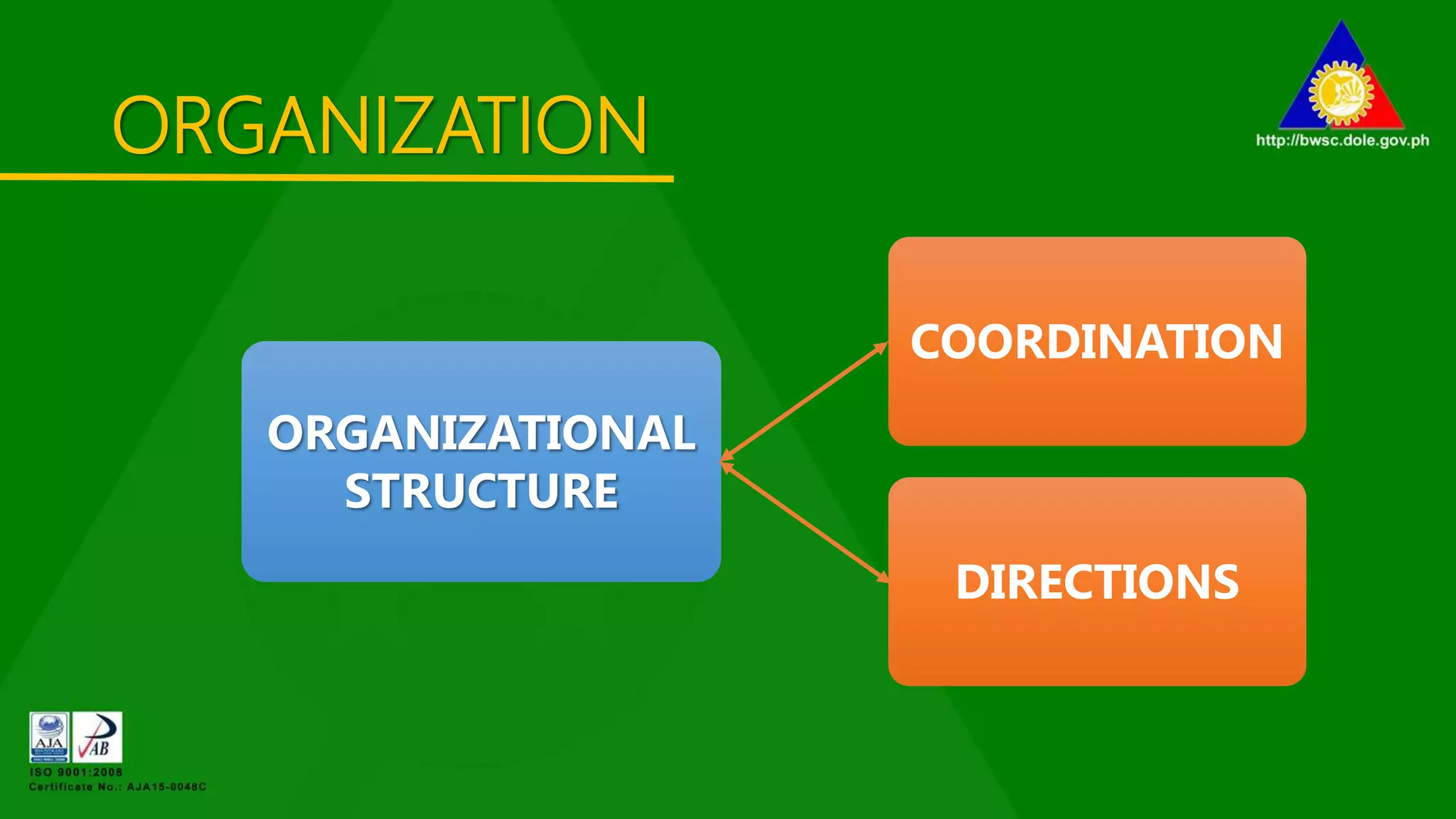
ORGANIZATION
A group of people that
bonded together for a
common purpose
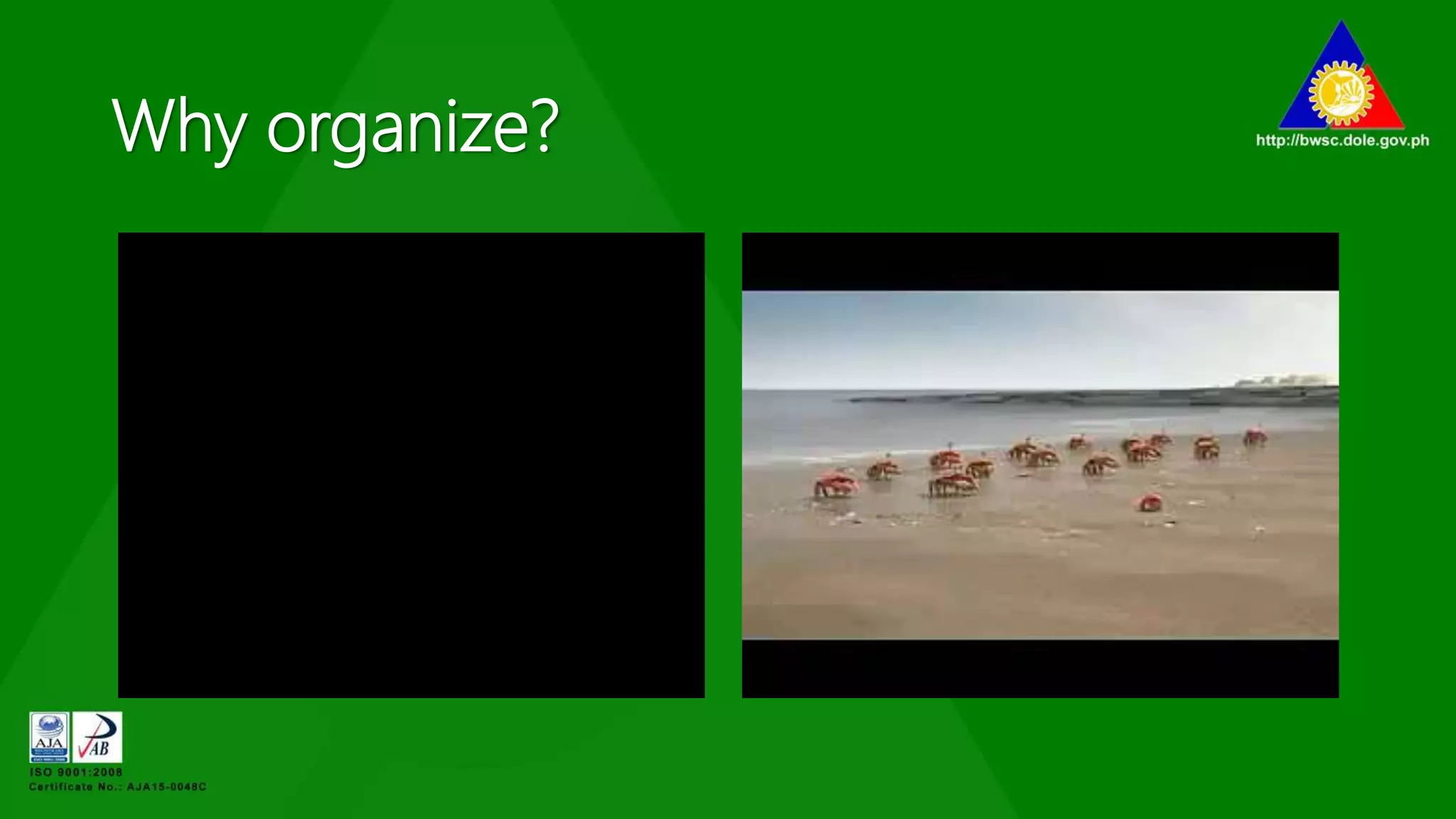
Why organize?
ORGANIZATION
ORGANIZATIONAL
STRUCTURE
COORDINATION
DIRECTIONS
PURPOSE AND ACCOMPLISMENT
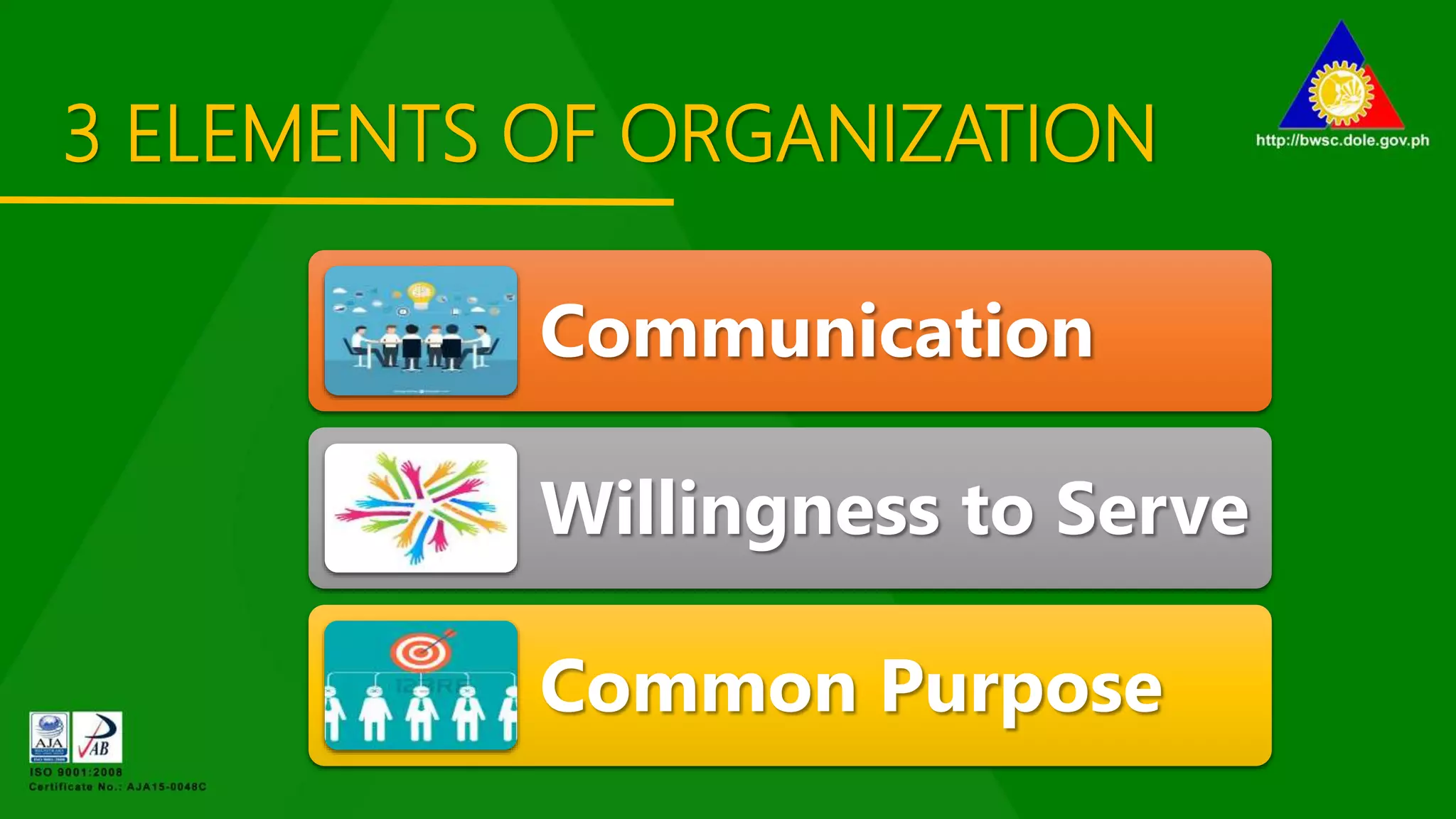
3 ELEMENTS OF ORGANIZATION
Communication
Willingness to Serve
Common Purpose
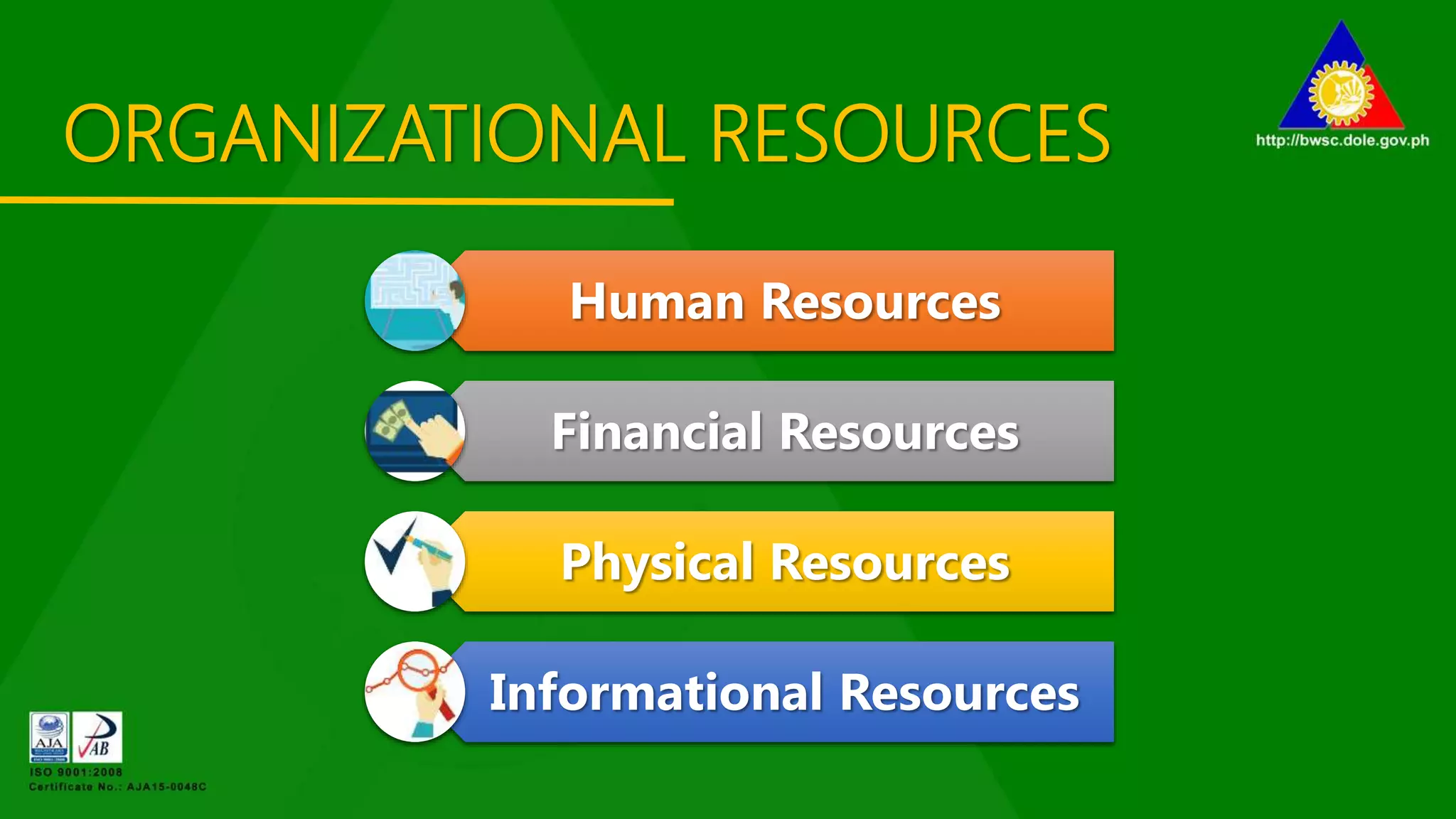
ORGANIZATIONAL RESOURCES
Human Resources
Financial Resources
Physical Resources
Informational Resources
MANAGEMENT
The process where managers
use organizational resources
through the functions of
planning, organizing, leading
and controlling
MANAGEMENT FUNCTIONS
 Planning- predetermining the course
of action
 Organizing - arranging and relating
work to be done
 Leading - causing people to take
action
 Controlling - assessing and regulating
performance
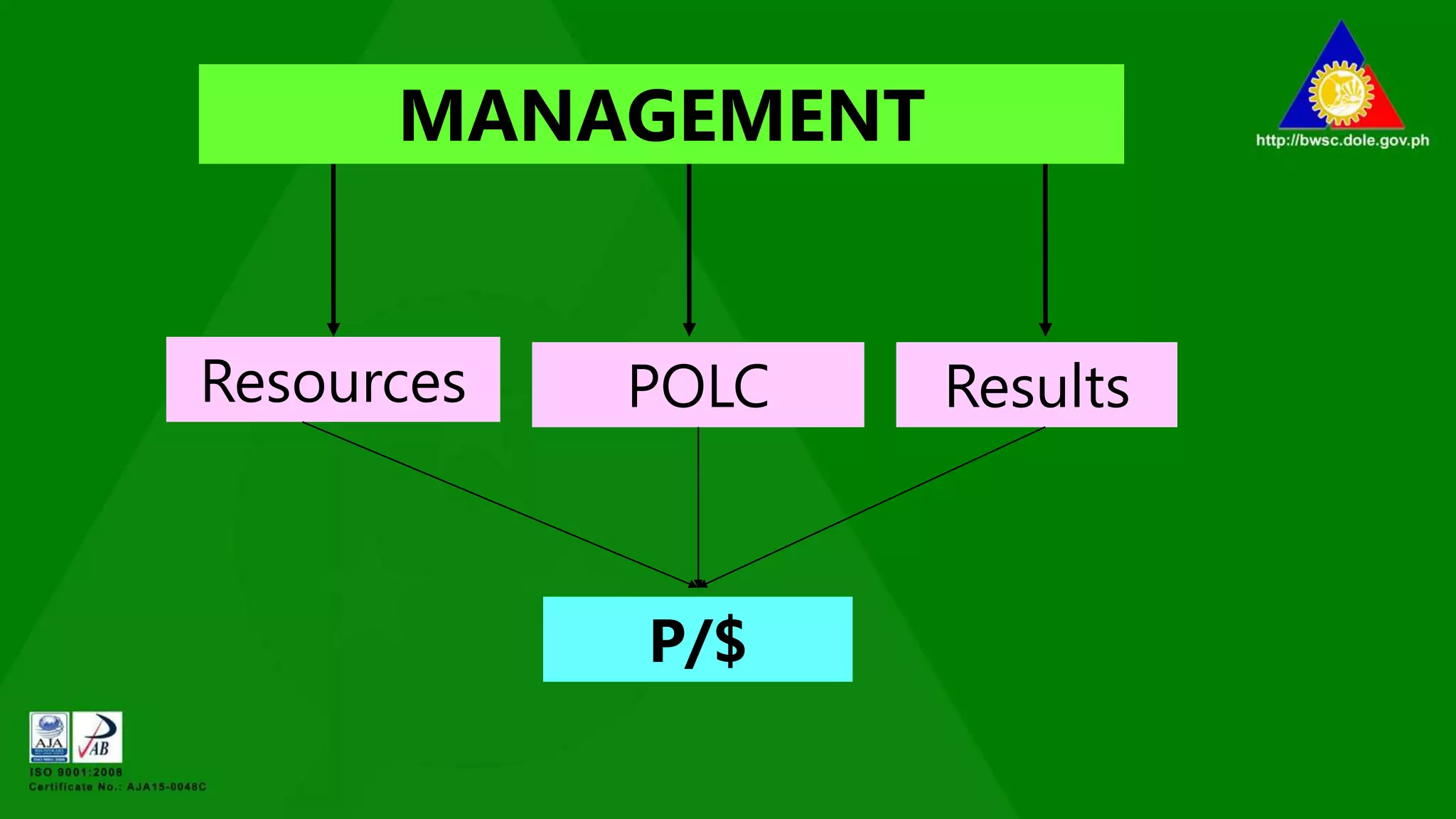
MANAGEMENT
Resources POLC Results
P/$
WHO DOES ALL THESE FUNCTIONS
THE
MANAGERS
MANAGERS
 Responsible for helping organizations achieve
their objectives and for creating and
implementing their plans.
 Responsible for the process of “POLC” efforts
of organization members, using all
organizational resources to achieve
organizational goals.
ENTREPRENEURS
 Anybody in business providing people the
products and services they need
 Change agents that make communities
move forward by affecting the production
and consumption of goods and services
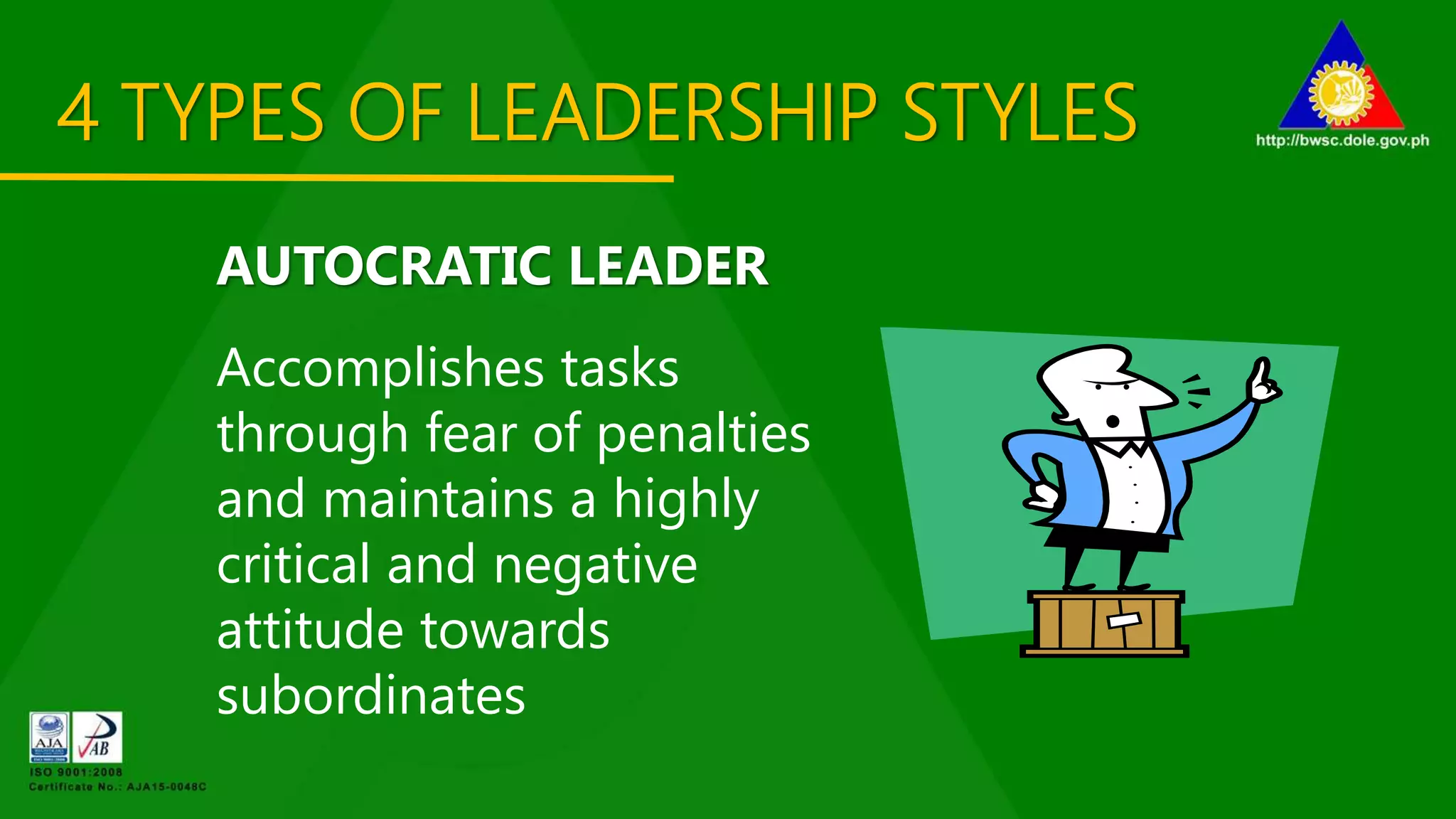
4 TYPES OF LEADERSHIP STYLES
AUTOCRATIC LEADER
Accomplishes tasks
through fear of penalties
and maintains a highly
critical and negative
attitude towards
subordinates
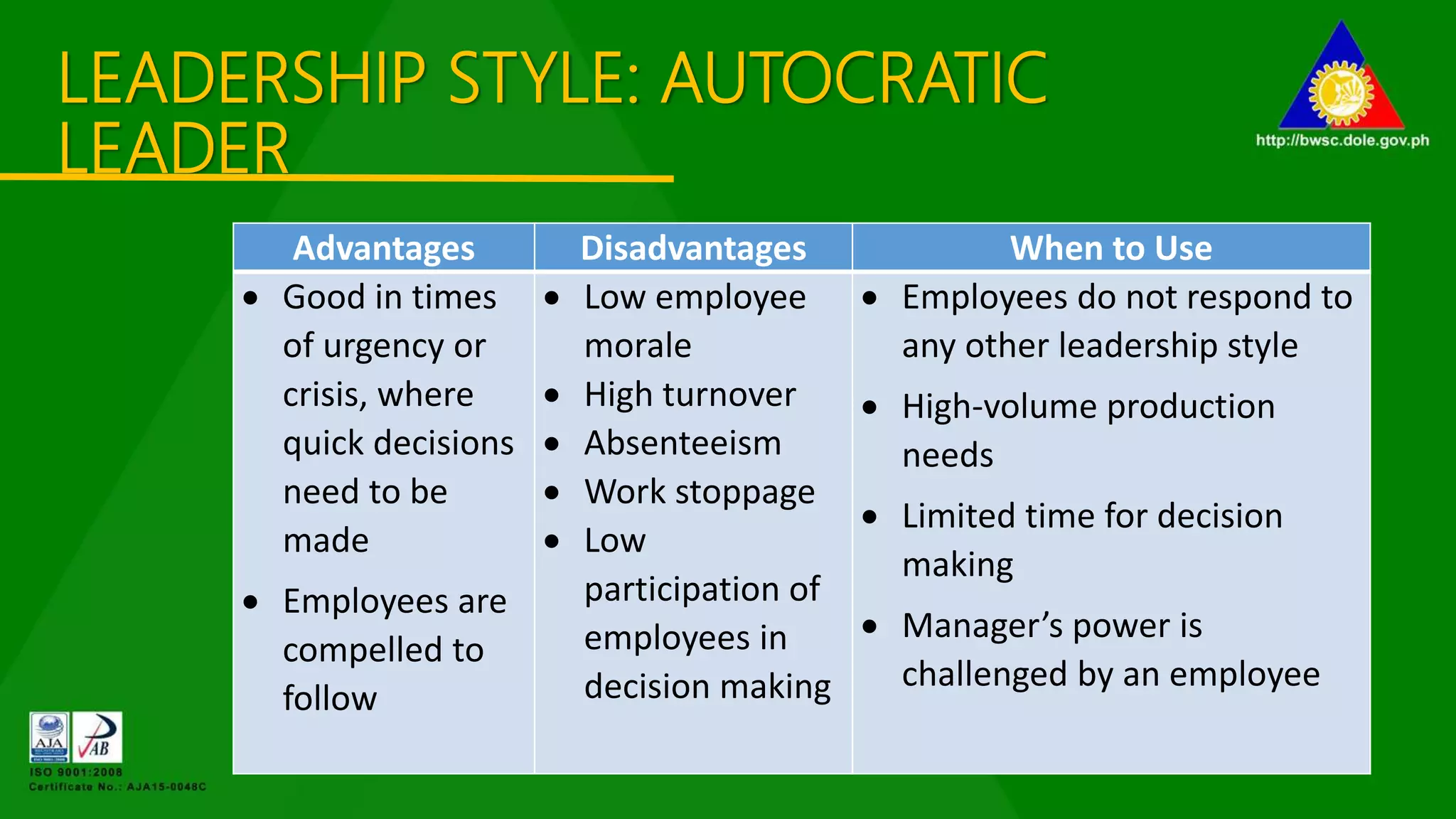
LEADERSHIP STYLE: AUTOCRATIC
LEADER
Advantages Disadvantages When to Use
 Good in times
of urgency or
crisis, where
quick decisions
need to be
made
 Employees are
compelled to
follow
 Low employee
morale
 High turnover
 Absenteeism
 Work stoppage
 Low
participation of
employees in
decision making
 Employees do not respond to
any other leadership style
 High-volume production
needs
 Limited time for decision
making
 Manager’s power is
challenged by an employee
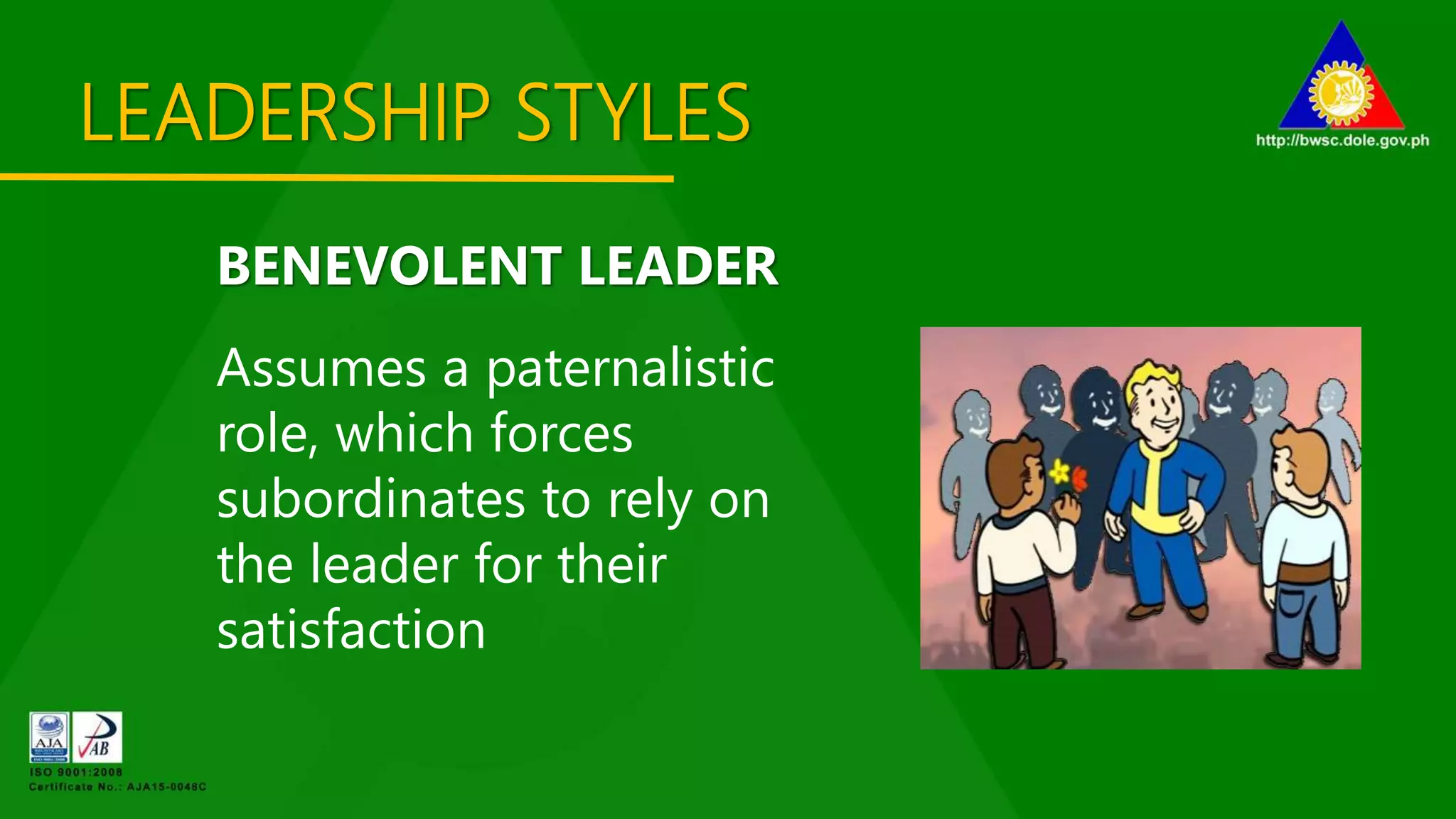
LEADERSHIP STYLES
BENEVOLENT LEADER
Assumes a paternalistic
role, which forces
subordinates to rely on
the leader for their
satisfaction
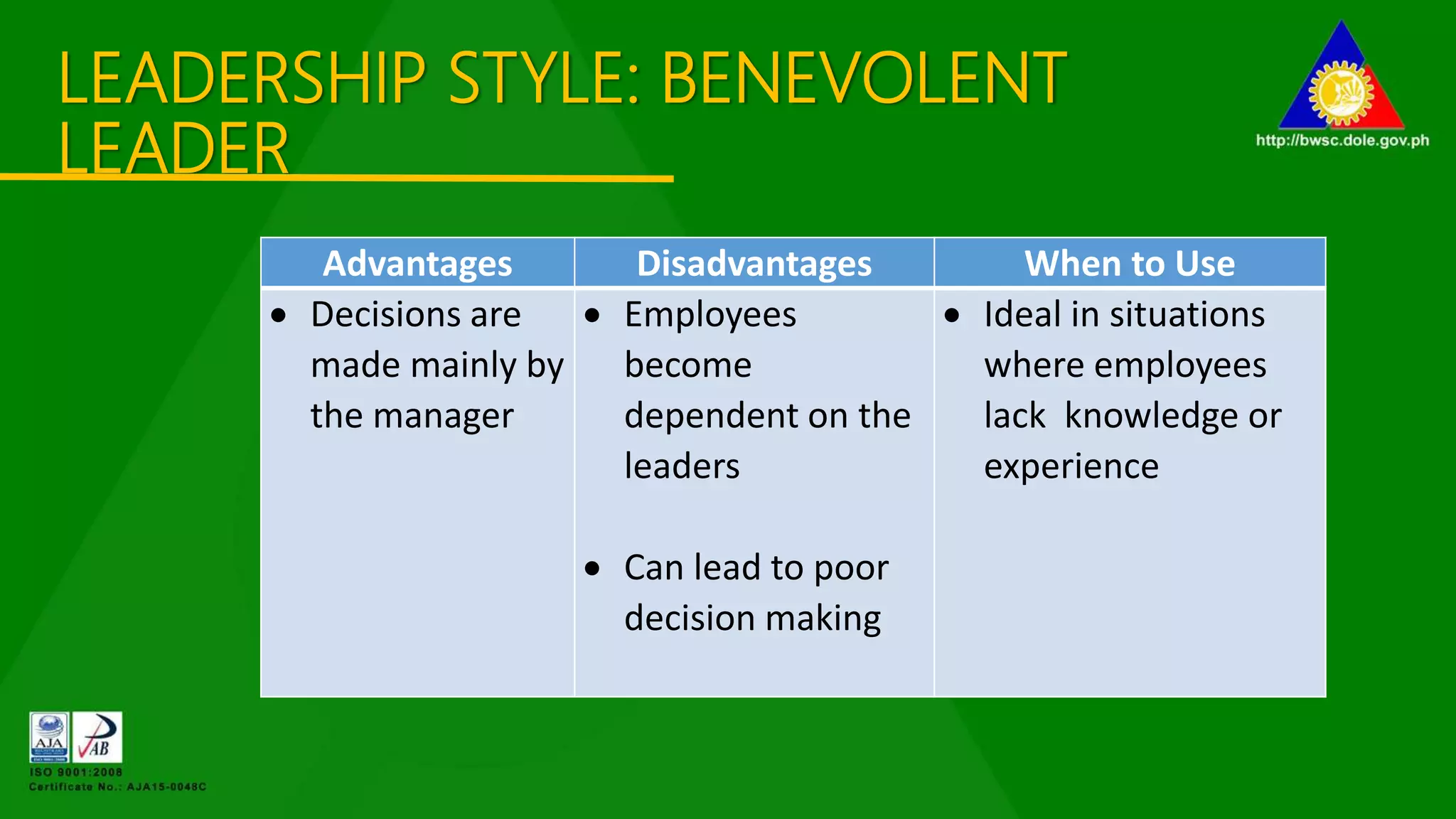
LEADERSHIP STYLE: BENEVOLENT
LEADER
Advantages Disadvantages When to Use
 Decisions are
made mainly by
the manager
 Employees
become
dependent on the
leaders
 Can lead to poor
decision making
 Ideal in situations
where employees
lack knowledge or
experience
LEADERSHIP STYLES
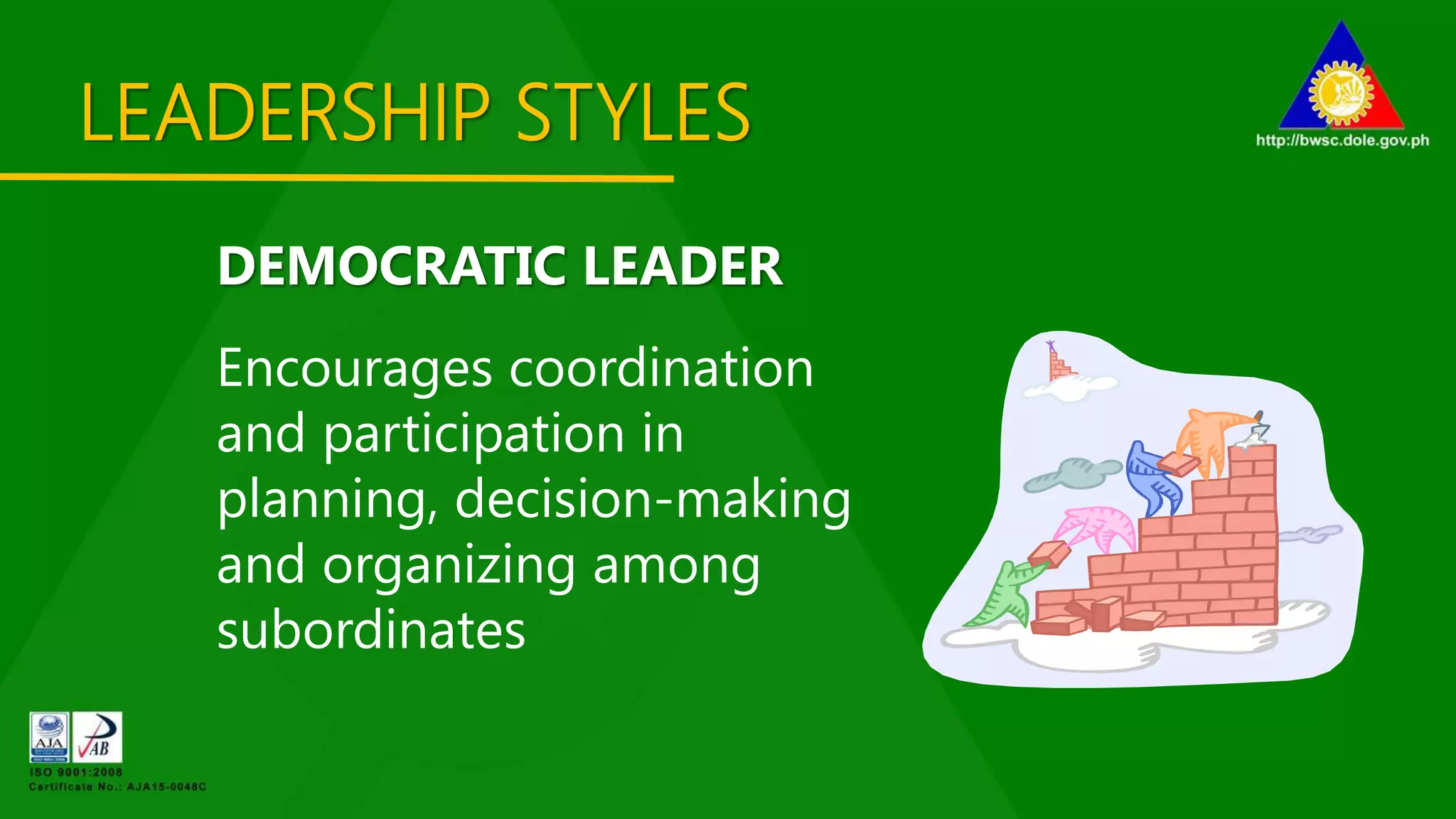
DEMOCRATIC LEADER
Encourages coordination
and participation in
planning, decision-making
and organizing among
subordinates
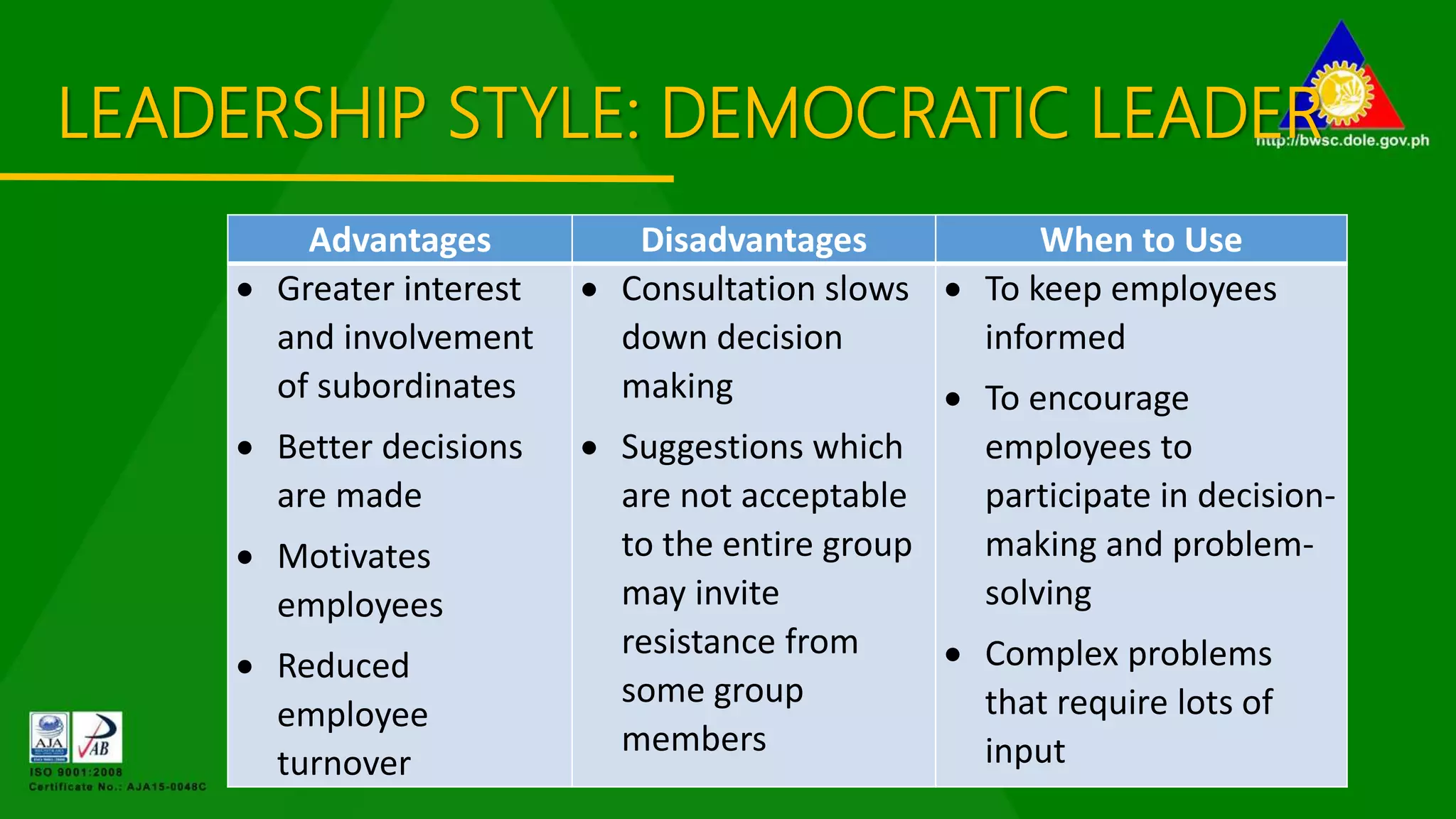
LEADERSHIP STYLE: DEMOCRATIC LEADER
Advantages Disadvantages When to Use
 Greater interest
and involvement
of subordinates
 Better decisions
are made
 Motivates
employees
 Reduced
employee
turnover
 Consultation slows
down decision
making
 Suggestions which
are not acceptable
to the entire group
may invite
resistance from
some group
members
 To keep employees
informed
 To encourage
employees to
participate in decision-
making and problem-
solving
 Complex problems
that require lots of
input
LEADERSHIP STYLES
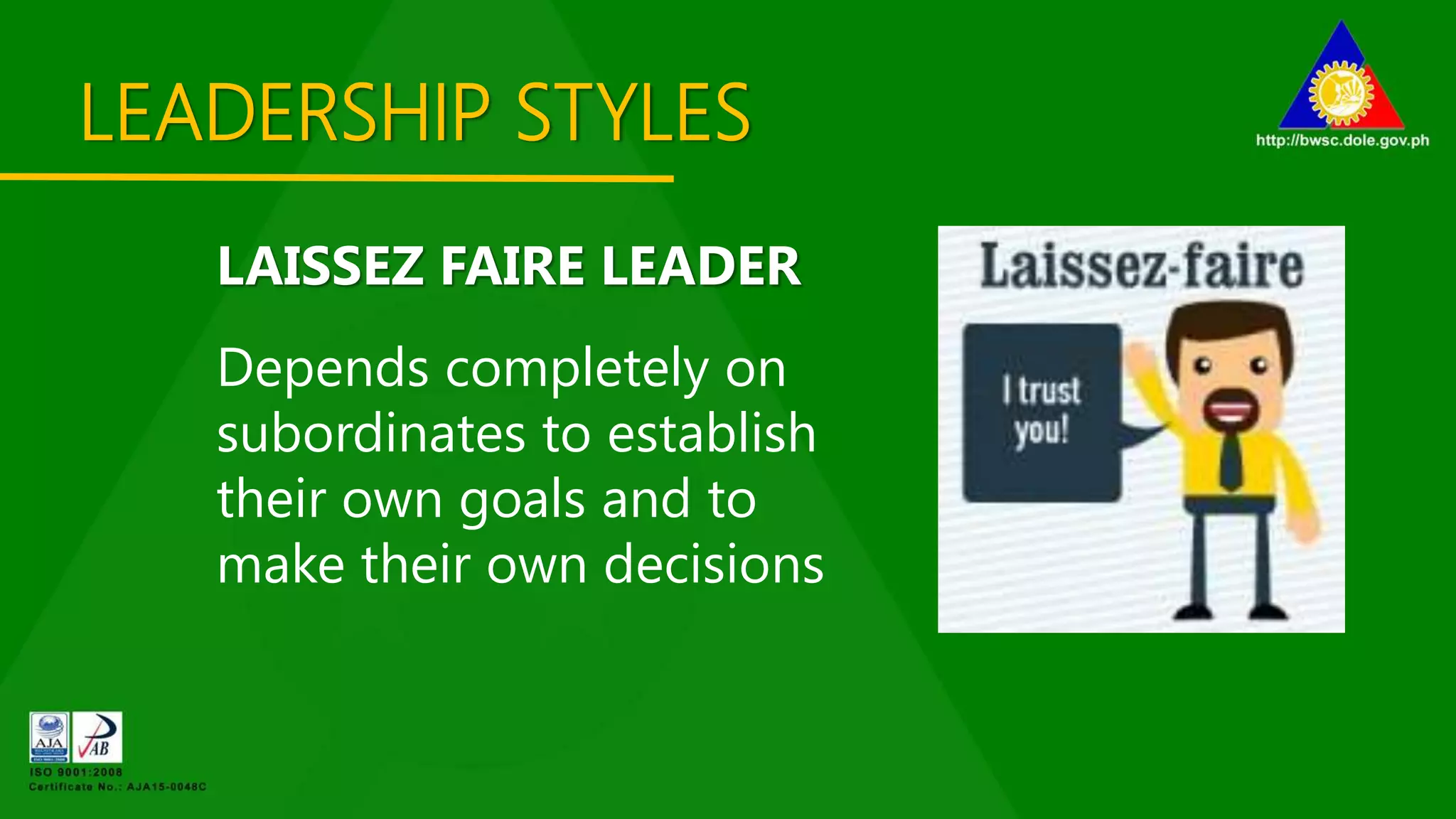
LAISSEZ FAIRE LEADER
Depends completely on
subordinates to establish
their own goals and to
make their own decisions
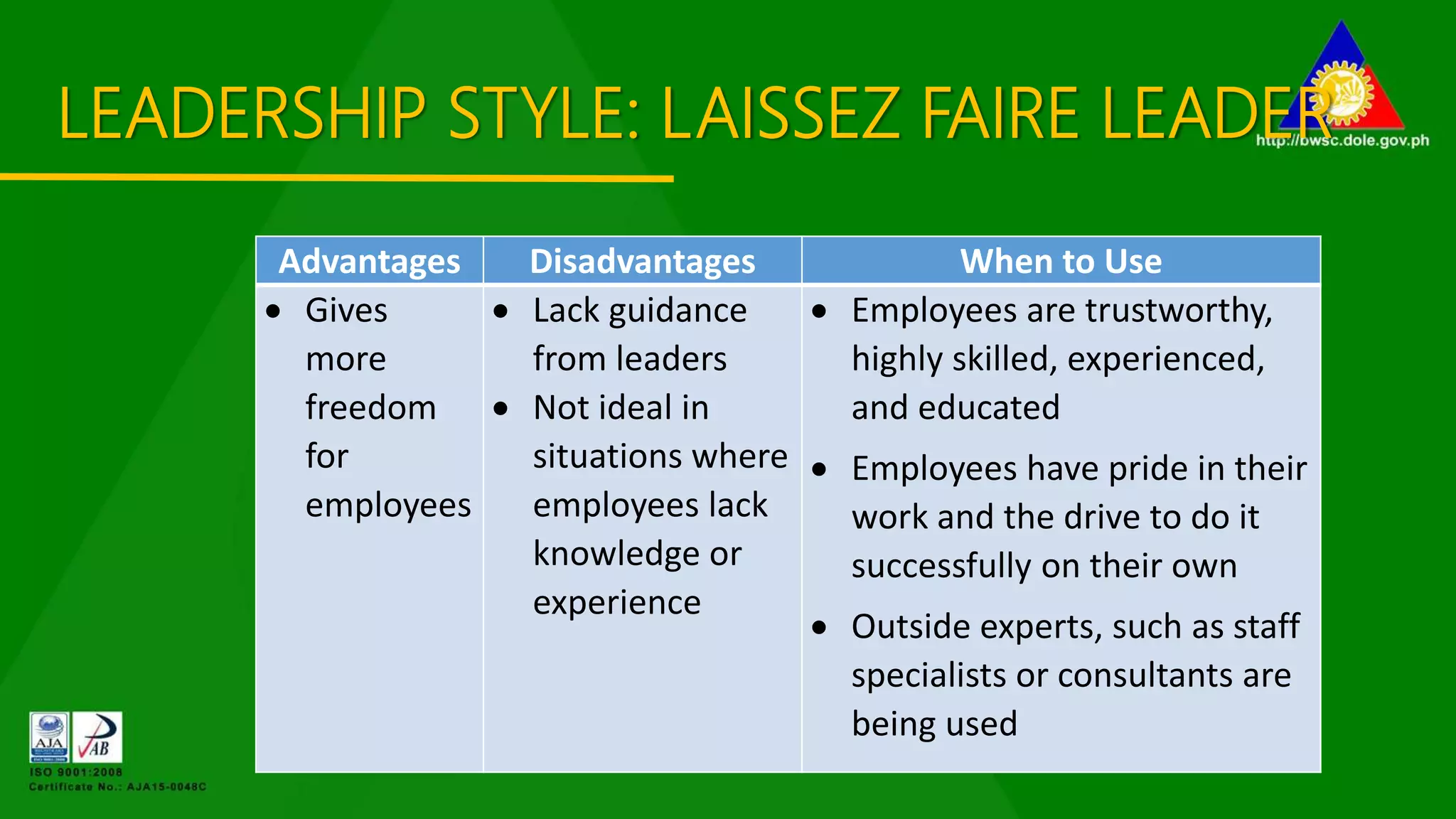
LEADERSHIP STYLE: LAISSEZ FAIRE LEADER
Advantages Disadvantages When to Use
 Gives
more
freedom
for
employees
 Lack guidance
from leaders
 Not ideal in
situations where
employees lack
knowledge or
experience
 Employees are trustworthy,
highly skilled, experienced,
and educated
 Employees have pride in their
work and the drive to do it
successfully on their own
 Outside experts, such as staff
specialists or consultants are
being used
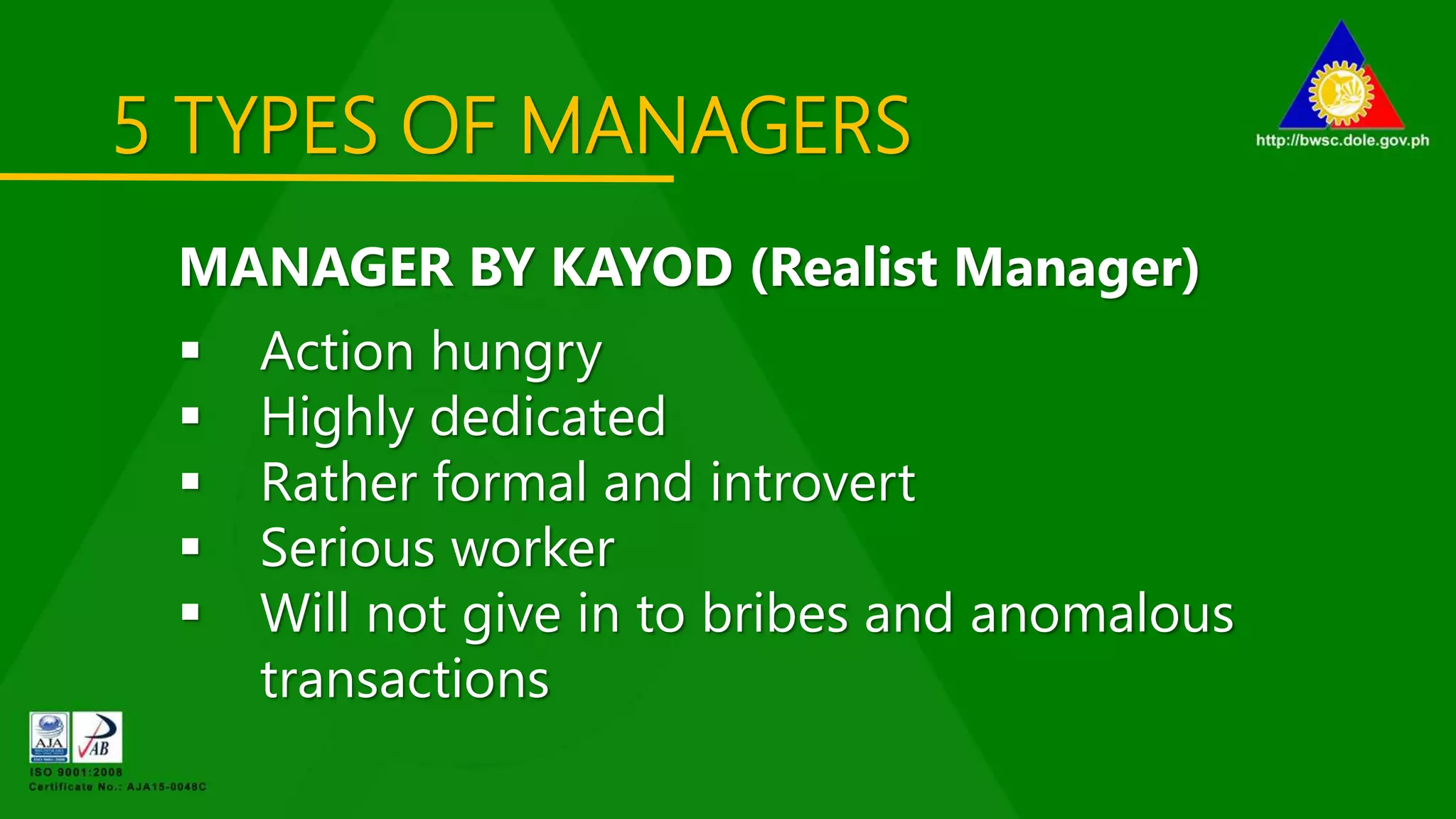
5 TYPES OF MANAGERS
MANAGER BY KAYOD (Realist Manager)
 Action hungry
 Highly dedicated
 Rather formal and introvert
 Serious worker
 Will not give in to bribes and anomalous
transactions
TYPES OF MANAGERS
MANAGER BY LUSOT (Opportunist Manager)
 Looks for loopholes
 Makes shortcuts
 Does unconventional or even illegal
ways to achieve objectives
 Extrovert, deals with people informally
TYPES OF MANAGERS
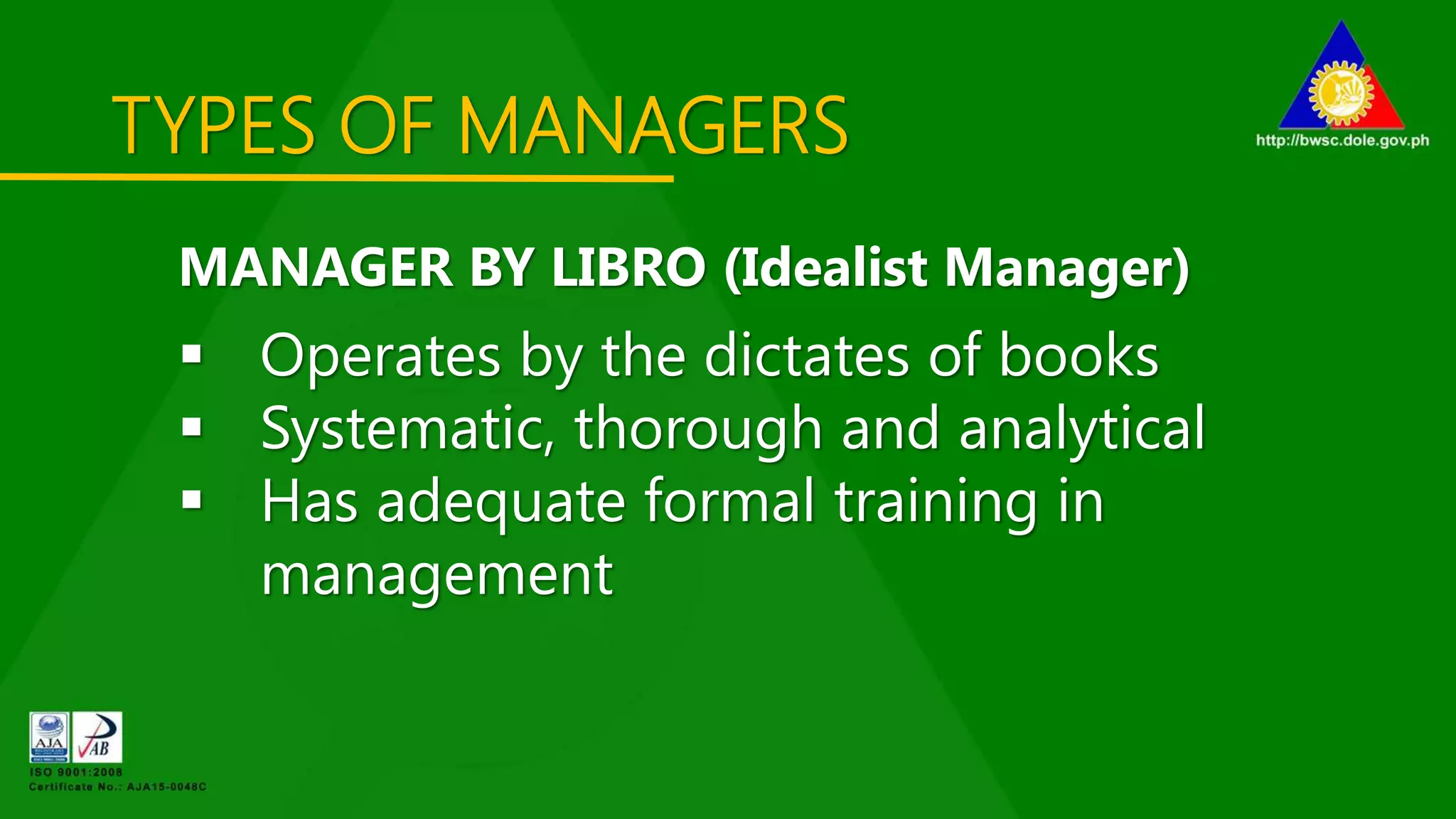
MANAGER BY LIBRO (Idealist Manager)
 Operates by the dictates of books
 Systematic, thorough and analytical
 Has adequate formal training in
management
TYPES OF MANAGERS
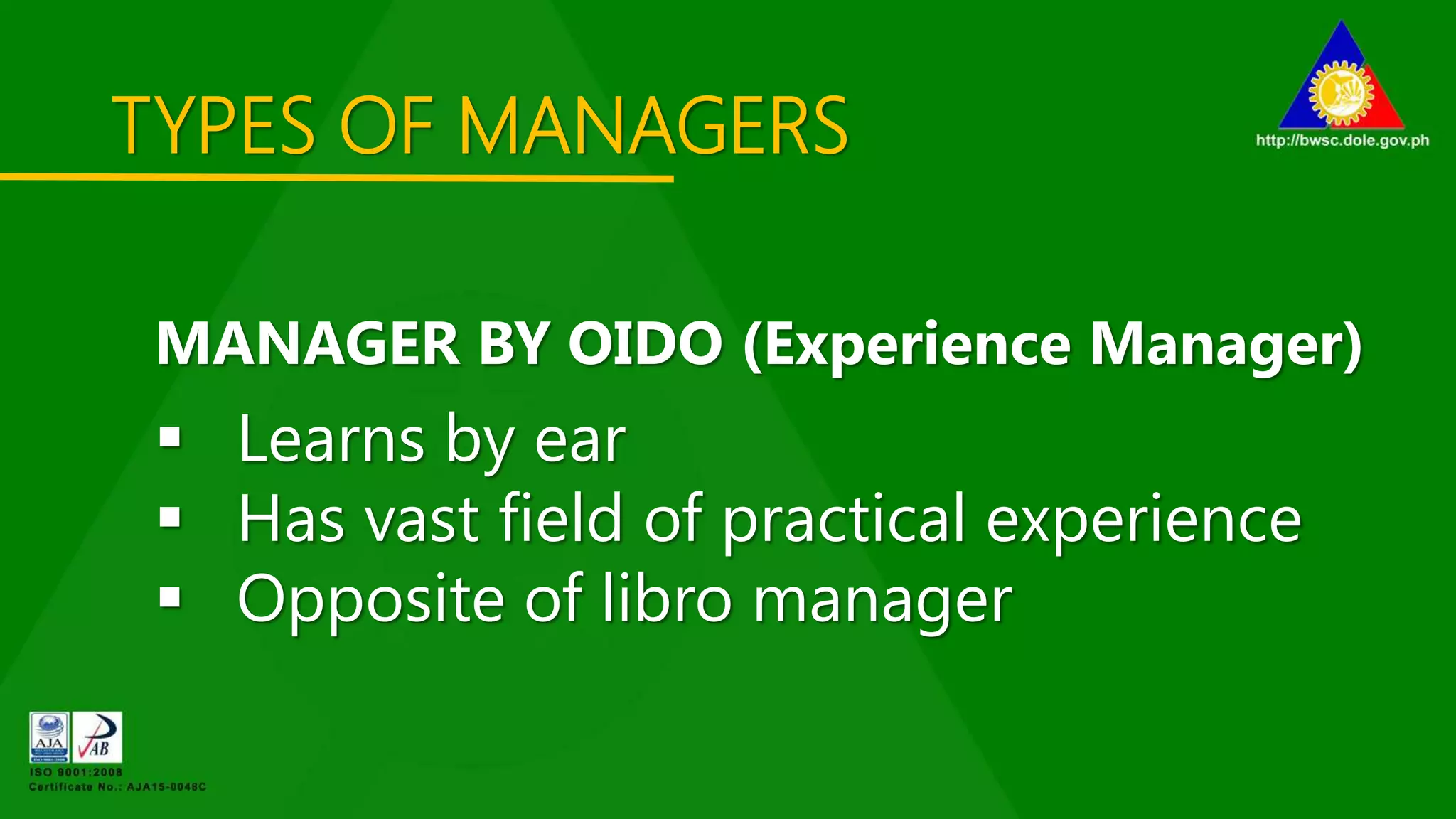
MANAGER BY OIDO (Experience Manager)
 Learns by ear
 Has vast field of practical experience
 Opposite of libro manager
TYPES OF MANAGERS
MANAGER BY UGNAYAN
(Reconciler Manager)
 Hybrid of all types of managers
SALAMAT PO!

Session 3: Business Work Improvement Course (Organization and Management)

  • 1.
    Exercise: The PaperTower Game CRITERIA PERCENTAGE Beauty 25% Height 25% Structure 25% Strength 25% 100%
  • 2.
    SESSION 3: ORGANIZATION ANDMANAGEMENT Business and Work Improvement Course
  • 3.
  • 4.
    ORGANIZATION A group ofpeople that bonded together for a common purpose
  • 5.
  • 6.
  • 7.
  • 8.
    3 ELEMENTS OFORGANIZATION Communication Willingness to Serve Common Purpose
  • 9.
    ORGANIZATIONAL RESOURCES Human Resources FinancialResources Physical Resources Informational Resources
  • 10.
    MANAGEMENT The process wheremanagers use organizational resources through the functions of planning, organizing, leading and controlling
  • 11.
    MANAGEMENT FUNCTIONS  Planning-predetermining the course of action  Organizing - arranging and relating work to be done  Leading - causing people to take action  Controlling - assessing and regulating performance
  • 12.
  • 13.
    WHO DOES ALLTHESE FUNCTIONS THE MANAGERS
  • 14.
    MANAGERS  Responsible forhelping organizations achieve their objectives and for creating and implementing their plans.  Responsible for the process of “POLC” efforts of organization members, using all organizational resources to achieve organizational goals.
  • 15.
    ENTREPRENEURS  Anybody inbusiness providing people the products and services they need  Change agents that make communities move forward by affecting the production and consumption of goods and services
  • 16.
    4 TYPES OFLEADERSHIP STYLES AUTOCRATIC LEADER Accomplishes tasks through fear of penalties and maintains a highly critical and negative attitude towards subordinates
  • 17.
    LEADERSHIP STYLE: AUTOCRATIC LEADER AdvantagesDisadvantages When to Use  Good in times of urgency or crisis, where quick decisions need to be made  Employees are compelled to follow  Low employee morale  High turnover  Absenteeism  Work stoppage  Low participation of employees in decision making  Employees do not respond to any other leadership style  High-volume production needs  Limited time for decision making  Manager’s power is challenged by an employee
  • 18.
    LEADERSHIP STYLES BENEVOLENT LEADER Assumesa paternalistic role, which forces subordinates to rely on the leader for their satisfaction
  • 19.
    LEADERSHIP STYLE: BENEVOLENT LEADER AdvantagesDisadvantages When to Use  Decisions are made mainly by the manager  Employees become dependent on the leaders  Can lead to poor decision making  Ideal in situations where employees lack knowledge or experience
  • 20.
    LEADERSHIP STYLES DEMOCRATIC LEADER Encouragescoordination and participation in planning, decision-making and organizing among subordinates
  • 21.
    LEADERSHIP STYLE: DEMOCRATICLEADER Advantages Disadvantages When to Use  Greater interest and involvement of subordinates  Better decisions are made  Motivates employees  Reduced employee turnover  Consultation slows down decision making  Suggestions which are not acceptable to the entire group may invite resistance from some group members  To keep employees informed  To encourage employees to participate in decision- making and problem- solving  Complex problems that require lots of input
  • 22.
    LEADERSHIP STYLES LAISSEZ FAIRELEADER Depends completely on subordinates to establish their own goals and to make their own decisions
  • 23.
    LEADERSHIP STYLE: LAISSEZFAIRE LEADER Advantages Disadvantages When to Use  Gives more freedom for employees  Lack guidance from leaders  Not ideal in situations where employees lack knowledge or experience  Employees are trustworthy, highly skilled, experienced, and educated  Employees have pride in their work and the drive to do it successfully on their own  Outside experts, such as staff specialists or consultants are being used
  • 24.
    5 TYPES OFMANAGERS MANAGER BY KAYOD (Realist Manager)  Action hungry  Highly dedicated  Rather formal and introvert  Serious worker  Will not give in to bribes and anomalous transactions
  • 25.
    TYPES OF MANAGERS MANAGERBY LUSOT (Opportunist Manager)  Looks for loopholes  Makes shortcuts  Does unconventional or even illegal ways to achieve objectives  Extrovert, deals with people informally
  • 26.
    TYPES OF MANAGERS MANAGERBY LIBRO (Idealist Manager)  Operates by the dictates of books  Systematic, thorough and analytical  Has adequate formal training in management
  • 27.
    TYPES OF MANAGERS MANAGERBY OIDO (Experience Manager)  Learns by ear  Has vast field of practical experience  Opposite of libro manager
  • 28.
    TYPES OF MANAGERS MANAGERBY UGNAYAN (Reconciler Manager)  Hybrid of all types of managers
  • 29.