SERVER AND ITS TYPES
CONTENT
1. What Is Server?
2. Define Different Services Provided By Server?
3. Define Different Types Of Server?
SERVER
A server is a computer or system that provides functionality, services or
resources to other computers or devices on a network. It is designed to
manage and share resources, such as files, applications, databases,
printers, and other devices, with other computers or devices on the
network. Server are typically more powerful and reliable than regular
computers and have specialized software and hardware components to
support their functions.
DIFFERENT SERVICES PROVIDED BY THE
SERVER
1. Control access to the hardware, software and data.
2. Centralized storage for software, data and
information.
3. Sharing software.
4. Managing network traffic
TYPES OF SERVER
1.WEB SERVER
2.APPLICATION SERVER
3.DATABASE SERVER
4.FILE SERVER
5.MAIL SERVER
6.PROXY SERVER
7.DNS SERVER
8.FTP SERVER
9.PRINT SERVER
10.BACKUP SERVER
WEB SERVER
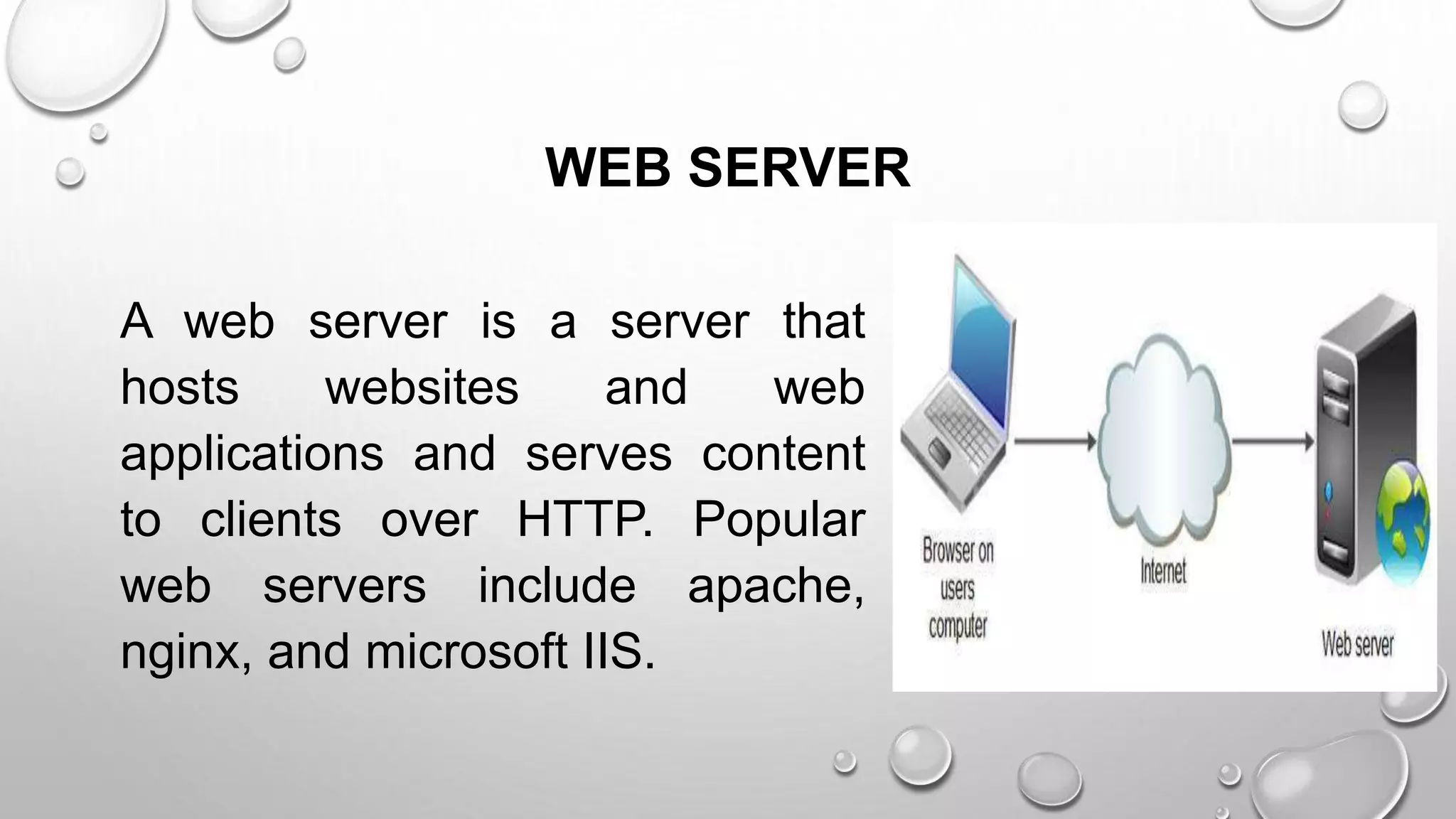
A web server is a server that
hosts websites and web
applications and serves content
to clients over HTTP. Popular
web servers include apache,
nginx, and microsoft IIS.
APPLICATION SERVER
An application server is a server that hosts
applications and provides middleware
services such as application scalability,
security, and transaction management.
Common examples include tomcat, jboss,
and IBM websphere.
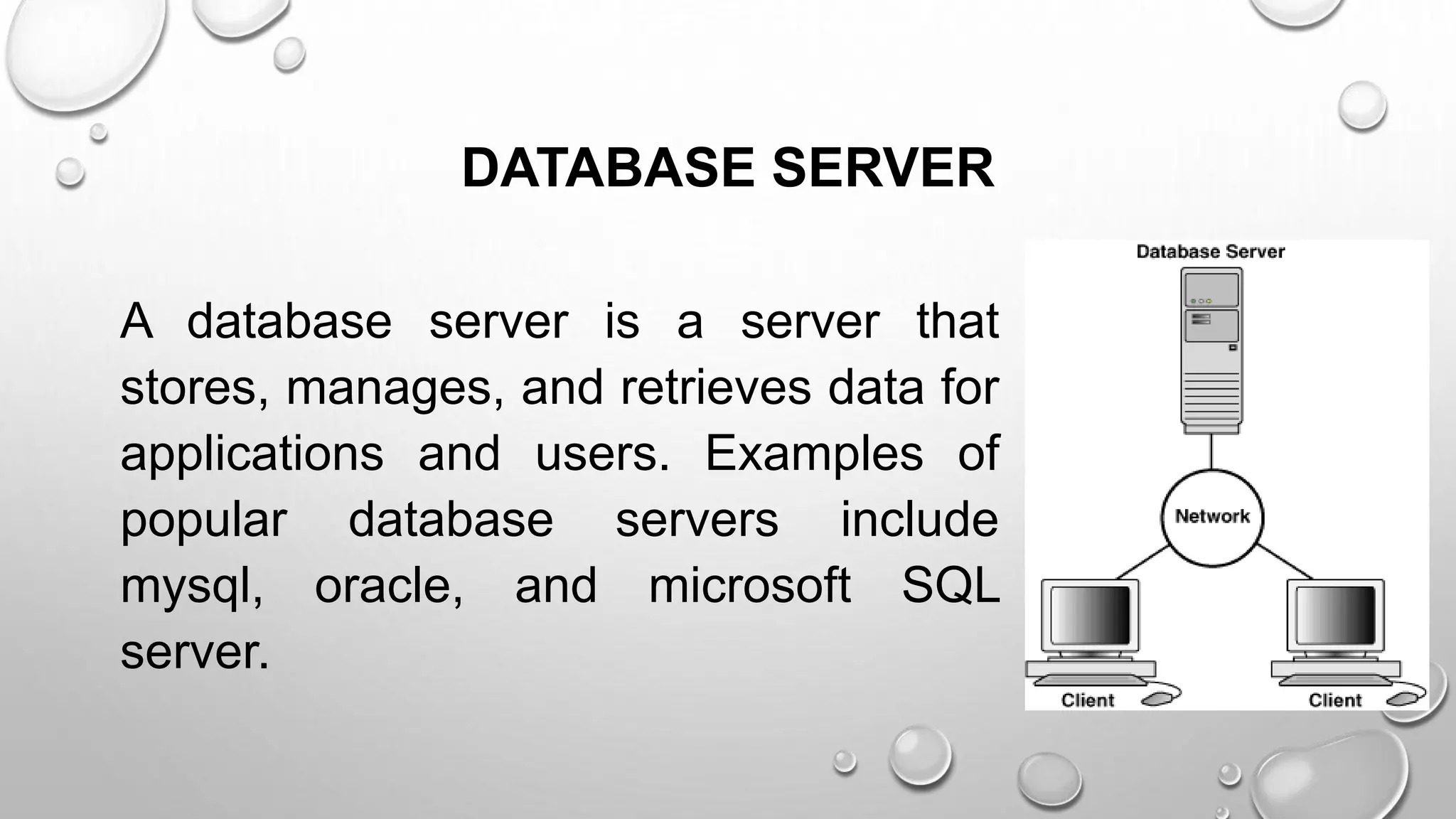
DATABASE SERVER
A database server is a server that
stores, manages, and retrieves data for
applications and users. Examples of
popular database servers include
mysql, oracle, and microsoft SQL
server.
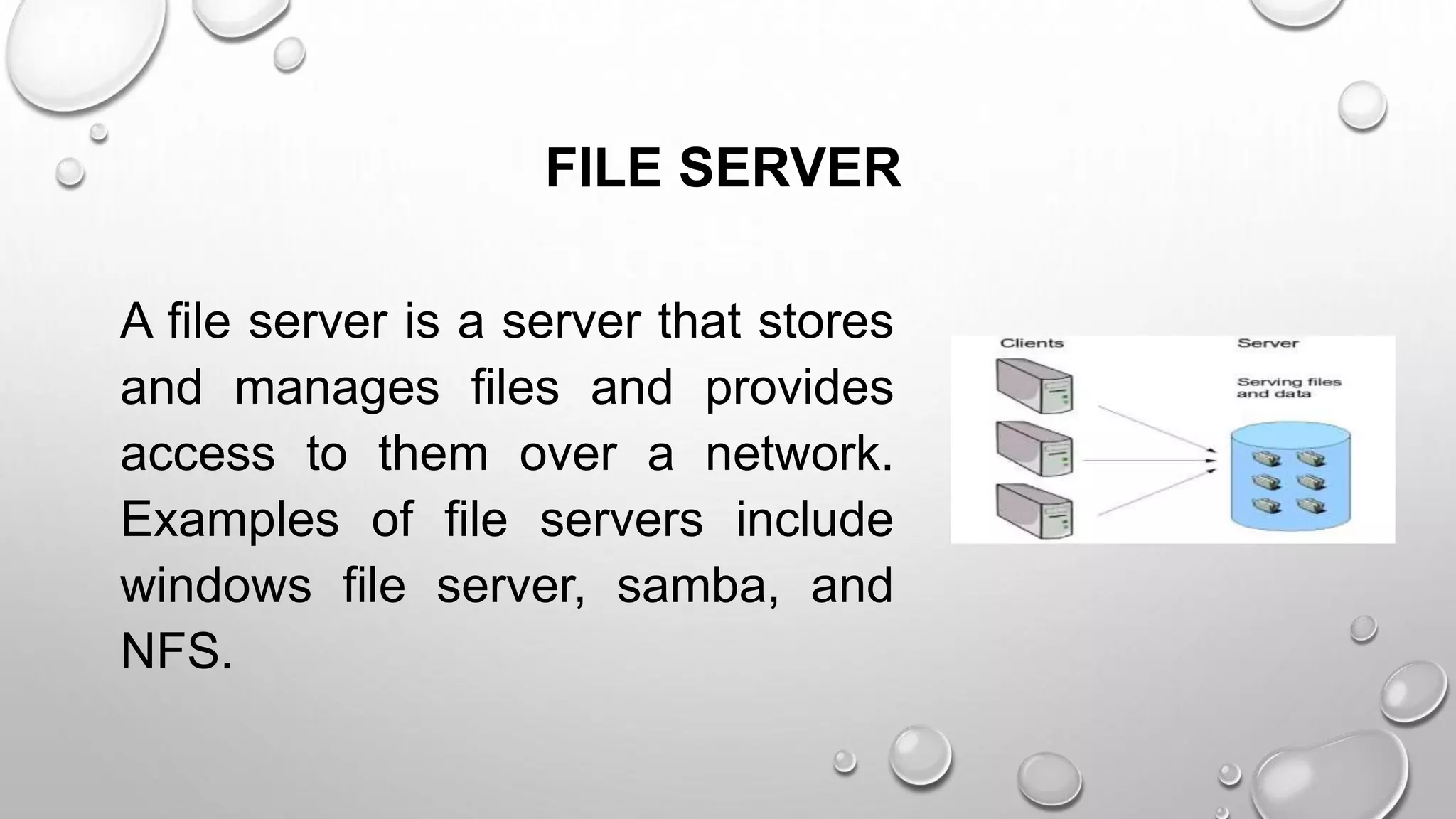
FILE SERVER
A file server is a server that stores
and manages files and provides
access to them over a network.
Examples of file servers include
windows file server, samba, and
NFS.
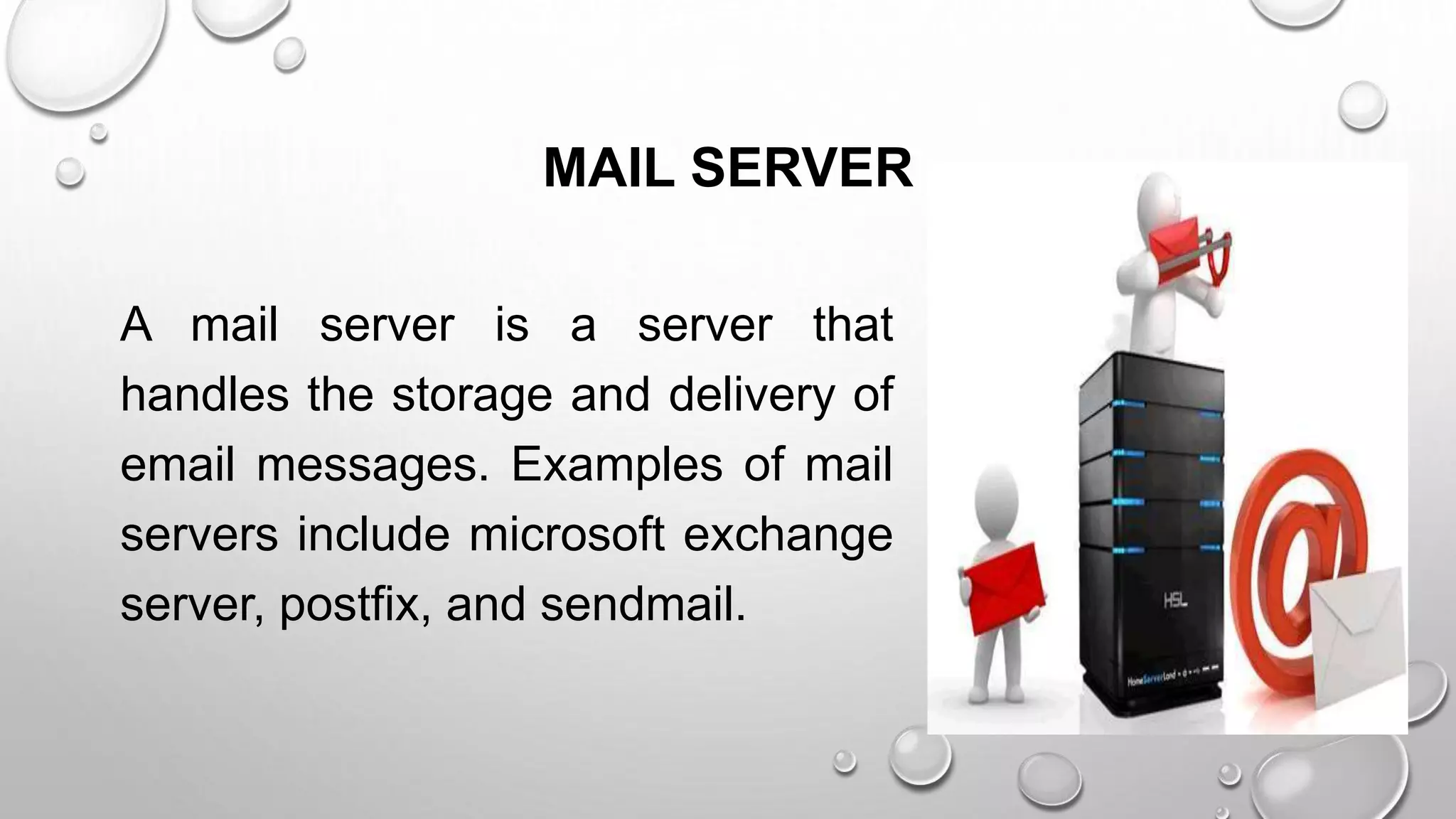
MAIL SERVER
A mail server is a server that
handles the storage and delivery of
email messages. Examples of mail
servers include microsoft exchange
server, postfix, and sendmail.
FTP SERVER
An FTP server is a server that provides file
transfer capabilities over the file transfer protocol
(FTP). Examples of FTP servers include filezilla
server, proftpd, and vsftpd.
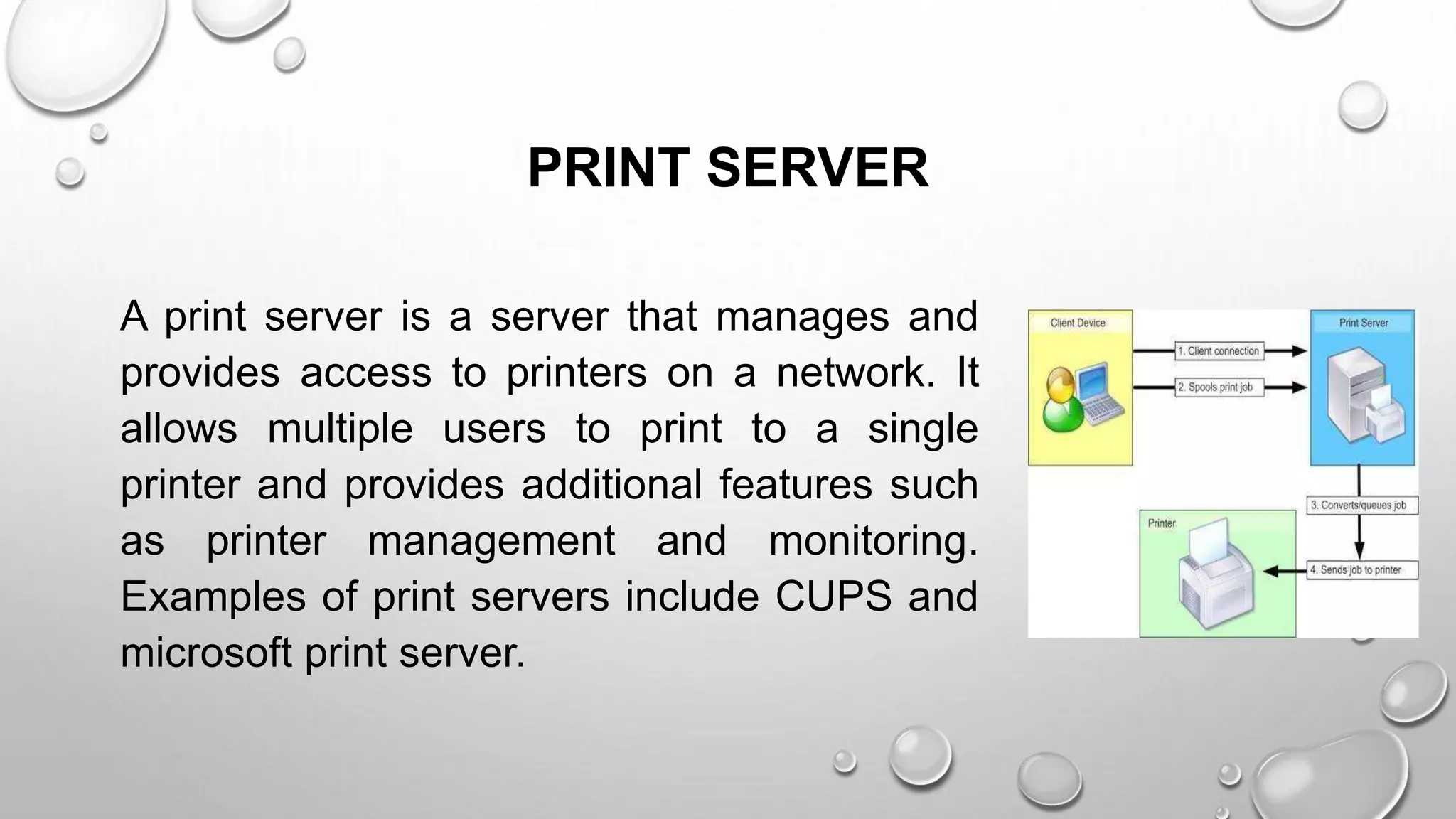
PRINT SERVER
A print server is a server that manages and
provides access to printers on a network. It
allows multiple users to print to a single
printer and provides additional features such
as printer management and monitoring.
Examples of print servers include CUPS and
microsoft print server.
BACKUP SERVER
A backup server is a server that is dedicated to backing up data
from other servers and devices on a network. It provides backup
and restores capabilities, as well as storage management and
data protection features. Examples of backup servers include
Acronis Backup and Veeam Backup.
TYPES OF SERVER FORM FACTORS
TOWER SERVERS
RACKMOUNT SERVERS
BLADE SERVERS
CLOUD SERVERS
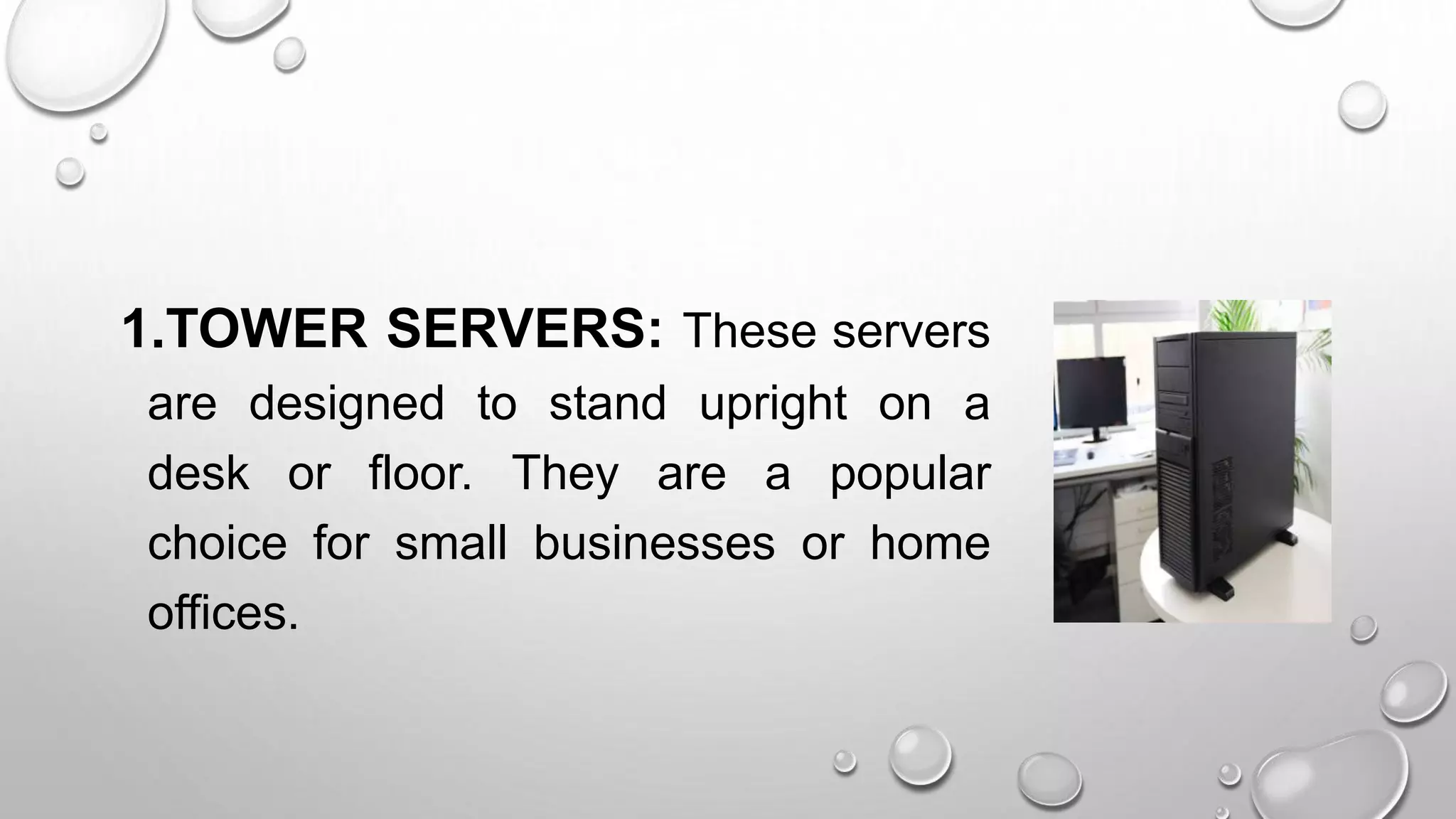
1.TOWER SERVERS: These servers
are designed to stand upright on a
desk or floor. They are a popular
choice for small businesses or home
offices.
• RACKMOUNT SERVERS: These
servers are designed to be mounted
into a rack or cabinet. They are
commonly used in data centers and
other large-scale IT environments.
• BLADE SERVERS: These servers are
designed to be mounted in a blade chassis,
which can hold multiple blade servers. Blade
servers are popular in data centers because
they can be easily managed and provide high-
density computing.
CLOUD SERVERS: These servers are designed to
provide computing resources over the internet. They
are commonly used by businesses and individuals
who require flexible, scalable computing resources
without the need for physical hardware.
THANK YOU

SERVER AND ITS TYPES.pptx

  • 1.
  • 2.
    CONTENT 1. What IsServer? 2. Define Different Services Provided By Server? 3. Define Different Types Of Server?
  • 3.
    SERVER A server isa computer or system that provides functionality, services or resources to other computers or devices on a network. It is designed to manage and share resources, such as files, applications, databases, printers, and other devices, with other computers or devices on the network. Server are typically more powerful and reliable than regular computers and have specialized software and hardware components to support their functions.
  • 4.
    DIFFERENT SERVICES PROVIDEDBY THE SERVER 1. Control access to the hardware, software and data. 2. Centralized storage for software, data and information. 3. Sharing software. 4. Managing network traffic
  • 5.
    TYPES OF SERVER 1.WEBSERVER 2.APPLICATION SERVER 3.DATABASE SERVER 4.FILE SERVER 5.MAIL SERVER 6.PROXY SERVER 7.DNS SERVER 8.FTP SERVER 9.PRINT SERVER 10.BACKUP SERVER
  • 6.
    WEB SERVER A webserver is a server that hosts websites and web applications and serves content to clients over HTTP. Popular web servers include apache, nginx, and microsoft IIS.
  • 7.
    APPLICATION SERVER An applicationserver is a server that hosts applications and provides middleware services such as application scalability, security, and transaction management. Common examples include tomcat, jboss, and IBM websphere.
  • 8.
    DATABASE SERVER A databaseserver is a server that stores, manages, and retrieves data for applications and users. Examples of popular database servers include mysql, oracle, and microsoft SQL server.
  • 9.
    FILE SERVER A fileserver is a server that stores and manages files and provides access to them over a network. Examples of file servers include windows file server, samba, and NFS.
  • 10.
    MAIL SERVER A mailserver is a server that handles the storage and delivery of email messages. Examples of mail servers include microsoft exchange server, postfix, and sendmail.
  • 11.
    FTP SERVER An FTPserver is a server that provides file transfer capabilities over the file transfer protocol (FTP). Examples of FTP servers include filezilla server, proftpd, and vsftpd.
  • 12.
    PRINT SERVER A printserver is a server that manages and provides access to printers on a network. It allows multiple users to print to a single printer and provides additional features such as printer management and monitoring. Examples of print servers include CUPS and microsoft print server.
  • 13.
    BACKUP SERVER A backupserver is a server that is dedicated to backing up data from other servers and devices on a network. It provides backup and restores capabilities, as well as storage management and data protection features. Examples of backup servers include Acronis Backup and Veeam Backup.
  • 14.
    TYPES OF SERVERFORM FACTORS TOWER SERVERS RACKMOUNT SERVERS BLADE SERVERS CLOUD SERVERS
  • 15.
    1.TOWER SERVERS: Theseservers are designed to stand upright on a desk or floor. They are a popular choice for small businesses or home offices.
  • 16.
    • RACKMOUNT SERVERS:These servers are designed to be mounted into a rack or cabinet. They are commonly used in data centers and other large-scale IT environments.
  • 17.
    • BLADE SERVERS:These servers are designed to be mounted in a blade chassis, which can hold multiple blade servers. Blade servers are popular in data centers because they can be easily managed and provide high- density computing.
  • 18.
    CLOUD SERVERS: Theseservers are designed to provide computing resources over the internet. They are commonly used by businesses and individuals who require flexible, scalable computing resources without the need for physical hardware.
  • 19.