It Makes Sense!
The class will be grouped into 5. Each group will receive
an envelope that contains materials for the activity.
Inside each envelope are paper strips with sentences.
With your cartolina, you will identify and classify each
sentence according to the senses (sight, smell, taste,
hearing and touch/feel) used. You will be given 5 minutes
to do the activity.
GROUP ACTIVITY
RULES:
Go to your group quietly.
Form a circle.
Do not drag the chairs.
Minimize your voice while doing the group activity.
Do not hesitate to ask questions to your teacher.
Five(5) minutes will be given for the activity, after
this, return to your proper seats properly.
Sensory
Images
Define sensory images.
Identify the type of sensory imagery used
in a sentence.
Express appreciation for sensory images
used
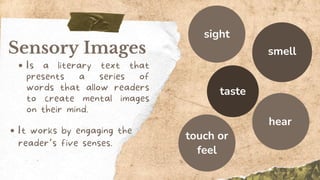
Sensory Images
Is a literary text that
presents a series of
words that allow readers
to create mental images
on their mind.
sight
It works by engaging the
reader’s five senses.
smell
taste
hear
touch or
feel
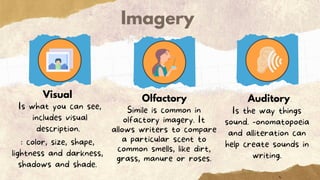
Imagery
Visual
Is what you can see,
includes visual
description.
: color, size, shape,
lightness and darkness,
shadows and shade.
Auditory
Is the way things
sound. -onomatopoeia
and alliteration can
help create sounds in
writing.
Olfactory
Simile is common in
olfactory imagery. It
allows writers to compare
a particular scent to
common smells, like dirt,
grass, manure or roses.
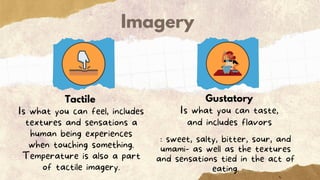
Imagery
Tactile
Is what you can feel, includes
textures and sensations a
human being experiences
when touching something.
Temperature is also a part
of tactile imagery.
Gustatory
Is what you can taste,
and includes flavors
: sweet, salty, bitter, sour, and
umami- as well as the textures
and sensations tied in the act of
eating.
Read the poem entitled "My Last
Duchess" by Robert Browning.
Identify the imagery used in the
poem. Make a list of at least 5
words for each senses using a
graphic organizer of your choice.
Activity Time!
WORKSHEET#4
How can sensory images
improve our appreciation
of literary text?
What I Have Learned?

Sensory Images

  • 1.
    It Makes Sense! Theclass will be grouped into 5. Each group will receive an envelope that contains materials for the activity. Inside each envelope are paper strips with sentences. With your cartolina, you will identify and classify each sentence according to the senses (sight, smell, taste, hearing and touch/feel) used. You will be given 5 minutes to do the activity.
  • 2.
    GROUP ACTIVITY RULES: Go toyour group quietly. Form a circle. Do not drag the chairs. Minimize your voice while doing the group activity. Do not hesitate to ask questions to your teacher. Five(5) minutes will be given for the activity, after this, return to your proper seats properly.
  • 3.
    Sensory Images Define sensory images. Identifythe type of sensory imagery used in a sentence. Express appreciation for sensory images used
  • 4.
    Sensory Images Is aliterary text that presents a series of words that allow readers to create mental images on their mind. sight It works by engaging the reader’s five senses. smell taste hear touch or feel
  • 5.
    Imagery Visual Is what youcan see, includes visual description. : color, size, shape, lightness and darkness, shadows and shade. Auditory Is the way things sound. -onomatopoeia and alliteration can help create sounds in writing. Olfactory Simile is common in olfactory imagery. It allows writers to compare a particular scent to common smells, like dirt, grass, manure or roses.
  • 6.
    Imagery Tactile Is what youcan feel, includes textures and sensations a human being experiences when touching something. Temperature is also a part of tactile imagery. Gustatory Is what you can taste, and includes flavors : sweet, salty, bitter, sour, and umami- as well as the textures and sensations tied in the act of eating.
  • 8.
    Read the poementitled "My Last Duchess" by Robert Browning. Identify the imagery used in the poem. Make a list of at least 5 words for each senses using a graphic organizer of your choice. Activity Time! WORKSHEET#4
  • 9.
    How can sensoryimages improve our appreciation of literary text? What I Have Learned?