MODALS
PAGE 1
Modal verbs show possibility, intent,
ability, or necessity. Because they’re a
type of auxiliary verb, they’re used
together with the main verb of the
sentence.
Modal verbs are used to express certain
hypothetical conditions. They’re used
alongside a main verb to change its
meaning slightly. Because they’re
auxiliary verbs, they can’t necessarily
be used on their own.
PAGE 2
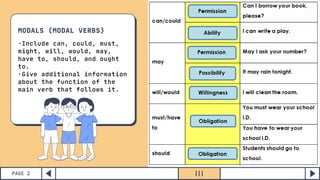
·Include can, could, must,
might, will, would, may,
have to, should, and ought
to.
·Give additional information
about the function of the
main verb that follows it.
MODALS (MODAL VERBS)
PAGE 3
As special verbs, modals do not change
in form or spelling. One cannot add -
s, -ed, or -ing to modals.
Modals are followed directly by the
bare infinitive, i.e., without "to".
As auxillary verbs, they do not need
an additional auxillary in negatives
or questions.
In questions or interrogative
sentences, one does inversion or the
inverted pattern in using modals.
REMEMBER
When are
modal verbs
used?
MODAL VERBS
The modal verb can shows whether or not the
subject is able to do something, such as
perform an action or demonstrate an ability.
Likewise, the negative form, cannot or can’t,
shows that the subject is unable to do
something.
When are
modal verbs
used?
In situations when something is
possible but not certain, use the
modal verbs could, may, or might.
POSSIBILITY
ABILITY
Similarly, if you want to ask
someone else to do something,
start your question with will,
would, can, or could.
When are
modal verbs
used?
If you want to ask permission to
do something, start your question
with can, may, or could.
ASKING PERMISSION
REQUEST
Modal verbs can express a
necessary action, such as an
obligation, duty, or requirement.
must, have to, or need to
When are
modal verbs
used?
If you’re giving suggestions or
advice without ordering someone
around, you can use the modal verb
should.
SUGGESTION/ADVICE
OBLIGATION OR NECESSITY
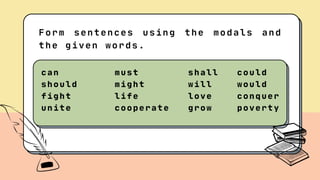
Form sentences using the modals and
the given words.
can must shall could
should might will would
fight life love conquer
unite cooperate grow poverty
ACTIVITY
TIME

Modals

  • 1.
    MODALS PAGE 1 Modal verbsshow possibility, intent, ability, or necessity. Because they’re a type of auxiliary verb, they’re used together with the main verb of the sentence. Modal verbs are used to express certain hypothetical conditions. They’re used alongside a main verb to change its meaning slightly. Because they’re auxiliary verbs, they can’t necessarily be used on their own.
  • 2.
    PAGE 2 ·Include can,could, must, might, will, would, may, have to, should, and ought to. ·Give additional information about the function of the main verb that follows it. MODALS (MODAL VERBS)
  • 3.
    PAGE 3 As specialverbs, modals do not change in form or spelling. One cannot add - s, -ed, or -ing to modals. Modals are followed directly by the bare infinitive, i.e., without "to". As auxillary verbs, they do not need an additional auxillary in negatives or questions. In questions or interrogative sentences, one does inversion or the inverted pattern in using modals. REMEMBER
  • 4.
  • 5.
    The modal verbcan shows whether or not the subject is able to do something, such as perform an action or demonstrate an ability. Likewise, the negative form, cannot or can’t, shows that the subject is unable to do something. When are modal verbs used? In situations when something is possible but not certain, use the modal verbs could, may, or might. POSSIBILITY ABILITY
  • 6.
    Similarly, if youwant to ask someone else to do something, start your question with will, would, can, or could. When are modal verbs used? If you want to ask permission to do something, start your question with can, may, or could. ASKING PERMISSION REQUEST
  • 7.
    Modal verbs canexpress a necessary action, such as an obligation, duty, or requirement. must, have to, or need to When are modal verbs used? If you’re giving suggestions or advice without ordering someone around, you can use the modal verb should. SUGGESTION/ADVICE OBLIGATION OR NECESSITY
  • 8.
    Form sentences usingthe modals and the given words. can must shall could should might will would fight life love conquer unite cooperate grow poverty
  • 9.