
ALLPPT.com _ Free PowerPoint Templates, Diagrams and Charts
By : Murniati, S.Pd, M.Si
Painting
Definition Painting
Painting is the expression of ideas and emotions, with the
creation of certain aesthetic qualities, in a two-dimensional
visual language. The elements of this language its shapes,
lines, colours, tones, and textures—are used in various wa
ys to produce sensations of volume, space, movement, an
d light on a flat surface. These elements are combined into
expressive patterns in order to represent real or supernatu
ral phenomena, to interpret a narrative theme, or to create
wholly abstract visual relationships.
Painting styles
Style is used in two senses: It can refer to the distin
ctive visual elements, techniques and methods that
typify an individual artist's work. It can also refer to t
he movement or school that an artist is associated
with. This can stem from an actual group that the ar
tist was consciously involved with or it can be a cate
gory in which art historians have placed the painter.
Naturalism
Naturalism describes a true-to-life style which involves the
representation or depiction of nature (including people) wit
h the least possible distortion or interpretation. There is a q
uasi-photographic quality to the best naturalistic paintings:
a quality which requires a minimum amount of visual detail
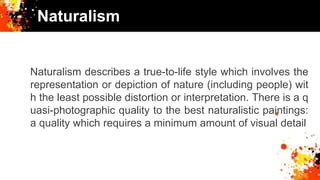
Rembrandt, “ The
Blinding of Samson”
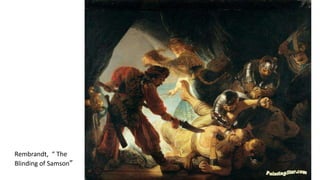
Rembrandt "The
Anatomy Lesson
of Dr. Tulp"
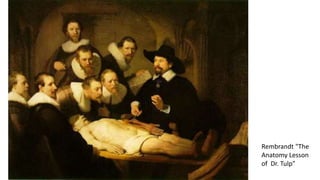
Paul Alfred Curzon
"The Afternoon
Pasttime"
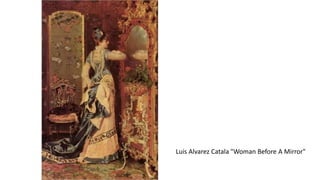
Luis Alvarez Catala "Woman Before A Mirror"
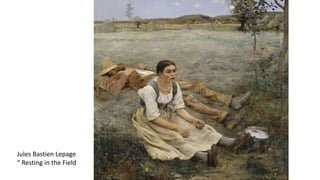
Jules Bastien Lepage
“ Resting in the Field
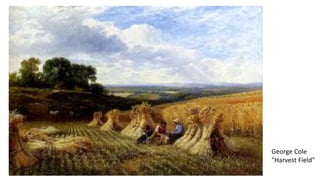
George Cole
"Harvest Field"
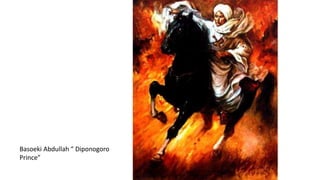
Basoeki Abdullah “ Diponogoro
Prince”
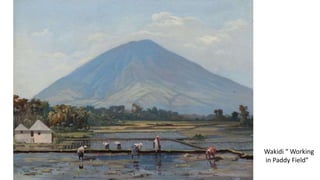
Wakidi “ Working
in Paddy Field”
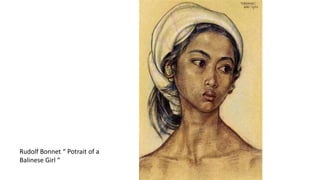
Rudolf Bonnet “ Potrait of a
Balinese Girl “
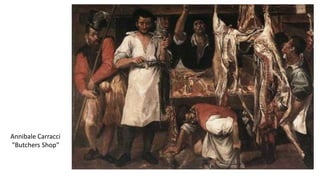
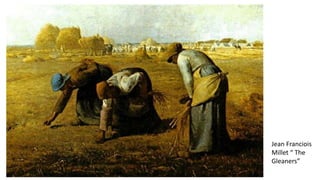
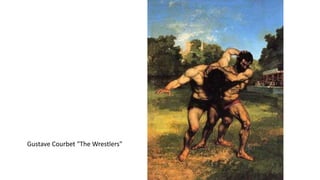
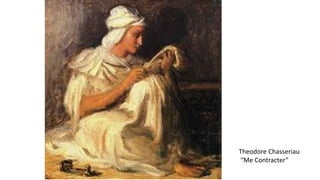
Realism
Realism was an artistic movement that began in
France in the 1850s, following the 1848 Revolutio
n. Realists rejected Romanticism, which had domi
nated French literature and art since the late 18th
century, revolting against the exotic subject matter
and exaggerated emotionalism of the movement.
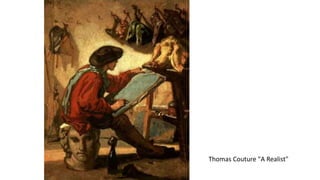
Thomas Couture "A Realist"
Annibale Carracci
"Butchers Shop"
Jean Franciois
Millet “ The
Gleaners”
Gustave Courbet "The Wrestlers"
Theodore Chasseriau
“Me Contracter”
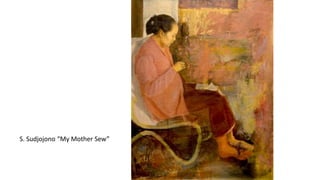
S. Sudjojono “My Mother Sew”
Romanticism
Romanticism embraced individuality and subjectivity to
counteract the excessive insistence on logical thought.
Artists began exploring various emotional and psycholo
gical states as well as moods. The preoccupation with
the hero and the genius translated to new views of the a
rtist as a brilliant creator who was unburdened by acade
mic dictate and tastes.
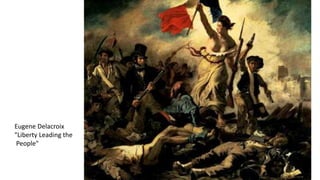
Eugene Delacroix
"Liberty Leading the
People"
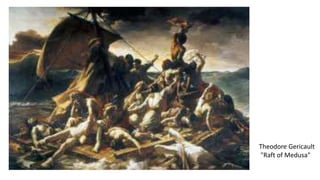
Theodore Gericault
"Raft of Medusa"
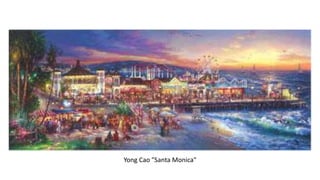
Yong Cao "Santa Monica"
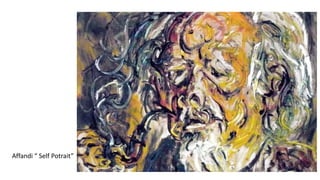
Expressionism
Abstract style of art takes on many forms and ‘
expressionism’ is one of them. The overflow of
human emotions is portrayed through the artist’
s point of view.
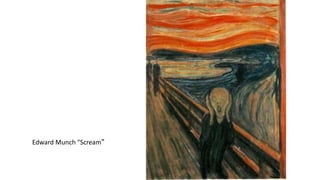
Edward Munch "Scream"
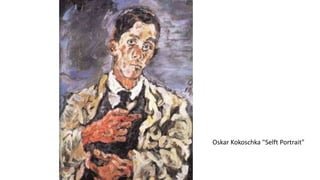
Oskar Kokoschka "Selft Portrait"
Affandi “ Self Potrait”
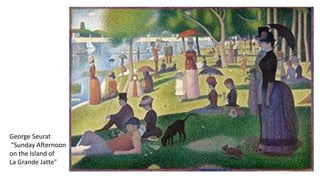
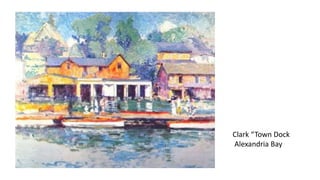
Impressionism
The first example of modernism in painting was impressionism
, a school of painting that initially focused on work done, not in
studios, but outdoors (en plein air). Impressionist paintings de
monstrated that human beings do not see objects, but instead
see light itself.
George Seurat
"Sunday Afternoon
on the Island of
La Grande Jatte"
Clark “Town Dock
Alexandria Bay
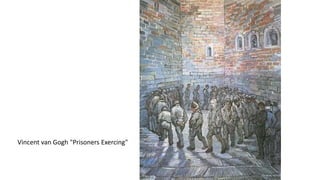
Vincent van Gogh "Prisoners Exercing"
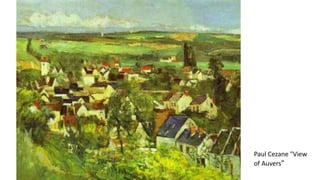
Paul Cezane "View
of Auvers"
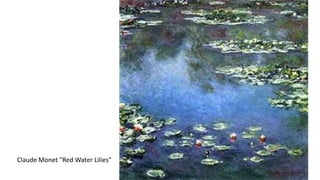
Claude Monet "Red Water Lilies"
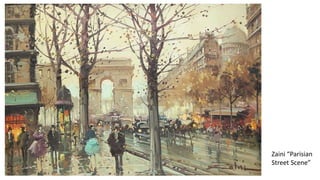
Zaini “Parisian
Street Scene”
Surrealism
Surrealism is a cultural movement that began in the early 19
20s, and is best known for the artistic and literary production
of those affiliated with the Surrealist Movement. Surrealist ar
tworks feature the element of surprise, the uncanny, the unc
onscious, unexpected juxtapositions and non-sequitur; how
ever, many Surrealist artists and writers regard their work as
an expression of the philosophical movement first and forem
ost, with the works being an artifact. Leader André Breton w
as explicit in his assertion that Surrealism was above all a re
volutionary movement.
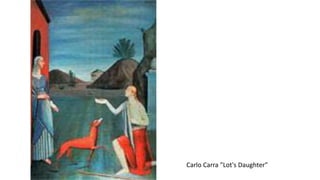
Carlo Carra "Lot's Daughter"
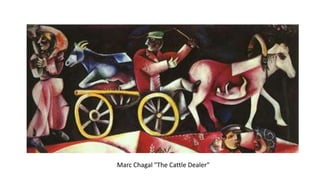
Marc Chagal "The Cattle Dealer"
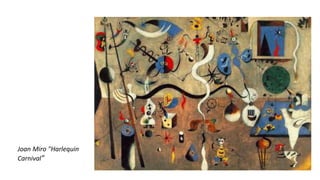
Joan Miro "Harlequin
Carnival"
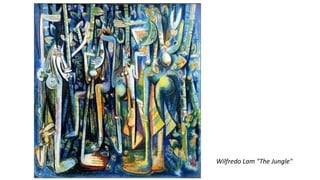
Wilfredo Lam "The Jungle"
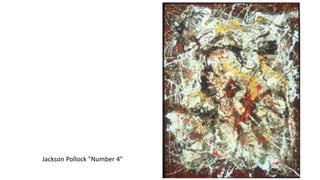
Abstract
Abstract art uses visual language of shape, form, color and
line to create a composition which may exist with a degree
of independence from visual references in the world.
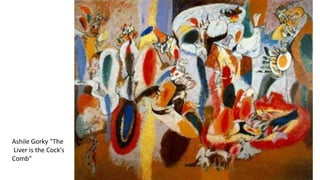
Ashile Gorky "The
Liver is the Cock's
Comb"
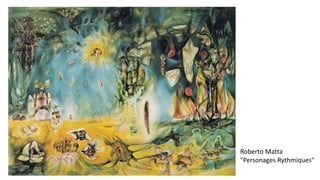
Roberto Matta
"Personages Rythmiques"
Jackson Pollock "Number 4"
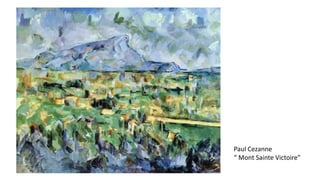
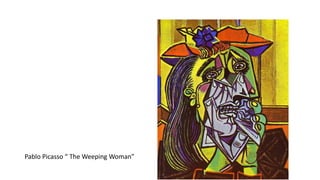
Cubism
Paul Cezanne, a famous artist once said –
“Everything in nature takes its form from the
cylinder, the cone or the sphere.” Interestingl
y, this later turned into the basis of ‘cubism’.
This is another expression of abstract art an
d geometrical shapes form a very important
part of this style.
Paul Cezanne
“ Mont Sainte Victoire”
Pablo Picasso “ The Weeping Woman”
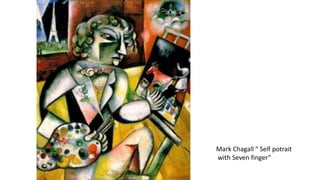
Mark Chagall “ Self potrait
with Seven finger”
Pointilism
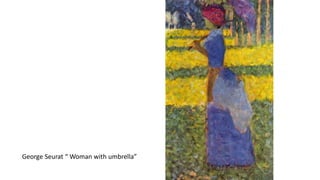
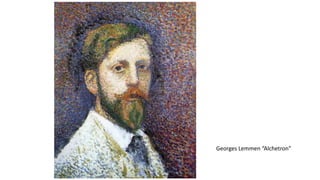
Pointillism is a technique of painting in which small
, distinct dots of color are applied in patterns to for
m an image.
Georges Seurat and Paul Signac developed the te
chnique in 1886, branching from Impressionism
George Seurat “ Woman with umbrella”
Georges Lemmen “Alchetron”
Contemporary
Contemporary art is the art of today, produced in the second
half of the 20th century or in the 21st century. Contemporary
artists work in a globally influenced, culturally diverse, and te
chnologically advancing world. Their art is a dynamic combin
ation of materials, methods, concepts, and subjects that cont
inue the challenging of boundaries that was already well und
erway in the 20th century.
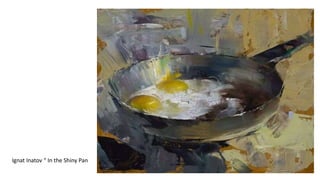
Ignat Inatov “ In the Shiny Pan
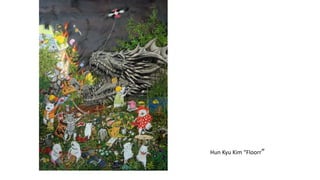
Hun Kyu Kim “Floorr”
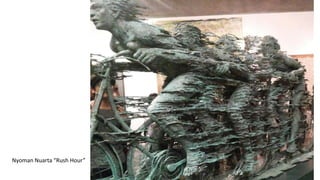
Nyoman Nuarta “Rush Hour”
Tools and materials for painting
Oil
For centuries, artists have been using oil paint to
create their masterpieces. This slow drying mediu
m is made from color pigments suspended in oil.
Due to its long drying time, artists can take their ti
me producing work. Oil paint is often used to creat
e wonderful textured effects thanks to its thick con
sistency.
Acrylic
There are a wide array of acrylic paints in terms of texture
and drying time. This water-soluble paint dries quickly, is
non-toxic, and cost-effective, often making it a go-to choic
e for painters of all skill levels. Over time it holds up better
than oil paint, as it’s not prone to cracking or yellowing.
Watercolor
Typically painted on paper, watercolors are made
from pigments suspended in a water-based soluti
on. Known for the transparent layers they create,
watercolor paint remains soluble even when dry.
This means that artists can make some correction
s even when the painting is dry, but this also mea
ns that finished work must be protected carefully.
Gouache
While gouache is similar to watercolor in that it can be re-
wetted, this type of paint dries matte and is a heavier paint
due to the chalk that’s incorporated into it. Gouache also h
as characteristics similar to acrylic in that it’s an opaque pa
int. It’s often used together with watercolor, and since it’s w
ater soluble, it requires a varnish over the top to seal the fi
nished painting.
Pastel
Sometimes known as “dry painting,” the use of
pastels has been popular since the 16th century
. Their stick form and lack of drying time make
them an easy and portable solution for artists.
The most popular pastels known as soft pastels
have chalk incorporated into them, but oil pastel
s with a waxy consistency are also available.
Mosaic
The traditional definition of a mosaic is a coherent pattern
or image in which each component element is built up fro
m small regular or irregular pieces of substances such as
stone, glass or ceramic, held in place by plaster/mortar, e
ntirely or predominantly covering a plane or curved surfac
e, even a three dimensional shape, and normally integrat
ed with its architectural context.

Seni Lukis

  • 1.
    ALLPPT.com _ FreePowerPoint Templates, Diagrams and Charts By : Murniati, S.Pd, M.Si Painting
  • 2.
    Definition Painting Painting isthe expression of ideas and emotions, with the creation of certain aesthetic qualities, in a two-dimensional visual language. The elements of this language its shapes, lines, colours, tones, and textures—are used in various wa ys to produce sensations of volume, space, movement, an d light on a flat surface. These elements are combined into expressive patterns in order to represent real or supernatu ral phenomena, to interpret a narrative theme, or to create wholly abstract visual relationships.
  • 3.
    Painting styles Style isused in two senses: It can refer to the distin ctive visual elements, techniques and methods that typify an individual artist's work. It can also refer to t he movement or school that an artist is associated with. This can stem from an actual group that the ar tist was consciously involved with or it can be a cate gory in which art historians have placed the painter.
  • 4.
    Naturalism Naturalism describes atrue-to-life style which involves the representation or depiction of nature (including people) wit h the least possible distortion or interpretation. There is a q uasi-photographic quality to the best naturalistic paintings: a quality which requires a minimum amount of visual detail
  • 5.
  • 6.
  • 7.
    Paul Alfred Curzon "TheAfternoon Pasttime"
  • 8.
    Luis Alvarez Catala"Woman Before A Mirror"
  • 9.
    Jules Bastien Lepage “Resting in the Field
  • 10.
  • 11.
    Basoeki Abdullah “Diponogoro Prince”
  • 12.
    Wakidi “ Working inPaddy Field”
  • 13.
    Rudolf Bonnet “Potrait of a Balinese Girl “
  • 14.
    Realism Realism was anartistic movement that began in France in the 1850s, following the 1848 Revolutio n. Realists rejected Romanticism, which had domi nated French literature and art since the late 18th century, revolting against the exotic subject matter and exaggerated emotionalism of the movement.
  • 15.
  • 16.
  • 17.
  • 18.
  • 19.
  • 20.
    S. Sudjojono “MyMother Sew”
  • 21.
    Romanticism Romanticism embraced individualityand subjectivity to counteract the excessive insistence on logical thought. Artists began exploring various emotional and psycholo gical states as well as moods. The preoccupation with the hero and the genius translated to new views of the a rtist as a brilliant creator who was unburdened by acade mic dictate and tastes.
  • 22.
  • 23.
  • 24.
  • 25.
    Expressionism Abstract style ofart takes on many forms and ‘ expressionism’ is one of them. The overflow of human emotions is portrayed through the artist’ s point of view.
  • 26.
  • 27.
  • 28.
    Affandi “ SelfPotrait”
  • 29.
    Impressionism The first exampleof modernism in painting was impressionism , a school of painting that initially focused on work done, not in studios, but outdoors (en plein air). Impressionist paintings de monstrated that human beings do not see objects, but instead see light itself.
  • 30.
    George Seurat "Sunday Afternoon onthe Island of La Grande Jatte"
  • 31.
  • 32.
    Vincent van Gogh"Prisoners Exercing"
  • 33.
  • 34.
    Claude Monet "RedWater Lilies"
  • 35.
  • 36.
    Surrealism Surrealism is acultural movement that began in the early 19 20s, and is best known for the artistic and literary production of those affiliated with the Surrealist Movement. Surrealist ar tworks feature the element of surprise, the uncanny, the unc onscious, unexpected juxtapositions and non-sequitur; how ever, many Surrealist artists and writers regard their work as an expression of the philosophical movement first and forem ost, with the works being an artifact. Leader André Breton w as explicit in his assertion that Surrealism was above all a re volutionary movement.
  • 37.
  • 38.
    Marc Chagal "TheCattle Dealer"
  • 39.
  • 40.
  • 41.
    Abstract Abstract art usesvisual language of shape, form, color and line to create a composition which may exist with a degree of independence from visual references in the world.
  • 42.
    Ashile Gorky "The Liveris the Cock's Comb"
  • 43.
  • 44.
  • 45.
    Cubism Paul Cezanne, afamous artist once said – “Everything in nature takes its form from the cylinder, the cone or the sphere.” Interestingl y, this later turned into the basis of ‘cubism’. This is another expression of abstract art an d geometrical shapes form a very important part of this style.
  • 46.
    Paul Cezanne “ MontSainte Victoire”
  • 47.
    Pablo Picasso “The Weeping Woman”
  • 48.
    Mark Chagall “Self potrait with Seven finger”
  • 49.
    Pointilism Pointillism is atechnique of painting in which small , distinct dots of color are applied in patterns to for m an image. Georges Seurat and Paul Signac developed the te chnique in 1886, branching from Impressionism
  • 50.
    George Seurat “Woman with umbrella”
  • 51.
  • 52.
    Contemporary Contemporary art isthe art of today, produced in the second half of the 20th century or in the 21st century. Contemporary artists work in a globally influenced, culturally diverse, and te chnologically advancing world. Their art is a dynamic combin ation of materials, methods, concepts, and subjects that cont inue the challenging of boundaries that was already well und erway in the 20th century.
  • 53.
    Ignat Inatov “In the Shiny Pan
  • 54.
    Hun Kyu Kim“Floorr”
  • 55.
  • 56.
    Tools and materialsfor painting Oil For centuries, artists have been using oil paint to create their masterpieces. This slow drying mediu m is made from color pigments suspended in oil. Due to its long drying time, artists can take their ti me producing work. Oil paint is often used to creat e wonderful textured effects thanks to its thick con sistency.
  • 58.
    Acrylic There are awide array of acrylic paints in terms of texture and drying time. This water-soluble paint dries quickly, is non-toxic, and cost-effective, often making it a go-to choic e for painters of all skill levels. Over time it holds up better than oil paint, as it’s not prone to cracking or yellowing.
  • 59.
    Watercolor Typically painted onpaper, watercolors are made from pigments suspended in a water-based soluti on. Known for the transparent layers they create, watercolor paint remains soluble even when dry. This means that artists can make some correction s even when the painting is dry, but this also mea ns that finished work must be protected carefully.
  • 60.
    Gouache While gouache issimilar to watercolor in that it can be re- wetted, this type of paint dries matte and is a heavier paint due to the chalk that’s incorporated into it. Gouache also h as characteristics similar to acrylic in that it’s an opaque pa int. It’s often used together with watercolor, and since it’s w ater soluble, it requires a varnish over the top to seal the fi nished painting.
  • 61.
    Pastel Sometimes known as“dry painting,” the use of pastels has been popular since the 16th century . Their stick form and lack of drying time make them an easy and portable solution for artists. The most popular pastels known as soft pastels have chalk incorporated into them, but oil pastel s with a waxy consistency are also available.
  • 62.
    Mosaic The traditional definitionof a mosaic is a coherent pattern or image in which each component element is built up fro m small regular or irregular pieces of substances such as stone, glass or ceramic, held in place by plaster/mortar, e ntirely or predominantly covering a plane or curved surfac e, even a three dimensional shape, and normally integrat ed with its architectural context.