Seminar on
Hydrogen Powered
Technologies
Submitted To : Submitted By :
Dr. Raj Kumar Sahil Garg
Dr. Ajay Kumar 12001004055
Mechanical Engineering
Introduction
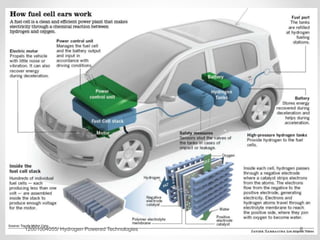
Hydrogen cars are basically electric cars. They have electric motors
that drive the wheels just like an electric car but the difference lies in
the battery. Whereas an electric car stores its electricity in a
conventional battery (usually lithium ion or nickel metal hydride),
hydrogen cars store their electricity in the form of hydrogen and
convert it back to electricity in what’s known as a fuel cell.
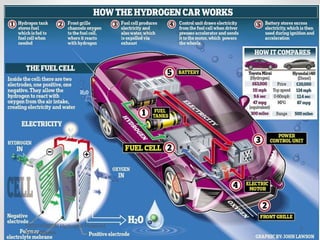
What makes a hydrogen car possible is a device
called a Fuel cell, which converts hydrogen to electricity, giving off
only heat and water as by products. Because it's non-polluting,
hydrogen seems like the ideal fuel for the 21st century.
A hydrogen fuel cell creates a chemical reaction with the hydrogen
that generates electricity, water and heat. Just like an electric car, there
are no harmful exhaust emissions.
12001004055/ Hydrogen Powered Technologies 2
12001004055/ Hydrogen Powered Technologies 3
Status of development of Hydrogen Energy in India
• Hydrogen energy is at present only at the Research, Development and
Demonstration (RD&D) stage. The Ministry of New and Renewable
Energy is supporting a broad based RD&D projects on different aspects of
hydrogen energy technologies including hydrogen production, its storage
and utilization for stationary, motive and portable power generation
applications using internal combustion engines and fuel cell technologies.
The focus of RD&D efforts in this area is directed towards development of
new materials, processes, components, sub-systems and systems.
• As a result of RD&D efforts made in the area of hydrogen energy,
laboratory level prototypes of hydrogen fuelled motorcycles, three
wheelers, engine-generator sets, and water/methanol electrolysers for
hydrogen production have been developed. About 15 hydrogen fuelled
motorcycles are being demonstrated in the campus of Banaras Hindu
University, Varanasi. Hydrogen catalytic combustion cookers have been
developed. Facilities for dispensing hydrogen blended compressed natural
gas fuel have been set up in Faridabad and Delhi.
• The Ministry of Science and Technology, CSIR Laboratories, Ministry of
Petroleum and Natural Gas, Defence Research & Development
Organizations, Indian Space Research Organization, Oil & Gas companies,
Department of Atomic Energy and private sector automobile
companies are also involved in the research, development and
demonstration programme related to hydrogen.
12001004055/ Hydrogen Powered Technologies 4
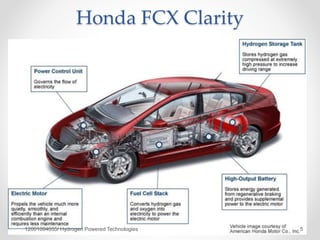
Honda FCX Clarity
12001004055/ Hydrogen Powered Technologies 5
Toyota Mirai
12001004055/ Hydrogen Powered Technologies 6
12001004055/ Hydrogen Powered
Technologies
7
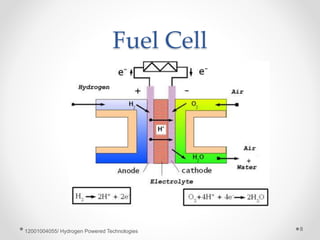
Fuel Cell
12001004055/ Hydrogen Powered Technologies 8
Differences between Fuel
Cell cars and other vehicles
• Battery electric vehicles –
 drive emissions-free
 can use existing infrastructure to recharge, but must be
plugged in for extended periods of time
• Plug-in hybrid electric vehicles –
 drive short distances on electricity-only, switching to
liquid fuel for longer trips
 not as clean as battery electric or fuel cell vehicles, plug-
in hybrids produce significantly less pollution than their
conventional counterparts
• Conventional hybrids –
 derive all their power from gasoline and diesel
12001004055/ Hydrogen Powered Technologies 9
Vehicles based on this
Technology
 Toyota Mirai in Japan at the end of 2014
 Tata Motors and ISRO have already developed a hydrogen bus which is
being tested in India. The bus was expected to get on road in 2015
 In March 2015, China South Rail Corporation (CSR) demonstrated the
world's first hydrogen fuel cell-powered tramcar at an assembly facility in
Qingdao.
 In July 2010 Boeing unveiled its hydrogen powered Phantom Eye UAV,
powered by two Ford internal combustion engines that have been converted
to run on hydrogen.
 Liquid hydrogen and oxygen were also used in the Space Shuttle to run the
fuel cells that power the electrical systems . The by product of the fuel cell
is water, which is used for drinking and other applications that require
water in space
12001004055/ Hydrogen Powered Technologies 10
Hydrogen Storage
The major technological barrier to the
development of hydrogen fuel cell cars
Because
• Hydrogen has a very low volumetric
energy density at ambient conditions, equal to about
one-third that of methane.
• When the fuel is stored as liquid hydrogen in
a cryogenic tank the volumetric energy density
(mega joules per litre) is small relative to that of
gasoline.
12001004055/ Hydrogen Powered Technologies 11
Targets to achieve :
 The fuel tank system when charged should contain 6%
gravimetric hydrogen density.
 System should be capable of being recharged at the filling
station in less than 5 min.
 The hydrogen should be available at the inlet of the fuel cell at
a pressure of a few bar without it being necessary to heat the
store to a temperature of more than 50 °C.
Methods analysed
• Liquid Hydrogen
• High-pressure hydrogen
• Solid-state hydride storage
• Porous solid adsorption of molecular hydrogen
12001004055/ Hydrogen Powered Technologies 12
• Hydrogen fuel cell cars have no exhaust emissions so
they’re great for the kind of local pollutants that
contribute to poor air quality in cities around the world.
• Nitrogen oxide, particulates, soot, black carbon, all the
nasty stuff churned from the exhausts of petrol and
diesel cars that people would rather keep out of their
lungs is completely absent from a fuel cell vehicles. You
just get a dribble of clean water (that you could drink, if
you were absolutely desperate).
Is Hydrogen Fuel Cell
Technology Green
12001004055/ Hydrogen Powered Technologies 13
Couldn’t it be dangerous ?
• The answer is YES. Many motorists do point to with
hydrogen is safety and worries about a repeat of the
Hindenburg airship disaster from the thirties. However,
these are misplaced, as Hayles explained: “The tanks
are rated twice as highly [as required] from a safety
perspective – you won’t damage one of these in a road
accident. It’s an unfair comparison, too, because people
get into a petrol car and don’t think about sitting on 50
litres of volatile fuel as they accept this as a danger –
hydrogen is no different.”
12001004055/ Hydrogen Powered Technologies 14
Summing Up
12001004055/ Hydrogen Powered Technologies 15
References
• https://en.wikipedia.org/wiki/Hydrogen_vehicle
• http://www.sciencedirect.com/science/article/pii/S004220
7X06001485
• http://www.autoexpress.co.uk/car-news/93180/hydrogen-
cars-can-you-really-live-with-a-fuel-cell-car
• https://www.fueleconomy.gov/feg/fuelcell.shtml
• http://www.ucsusa.org/clean-vehicles/electric-
vehicles/how-do-hydrogen-fuel-cells-
work#.VuWvX5x97IV
• http://mnre.gov.in/file-
manager/UserFiles/faq_hydrogenenergy.htm
12001004055/ Hydrogen Powered Technologies 16

Seminar on Hydrogen powered Technologies

  • 1.
    Seminar on Hydrogen Powered Technologies SubmittedTo : Submitted By : Dr. Raj Kumar Sahil Garg Dr. Ajay Kumar 12001004055 Mechanical Engineering
  • 2.
    Introduction Hydrogen cars arebasically electric cars. They have electric motors that drive the wheels just like an electric car but the difference lies in the battery. Whereas an electric car stores its electricity in a conventional battery (usually lithium ion or nickel metal hydride), hydrogen cars store their electricity in the form of hydrogen and convert it back to electricity in what’s known as a fuel cell. What makes a hydrogen car possible is a device called a Fuel cell, which converts hydrogen to electricity, giving off only heat and water as by products. Because it's non-polluting, hydrogen seems like the ideal fuel for the 21st century. A hydrogen fuel cell creates a chemical reaction with the hydrogen that generates electricity, water and heat. Just like an electric car, there are no harmful exhaust emissions. 12001004055/ Hydrogen Powered Technologies 2
  • 3.
  • 4.
    Status of developmentof Hydrogen Energy in India • Hydrogen energy is at present only at the Research, Development and Demonstration (RD&D) stage. The Ministry of New and Renewable Energy is supporting a broad based RD&D projects on different aspects of hydrogen energy technologies including hydrogen production, its storage and utilization for stationary, motive and portable power generation applications using internal combustion engines and fuel cell technologies. The focus of RD&D efforts in this area is directed towards development of new materials, processes, components, sub-systems and systems. • As a result of RD&D efforts made in the area of hydrogen energy, laboratory level prototypes of hydrogen fuelled motorcycles, three wheelers, engine-generator sets, and water/methanol electrolysers for hydrogen production have been developed. About 15 hydrogen fuelled motorcycles are being demonstrated in the campus of Banaras Hindu University, Varanasi. Hydrogen catalytic combustion cookers have been developed. Facilities for dispensing hydrogen blended compressed natural gas fuel have been set up in Faridabad and Delhi. • The Ministry of Science and Technology, CSIR Laboratories, Ministry of Petroleum and Natural Gas, Defence Research & Development Organizations, Indian Space Research Organization, Oil & Gas companies, Department of Atomic Energy and private sector automobile companies are also involved in the research, development and demonstration programme related to hydrogen. 12001004055/ Hydrogen Powered Technologies 4
  • 5.
    Honda FCX Clarity 12001004055/Hydrogen Powered Technologies 5
  • 6.
    Toyota Mirai 12001004055/ HydrogenPowered Technologies 6
  • 7.
  • 8.
    Fuel Cell 12001004055/ HydrogenPowered Technologies 8
  • 9.
    Differences between Fuel Cellcars and other vehicles • Battery electric vehicles –  drive emissions-free  can use existing infrastructure to recharge, but must be plugged in for extended periods of time • Plug-in hybrid electric vehicles –  drive short distances on electricity-only, switching to liquid fuel for longer trips  not as clean as battery electric or fuel cell vehicles, plug- in hybrids produce significantly less pollution than their conventional counterparts • Conventional hybrids –  derive all their power from gasoline and diesel 12001004055/ Hydrogen Powered Technologies 9
  • 10.
    Vehicles based onthis Technology  Toyota Mirai in Japan at the end of 2014  Tata Motors and ISRO have already developed a hydrogen bus which is being tested in India. The bus was expected to get on road in 2015  In March 2015, China South Rail Corporation (CSR) demonstrated the world's first hydrogen fuel cell-powered tramcar at an assembly facility in Qingdao.  In July 2010 Boeing unveiled its hydrogen powered Phantom Eye UAV, powered by two Ford internal combustion engines that have been converted to run on hydrogen.  Liquid hydrogen and oxygen were also used in the Space Shuttle to run the fuel cells that power the electrical systems . The by product of the fuel cell is water, which is used for drinking and other applications that require water in space 12001004055/ Hydrogen Powered Technologies 10
  • 11.
    Hydrogen Storage The majortechnological barrier to the development of hydrogen fuel cell cars Because • Hydrogen has a very low volumetric energy density at ambient conditions, equal to about one-third that of methane. • When the fuel is stored as liquid hydrogen in a cryogenic tank the volumetric energy density (mega joules per litre) is small relative to that of gasoline. 12001004055/ Hydrogen Powered Technologies 11
  • 12.
    Targets to achieve:  The fuel tank system when charged should contain 6% gravimetric hydrogen density.  System should be capable of being recharged at the filling station in less than 5 min.  The hydrogen should be available at the inlet of the fuel cell at a pressure of a few bar without it being necessary to heat the store to a temperature of more than 50 °C. Methods analysed • Liquid Hydrogen • High-pressure hydrogen • Solid-state hydride storage • Porous solid adsorption of molecular hydrogen 12001004055/ Hydrogen Powered Technologies 12
  • 13.
    • Hydrogen fuelcell cars have no exhaust emissions so they’re great for the kind of local pollutants that contribute to poor air quality in cities around the world. • Nitrogen oxide, particulates, soot, black carbon, all the nasty stuff churned from the exhausts of petrol and diesel cars that people would rather keep out of their lungs is completely absent from a fuel cell vehicles. You just get a dribble of clean water (that you could drink, if you were absolutely desperate). Is Hydrogen Fuel Cell Technology Green 12001004055/ Hydrogen Powered Technologies 13
  • 14.
    Couldn’t it bedangerous ? • The answer is YES. Many motorists do point to with hydrogen is safety and worries about a repeat of the Hindenburg airship disaster from the thirties. However, these are misplaced, as Hayles explained: “The tanks are rated twice as highly [as required] from a safety perspective – you won’t damage one of these in a road accident. It’s an unfair comparison, too, because people get into a petrol car and don’t think about sitting on 50 litres of volatile fuel as they accept this as a danger – hydrogen is no different.” 12001004055/ Hydrogen Powered Technologies 14
  • 15.
    Summing Up 12001004055/ HydrogenPowered Technologies 15
  • 16.
    References • https://en.wikipedia.org/wiki/Hydrogen_vehicle • http://www.sciencedirect.com/science/article/pii/S004220 7X06001485 •http://www.autoexpress.co.uk/car-news/93180/hydrogen- cars-can-you-really-live-with-a-fuel-cell-car • https://www.fueleconomy.gov/feg/fuelcell.shtml • http://www.ucsusa.org/clean-vehicles/electric- vehicles/how-do-hydrogen-fuel-cells- work#.VuWvX5x97IV • http://mnre.gov.in/file- manager/UserFiles/faq_hydrogenenergy.htm 12001004055/ Hydrogen Powered Technologies 16