Pedagogical Shifts to Instructional 
Strategies: The Role of Writing with 
Literacy in the Content Areas 
Self-Regulated Strategy 
Development (SRSD)
Learning 
Objectives:
Questions to think about while you’re 
learning this topic: 
 Define high-quality writing. What does 
that look like in your classroom? 
 What is SRSD? 
 How can you use SRSD in your 
classroom? 
 Can this strategy be used across all 
grade levels and in all content areas? 
How?
SRSD 
The Self-Regulated Strategy Development approach is 
designed to help students learn, use, and adopt the strategies 
used by skilled writers. This approach integrates all aspects of 
authentic writing skills into writing instruction. 
Quoted from http://www.thinksrsd.com/self-regulated-strategy-development/ 
What does Self-Regulated Strategy Development look like in a 
classroom? Self-Regulated Strategy Development follows a 6 
stage gradual release of responsibility model. Students first 
receive explicit supportive instruction in how to carry out each 
phase of the writing process, with a community-centered and 
meaning-based approach to writing instruction. Children 
progressing through these stages become increasingly 
independent writers.
OStage 1: Activate and Develop 
Background Knowledge 
• Build enthusiasm for genre 
• Develop background knowledge (and 
pre-skills) 
• Read and discuss models 
• Teach genre vocabulary
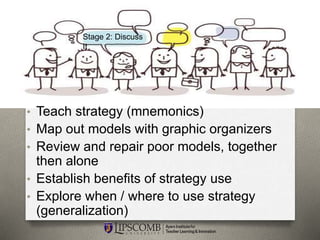
Stage 2: Discuss 
It 
• Teach strategy (mnemonics) 
• Map out models with graphic organizers 
• Review and repair poor models, together 
then alone 
• Establish benefits of strategy use 
• Explore when / where to use strategy 
(generalization)
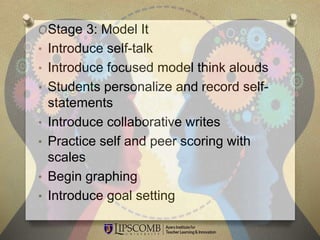
OStage 3: Model It 
• Introduce self-talk 
• Introduce focused model think alouds 
• Students personalize and record self-statements 
• Introduce collaborative writes 
• Practice self and peer scoring with 
scales 
• Begin graphing 
• Introduce goal setting
OStage 4: Memorize It 
• Internalize strategy via 
mnemonics 
• Internalize personalized self-statements
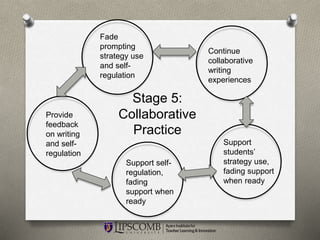
Stage 5: 
Collaborative 
Practice 
Continue 
collaborative 
writing 
experiences 
Support 
students’ 
strategy use, 
fading support 
when ready 
Support self-regulation, 
fading 
support when 
ready 
Provide 
feedback 
on writing 
and self-regulation 
Fade 
prompting 
strategy use 
and self-regulation
OStage 6: Independent Use 
• Students use strategies and self-regulate 
independently 
• Fade overt self-instruction to covert 
(“in your head”) 
• Ensure transfer and buy in to 
strategies and self-regulation
http://lighthouseview.wordpress.com/2011/0 
2/17/self-regulated-strategy-development-srsd- 
approach-and-writing-instruction/
Supplemental resources: 
1. National Writing Project: Strategies 
http://www.nwp.org/cs/public/print/resource_topic/teaching_writing 
2. ASCD: How to Create and Use Rubrics 
http://www.ascd.org/publications/books/112001/chapters/An-ASCD-2013- 
Study-Guide-for-How-to-Create-and-Use-Rubrics-for-Formative- 
Assessment-and-Grading.aspx 
3. DBU University Writing Center: Beyond the Five-Paragraph Essay 
http://www3.dbu.edu/uwc/BeyondtheFive-ParagraphEssay.pptx 
4. 3rd Grade Informational/Explanatory Writing Rubric 
http://tncore.org/sites/www/Uploads/TNCORE/Rubrics/InfExpRubric- 
Gr3.pdf 
5. 4th/5th Grade Informational/Explanatory Writing Rubric 
http://tncore.org/sites/www/Uploads/TNCORE/Rubrics/InfExpRubric- 
Gr4-5.pdf 
6. 6th – 8th Grade Informational/Explanatory Writing Rubric 
http://tncore.org/sites/www/Uploads/TNCORE/Rubrics/InfExpRubric- 
Gr6-8.pdf 
7. 9th – 12th Grade Informational/Explanatory Writing Rubric 
http://tncore.org/sites/www/Uploads/TNCORE/Rubrics/InfExpRubric- 
Gr9-12.pdf

Self-Regulated Strategy Development (SRSD)

  • 1.
    Pedagogical Shifts toInstructional Strategies: The Role of Writing with Literacy in the Content Areas Self-Regulated Strategy Development (SRSD)
  • 2.
  • 3.
    Questions to thinkabout while you’re learning this topic:  Define high-quality writing. What does that look like in your classroom?  What is SRSD?  How can you use SRSD in your classroom?  Can this strategy be used across all grade levels and in all content areas? How?
  • 4.
    SRSD The Self-RegulatedStrategy Development approach is designed to help students learn, use, and adopt the strategies used by skilled writers. This approach integrates all aspects of authentic writing skills into writing instruction. Quoted from http://www.thinksrsd.com/self-regulated-strategy-development/ What does Self-Regulated Strategy Development look like in a classroom? Self-Regulated Strategy Development follows a 6 stage gradual release of responsibility model. Students first receive explicit supportive instruction in how to carry out each phase of the writing process, with a community-centered and meaning-based approach to writing instruction. Children progressing through these stages become increasingly independent writers.
  • 5.
    OStage 1: Activateand Develop Background Knowledge • Build enthusiasm for genre • Develop background knowledge (and pre-skills) • Read and discuss models • Teach genre vocabulary
  • 6.
    Stage 2: Discuss It • Teach strategy (mnemonics) • Map out models with graphic organizers • Review and repair poor models, together then alone • Establish benefits of strategy use • Explore when / where to use strategy (generalization)
  • 7.
    OStage 3: ModelIt • Introduce self-talk • Introduce focused model think alouds • Students personalize and record self-statements • Introduce collaborative writes • Practice self and peer scoring with scales • Begin graphing • Introduce goal setting
  • 8.
    OStage 4: MemorizeIt • Internalize strategy via mnemonics • Internalize personalized self-statements
  • 9.
    Stage 5: Collaborative Practice Continue collaborative writing experiences Support students’ strategy use, fading support when ready Support self-regulation, fading support when ready Provide feedback on writing and self-regulation Fade prompting strategy use and self-regulation
  • 10.
    OStage 6: IndependentUse • Students use strategies and self-regulate independently • Fade overt self-instruction to covert (“in your head”) • Ensure transfer and buy in to strategies and self-regulation
  • 11.
  • 13.
    Supplemental resources: 1.National Writing Project: Strategies http://www.nwp.org/cs/public/print/resource_topic/teaching_writing 2. ASCD: How to Create and Use Rubrics http://www.ascd.org/publications/books/112001/chapters/An-ASCD-2013- Study-Guide-for-How-to-Create-and-Use-Rubrics-for-Formative- Assessment-and-Grading.aspx 3. DBU University Writing Center: Beyond the Five-Paragraph Essay http://www3.dbu.edu/uwc/BeyondtheFive-ParagraphEssay.pptx 4. 3rd Grade Informational/Explanatory Writing Rubric http://tncore.org/sites/www/Uploads/TNCORE/Rubrics/InfExpRubric- Gr3.pdf 5. 4th/5th Grade Informational/Explanatory Writing Rubric http://tncore.org/sites/www/Uploads/TNCORE/Rubrics/InfExpRubric- Gr4-5.pdf 6. 6th – 8th Grade Informational/Explanatory Writing Rubric http://tncore.org/sites/www/Uploads/TNCORE/Rubrics/InfExpRubric- Gr6-8.pdf 7. 9th – 12th Grade Informational/Explanatory Writing Rubric http://tncore.org/sites/www/Uploads/TNCORE/Rubrics/InfExpRubric- Gr9-12.pdf