Presented By:
Rawal Rafiq Leghari
Medicose Nursing Academy
Unit-10
Objectives:
 At the end of this unit, learners will be able to:
 Define self perception/ self concept pattern.
 Describe the functions of self and self concept
PERCEPTION
Perception
It is the ability to experience,
recognize, organize, and describe the
sensory stimuli.
Sensation
It is the ability to receive and
process stimuli received through the sensory
organs
PERCEPTION
Sensory perception
It is the ability to receive
sensory impressions and, through cortical
association, relate the stimuli to past
experiences and to form an impression of
the nature of the stimulus.
Kozier & Erb’s (2008, p. 922).
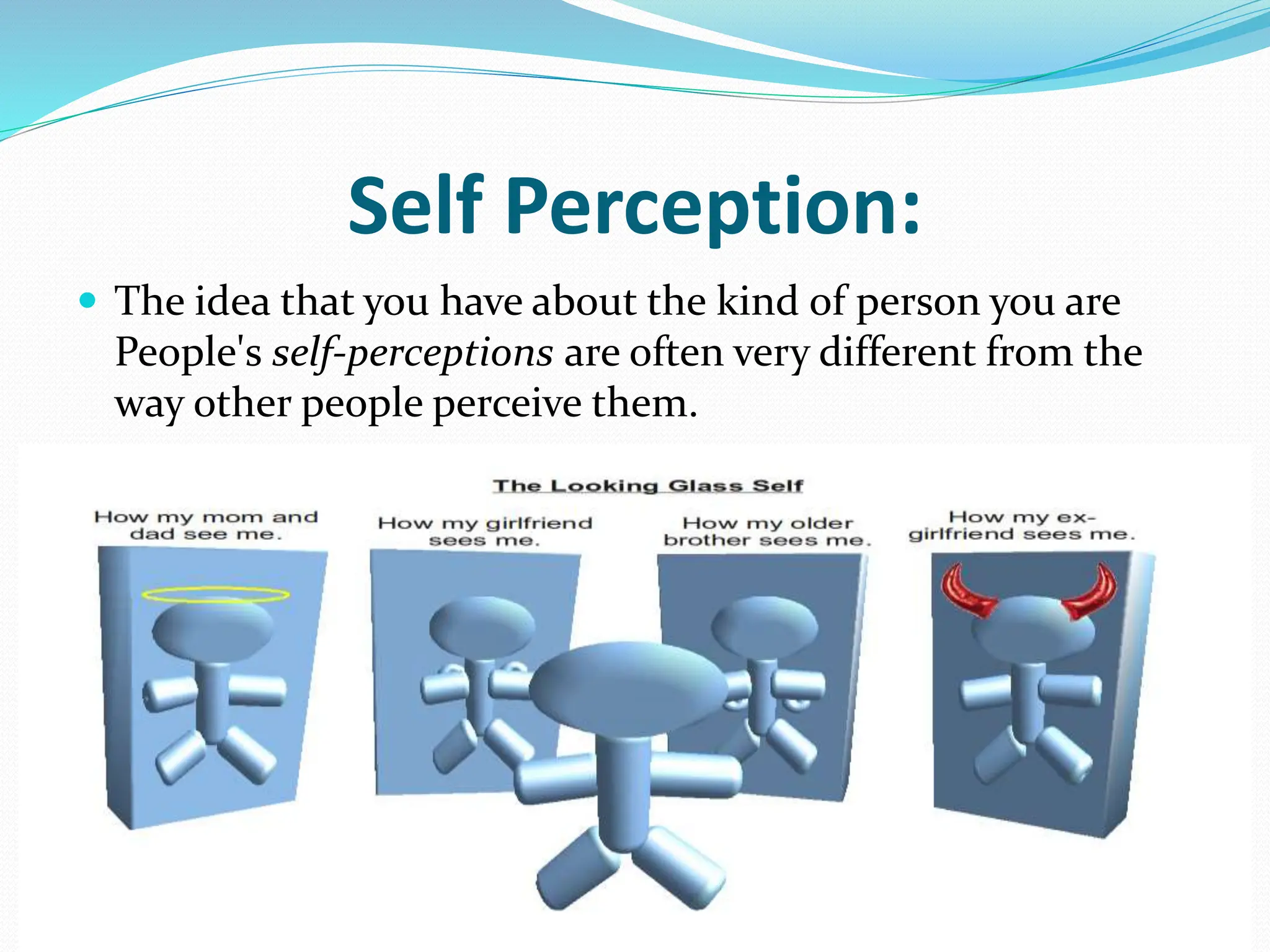
Self Perception:
 The idea that you have about the kind of person you are
People's self-perceptions are often very different from the
way other people perceive them.
SELF-CONCEPT
 Self-concept is one’s mental image of oneself. A
positive self concept is essential to a person’s mental
and physical health.
 Individuals with a positive self-concept are better able
to develop and maintain interpersonal relationships
and resist psychological and physical illness.
 An individual possessing a strong self-concept should
be better able to accept or adapt to changes that may
occur over the life span.
 How one views oneself affects one’s interaction with
others.
Cont…
 Self-concept involves all of the self-perceptions—
appearance, values, and beliefs—that influence
behavior and are referred to when using the words I or
me. Self-concept influences the following:
 How one thinks, talks, and acts
 How one sees and treats another person
 Choices one makes
 Ability to give and receive love
 Ability to take action and to change things.
SELF-CONCEPT
Function of self concept:
 It affects every aspect of life, including
relationships, functional abilities, and
health status
 Self-concept is what helps make each
individual unique
Functions of self and self concept
 Though neither visible nor tangible, a
positive self-concept is one of the greatest
strengths a person can possess
 Because self-concept is an individual’s frame
of reference for perceiving and interacting
with the world, it exerts a powerful
influence on one’s life
Cont….
Function of self and self concept:
 Self-concept greatly influences health status
For example, a person with a positive self-concept is
more likely to care for one’s self—physically,
emotionally, and spiritually.
Kozier & Erb’s (2008, p. 923).
Cont…
Function of self
One’s view of self affects the ability to
function
 A person who sees self as a competent
individual will behave competently and vice
versa.
 Individuals with a positive self-concept
approach new experiences and tasks with
confidence; they expect to be accepted by
others and to succeed
Cont…
Function of self
 Conversely, the person with a negative self-
concept tends to shy away from others and
to avoid challenges.
Self PERCEPTION/SELF-CONCEPT
COMPONENTS OF SELF-CONCEPT:
Self-concept is composed of four
components:
1. Identity
2. Body image
3. Self-esteem
4. Role performance
Self Concept Self Perception.pptxjjjjjjjj

Self Concept Self Perception.pptxjjjjjjjj

  • 1.
    Presented By: Rawal RafiqLeghari Medicose Nursing Academy Unit-10
  • 2.
    Objectives:  At theend of this unit, learners will be able to:  Define self perception/ self concept pattern.  Describe the functions of self and self concept
  • 3.
    PERCEPTION Perception It is theability to experience, recognize, organize, and describe the sensory stimuli. Sensation It is the ability to receive and process stimuli received through the sensory organs
  • 4.
    PERCEPTION Sensory perception It isthe ability to receive sensory impressions and, through cortical association, relate the stimuli to past experiences and to form an impression of the nature of the stimulus. Kozier & Erb’s (2008, p. 922).
  • 5.
    Self Perception:  Theidea that you have about the kind of person you are People's self-perceptions are often very different from the way other people perceive them.
  • 6.
    SELF-CONCEPT  Self-concept isone’s mental image of oneself. A positive self concept is essential to a person’s mental and physical health.  Individuals with a positive self-concept are better able to develop and maintain interpersonal relationships and resist psychological and physical illness.  An individual possessing a strong self-concept should be better able to accept or adapt to changes that may occur over the life span.  How one views oneself affects one’s interaction with others.
  • 7.
    Cont…  Self-concept involvesall of the self-perceptions— appearance, values, and beliefs—that influence behavior and are referred to when using the words I or me. Self-concept influences the following:  How one thinks, talks, and acts  How one sees and treats another person  Choices one makes  Ability to give and receive love  Ability to take action and to change things.
  • 8.
    SELF-CONCEPT Function of selfconcept:  It affects every aspect of life, including relationships, functional abilities, and health status  Self-concept is what helps make each individual unique
  • 9.
    Functions of selfand self concept  Though neither visible nor tangible, a positive self-concept is one of the greatest strengths a person can possess  Because self-concept is an individual’s frame of reference for perceiving and interacting with the world, it exerts a powerful influence on one’s life
  • 10.
    Cont…. Function of selfand self concept:  Self-concept greatly influences health status For example, a person with a positive self-concept is more likely to care for one’s self—physically, emotionally, and spiritually. Kozier & Erb’s (2008, p. 923).
  • 11.
    Cont… Function of self One’sview of self affects the ability to function  A person who sees self as a competent individual will behave competently and vice versa.  Individuals with a positive self-concept approach new experiences and tasks with confidence; they expect to be accepted by others and to succeed
  • 12.
    Cont… Function of self Conversely, the person with a negative self- concept tends to shy away from others and to avoid challenges.
  • 13.
    Self PERCEPTION/SELF-CONCEPT COMPONENTS OFSELF-CONCEPT: Self-concept is composed of four components: 1. Identity 2. Body image 3. Self-esteem 4. Role performance