

Security OPS
for large and small
companies
#PAYMENTSECURITY, Saint-Petersburg, Russia, 2017
#whoami
Mona Arkhipova
◎ Unit Manager of information security
architecture and monitoring at software
vendor and cloud services
◎ Co-owner at internet acquiring software
custom development company
◎ Independent security consultant
Past
• Head of SOC and OPS monitoring, Lead information security expert at QIWI
group;
• Security analyst at General Electric (GE Capital);
• Independent security consultant at fintech start-ups;
• *nix systems and network administrator
1.
First steps to secure
your operations
Do you really need ISOC?
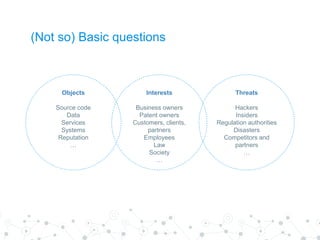
(Not so) Basic questions
Interests
Business owners
Patent owners
Customers, clients,
partners
Employees
Law
Society
…
Objects
Source code
Data
Services
Systems
Reputation
…
Threats
Hackers
Insiders
Regulation authorities
Disasters
Competitors and
partners
…
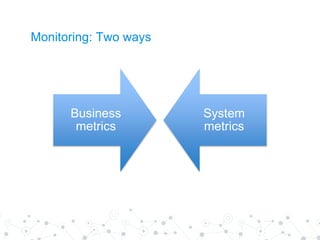
Monitoring: Two ways
Business
metrics
System
metrics
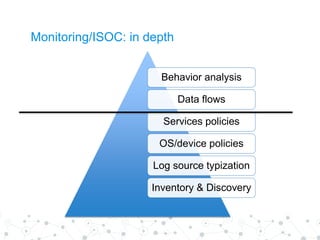
Monitoring/ISOC: in depth
Behavior analysis
Data flows
Services policies
OS/device policies
Log source typization
Inventory & Discovery
2.
Solutions
Marketing vs operations
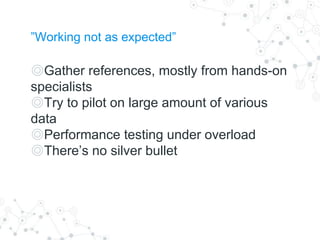
”Working not as expected”
◎Gather references, mostly from hands-on
specialists
◎Try to pilot on large amount of various
data
◎Performance testing under overload
◎There’s no silver bullet
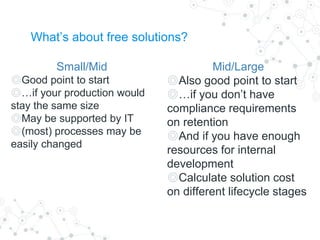
What’s about free solutions?
Small/Mid
◎Good point to start
◎…if your production would
stay the same size
◎May be supported by IT
◎(most) processes may be
easily changed
Mid/Large
◎Also good point to start
◎…if you don’t have
compliance requirements
on retention
◎And if you have enough
resources for internal
development
◎Calculate solution cost
on different lifecycle stages
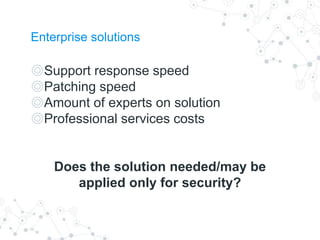
Enterprise solutions
◎Support response speed
◎Patching speed
◎Amount of experts on solution
◎Professional services costs
Does the solution needed/may be
applied only for security?
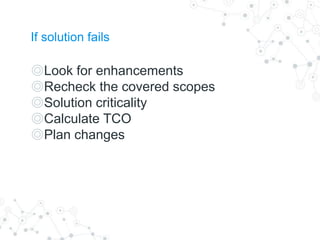
If solution fails
◎Look for enhancements
◎Recheck the covered scopes
◎Solution criticality
◎Calculate TCO
◎Plan changes
3.
Embedding security
into IT operations
Mission possible
Overlapping processes
◎Inventory
◎Sources setup
◎Hardening processes support
◎Access management
◎In-depth knowledge of services/networks
◎Awareness
◎Win-win deployments (share your tools!)
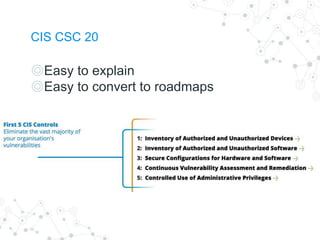
CIS CSC 20
◎Easy to explain
◎Easy to convert to roadmaps
Typical incidents
◎Prepare detailed response plans
◎Create kb on known issues
◎Alerts may be pushed outside
◎May be partially handled by duty/IT
monitoring team
◎Keep it simple
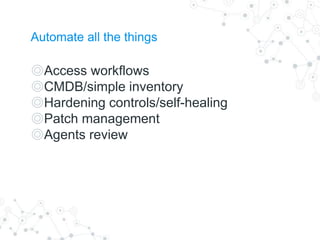
Automate all the things
◎Access workflows
◎CMDB/simple inventory
◎Hardening controls/self-healing
◎Patch management
◎Agents review
I’m loving
IT
Team up Security and
IT and you might like
the result
4.
Testing
Find your way
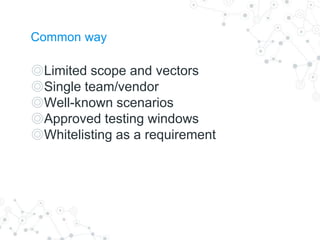
Common way
◎Limited scope and vectors
◎Single team/vendor
◎Well-known scenarios
◎Approved testing windows
◎Whitelisting as a requirement
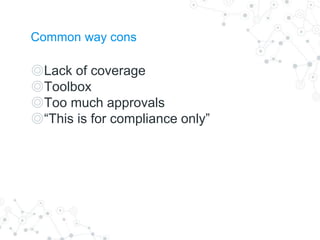
Common way cons
◎Lack of coverage
◎Toolbox
◎Too much approvals
◎“This is for compliance only”
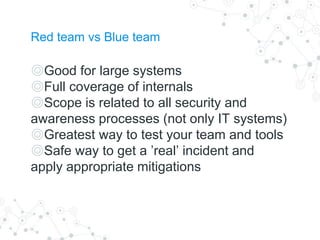
Red team vs Blue team
◎Good for large systems
◎Full coverage of internals
◎Scope is related to all security and
awareness processes (not only IT systems)
◎Greatest way to test your team and tools
◎Safe way to get a ’real’ incident and
apply appropriate mitigations
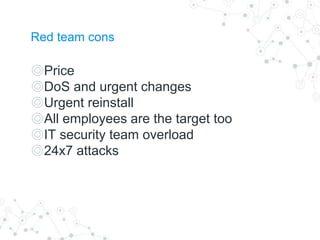
Red team cons
◎Price
◎DoS and urgent changes
◎Urgent reinstall
◎All employees are the target too
◎IT security team overload
◎24x7 attacks
Thanks!
Any questions?
You can find me at:
/monaarkhipova
mona@sudo.su

Security Ops for large and small companies

  • 1.
    Security OPS for largeand small companies #PAYMENTSECURITY, Saint-Petersburg, Russia, 2017
  • 2.
    #whoami Mona Arkhipova ◎ UnitManager of information security architecture and monitoring at software vendor and cloud services ◎ Co-owner at internet acquiring software custom development company ◎ Independent security consultant Past • Head of SOC and OPS monitoring, Lead information security expert at QIWI group; • Security analyst at General Electric (GE Capital); • Independent security consultant at fintech start-ups; • *nix systems and network administrator
  • 3.
    1. First steps tosecure your operations Do you really need ISOC?
  • 4.
    (Not so) Basicquestions Interests Business owners Patent owners Customers, clients, partners Employees Law Society … Objects Source code Data Services Systems Reputation … Threats Hackers Insiders Regulation authorities Disasters Competitors and partners …
  • 5.
  • 6.
    Monitoring/ISOC: in depth Behavioranalysis Data flows Services policies OS/device policies Log source typization Inventory & Discovery
  • 7.
  • 8.
    ”Working not asexpected” ◎Gather references, mostly from hands-on specialists ◎Try to pilot on large amount of various data ◎Performance testing under overload ◎There’s no silver bullet
  • 9.
    What’s about freesolutions? Small/Mid ◎Good point to start ◎…if your production would stay the same size ◎May be supported by IT ◎(most) processes may be easily changed Mid/Large ◎Also good point to start ◎…if you don’t have compliance requirements on retention ◎And if you have enough resources for internal development ◎Calculate solution cost on different lifecycle stages
  • 10.
    Enterprise solutions ◎Support responsespeed ◎Patching speed ◎Amount of experts on solution ◎Professional services costs Does the solution needed/may be applied only for security?
  • 11.
    If solution fails ◎Lookfor enhancements ◎Recheck the covered scopes ◎Solution criticality ◎Calculate TCO ◎Plan changes
  • 12.
    3. Embedding security into IToperations Mission possible
  • 13.
    Overlapping processes ◎Inventory ◎Sources setup ◎Hardeningprocesses support ◎Access management ◎In-depth knowledge of services/networks ◎Awareness ◎Win-win deployments (share your tools!)
  • 14.
    CIS CSC 20 ◎Easyto explain ◎Easy to convert to roadmaps
  • 15.
    Typical incidents ◎Prepare detailedresponse plans ◎Create kb on known issues ◎Alerts may be pushed outside ◎May be partially handled by duty/IT monitoring team ◎Keep it simple
  • 16.
    Automate all thethings ◎Access workflows ◎CMDB/simple inventory ◎Hardening controls/self-healing ◎Patch management ◎Agents review
  • 17.
    I’m loving IT Team upSecurity and IT and you might like the result
  • 18.
  • 19.
    Common way ◎Limited scopeand vectors ◎Single team/vendor ◎Well-known scenarios ◎Approved testing windows ◎Whitelisting as a requirement
  • 20.
    Common way cons ◎Lackof coverage ◎Toolbox ◎Too much approvals ◎“This is for compliance only”
  • 21.
    Red team vsBlue team ◎Good for large systems ◎Full coverage of internals ◎Scope is related to all security and awareness processes (not only IT systems) ◎Greatest way to test your team and tools ◎Safe way to get a ’real’ incident and apply appropriate mitigations
  • 22.
    Red team cons ◎Price ◎DoSand urgent changes ◎Urgent reinstall ◎All employees are the target too ◎IT security team overload ◎24x7 attacks
  • 23.
    Thanks! Any questions? You canfind me at: /monaarkhipova mona@sudo.su