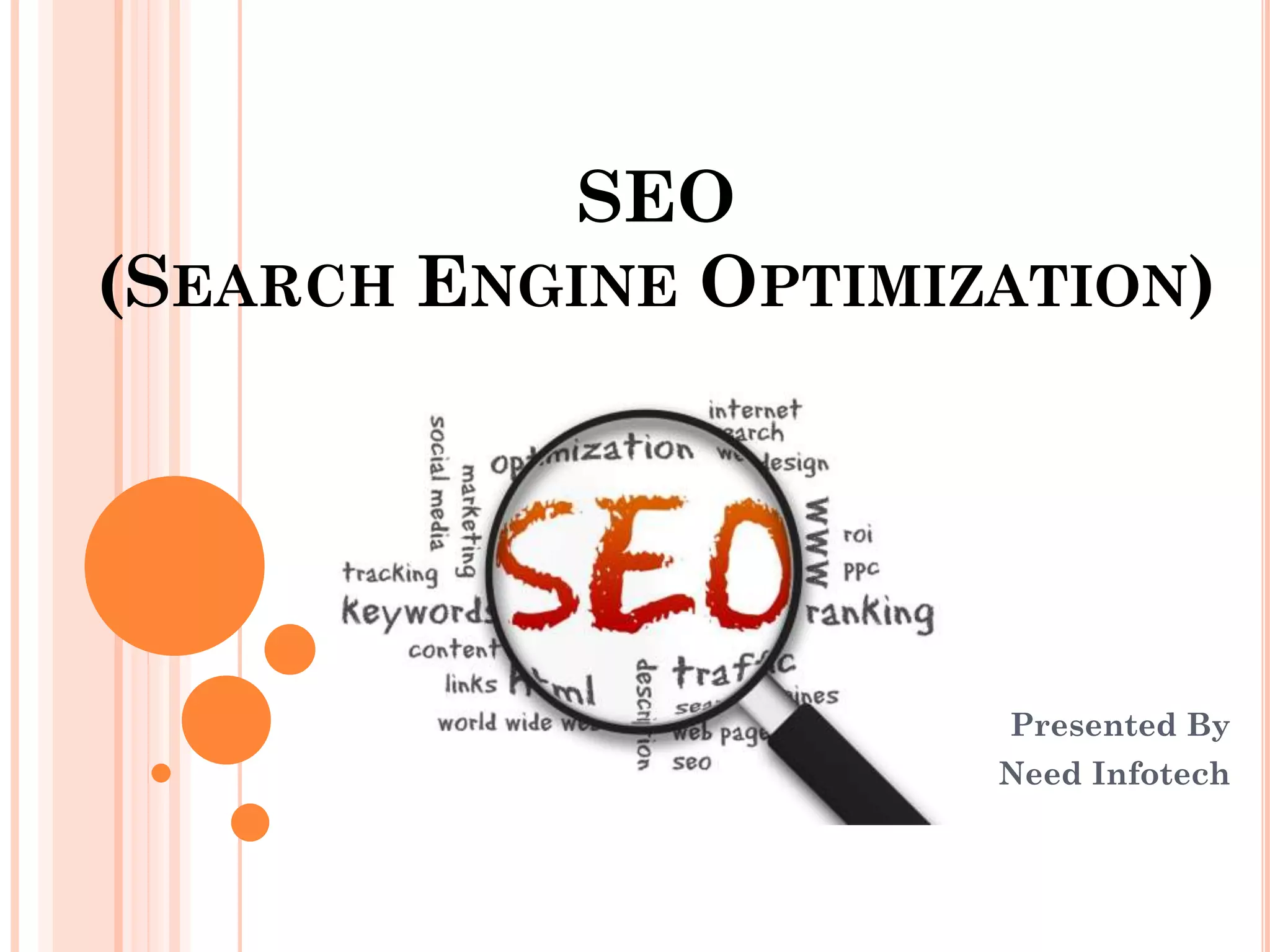
SEO
(SEARCH ENGINE OPTIMIZATION)
Presented By
Need Infotech
What is SEO?
•Search engine optimization (SEO) is the process of affecting the visibility of
a website or a web page in a search engine's "natural" or un-paid
("organic") search results. In general, the earlier (or higher ranked on the
search results page), and more frequently a site appears in the search
results list, the more visitors it will receive from the search engine's users.
SEO may target different kinds of search, including image search, local
search, video search, academic search, news search and industry-
specific vertical search engines.
•SEO is the act of modifying a website to increase its ranking
•Ranking in organic (vs paid), crawler-based listings of search engines
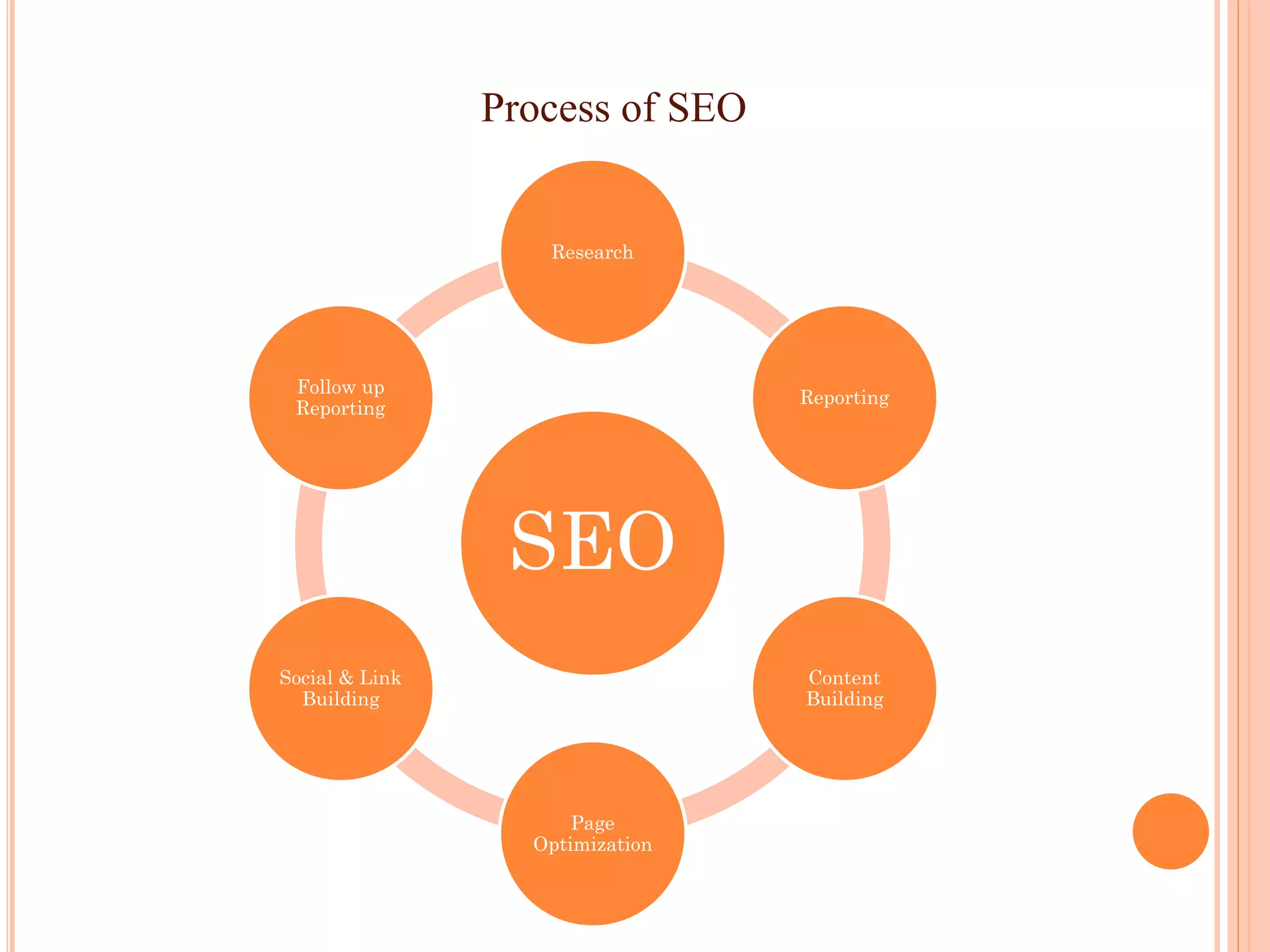
Process of SEO
SEO
Research
Reporting
Content
Building
Page
Optimization
Social & Link
Building
Follow up
Reporting
Advantages of SEO
1. The Results are Low Cost (In Comparison to Adwords and PPC)
2. Definite Increase in Traffic
3. Higher Brand Credibility, People Trust Google
4. Better ROI (Return on Investment) Than Normal Ads
5. Your Competitors Are Doing It
6. Take Your Business to the Next Level
7. 250 Million websites on the web, SEO makes you stand out
8. 60% Of Clicks Go to the First Result
9. You’ll Have Access to Data
10. The Results are Permanent
Steps for good SEO Strategy
1. Research desirable keywords and search phrases (Word Tracker,
Overture, Google Ad Words)
2. Identify search phrases to target
3. “Clean” and optimize a website’s HTML code for appropriate
keyword density, title tag optimization
4. Study competitors (competing websites) and search engines
5. Add Quality content
6. Constant monitoring of rankings for targeted search terms
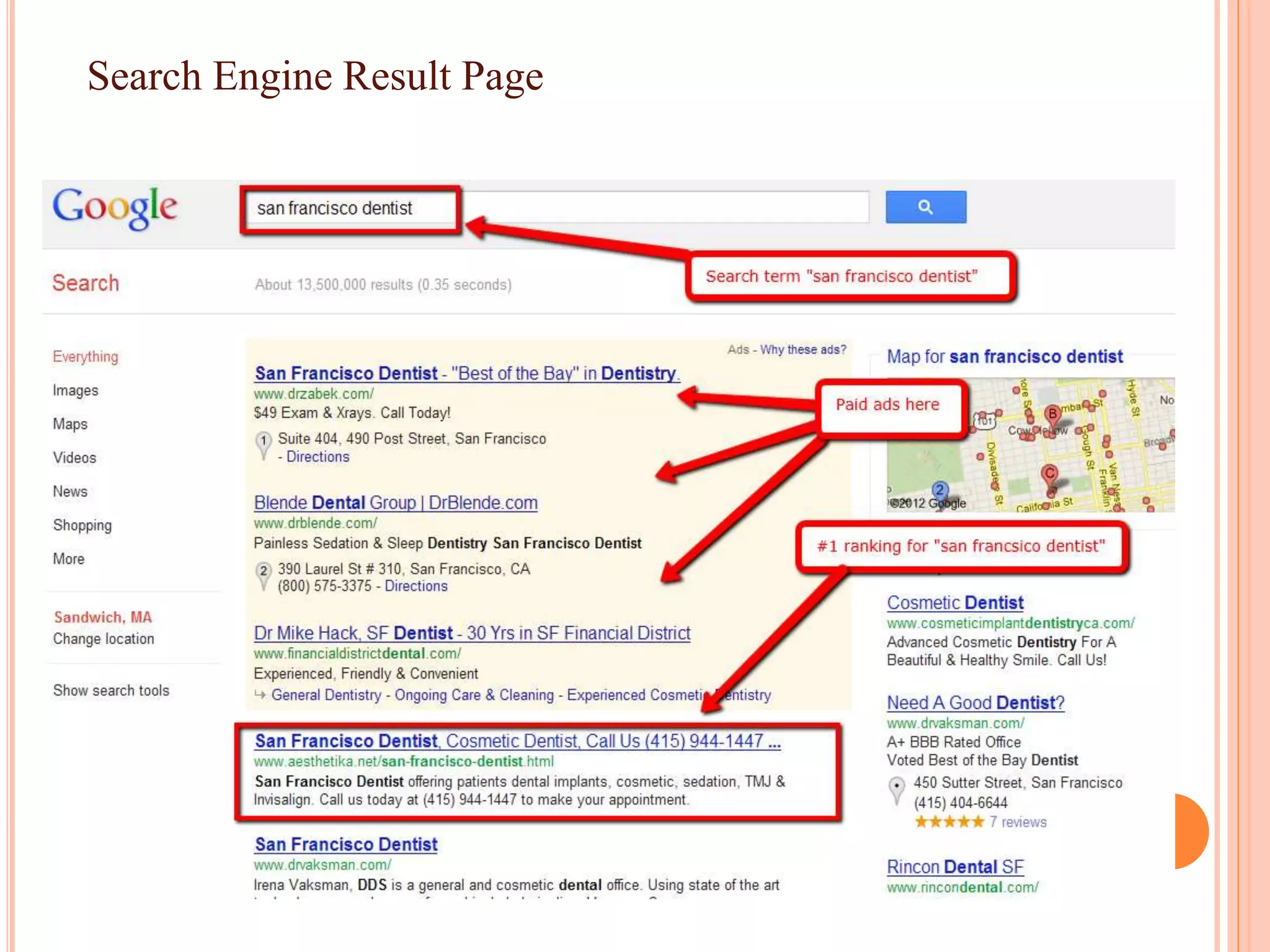
Search Engine Result Page
Technical Aspects of SEO
1. Comprehensive Website Analysis
2. Keyword Research and Analysis.
3. Baseline Ranking report.
4. Competitive analysis in Search Engines.
5. Content Analysis & SEO Copywriting.
6. Analysis of URL structure & information architecture.
7. Analysis of internal linking.
8. Analysis of source code and page layout.
9. Code validation.
10.Search Engine Saturation.
11.Link Popularity Analysis.
12.Link Relevancy & Co-Citation Analysis (Topical Relevancy).
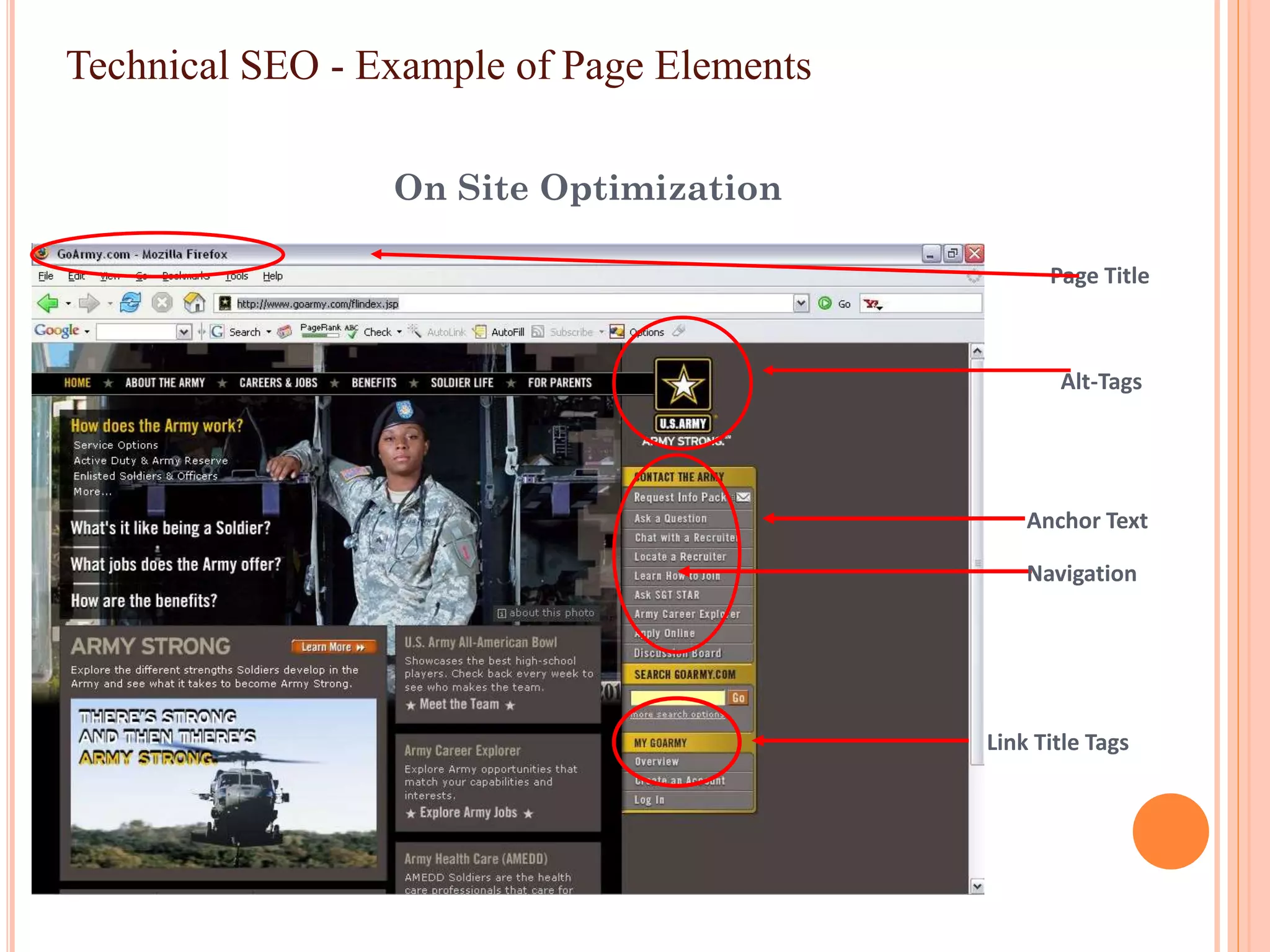
On Site Optimization
Technical SEO - Example of Page Elements
Page Title
Alt-Tags
Link Title Tags
Anchor Text
Navigation
Measuring of SEO Success
• Keyword Ranking.
• Website Traffic.
• Increase in "Share of Traffic" per keyword.
• Increased Revenue/keyword.
• Increase in Impressions ( good for Publishers to show advertisers).
• Lower dependence on Paid Search.
• Lowering the cost per acquisition.
Thank you

Search Engine Optimization

  • 1.
  • 2.
    What is SEO? •Searchengine optimization (SEO) is the process of affecting the visibility of a website or a web page in a search engine's "natural" or un-paid ("organic") search results. In general, the earlier (or higher ranked on the search results page), and more frequently a site appears in the search results list, the more visitors it will receive from the search engine's users. SEO may target different kinds of search, including image search, local search, video search, academic search, news search and industry- specific vertical search engines. •SEO is the act of modifying a website to increase its ranking •Ranking in organic (vs paid), crawler-based listings of search engines
  • 3.
  • 4.
    Advantages of SEO 1.The Results are Low Cost (In Comparison to Adwords and PPC) 2. Definite Increase in Traffic 3. Higher Brand Credibility, People Trust Google 4. Better ROI (Return on Investment) Than Normal Ads 5. Your Competitors Are Doing It 6. Take Your Business to the Next Level 7. 250 Million websites on the web, SEO makes you stand out 8. 60% Of Clicks Go to the First Result 9. You’ll Have Access to Data 10. The Results are Permanent
  • 5.
    Steps for goodSEO Strategy 1. Research desirable keywords and search phrases (Word Tracker, Overture, Google Ad Words) 2. Identify search phrases to target 3. “Clean” and optimize a website’s HTML code for appropriate keyword density, title tag optimization 4. Study competitors (competing websites) and search engines 5. Add Quality content 6. Constant monitoring of rankings for targeted search terms
  • 6.
  • 7.
    Technical Aspects ofSEO 1. Comprehensive Website Analysis 2. Keyword Research and Analysis. 3. Baseline Ranking report. 4. Competitive analysis in Search Engines. 5. Content Analysis & SEO Copywriting. 6. Analysis of URL structure & information architecture. 7. Analysis of internal linking. 8. Analysis of source code and page layout. 9. Code validation. 10.Search Engine Saturation. 11.Link Popularity Analysis. 12.Link Relevancy & Co-Citation Analysis (Topical Relevancy).
  • 8.
    On Site Optimization TechnicalSEO - Example of Page Elements Page Title Alt-Tags Link Title Tags Anchor Text Navigation
  • 9.
    Measuring of SEOSuccess • Keyword Ranking. • Website Traffic. • Increase in "Share of Traffic" per keyword. • Increased Revenue/keyword. • Increase in Impressions ( good for Publishers to show advertisers). • Lower dependence on Paid Search. • Lowering the cost per acquisition.
  • 10.