Scrum X
as complex adaptive system
towards
Enterprise Scrum
Pierre E. Neis
agile field worker
pierre.neis@agilesqr.com
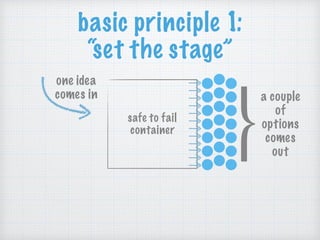
basic principle 1:
“set the stage”
safe to fail
container
one idea
comes in a couple
of
options
comes
out
basic principle 2:
“everything is not an option”
[time bound]
safe to fail
container
one idea
comes in a decision
has to be
taken on
what to keep
and what to
leave
[sprint]
basic principle 3:
“decide”
one idea
comes in
a decision has to be taken on what to keep and what to leave
[time bound]
safe to fail
container
[sprint]
[time bound]
safe to fail
container
[sprint]
basic principle 4:
“avoid never ending stories”
one idea
comes in
[time bound]
safe to fail
container
[sprint]
[time bound]
safe to fail
container
[sprint]
Proceed until you reach a valid outcome
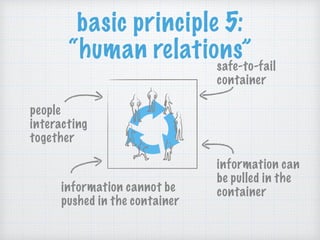
basic principle 5:
“human relations”
safe-to-fail
container
people
interacting
together
information can
be pulled in the
containerinformation cannot be
pushed in the container
Basic principle 6:
“Keep the balance”
one idea
comes in
[time bound]
safe to fail
container
Balance is everything
demand/
capability
development/
customer experience
development/support/
architecture/QA/Processes
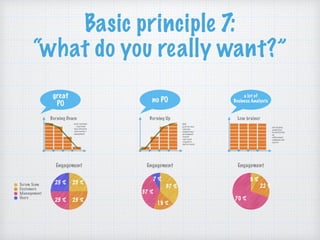
Basic principle 7:
“what do you really want?”
Burning Down
- great customer
experience
- clear direction
- +motivation +
engagement
Burning Up
- R&D
- good for new
solutions
- engineering/
development
focused
- risk to not
respond to
market needs
Low brainer
- just keeping
people busy
- no motivation
- no
achievement
- command and
control
Engagement
25 %
25 % 25 %
25 %Scrum Team
Customers
Management
Users
Engagement
7 %
37 %
19 %
37 %
Engagement
70 %
22 %
9 %
great
PO
no PO
a lot of
Business Analysts
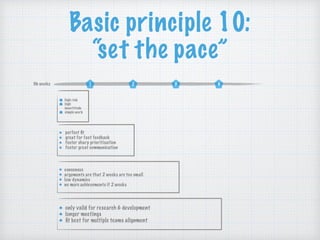
Basic principle 10:
“set the pace”
high risk
high
incertitude
simple work
1 2 3 4Nb weeks
perfect fit
great for fast feedback
foster sharp prioritisation
foster great communication
consensus
arguments are that 2 weeks are too small
low dynamics
no more achievements if 2 weeks
only valid for research & development
longer meetings
fit best for multiple teams alignment
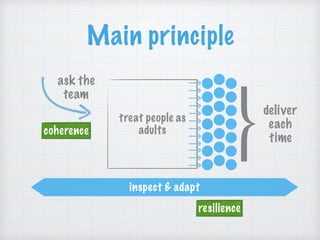
Main principle
treat people as
adults
ask the
team
deliver
each
time
inspect & adapt
coherence
resilience
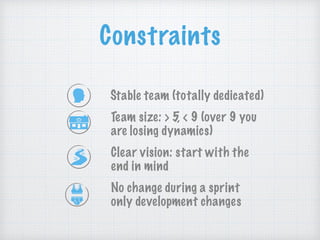
Constraints
Stable team (totally dedicated)
Team size: > 5, < 9 (over 9 you
are losing dynamics)
Clear vision: start with the
end in mind
No change during a sprint
only development changes
www.agilesqr.com | Heidelberg

Scrum x

  • 1.
    Scrum X as complexadaptive system towards Enterprise Scrum
  • 2.
    Pierre E. Neis agilefield worker pierre.neis@agilesqr.com
  • 3.
    basic principle 1: “setthe stage” safe to fail container one idea comes in a couple of options comes out
  • 4.
    basic principle 2: “everythingis not an option” [time bound] safe to fail container one idea comes in a decision has to be taken on what to keep and what to leave [sprint]
  • 5.
    basic principle 3: “decide” oneidea comes in a decision has to be taken on what to keep and what to leave [time bound] safe to fail container [sprint] [time bound] safe to fail container [sprint]
  • 6.
    basic principle 4: “avoidnever ending stories” one idea comes in [time bound] safe to fail container [sprint] [time bound] safe to fail container [sprint] Proceed until you reach a valid outcome
  • 7.
    basic principle 5: “humanrelations” safe-to-fail container people interacting together information can be pulled in the containerinformation cannot be pushed in the container
  • 8.
    Basic principle 6: “Keepthe balance” one idea comes in [time bound] safe to fail container Balance is everything demand/ capability development/ customer experience development/support/ architecture/QA/Processes
  • 9.
    Basic principle 7: “whatdo you really want?” Burning Down - great customer experience - clear direction - +motivation + engagement Burning Up - R&D - good for new solutions - engineering/ development focused - risk to not respond to market needs Low brainer - just keeping people busy - no motivation - no achievement - command and control Engagement 25 % 25 % 25 % 25 %Scrum Team Customers Management Users Engagement 7 % 37 % 19 % 37 % Engagement 70 % 22 % 9 % great PO no PO a lot of Business Analysts
  • 10.
    Basic principle 10: “setthe pace” high risk high incertitude simple work 1 2 3 4Nb weeks perfect fit great for fast feedback foster sharp prioritisation foster great communication consensus arguments are that 2 weeks are too small low dynamics no more achievements if 2 weeks only valid for research & development longer meetings fit best for multiple teams alignment
  • 11.
    Main principle treat peopleas adults ask the team deliver each time inspect & adapt coherence resilience
  • 12.
    Constraints Stable team (totallydedicated) Team size: > 5, < 9 (over 9 you are losing dynamics) Clear vision: start with the end in mind No change during a sprint only development changes
  • 13.