AGILE COACHING IN 21ST
CENTURY WORLD
1
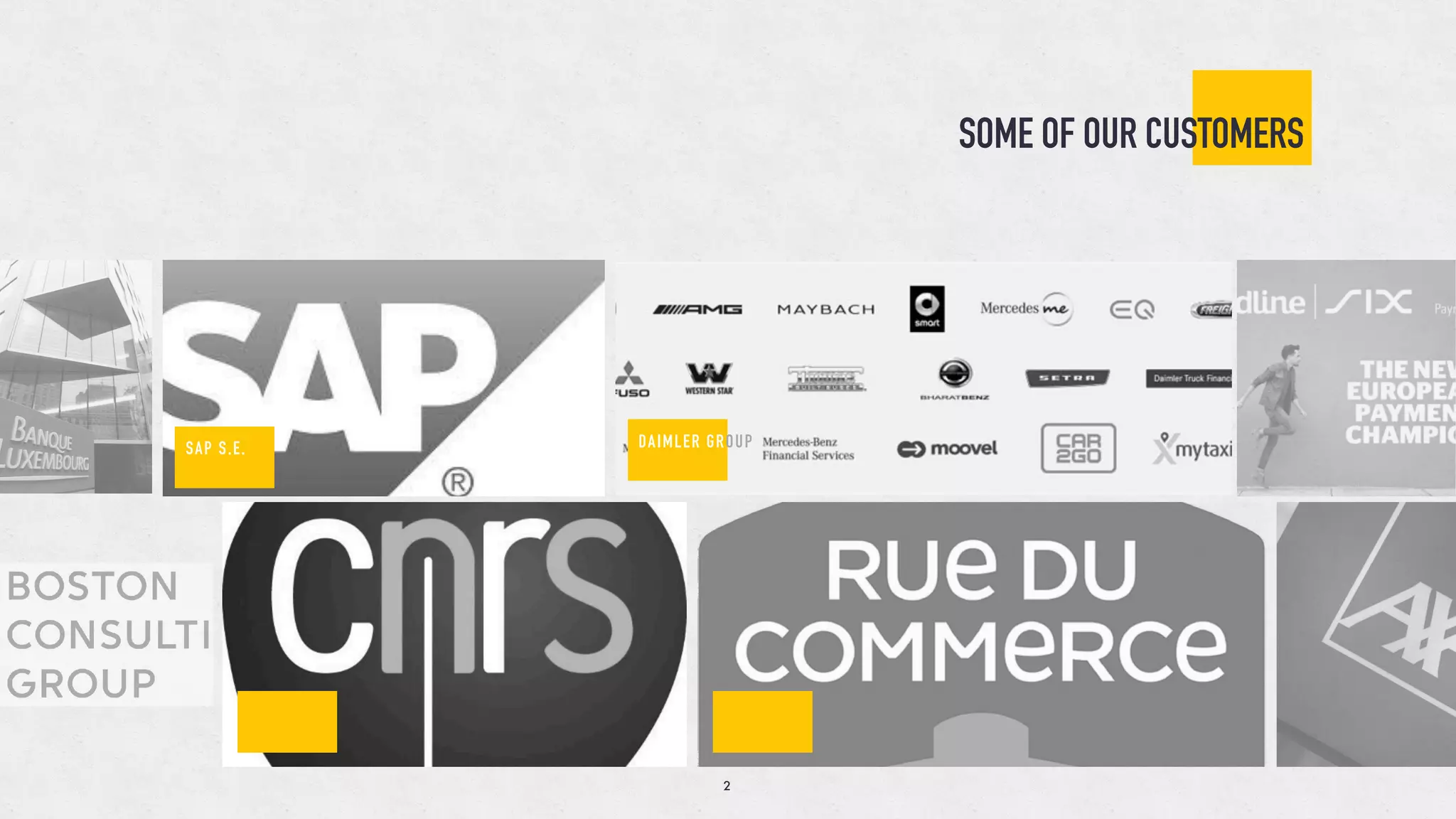
SAP S.E. DAIMLER GROUP
SOME OF OUR CUSTOMERS
2
“Agile sounds to be on everyone’s plates nowadays and I have
the feeling that you can put “agile” in front of everything you are
on the wave. Unfortunately, this is not possible.
3
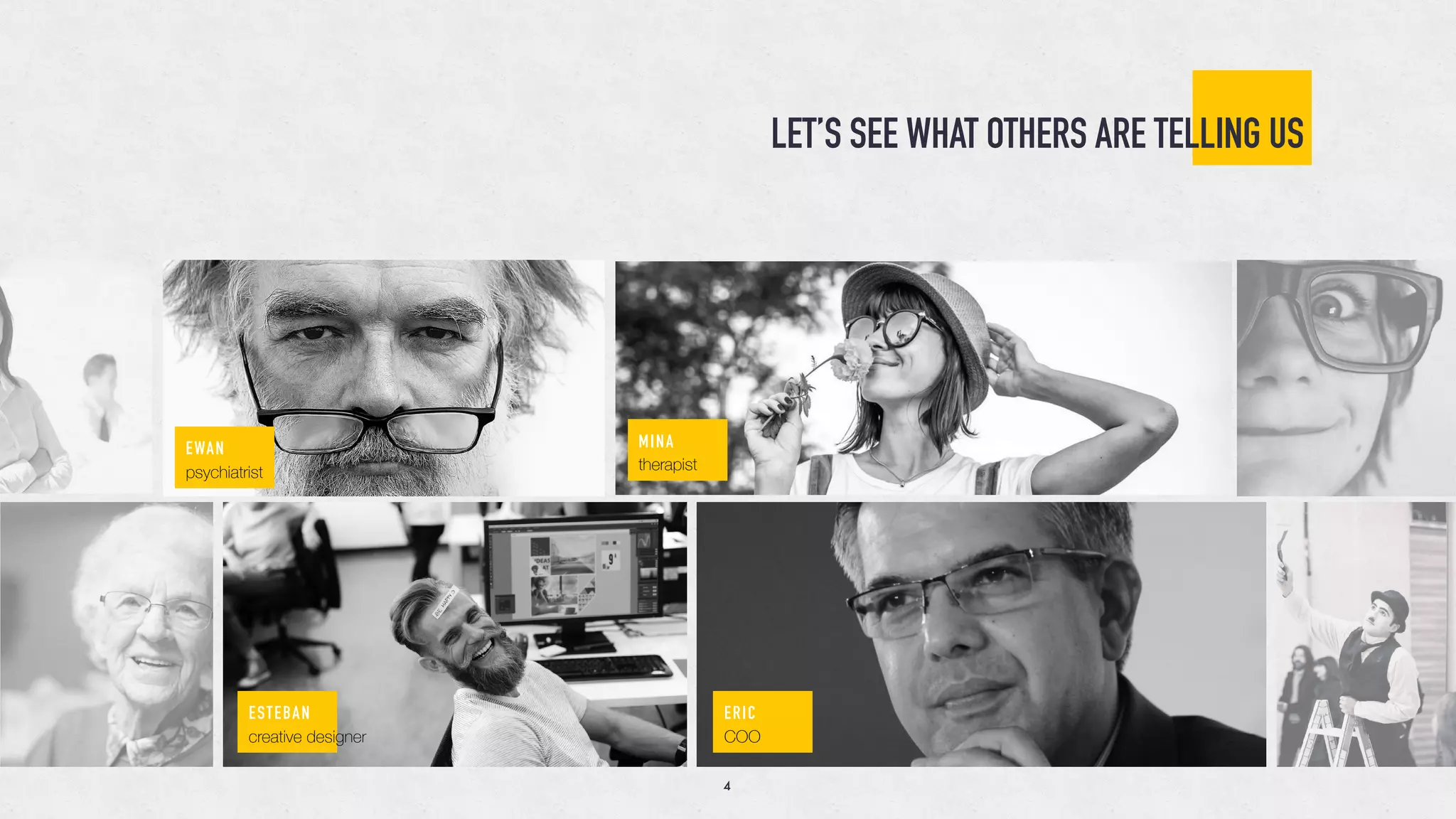
EWAN
psychiatrist
ESTEBAN
creative designer
ERIC
COO
MINA
therapist
LET’S SEE WHAT OTHERS ARE TELLING US
4
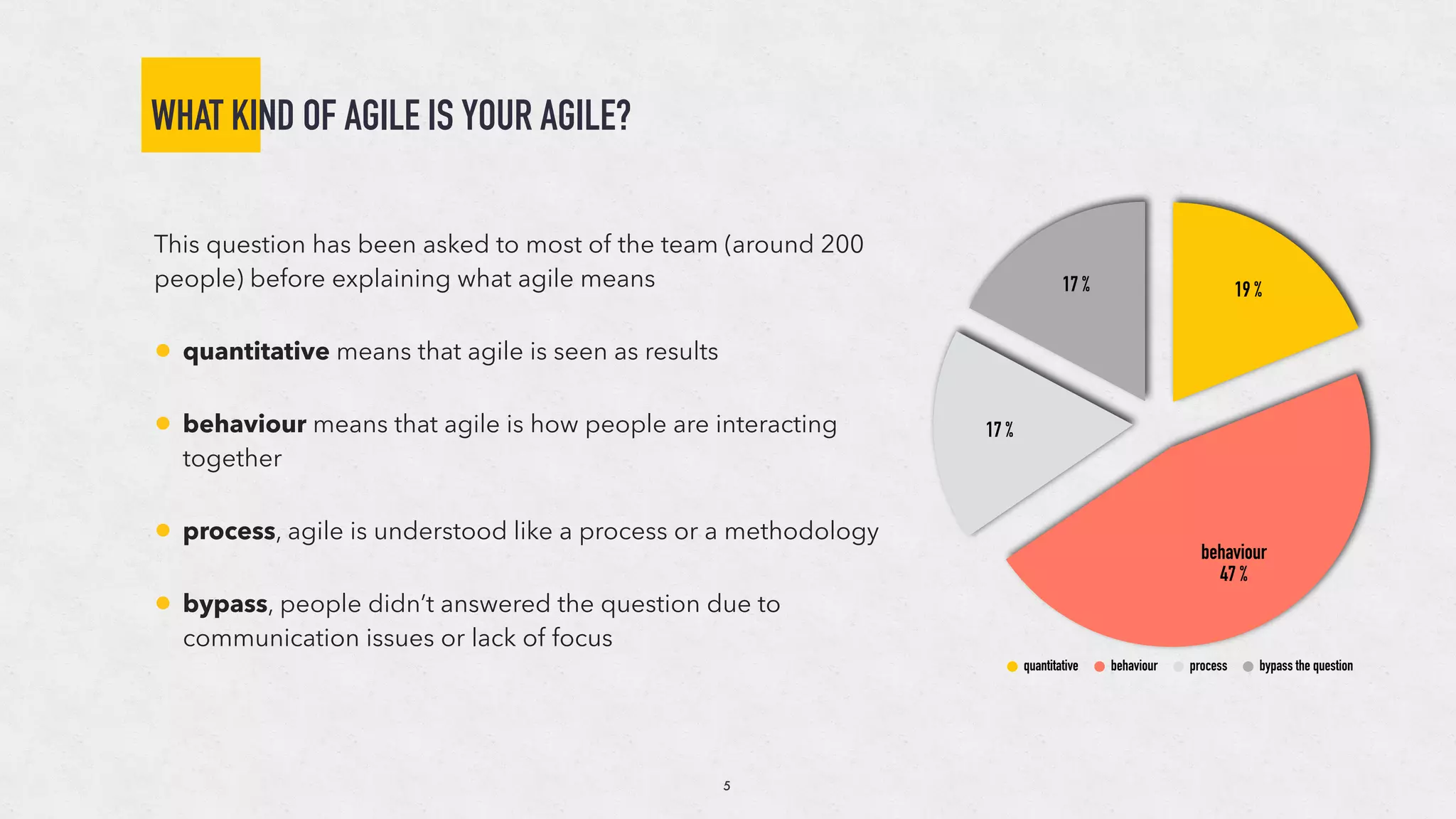
WHAT KIND OF AGILE IS YOUR AGILE?
This question has been asked to most of the team (around 200
people) before explaining what agile means
• quantitative means that agile is seen as results
• behaviour means that agile is how people are interacting
together
• process, agile is understood like a process or a methodology
• bypass, people didn’t answered the question due to
communication issues or lack of focus
17 %
17 %
behaviour
47 %
19 %
quantitative behaviour process bypass the question
5
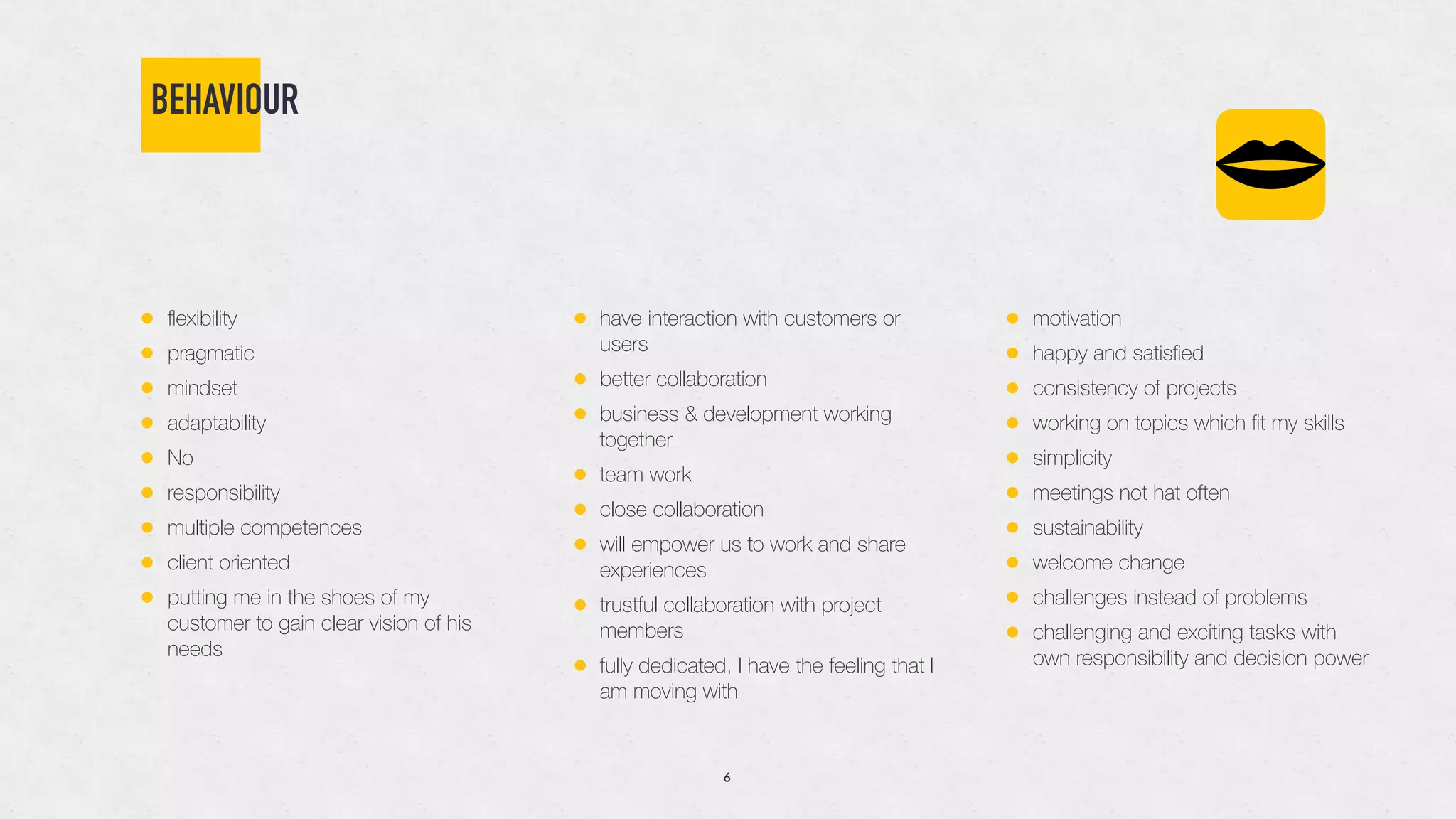
BEHAVIOUR
• flexibility
• pragmatic
• mindset
• adaptability
• No
• responsibility
• multiple competences
• client oriented
• putting me in the shoes of my
customer to gain clear vision of his
needs
• have interaction with customers or
users
• better collaboration
• business & development working
together
• team work
• close collaboration
• will empower us to work and share
experiences
• trustful collaboration with project
members
• fully dedicated, I have the feeling that I
am moving with
• motivation
• happy and satisfied
• consistency of projects
• working on topics which fit my skills
• simplicity
• meetings not hat often
• sustainability
• welcome change
• challenges instead of problems
• challenging and exciting tasks with
own responsibility and decision power
6
Gallup 2018 study of employees in France, Germany, Spain and the UK
“
7
In operational terms, the concept of agility can be
defined as employees’ capacity to gather
and disseminate information about changes
in the environment, and respond to that
information quickly and expediently.
Gallup 2018 study of employees in France, Germany, Spain and the UK
“
8
From a strategic perspective, this combination of
speed and data-driven innovation is
increasingly important for many businesses to
maintain a competitive advantage.
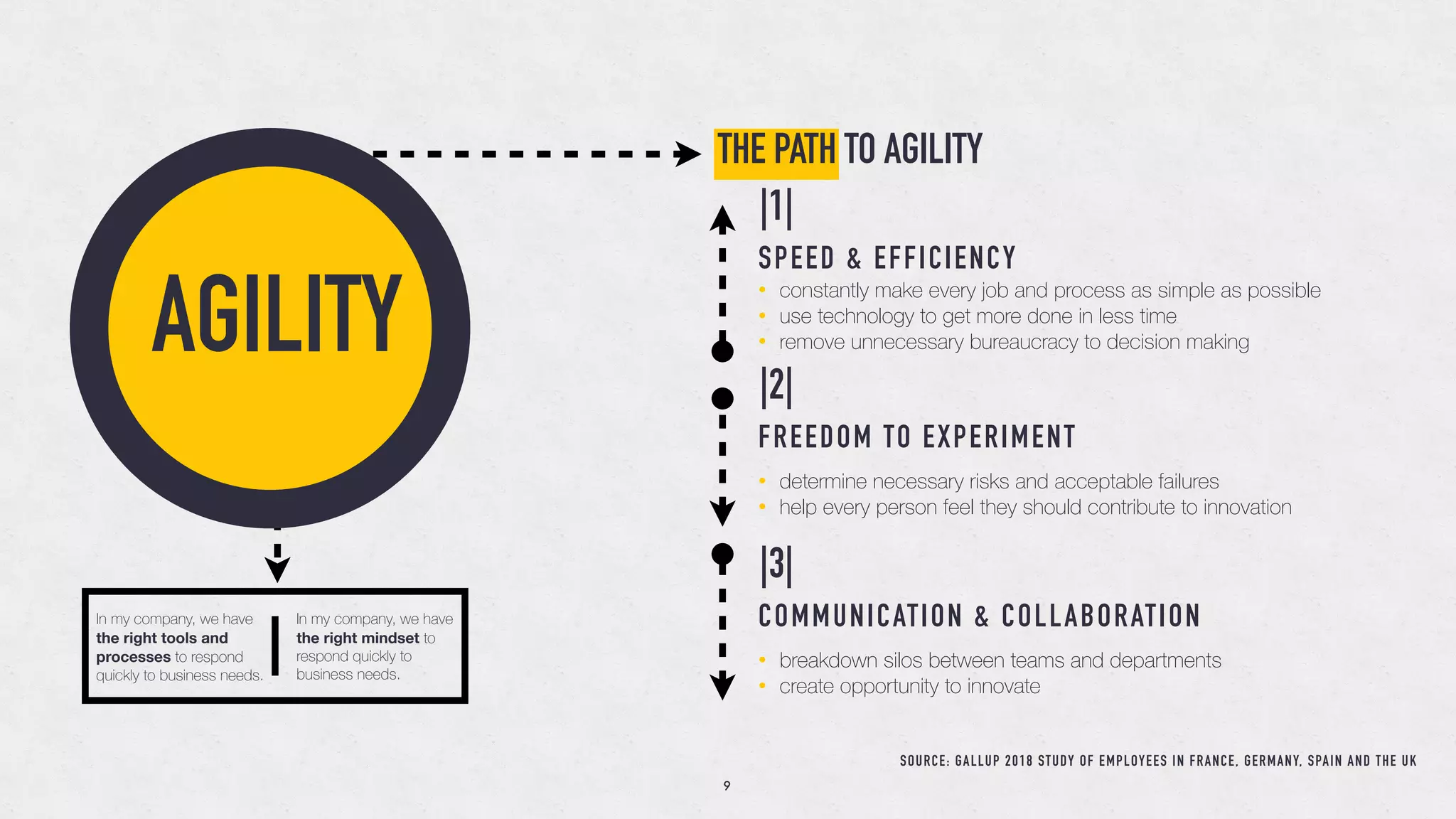
AGILITY
THE PATH TO AGILITY
|1|
SPEED & EFFICIENCY
• constantly make every job and process as simple as possible
• use technology to get more done in less time
• remove unnecessary bureaucracy to decision making
|2|
FREEDOM TO EXPERIMENT
• determine necessary risks and acceptable failures
• help every person feel they should contribute to innovation
|3|
COMMUNICATION & COLLABORATION
• breakdown silos between teams and departments
• create opportunity to innovate
In my company, we have
the right tools and
processes to respond
quickly to business needs.
In my company, we have
the right mindset to
respond quickly to
business needs.
SOURCE: GALLUP 2018 STUDY OF EMPLOYEES IN FRANCE, GERMANY, SPAIN AND THE UK
9
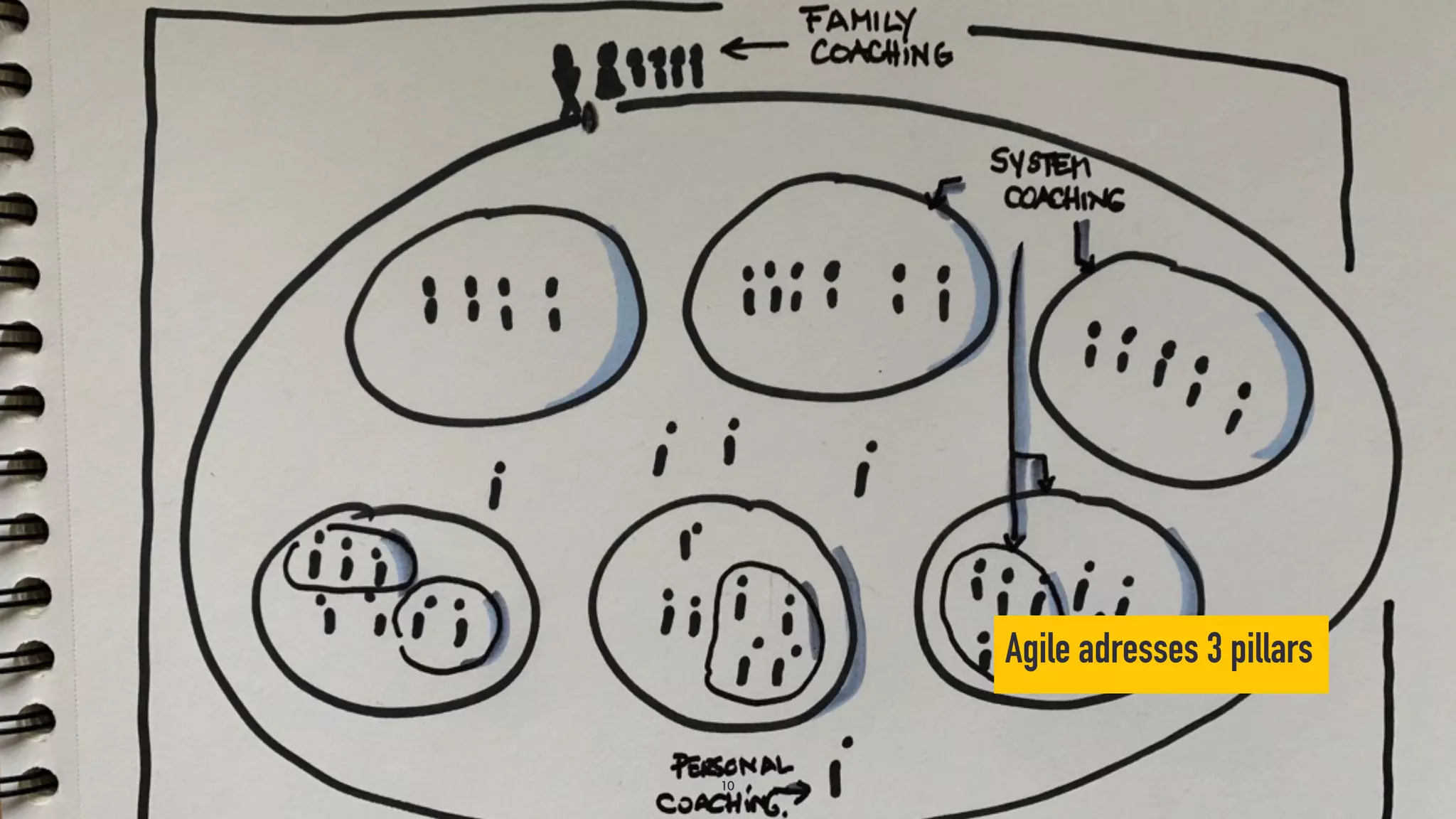
Agile adresses 3 pillars
10
11
12
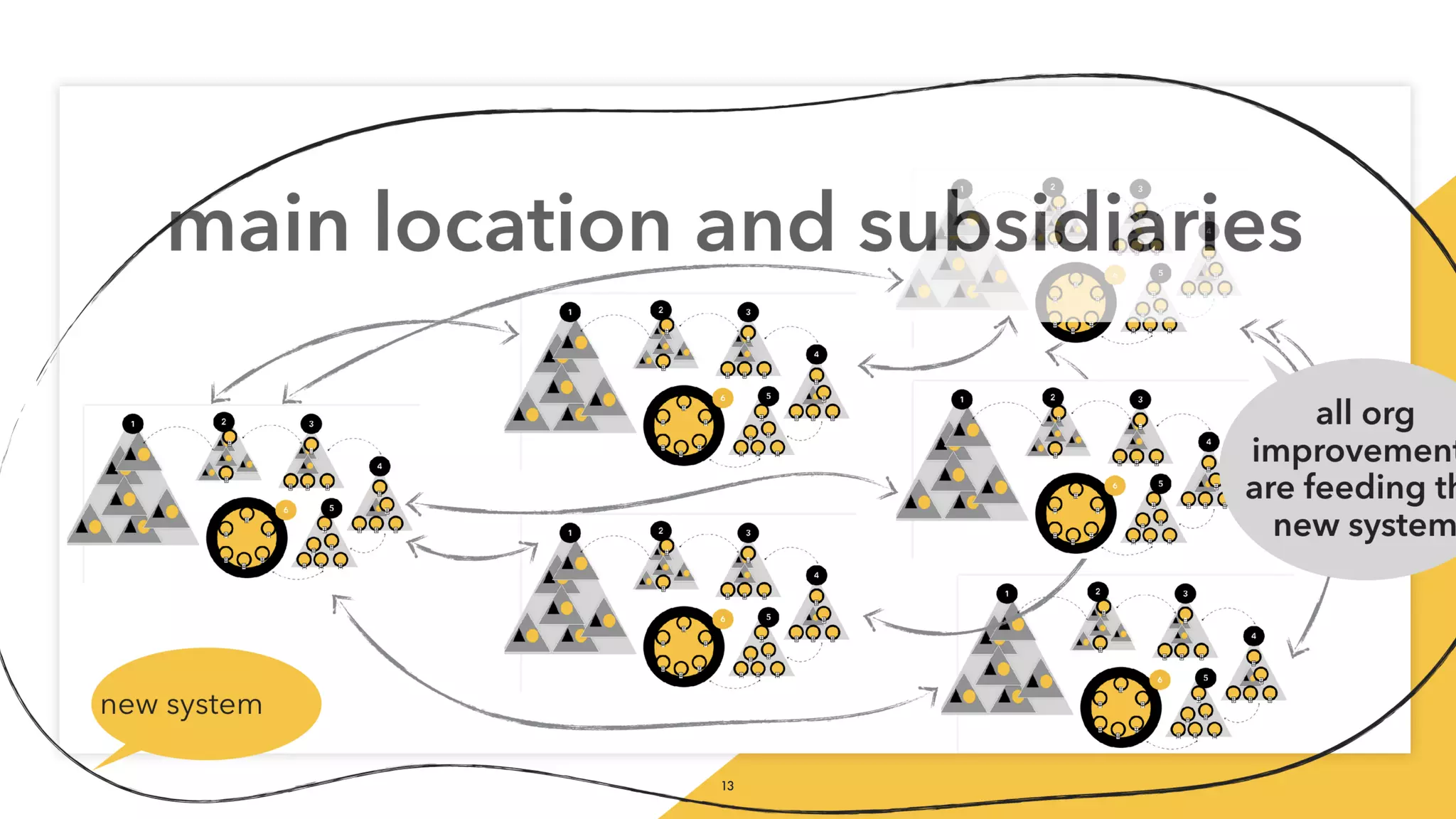
13
TO UNDERSTAND THE CHALLENGE
14
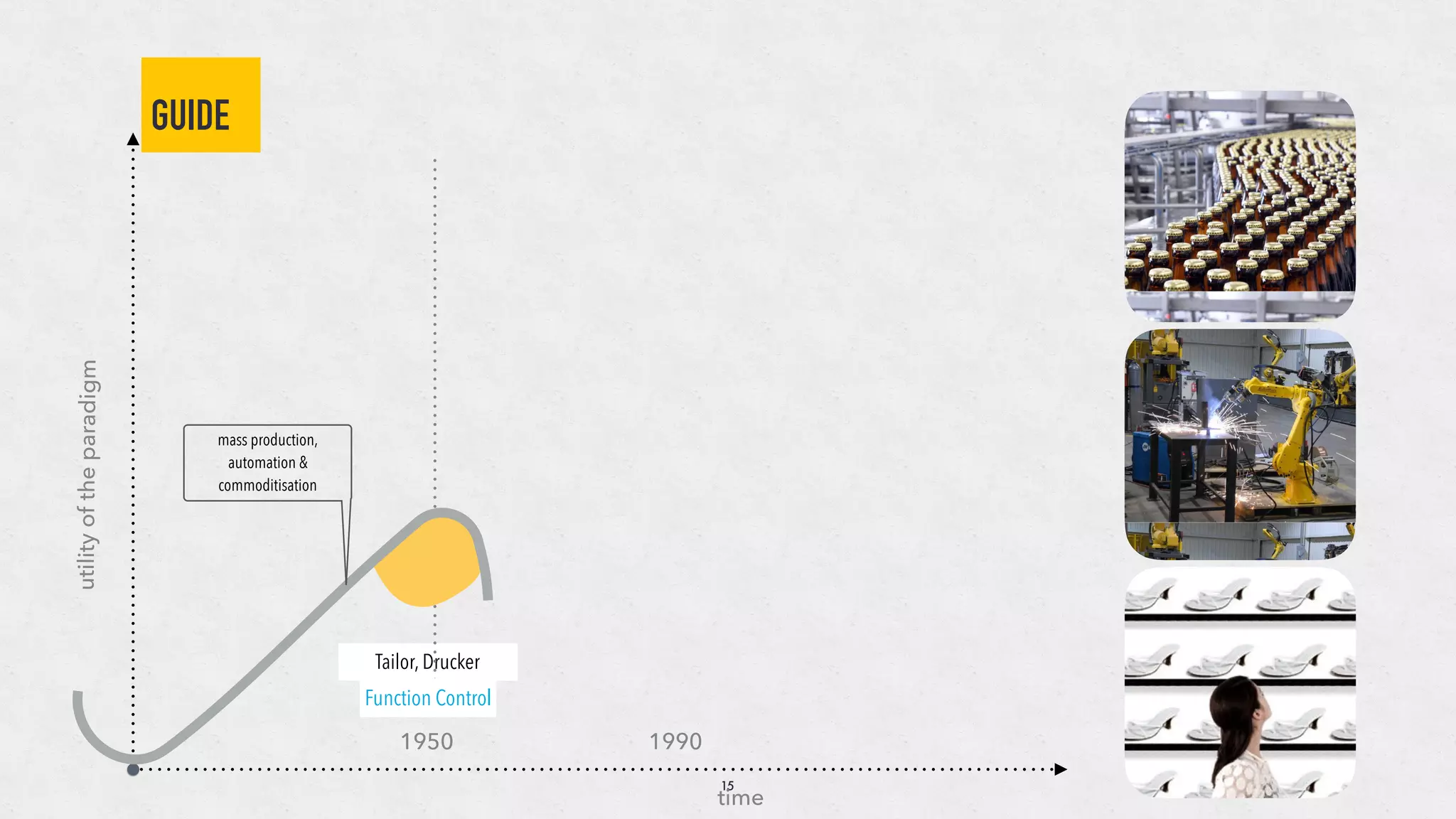
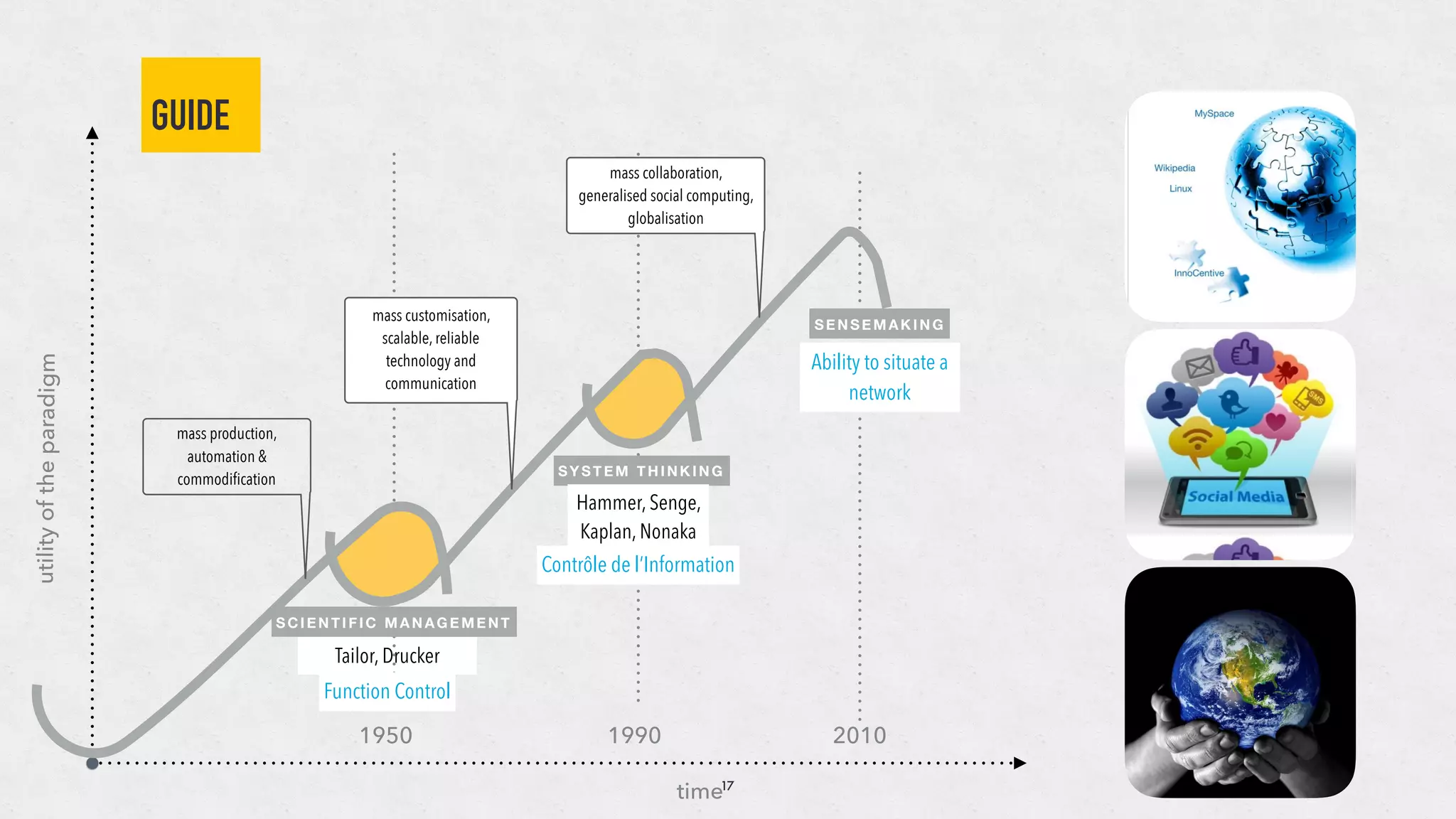
GUIDE
15
Tailor, Drucker
utilityoftheparadigm
time
Function Control
mass production,
automation &
commoditisation
1950 1990
GUIDE
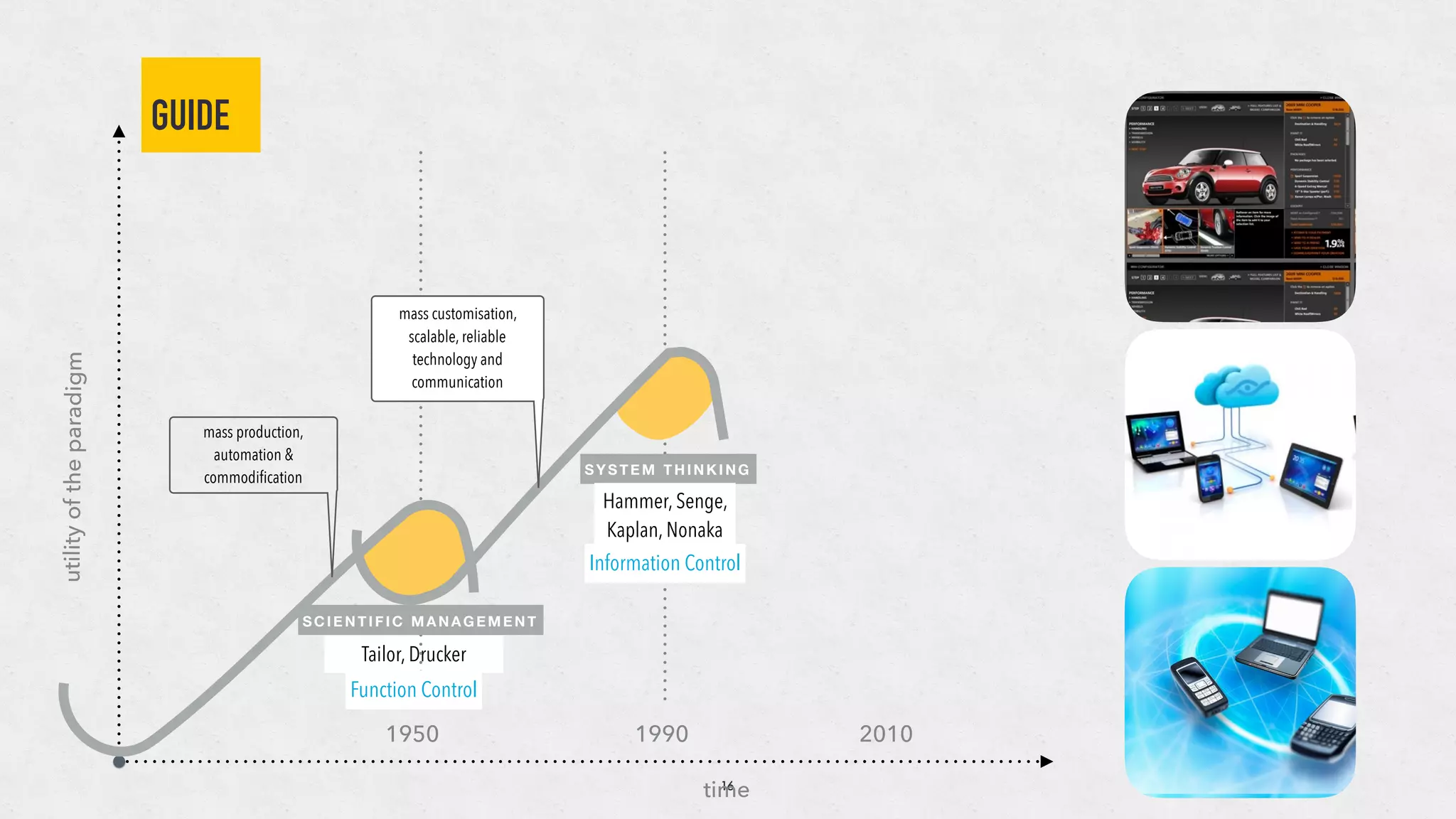
16
Tailor, Drucker
utilityoftheparadigm
time
SCIENTIFIC M ANAGEMENT
SYSTEM THINKING
Hammer, Senge,
Kaplan, Nonaka
Function Control
Information Control
mass customisation,
scalable, reliable
technology and
communication
mass production,
automation &
commodification
1950 1990 2010
GUIDE
17
Tailor, Drucker
utilityoftheparadigm
time
SCIENTIFIC MANAGEMENT
SYSTEM THINKING
S E NS E M AKIN G
Hammer, Senge,
Kaplan, Nonaka
Function Control
Contrôle de l’Information
Ability to situate a
network
mass customisation,
scalable, reliable
technology and
communication
mass production,
automation &
commodification
mass collaboration,
generalised social computing,
globalisation
1950 1990 2010
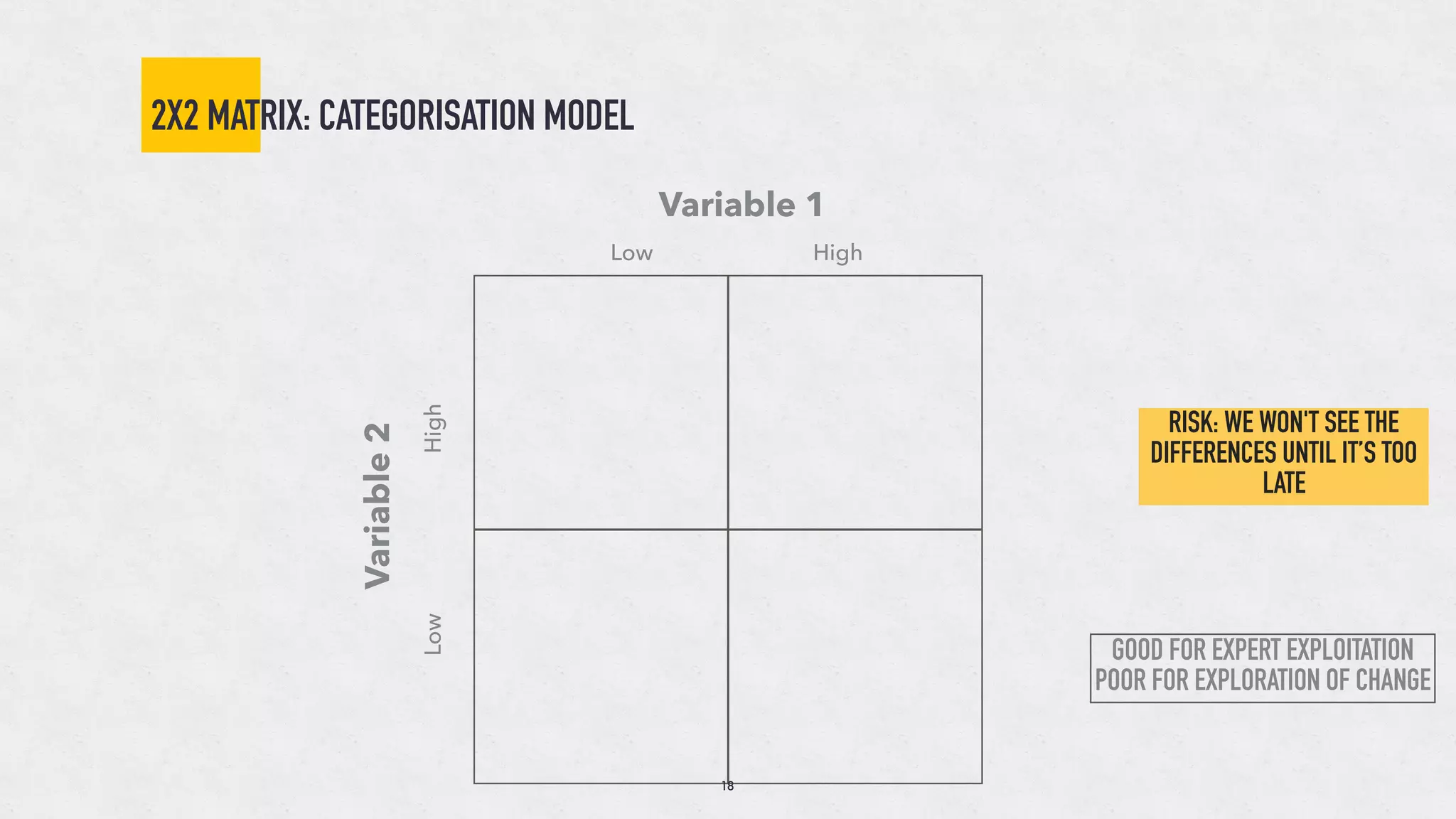
2X2 MATRIX: CATEGORISATION MODEL
Low High
LowHigh
Variable 1
Variable2
18
RISK: WE WON'T SEE THE
DIFFERENCES UNTIL IT’S TOO
LATE
GOOD FOR EXPERT EXPLOITATION
POOR FOR EXPLORATION OF CHANGE
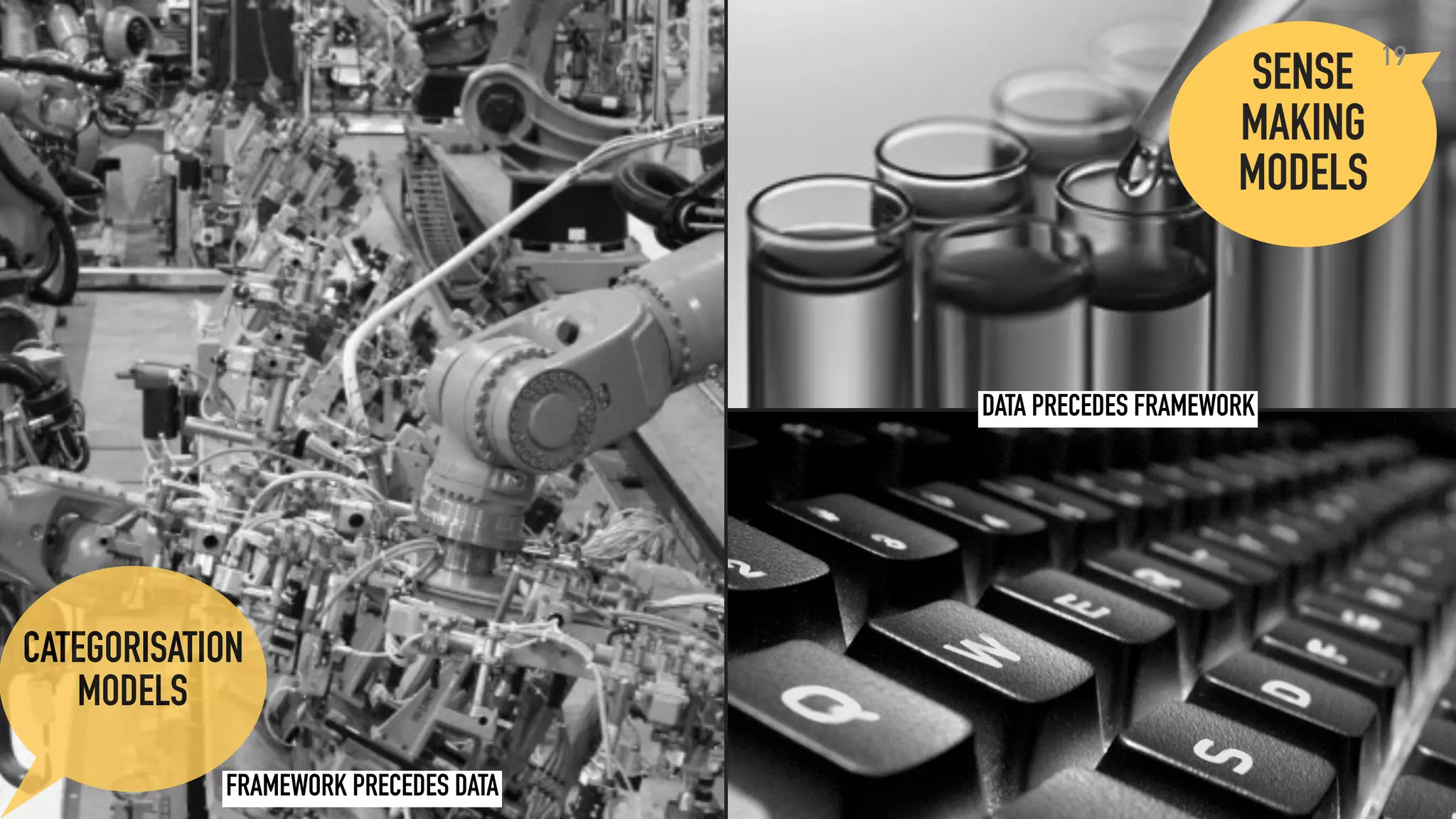
CATEGORISATION
MODELS
SENSE
MAKING
MODELS
19
FRAMEWORK PRECEDES DATA
DATA PRECEDES FRAMEWORK
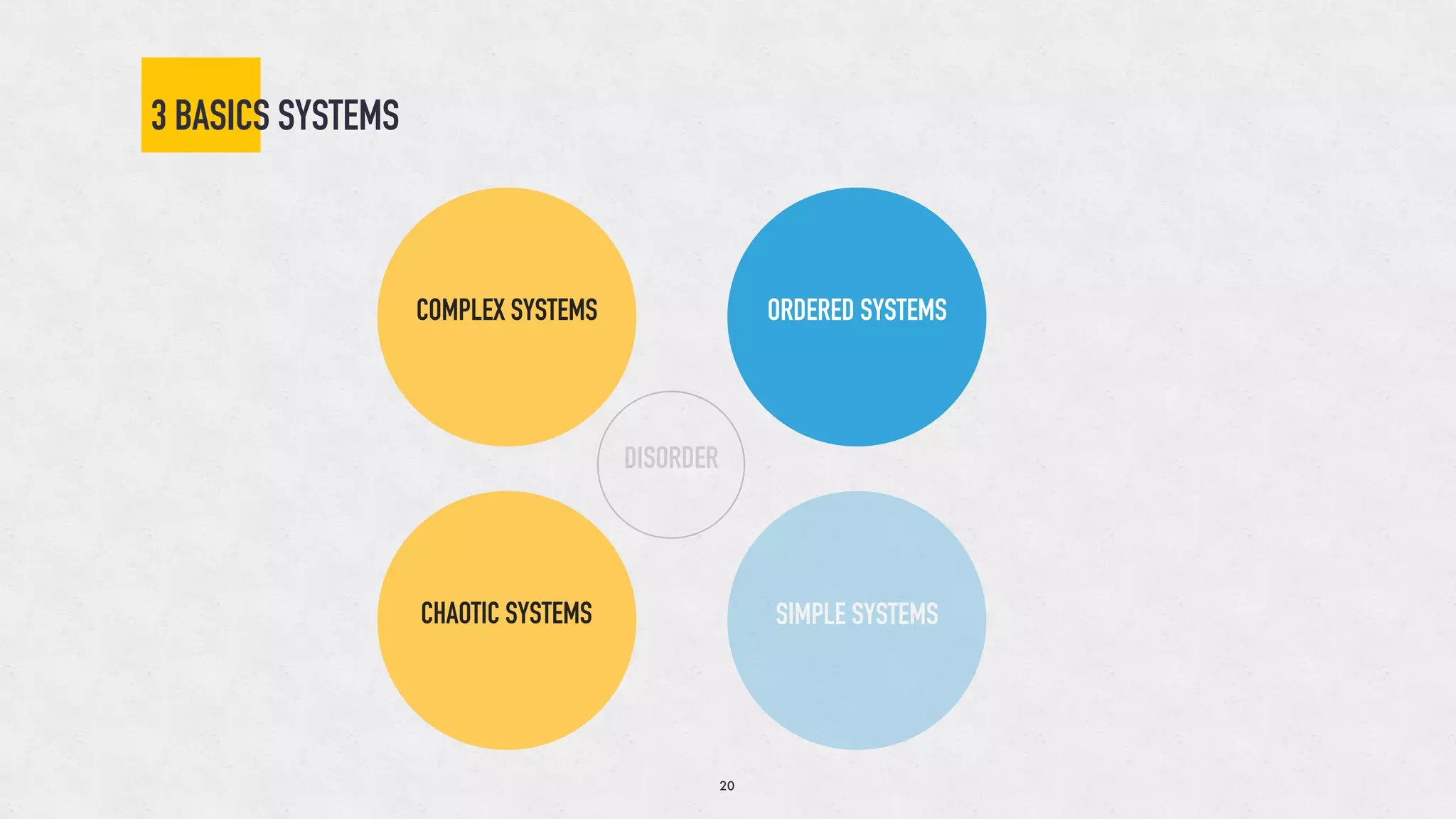
3 BASICS SYSTEMS
ORDERED SYSTEMSCOMPLEX SYSTEMS
CHAOTIC SYSTEMS SIMPLE SYSTEMS
DISORDER
20
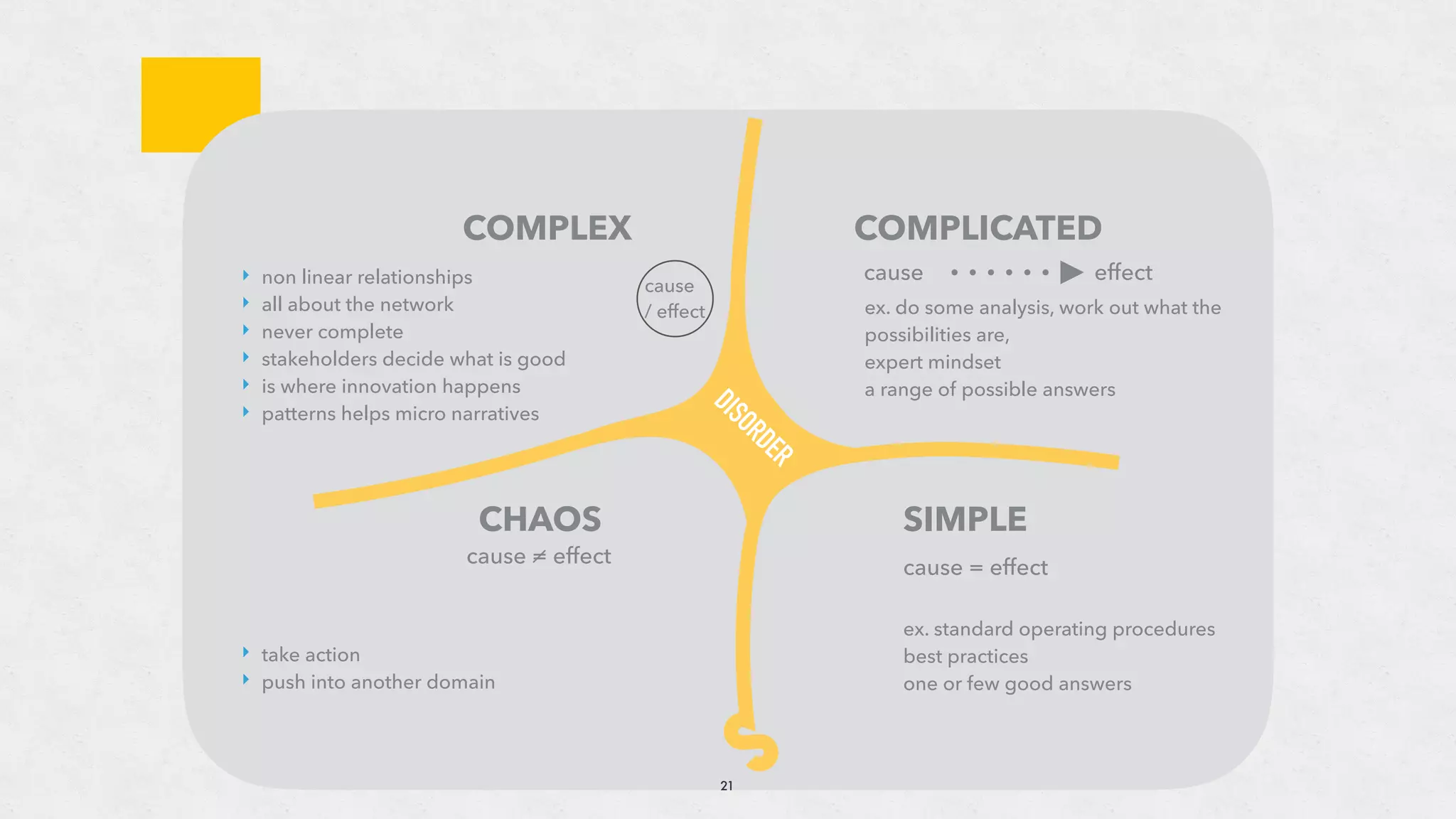
SIMPLE
COMPLEX COMPLICATED
CHAOS
cause = effect
ex. standard operating procedures
best practices
one or few good answers
cause effect
ex. do some analysis, work out what the
possibilities are,
expert mindset
a range of possible answers
cause
/ effect
‣ non linear relationships
‣ all about the network
‣ never complete
‣ stakeholders decide what is good
‣ is where innovation happens
‣ patterns helps micro narratives
cause = effect
‣ take action
‣ push into another domain
DISORDER
21
THE AGILE SYSTEM DYNAMICS
22
23
24
CONTINUOUS ORGANIZATIONAL
CHANGE IS UNDER AGILE
COACHES HOOD
25
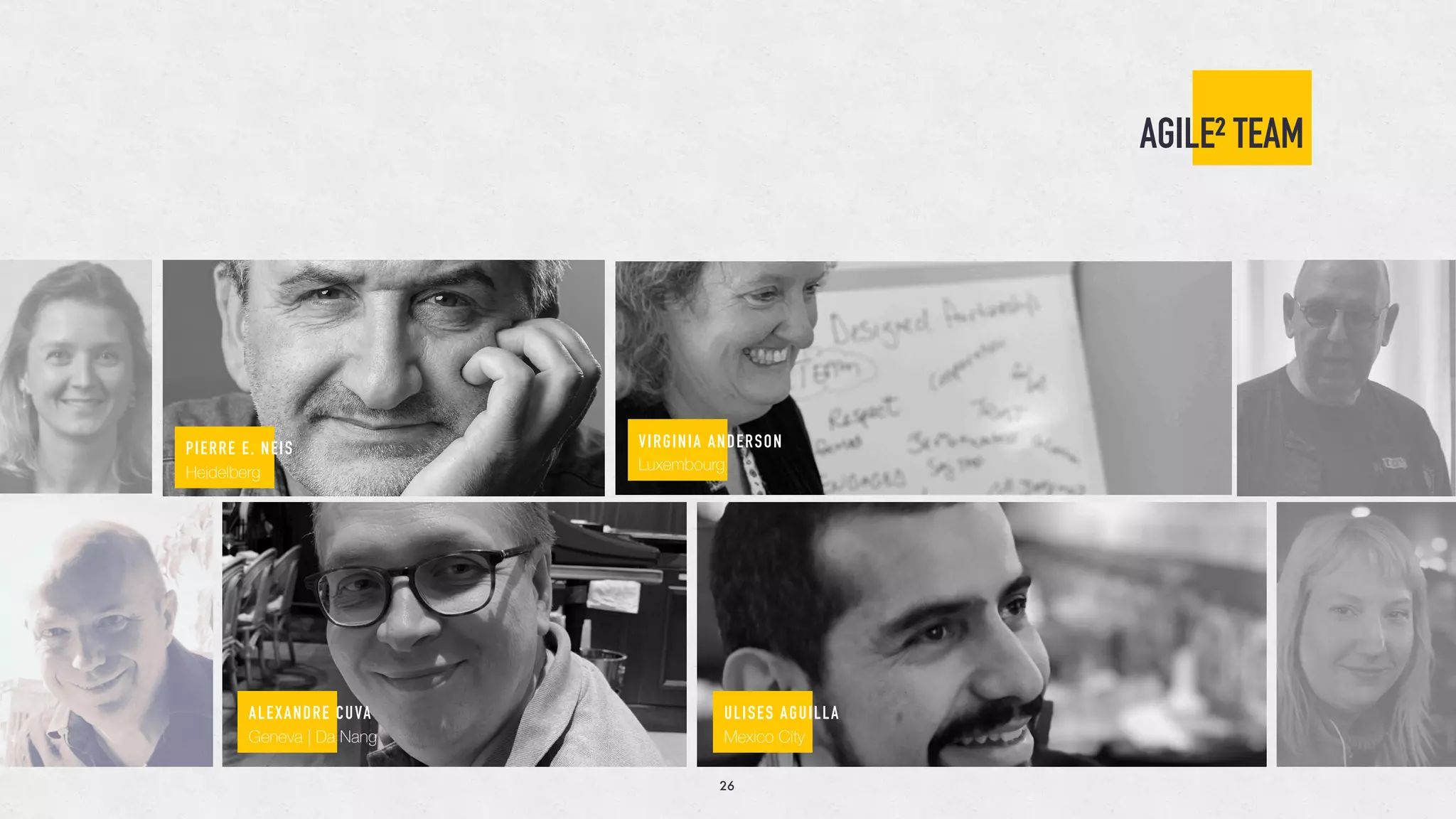
PIERRE E. NEIS
Heidelberg
ALEXANDRE CUVA
Geneva | Da Nang
ULISES AGUILLA
Mexico City
VIRGINIA ANDERSON
Luxembourg
AGILE² TEAM
26
pierre.neis@agilesqr.com
“Thanks
27
CONTACT ME TO JOIN THE AGILE COACHING
CERTIFICATION PROGRAM

What is agile coaching?

  • 1.
    AGILE COACHING IN21ST CENTURY WORLD 1
  • 2.
    SAP S.E. DAIMLERGROUP SOME OF OUR CUSTOMERS 2
  • 3.
    “Agile sounds tobe on everyone’s plates nowadays and I have the feeling that you can put “agile” in front of everything you are on the wave. Unfortunately, this is not possible. 3
  • 4.
  • 5.
    WHAT KIND OFAGILE IS YOUR AGILE? This question has been asked to most of the team (around 200 people) before explaining what agile means • quantitative means that agile is seen as results • behaviour means that agile is how people are interacting together • process, agile is understood like a process or a methodology • bypass, people didn’t answered the question due to communication issues or lack of focus 17 % 17 % behaviour 47 % 19 % quantitative behaviour process bypass the question 5
  • 6.
    BEHAVIOUR • flexibility • pragmatic •mindset • adaptability • No • responsibility • multiple competences • client oriented • putting me in the shoes of my customer to gain clear vision of his needs • have interaction with customers or users • better collaboration • business & development working together • team work • close collaboration • will empower us to work and share experiences • trustful collaboration with project members • fully dedicated, I have the feeling that I am moving with • motivation • happy and satisfied • consistency of projects • working on topics which fit my skills • simplicity • meetings not hat often • sustainability • welcome change • challenges instead of problems • challenging and exciting tasks with own responsibility and decision power 6
  • 7.
    Gallup 2018 studyof employees in France, Germany, Spain and the UK “ 7 In operational terms, the concept of agility can be defined as employees’ capacity to gather and disseminate information about changes in the environment, and respond to that information quickly and expediently.
  • 8.
    Gallup 2018 studyof employees in France, Germany, Spain and the UK “ 8 From a strategic perspective, this combination of speed and data-driven innovation is increasingly important for many businesses to maintain a competitive advantage.
  • 9.
    AGILITY THE PATH TOAGILITY |1| SPEED & EFFICIENCY • constantly make every job and process as simple as possible • use technology to get more done in less time • remove unnecessary bureaucracy to decision making |2| FREEDOM TO EXPERIMENT • determine necessary risks and acceptable failures • help every person feel they should contribute to innovation |3| COMMUNICATION & COLLABORATION • breakdown silos between teams and departments • create opportunity to innovate In my company, we have the right tools and processes to respond quickly to business needs. In my company, we have the right mindset to respond quickly to business needs. SOURCE: GALLUP 2018 STUDY OF EMPLOYEES IN FRANCE, GERMANY, SPAIN AND THE UK 9
  • 10.
    Agile adresses 3pillars 10
  • 11.
  • 12.
  • 13.
  • 14.
    TO UNDERSTAND THECHALLENGE 14
  • 15.
    GUIDE 15 Tailor, Drucker utilityoftheparadigm time Function Control massproduction, automation & commoditisation 1950 1990
  • 16.
    GUIDE 16 Tailor, Drucker utilityoftheparadigm time SCIENTIFIC MANAGEMENT SYSTEM THINKING Hammer, Senge, Kaplan, Nonaka Function Control Information Control mass customisation, scalable, reliable technology and communication mass production, automation & commodification 1950 1990 2010
  • 17.
    GUIDE 17 Tailor, Drucker utilityoftheparadigm time SCIENTIFIC MANAGEMENT SYSTEMTHINKING S E NS E M AKIN G Hammer, Senge, Kaplan, Nonaka Function Control Contrôle de l’Information Ability to situate a network mass customisation, scalable, reliable technology and communication mass production, automation & commodification mass collaboration, generalised social computing, globalisation 1950 1990 2010
  • 18.
    2X2 MATRIX: CATEGORISATIONMODEL Low High LowHigh Variable 1 Variable2 18 RISK: WE WON'T SEE THE DIFFERENCES UNTIL IT’S TOO LATE GOOD FOR EXPERT EXPLOITATION POOR FOR EXPLORATION OF CHANGE
  • 19.
  • 20.
    3 BASICS SYSTEMS ORDEREDSYSTEMSCOMPLEX SYSTEMS CHAOTIC SYSTEMS SIMPLE SYSTEMS DISORDER 20
  • 21.
    SIMPLE COMPLEX COMPLICATED CHAOS cause =effect ex. standard operating procedures best practices one or few good answers cause effect ex. do some analysis, work out what the possibilities are, expert mindset a range of possible answers cause / effect ‣ non linear relationships ‣ all about the network ‣ never complete ‣ stakeholders decide what is good ‣ is where innovation happens ‣ patterns helps micro narratives cause = effect ‣ take action ‣ push into another domain DISORDER 21
  • 22.
    THE AGILE SYSTEMDYNAMICS 22
  • 23.
  • 24.
  • 25.
    CONTINUOUS ORGANIZATIONAL CHANGE ISUNDER AGILE COACHES HOOD 25
  • 26.
    PIERRE E. NEIS Heidelberg ALEXANDRECUVA Geneva | Da Nang ULISES AGUILLA Mexico City VIRGINIA ANDERSON Luxembourg AGILE² TEAM 26
  • 27.
    pierre.neis@agilesqr.com “Thanks 27 CONTACT ME TOJOIN THE AGILE COACHING CERTIFICATION PROGRAM