
Scoping and setting evidence priorities for public health decision making: ways forward for the Cochrane Collaboration Professor Elizabeth Waters Co-Director, Health Promotion and Public Health Field School of Population Health University of Melbourne
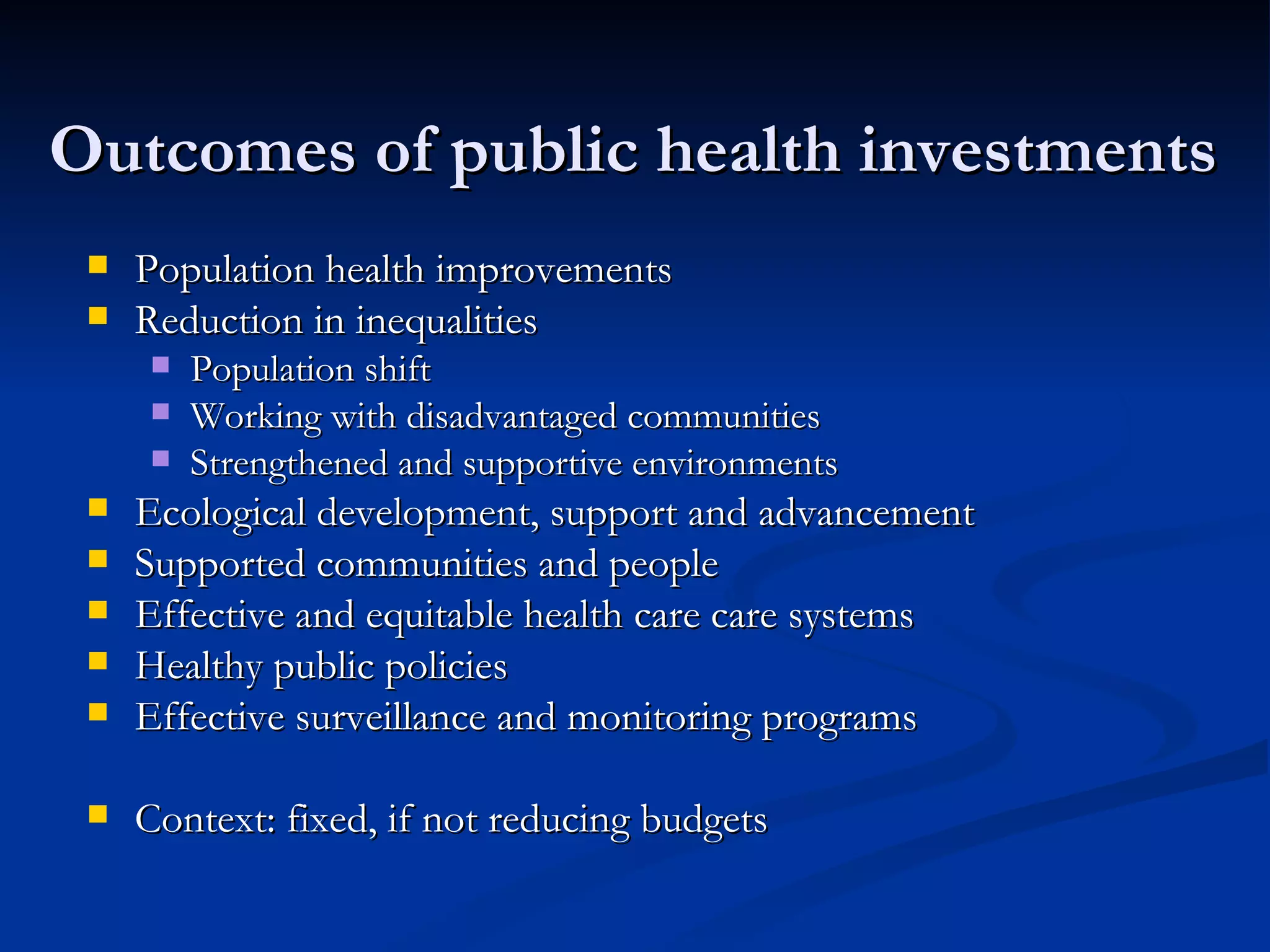
Outcomes of public health investments Population health improvements  Reduction in inequalities  Population shift Working with disadvantaged communities Strengthened and supportive environments Ecological development, support and advancement Supported communities and people Effective and equitable health care care systems Healthy public policies Effective surveillance and monitoring programs Context: fixed, if not reducing budgets
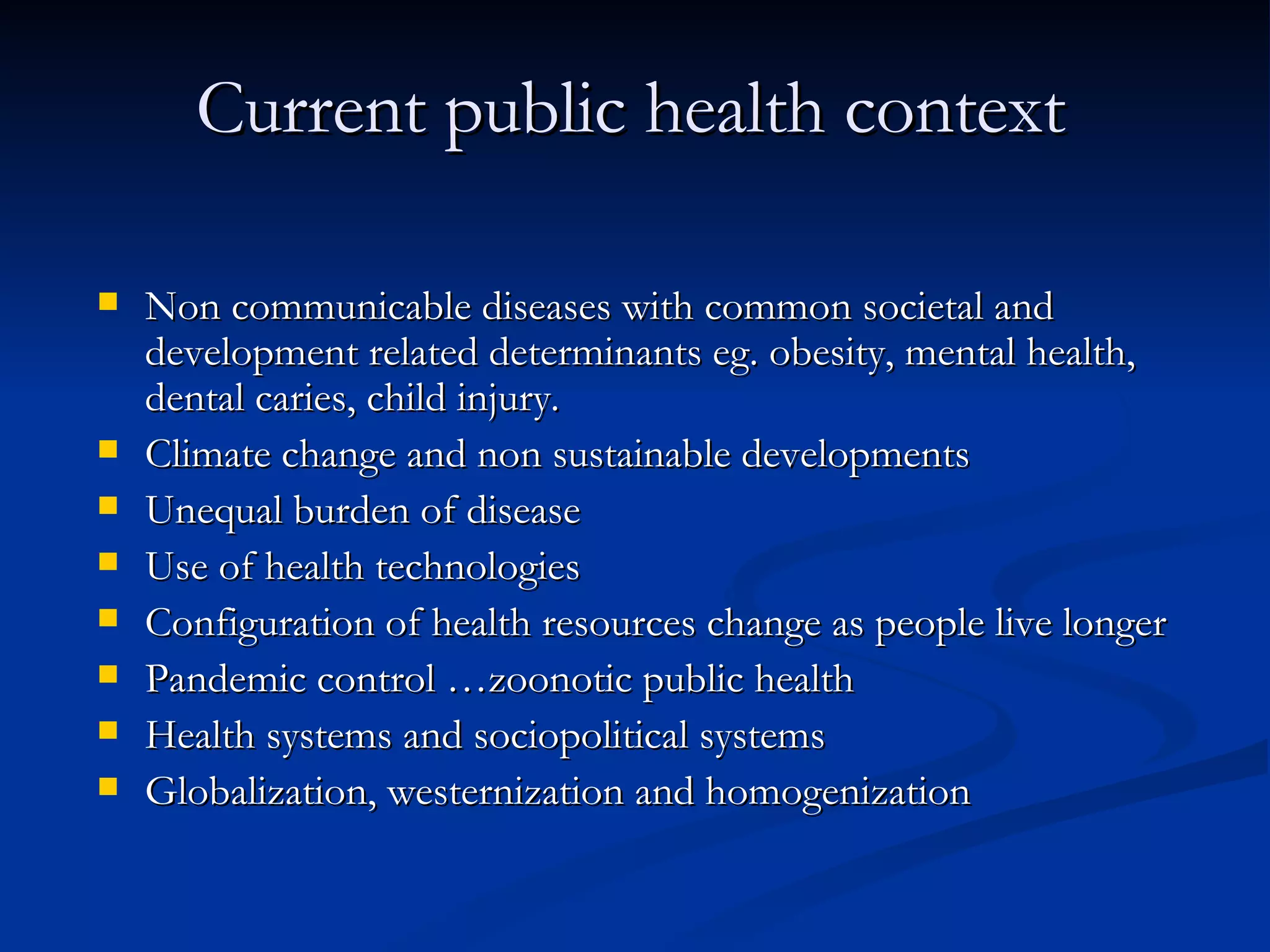
Current public health context Non communicable diseases with common societal and development related determinants eg. obesity, mental health, dental caries, child injury.  Climate change and non sustainable developments Unequal burden of disease Use of health technologies  Configuration of health resources change as people live longer  Pandemic control …zoonotic public health Health systems and sociopolitical systems  Globalization, westernization and homogenization
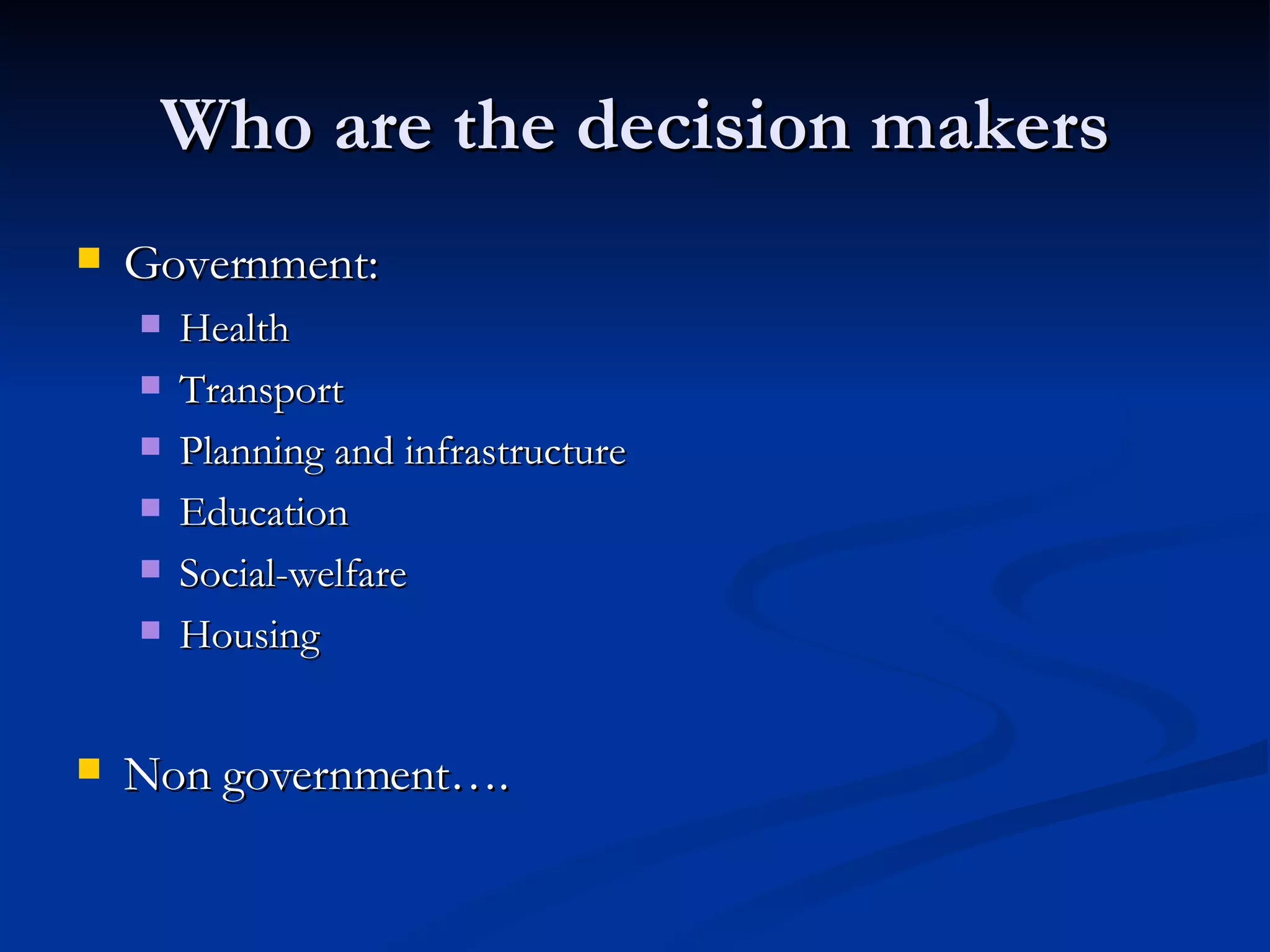
Who are the decision makers Government:  Health Transport Planning and infrastructure Education Social-welfare Housing Non government….
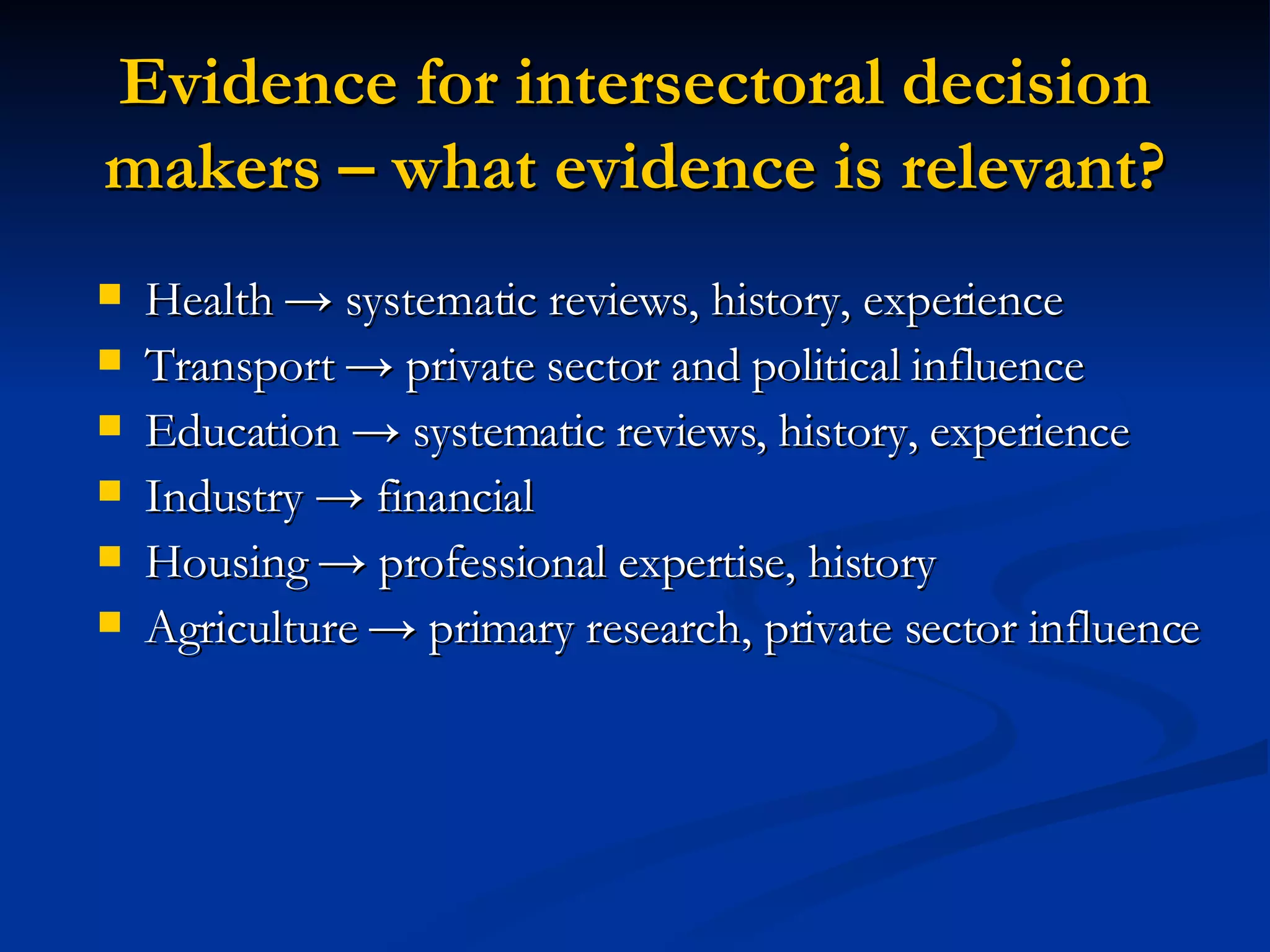
Evidence for intersectoral decision makers – what evidence is relevant? Health  -> systematic reviews, history, experience Transport  -> private sector and political influence Education  -> systematic reviews, history, experience Industry  -> financial  Housing  -> professional expertise, history Agriculture -> primary research, private sector influence
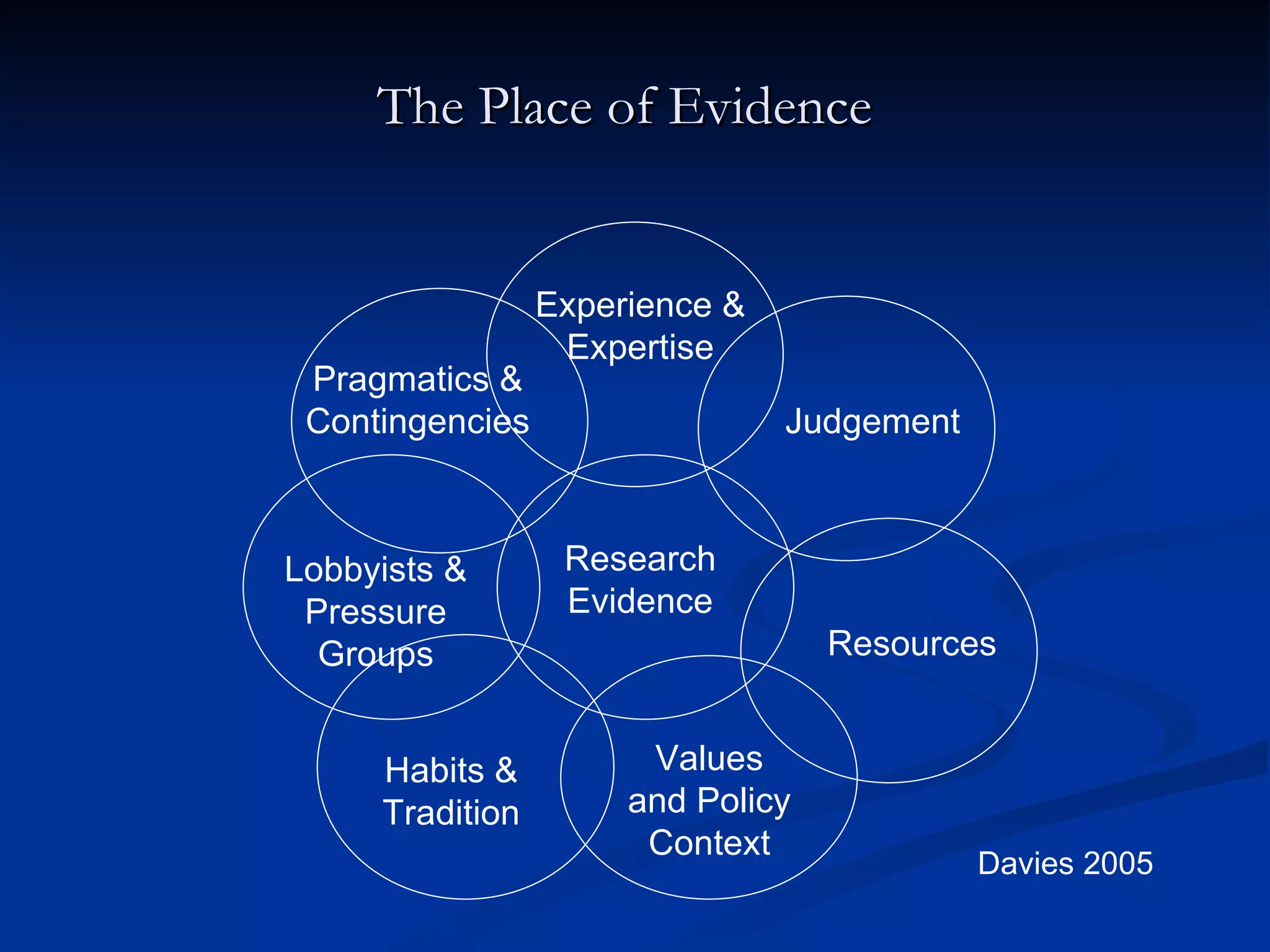
The Place of Evidence Research Evidence Experience & Expertise Judgement Resources Values and Policy Context Habits & Tradition Lobbyists & Pressure Groups Pragmatics & Contingencies Davies 2005
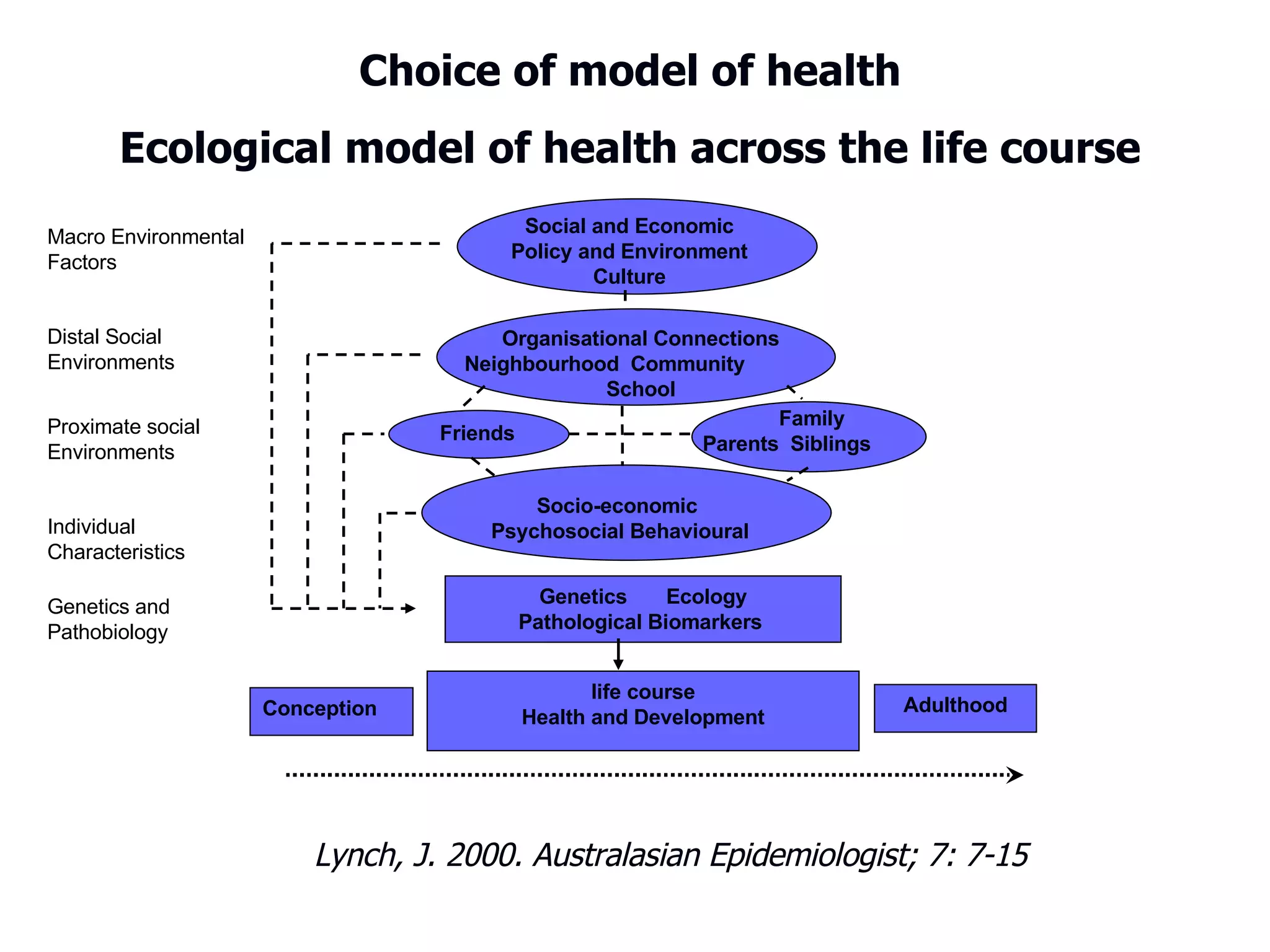
Conception Choice of model of health Ecological model of health across the life course Lynch, J. 2000. Australasian Epidemiologist; 7: 7-15 Friends Family Parents  Siblings   Socio-economic Psychosocial Behavioural   Genetics Ecology Pathological Biomarkers  life course Health and Development Adulthood Social and Economic Policy and Environment Culture Organisational Connections Neighbourhood  Community School Macro Environmental Factors Distal Social Environments  Proximate social Environments Individual Characteristics Genetics and  Pathobiology
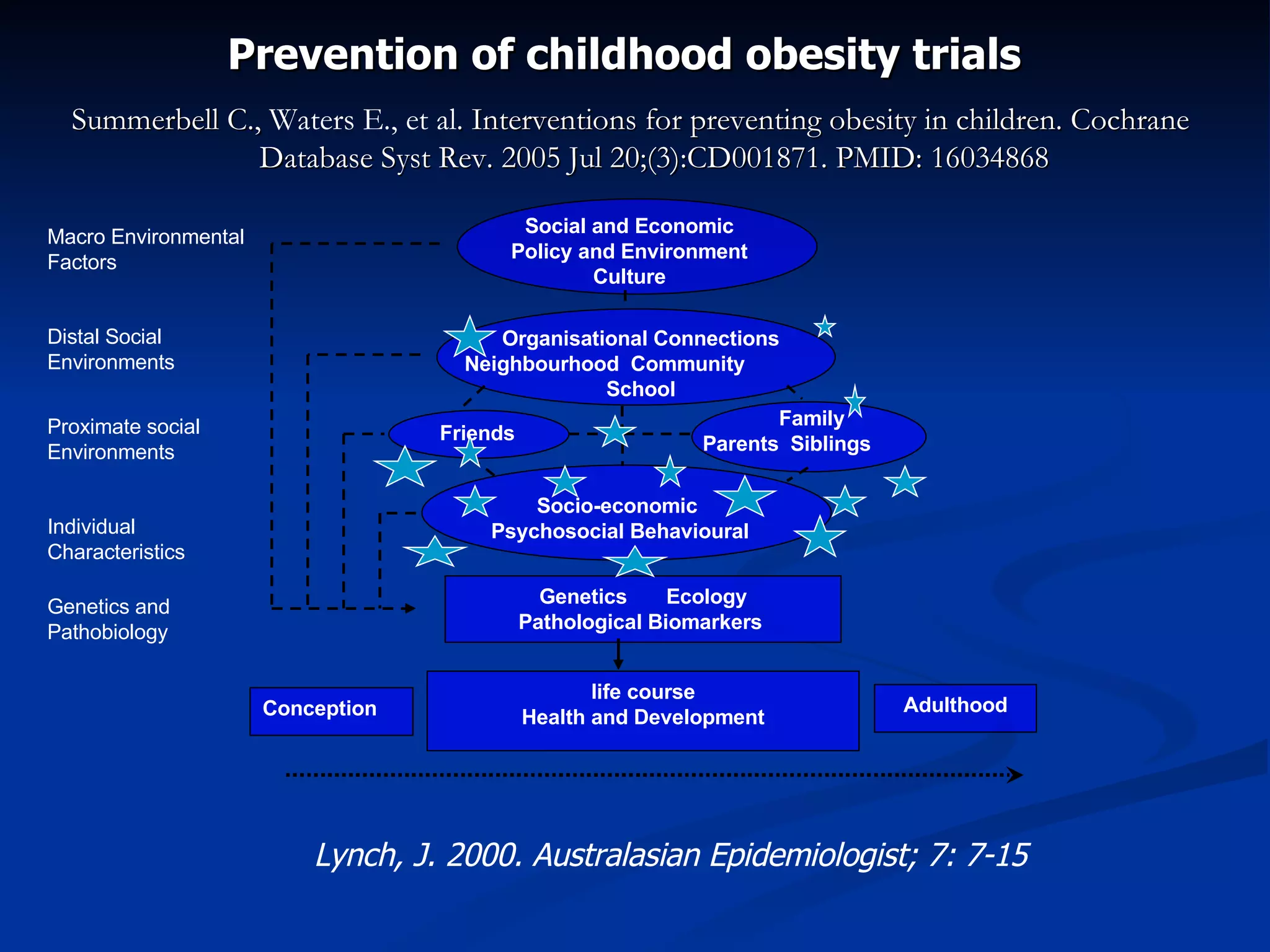
Conception Prevention of childhood obesity trials  Summerbell C.,  Waters E., et al . Interventions for preventing obesity in children. Cochrane Database Syst Rev. 2005 Jul 20;(3):CD001871. PMID: 16034868 Lynch, J. 2000. Australasian Epidemiologist; 7: 7-15 Friends Family Parents  Siblings  Socio-economic Psychosocial Behavioural  Genetics Ecology Pathological Biomarkers  life course Health and Development Adulthood Social and Economic Policy and Environment Culture Organisational Connections Neighbourhood  Community School Macro Environmental   Factors Distal Social Environments  Proximate social Environments Individual Characteristics Genetics and  Pathobiology
Can Cochrane Collaboration afford not to meet these needs? Strategic value of Cochrane Collaboration in public health decision making Identifies needs on content as well as form Resource investment in public health evidence and knowledge substantive – but product and approach needs to meet needs of the audience
Alternatives to Cochrane Health Technology Assessment Community Guide – CDC International Union of Health Promotion and Education Effectiveness Project Separately funded reviews – common topics across the world
Stakeholder engagement and topic prioritization process Example: International stakeholders: WHO, PAHO, CDC, Global Forum for Health Research Mapping of CDSR against WHO Health report Identification of gaps of evidence for decision making 26 nominated ‘priority’ – important topics that aren’t on the Cochrane Library
Important PH topics  Effectiveness of community-building interventions to improve physical, social and mental health Effectiveness of healthy cities, municipalities or spaces projects in reducing cardiovascular disease risk factors Effectiveness of physical exercise to improve mental health Effectiveness of marketing strategies to promote healthy eating in young people.  Effectiveness of interventions using the WHO Health Promoting School framework to improve health and academic achievements among school students Interventions to improve breastfeeding options for women in employment Interventions that employ a combination of environmental, social and educational strategies to prevent infectious diseases such as malaria, dengue and diarrhoea Interventions addressing  gender disparities in family food distribution to improve child nutrition
Benefits Increased awareness and value by stakeholders Close strategic alignment with where decisions need to be made to improve population health outcomes Articulation of complexity of evidence sought to answer public health challenges Evidence base by which to examine capacity of Cochrane to respond to public health policy and program decision making
Mobilizing efforts to complete priority reviews Identification of ‘priority’/absent/important reviews Aligning topics with CRG’s: existing CRG’s usually have single intervention – single outcome scope Strong positive communication required to facilitate reviews Complex reviews – large resources and reviewers with content and methods required
Strategic vision for CC and priorities Re-frame priorities as contemporary, important, relevant and useful reviews Regularly going through prioritisation process is useful in ensuring relevance Cross entity engagement through the collaboration extremely useful – contribution of those engaged with decision makers and organisational processes essential to high quality content and product Eg. policy ‘cameos’ for WHO Global Commission on Social Determinants of Health, linking context, evidence and policy
Obrigado Alvaro Atallah and organising committees Jodie Doyle, Rebecca Armstrong, Naomi Priest Global agencies: WHO & PAHO, IUHPE, Global Forum Health Promotion and Public Health Field International Centres, CRG’s, and colleagues

Scoping and setting evidence priorities for public health decision making: ways forward for The Cochrane Collaboration

  • 1.
    Scoping and settingevidence priorities for public health decision making: ways forward for the Cochrane Collaboration Professor Elizabeth Waters Co-Director, Health Promotion and Public Health Field School of Population Health University of Melbourne
  • 2.
    Outcomes of publichealth investments Population health improvements Reduction in inequalities Population shift Working with disadvantaged communities Strengthened and supportive environments Ecological development, support and advancement Supported communities and people Effective and equitable health care care systems Healthy public policies Effective surveillance and monitoring programs Context: fixed, if not reducing budgets
  • 3.
    Current public healthcontext Non communicable diseases with common societal and development related determinants eg. obesity, mental health, dental caries, child injury. Climate change and non sustainable developments Unequal burden of disease Use of health technologies Configuration of health resources change as people live longer Pandemic control …zoonotic public health Health systems and sociopolitical systems Globalization, westernization and homogenization
  • 4.
    Who are thedecision makers Government: Health Transport Planning and infrastructure Education Social-welfare Housing Non government….
  • 5.
    Evidence for intersectoraldecision makers – what evidence is relevant? Health -> systematic reviews, history, experience Transport -> private sector and political influence Education -> systematic reviews, history, experience Industry -> financial Housing -> professional expertise, history Agriculture -> primary research, private sector influence
  • 6.
    The Place ofEvidence Research Evidence Experience & Expertise Judgement Resources Values and Policy Context Habits & Tradition Lobbyists & Pressure Groups Pragmatics & Contingencies Davies 2005
  • 7.
    Conception Choice ofmodel of health Ecological model of health across the life course Lynch, J. 2000. Australasian Epidemiologist; 7: 7-15 Friends Family Parents Siblings Socio-economic Psychosocial Behavioural Genetics Ecology Pathological Biomarkers life course Health and Development Adulthood Social and Economic Policy and Environment Culture Organisational Connections Neighbourhood Community School Macro Environmental Factors Distal Social Environments Proximate social Environments Individual Characteristics Genetics and Pathobiology
  • 8.
    Conception Prevention ofchildhood obesity trials Summerbell C., Waters E., et al . Interventions for preventing obesity in children. Cochrane Database Syst Rev. 2005 Jul 20;(3):CD001871. PMID: 16034868 Lynch, J. 2000. Australasian Epidemiologist; 7: 7-15 Friends Family Parents Siblings Socio-economic Psychosocial Behavioural Genetics Ecology Pathological Biomarkers life course Health and Development Adulthood Social and Economic Policy and Environment Culture Organisational Connections Neighbourhood Community School Macro Environmental Factors Distal Social Environments Proximate social Environments Individual Characteristics Genetics and Pathobiology
  • 9.
    Can Cochrane Collaborationafford not to meet these needs? Strategic value of Cochrane Collaboration in public health decision making Identifies needs on content as well as form Resource investment in public health evidence and knowledge substantive – but product and approach needs to meet needs of the audience
  • 10.
    Alternatives to CochraneHealth Technology Assessment Community Guide – CDC International Union of Health Promotion and Education Effectiveness Project Separately funded reviews – common topics across the world
  • 11.
    Stakeholder engagement andtopic prioritization process Example: International stakeholders: WHO, PAHO, CDC, Global Forum for Health Research Mapping of CDSR against WHO Health report Identification of gaps of evidence for decision making 26 nominated ‘priority’ – important topics that aren’t on the Cochrane Library
  • 12.
    Important PH topics Effectiveness of community-building interventions to improve physical, social and mental health Effectiveness of healthy cities, municipalities or spaces projects in reducing cardiovascular disease risk factors Effectiveness of physical exercise to improve mental health Effectiveness of marketing strategies to promote healthy eating in young people. Effectiveness of interventions using the WHO Health Promoting School framework to improve health and academic achievements among school students Interventions to improve breastfeeding options for women in employment Interventions that employ a combination of environmental, social and educational strategies to prevent infectious diseases such as malaria, dengue and diarrhoea Interventions addressing gender disparities in family food distribution to improve child nutrition
  • 13.
    Benefits Increased awarenessand value by stakeholders Close strategic alignment with where decisions need to be made to improve population health outcomes Articulation of complexity of evidence sought to answer public health challenges Evidence base by which to examine capacity of Cochrane to respond to public health policy and program decision making
  • 14.
    Mobilizing efforts tocomplete priority reviews Identification of ‘priority’/absent/important reviews Aligning topics with CRG’s: existing CRG’s usually have single intervention – single outcome scope Strong positive communication required to facilitate reviews Complex reviews – large resources and reviewers with content and methods required
  • 15.
    Strategic vision forCC and priorities Re-frame priorities as contemporary, important, relevant and useful reviews Regularly going through prioritisation process is useful in ensuring relevance Cross entity engagement through the collaboration extremely useful – contribution of those engaged with decision makers and organisational processes essential to high quality content and product Eg. policy ‘cameos’ for WHO Global Commission on Social Determinants of Health, linking context, evidence and policy
  • 16.
    Obrigado Alvaro Atallahand organising committees Jodie Doyle, Rebecca Armstrong, Naomi Priest Global agencies: WHO & PAHO, IUHPE, Global Forum Health Promotion and Public Health Field International Centres, CRG’s, and colleagues