Supply Chain Management
A discussion on the issues
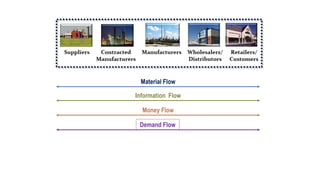
Material Flow
Information Flow
Money Flow
Demand Flow
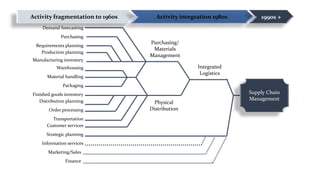
Demand forecasting
Purchasing
Requirements planning
Production planning
Manufacturing inventory
Warehousing
Material handling
Packaging
Finished goods inventory
Distribution planning
Order processing
Transportation
Customer services
Strategic planning
Information services
Marketing/Sales
Finance
Activity fragmentation to 1960s Activity integration 1980s 1990s +
Purchasing/
Materials
Management
Physical
Distribution
Integrated
Logistics
Supply Chain
Management
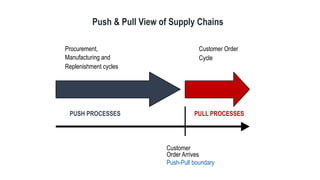
Push & Pull View of Supply Chains
Procurement,
Manufacturing and
Replenishment cycles
Customer Order
Cycle
Customer
Order Arrives
Push-Pull boundary
PUSH PROCESSES PULL PROCESSES
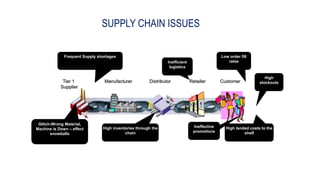
SUPPLY CHAIN ISSUES
Tier 1
Supplier
Manufacturer Distributor Retailer Customer
Inefficient
logistics
High
stockouts
Ineffective
promotions
Frequent Supply shortages
High landed costs to the
shelf
High inventories through the
chain
Low order fill
rates
Glitch-Wrong Material,
Machine is Down – effect
snowballs
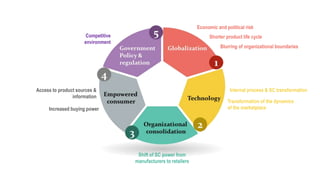
What do you consider to be the major
external forces that have an impact on
supply chains?
Economic and political risk
Shorter product life cycle
Blurring of organizational boundaries
Internal process & SC transformation
Transformation of the dynamics
of the marketplace
Shift of SC power from
manufacturers to retailers
Access to product sources &
information
Increased buying power
Competitive
environment
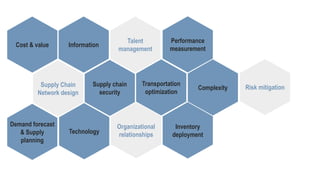
Cost & value
Complexity
Information
Supply Chain
Network design
Organizational
relationships
Inventory
deployment
Performance
measurement
Technology
Transportation
optimization
Supply chain
security
Talent
management
Risk mitigation
Demand forecast
& Supply
planning
Group quiz
Take 10 minutes
One response per team
Hand-written
Names of the team members & date
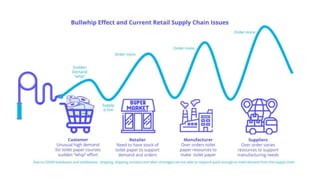
Remember the toilet paper crisis of 2020?
Discuss in your teams and identify at least three valuable lessons in
supply chain management this crisis has taught us for the next normal.
During the COVID-19, pandemic supermarket shelves–and
online retailers–were emptied of hand sanitizer, cleaning
supplies, and toilet paper. This issue brings to light the
flaws of supply chains.

SCM - Intro.pptx

  • 1.
    Supply Chain Management Adiscussion on the issues
  • 2.
  • 4.
    Demand forecasting Purchasing Requirements planning Productionplanning Manufacturing inventory Warehousing Material handling Packaging Finished goods inventory Distribution planning Order processing Transportation Customer services Strategic planning Information services Marketing/Sales Finance Activity fragmentation to 1960s Activity integration 1980s 1990s + Purchasing/ Materials Management Physical Distribution Integrated Logistics Supply Chain Management
  • 10.
    Push & PullView of Supply Chains Procurement, Manufacturing and Replenishment cycles Customer Order Cycle Customer Order Arrives Push-Pull boundary PUSH PROCESSES PULL PROCESSES
  • 12.
    SUPPLY CHAIN ISSUES Tier1 Supplier Manufacturer Distributor Retailer Customer Inefficient logistics High stockouts Ineffective promotions Frequent Supply shortages High landed costs to the shelf High inventories through the chain Low order fill rates Glitch-Wrong Material, Machine is Down – effect snowballs
  • 13.
    What do youconsider to be the major external forces that have an impact on supply chains?
  • 14.
    Economic and politicalrisk Shorter product life cycle Blurring of organizational boundaries Internal process & SC transformation Transformation of the dynamics of the marketplace Shift of SC power from manufacturers to retailers Access to product sources & information Increased buying power Competitive environment
  • 17.
    Cost & value Complexity Information SupplyChain Network design Organizational relationships Inventory deployment Performance measurement Technology Transportation optimization Supply chain security Talent management Risk mitigation Demand forecast & Supply planning
  • 20.
    Group quiz Take 10minutes One response per team Hand-written Names of the team members & date
  • 21.
    Remember the toiletpaper crisis of 2020? Discuss in your teams and identify at least three valuable lessons in supply chain management this crisis has taught us for the next normal. During the COVID-19, pandemic supermarket shelves–and online retailers–were emptied of hand sanitizer, cleaning supplies, and toilet paper. This issue brings to light the flaws of supply chains.

Editor's Notes

  • #11 In this view processes are divided based on their timing relative to the timing of a customer order. Define push and pull processes. They key difference is the uncertainty during the two phases. Give examples at Amazon and Borders to illustrate the two views