Chapter 1
Learning
Contents
Introduction to scientific learning
How to learn science ?
Fields of science
Fundamental units
Precaution of scientific experiment inside lab
Introduction to fields of science
Science is knowledge of
systematic body. Science is
the heap of truth. Science
is the complete study of
everything, which has been
a necessity of our modern
society
Science
Learning
Learning is the process
of acquiring new
knowledge, behaviors,
skill, value and
attitudes.
Scientific learning
Scientific learning refers to the
processes of obtaining
knowledge and developing skills
by using scientific process.
Act of getting knowledge by
scientific learning process.
Scientific
learning
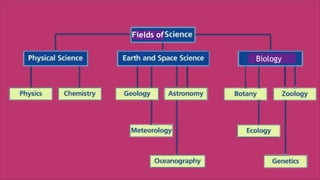
Fields of science
Science subject with different types of fields.
They are physics chemistry environment science
geology astronomy meteorology.
Biology
Fields of
Biology
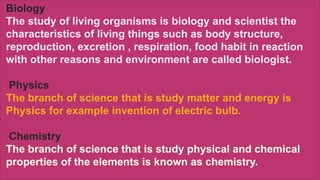
The study of living organisms is biology and scientist the
characteristics of living things such as body structure,
reproduction, excretion , respiration, food habit in reaction
with other reasons and environment are called biologist.
Physics
The branch of science that is study matter and energy is
Physics for example invention of electric bulb.
Chemistry
The branch of science that is study physical and chemical
properties of the elements is known as chemistry.
Subjects Related peoples
Geology Geologist
Astronomy Astronomer
Environment science Environmentalist
Meteorology Meterologist
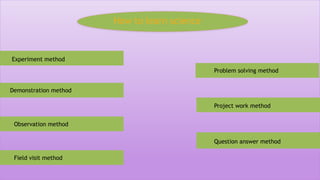
How to learn science
Demonstration method
Project work method
Field visit method
Question answer method
Observation method
Experiment method
Problem solving method
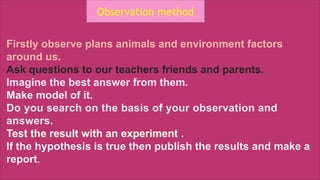
Observation method
Firstly observe plans animals and environment factors
around us.
Ask questions to our teachers friends and parents.
Imagine the best answer from them.
Make model of it.
Do you search on the basis of your observation and
answers.
Test the result with an experiment .
If the hypothesis is true then publish the results and make a
report.
Precautions to be taken in the laboratory are as follows:
1. Do not touch or taste any unknown substance.
2. Use an only a small quantity of chemicals to carry out experiment.
3. Do not work alone in the laboratory.
4. Do not throw hot concentrated acids into the sink directly.
5. Always wear an apron in the laboratory to protect your clothes.
6. While heating keep the mouth of test tube away from your eyes
and face.
7. The apparatus to be used in an experiment should be arranged
neatly before beginning an experiment.
8. Do not throw broken glass apparatus or used filter paper in the
sink. Throw them in a dustbin
By Sarju Bhandari
Class 9 Dhaulagari

science scientific learning process science class nine

  • 1.
  • 2.
    Contents Introduction to scientificlearning How to learn science ? Fields of science Fundamental units Precaution of scientific experiment inside lab Introduction to fields of science
  • 3.
    Science is knowledgeof systematic body. Science is the heap of truth. Science is the complete study of everything, which has been a necessity of our modern society Science
  • 4.
    Learning Learning is theprocess of acquiring new knowledge, behaviors, skill, value and attitudes.
  • 5.
    Scientific learning Scientific learningrefers to the processes of obtaining knowledge and developing skills by using scientific process. Act of getting knowledge by scientific learning process. Scientific learning
  • 6.
    Fields of science Sciencesubject with different types of fields. They are physics chemistry environment science geology astronomy meteorology.
  • 7.
  • 8.
    Biology The study ofliving organisms is biology and scientist the characteristics of living things such as body structure, reproduction, excretion , respiration, food habit in reaction with other reasons and environment are called biologist. Physics The branch of science that is study matter and energy is Physics for example invention of electric bulb. Chemistry The branch of science that is study physical and chemical properties of the elements is known as chemistry.
  • 9.
    Subjects Related peoples GeologyGeologist Astronomy Astronomer Environment science Environmentalist Meteorology Meterologist
  • 10.
    How to learnscience Demonstration method Project work method Field visit method Question answer method Observation method Experiment method Problem solving method
  • 11.
    Observation method Firstly observeplans animals and environment factors around us. Ask questions to our teachers friends and parents. Imagine the best answer from them. Make model of it. Do you search on the basis of your observation and answers. Test the result with an experiment . If the hypothesis is true then publish the results and make a report.
  • 12.
    Precautions to betaken in the laboratory are as follows: 1. Do not touch or taste any unknown substance. 2. Use an only a small quantity of chemicals to carry out experiment. 3. Do not work alone in the laboratory. 4. Do not throw hot concentrated acids into the sink directly. 5. Always wear an apron in the laboratory to protect your clothes. 6. While heating keep the mouth of test tube away from your eyes and face. 7. The apparatus to be used in an experiment should be arranged neatly before beginning an experiment. 8. Do not throw broken glass apparatus or used filter paper in the sink. Throw them in a dustbin
  • 13.