NAME OF GROUP MEMBERS: CHRISTINA SIWNARINE-21-ADE-PRI-D-GT-272
GRACE EDMONDSON-21-ADE-PRI-D-GT-240
GABRIEL DOVER-21-ADE-PRI-D-GT-286
FRANK NOBLE-21-ADE-PRI-D-GT-461
JASON MARSHALL-21-ADE-PRI-D-GT-044-PRE
PROGRAM: ASSOCIATE DEGREE IN EDUCATION
COURSE: PHYSICAL & BIOLOGY SCIENCE (PBS)
TOPIC: CLASSIFICATION OF LIVING THINGS AND PLANT
Characteristics of living things
• Living things
Reproduce Respire Movement
Characteristics of living things
• Living things Excrete waste
Grow Respond to stimuli
Take on nutrients
The difference between vertebrates and
invertebrates
• Vertebrates are animal with backbone while invertebrate are animals without
backbone
The difference between vertebrates and
invertebrates
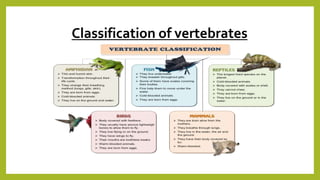
Classification of vertebrates
Classification of invertebrates
Classification of plants
Plants
 Produce flowers Do not produce flowers
 Some produce flowers Do not produce fruits
 Reproduce from seeds Reproduce from spores
 Divided into monocotyledons
And dicotyledons
Example : apple Ferns
Flowering Plants
(Angiosperms)
Non- Flowering Plants
(Gymnosperms)
Differences between monocotyledon
and dicotyledon
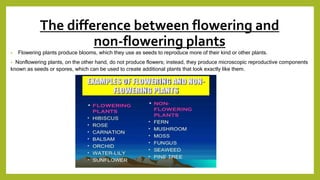
The difference between flowering and
non-flowering plants
• Flowering plants produce blooms, which they use as seeds to reproduce more of their kind or other plants.
• Nonflowering plants, on the other hand, do not produce flowers; instead, they produce microscopic reproductive components
known as seeds or spores, which can be used to create additional plants that look exactly like them.
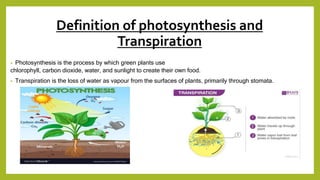
Definition of photosynthesis and
Transpiration
• Photosynthesis is the process by which green plants use
chlorophyll, carbon dioxide, water, and sunlight to create their own food.
• Transpiration is the loss of water as vapour from the surfaces of plants, primarily through stomata.
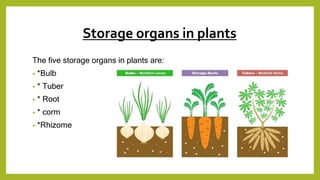
Storage organs in plants
The five storage organs in plants are:
• *Bulb
• * Tuber
• * Root
• * corm
• *Rhizome
References
• Transpiration Facts for Kids. (2019). Kiddle.co. https://kids.kiddle.co/Transpiration
• Welcome to CK-12 Foundation | CK-12 Foundation. (n.d.).Www.ck12.org.
https://www.ck12.org/book/ck-12-biology-advanced-concepts/section/16.6/
• https://lessonplancoaches.com/lesson-plan-of-plants-flowering-non-flowering-
plants/

science powerpoint - Copy.pptx

  • 1.
    NAME OF GROUPMEMBERS: CHRISTINA SIWNARINE-21-ADE-PRI-D-GT-272 GRACE EDMONDSON-21-ADE-PRI-D-GT-240 GABRIEL DOVER-21-ADE-PRI-D-GT-286 FRANK NOBLE-21-ADE-PRI-D-GT-461 JASON MARSHALL-21-ADE-PRI-D-GT-044-PRE PROGRAM: ASSOCIATE DEGREE IN EDUCATION COURSE: PHYSICAL & BIOLOGY SCIENCE (PBS) TOPIC: CLASSIFICATION OF LIVING THINGS AND PLANT
  • 2.
    Characteristics of livingthings • Living things Reproduce Respire Movement
  • 3.
    Characteristics of livingthings • Living things Excrete waste Grow Respond to stimuli Take on nutrients
  • 4.
    The difference betweenvertebrates and invertebrates • Vertebrates are animal with backbone while invertebrate are animals without backbone
  • 5.
    The difference betweenvertebrates and invertebrates
  • 6.
  • 7.
  • 8.
    Classification of plants Plants Produce flowers Do not produce flowers  Some produce flowers Do not produce fruits  Reproduce from seeds Reproduce from spores  Divided into monocotyledons And dicotyledons Example : apple Ferns Flowering Plants (Angiosperms) Non- Flowering Plants (Gymnosperms)
  • 9.
  • 10.
    The difference betweenflowering and non-flowering plants • Flowering plants produce blooms, which they use as seeds to reproduce more of their kind or other plants. • Nonflowering plants, on the other hand, do not produce flowers; instead, they produce microscopic reproductive components known as seeds or spores, which can be used to create additional plants that look exactly like them.
  • 11.
    Definition of photosynthesisand Transpiration • Photosynthesis is the process by which green plants use chlorophyll, carbon dioxide, water, and sunlight to create their own food. • Transpiration is the loss of water as vapour from the surfaces of plants, primarily through stomata.
  • 12.
    Storage organs inplants The five storage organs in plants are: • *Bulb • * Tuber • * Root • * corm • *Rhizome
  • 13.
    References • Transpiration Factsfor Kids. (2019). Kiddle.co. https://kids.kiddle.co/Transpiration • Welcome to CK-12 Foundation | CK-12 Foundation. (n.d.).Www.ck12.org. https://www.ck12.org/book/ck-12-biology-advanced-concepts/section/16.6/ • https://lessonplancoaches.com/lesson-plan-of-plants-flowering-non-flowering- plants/