
Agenda
• Why are we here?
• A Personal Story
• Cost of Security
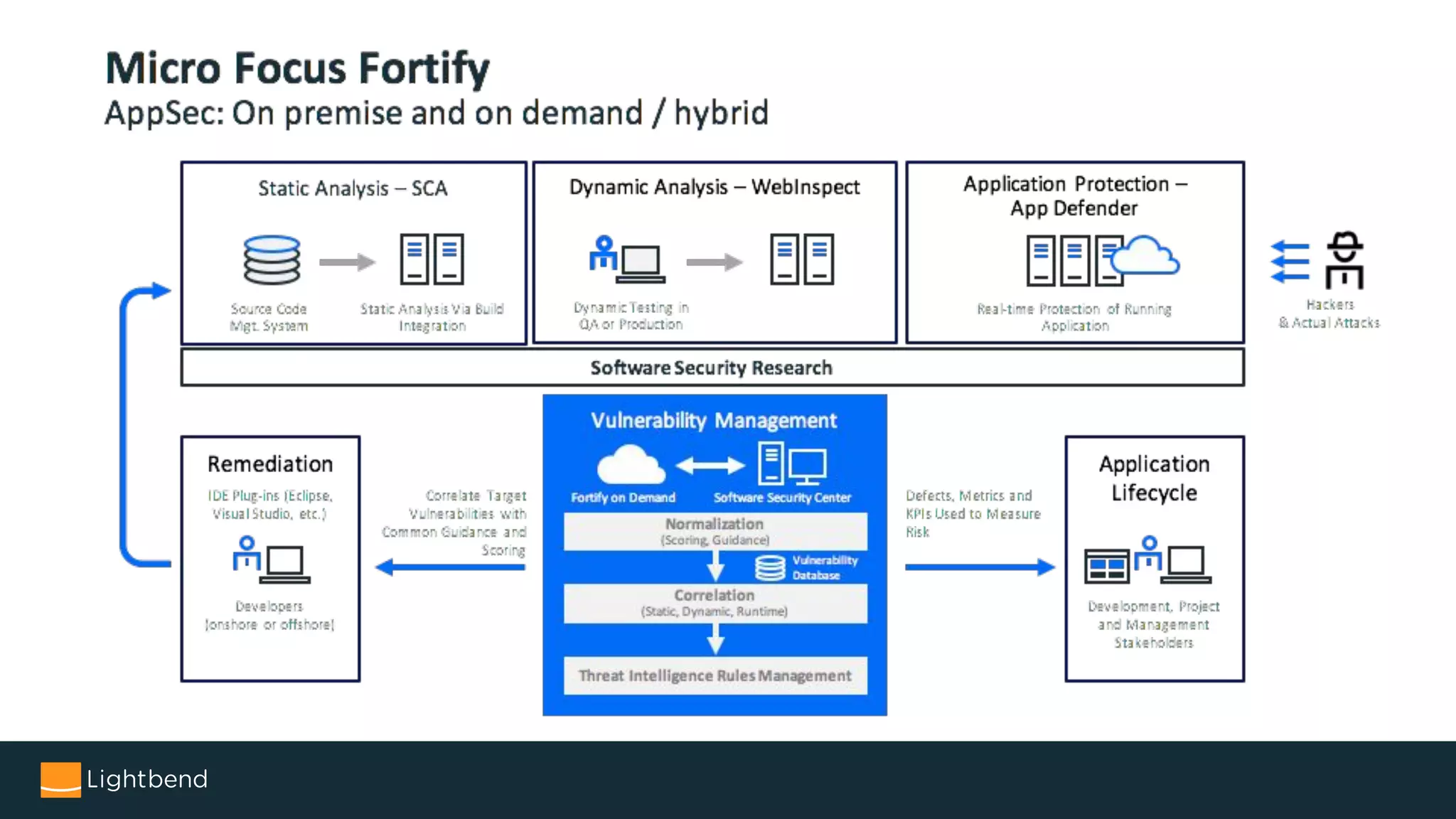
• Micro Focus Fortify
• Fortify SCA for Scala
• Demo
• Tips/Suggestions
• Q & A
2
Why are we here?
• Security Challenges
• How static analysis can find vulnerabilities in your Scala source code
• What is Fortify?
• How Fortify SCA for Scala can fit into your DevSecOps pipelines
3
A Personal Story
• Why security is important to me
• Why we must be vigilant about data security
• Experienced major Identity Theft at the end of 2017
• Debit card compromised 2 weeks ago
4
Overall Cost of Security
• Data Breaches
• Company, Customer, PII
• Blow to confidence of teams
• Not a matter of “if”, but rather “when”
• How will your company survive it?
• What is your remediation plan?
5
Industry Trends
• Shortage of Security Engineers
• Healthcare is the #1 security risk
• Security is “moving left” in the development lifecycle
• Customers looking to implement security best practices
6
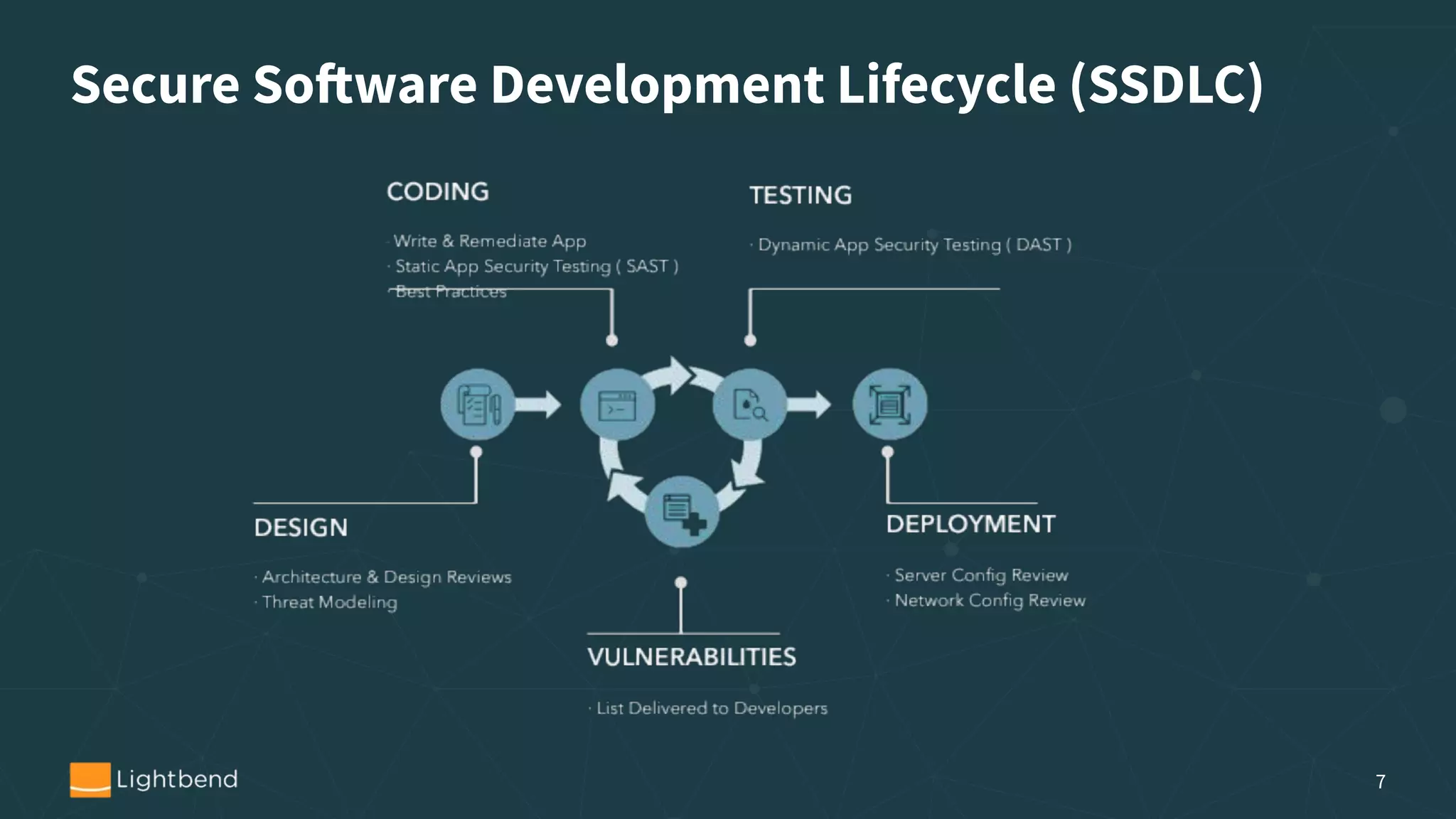
Secure Software Development Lifecycle (SSDLC)
7
Why Static Analysis?
• First line of defense in your security efforts
• Allows developers to catch problems up front, rather than in production
• Ensure that code paths are secure - method signatures, input/output variables
• Defined rules discover anomalies based on industry standards like OWASP
• Applies to all market segments
8
Static code analysis for Scala!
• Lightbend team wrote the frontend/translator for Scala
• Fortify team made sure the translator worked well with our backend to find
vulnerabilities
• Fortify SSR team developed rules for Scala
• We will carry this model forward to extend Scala support to:
• Support major frameworks
• Keep the support up to date
Fortify SCA for Scala
10
Fortify SCA for Scala - Highlights
1.0.0 initially released December 2017, latest release 1.0.13
• Fortify SCA 18.2 and 19.1 support
• Fortify on Demand
• Scala 2.11.{6-8,11-12}, 2.12.{3-8}, 2.13.0-RC1
• Akka HTTP Rules
• Additional Compiler Flags - SCA version, output directory, license file location
• Documentation Improvements
• Multi-project builds
• Transitive Dependencies - necessary for deep analysis
11
How it Works
1. Translate
2. Scan
3. View Results
12
How it Works: Translation
• Scala Compiler Plugin
• Runs late in the compilation process
• Compiles source code directly into JVM Bytecode ...and the necessary Fortify NST files
• Configure build tool of choice - sbt, Maven, Gradle, scalac, scripts
• Integrate into your development pipelines
13
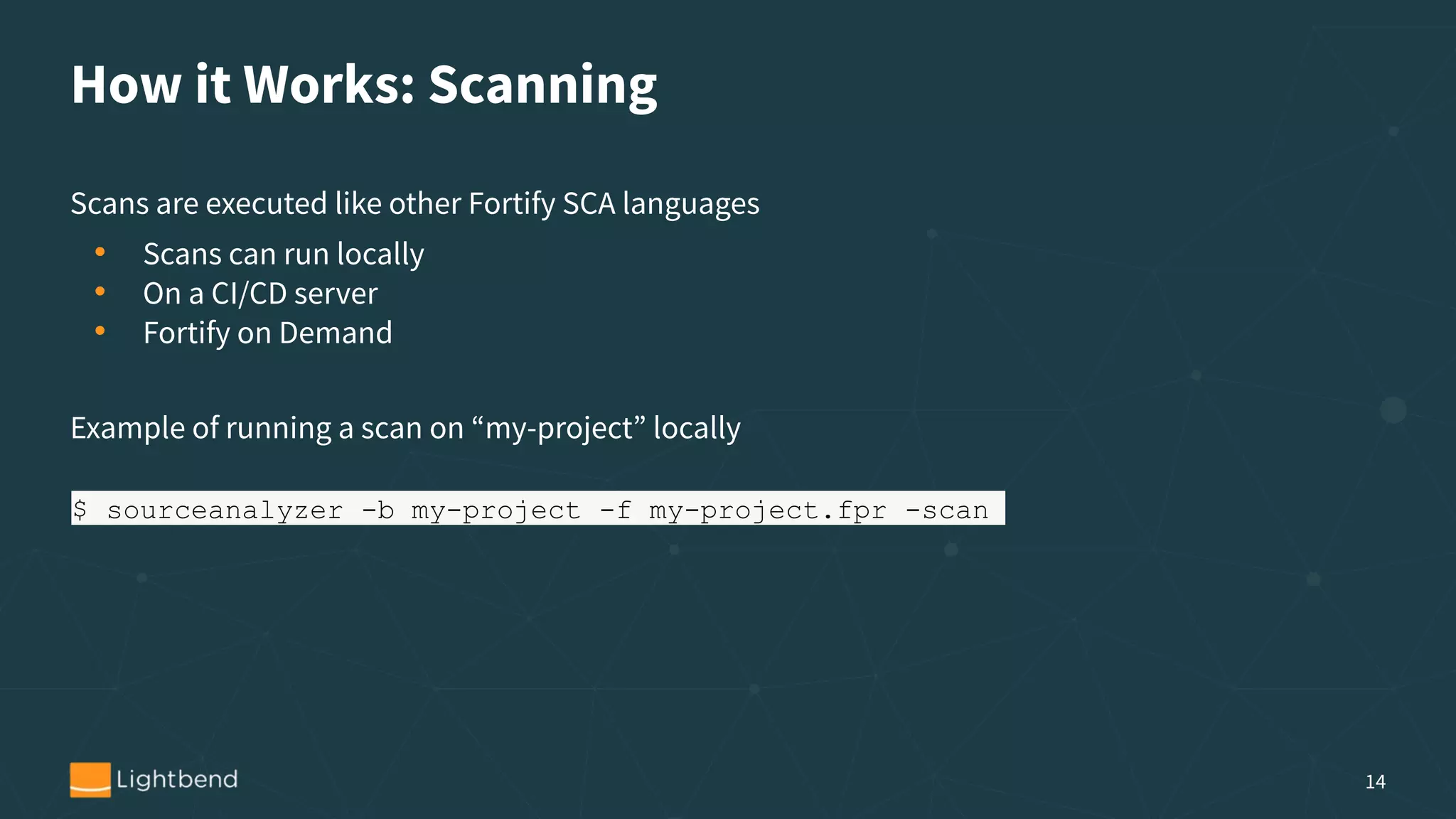
How it Works: Scanning
Scans are executed like other Fortify SCA languages
• Scans can run locally
• On a CI/CD server
• Fortify on Demand
Example of running a scan on “my-project” locally
14
$ sourceanalyzer -b my-project -f my-project.fpr -scan
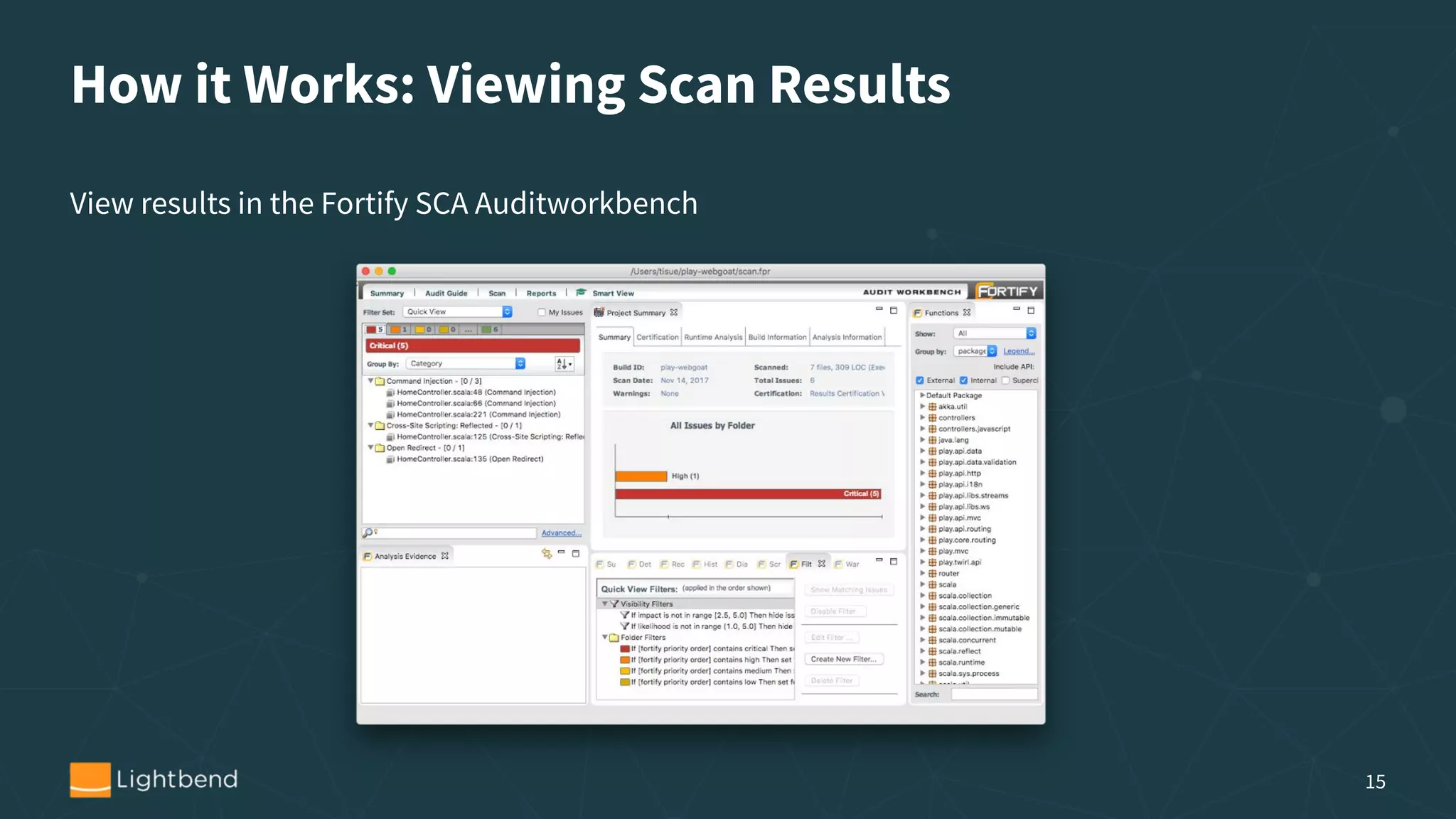
How it Works: Viewing Scan Results
View results in the Fortify SCA Auditworkbench
15
Vulnerabilities
• Java rulepacks apply to Scala code as well!
• Scala specific knowledge - collections, Play, Akka HTTP
• Fortify Taxonomy: Software Security Errors Site
• Outlines each potential vulnerability that can be surfaced
• 481 weaknesses supported - Java/Scala
16
Demo
Tips/Suggestions
• Establish Security Champions within your Organizations/Teams
• Initiate a Security Assessment of your systems
• Find the right tools
18
Q & A
Thank You!
Jeremy Daggett
Solutions Architect
jeremy@lightbend.com

Scala Security: Eliminate 200+ Code-Level Threats With Fortify SCA For Scala

  • 2.
    Agenda • Why arewe here? • A Personal Story • Cost of Security • Micro Focus Fortify • Fortify SCA for Scala • Demo • Tips/Suggestions • Q & A 2
  • 3.
    Why are wehere? • Security Challenges • How static analysis can find vulnerabilities in your Scala source code • What is Fortify? • How Fortify SCA for Scala can fit into your DevSecOps pipelines 3
  • 4.
    A Personal Story •Why security is important to me • Why we must be vigilant about data security • Experienced major Identity Theft at the end of 2017 • Debit card compromised 2 weeks ago 4
  • 5.
    Overall Cost ofSecurity • Data Breaches • Company, Customer, PII • Blow to confidence of teams • Not a matter of “if”, but rather “when” • How will your company survive it? • What is your remediation plan? 5
  • 6.
    Industry Trends • Shortageof Security Engineers • Healthcare is the #1 security risk • Security is “moving left” in the development lifecycle • Customers looking to implement security best practices 6
  • 7.
    Secure Software DevelopmentLifecycle (SSDLC) 7
  • 8.
    Why Static Analysis? •First line of defense in your security efforts • Allows developers to catch problems up front, rather than in production • Ensure that code paths are secure - method signatures, input/output variables • Defined rules discover anomalies based on industry standards like OWASP • Applies to all market segments 8
  • 10.
    Static code analysisfor Scala! • Lightbend team wrote the frontend/translator for Scala • Fortify team made sure the translator worked well with our backend to find vulnerabilities • Fortify SSR team developed rules for Scala • We will carry this model forward to extend Scala support to: • Support major frameworks • Keep the support up to date Fortify SCA for Scala 10
  • 11.
    Fortify SCA forScala - Highlights 1.0.0 initially released December 2017, latest release 1.0.13 • Fortify SCA 18.2 and 19.1 support • Fortify on Demand • Scala 2.11.{6-8,11-12}, 2.12.{3-8}, 2.13.0-RC1 • Akka HTTP Rules • Additional Compiler Flags - SCA version, output directory, license file location • Documentation Improvements • Multi-project builds • Transitive Dependencies - necessary for deep analysis 11
  • 12.
    How it Works 1.Translate 2. Scan 3. View Results 12
  • 13.
    How it Works:Translation • Scala Compiler Plugin • Runs late in the compilation process • Compiles source code directly into JVM Bytecode ...and the necessary Fortify NST files • Configure build tool of choice - sbt, Maven, Gradle, scalac, scripts • Integrate into your development pipelines 13
  • 14.
    How it Works:Scanning Scans are executed like other Fortify SCA languages • Scans can run locally • On a CI/CD server • Fortify on Demand Example of running a scan on “my-project” locally 14 $ sourceanalyzer -b my-project -f my-project.fpr -scan
  • 15.
    How it Works:Viewing Scan Results View results in the Fortify SCA Auditworkbench 15
  • 16.
    Vulnerabilities • Java rulepacksapply to Scala code as well! • Scala specific knowledge - collections, Play, Akka HTTP • Fortify Taxonomy: Software Security Errors Site • Outlines each potential vulnerability that can be surfaced • 481 weaknesses supported - Java/Scala 16
  • 17.
  • 18.
    Tips/Suggestions • Establish SecurityChampions within your Organizations/Teams • Initiate a Security Assessment of your systems • Find the right tools 18
  • 19.
  • 20.
    Thank You! Jeremy Daggett SolutionsArchitect jeremy@lightbend.com