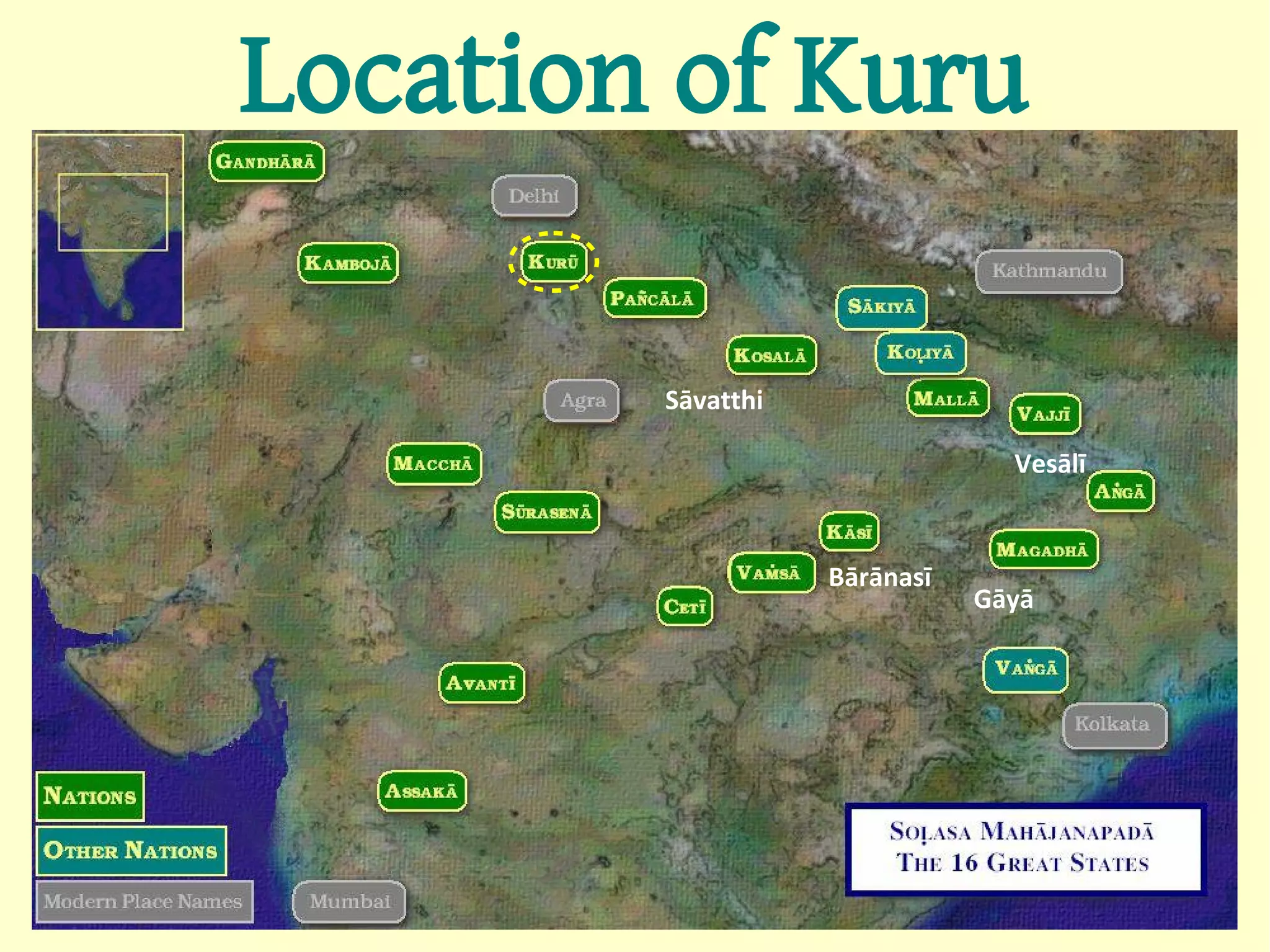
Location of Kuru

        Sāvatthi

                                Vesālī


                   Bārānasī
                              Gāyā
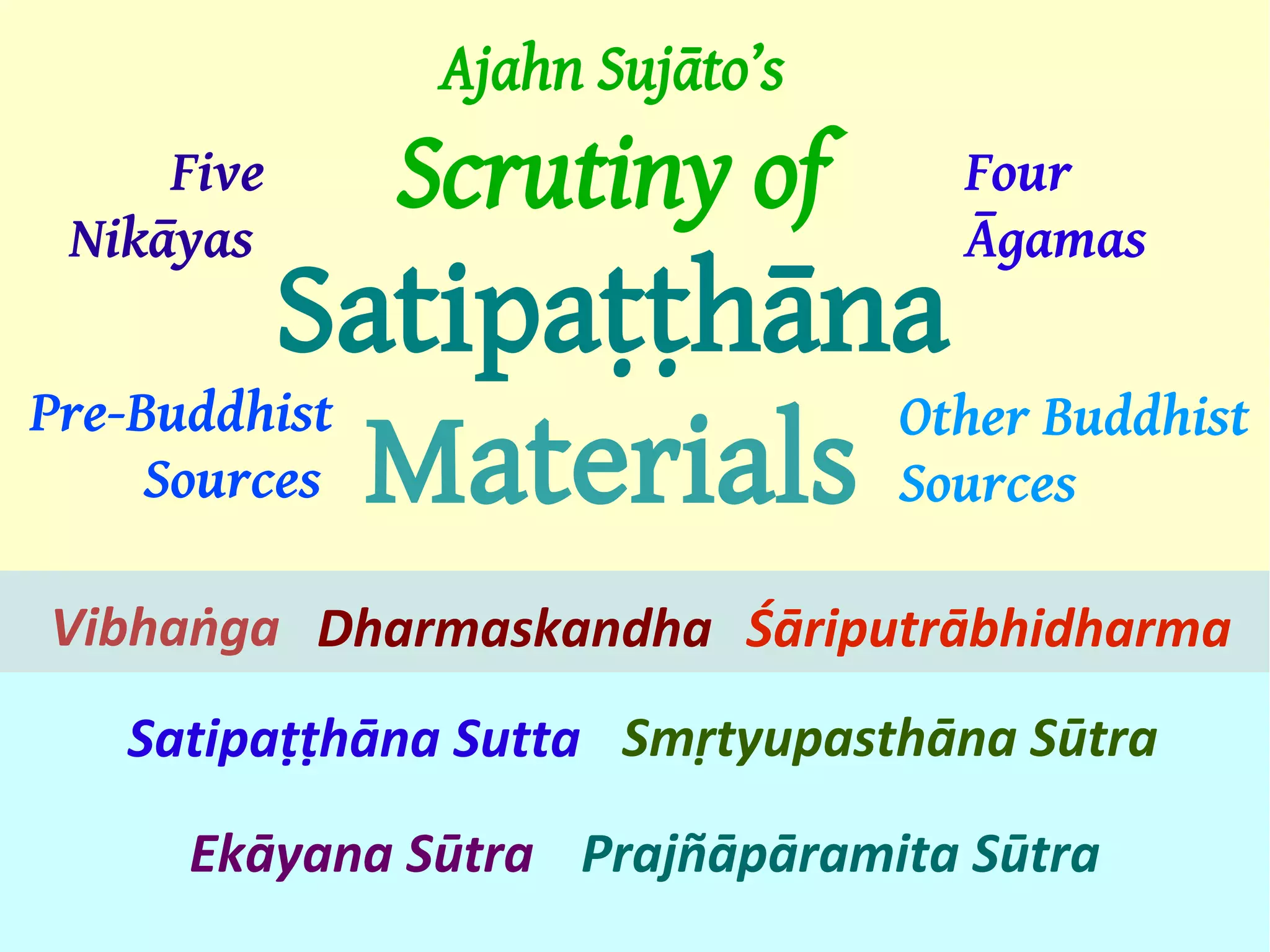
Ajahn Sujāto’s
     Five
 Nikāyas
             Scrutiny of          Four
                                  Āgamas
          Satipaṭṭhāna
Pre-Buddhist           Other Buddhist
     Sources Materials Sources

Vibhaṅga Dharmaskandha Śāriputrābhidharma
   Satipaṭṭhāna Sutta Smṛtyupasthāna Sūtra
     Ekāyana Sūtra Prajñāpāramita Sūtra
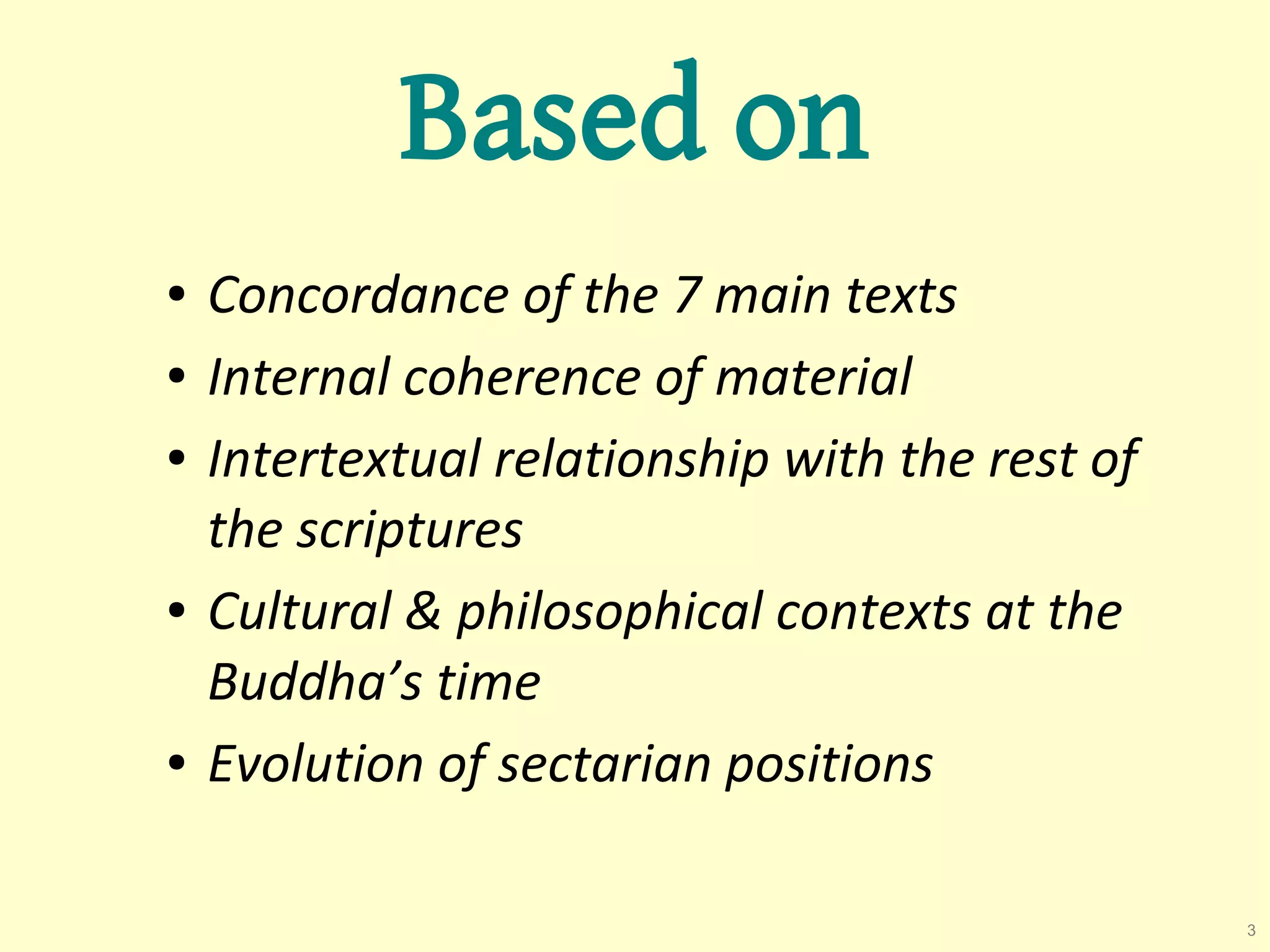
Based on
●   Concordance of the 7 main texts
●   Internal coherence of material
●   Intertextual relationship with the rest of
    the scriptures
●   Cultural & philosophical contexts at the
    Buddha’s time
●   Evolution of sectarian positions

                                                 3
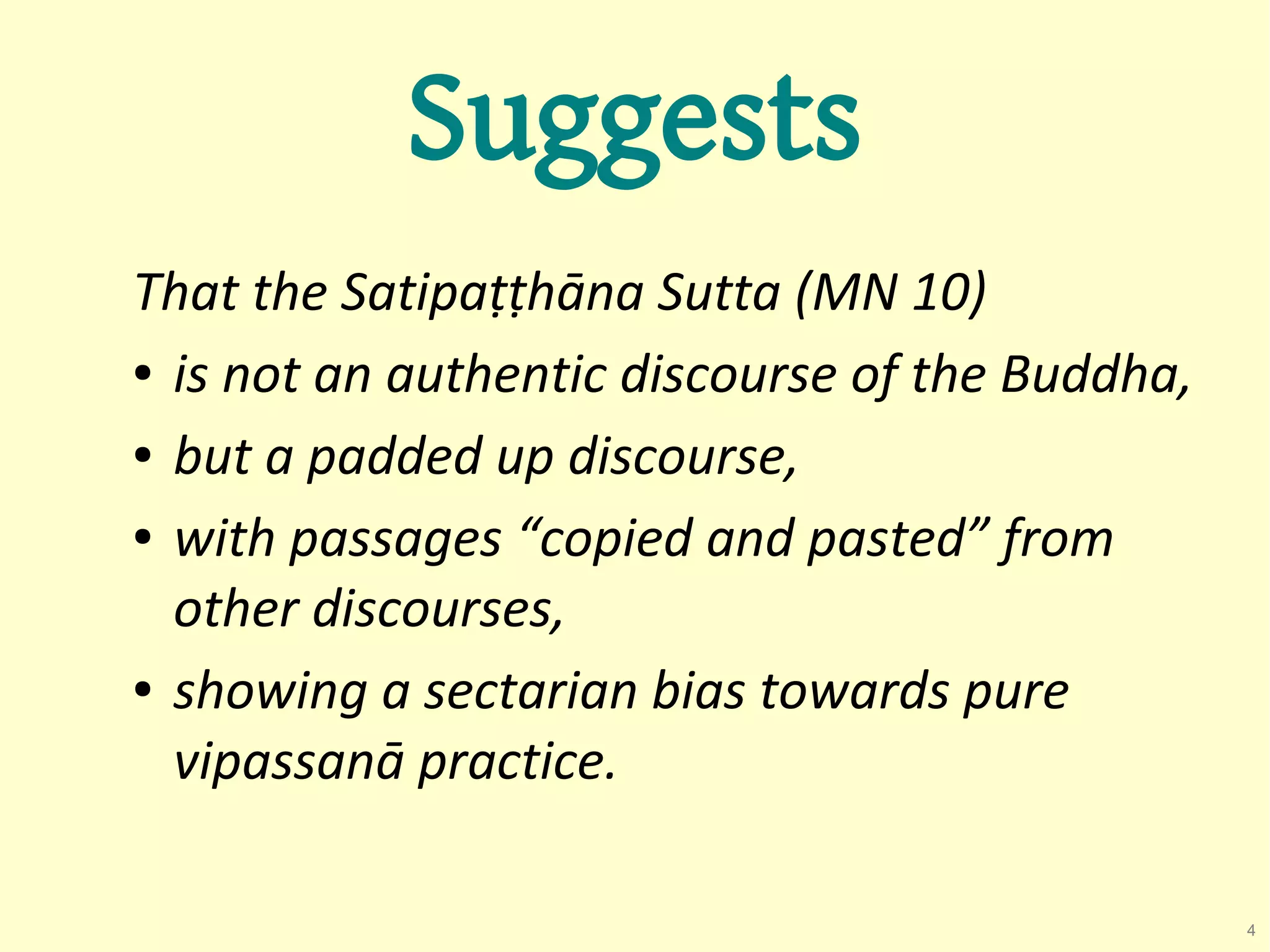
Suggests
That the Satipaṭṭhāna Sutta (MN 10)
● is not an authentic discourse of the Buddha,


● but a padded up discourse,


● with passages “copied and pasted” from


  other discourses,
● showing a sectarian bias towards pure


  vipassanā practice.

                                                 4
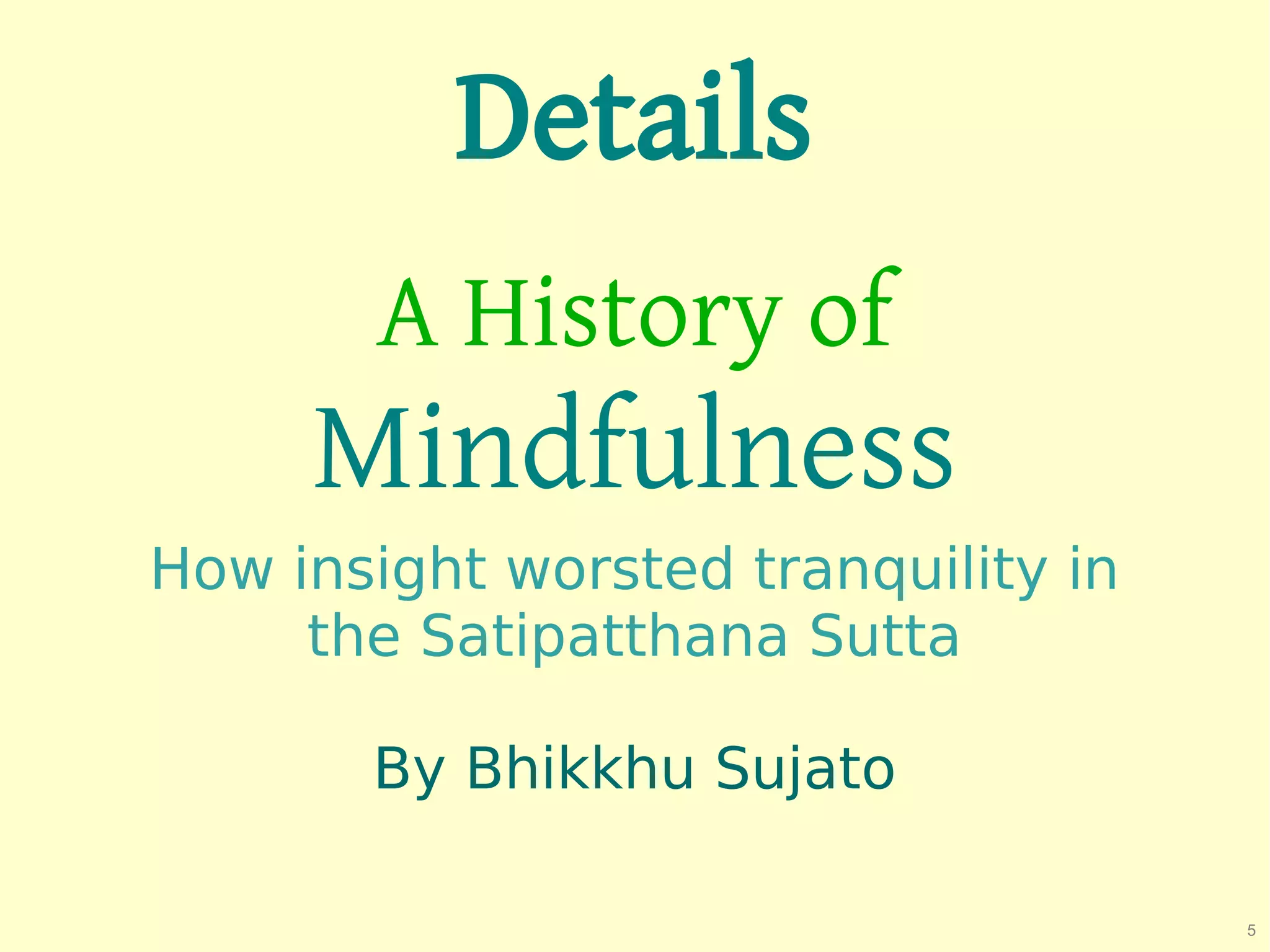
Details
       A History of
     Mindfulness
How insight worsted tranquility in
     the Satipatthana Sutta

       By Bhikkhu Sujato

                                     5
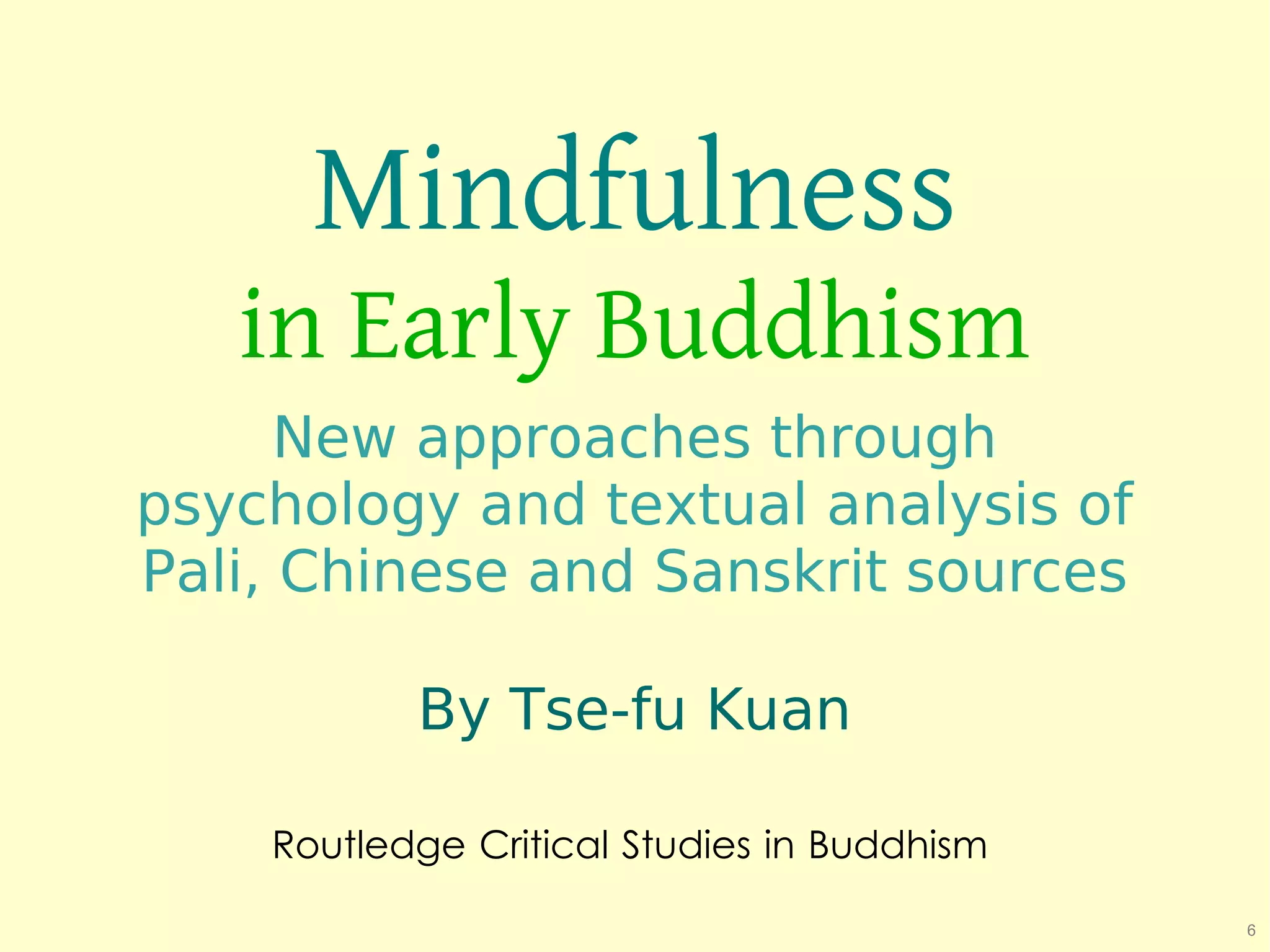
Mindfulness
   in Early Buddhism
      New approaches through
psychology and textual analysis of
Pali, Chinese and Sanskrit sources

           By Tse-fu Kuan

    Routledge Critical Studies in Buddhism

                                             6
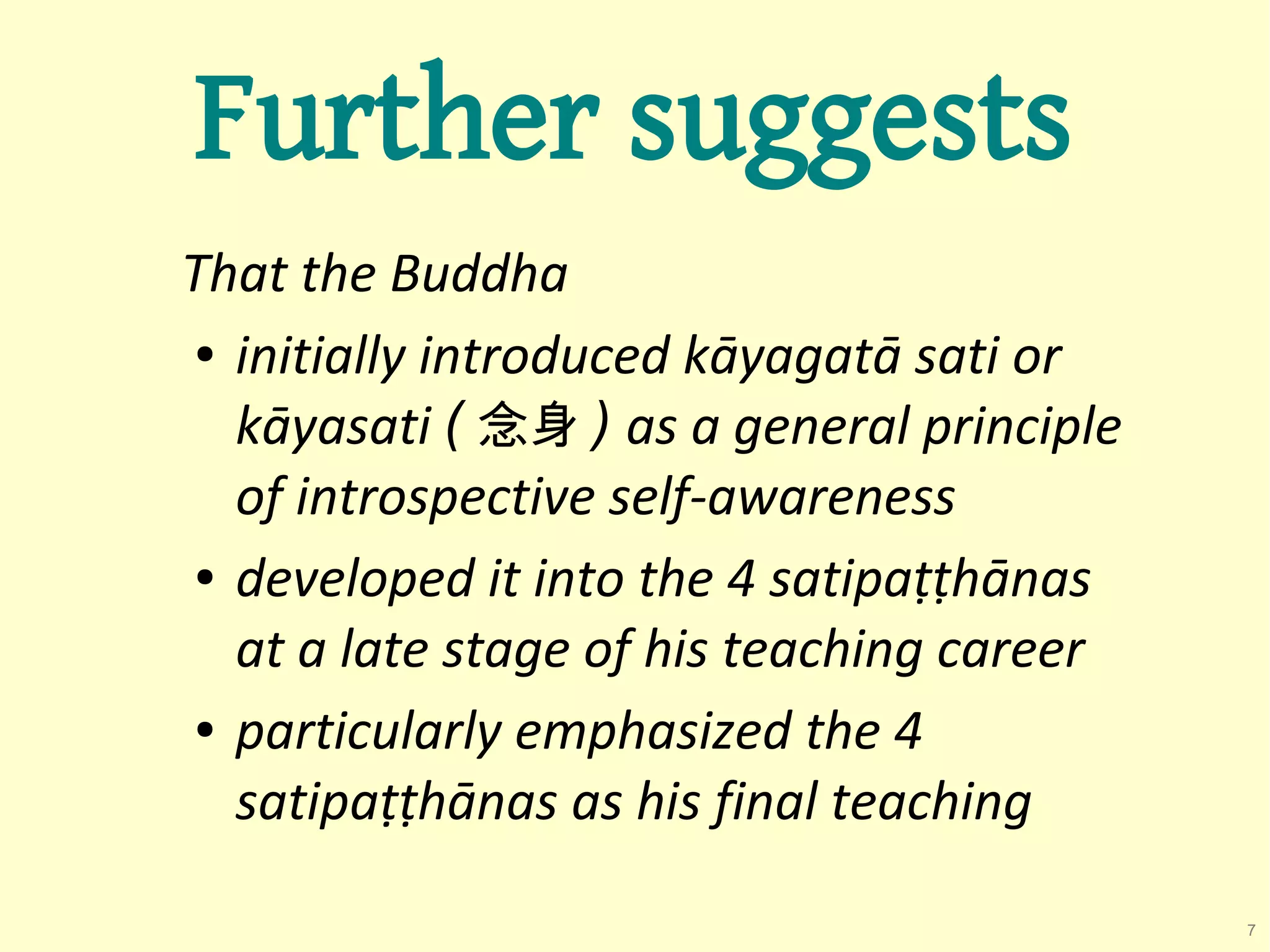
Further suggests
That the Buddha
● initially introduced kāyagatā sati or


  kāyasati ( 念身 ) as a general principle
  of introspective self-awareness
● developed it into the 4 satipaṭṭhānas


  at a late stage of his teaching career
● particularly emphasized the 4


  satipaṭṭhānas as his final teaching

                                           7
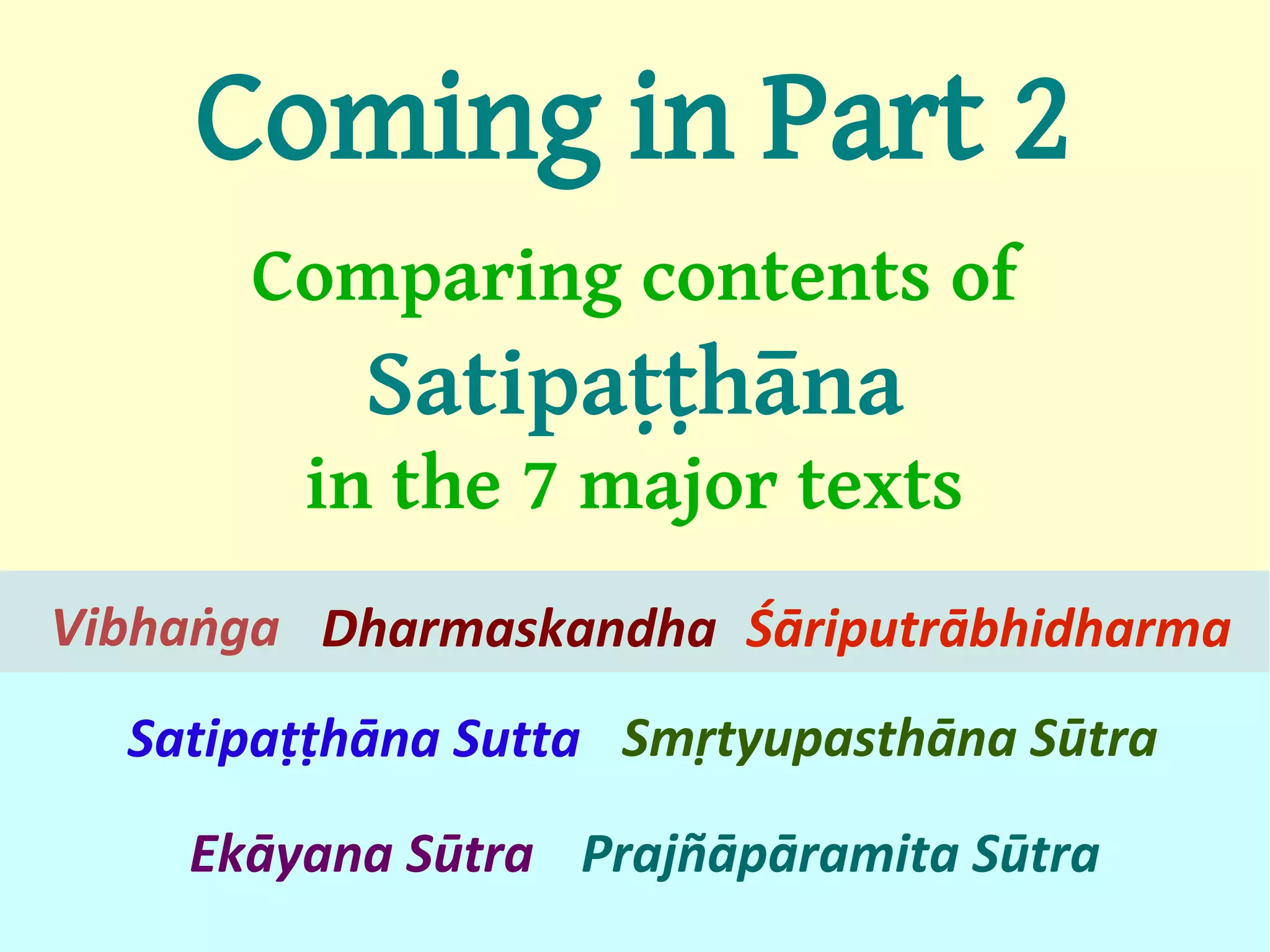
Coming in Part 2
      Comparing contents of
          Satipaṭṭhāna
        in the 7 major texts
Vibhaṅga Dharmaskandha Śāriputrābhidharma
  Satipaṭṭhāna Sutta Smṛtyupasthāna Sūtra
    Ekāyana Sūtra Prajñāpāramita Sūtra
                                            8

Satipatthana Sutta Workshop - S2 Introduction to Satipatthana Sutta

  • 1.
    Location of Kuru Sāvatthi Vesālī Bārānasī Gāyā
  • 2.
    Ajahn Sujāto’s Five Nikāyas Scrutiny of Four Āgamas Satipaṭṭhāna Pre-Buddhist Other Buddhist Sources Materials Sources Vibhaṅga Dharmaskandha Śāriputrābhidharma Satipaṭṭhāna Sutta Smṛtyupasthāna Sūtra Ekāyana Sūtra Prajñāpāramita Sūtra
  • 3.
    Based on ● Concordance of the 7 main texts ● Internal coherence of material ● Intertextual relationship with the rest of the scriptures ● Cultural & philosophical contexts at the Buddha’s time ● Evolution of sectarian positions 3
  • 4.
    Suggests That the SatipaṭṭhānaSutta (MN 10) ● is not an authentic discourse of the Buddha, ● but a padded up discourse, ● with passages “copied and pasted” from other discourses, ● showing a sectarian bias towards pure vipassanā practice. 4
  • 5.
    Details A History of Mindfulness How insight worsted tranquility in the Satipatthana Sutta By Bhikkhu Sujato 5
  • 6.
    Mindfulness in Early Buddhism New approaches through psychology and textual analysis of Pali, Chinese and Sanskrit sources By Tse-fu Kuan Routledge Critical Studies in Buddhism 6
  • 7.
    Further suggests That theBuddha ● initially introduced kāyagatā sati or kāyasati ( 念身 ) as a general principle of introspective self-awareness ● developed it into the 4 satipaṭṭhānas at a late stage of his teaching career ● particularly emphasized the 4 satipaṭṭhānas as his final teaching 7
  • 8.
    Coming in Part2 Comparing contents of Satipaṭṭhāna in the 7 major texts Vibhaṅga Dharmaskandha Śāriputrābhidharma Satipaṭṭhāna Sutta Smṛtyupasthāna Sūtra Ekāyana Sūtra Prajñāpāramita Sūtra 8