Satipaṭṭhāna Sutta
Study with Meditation
  Workshop Part 2.1
Summary & Conclusion
     ●  Contemplation of Dhammas
             ● 5 Hindrances

             ● 5 Aggregates

 ●   6 Internal & External Sense-bases
      ● Awakening Factors (1 – 4)
                                         1
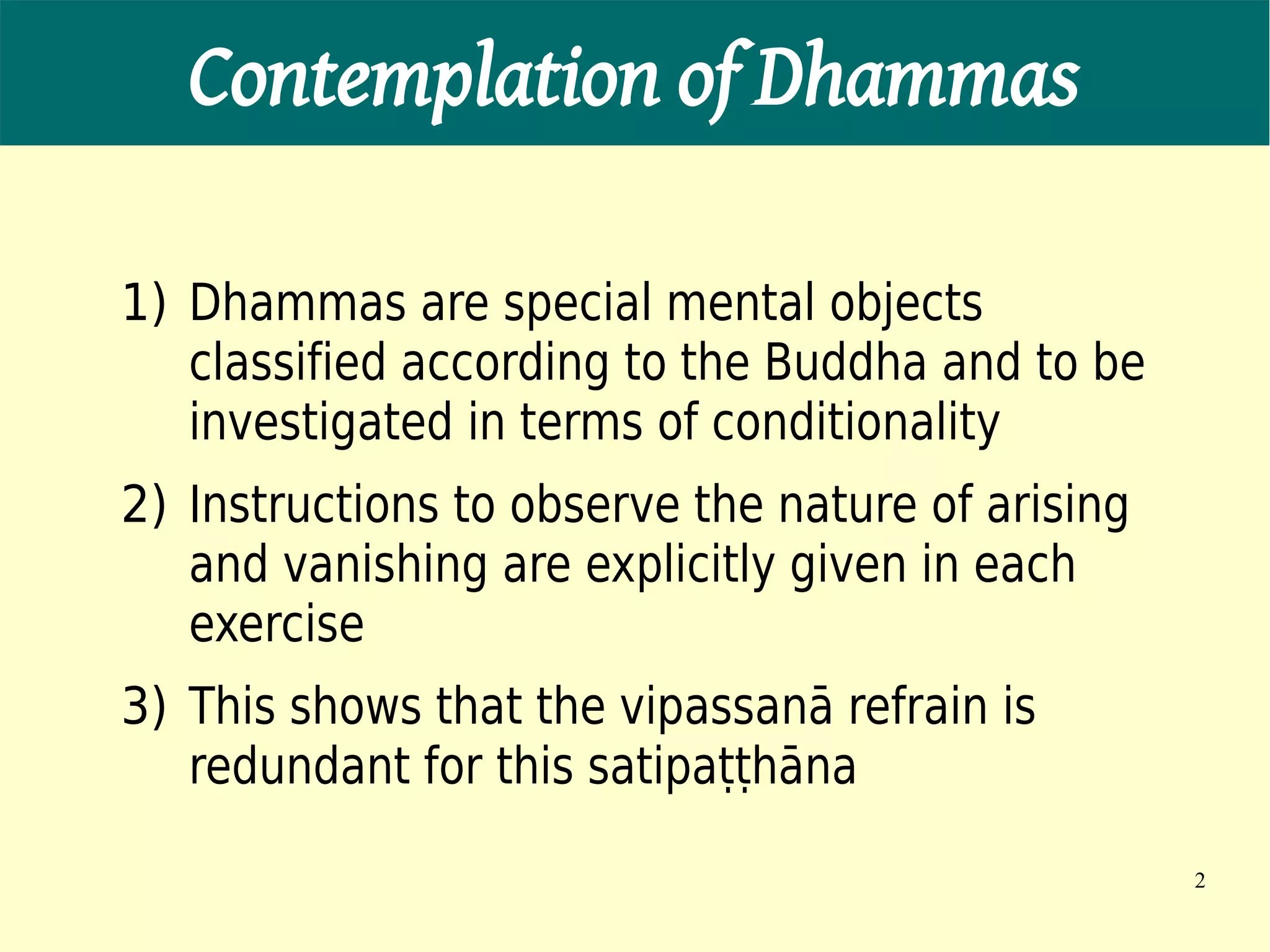
Contemplation of Dhammas

1) Dhammas are special mental objects
   classified according to the Buddha and to be
   investigated in terms of conditionality
2) Instructions to observe the nature of arising
   and vanishing are explicitly given in each
   exercise
3) This shows that the vipassanā refrain is
   redundant for this satipaṭṭhāna

                                                   2
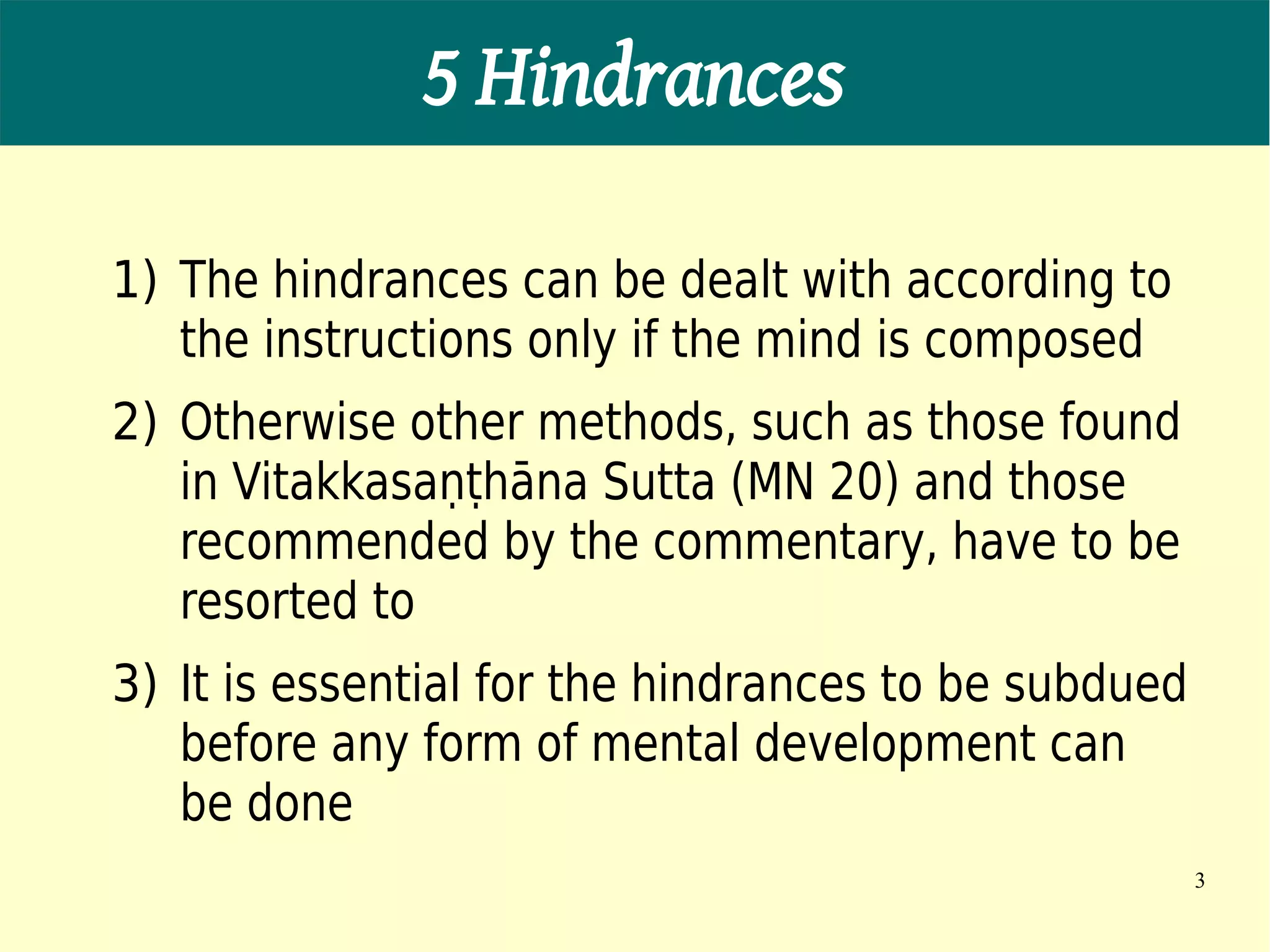
5 Hindrances

1) The hindrances can be dealt with according to
   the instructions only if the mind is composed
2) Otherwise other methods, such as those found
   in Vitakkasaṇṭhāna Sutta (MN 20) and those
   recommended by the commentary, have to be
   resorted to
3) It is essential for the hindrances to be subdued
   before any form of mental development can
   be done
                                                      3
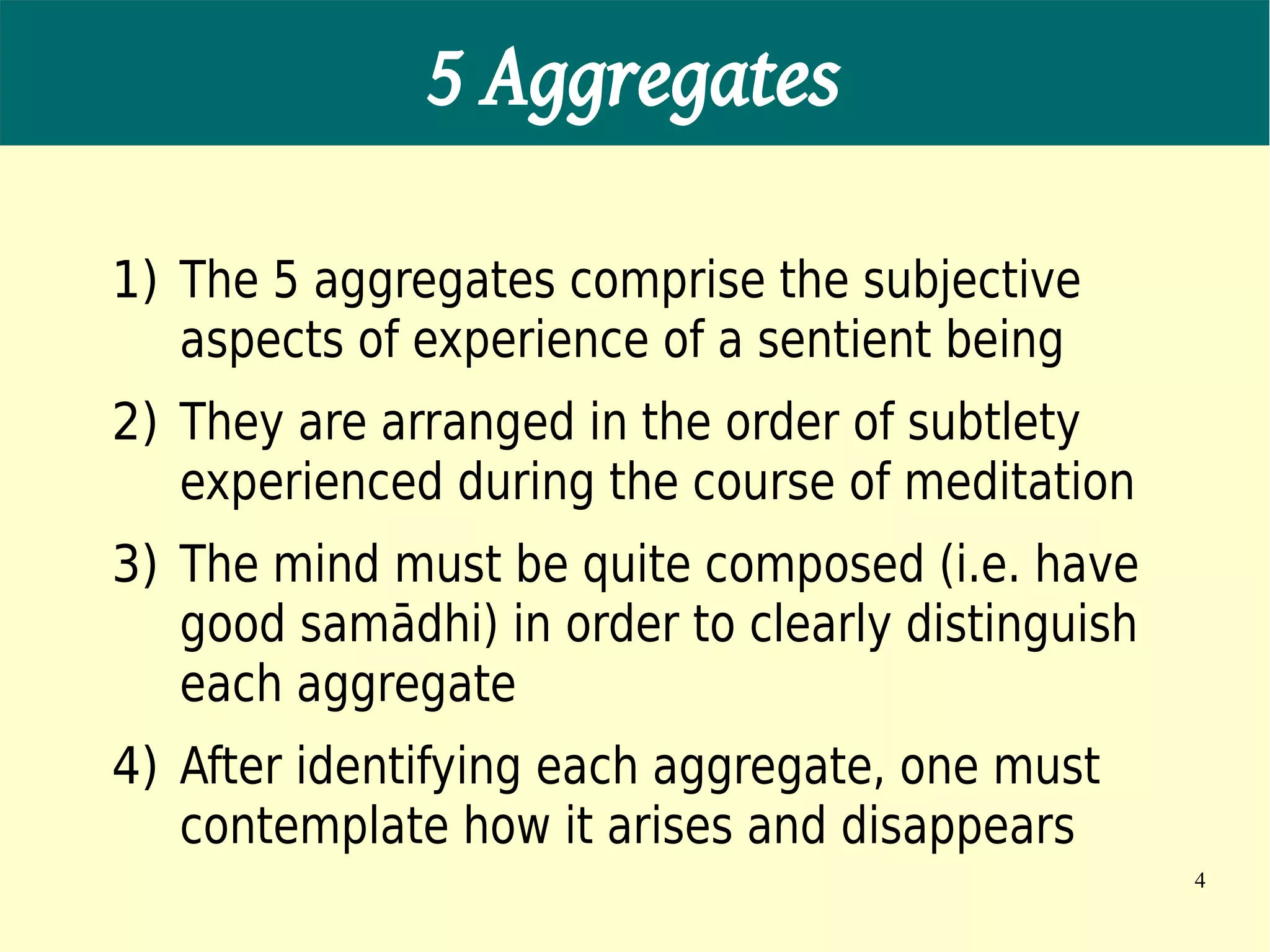
5 Aggregates

1) The 5 aggregates comprise the subjective
   aspects of experience of a sentient being
2) They are arranged in the order of subtlety
   experienced during the course of meditation
3) The mind must be quite composed (i.e. have
   good samādhi) in order to clearly distinguish
   each aggregate
4) After identifying each aggregate, one must
   contemplate how it arises and disappears
                                                   4
6 Internal & External Sense-bases
1) The objects for vipassanā are saṅkhāras =
   conditioned conditioners
2) Saṅkhāras include sense-objects, citta and
   cetasikas, as well as thoughts, ideas, beliefs,
   expectations, etc.
3) Keeping a close watch on how the mind
   responds or reacts to the six senses is the key
   to both spiritual and worldly success
4) This constitutes the basis and rationale for the
   continual daily practice of open-awareness
                                                      5
Awakening Factors (1 – 4)
1) The range of application for the awakening
   factors are not just limited to the exercises in
   the Satipaṭṭhāna Sutta
2) This range includes reflection on a Dhamma
   discourse and the arising of the ensuing
   awakening factors
3) It also includes other meditations based on
   seclusion, dispassion and cessation, and
   maturing in release, e.g. 4 brahmavihāras,
   asubha, and various perceptions
                                                      6
Awakening Factors (1 – 4)


4) Intently listening to a Dhamma
   discourse can also bring about
   the 7 awakening factors and
   their development to fulfilment


                                     7

Satipatthana Sutta Workshop - S10.1 Summary & Conclusion Day 3

  • 1.
    Satipaṭṭhāna Sutta Study withMeditation Workshop Part 2.1 Summary & Conclusion ● Contemplation of Dhammas ● 5 Hindrances ● 5 Aggregates ● 6 Internal & External Sense-bases ● Awakening Factors (1 – 4) 1
  • 2.
    Contemplation of Dhammas 1)Dhammas are special mental objects classified according to the Buddha and to be investigated in terms of conditionality 2) Instructions to observe the nature of arising and vanishing are explicitly given in each exercise 3) This shows that the vipassanā refrain is redundant for this satipaṭṭhāna 2
  • 3.
    5 Hindrances 1) Thehindrances can be dealt with according to the instructions only if the mind is composed 2) Otherwise other methods, such as those found in Vitakkasaṇṭhāna Sutta (MN 20) and those recommended by the commentary, have to be resorted to 3) It is essential for the hindrances to be subdued before any form of mental development can be done 3
  • 4.
    5 Aggregates 1) The5 aggregates comprise the subjective aspects of experience of a sentient being 2) They are arranged in the order of subtlety experienced during the course of meditation 3) The mind must be quite composed (i.e. have good samādhi) in order to clearly distinguish each aggregate 4) After identifying each aggregate, one must contemplate how it arises and disappears 4
  • 5.
    6 Internal &External Sense-bases 1) The objects for vipassanā are saṅkhāras = conditioned conditioners 2) Saṅkhāras include sense-objects, citta and cetasikas, as well as thoughts, ideas, beliefs, expectations, etc. 3) Keeping a close watch on how the mind responds or reacts to the six senses is the key to both spiritual and worldly success 4) This constitutes the basis and rationale for the continual daily practice of open-awareness 5
  • 6.
    Awakening Factors (1– 4) 1) The range of application for the awakening factors are not just limited to the exercises in the Satipaṭṭhāna Sutta 2) This range includes reflection on a Dhamma discourse and the arising of the ensuing awakening factors 3) It also includes other meditations based on seclusion, dispassion and cessation, and maturing in release, e.g. 4 brahmavihāras, asubha, and various perceptions 6
  • 7.
    Awakening Factors (1– 4) 4) Intently listening to a Dhamma discourse can also bring about the 7 awakening factors and their development to fulfilment 7