About
Calatrava
 Date of Birth: 28th July, 1951
 Country: Spain
 Education: He pursued undergraduate studies at the
Architecture
School and Arts and Crafts School.
 Following graduation in 1975, he enrolled in the Swiss Federal
Institute of Technology (ETH) in Zurich, Switzerland, for
graduate work in civil engineering.
 In 1981, after completing his doctoral thesis,
"On the Foldability of Space Frames", he started his
architecture and engineering practice
 Santiago Calatrava Valls is an internationally recognized and
award-winning Valencian Spanish architect, sculptor and
structural engineer.
 Gained international celebrity for structures that suggest the
shapes and the motion of organic entities
INSPIRATION
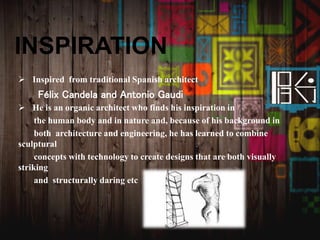
 Inspired from traditional Spanish architect
Félix Candela and Antonio Gaudi
 He is an organic architect who finds his inspiration in
the human body and in nature and, because of his background in
both architecture and engineering, he has learned to combine
sculptural
concepts with technology to create designs that are both visually
striking
and structurally daring etc
philosophy
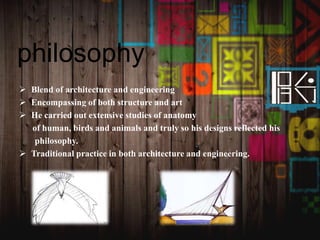
 Blend of architecture and engineering
 Encompassing of both structure and art
 He carried out extensive studies of anatomy
of human, birds and animals and truly so his designs reflected his
philosophy.
 Traditional practice in both architecture and engineering.
Works
 Florida Polytechnic University
 Turning Torso
 Chicago Tower
 Museum of tomorrow
 Athens Olympic sports complex
 Chords bridge
 Auditorio de tenerife
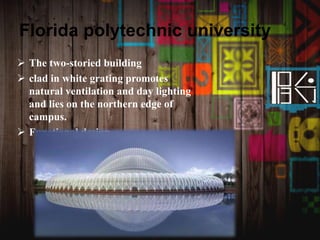
Florida polytechnic university
 The two-storied building
 clad in white grating promotes
natural ventilation and day lighting
and lies on the northern edge of
campus.
 Functional design
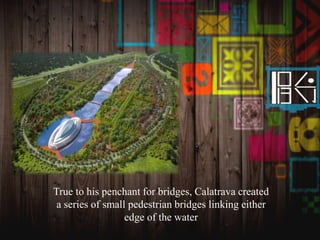
True to his penchant for bridges, Calatrava created
a series of small pedestrian bridges linking either
edge of the water
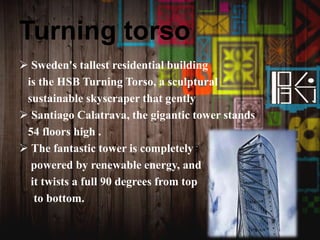
Turning torso
 Sweden's tallest residential building
is the HSB Turning Torso, a sculptural
sustainable skyscraper that gently
 Santiago Calatrava, the gigantic tower stands
54 floors high .
 The fantastic tower is completely
powered by renewable energy, and
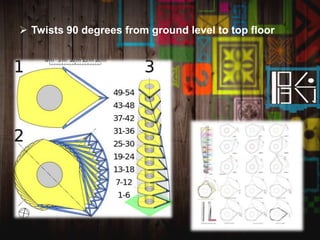
it twists a full 90 degrees from top
to bottom.
 Twists 90 degrees from ground level to top floor
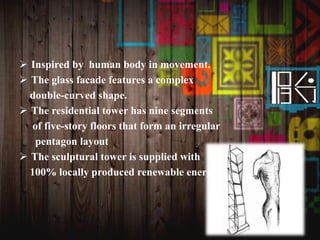
 Inspired by human body in movement.
 The glass facade features a complex
double-curved shape.
 The residential tower has nine segments
of five-story floors that form an irregular
pentagon layout
 The sculptural tower is supplied with
100% locally produced renewable energy
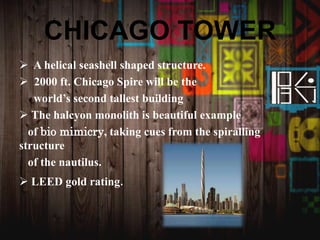
CHICAGO TOWER
 A helical seashell shaped structure.
 2000 ft. Chicago Spire will be the
world’s second tallest building
 The halcyon monolith is beautiful example
of bio mimicry, taking cues from the spiralling
structure
of the nautilus.
 LEED gold rating.
 Fluid facade shrouded
in glass.
 All landscaping is
maintained via a rainwater
recycling system.
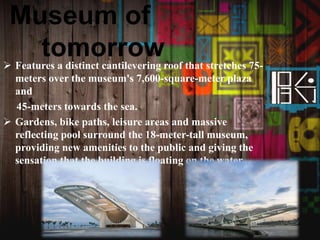
Museum of
tomorrow Features a distinct cantilevering roof that stretches 75-
meters over the museum's 7,600-square-meter plaza
and
45-meters towards the sea.
 Gardens, bike paths, leisure areas and massive
reflecting pool surround the 18-meter-tall museum,
providing new amenities to the public and giving the
sensation that the building is floating on the water.
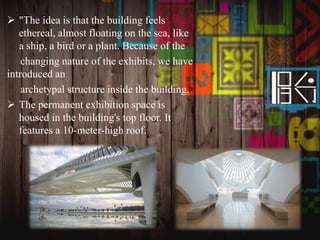
 "The idea is that the building feels
ethereal, almost floating on the sea, like
a ship, a bird or a plant. Because of the
changing nature of the exhibits, we have
introduced an
archetypal structure inside the building.
 The permanent exhibition space is
housed in the building's top floor. It
features a 10-meter-high roof.
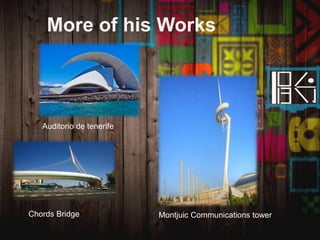
More of his Works
Auditorio de tenerife
Montjuic Communications towerChords Bridge
THANK YOU
Keerthana Bharatula
Deepika Puppala
Lavanya Pilli
Udaya Bhanu
Jnana Prasanna
Lakshmi Durga
Veera Prabha

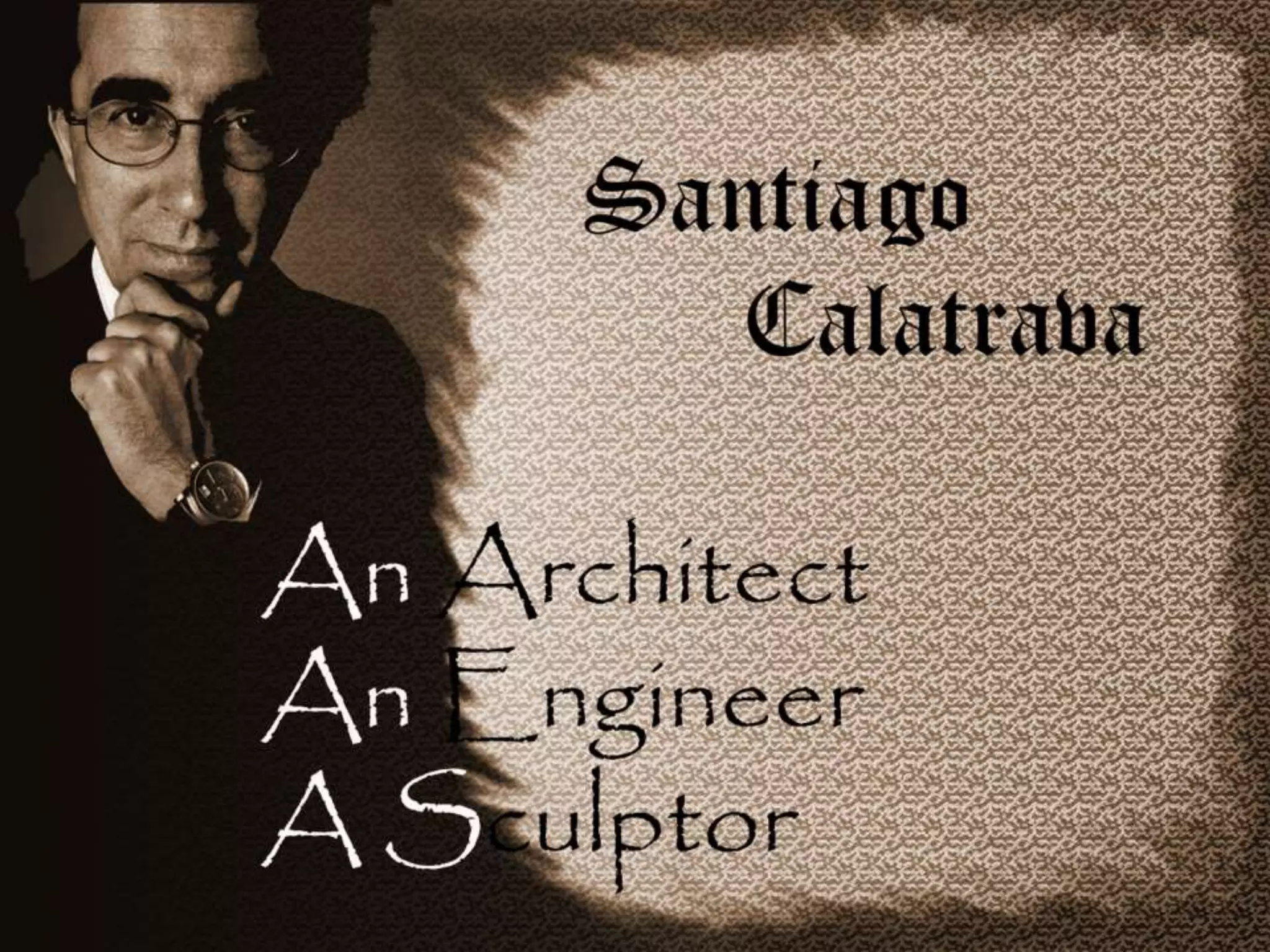
Santiago calatrava

  • 2.
    About Calatrava  Date ofBirth: 28th July, 1951  Country: Spain  Education: He pursued undergraduate studies at the Architecture School and Arts and Crafts School.  Following graduation in 1975, he enrolled in the Swiss Federal Institute of Technology (ETH) in Zurich, Switzerland, for graduate work in civil engineering.  In 1981, after completing his doctoral thesis, "On the Foldability of Space Frames", he started his architecture and engineering practice  Santiago Calatrava Valls is an internationally recognized and award-winning Valencian Spanish architect, sculptor and structural engineer.  Gained international celebrity for structures that suggest the shapes and the motion of organic entities
  • 3.
    INSPIRATION  Inspired fromtraditional Spanish architect Félix Candela and Antonio Gaudi  He is an organic architect who finds his inspiration in the human body and in nature and, because of his background in both architecture and engineering, he has learned to combine sculptural concepts with technology to create designs that are both visually striking and structurally daring etc
  • 4.
    philosophy  Blend ofarchitecture and engineering  Encompassing of both structure and art  He carried out extensive studies of anatomy of human, birds and animals and truly so his designs reflected his philosophy.  Traditional practice in both architecture and engineering.
  • 5.
    Works  Florida PolytechnicUniversity  Turning Torso  Chicago Tower  Museum of tomorrow  Athens Olympic sports complex  Chords bridge  Auditorio de tenerife
  • 6.
    Florida polytechnic university The two-storied building  clad in white grating promotes natural ventilation and day lighting and lies on the northern edge of campus.  Functional design
  • 7.
    True to hispenchant for bridges, Calatrava created a series of small pedestrian bridges linking either edge of the water
  • 8.
    Turning torso  Sweden'stallest residential building is the HSB Turning Torso, a sculptural sustainable skyscraper that gently  Santiago Calatrava, the gigantic tower stands 54 floors high .  The fantastic tower is completely powered by renewable energy, and it twists a full 90 degrees from top to bottom.
  • 9.
     Twists 90degrees from ground level to top floor
  • 10.
     Inspired byhuman body in movement.  The glass facade features a complex double-curved shape.  The residential tower has nine segments of five-story floors that form an irregular pentagon layout  The sculptural tower is supplied with 100% locally produced renewable energy
  • 11.
    CHICAGO TOWER  Ahelical seashell shaped structure.  2000 ft. Chicago Spire will be the world’s second tallest building  The halcyon monolith is beautiful example of bio mimicry, taking cues from the spiralling structure of the nautilus.  LEED gold rating.
  • 12.
     Fluid facadeshrouded in glass.  All landscaping is maintained via a rainwater recycling system.
  • 13.
    Museum of tomorrow Featuresa distinct cantilevering roof that stretches 75- meters over the museum's 7,600-square-meter plaza and 45-meters towards the sea.  Gardens, bike paths, leisure areas and massive reflecting pool surround the 18-meter-tall museum, providing new amenities to the public and giving the sensation that the building is floating on the water.
  • 14.
     "The ideais that the building feels ethereal, almost floating on the sea, like a ship, a bird or a plant. Because of the changing nature of the exhibits, we have introduced an archetypal structure inside the building.  The permanent exhibition space is housed in the building's top floor. It features a 10-meter-high roof.
  • 15.
    More of hisWorks Auditorio de tenerife Montjuic Communications towerChords Bridge
  • 16.
    THANK YOU Keerthana Bharatula DeepikaPuppala Lavanya Pilli Udaya Bhanu Jnana Prasanna Lakshmi Durga Veera Prabha