Download to read offline
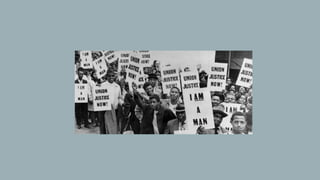

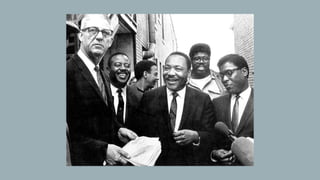
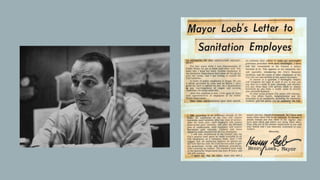

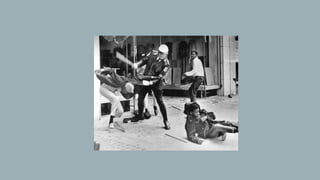
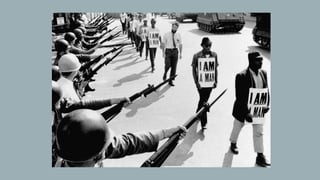
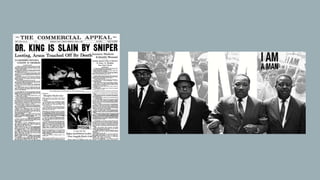
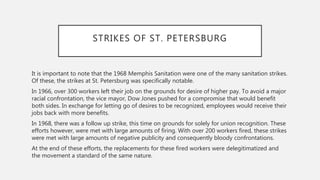

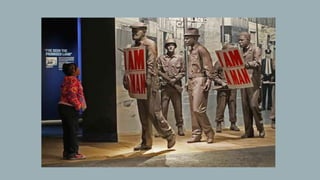

The 1968 Memphis sanitation strikes were a pivotal moment in the fight for civil rights and economic equality. Led by Martin Luther King Jr., sanitation workers, many of whom were African American, went on strike to protest poor working conditions, low pay, and a lack of benefits and union recognition. The strikes faced strong opposition from Memphis mayor Henry Loeb but gained widespread support from the black community. King's assassination in April 1968 galvanized further support for the strikes, and Loeb eventually signed an agreement granting the workers' demands. The Memphis strikes inspired similar sanitation worker strikes across the country and helped advance the civil rights movement's goals of desegregation and fair treatment in the workplace.


