The Seattle General
Strike of 1919
Neha Sheth
Introduction- Post World War I working conditions
As the World War came to an end, United States saw another
transition in its Labor History. During the time of war, women
played an important part in workforce. The employment rates of
women increased dramatically. However, when the soldiers came
back, there were high inflation rate. In comparison to males,
women had to work in lower wages. Companies were prospering,
but they couldn’t keep a lot of employees, so they laid off a lot
of workers.
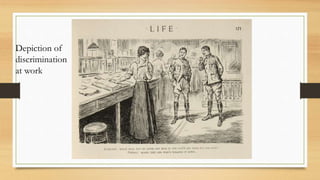
Depiction of
discrimination
at work
Expectation vs Reality
Americans exported a lot of war goods at the time of World
War I., and it was not just for Americans, but for European soldiers
as well. Since there was a war going on in Europe, Americans
expected that there hard work will be paid off once the war is over.
As the first World War was over, Americans were eagerly waiting for
money. However, they were left disappointed, since European
countries did not pay for the war goods and services provided. This
made a lot of laborers frustrated.
Reality Hits hard
Laborers expected higher wages, but they did not get what
they expected. In fact, companies were controlling laborers,
which turned out to be a nightmare. It was one of the main
factors that triggered the strike.
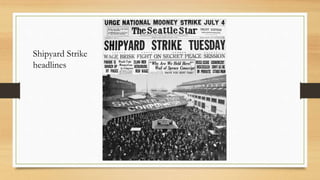
The Shipyard Strike
Seattle has always been a city where labor unions’ protest have
been the The Seattle General Strike began from the shipyard strike,
that started on January 21st of 1919. The strike was intended to
target federal government’s Emergency Fleet Corporation. Around
30,000 union members went on that strike. The main purpose of
The Shipyard Strike was to get a hike in wages.
Shipyard Strike
headlines
On February 4th, first General strike committee was
held. It was decided that all the decisions would be taken
by a committee of people. SCLC no longer had the
power to take decisions.
On February 6th, the strike began. Seattle completely
shut down on that day. Around 25,000 union members
joined the strike with 35,000 people that were already on
the strike.
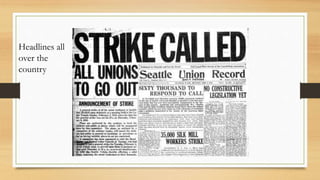
Headlines all
over the
country
By February 8th, some drivers, restaurant workers, and shop
workers went back to work. There was a conflict building up
between radicals, and progressives, whether to continue the
strike or stop it.
On February 9th, most of the union members went back
to work. The only ones that were left, were longshoremen,
cooks and metal workers.
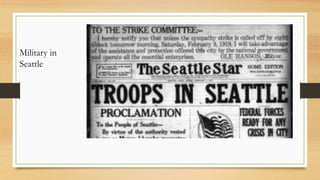
Military in
Seattle
On February 10th, SCLC came up with another
resolution. However, that was rejected by the metal
workers.
On February 11th, the strike came to an end (SCLC
declared an end to the strike.
Who won? And HOW?
Union members returned back to work. However, their demands
were not accepted by the companies. The main reason for this was
military control. It somewhat pressurized workers to get back to
work. Even after the strike was over, the mayor made sure that
military stays in Seattle. Media also contributed to this.
It impacted Seattle in certain way, since it was always
considered as one of the key cities. It has a long history of
labor. After this strike, it outlined laborers’ power. Five days
of shutdown caused by the strike emphasized the
importance of labor unions and workers.
It was called a revolution by media. The headlines, as the
source quoted, “Seattle saved from revolution” were going
around in whole country.
The Seattle General Strike was an important part of
labor history, since it was the first ever strike in United
States, that was this huge. It was the first time in history
that workers from all different areas were coming
together. It showed the power of labor unions. For the
first time in history, laborers fought for their rights
openly. This strike will be remembered for a long time.
Bibliography
Frank, Dana. Race Relations And The Seattle Labor Movement, 1915-1929. EBSCOhost.
20th March 2017. http://web.b.ebscohost.com.ezproxy.wpunj.edu/ehost/detail/detail?sid=caba6f8f-fc00-474c-
ad43d80d985aacd6%40sessionmgr103&vid=0&hid=128&bdata=JnNpdGU9ZWhvc3QtbGl2ZQ%3d%3d#A=
46927197&db=ahl
Jones, Hannah. “Seattle workers general strike for fair wages, 1919”. Global Nonviolent Action Database. 30th April
2017. http://nvdatabase.swarthmore.edu/content/seattle-workers-general-strike-fair-wages-1919
Levi, Margaret, and Olson, David. The Battles in Seattle. EBSCOhost. 20th March 2017.
http://web.b.ebscohost.com.ezproxy.wpunj.edu/ehost/detail/detail?sid=ab7b357b-fa81-4a69-9267-
48a517314624%40sessionmgr104&vid=0&hid=128&bdata=JnNpdGU9ZWhvc3QtbGl2ZQ%3d%3d#AN=347
4687&db=ahl
McRoberts, Patrick. “Seattle General Strike, 1919”. HistoryLink.org. 20th March 2017.
http://www.historylink.org/File/861
“World War I: 1914-1918”. Striking Women: Women and Work. 30th April 2017.
http://www.striking-women.org/module/women-and-work/world-war-i-1914-1918

Seattle 1919 2

  • 1.
    The Seattle General Strikeof 1919 Neha Sheth
  • 2.
    Introduction- Post WorldWar I working conditions As the World War came to an end, United States saw another transition in its Labor History. During the time of war, women played an important part in workforce. The employment rates of women increased dramatically. However, when the soldiers came back, there were high inflation rate. In comparison to males, women had to work in lower wages. Companies were prospering, but they couldn’t keep a lot of employees, so they laid off a lot of workers.
  • 3.
  • 4.
    Expectation vs Reality Americansexported a lot of war goods at the time of World War I., and it was not just for Americans, but for European soldiers as well. Since there was a war going on in Europe, Americans expected that there hard work will be paid off once the war is over. As the first World War was over, Americans were eagerly waiting for money. However, they were left disappointed, since European countries did not pay for the war goods and services provided. This made a lot of laborers frustrated.
  • 5.
    Reality Hits hard Laborersexpected higher wages, but they did not get what they expected. In fact, companies were controlling laborers, which turned out to be a nightmare. It was one of the main factors that triggered the strike.
  • 6.
    The Shipyard Strike Seattlehas always been a city where labor unions’ protest have been the The Seattle General Strike began from the shipyard strike, that started on January 21st of 1919. The strike was intended to target federal government’s Emergency Fleet Corporation. Around 30,000 union members went on that strike. The main purpose of The Shipyard Strike was to get a hike in wages.
  • 7.
  • 8.
    On February 4th,first General strike committee was held. It was decided that all the decisions would be taken by a committee of people. SCLC no longer had the power to take decisions. On February 6th, the strike began. Seattle completely shut down on that day. Around 25,000 union members joined the strike with 35,000 people that were already on the strike.
  • 9.
  • 10.
    By February 8th,some drivers, restaurant workers, and shop workers went back to work. There was a conflict building up between radicals, and progressives, whether to continue the strike or stop it. On February 9th, most of the union members went back to work. The only ones that were left, were longshoremen, cooks and metal workers.
  • 11.
  • 12.
    On February 10th,SCLC came up with another resolution. However, that was rejected by the metal workers. On February 11th, the strike came to an end (SCLC declared an end to the strike.
  • 13.
    Who won? AndHOW? Union members returned back to work. However, their demands were not accepted by the companies. The main reason for this was military control. It somewhat pressurized workers to get back to work. Even after the strike was over, the mayor made sure that military stays in Seattle. Media also contributed to this.
  • 14.
    It impacted Seattlein certain way, since it was always considered as one of the key cities. It has a long history of labor. After this strike, it outlined laborers’ power. Five days of shutdown caused by the strike emphasized the importance of labor unions and workers. It was called a revolution by media. The headlines, as the source quoted, “Seattle saved from revolution” were going around in whole country.
  • 15.
    The Seattle GeneralStrike was an important part of labor history, since it was the first ever strike in United States, that was this huge. It was the first time in history that workers from all different areas were coming together. It showed the power of labor unions. For the first time in history, laborers fought for their rights openly. This strike will be remembered for a long time.
  • 16.
    Bibliography Frank, Dana. RaceRelations And The Seattle Labor Movement, 1915-1929. EBSCOhost. 20th March 2017. http://web.b.ebscohost.com.ezproxy.wpunj.edu/ehost/detail/detail?sid=caba6f8f-fc00-474c- ad43d80d985aacd6%40sessionmgr103&vid=0&hid=128&bdata=JnNpdGU9ZWhvc3QtbGl2ZQ%3d%3d#A= 46927197&db=ahl Jones, Hannah. “Seattle workers general strike for fair wages, 1919”. Global Nonviolent Action Database. 30th April 2017. http://nvdatabase.swarthmore.edu/content/seattle-workers-general-strike-fair-wages-1919 Levi, Margaret, and Olson, David. The Battles in Seattle. EBSCOhost. 20th March 2017. http://web.b.ebscohost.com.ezproxy.wpunj.edu/ehost/detail/detail?sid=ab7b357b-fa81-4a69-9267- 48a517314624%40sessionmgr104&vid=0&hid=128&bdata=JnNpdGU9ZWhvc3QtbGl2ZQ%3d%3d#AN=347 4687&db=ahl McRoberts, Patrick. “Seattle General Strike, 1919”. HistoryLink.org. 20th March 2017. http://www.historylink.org/File/861 “World War I: 1914-1918”. Striking Women: Women and Work. 30th April 2017. http://www.striking-women.org/module/women-and-work/world-war-i-1914-1918