PERFORMANCE EVALUATION
Present by
NAZIM AHMAD 60
NILESH SABALE 72
AJINKYA DESAI 19
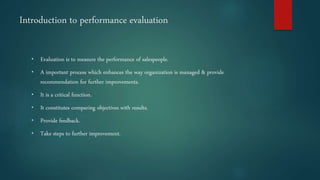
Introduction to performance evaluation
• Evaluation is to measure the performance of salespeople.
• A important process which enhances the way organization is managed & provide
recommendation for further improvements.
• It is a critical function.
• It constitutes comparing objectives with results.
• Provide feedback.
• Take steps to further improvement.
Dimensions of salesperson evaluation process
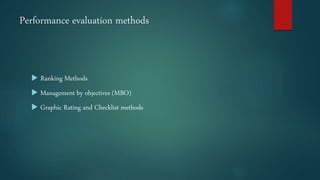
Performance evaluation methods
 Ranking Methods
 Management by objectives (MBO)
 Graphic Rating and Checklist methods
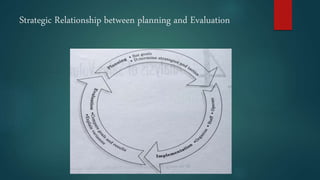
Strategic Relationship between planning and Evaluation
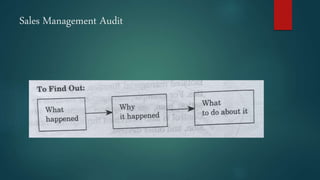
Sales Management Audit
Components of performance evaluation
 Sales Volume Analysis
 Related Marketing Expenses/Cost Analysis
 Performance of individual salespeople
Performance Evaluation and Misdirected Marketing Efforts
 The 80-20 principle
 Sales executive must make decision on
- What should have been spent on marketing
- Standards for determining
A> What should have been spent on marketing
B> What result should have been obtained from these expenditures
The Need for Detailed Data
 Sales Administrator who is analysing sales volume need subdivision of
- Sales Territories
- Salespeople
- Products
- Customers
- Size of Order
Bases for Analysing Sales Volume
 Total sales volume.
 Sales by territories.
 Sales by product.
 Sales by Customer Classifications
 Insufficiency of Sales Volume Analysis
Salesforce Automation and Performance Evaluation
Models of Salespersons performance evaluation
Qualitative methods are:
 Personal observation by sales executive.
 Customer opinion of salesman.
Quantitative methods are:
 Analysis of sales record & reports.
 Comparison of salesman’s performance with quota.
 Ratio analysis.
 Profit & loss statements.
Review Performance Evaluation with salespeople
 Performance review/ appraisal session is conducted, after evaluation of the salesperson’s performance.
 Sales managers should first review high/ good rating, and then review others ratings.
 Both should decide objectives/ goals and action plan for future period
 After the review, sales managers should write about performance evaluation & objectives for the future.
 Guidelines for reviewing performance of salespersons:
 sales managers presents his views
 Establish mutual agreement on the performance
Sales Analysis
 Sales analysis is the study of sales volume operations to find the sales and profits
trend. It help in achieving better sales performance. It also provides insights on the
sales territories type of customers and products.
Marketing cost Analysis
 Marketing cost analysis is a strategy applied in marketing where the cost connected
with selling, storing, advertising and distributing of products to particular buyers,
are analysed in order to determine their profitability. Distribution.

Sales Performance evaluation

  • 1.
    PERFORMANCE EVALUATION Present by NAZIMAHMAD 60 NILESH SABALE 72 AJINKYA DESAI 19
  • 2.
    Introduction to performanceevaluation • Evaluation is to measure the performance of salespeople. • A important process which enhances the way organization is managed & provide recommendation for further improvements. • It is a critical function. • It constitutes comparing objectives with results. • Provide feedback. • Take steps to further improvement.
  • 3.
    Dimensions of salespersonevaluation process
  • 4.
    Performance evaluation methods Ranking Methods  Management by objectives (MBO)  Graphic Rating and Checklist methods
  • 5.
    Strategic Relationship betweenplanning and Evaluation
  • 6.
  • 7.
    Components of performanceevaluation  Sales Volume Analysis  Related Marketing Expenses/Cost Analysis  Performance of individual salespeople
  • 8.
    Performance Evaluation andMisdirected Marketing Efforts  The 80-20 principle  Sales executive must make decision on - What should have been spent on marketing - Standards for determining A> What should have been spent on marketing B> What result should have been obtained from these expenditures
  • 9.
    The Need forDetailed Data  Sales Administrator who is analysing sales volume need subdivision of - Sales Territories - Salespeople - Products - Customers - Size of Order
  • 10.
    Bases for AnalysingSales Volume  Total sales volume.  Sales by territories.  Sales by product.  Sales by Customer Classifications  Insufficiency of Sales Volume Analysis Salesforce Automation and Performance Evaluation
  • 11.
    Models of Salespersonsperformance evaluation Qualitative methods are:  Personal observation by sales executive.  Customer opinion of salesman. Quantitative methods are:  Analysis of sales record & reports.  Comparison of salesman’s performance with quota.  Ratio analysis.  Profit & loss statements.
  • 12.
    Review Performance Evaluationwith salespeople  Performance review/ appraisal session is conducted, after evaluation of the salesperson’s performance.  Sales managers should first review high/ good rating, and then review others ratings.  Both should decide objectives/ goals and action plan for future period  After the review, sales managers should write about performance evaluation & objectives for the future.  Guidelines for reviewing performance of salespersons:  sales managers presents his views  Establish mutual agreement on the performance
  • 13.
    Sales Analysis  Salesanalysis is the study of sales volume operations to find the sales and profits trend. It help in achieving better sales performance. It also provides insights on the sales territories type of customers and products.
  • 14.
    Marketing cost Analysis Marketing cost analysis is a strategy applied in marketing where the cost connected with selling, storing, advertising and distributing of products to particular buyers, are analysed in order to determine their profitability. Distribution.