Design Resilient Safety Systems
Process Output Y
No
accidents
You should be
able to measure
all process
inputs
Process
Inputs
Fx
Machines
Geometry
Wear
Moving parts
Process Materials
Lubricants
Abrasives
Incoming materials
Chemistry
Geometry etc
Energy In
Elect- Heat– Cool--
Speed
Recipe
Procedures, Feeds, Speeds,
Training records
System
Changes and
Environment
Knowledge
and
Learning
Safety Process Model
Root causes of safety problems
(Fx) all should have controls so
that Output Y is stable.
Process Output Y
Accidents
Lost time
Process
Inputs
Fx
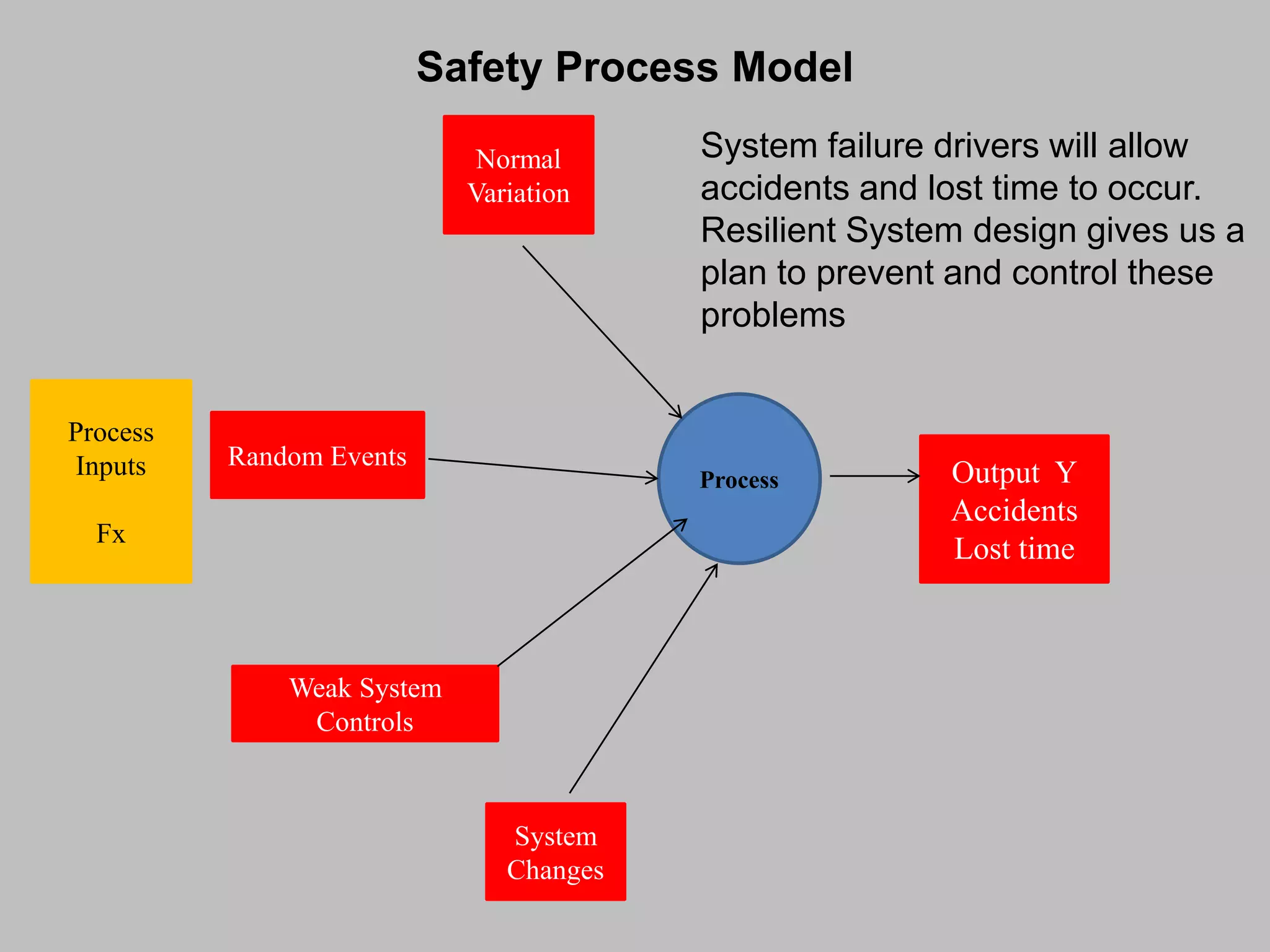
Normal
Variation
Random Events
Weak System
Controls
System
Changes
Safety Process Model
System failure drivers will allow
accidents and lost time to occur.
Resilient System design gives us a
plan to prevent and control these
problems
Core Competency Design Resilient Safety Systems
Resilient System Controls
Ongoing system maintenance
Develop operator controls in the system
Understand the leverage in the system
Simulate problems to study the response
Focus on prevention
Source: Richard Cook How Complex Systems Fail
Core Competency Design Resilient Safety Systems
On-going systems maintenance:
Conduct regular system audits following OSHA guidelines.
Post audit results
Management reviews regularly and has the discipline to insure ongoing audits.
Develop operator controls:
Use cross-functional team of auditors – operators, supervisors, engineers etc.
Train employees how the system works and encourage reporting of problems
and near misses.
Understand the leverage in the system:
Use data to pinpoint ongoing problems.
Develop corrective actions with cross-functional teams
Audit biggest problems more often.
Perform corrective actions on all accidents and near-misses.
Core Competency Design Resilient Safety Systems
Simulate failures:
Fire drills, first aid accidents, machine guarding failures, environmental
failures
Make a regular part of the safety process.
When an event occurs the employees will be able to rebound promptly.
Focus on prevention:
Accidents can be prevented with the right approach to safety culture and the
discipline to insure that controls are in place. Everyone needs to be part of this
process.
Core Competency Design Resilient Safety Systems
Suggested Safety System for a small to mid-size manufacturing
company.
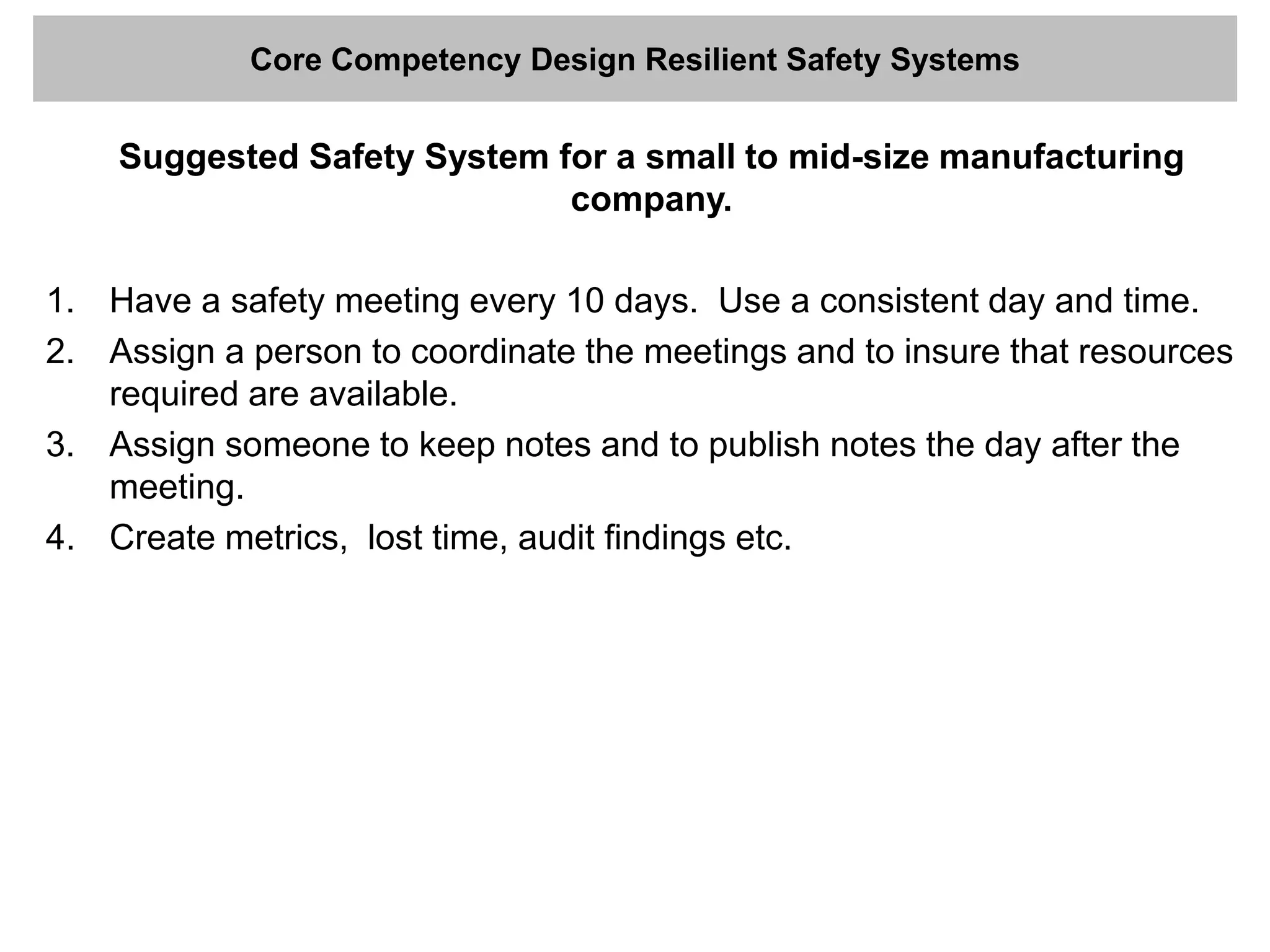
1. Have a safety meeting every 10 days. Use a consistent day and time.
2. Assign a person to coordinate the meetings and to insure that resources
required are available.
3. Assign someone to keep notes and to publish notes the day after the
meeting.
4. Create metrics, lost time, audit findings etc.
Core Competency Design Resilient Safety Systems
Suggested Safety System for a small to mid-size manufacturing
company.
5. Meeting objectives:
• Review current injuries, assign and discuss corrective actions
• Review ongoing projects and events --- driven by audit results
• Review safety data
• Perform audits--- target is 2 audits per meeting.
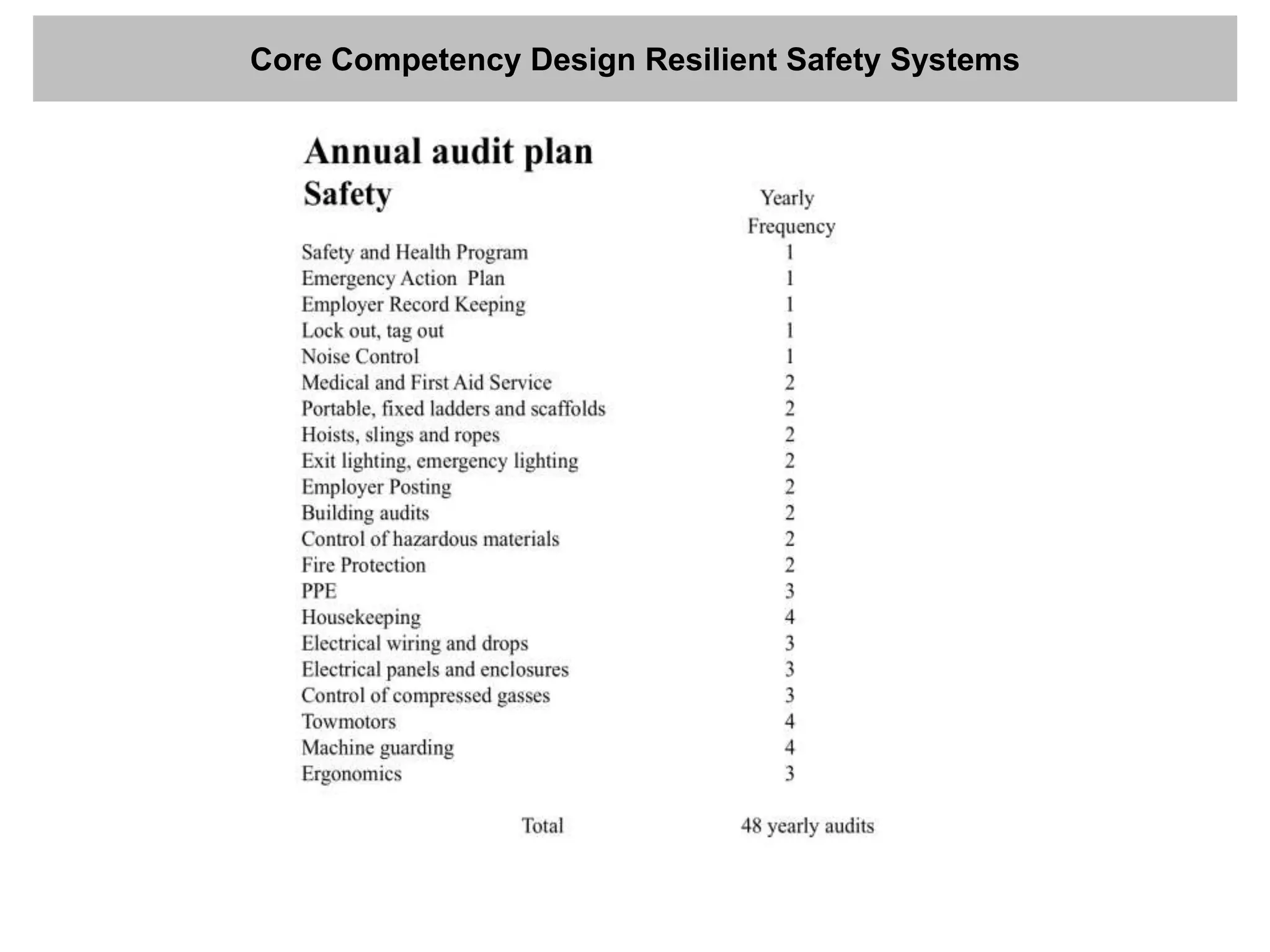
6.There are 21 key items to audit. The audits should tie back to the
OSHA Standard.
7. Create a year round audit schedule to fit your needs. Audit the known
problems more frequently.
8. Prepare regular reports to display to employees and to management.
9. Hold regular meetings with all employees to report on metrics and
activities.
Core Competency Design Resilient Safety Systems

Safety System Process

  • 1.
  • 2.
    Process Output Y No accidents Youshould be able to measure all process inputs Process Inputs Fx Machines Geometry Wear Moving parts Process Materials Lubricants Abrasives Incoming materials Chemistry Geometry etc Energy In Elect- Heat– Cool-- Speed Recipe Procedures, Feeds, Speeds, Training records System Changes and Environment Knowledge and Learning Safety Process Model Root causes of safety problems (Fx) all should have controls so that Output Y is stable.
  • 3.
    Process Output Y Accidents Losttime Process Inputs Fx Normal Variation Random Events Weak System Controls System Changes Safety Process Model System failure drivers will allow accidents and lost time to occur. Resilient System design gives us a plan to prevent and control these problems
  • 4.
    Core Competency DesignResilient Safety Systems Resilient System Controls Ongoing system maintenance Develop operator controls in the system Understand the leverage in the system Simulate problems to study the response Focus on prevention Source: Richard Cook How Complex Systems Fail
  • 5.
    Core Competency DesignResilient Safety Systems On-going systems maintenance: Conduct regular system audits following OSHA guidelines. Post audit results Management reviews regularly and has the discipline to insure ongoing audits. Develop operator controls: Use cross-functional team of auditors – operators, supervisors, engineers etc. Train employees how the system works and encourage reporting of problems and near misses. Understand the leverage in the system: Use data to pinpoint ongoing problems. Develop corrective actions with cross-functional teams Audit biggest problems more often. Perform corrective actions on all accidents and near-misses.
  • 6.
    Core Competency DesignResilient Safety Systems Simulate failures: Fire drills, first aid accidents, machine guarding failures, environmental failures Make a regular part of the safety process. When an event occurs the employees will be able to rebound promptly. Focus on prevention: Accidents can be prevented with the right approach to safety culture and the discipline to insure that controls are in place. Everyone needs to be part of this process.
  • 7.
    Core Competency DesignResilient Safety Systems Suggested Safety System for a small to mid-size manufacturing company. 1. Have a safety meeting every 10 days. Use a consistent day and time. 2. Assign a person to coordinate the meetings and to insure that resources required are available. 3. Assign someone to keep notes and to publish notes the day after the meeting. 4. Create metrics, lost time, audit findings etc.
  • 8.
    Core Competency DesignResilient Safety Systems Suggested Safety System for a small to mid-size manufacturing company. 5. Meeting objectives: • Review current injuries, assign and discuss corrective actions • Review ongoing projects and events --- driven by audit results • Review safety data • Perform audits--- target is 2 audits per meeting. 6.There are 21 key items to audit. The audits should tie back to the OSHA Standard. 7. Create a year round audit schedule to fit your needs. Audit the known problems more frequently. 8. Prepare regular reports to display to employees and to management. 9. Hold regular meetings with all employees to report on metrics and activities.
  • 9.
    Core Competency DesignResilient Safety Systems
  • 10.
    Core Competency DesignResilient Safety Systems
  • 11.
    Core Competency DesignResilient Safety Systems