+


                             Access & Proximity to
                             Eyewash Stations
                             Near Chemical Hazards in an Industrial
                             Manufacturing Setting
Presentation by Mary Macin
+


Background|Company
Current Conditions at Mitsubishi
+
      Background|OSHA Regulations

     OSHA 29 CFR 1910.133             OSHA 29 CFR 1910.151
    The employer shall ensure        “…where the eyes or body of
    that each affected employee      any person may be exposed
    uses appropriate eye or face     to injurious corrosive
    protection when exposed to       materials, suitable facilities
    eye or face hazards from         for quick drenching or
    flying particles, molten         flushing of the eyes and body
    metal, liquid chemicals, acids   shall be provided within the
    or caustic liquids, chemical     work area for immediate
    gases or vapors, or              emergency use.”
    potentially injurious light
    radiation.
☛  2.8% of all injuries & illnesses
                       in 2005 were eye injuries


     ☛  Chemical burns accounted
     for 11.4% of occupational eye
     injuries in 2002
         ☛  Ranked #3 cause of
         eye injuries in the U.S.


Background|Stats
Incidence of Eye Injuries due to Chemicals
+
Preliminary
Hazard
Analysis


After assessing all of the
hazards that could result
from storing hazardous
chemicals, I focused on those
that presented a potential
danger to the eyes
+
    Breakdown of Chemical Hazards


                       44% were co
                                    nsidered
                       moderate ris
                                   k
+
    Potential Eye Hazards
    From the storage and use of hazardous chemicals
Recommendations:
- Engineering Controls


+ Emergency Eyewash Station

 Add or relocate eyewash station
 •  more than 60 ft from the chemical storage area
 •  more than a 10 sec walk from hazard
 •  cluttered/partially blocked surroundings
 •  not located in area of hazard
 •  entrance to chemical storage area
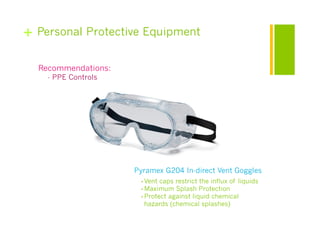
+   Personal Protective Equipment


    Recommendations:
      - PPE Controls


                       Pyramex G204 In-direct Vent Goggles
                        • Vent caps restrict the influx of liquids
                        • Maximum Splash Protection
                        • Protect against liquid chemical
                          hazards (chemical splashes)
+   Chemical Hazard Signage


                         Recommendations:
                              - Administrative Controls


                         Post appropriate signage within the
                         chemical storage area to inform
                         workers of the:
                               •  equirements
                                r
                               •  ocation
                                l
                               •  roper
                                p         use

                         of the provided PPE
+
    NFPA Chemical Hazard Labels


                        This is only a sample of the
                         chemicals being stored in the
                         chemical storage area

                        These NFPA ratings were
                         listed in the MSDS for each
                         chemical

                        Range from very low hazard
                         (Degreaser) to moderately
                         high hazard (Spray Sealer
                         and Protective Coating)
Inside the Chemical Storage Area
Each chemical shown here is required to have a Material
Safety Data Sheet (MSDS). The MSDS specifies NFPA
ratings, transportation guidelines, recommended PPE,
and other environmental, health, and safety information
Questions???
Safety Presentation
Safety Presentation

Safety Presentation

  • 1.
    + Access & Proximity to Eyewash Stations Near Chemical Hazards in an Industrial Manufacturing Setting Presentation by Mary Macin
  • 2.
  • 3.
    + Background|OSHA Regulations OSHA 29 CFR 1910.133 OSHA 29 CFR 1910.151 The employer shall ensure “…where the eyes or body of that each affected employee any person may be exposed uses appropriate eye or face to injurious corrosive protection when exposed to materials, suitable facilities eye or face hazards from for quick drenching or flying particles, molten flushing of the eyes and body metal, liquid chemicals, acids shall be provided within the or caustic liquids, chemical work area for immediate gases or vapors, or emergency use.” potentially injurious light radiation.
  • 4.
    ☛  2.8% ofall injuries & illnesses in 2005 were eye injuries ☛  Chemical burns accounted for 11.4% of occupational eye injuries in 2002 ☛  Ranked #3 cause of eye injuries in the U.S. Background|Stats Incidence of Eye Injuries due to Chemicals
  • 5.
    + Preliminary Hazard Analysis After assessing allof the hazards that could result from storing hazardous chemicals, I focused on those that presented a potential danger to the eyes
  • 6.
    + Breakdown of Chemical Hazards 44% were co nsidered moderate ris k
  • 7.
    + Potential Eye Hazards From the storage and use of hazardous chemicals
  • 8.
    Recommendations: - Engineering Controls +Emergency Eyewash Station Add or relocate eyewash station •  more than 60 ft from the chemical storage area •  more than a 10 sec walk from hazard •  cluttered/partially blocked surroundings •  not located in area of hazard •  entrance to chemical storage area
  • 9.
    + Personal Protective Equipment Recommendations: - PPE Controls Pyramex G204 In-direct Vent Goggles • Vent caps restrict the influx of liquids • Maximum Splash Protection • Protect against liquid chemical hazards (chemical splashes)
  • 10.
    + Chemical Hazard Signage Recommendations: - Administrative Controls Post appropriate signage within the chemical storage area to inform workers of the: •  equirements r •  ocation l •  roper p use of the provided PPE
  • 11.
    + NFPA Chemical Hazard Labels   This is only a sample of the chemicals being stored in the chemical storage area   These NFPA ratings were listed in the MSDS for each chemical   Range from very low hazard (Degreaser) to moderately high hazard (Spray Sealer and Protective Coating)
  • 12.
    Inside the ChemicalStorage Area Each chemical shown here is required to have a Material Safety Data Sheet (MSDS). The MSDS specifies NFPA ratings, transportation guidelines, recommended PPE, and other environmental, health, and safety information
  • 13.